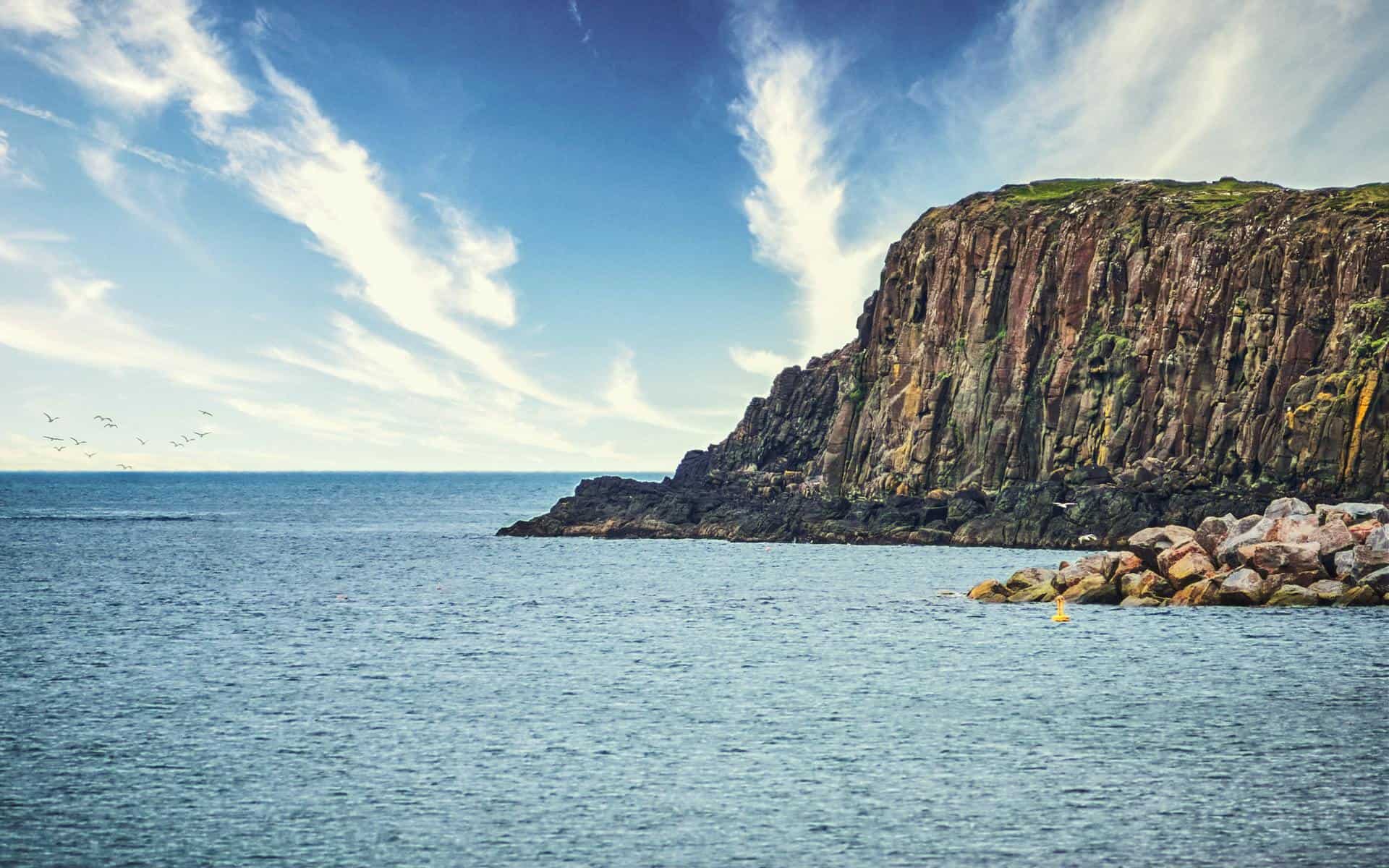

Stand on the clifftops of Binevenagh Mountain and watch the mist roll in from the Atlantic. You’re witnessing something ancient, something the Celts would have recognised as the work of Manannán Mac Lir himself. The Celtic sea god commands these waters still, his presence felt in every wave that crashes against Ireland’s northern coast.
The mythology surrounding this powerful deity offers far more than ancient tales. His stories connect directly to the landscapes you can visit today, from the famous statue at Gortmore Viewpoint to the Isle of Man, where his legend runs deepest. Understanding Manannán Mac Lir means understanding the relationship between Ireland’s coastal heritage and the stories that shaped Celtic identity for centuries.
Table of Contents
Understanding the Celtic Sea God and His Origins
Manannán Mac Lir stands among the most fascinating figures in Celtic mythology, yet confusion often surrounds his identity and role. His name translates directly as “Manannán, Son of Lir,” but this simple translation masks layers of cultural significance that extend across Irish, Scottish, and Manx traditions.
Manannán Mac Lir vs Lir: Clarifying the Father and Son
The distinction between Lir and Manannán Mac Lir matters greatly when exploring Celtic mythology. Lir represents the primordial ocean itself, an ancient, elemental force rarely taking active form in surviving tales. His most famous story, “The Children of Lir,” speaks of tragedy and transformation, positioning him as a distant, powerful presence.
Manannán Mac Lir, conversely, actively shapes events throughout Irish mythology. He belongs to the Tuatha Dé Danann, the supernatural race that ruled Ireland before the arrival of the Milesians. Where his father embodies the raw power of the sea, Manannán controls it, travelling freely between the mortal world and the Otherworld known as Tír na nÓg.
This Celtic sea god possessed remarkable abilities that set him apart from other deities. His cloak of mists, the féth fíada, could make him invisible or create illusions to protect those he favoured. He rode Aonbharr, a horse that could gallop across water as easily as land. His sword Fragarach, “The Answerer,” could cut through any armour and compel truth from anyone it touched.
The God’s Role Among the Tuatha Dé Danann
Manannán Mac Lir served as more than just the Celtic god of sea and storms. He acted as guardian and guide, the deity who knew the paths between worlds. When the Tuatha Dé Danann retreated from mortal Ireland into the síd mounds, Manannán provided them with pigs that could be eaten one day and return alive the next, ensuring they never went hungry in their underground kingdoms.
His home, Emhain Ablach, existed somewhere beyond the western horizon. Sailors spoke of glimpsing this island through the mists, though none could reach it unless Manannán wished them to arrive. The god’s connection to fog and sea mist wasn’t merely poetic. Ancient Irish communities understood these weather patterns as manifestations of his power, the boundaries he drew between the visible and invisible worlds.
The Isle of Man Connection
The relationship between Manannán and the Isle of Man runs deeper than simple etymology, though the island’s name does derive from the god’s. In Manx tradition, he appears as Manannan beg mac y Leir, watching over the island from his throne on Barrule Mountain. Manx folklore speaks of him as the island’s first ruler and protector, defending it with magical mists that concealed it from raiders.
An ancient Manx custom required islanders to pay tribute to Manannán each Midsummer Eve by laying rushes on specific hills, a practice that continued into relatively modern times. This wasn’t mere superstition but an acknowledgement of the god’s protective presence over the island. When the mists rolled in thick enough to hide the entire island, locals would say Manannán was angry or working his protective magic.
The Welsh know him as Manawydan fab Llŷr, appearing in the Mabinogion as a figure of wisdom and craftsmanship. Though his character differs somewhat from the Irish version, the core association with the sea and otherworldly knowledge remains consistent across Celtic cultures.
The Modern Legend: Binevenagh’s Famous Statue
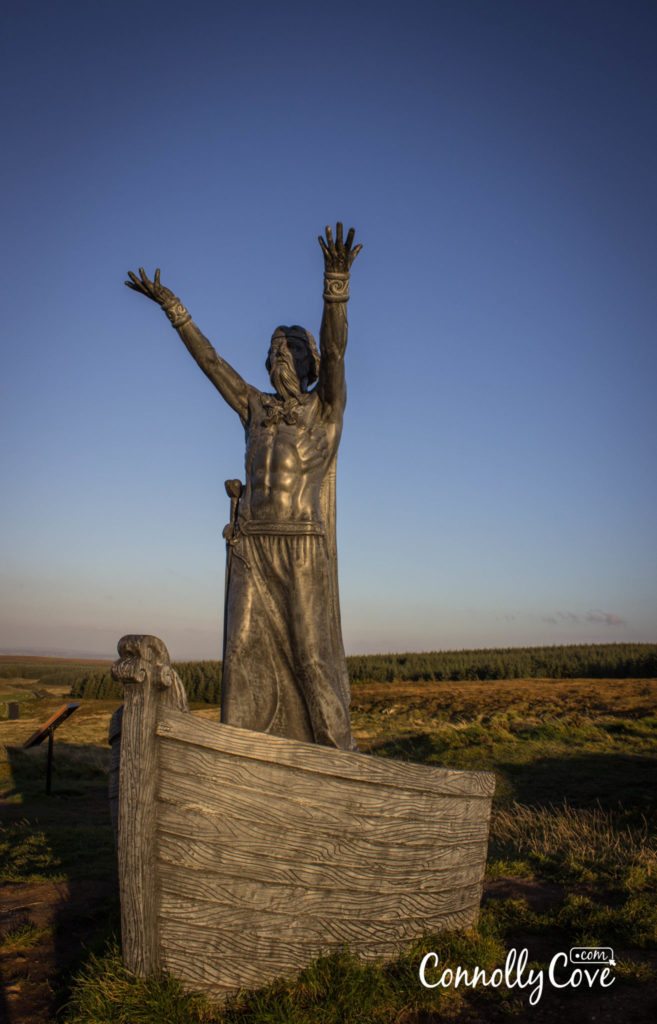
Few modern artworks capture public imagination quite like the Manannán Mac Lir statue overlooking Lough Foyle from Gortmore Viewpoint. This striking sculpture has become a pilgrimage site for those interested in Celtic mythology and Northern Ireland’s cultural heritage, but its story extends far beyond simple artistic achievement.
Creating a Contemporary Celtic Icon
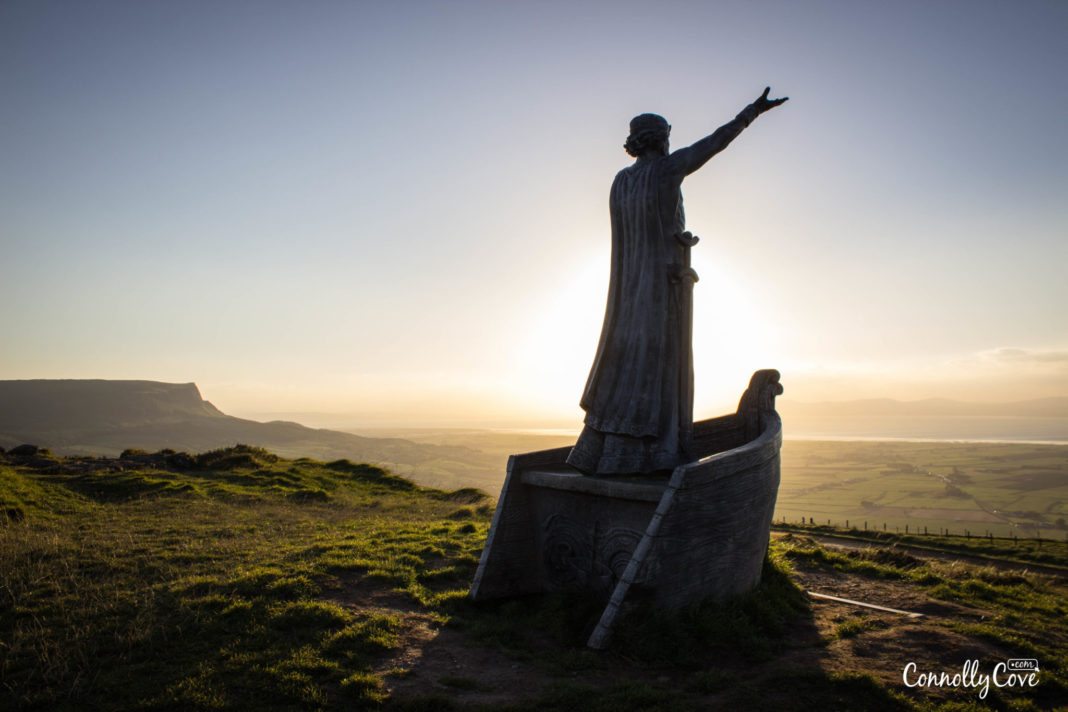
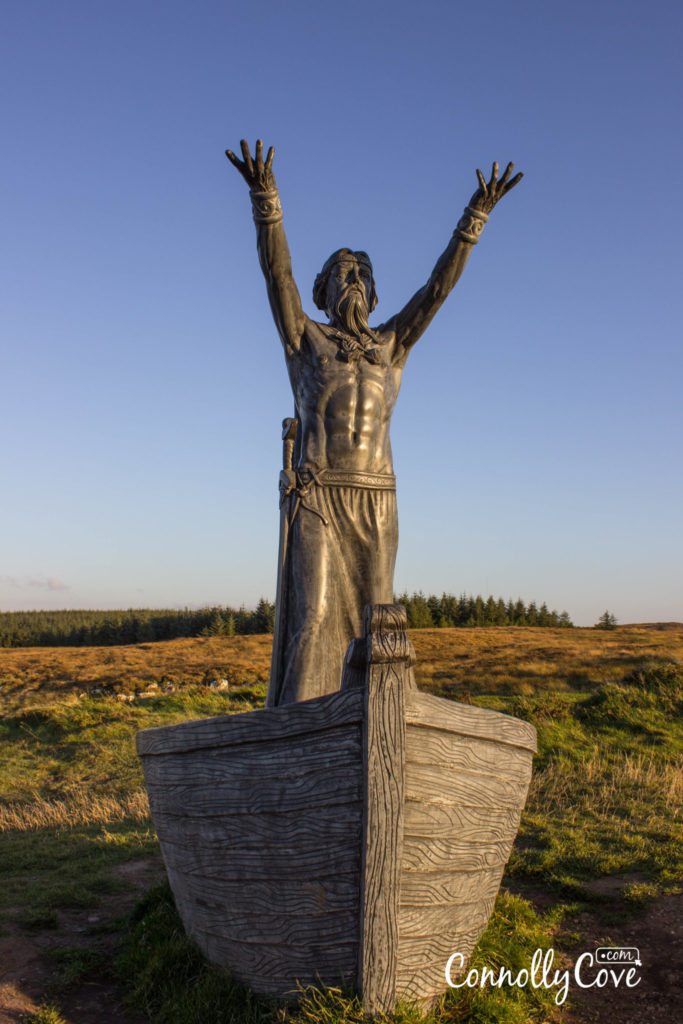
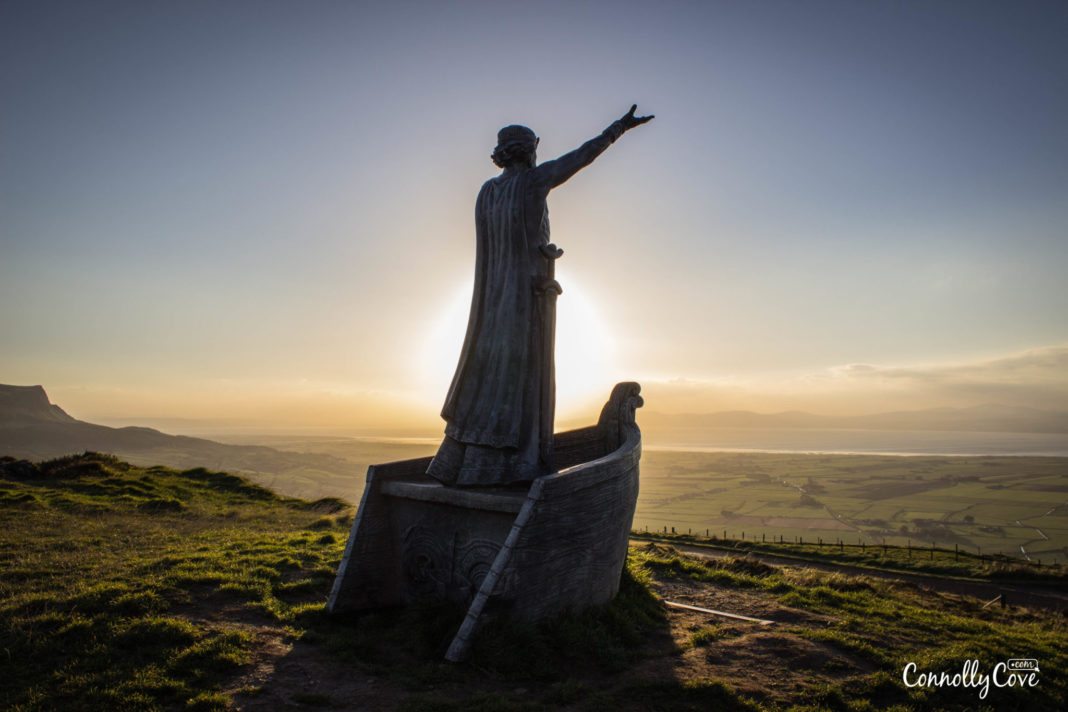
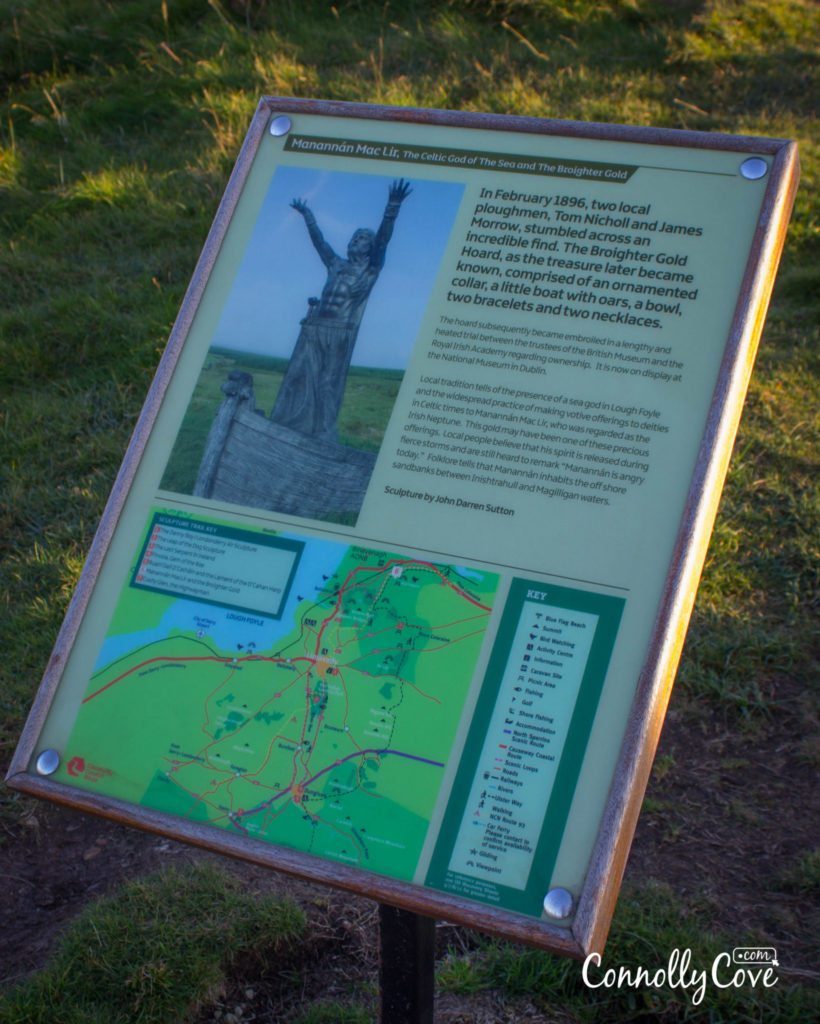
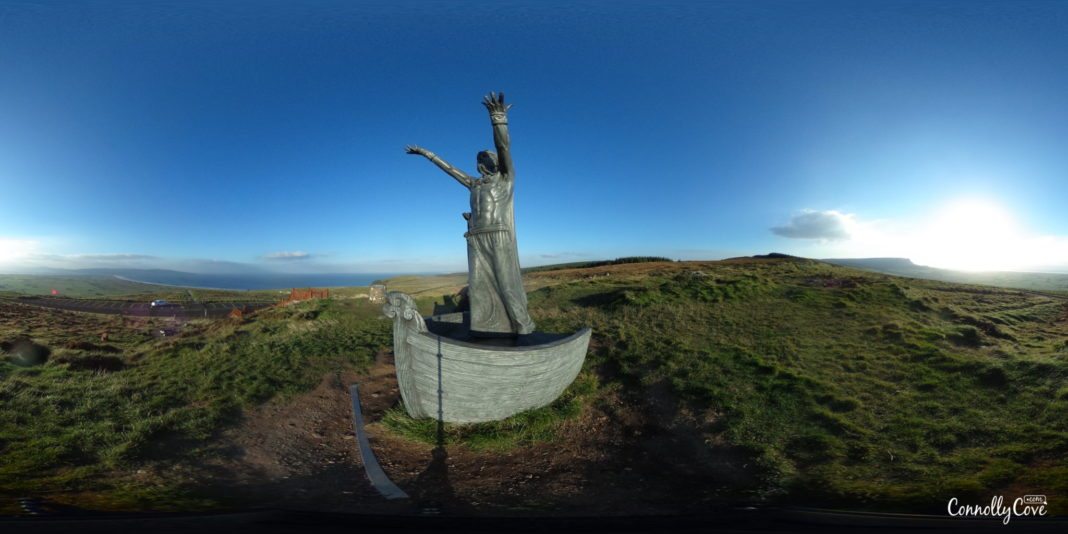
Sculptor John Sutton, known for his work on the hit television series Game of Thrones, created the Manannán Mac Lir statue as part of a series highlighting the myths and legends of the Roe Valley’s cultural heritage. The nine-foot sculpture depicts the Celtic sea god standing proud in the prow of a boat, gazing out across Lough Foyle toward Donegal and the open Atlantic beyond.
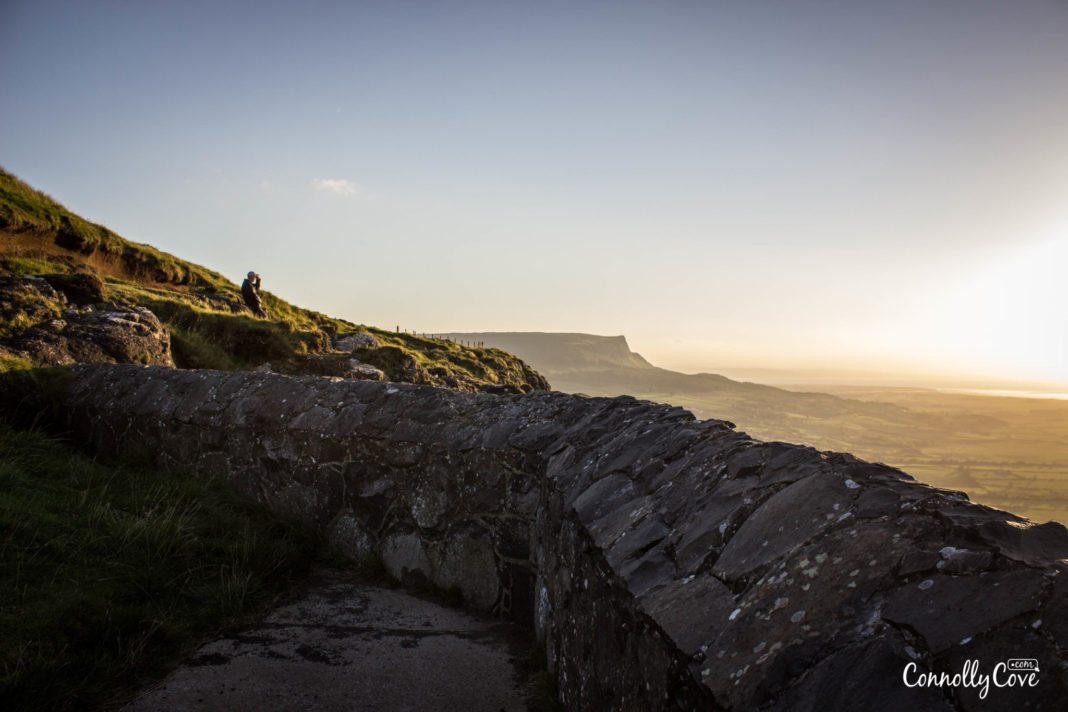
The statue’s location on Binevenagh Mountain holds particular significance. This elevated position, 385 metres above sea level, offers views extending to the Scottish islands of Islay and Jura on clear days. Ancient communities would have seen this clifftop as a natural threshold between earth, sea, and sky, precisely the type of liminal space associated with Manannán’s power.
The Binevenagh statue captures something essential about the god’s nature. He doesn’t sit enthroned or wield weapons in aggressive display. Instead, he stands watchful, a guardian figure surveying the waters and coastlines that fall under his protection. This artistic interpretation resonates with older descriptions of Manannán as a guide and protector rather than a warrior deity.
The Theft That Became Modern Folklore
The statue’s disappearance in January 2015 shocked the local community and generated international attention. The Manannán Mac Lir statue vanished from its concrete base on Binevenagh Mountain, apparently removed by individuals who took considerable effort to cut it down. In its place, thieves left a wooden cross bearing the words “You shall have no other gods before me,” suggesting religious motivation for the theft.
The search for the Binevenagh statue involved PSNI officers conducting land and air searches across the mountain. Local walking groups scoured the area, concerned about the loss of what had become a beloved landmark. After a month, wanderers discovered the sculpture dumped on the mountainside just a few hundred metres from its original location, badly damaged with chunks missing from the head and arms.
The incident sparked an outpouring of support for the statue’s restoration. Far from diminishing public interest, the theft transformed the sculpture into something more than art. It became a symbol of cultural pride and resilience, a modern echo of the very myths it depicted. The sculpture’s temporary absence made people realise how much it meant to them.
Restoration and Renewed Significance
John Sutton spent six months creating a replacement Manannán Mac Lir statue, reinforcing the new sculpture against future vandalism. The unveiling of the restored artwork drew large crowds, with spectators arriving even as the statue was being installed. Local politicians, including the SDLP’s Gerry Mullan, emphasised the sculpture’s importance for tourism and cultural identity in the Northwest.
The damaged original sculpture wasn’t discarded but preserved for educational purposes, allowing people to see both the destructive act and the community’s response. This dual legacy reinforces the statue’s meaning. Like the god it represents, the Binevenagh statue has proven resilient, returning from apparent destruction to resume its watch over Lough Foyle.
Gortmore Viewpoint receives steady visitor numbers, with many specifically seeking the Manannán Mac Lir statue. The site’s accessibility, free parking, and spectacular views make it popular with families, photographers, and those interested in Northern Ireland’s cultural heritage. The sculpture functions as both an artistic achievement and an active site of cultural engagement, exactly what its creators intended.
Following the God’s Path: Sacred Landscapes and Celtic Sites
The mythology of Manannán Mac Lir connects directly to real locations across Ireland, the Isle of Man, and beyond. Understanding these places enriches both the ancient stories and contemporary visitor experiences, revealing how landscape and legend intertwine in Celtic tradition.
Gortmore Viewpoint and Binevenagh Mountain
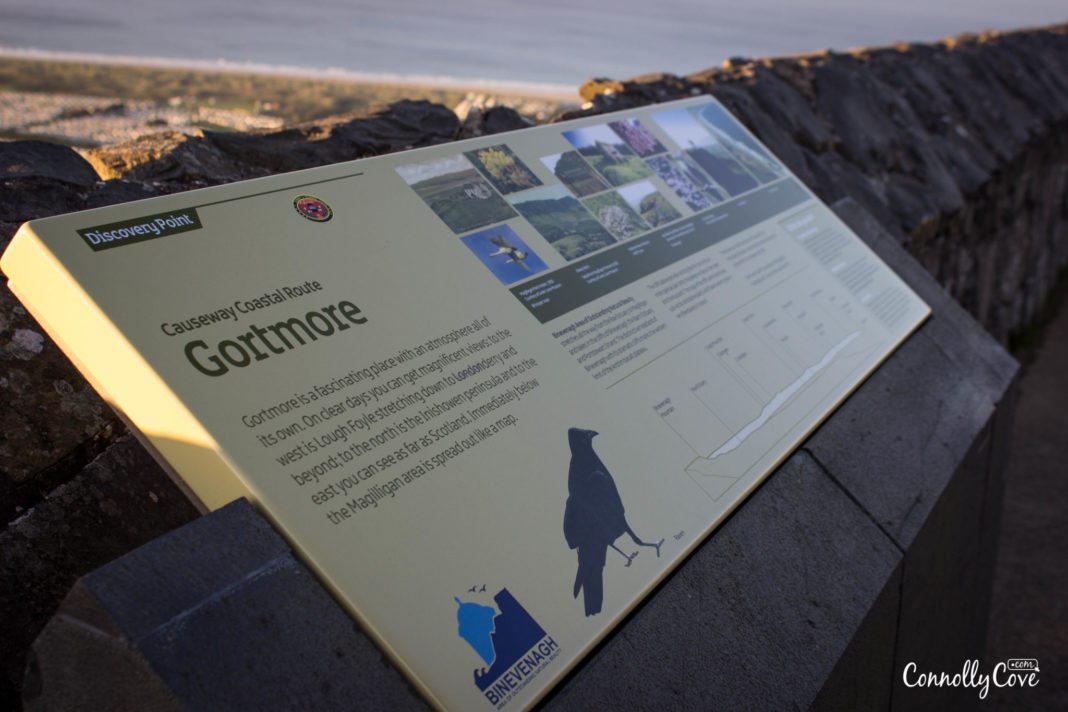
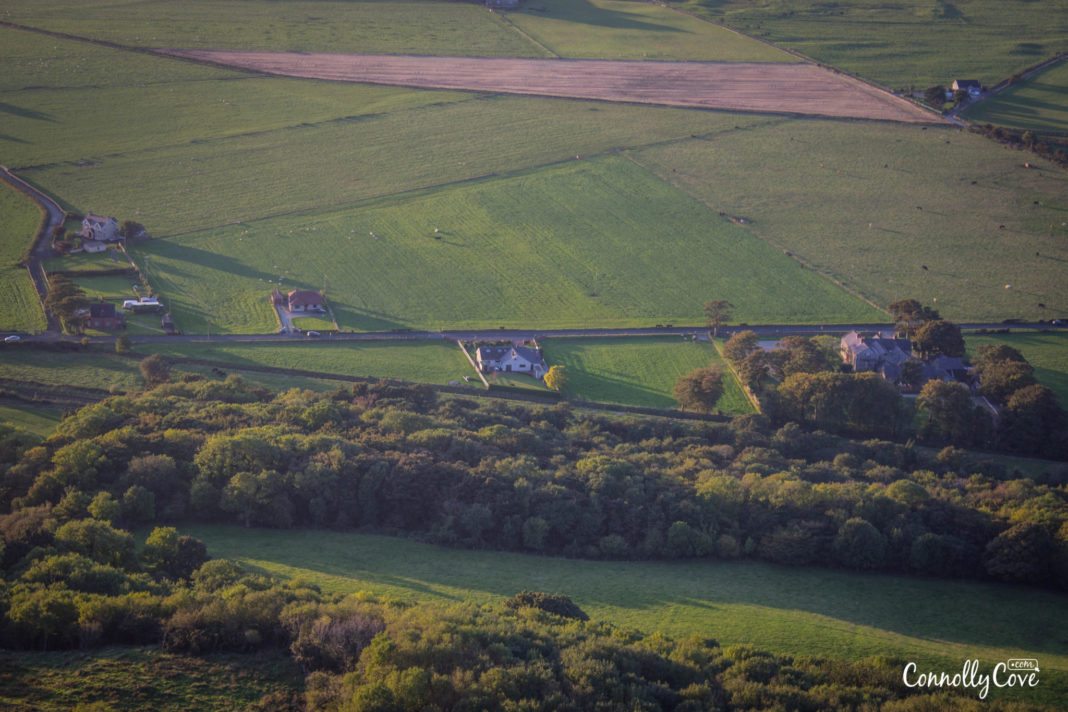
The location of the famous Binevenagh statue wasn’t chosen randomly. Gortmore Viewpoint sits along Bishop’s Road on the Binevenagh Loop, part of the renowned Causeway Coastal Route. The viewing point offers panoramic vistas extending across Lough Foyle to Donegal, Inishowen Peninsula, and on clear days, the Scottish islands of Islay and Jura.
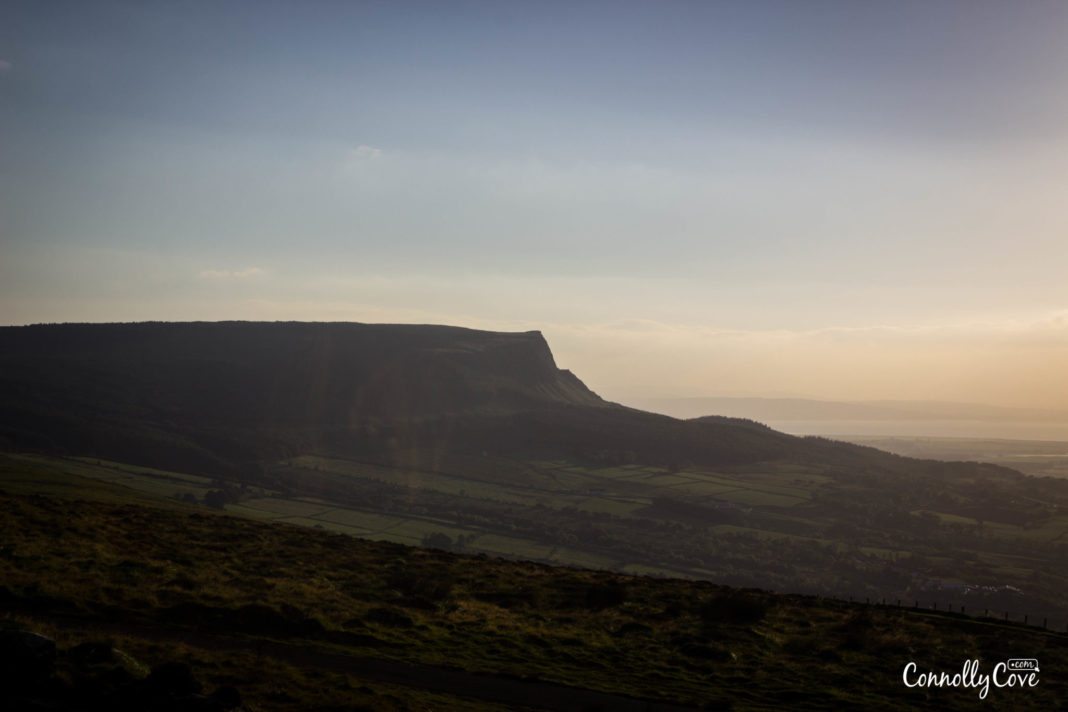
Binevenagh Mountain itself formed 60 million years ago during the same volcanic activity that created the Giant’s Causeway. The mountain’s distinctive basalt cliffs and flat summit create a dramatic landscape that ancient peoples would have regarded as sacred. Legend claims Viking raiders once mistook Binevenagh for a massive fortress and fled rather than face warriors capable of building such an enormous structure.
The mountain hosts diverse wildlife, including peregrine falcons nesting along the cliff faces. Below the cliffs, the Magilligan Special Area of Conservation protects one of Ireland’s broadest dune systems. Walking from Gortmore Viewpoint southward along the fence line brings you to Hell’s Hole, a dramatic cliff formation offering different perspectives on this ancient landscape.
The Binevenagh Area of Outstanding Natural Beauty received protected status in 2006, recognising the region’s unique balance of natural and cultural heritage. The coastal waters support varied marine habitats that sustain large populations of seabirds, exactly the type of environment where ancient communities would have felt Manannán’s presence most strongly.
The Isle of Man: Manannán’s Island Kingdom
The Isle of Man maintains the strongest continuing connection to Manannán Mac Lir of any location. Manx tradition identifies him as the island’s first ruler and eternal guardian. Peel Castle, perched on St Patrick’s Isle off the western coast, stands as one site particularly associated with the god. The castle’s dramatic position, accessible only at low tide, embodies the liminal quality of Manannán’s domain.
Manx folklore preserves more detailed traditions about Manannán than survive in Irish sources. Stories describe how he would wrap the island in protective mists when enemies approached, rendering it invisible to raiders. The three-legged symbol of the Isle of Man, though its exact origins remain debated, appears in some traditions connected to the god’s magical protection.
The annual tribute of rushes laid on midsummer demonstrates how Manannán remained an active presence in Manx consciousness far longer than in Ireland. This practice, documented into the modern era, shows the god’s evolution from a mythological figure to a cultural symbol of Manx identity and independence.
South Barrule, at 483 metres, the island’s second-highest peak, served as Manannán’s traditional seat. From this vantage, he could observe all approaches to the island, ready to deploy his mists or other defences as needed. The mountain’s summit offers 360-degree views, making it easy to understand why tradition placed the god’s throne there.
Planning Your Visit to Manannán’s Landscapes
Exploring the sites associated with Manannán Mac Lir requires practical planning, particularly for UK and Irish travellers navigating between jurisdictions with different currencies and transport systems. Understanding the logistics enhances the experience, allowing you to focus on the landscapes and stories rather than unexpected complications.
Reaching Gortmore Viewpoint and Binevenagh
Gortmore Viewpoint sits approximately 13 kilometres from Limavady town centre in County Derry/Londonderry. The most straightforward approach follows the A2 Coastal Route, turning onto Bishop’s Road for the final ascent. The narrow, winding road requires careful driving but presents no difficulties for standard vehicles in good weather.
Free parking is available at the viewpoint, though spaces can fill during peak times, particularly summer weekends. The Manannán Mac Lir statue stands immediately visible from the car park, making this an accessible stop for those with limited mobility. More adventurous visitors can explore walking trails extending along the cliff edge and across Binevenagh’s plateau.
Northern Ireland uses pounds sterling (£), though visitors from the Republic should note that Northern Irish banknotes, while legal tender throughout the UK, sometimes encounter resistance in English shops. Most businesses accept card payments, making currency exchange less critical than in previous decades. Petrol stations along the route accept both cash and cards.
The Limavady Visitor Information Centre, located within the Roe Valley Arts and Cultural Centre, provides detailed local information, maps, and assistance with accommodation bookings. Opening hours run Monday through Wednesday and Saturday 09:30 to 17:00, with extended Thursday and Friday hours until 21:30.
Travelling to the Isle of Man
Reaching the Isle of Man requires ferry or flight connections, with costs varying significantly by season and booking timing. The Steam Packet Company operates regular ferry services from Liverpool, Heysham, Dublin, and Belfast. Return ferry fares from Liverpool typically range from £80 to £150, depending on season, booking advance time, and whether you’re bringing a vehicle.
The journey from Liverpool to Douglas takes approximately two hours and 45 minutes on the fastest vessels, offering comfortable seating, catering facilities, and outdoor deck areas for observing the Irish Sea. Booking several weeks in advance generally secures better rates, particularly important for summer travel when prices peak.
Flights from several UK and Irish airports reach the Isle of Man in under an hour, though costs often exceed ferry fares. Airlines, including Loganair and easyJet, operate regular services, with advance bookings essential for reasonable prices. The airport sits within easy reach of Douglas, though onward transport requires taxis, buses, or car rental.
The Isle of Man uses pounds sterling, though the island prints its own notes that aren’t accepted outside the island. Most businesses accept standard UK currency and cards, making the local notes an optional souvenir rather than a necessity. ATMs dispense Manx notes, which visitors should exchange before departing if receiving them as change.
Practical Considerations for Modern Visitors
Appropriate clothing matters significantly when visiting exposed coastal locations. Waterproof jackets and sturdy footwear serve well even during apparently fine weather, as conditions can change rapidly along the Atlantic coast. Binevenagh’s elevation means temperatures typically run several degrees cooler than at sea level, with wind chill making conditions feel colder still.
Mobile phone coverage generally proves reliable around Gortmore Viewpoint, though some areas along coastal walks may have limited signal. The Isle of Man maintains its own mobile networks, which UK networks typically treat as international roaming destinations. Checking roaming charges before travelling prevents unexpected costs.
Food and drink facilities near Gortmore Viewpoint are limited, with the nearest substantial options in Limavady. Bringing refreshments allows more flexibility for spending time at the location without rushing to reach services before they close. The viewpoint itself offers no facilities beyond parking, reflecting its character as a natural viewing point rather than a developed tourist attraction.
The Isle of Man offers comprehensive visitor facilities, particularly in Douglas and other main towns. Accommodation ranges from budget hostels through to luxury hotels, with booking in advance essential during the summer months and impossible during the TT races without extremely early planning. The island’s compact size means even accommodation on the opposite side from your main interests rarely sits more than 30 to 40 minutes’ drive away.
Conclusion
The mythology surrounding Manannán Mac Lir offers more than historical interest. These stories connect to landscapes you can visit today, explaining why certain locations feel significant even to visitors unfamiliar with the tales. Standing at Gortmore Viewpoint watching mist roll across Lough Foyle creates an experience the ancient Irish would have recognised, even if your understanding of it differs from theirs.
FAQs
Who is Manannán Mac Lir in Celtic mythology?
Manannán Mac Lir is the Celtic sea god and member of the Tuatha Dé Danann, serving as guardian of the ocean and guide between the mortal world and the Otherworld of Tír na nÓg. His name means “Manannán, Son of Lir,” distinguishing him from his father Lir, who represented the primordial ocean itself.
Where is the Manannán Mac Lir statue located?
The Manannán Mac Lir statue stands at Gortmore Viewpoint on Binevenagh Mountain in County Derry/Londonderry, Northern Ireland. The sculpture, created by John Sutton, is located along Bishop’s Road on the Binevenagh Loop, part of the Causeway Coastal Route. The site offers panoramic views across Lough Foyle to Donegal and, on clear days, the Scottish islands of Islay and Jura.
What happened to the original Binevenagh statue?
The original Binevenagh statue was stolen in January 2015, removed from its mountaintop location by individuals who left a wooden cross with religious messaging in its place. After a month-long search involving police and local volunteers, the sculpture was discovered dumped on the mountainside several hundred metres from its original position, badly damaged with sections missing.
What is the connection between Manannán and the Isle of Man?
The Isle of Man takes its name from Manannán Mac Lir, who appears in Manx tradition as Manannan beg mac y Leir, the island’s first ruler and eternal guardian. Manx folklore describes how he protected the island by wrapping it in magical mists that concealed it from raiders.
What does the name Manannán Mac Lir mean?
Manannán Mac Lir translates directly from Irish as “Manannán, Son of Lir,” identifying him as the offspring of the primordial sea deity Lir. The name distinguishes him from his father while maintaining the crucial connection to oceanic power.