


The 4 Major International Airports in Cyprus
Updated On: February 25, 2024 by  Eman Sameh
Cyprus is an island country in the Eastern Mediterranean with beautiful beaches, rich history and culture, and delicious cuisine. It is a small country, yet it bursts with diverse landscapes, mountains, forests, and coastal plains. It is a popular tourist destination for hiking, cycling, and water sports.
Cyprus International Airports offer excellent air travel services for travellers across the globe. Among the primary airports in Cyprus, Larnaca Airport and Paphos Airport stand out as key gateways to the island. If you are planning to spend a wonderful time in Cyprus, then you will need to know which airport in Cyprus to fly into. Let us learn more about each one.
What Are the Main International Airports in Cyprus?
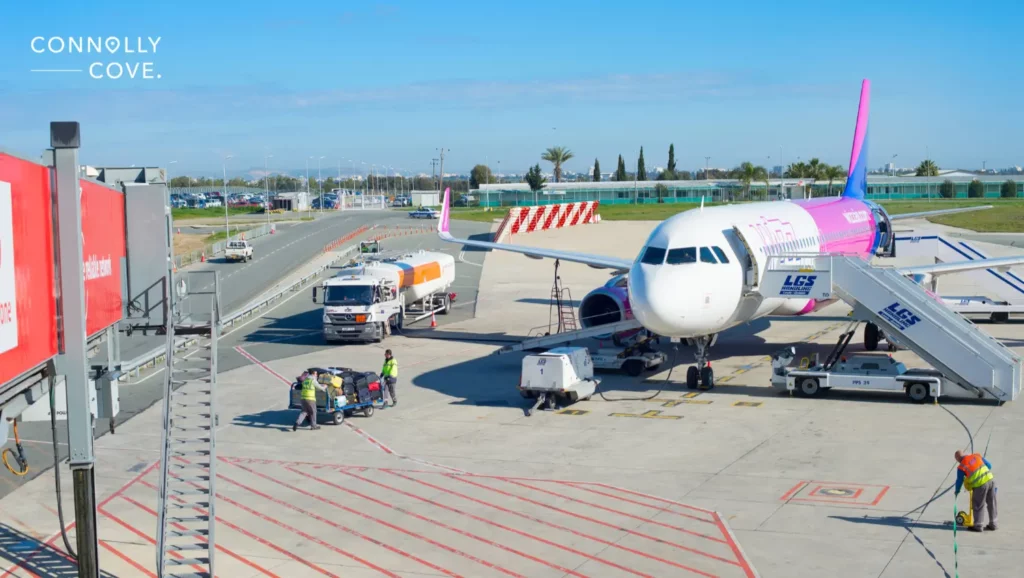
There are two principal airports in Cyprus, Larnaca Airport (LCA) and Paphos Airport (PFO), and two smaller ones, Ercan International (ECN) and Lefkoniko International (GEC). Each one is served by a various number of airlines. Let us discover each one.
Overview of Larnaca International Airport (LCA)
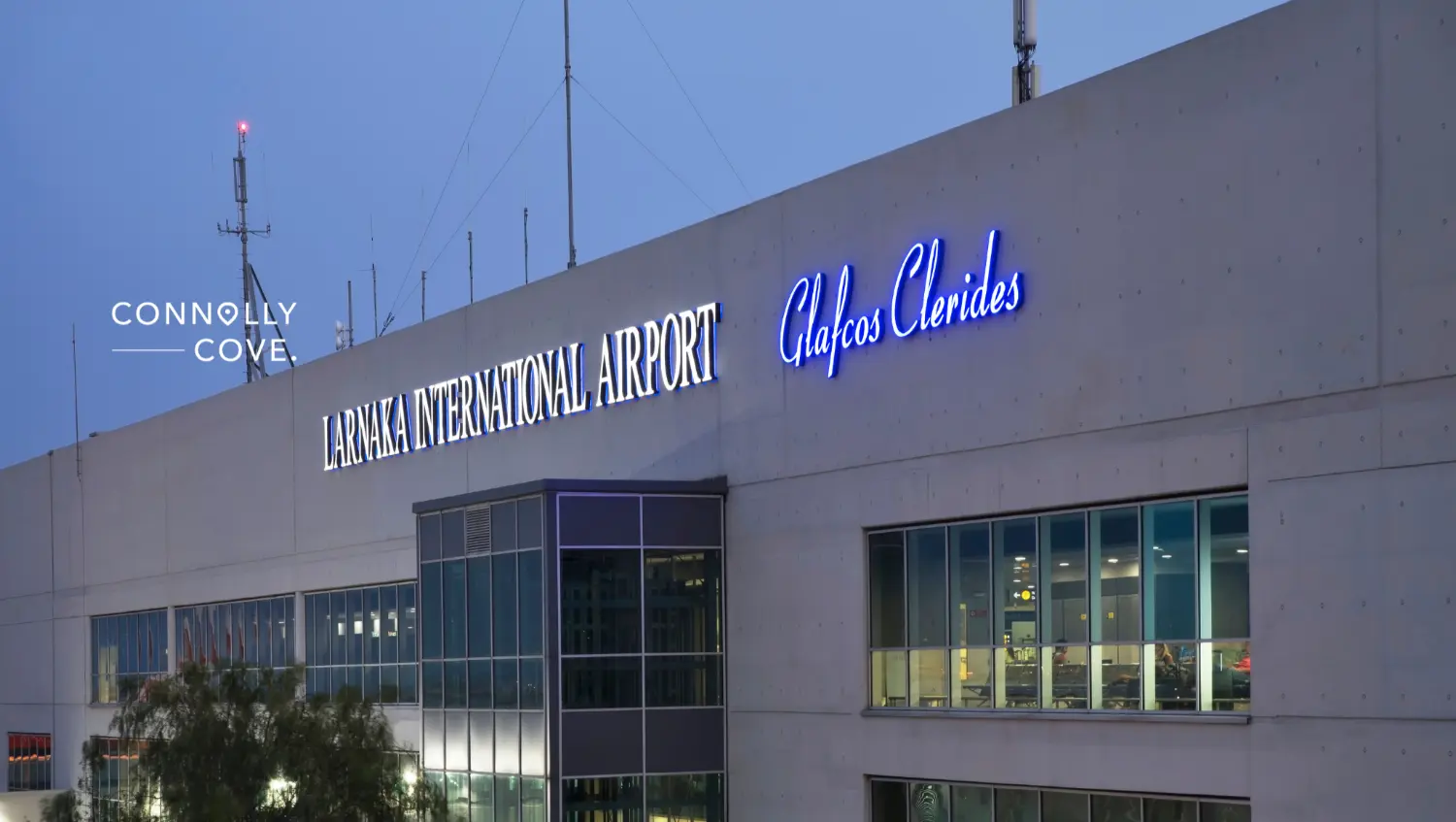
Larnaca Airport, known as Glafcos Clerides International Airport (LCA/LCLK), is the primary airport serving Larnaca, Cyprus. It is the largest of the two commercial airports in the area, controlled by Cyprus, situated 4 km (2.5 mi) southwest of Larnaca, the third-largest city on the southern coast of Cyprus.
The airport is a major hub for both passenger and cargo traffic and is well-equipped with modern facilities to cater to the needs of travellers. Larnaca International Airport is currently undergoing a significant expansion project. The project is expected to be completed in 2025 and will increase the airport’s capacity to 14 million passengers annually.
Overview of Paphos International Airport
Paphos Airport (PFO/LCPH) is a joint civil-military public airport located 6.5 kilometres (4 miles) southeast of Paphos on the Mediterranean island of Cyprus. It is the second-largest airport in Cyprus, commonly used by tourists on vacation in western Cyprus. It provides access to many popular resorts such as Coral Bay, Limassol (about 50 kilometres (31 miles) southeast), and Paphos.
Paphos International Airport has a single terminal with two runways. The terminal has a total area of 21,000 square metres (226,000 square feet) and can handle up to 4 million passengers annually. The airport has many facilities, including shops, restaurants, cafes, duty-free shops, banks, currency exchange offices, ATMs, car rental desks, and a post office.
Overview of Ercan International Airport (ECN)
Ercan International Airport (ECN), also known as Ercan Uluslararası Havalimanı or Lefkoşa Havalimanı in Turkish and Αεροδρόμιο Τύμπου in Greek, is the primary civilian airport of the partially recognised Turkish Republic of Northern Cyprus (TRNC). It is located about 13 kilometres east of Nicosia, near the village of Tymbou. The airport serves as the main portal to Northern Cyprus and handles both domestic and international flights.
Ercan International Airport has a single terminal with one runway that is 2,755 metres (9,039 ft) long. The terminal has a total area of 15,000 square metres and can handle up to 7 million passengers per year. The airport has many facilities, including shops, restaurants, cafes, duty-free shops, banks, currency exchange offices, ATMs, car rental desks, and a post office.
Overview of Lefkoniko International Airport
Lefkoniko International Airport (IATA: GEC, ICAO: LGFL), also known as Geçitkale Airfield or Geçitkale Havaalanı in Turkish, is a small international airport located in northern Cyprus, near the village of Lefkoniko. It is the second airport in Northern Cyprus, after Ercan International Airport.
Lefkoniko International Airport has a single terminal with one runway that is 1,830 metres (6,000 ft) long. The terminal has a total area of 5,000 square metres and can handle up to 500,000 passengers per year. The airport has a limited number of facilities, including a small cafe, a souvenir shop, and a car rental desk.
Main Airlines Based in Cyprus
- Cyprus Airways: It is Cyprus’ flag carrier, with its headquarters and hub at Larnaca International Airport. The airline operates a network of flights to anywhere in the world.
- Tus Airways: It is a private airline based at Larnaca International Airport. The airline is a relatively new entrant into the market, having been founded in 2005. Tus Airways operates a network of routes to destinations across the globe.
- Aegean Airlines: It is a Greek airline with a base at Larnaca International Airport. It is the main airline in Greece and operates a network of flights to destinations in Europe, the Middle East, and Africa.
Attractions Near Paphos International Airport
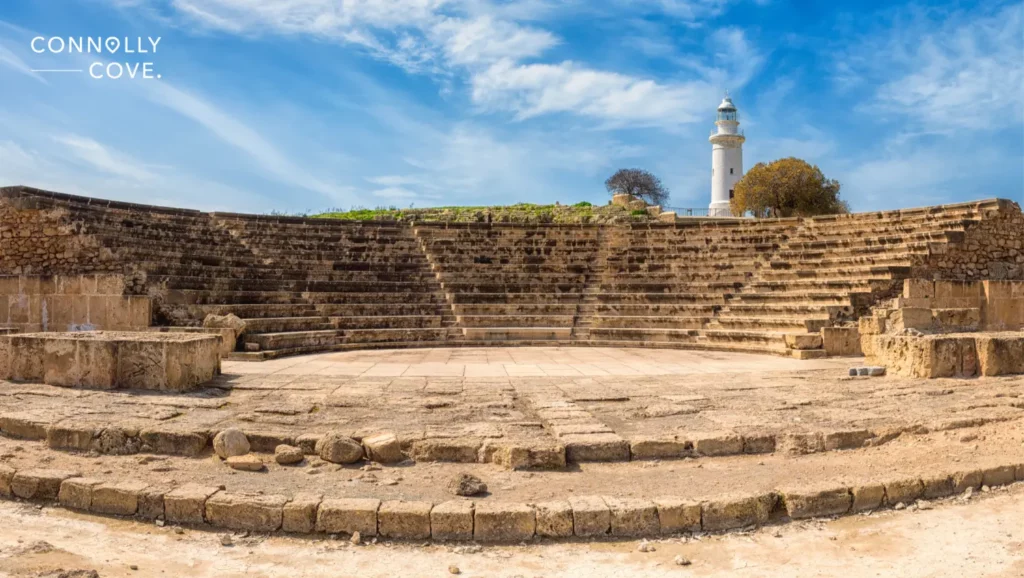
Paphos is a beautiful coastal town in Cyprus with a rich history and culture. It is home to several UNESCO World Heritage Sites, as well as stunning beaches, picturesque villages, and ancient ruins. Here are some of the most famous attractions in Paphos:
- Kato Paphos Archaeological Park: It is a UNESCO World Heritage Site home to several ancient Roman ruins, including the House of Dionysus, the House of Aion, and the Tombs of the Kings.
- Paphos Harbour: It is a picturesque harbour lined with restaurants, shops, and cafes. It is also a popular hub for swimming, sunbathing, and boat trips.
- Paphos Castle: It is a medieval castle that was built by the Lusignans in the 13th century. It is now a museum that displays a collection of archaeological artefacts.
- Agios Neophytos Monastery: It is a 12th-century monastery located in a cave on the slopes of a hill. It is home to a number of beautiful frescoes and icons.
- Aphrodite’s Rock: It is a legendary rock that is said to be the birthplace of the Greek goddess of love, Aphrodite. It is a popular spot for tourists to go swimming and sunbathing.
- The Akamas Peninsula: It is a protected nature reserve that encompasses many rare plants and animals. It is a popular spot for hiking, bird-watching, and off-road driving.
- The Baths of Aphrodite: It is a natural beauty spot that is said to have been the bathing pool of the Greek goddess of love, Aphrodite.
- The Pafos Zoo: It is a small zoo with animals from Cyprus and around the world. It is a popular spot for families with children.
- The Paphos Waterpark: It is a waterpark with several water slides, pools, and other attractions. It is a popular spot for families with children.
Attractions Near Larnaca International Airport
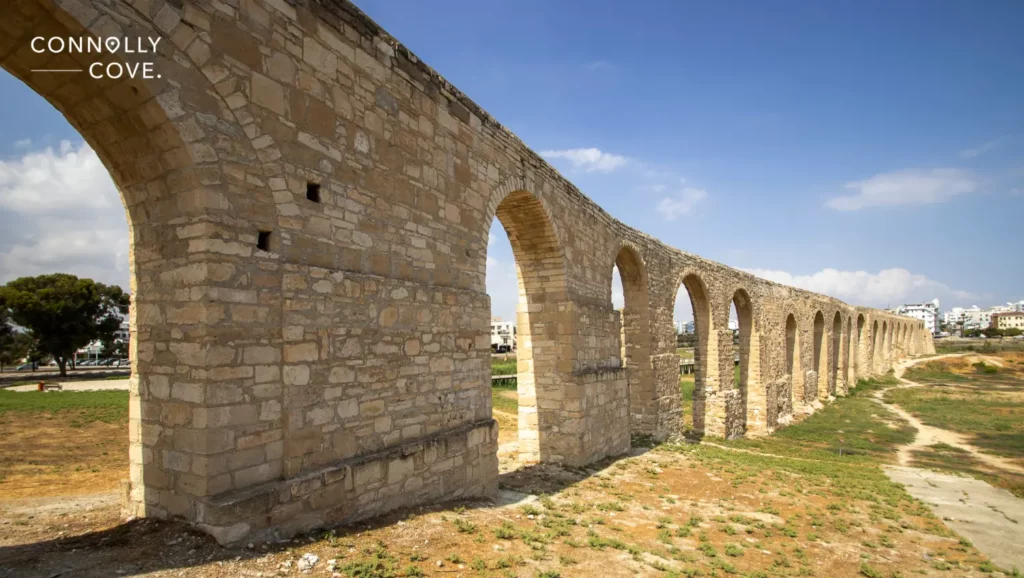
- Kamares Aqueduct: It is a historic water bridge with 75 arches built in 1750. It is one of the most popular tourist attractions in Larnaca.
- Larnaca – Meneou Salt Lake: It is a large salt lake with several migratory birds, making it ideal for bird watching and photography.
- Doggy Beach: It is a small beach designated for dogs, perfect for dog owners and their furry friends.
- Holy Church of Saint Lazarus: It is a 9th-century Byzantine church that is located in the town centre. It is one of the most important religious sites in Cyprus.
It is advisable to choose the airport nearest to the attractions you plan to visit in Cyprus, as this will save you time and transportation costs. Additionally, consider the size and facilities of the airport, as larger airports may offer more convenience and amenities. Research the airlines that fly to and from the airport and compare prices and flight schedules to find the best option for your trip. Overall, choosing the right airport can greatly enhance your travel experience in Cyprus.
What are the top airlines serving Larnaca International Airport?
Larnaca International Airport is served by a number of airlines, including Aegean Airlines, Aer Lingus, AirBaltic, Cyprus Airways, easyJet, Emirates, Lufthansa, Ryanair, and Wizz Air.
What are the top airlines serving Paphos International Airport?
Paphos International Airport is served by a number of airlines, including Aegean Airlines, British Airways, Corendon Airlines, Cyprus Airways, Eurowings, Jet2, Ryanair, and Wizz Air.
What is the best month to visit Cyprus?
The best months to visit are during the summer in July and August when the beaches are at their busiest during the summer months, but they are also at their most beautiful. The water is warm and clear, and there are plenty of water sports to enjoy. From September to November, the weather is still warm and sunny, with average temperatures ranging from 20°C to 25°C, so the water is still warm enough for swimming, and there are fewer crowds.
What are the major cities in Cyprus?
Nicosia is the main city and the capital of Cyprus. It is a divided city, with the northern part controlled by Turkey and the southern part controlled by the Republic of Cyprus. The second-largest city in Cyprus, Limassol is a famous tourist destination known for its beaches, nightlife, and shopping. There is also Larnca, a major port city in Cyprus; Larnaca is known for its beaches, its ancient ruins, and its relaxed atmosphere.
Is Cyprus Greek or Turkish?
Cyprus is a divided island with a complex political and ethnic history. The southern part of the island is controlled by the Republic of Cyprus, which is a member state of the European Union. The northern part of the island is controlled by the Turkish Republic of Northern Cyprus (TRNC), which is a partially recognised state.

Top Things To Do in Hamburg: A Hamburger’s Guide!
Germany
27/04/2024

Take a Look at the Astounding Scenery of County Kerry
County Kerry
27/04/2024

Famous Haunted Houses in Egypt: Spooky Stories for Halloween
Destinations
27/04/2024

St. Paul’s Cathedral – London Attractions
England
27/04/2024

Great Scotland Yard – London Attractions
England
27/04/2024