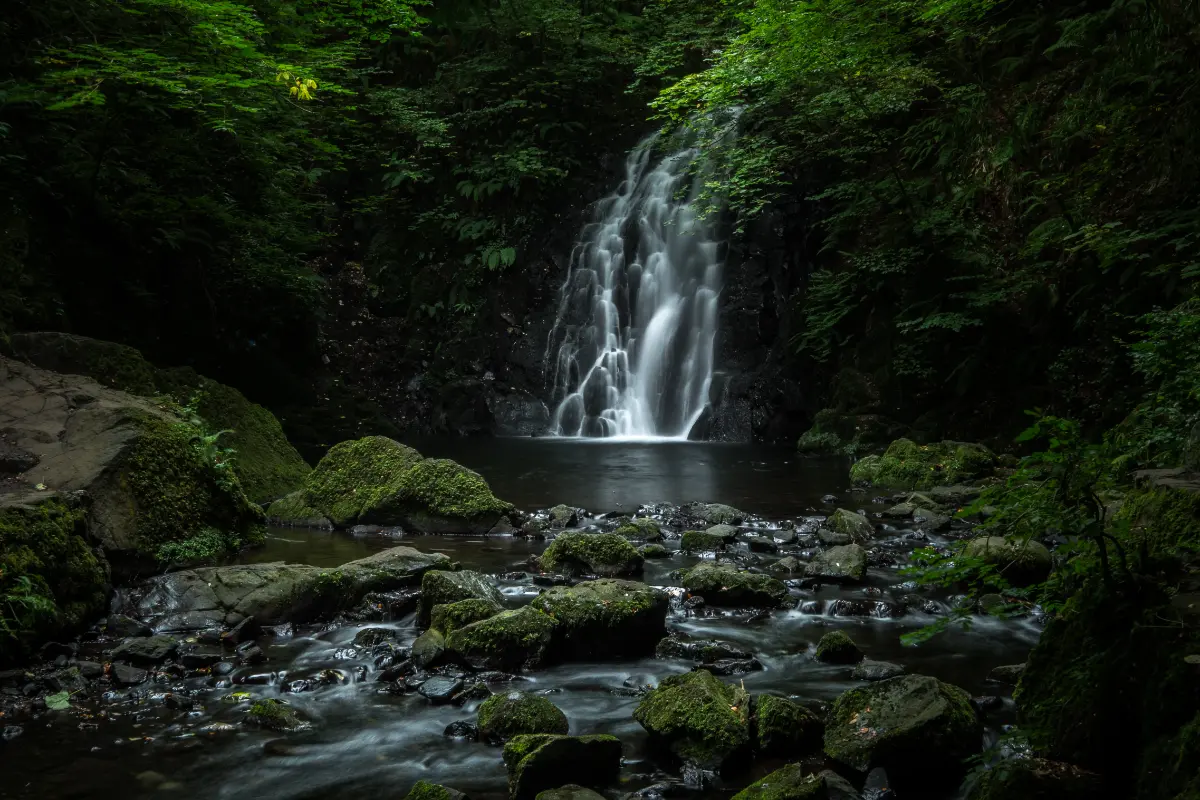


Hidden within the emerald valleys of the Glens of Antrim lies a cascading secret that has captivated visitors for centuries. Glenoe Waterfall, a 30-foot natural wonder, offers more than just a picturesque escape—it represents the perfect blend of Northern Ireland’s industrial heritage and unspoilt natural beauty.
For those seeking authentic experiences beyond the typical tourist trail, this hidden gem near the charming village of Glenoe provides a window into County Antrim’s layered history. From its role in the region’s textile industry to its current status as a protected National Trust site, Glenoe Waterfall tells a story that resonates with anyone interested in how landscapes shape communities and how those stories can be shared with the world.
At ConnollyCove, we’ve explored countless waterfalls across Ireland and beyond, capturing their essence through video, photography, and detailed cultural narratives. Our work with heritage sites and tourism boards has taught us that places like Glenoe aren’t just destinations—they’re stories waiting to be told through compelling digital content.
Table of Contents
Glenoe Waterfall: The Story of the Cascading Waters
Glenoe Waterfall isn’t just a stunning natural wonder in the heart of Northern Ireland’s Glens of Antrim; it’s where nature intertwines with a rich and evocative history. From ancient settlements to turbulent times, the whispers of the past echo through the rushing water and mossy glens, adding another layer of fascination to this enchanting spot.
Understanding the cultural and historical context of a destination transforms a simple visit into a meaningful experience. This is something we’ve learnt through years of creating content for heritage sites across Ireland and the UK—the stories behind the stones matter as much as the visual spectacle.
So, before we get to what you can see and do whilst visiting the waterfalls, let’s dive into its rich history.
Early Echoes in the Glens

Archaeological evidence suggests human activity in the Glenoe area dating back to Neolithic times. Imagine, as you stand beside the waterfall, picturing early settlers dwelling in stone huts beside the gurgling river, their lives dictated by the rhythm of nature. Later, Celtic tribes carved out their mark on the landscape, leaving burial mounds and earthworks that speak of their beliefs and customs.
These layers of history present a fascinating challenge for digital storytellers. How do you capture 5,000 years of human presence in a way that resonates with modern audiences? Through our video production work with cultural heritage sites, we’ve found that blending drone footage of the landscape with close-up details of ancient earthworks helps viewers connect past and present.
Medieval Melodies and Turbulent Tales
Fast forward to the medieval era, and the Glens of Antrim echoed with the chiming of church bells from Glenoe Old Church, still standing proudly near the waterfall. This charming 13th-century structure, with its weathered stones and ornate windows, bears witness to centuries of baptisms, weddings, and prayers whispered amongst the rustling leaves.
But the region wasn’t always peaceful. The turbulence of the 17th century saw Glenoe caught amid religious conflicts, leaving stories of battles and resilience behind. The waterfall itself played a practical role during this period, powering mills that processed flax and cotton—an industrial heritage that shaped the village’s character.
“When we first filmed at Glenoe, we were struck by how the industrial ruins and natural beauty coexist,” notes Ciaran Connolly, Founder of ConnollyCove. “It’s a reminder that the best travel content doesn’t just show pretty pictures—it reveals the human stories that make places meaningful.”
Whispers of Rebellion and the Birth of National Trust Guardianship
The towering ruins of Kilwaughter Castle, just a short distance from the waterfall, are a stark reminder of these turbulent times. Built in the 16th century by the notorious Grey family, the castle witnessed acts of rebellion and intrigue. Imagine the clash of swords and the shouts of defiance echoing through the ancient walls.
The waterfall’s role in the local economy continued through the Industrial Revolution, when water-powered mills transformed Glenoe into a hub of textile production. The remnants of these mills, now picturesque ruins along the walking path, tell a story of innovation and community resilience that modern businesses can learn from.
Thankfully, times of peace eventually returned to Glenoe. In the early 20th century, the National Trust recognised the area’s natural beauty and historical significance, acquiring Glenoe Waterfall and the surrounding glen. This act of preservation ensured that future generations could experience the magic of this place, protecting its ancient whispers and ensuring the cascading waters continue to serenade visitors for years to come.
Visiting Glenoe Waterfall Today
Today, Glenoe Waterfall welcomes visitors to explore its enchanting blend of natural beauty and historical intrigue. The site offers excellent opportunities for photography, nature observation, and quiet reflection—elements that make it popular with content creators, families, and solo travellers alike.
From a practical standpoint, the waterfall is easily accessible from Belfast (approximately 35 minutes by car) or Larne (10 minutes), making it an ideal half-day excursion or part of a broader Antrim Coast exploration.
Getting There and Parking

Address: Glenoe Village, Larne, County Antrim, BT40 3QX
The waterfall is located just off the A2 Coast Road, with a small dedicated car park at the entrance to the walking trail. During peak season (May through September), the car park fills quickly, particularly on sunny weekends. Arriving before 10:00 am or after 4:00 pm typically ensures easier parking.
For those relying on public transport, buses from Belfast and Larne stop in Glenoe village, leaving approximately a 5-10 minute walk to the waterfall entrance. The rural location means services are less frequent, so checking timetables in advance is advisable.
Admission and Facilities
Entry to Glenoe Waterfall is completely free, reflecting the National Trust’s commitment to accessible natural heritage. There are no formal opening hours, though dawn and dusk visits offer particularly atmospheric experiences for photographers.
Basic facilities include:
- Small car park (approximately 10-12 spaces)
- Information board detailing local history
- Well-maintained walking paths
- Viewing platforms overlooking the waterfall
No café or toilet facilities exist on-site, so visitors should plan accordingly. The nearby village of Glenoe offers a small shop and a traditional pub for refreshments.
Best Times to Visit
Each season brings a distinct character to Glenoe Waterfall:
- Spring (March-May): Increased water flow from snowmelt creates a more powerful cascade. Woodland flowers and fresh green foliage frame the falls beautifully—ideal for nature photography.
- Summer (June-August): Lower water levels reveal more of the underlying rock formations. Longer daylight hours allow flexible visiting times, though this is also the busiest season.
- Autumn (September-November): The surrounding woodlands transform into brilliant golds and russets, creating a stunning backdrop. Moderate water flow and fewer crowds make this an excellent time for content creation.
- Winter (December-February): Dramatic conditions with high water flow and occasional ice formations. The waterfall takes on a wild, untamed character, though paths can be slippery—proper footwear is essential.
Glenoe Waterfall: A Gem in the Glens of Antrim
Nestled amidst the verdant embrace of the Glens of Antrim, Northern Ireland, lies a spellbinding gem: Glenoe Waterfall. This 30-foot wonder isn’t just a cascading spectacle; it offers a haven for adventurers, nature lovers, and photographers alike. Glenoe beckons you to lose yourself in its enchanting atmosphere and explore its endless charms.
Immerse Yourself in the Waterfall’s Majesty
Your journey begins with a gentle stroll from the car park, a short path winding through a verdant forest alongside the Glenoe River. Breathe in the crisp air, listen to the symphony of birdsong, and let the anticipation build as you approach Glenoe Waterfall. Sunlight peeks through the canopy, dappling the path with a magical play of light and shadow.
The walk itself is relatively easy, taking approximately 15-20 minutes at a leisurely pace. The path is well-maintained but includes some uneven surfaces and steps, so sturdy footwear is recommended. The trail is suitable for most fitness levels, though it may prove challenging for those with significant mobility issues or pushchairs.
As you emerge from the trees, a spectacular sight awaits. A sturdy viewing bridge stands sentinel, offering breathtaking panoramic views of the cascading Glenoe Waterfall. Feel the mist kiss your face and hear the thunderous roar as the water plunges into a tranquil pool below.
From a content creation perspective, this vantage point offers exceptional photographic opportunities. The viewing platform provides a stable footing for tripods, whilst the surrounding foliage creates natural framing for compositions. We’ve produced numerous promotional videos for tourism boards that feature similar locations, and Glenoe consistently ranks among the most visually compelling sites in Northern Ireland.
Capturing Glenoe’s Beauty
For the adventurous souls, a network of steps and paths snakes down the moss-covered glen walls, inviting you to delve deeper into the Glenoe Waterfall’s majesty. Feel the spray on your skin, listen to the water’s roar up close, and discover hidden nooks perfect for quiet contemplation. Imagine tiny moss-covered rocks as stepping stones, leading you closer to the cascading torrent.
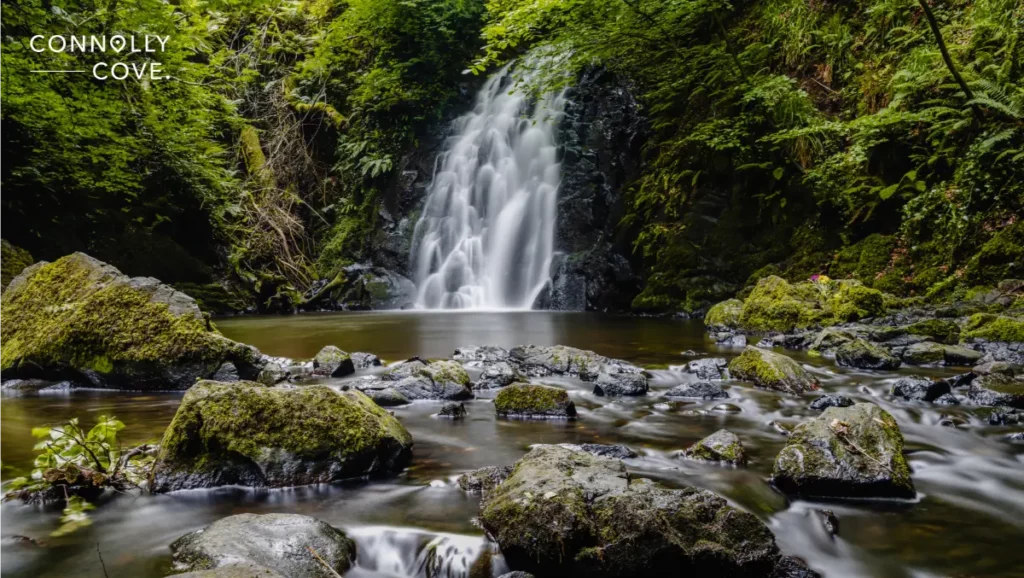
Photography Tips for Glenoe:
- Early Morning Light: Arrives between 7:00 and 9:00 am during the summer months, creating soft, diffused illumination ideal for capturing water movement
- Slow Shutter Speeds: Use 1-4 second exposures to create the classic silky water effect; a neutral density filter helps in bright conditions
- Foreground Interest: Include moss-covered rocks or autumn leaves to add depth and context
- After Rain: The waterfall flows most impressively 24-48 hours following heavy rainfall
- Seasonal Variation: Autumn colours (October) and spring flowers (April-May) provide natural colour contrast
These technical considerations come from our experience creating promotional content for tourism organisations across Ireland and Scotland. Understanding how light interacts with water, foliage, and stone is fundamental to producing compelling visual narratives that inspire travel and promote destinations effectively.
Picnics and Photography Delights
Spread a blanket on the lush grass near the waterfall and savour a delightful picnic surrounded by natural beauty. Towering trees provide dappled shade, and sturdy benches offer a comfortable respite. Imagine the smell of fresh bread and sweet berries mingling with the scent of pine needles and fresh air.
Glenoe Waterfall’s diverse landscapes and captivating cascade are magnets for photographers and videographers. The location offers multiple compositional opportunities within a compact area—from wide establishing shots that capture the full scene to intimate details of water droplets on moss.
Professional content creators will appreciate the site’s accessibility combined with its relatively undiscovered status. Unlike more famous Irish waterfalls that become crowded with tripods during golden hour, Glenoe often provides solitary shooting opportunities even during peak season.
Beyond the Glenoe Waterfall’s Embrace
Away from the cascading water, there are plenty of places for you to visit. Some of our favourites are the parks where you can have a nice, relaxing picnic with your family or friends whilst enjoying the scenery. The parks also offer adventures and activities for more active visitors.
Glenariff Forest Park
The nearby Glenariff Forest Park beckons those seeking extended adventures with its enchanting woodlands, walking trails, and waterfalls. Imagine hidden glens shrouded in mist, ancient trees whispering secrets in the wind, and cascading waterfalls carving through the verdant landscape.
Glenariff, often called the “Queen of the Glens,” offers approximately 15 miles of walking trails ranging from gentle riverside strolls to challenging upland routes. The park’s three waterfalls—Ess-na-Larach, Ess-na-Crub, and the Mare’s Tail—provide varied photographic subjects within a single location.
From a digital marketing perspective, Glenariff represents the type of “anchor content” destination that drives sustained traffic. Creating comprehensive guides to such locations, supported by video walkthroughs and seasonal updates, helps establish authority in regional tourism content.
Carnfunnock Country Park
Pack your swimsuit and head to Carnfunnock Country Park for a splash in the lake, a thrilling zip line ride through the trees, or a leisurely game of mini golf. This family-friendly park entertains all ages. Imagine the exhilaration of soaring through the air on the zip line, the refreshing coolness of the lake against your skin, and the laughter echoing through the park.
Carnfunnock offers a contrasting experience to Glenoe’s quiet natural beauty—it’s an active, amenity-rich destination that appeals to families with young children. The park’s mix of natural and constructed attractions demonstrates how thoughtful development can enhance rather than diminish a location’s appeal.
10 Enchanting Attractions Near Glenoe Waterfall
Glenoe Waterfall may captivate your heart with its cascading majesty, but its magic extends far beyond the pool at its base. The Glens of Antrim, where this hidden gem resides, offer a collection of diverse attractions, ready to weave an unforgettable adventure for every kind of traveller.
The beauty of exploring this region lies in its compact geography—most of these attractions sit within a 30-minute drive of Glenoe, making it possible to experience multiple sites in a single day. Whether you’re drawn to medieval ruins, geological wonders, or family-friendly activities, the area surrounding Glenoe provides a rich tapestry of experiences that showcase Northern Ireland’s cultural and natural heritage.
Here are some of the finest attractions near Glenoe Waterfall that you simply must visit:
Glenoe Old Church
Nestled near the waterfall, this charming 13th-century church is a testament to the region’s rich past. Imagine stepping inside its weathered walls, feeling the weight of centuries within its ancient stones, and picturing the lives of those who worshipped here for generations. The intricate details of the windows and the weathered headstones in the churchyard whisper stories of times gone by.
The church’s architecture reflects the typical Irish medieval style, with its simple rectangular design and eastern window that would have illuminated the altar during morning services. The graveyard surrounding the church contains headstones dating back several centuries, many bearing the names of local families whose descendants still live in the area today. These weathered markers tell stories of births, deaths, and the everyday lives of rural Irish communities through turbulent historical periods.
Walking amongst these graves offers a poignant reminder of the continuity of human life in this glen. The stones record infant deaths, elderly patriarchs, and young men lost in conflicts far from home. For those interested in genealogy or local history, the churchyard provides a tangible connection to the past that complements the natural beauty of the waterfall nearby.
The church remains one of the most photographed heritage sites in the Glens of Antrim, its stone walls providing texture and historical context that enriches any visual narrative about the region. The interplay of light through the ancient windows during golden hour creates particularly striking photographic opportunities, with dust motes dancing in shafts of sunlight that have illuminated this space for over 700 years.
Kilwaughter Castle
Perched on a cliff overlooking the dramatic coastline, the ruins of Kilwaughter Castle speak of an era of turbulence and intrigue. Built in the 16th century by the notorious Grey family, the castle witnessed battles and acts of rebellion. Imagine exploring the crumbling towers and imagining the clash of swords and the shouts of defiance that once echoed through these walls.
The castle’s strategic position wasn’t chosen by accident. From its elevated perch, the Grey family could monitor shipping traffic along the coast and watch for approaching threats from land or sea. The remaining fragments of the structure—partial walls, crumbling staircases, and the outline of what once were substantial defensive positions—hint at the fortress’s original imposing presence.
During the turbulent 17th century, when religious and political conflicts tore through Ireland, Kilwaughter served as a stronghold for various factions. The castle changed hands multiple times, each transfer often accompanied by violence. Local folklore speaks of hidden tunnels connecting the castle to the shoreline below, though no definitive evidence of these passages has been discovered. Such stories, whether factual or embellished, add layers of mystery that make exploring the ruins all the more captivating.
The castle’s elevated position offers panoramic views across the Antrim coast, making it valuable for establishing shots in video production. On clear days, you can see across to Scotland, the same view that medieval lords would have surveyed whilst planning their strategies and alliances. The contrast between medieval architecture and coastal landscape creates a compelling visual juxtaposition, particularly at sunset when the ruins are silhouetted against the fading light.
For visitors interested in medieval history, information boards near the site provide context about the castle’s construction, the families who inhabited it, and its role in regional conflicts. The ruins are freely accessible, though care should be taken when exploring as some areas feature unstable stonework and steep drops.
Whitehead Railway Museum
Take a step back at the Whitehead Railway Museum, where vintage locomotives and carriages tell the story of Northern Ireland’s railway heritage. Imagine exploring the exhibits, peering into the engines, and learning about the journeys they once undertook. You might even have the chance to hop aboard a heritage train for a nostalgic ride through the countryside.
Located in the coastal town of Whitehead, approximately 15 minutes from Glenoe, this museum houses the largest collection of railway vehicles in Ireland. The Railway Preservation Society of Ireland has worked tirelessly to restore and maintain locomotives and carriages dating from the late 19th century through to the diesel era of the 1960s and 1970s.
The collection includes steam locomotives that once hauled passengers and freight across Ireland’s extensive rail network, elegant dining carriages where first-class passengers enjoyed fine meals whilst travelling, and workaday goods wagons that transported everything from livestock to mail. Each vehicle has been meticulously restored, with many returned to working condition for special heritage railway events.
During summer months and bank holidays, the museum operates special heritage train journeys along the scenic coastal route between Whitehead and Belfast. These excursions offer a unique way to experience the Antrim coastline whilst travelling in authentic period carriages pulled by restored steam or diesel locomotives. The rhythmic chug of the engine, the smell of coal smoke, and the distinctive whistle create an atmospheric journey that transports passengers back to the golden age of rail travel.
The museum also features an extensive archive of railway memorabilia, including vintage posters, tickets, uniforms, and photographs documenting Ireland’s railway history. For enthusiasts of industrial heritage or anyone interested in how transport shaped Northern Ireland’s development, the museum provides fascinating insights into an often-overlooked aspect of the region’s past.
Brown’s Bay
If the sound of the waves calls to your soul, head to Brown’s Bay, a picturesque beach just a short distance from Glenoe. Imagine sinking your toes into the golden sand, feeling the refreshing sea breeze on your face, and soaking in the panoramic views of the coastline. This charming beach is perfect for a stroll, building sandcastles with your family, or enjoying a picnic in the sunshine.
Unlike some of Northern Ireland’s more famous beaches, Brown’s Bay maintains a quiet, local character. The beach stretches for approximately half a mile, with a mixture of sand and shingle that changes character depending on the tides. At low tide, rock pools appear along the shoreline, creating natural aquariums teeming with small crabs, sea anemones, and tiny fish—a delight for children and anyone interested in marine life.
The bay enjoys a relatively sheltered position, making it more suitable for swimming than some of the more exposed Antrim beaches. During the summer months, the water temperature rises to comfortable levels, and the gentle slope of the beach makes it accessible for families with young children. Lifeguards are not typically present, so swimmers should exercise appropriate caution and be aware of tide times.
A promenade runs along the back of the beach, popular with walkers, joggers, and cyclists enjoying the sea air and coastal views. Several benches positioned along the promenade provide perfect spots for watching the sunset, when the western sky often explodes in brilliant oranges and pinks reflected on the water’s surface.
The surrounding area includes a small car park, public toilets, and a traditional seaside café serving fish and chips, ice cream, and hot drinks. The combination of natural beauty and basic amenities makes Brown’s Bay an excellent spot to break up a day of sightseeing with some relaxation and perhaps a paddle in the Irish Sea.
For photographers and content creators, Brown’s Bay offers diverse compositions—from wide landscape shots capturing the sweep of the coastline to intimate close-ups of rock pool ecosystems. Early morning visits often reward patient observers with sightings of seabirds feeding along the tideline, whilst evening light creates long shadows and warm tones ideal for atmospheric coastal imagery.
Cushendun Caves
Explore the depths of the earth at Cushendun Caves, a network of natural caverns carved by the sea over millennia. Marvel at the vibrant rock formations, listen to the drip-drip-drip of water and imagine these caves’ secrets.
Located approximately 20 minutes north of Glenoe, these limestone caves represent one of the Antrim coast’s most distinctive geological features. The caves were formed over 400 million years ago during the Devonian period, when layers of limestone, sandstone, and mudstone were deposited in ancient seas. Subsequent tectonic activity tilted and folded these layers, whilst wind and wave action carved out the dramatic openings and chambers visible today.
The main cave system consists of several interconnected chambers, with the largest featuring a high vaulted ceiling that creates excellent natural acoustics. The interplay of light and shadow within the caves changes throughout the day as the sun’s angle shifts, creating ever-changing patterns on the rock walls. The stratified layers of different coloured stone—bands of rust red, grey, and ochre—tell the story of different depositional periods separated by millions of years.
These caves gained international recognition after featuring in popular television productions, demonstrating how strategic content placement can transform relatively unknown locations into must-visit destinations. This phenomenon illustrates the power of visual storytelling and digital marketing in the tourism sector. Following their appearance on screen, visitor numbers increased substantially, leading to improved car parking facilities and information boards explaining the caves’ geological and cultural significance.
Local folklore has long associated the caves with smugglers and hidden treasures, though historical records suggest they more prosaically served as shelter for fishermen caught in sudden storms. The caves’ proximity to the sea meant that during spring tides or severe weather, waves could surge into the lower chambers, filling them with seawater and creating dramatic spray effects.
Visitors should time their visit according to tide tables, as the caves are only safely accessible during low to mid-tide. During high tide, the sea claims the cave entrances, making access impossible and potentially dangerous. The caves are freely accessible and require no special equipment, though sturdy footwear is advisable as the floors can be uneven and slippery. A torch or phone light helps when exploring the deeper recesses where sunlight doesn’t penetrate.
Fair Head
Hike to the dramatic cliffs of Fair Head, where rugged beauty meets panoramic views. Imagine the wind moving through your hair as you gaze across the ocean, spotting puffins nesting on the rocky slopes. This challenging trek rewards breathtaking vistas and a sense of accomplishment.
Fair Head rises 196 metres above sea level, its distinctive columnar basalt cliffs created by the same volcanic activity that formed the famous Giant’s Causeway further along the coast. The geological formations here are equally impressive, though far less visited, offering adventurous hikers and climbers a more solitary experience of Northern Ireland’s volcanic heritage.
The headland marks the closest point on the Irish mainland to Scotland, with the Mull of Kintyre visible on clear days across the narrow North Channel. This proximity made Fair Head strategically important throughout history, serving as a navigational landmark for seafarers and a lookout point during various conflicts. Ancient fortifications on the headland testify to its defensive significance, with the remains of a promontory fort suggesting occupation dating back to the Iron Age.
The walking route to Fair Head starts from the small car park near Coolanlough, following rough tracks across moorland characterised by heather, gorse, and hardy grasses adapted to the exposed conditions. The walk covers approximately 6 kilometres return and takes 2-3 hours, depending on pace and how long you linger at the summit. The terrain is challenging in places, with boggy sections after rain and exposed rocky paths near the cliff edge.
Fair Head represents the type of “epic landscape” content that performs exceptionally well across social media platforms. The dramatic cliff formations and seabird colonies provide both visual impact and ecological interest, appealing to adventure seekers and nature enthusiasts alike. The headland hosts nesting seabirds, including razorbills, guillemots, and, during certain seasons, puffins, whose colourful beaks and comical waddle make them perennial favourites with wildlife photographers.
Rock climbers regard Fair Head as one of the finest climbing locations in Ireland, with numerous routes scaling the columnar basalt faces. Even for non-climbers, watching the tiny figures of climbers ascending the sheer walls provides perspective on the cliffs’ immense scale. The climbing community has maintained the approaches and established clear paths, inadvertently making the headland more accessible for walkers.
The summit offers 360-degree views that encompass the Antrim coast, Rathlin Island, the Scottish coast, and the Glens of Antrim. On exceptionally clear days, you can see as far as the Inner Hebrides and make out individual peaks in the Scottish Highlands. These views, combined with the physical achievement of reaching the summit, create the sense of accomplishment that makes challenging hikes memorable.
Dunluce Castle
Perch on the rugged cliffs and stand in awe of Dunluce Castle, a historic marvel clinging to the sea’s edge. Imagine the whispers of pirates and smugglers echoing through the crumbling towers, and picture the dramatic backdrop of the crashing waves against the ancient stone.
Located approximately 30 minutes west of Glenoe along the scenic Causeway Coastal Route, Dunluce Castle stands as one of Northern Ireland’s most iconic ruins. Its precarious clifftop position creates one of the most photographed scenes along the entire Irish coast, with substantial sections of the castle literally perched on isolated rock stacks connected to the mainland by bridges and causeways.
The castle’s history stretches back to at least the 13th century, though the dramatic ruins visible today largely date from the 16th and early 17th centuries when the MacDonnell clan, Earls of Antrim, held the fortress. During this period, Dunluce served as the seat of power for one of Ireland’s most prominent Gaelic families, who maintained strong connections with Scotland and controlled valuable shipping routes along the north coast.
The castle witnessed numerous sieges and conflicts, changing hands between Gaelic Irish, Scottish, and English forces multiple times. Its strongest defences couldn’t protect against nature, however. In 1639, part of the kitchen collapsed into the sea during a storm, reportedly taking several servants to their deaths. This catastrophic collapse convinced the Earl’s family to abandon Dunluce for safer residences, beginning the castle’s slow decline into romantic ruin.
Today, visitors can explore the substantial remains, including the gatehouse, several towers, the great hall, and what remains of the domestic quarters. Information boards throughout the site explain the castle’s complex history, whilst the visitor centre houses artefacts recovered during archaeological excavations. These include coins, pottery, weapons, and everyday items that provide insights into life within the castle during its occupied centuries.
Dunluce stands as one of Northern Ireland’s most iconic ruins, its dramatic setting exemplifying how natural drama and historical architecture combine to create irresistible content opportunities. The castle appears in countless photographs, paintings, and even inspired fantasy locations in popular media. For content creators, the challenge lies in finding fresh perspectives on such a frequently photographed subject—shooting from the beach below, capturing storm waves crashing against the rocks, or visiting during golden hour when warm light illuminates the stone walls.
The castle charges admission, with tickets available at the visitor centre. Guided tours provide a deeper historical context, bringing the ruins to life with stories of the families who lived here, the battles fought, and the everyday routines that filled the castle with activity. The site is managed by the Department for Communities and maintains excellent facilities, including accessible paths, toilets, and a gift shop.
Carrickfergus Castle
Journey back in time to Carrickfergus Castle, one of the best-preserved Norman castles in Ireland. Imagine knights in shining armour and damsels in distress as you explore the dungeons, towers, and grand halls. This historic site offers guided tours, re-enactments, and interactive exhibits for a truly immersive experience.
Situated approximately 20 minutes south of Glenoe in the historic town of Carrickfergus, this imposing fortress has guarded the entrance to Belfast Lough for over 800 years. Built by John de Courcy in 1177 following the Norman invasion of Ulster, Carrickfergus Castle represents one of the finest examples of medieval military architecture in Ireland, its massive walls and towers remaining substantially intact despite centuries of conflict.
Unlike many Irish castles that fell into picturesque ruin, Carrickfergus remained in military use until 1928, with various additions and modifications made throughout its long operational life. This continuous occupation meant the structure was maintained and adapted rather than abandoned, explaining its remarkable state of preservation. Walking through the castle provides a journey through architectural and military evolution, from the original Norman keep to Tudor additions and later Georgian artillery positions.
The castle played significant roles in numerous historical events. It withstood sieges during the Irish Confederate Wars, was captured by the French commander François Thurot in 1760 (the last hostile action on British Isles soil until World War II), and served as a garrison and armoury through both World Wars. Each period of occupation left its mark on the structure, creating layers of history visible in the changing architectural styles and military adaptations.
Today, the castle operates as a major tourist attraction with excellent interpretive facilities. Life-sized mannequins in period costume populate various rooms, depicting scenes from different eras of the castle’s history. You might encounter medieval soldiers preparing for battle, Tudor courtiers engaged in political intrigue, or Victorian soldiers maintaining their garrison. These displays, combined with audio guides and information panels, help visitors understand how the castle functioned and what daily life meant for its various inhabitants.
The dungeons prove particularly popular with younger visitors, their atmospheric stone chambers and narrow passages evoking classic castle imagery. The great hall, with its high vaulted ceiling and imposing fireplace, provides a sense of medieval grandeur, whilst the climb up the keep’s spiral staircase rewards those who reach the battlements with sweeping views across Belfast Lough and the surrounding countryside.
Throughout the summer, the castle hosts living history events where costumed interpreters demonstrate medieval crafts, weapons, and everyday activities. These events include archery demonstrations, sword fighting displays, and opportunities for visitors to try their hand at period activities. Such interactive experiences prove particularly valuable for families and school groups, transforming historical education into engaging entertainment.
The castle’s strategic waterfront position also means it serves as an excellent location for watching sailing regattas, cruise ships entering Belfast Lough, and dramatic coastal weather rolling in from the Irish Sea. The combination of historical architecture and dynamic maritime views creates photographic opportunities that blend heritage and natural elements.
The Ulster Folk and Transport Museum
Step into a living history book at The Ulster Folk and Transport Museum. Imagine strolling through recreated streets of a bygone era, seeing traditional crafts at work, and marvelling at vintage vehicles from yesteryear. This museum offers a vibrant glimpse into Northern Ireland’s rich past and cultural heritage.
Located in Cultra, approximately 25 minutes south of Glenoe, this expansive open-air museum covers over 170 acres and ranks among the finest folk museums in Europe. Rather than simply displaying artefacts behind glass, the museum has reconstructed entire buildings from across Ulster, creating an immersive experience where visitors can walk through farmhouses, schools, churches, shops, and workshops exactly as they appeared in previous centuries.
The museum is divided into two distinct sections. The Folk Museum occupies the larger outdoor area, where over 50 buildings have been painstakingly dismantled at their original locations and rebuilt on the museum grounds. These structures range from humble cottages and urban terraced houses to substantial farmhouses and public buildings, representing the full spectrum of Ulster society from the 1700s through to the early 1900s.
Walking through the Folk Museum feels like travelling through time and across social classes. You might enter a prosperous merchant’s townhouse with its elegant furnishings and decorative plasterwork, then step into a single-room cabin where an entire family lived, cooked, and slept in cramped conditions. Each building has been furnished with authentic period items, from cooking utensils and furniture to agricultural tools and personal belongings, creating detailed snapshots of daily life across different eras and social strata.
The museum’s approach to interpretation—combining authentic buildings, costumed interpreters, and hands-on demonstrations—represents best practice in heritage tourism. Throughout the museum, interpreters dressed in period costume demonstrate traditional crafts and activities. You might watch a blacksmith forging horseshoes, see a weaver creating linen fabric on a traditional loom, observe a printer operating a Victorian press, or help a farmer tend to rare breed animals on one of the working farms.
These demonstrations aren’t performances but genuinely skilled work producing functional items using traditional techniques. The interpreters, many of whom are experts in their particular crafts, are happy to explain processes, answer questions, and discuss how these activities fit into the broader economic and social patterns of Ulster life. This interactive approach transforms what could be a static display into a dynamic educational experience.
The Transport Museum, housed in modern purpose-built galleries, charts the history of transport in Ireland from horse-drawn carts to modern vehicles. The collection includes over 200 vehicles spanning railways, road transport, cycling, and even the ill-fated DeLorean motor car, manufactured in Belfast and now best known for its starring role in popular cinema.
Highlights include the largest collection of Irish railway locomotives and rolling stock outside of working railways, vintage cars and motorcycles showing the evolution of personal transport, commercial vehicles including lorries and buses, and an extensive collection of bicycles chronicling Ireland’s long relationship with cycling. Interactive displays explain the engineering principles behind different vehicles and explore how transport developments shaped Irish society and economy.
The museum also features the Titanic exhibition, documenting Belfast’s proud shipbuilding heritage and the construction of the famous liner at Harland & Wolff. This collection includes original artefacts, photographs, and documents relating to the ship’s construction and the city’s maritime industries.
For families, the museum provides an excellent full-day excursion. Children can participate in hands-on activities, interact with period-costumed interpreters, meet farm animals, and explore playgrounds designed to reflect different historical periods. The combination of outdoor exploration and indoor galleries means there’s shelter during poor weather, whilst outdoor spaces can be enjoyed when the sun shines.
The museum operates a programme of special events throughout the year, including traditional music sessions, agricultural shows, harvest celebrations, and seasonal festivals that bring particular aspects of Ulster heritage to life. These events often attract large crowds and provide opportunities to experience traditional activities in their proper social context.
Waterworld
If you crave watery adventures, Waterworld in Ballymena is the perfect destination. Imagine conquering thrilling waterslides, relaxing in wave pools, and enjoying all sorts of aquatic fun. This water park offers something for everyone, from toddlers to teens and adults, promising a day of laughter and splashes.
Located in the market town of Ballymena, approximately 25 minutes west of Glenoe, Waterworld provides a modern leisure facility that contrasts with the region’s historical and natural attractions. For families travelling with children, particularly during inclement weather or when younger visitors need a break from heritage sites, this aquatic centre offers energetic entertainment in a controlled indoor environment.
The facility features multiple pools catering to different ages and confidence levels. The main swimming pool accommodates lane swimming and general recreation, whilst a dedicated teaching pool with shallower depths serves learners and younger children. The temperature-controlled environment means comfortable swimming year-round, regardless of Northern Ireland’s changeable weather.
The water park section includes various flume slides offering different experiences—from gentle, winding descents suitable for younger children to faster, more thrilling slides that attract older visitors seeking adrenaline rushes. The wave pool generates regular waves that simulate sea conditions, allowing children to experience the excitement of ocean swimming in a safe, supervised setting. During designated sessions, inflatable obstacles are deployed in the pools, creating aquatic assault courses that prove popular with teenagers and competitive families.
For very young children, a dedicated splash area features scaled-down slides, water jets, tipping buckets, and interactive water play equipment designed for toddlers and pre-schoolers. Parents can supervise from adjacent seating or paddle in the shallow water whilst their children explore this safe introduction to aquatic play.
The facility also includes a health suite with sauna, steam room, and spa pool, allowing adults to relax whilst children are occupied in the main pools. Qualified lifeguards supervise all areas, and the centre maintains high standards of water quality and safety, with clear rules and age restrictions for different attractions clearly posted and enforced.
Waterworld offers various admission options, including single visits, family tickets, and membership schemes for regular visitors. The centre includes changing facilities with family rooms, lockers, and a café serving hot and cold refreshments. During school holidays and weekends, the facility can become busy, so booking in advance or visiting during off-peak times might provide a more relaxed experience.
This list merely scratches the surface of the countless attractions waiting to be discovered near Glenoe Waterfall. Whether you seek historical tales, adventurous thrills, or peaceful communion with nature, the Glens of Antrim have something for every kind of explorer. The compact geography of this region means you can easily visit multiple sites in a single day, creating diverse itineraries that combine natural beauty, historical discovery, and modern entertainment to suit any group’s interests and energy levels.
Creating Content at Glenoe: A Digital Storytelling Perspective
Northern Ireland’s landscapes offer rich opportunities for content creators, tourism boards, and cultural organisations seeking to share their stories with broader audiences. Glenoe Waterfall exemplifies the type of location that benefits from thoughtful digital presentation—accessible yet atmospheric, historically significant yet naturally beautiful.
Why Locations Like Glenoe Matter for Digital Marketing
In our work with tourism organisations and heritage sites across Ireland, we’ve found that mid-tier attractions, such as Glenoe Waterfall, often outperform famous landmarks in terms of content engagement. Why? Because they offer:
- Authenticity: Visitors seeking genuine experiences rather than overcrowded tourist hotspots respond enthusiastically to content about hidden gems.
- Narrative Depth: The combination of natural beauty and industrial heritage provides multiple storytelling angles—environmental, historical, cultural, and personal.
- Visual Variety: Within a compact area, Glenoe offers woodland paths, cascading water, historical ruins, and pastoral village scenes—all elements that create diverse visual content from a single location.
- Accessibility: The short walk and free admission lower barriers to entry, meaning audiences can actually visit locations featured in content rather than simply admiring them from afar.
Video Production Considerations
When filming at locations like Glenoe, several factors influence the final content quality:
- Sound Design: The waterfall’s natural soundscape provides excellent ambient audio for establishing scenes or contemplative moments in longer-form content.
- Seasonal Variation: Returning to the same location across different seasons creates opportunities for comparison content, time-lapse sequences, and seasonal guides that maintain freshness.
- Drone Perspectives: The glen’s topography works beautifully with aerial footage, revealing the relationship between the waterfall, the surrounding forest, and the nearby village in ways ground-level footage cannot achieve.
- Human Element: Including visitors or presenters within shots provides scale and relatability, transforming landscape footage into a travel narrative.
These considerations come from our experience producing promotional videos for tourism boards, heritage sites, and cultural organisations throughout Ireland and the UK. Understanding how to capture a location’s essence whilst maintaining production quality separates adequate content from compelling visual storytelling.
Frequently Asked Questions
Is Glenoe Waterfall easy to reach?
Yes, Glenoe Waterfall is easily accessible from the small car park near Glenoe village. The walk from the car park to the waterfall takes approximately 15-20 minutes along a well-maintained path, though it does include some steps and uneven surfaces. The route is suitable for most fitness levels but may prove challenging for wheelchairs or pushchairs.
Can I reach Glenoe Waterfall by public transport?
Public transport options exist but are limited. Buses from Belfast and Larne stop in Glenoe village, leaving a 5-10 minute walk to the waterfall entrance. Services are infrequent, particularly at weekends, so checking timetables in advance is essential. For flexibility in exploring the wider Antrim Coast, hiring a car is advisable.
Are there any facilities near the waterfall?
Facilities at the waterfall site itself are minimal—just the car park and information board. No toilets, cafés, or visitor centres exist on-site. The nearby village of Glenoe offers a small shop and pub. For more comprehensive facilities, the town of Larne (10 minutes’ drive) provides restaurants, cafés, toilets, and petrol stations.
When is the best time to see Glenoe Waterfall?
The waterfall impresses year-round, although each season offers a different experience. Spring brings increased water flow and fresh greenery. Summer offers the most comfortable weather and longest daylight hours, though it’s also the busiest. Autumn provides stunning foliage colours with moderate crowds. Winter showcases the waterfall at its most dramatic with high flow rates, though paths can be slippery. For photography, early morning light (7:00-9:00 am) generally produces the most appealing results.
Is Glenoe Waterfall free to visit?
Yes, entry to Glenoe Waterfall and the surrounding area is entirely free. There are no admission charges, and the site has no formal opening or closing times. This makes it an excellent budget-friendly option for families and groups exploring County Antrim.
How long should I allow for a visit to Glenoe Waterfall?
Most visitors spend 45 minutes to 1.5 hours at Glenoe Waterfall. This allows time for the walk in, viewing the falls from various angles, taking photographs, and returning to the car park. Photography enthusiasts or those wishing to explore the surrounding glen more thoroughly might extend this to 2-3 hours.
Is Glenoe Waterfall suitable for children?
Yes, Glenoe Waterfall suits families with children. The walk is short enough for most ages, and children typically enjoy the adventure of the woodland path and the excitement of seeing the cascading water. Parental supervision is essential near the water’s edge and on steps, as no barriers protect the steep drops. Sturdy footwear for children is advisable, as the path includes uneven surfaces.
Are dogs allowed at Glenoe Waterfall?
Dogs are welcome at Glenoe Waterfall, though they must be kept under close control and on leads, particularly near the waterfall, where paths can be slippery. Please clean up after your pets and be considerate of other visitors. The woodland paths offer pleasant walking for dog owners, making this a popular local spot for dog walking.
Discovering Northern Ireland’s Waterfall Heritage
Glenoe Waterfall stands as one of Northern Ireland’s accessible natural treasures—a place where the drama of cascading water meets the quiet dignity of historical ruins. Whether you’re a photographer seeking that perfect shot, a family looking for an afternoon adventure, or a cultural enthusiast interested in the region’s industrial heritage, Glenoe offers experiences that resonate long after your visit.
The waterfall’s story mirrors broader themes in Northern Ireland’s tourism landscape: the transformation from industrial hub to heritage site, the protection of natural beauty through organisations like the National Trust, and the ongoing appeal of authentic, accessible destinations that don’t require extensive planning or significant expense.
For those interested in how places like Glenoe can be effectively promoted through digital channels, the site exemplifies the balance between preservation and accessibility that modern heritage tourism requires. Creating content that respects a location’s significance whilst inspiring visits demands technical skill, cultural sensitivity, and an understanding of how digital narratives drive real-world tourism.
At ConnollyCove, we’ve dedicated years to exploring, documenting, and sharing Ireland’s cultural and natural heritage. From ancient mythology to modern travel logistics, our approach combines on-the-ground experience with digital expertise to create content that informs, inspires, and ultimately brings people closer to the places and stories that matter.
Whether you’re planning your own visit to Glenoe or considering how to tell your destination’s story more effectively, remember that authentic experiences and thoughtful presentation create lasting impressions. The waterfall has been flowing for millennia—it’s how we share its story today that determines who will discover its magic tomorrow.
Ready to explore more of Northern Ireland’s hidden natural wonders? Discover our guides to the Glens of Antrim, County Antrim’s coastal route, and other waterfalls across Ireland and beyond.