


Gargano: The Eastern Arabian Tradition Making Children Happy During Ramadan

Updated On: November 09, 2023 by  Aya Radwan
Muslims observe the holy month of Ramadan every year, the ninth month in the Arabic Calendar, which is a lunar calendar. Ramadan also referred to as Ramazan, is distinguished by fasting from dawn till dusk, praying Taraweh and a focus on the importance of purifying our hearts. On the night of mid-Ramadan, children in the Arabian Gulf countries don the traditional costume of their home country and wear an especially-tailored fabric satchel around their neck before getting together, knocking on one door after another in their neighbourhood while singing the Gargano song.
Gargano is a rather unusual celebration in Ramadan and carries a lot of controversy along with it. In this article, we’re going to introduce you to this event, how it started, how it is celebrated and why some debate it’s the Arabic Halloween while others negate that fact.
What is Gargano? What does the name mean?
Gargano, also locally referred to as Gerga’oon or Gargee’an, is an Eastern Arabian traditional celebration. This celebration falls in the middle of Ramadan to celebrate the children who have been resilient and pursued good deeds during the first half of the month. It is also an encouragement from the local community to incentivise them to keep up their hard work for the rest of the month. By going from door to door, chanting local songs, neighbours give children sweets and nuts as a reward for their hard work.
There are several theories regarding the name Gargano. Some say it comes from the Arabic word “Qurat Al-Ain” which literally translates to the “Apple of the eye”, but it has a figurative meaning of “blessing to the eye”. This team refers to the birth of Al-Hassan, Prophet Mohamed’s grandson, who was born on the night of mid-Ramadan. The other team suggests that Gargano referred to the sound of sweets made in the bags or pots children carried along as they sang and went from door to door; the banging sound is known as “Qarqa’a”, which transformed into the current name over the years.
It’s vital to emphasise that this event is a traditional celebration and not a religious one, which explains why residents in specific countries only celebrate it and not all Muslim communities worldwide.
How did Gargano start?
Historian Ali Al-Darora denoted that Gargano appeared in Medina, between the folds of the new state. The historical tradition had the goal of encouraging children to social communication and unity with society, which is one of Islam’s vital teachings. On the other hand, Gargano also allowed the society to give back to the children, where the traditional sweets acted as an appreciation for reaching out, good behaviour and good deeds. Although the Prophet’s companions travelled all across the Middle East, the particular tradition of Gargano settled mainly in the Gulf countries but not in other countries, such as Cairo or Morocco.
There have been a few changes in Gargano celebrations throughout history. The little bags children carried to receive sweets from the neighbours were mainly handmade at home. Now, children sometimes opt for making their own satchels to make them more personalised, while designer brands have begun to take notice and started making Gargano satchels. Additionally, local NGOs attempted to partake in the celebrations to join in on the fun with the community’s children and maximise their happiness. To this end, these NGOs began organising larger scale celebrations, on a communal scale though, which also helped emphasise the values of Ramadan.
Is Gargano the Arabic Halloween?
When learning about Gargano, you might start to think you’re learning about Halloween. Admittedly, there are multiple similarities between the two celebrations. However, they are also significantly different. To answer out question though, No, Gargano is not the Arabic Halloween. We’re not even sure there’s an Arabic celebration that’s equivalent to Halloween. So, let’s discover the similarities and differences between Gargano and Halloween.

Similarities between Gargano and Halloween
Similarities between the two celebrations are easily spotted. We can summarise them as follows:
- Children wear costumes.
- They carry little bags to put their candy in.
- Children go from door to door knocking and singing, asking for sweets and nuts.
- Both celebrations have become communal celebrations.
Differences between Gargano and Halloween
Despite their apparent similarities, there are multiple differences between Gargano and Halloween, such as:
- For Gargano, children wear their country’s traditional attire, while for Halloween, children wear expressive costumes, such as superheroes, cartoon characters or even creatures from nature.
- Gargano is a traditional celebration and aims at strengthening the bond between the children and their society, and not a religious celebration. Halloween, on the other hand, originally started as a religious celebration derived from the pagan festival of Samhain. Even though Halloween isn’t a religious celebration today, it falls on the same day the Celts celebrated Samhain, which is a tribute to the old event.
- Gargano doesn’t have the same horror element that Halloween has. Halloween’s origins show us the scary beginning of horror costumes, trick or treat and how it was all about scaring one’s neighbours if they refused to give out candy.
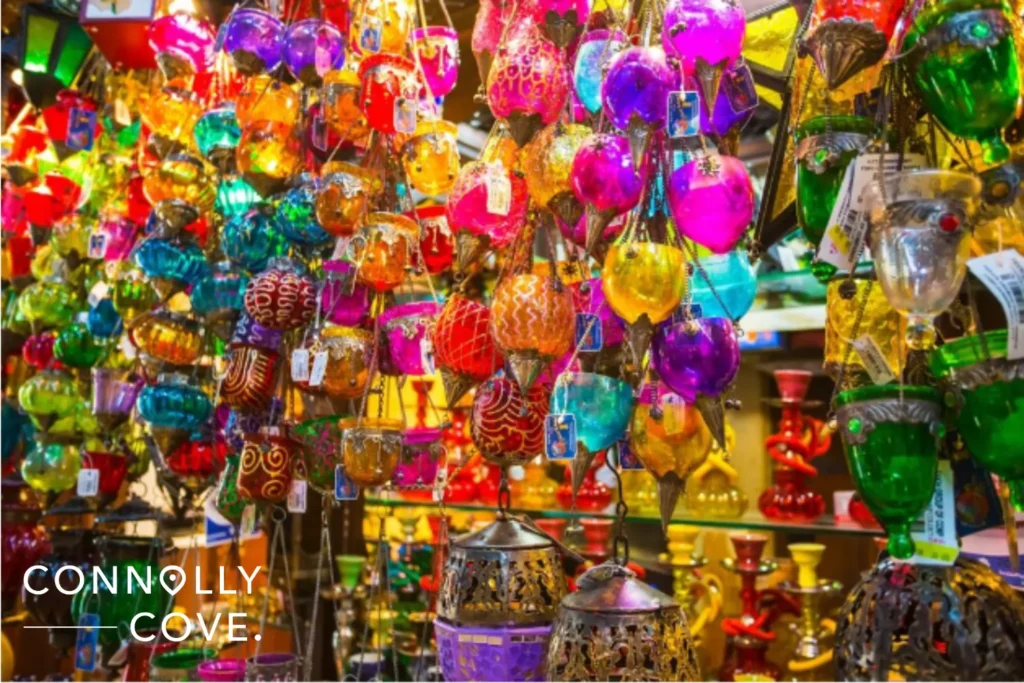
- Gargano decorations are mainly related to Ramadan, which include lamps, balloons and string lights. Halloween decorations include carved pumpkins, otherwise known as Jack O’Lantern, fake bats and ghosts.
- In Gargano, children chant local songs that include well-wishing for the people they knock on their door. For Halloween, we all know the famous three words by heart “Trick or Treat”.
- Even though almost all the Arabian Gulf countries celebrate Gargano, there are still differences between each country’s celebration, mainly in the songs children chant as they knock on doors. Halloween celebrations are almost all the same worldwide.
- While Halloween has become a universal celebration due to the fun and joy children have during its festivities, Gargano is a rather regional celebration, particularly in the Gulf countries.
How to celebrate Gargano?
We’ve learned about Gargano from celebratory videos of children in Kuwait and Qatar wearing traditional attire and singing the Gargano song. Despite having the same origin, every Gargano is different from one Gulf country to another. One important similarity between all these Gargano celebrations is the children’s singing includes prayer for the house’s youngest child. This prayer derives from the birth of Al-Hassan, since back then, he was the youngest member of Prophet Mohamed’s family.
Let’s see how each country celebrates Gargano, and we’ll share a couple of verses from each country’s Gargano song.
Saudi Arabia
Gargano is a settled tradition in the Eastern region of Saudi Arabia. In the old days, boys and girls wore traditional Saudi attire, where boys wore traditional Jilbab with the Saudi vest on top, while girls wore Al-Der’at, their traditional dress with sequin-decorated hair accessories. There’s a new theory in Saudi Arabia relating to the origin of the name Gargano or Gargee’an that it comes from the Arabic word, Al-Qar’a, which means knocking on doors, and over the years, the word ended up as Gargee’an.
Gargano changed significantly from its traditional form, and this change created some controversy in the country. Some argue that the old simplicity of Gargano has vanished, while others rejoice the new generations are adding their own twist to the years’ old tradition. Before, children donned their traditional attire, knocked on the neighbours’ doors and filled their bags with sweets. Today, merchants and supermarkets compete in making ready packages of sweets, especially for Gargano, and local halls also compete is organising lavish celebrations for the occasion. Even the giving of sweets changed, where families now order handmade satchels with the recipients’ names embroidered on them, and some even include a golden pound in the satchel.
“Garga Gargee’an
Give us, may God give you
And may you visit Mecca
Mecca, the whole house”
Bahrain
In Bahrain, Gargano, locally referred to as Gargaoun, celebrations begin on the 13th of Ramadan and continue for three days, ending on the 15th. In the past, Bahrainis used to celebrate Gargano twice, once in the middle of Sha’baan and once in the middle of Ramadan. Today, they only celebrate it once in Ramadan, along with its fellow Gulf countries.
For Gargano, girls wear the traditional Bahraini Bashnal, the brightly coloured dress with golden embroidery, while boys wear the traditional Jilbab, with golden embroidery on the collar and sometimes with a black vest on top, also with a bit of golden embroidery. Bahrain kept up with its neighbours when it came to celebrating Gargano. Several local brands started making assembled packs of sweets and nuts to give to the children, and local municipalities began to organise larger-scale celebrations.
“Gargaoun has come again
Oh, fasting during Ramadan
God, protect their child
God, save him for his mother”
Qatar
Qataris know Gargano as Garnagao, and they also celebrate it beginning by the 13th of Ramadan up to the 15th. Garnagao’s history in Qatar is one of the most documented. Although Qataris also celebrate Gargano in Sha’baan, celebrations in Ramadan are more abundant and bigger. In the old days, children would rub pebbles together as they went from home to home; this sound was called Qarqa’a, which some allege is the origin of the name Gargano.
Back then, candy wasn’t as varied as it is now, so the majority of the sweets that children got included nuts and dried fruit. Qataris used to celebrate in the afternoon to keep the children safe from roaming the streets at night. Children would split into two groups; one carried the pebbles and the sweets’ satchel, and another carried drums. However, Gargano satchels are available at local shops; children like to design their own satchels and artistically challenge each other. While boys wear the traditional white Jilbab, the vest and a silver-embroidered Qahfiya; the traditional men’s head cover, the girls wear the Al-Zerry dress; a colourful golden-embroidered dress and Al-Bakhnaq, the traditional women’s head cover.
“Garnagao gargao
Give us, may God give you
May you visit Mecca
Where you’ll meet with your loved ones”
Oman
In Oman, Gargano is known as Garangashoh, and despite the celebration’s ancient Arabic roots, some like to claim it’s an Arabian version of Halloween. Omanis anticipate Gargano to participate in this social and communal activity, used since its beginning to strengthen the bonds of society and teach children the importance of cooperation and teamwork as they each have a role as they go around the neighbourhood.
In the old days, children split into groups and assigned a leader who received the sweets and presents from homes while the rest sang and prayed for the givers. After their journey was done, each group split the gifts equally, and everyone went home happy. Today, gifts changed from simple sweets and nuts to money and sometimes expensive gifts to accommodate the change in time and children’s desire to receive particular presents. After Taraweh’s prayers, a larger assembly takes place where everyone wears their traditional attire again and takes a memorable group photo.
“Garangashoh garangashoh
Give us some sweets
Garangasho people of the house
Give us some nuts and sweets”
UAE
Gargano is rather different in the UAE than in other neighbouring countries. Emiratis celebrate Gargano, locally known as Haq Al-Leila, twice. The first is from the 13th to the 15th of Sha’baan, which is the eighth month of the Arabian calendar, and the second is from the 13th to the 15th of Ramadan. Haq Al-Leila literally translates to “Right of the night” in reference to the sweets children expect to receive. It’s also true in the UAE; they celebrate a month earlier than their neighbours. This particular date marks the end of voluntary fasting in Sha’baan and is seen as an opportunity to teach children about Ramadan as they learn together when to observe the holy month.
In the old days, on Haq Al-Leila, boys would wear the traditional Kandoora, while girls wore special colourful dresses. They each received their fabric satchel, historically called Al-Khareeta, hung it around their neck, gathered with the neighbourhood’s children and went door to door to knock and begin singing. Today, the fabric satchel became an accessory that decorates the costume. Children don’t go around the neighbourhood anymore; rather, each family holds a celebration at the grandparents’ house, where they give each child a bag of sweets and nuts. The candy bags are premade for each child and not random as they used to be.
“Give us God’s right
Give us, May God give you
Give us God’s right
May God bestow his blessings upon you”
Attempting to bring you all we know about the different celebratory events of Gargano has been an exciting time for us. We hope you enjoyed this deep dive into Eastern Arabian culture and hopefully get to once attend Gargano celebrations one day.
Dracula Tourism: Must-see Locations
Destinations
12/05/2024

Does it Snow in Ireland? Exploring Winter Weather Patterns in the Emerald Isle!
Ireland
12/05/2024

Everything You Need To Know About the Eiffel Tower
France
12/05/2024

8 Must-Do Outdoor Activities in Ireland
Ireland
12/05/2024

Exploring the Legacy of the Wolfe Tones: A Journey Through The Irish Rebel Music!
Music and Arts
12/05/2024