

Top Locations For Dolphin and Whale Watching in Ireland
Updated On: April 20, 2024 by  Eman Sameh
Ireland is renowned for its emerald landscapes and vibrant marine ecosystem, which is prosperous with majestic cetaceans. If you are an animal lover seeking an exceptional experience with dolphin and whale watching in Ireland, then this article is for you.
This island nation, cradled by the Atlantic Ocean, provides diverse habitats for various cetacean species. From the playful bottlenose dolphins frolicking in coastal bays to the awe-inspiring humpback whales migrating past rugged cliffs, Ireland’s waters offer a chance to witness these remarkable creatures in their natural splendour.
The Best Time To Witness Whales and Dolphins in Ireland
The dance of marine life around Ireland’s shores follows a seasonal rhythm, impacting when you’re most likely to encounter different whale species and dolphins in Ireland. Understanding these rhythms is critical to planning your adventure.
Dolphins
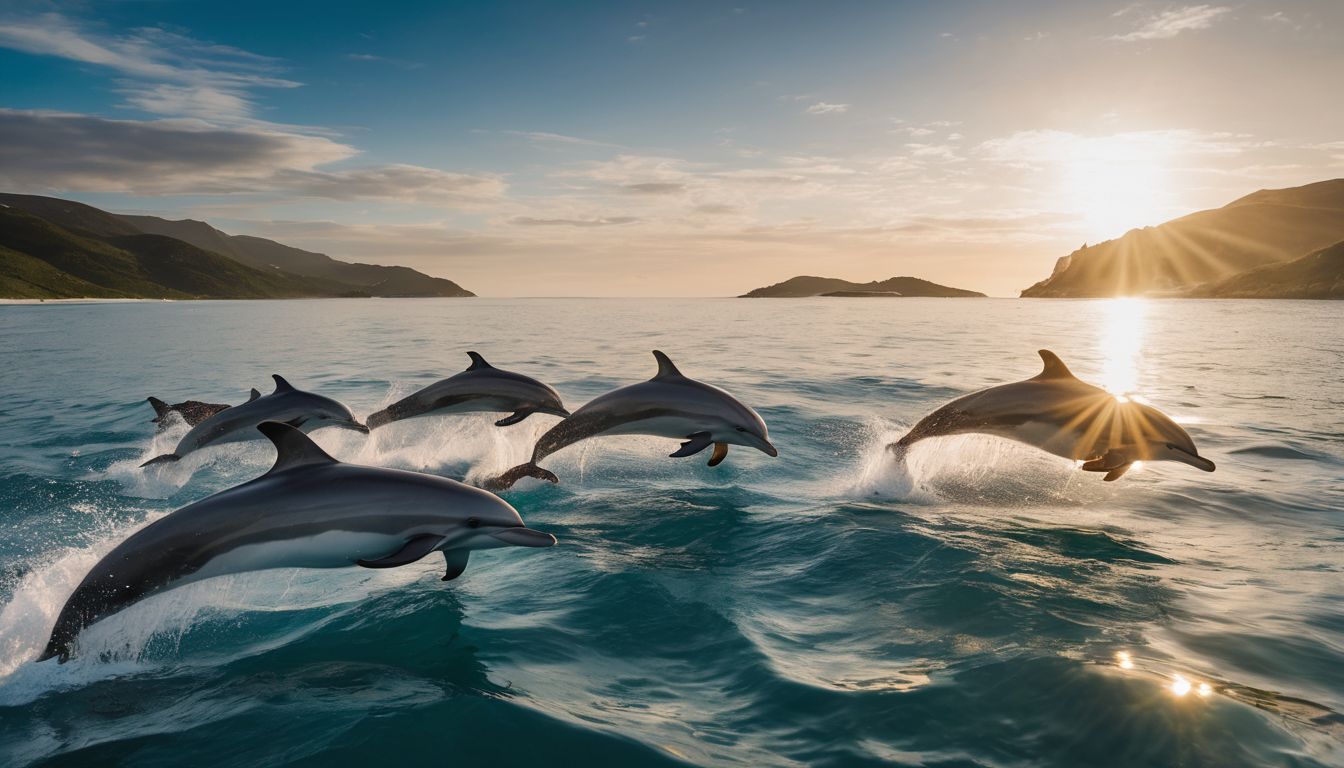
- Bottlenose Dolphins: These year-round residents are most active in spring and summer (March-September), when warmer waters and abundant fish draw them closer to shore.
- Common Dolphins: These playful pods frequent Irish waters year-round, but peak sightings occur in summer (June-August) in the west and southwest.
- Harbour Porpoises: Primarily spotted in spring and summer (April-September), especially in sheltered bays and inlets along the west and south coasts.
Whales
- Humpback Whales: Their impressive migrations paint the summer skies. Witness their acrobatic displays from May to October, with peak season in July and August, particularly along the west and south coasts.
- Minke Whales: These year-round inhabitants favour cooler waters, making spring and summer (April-September) ideal for sightings, especially in the west and northwest.
- Fin Whales: Summer giants, they grace Irish waters from June to September, with peak activity in July and August, often spotted off the west and southwest coasts.
Weather & Sea Conditions
Calm seas and clear skies enhance your chances of spotting dolphins in Ireland. Opt for tours during settled weather, typically spring and summer. However, remember that even experienced operators cannot guarantee sightings of these wild animals.
Remember: Dress in layers and bring waterproof gear. Choose responsible tour operators committed to ethical practices and minimising disturbance to these magnificent creatures.
Prime Locations for Dolphin and Whale Watching in Ireland
Ireland’s diverse coastline offers unique hotspots for encountering different cetacean species. Choosing the right location to spot whales and dolphins in Ireland is based on the season, and your target species is crucial for maximising your chances of a successful trip. Here, we delve into some key hotspots across the island:
Dolphin Domain
- Donegal Bay, Co. Donegal: A top spot for dolphins in Ireland, especially during summer. Boat tours from villages like Killybegs and Downings offer opportunities to observe bottlenose dolphins, common dolphins, and harbour porpoises.
- Galway Bay, Co. Galway: Combining stunning views of dolphins and other marine life with a vibrant foodie scene, Galway Bay entices nature lovers and epicureans alike. Boat tours departing from Galway City or Salthill allow for sightings of bottlenose dolphins, common dolphins, and harbour porpoises.
- Cork Harbour, Co. Cork: Witness resident and migratory dolphins in Ireland up close while enjoying the scenic beauty of Cork Harbour. Boat tours operating from Cork City or Cobh offer encounters with bottlenose dolphins, common dolphins, and harbour porpoises.
- Dingle, Co. Kerry: Renowned for its resident coastal dolphins, Dingle is perfect for those seeking an immersive experience. Boat trips from Dingle Harbour provide chances to see bottlenose dolphins and harbour porpoises while exploring the stunning scenery.
- Kilrush, Co. Clare: Beautiful waters and stunning views set the stage for fantastic dolphin spotting experiences in Kilrush. Boat tours departing from the town offer sightings of bottlenose dolphins, common dolphins, and harbour porpoises, especially during summer.
Whale Watching
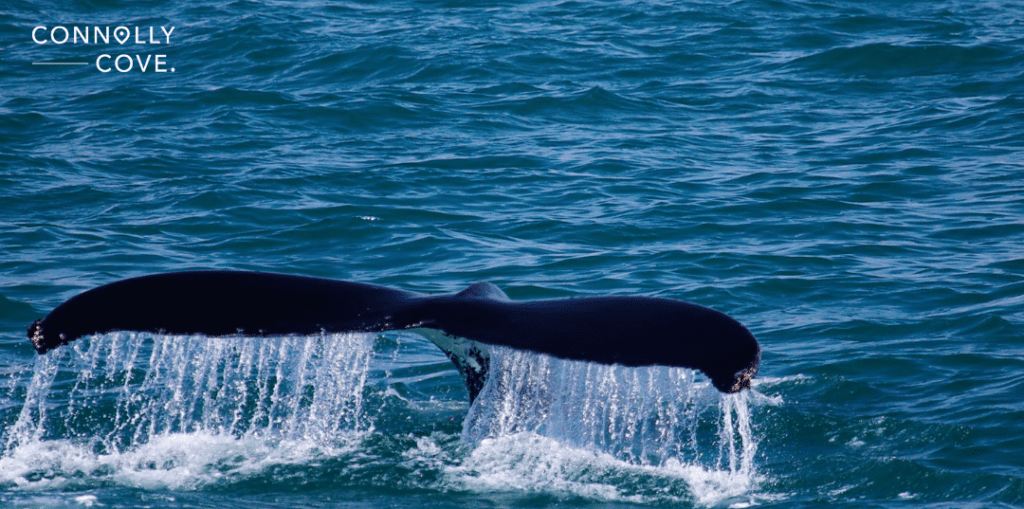
Beyond dolphins, Ireland offers opportunities to witness majestic whales. Remember, the best timing and locations vary depending on the species you seek. Consider these prime areas:
- West Cork: As mentioned previously, this rugged coastline is a haven for fin whales, minke whales, and humpback whales, with peak activity in summer.
- The North Coast: Head here for a chance to encounter elusive orcas and minkewhales, particularly in spring and summer.
Choosing Wisely
Remember, selecting the right location is key. Consider the season, your desired species, and your preferred coastal region. Research tours with responsible operators who prioritise ethical practices and minimise animal disturbance. With careful planning and a dose of respect for these magnificent creatures, your Irish dolphin and whale-watching adventure promises to be an unforgettable experience.
Dolphin and Whale Watching Tours in Ireland
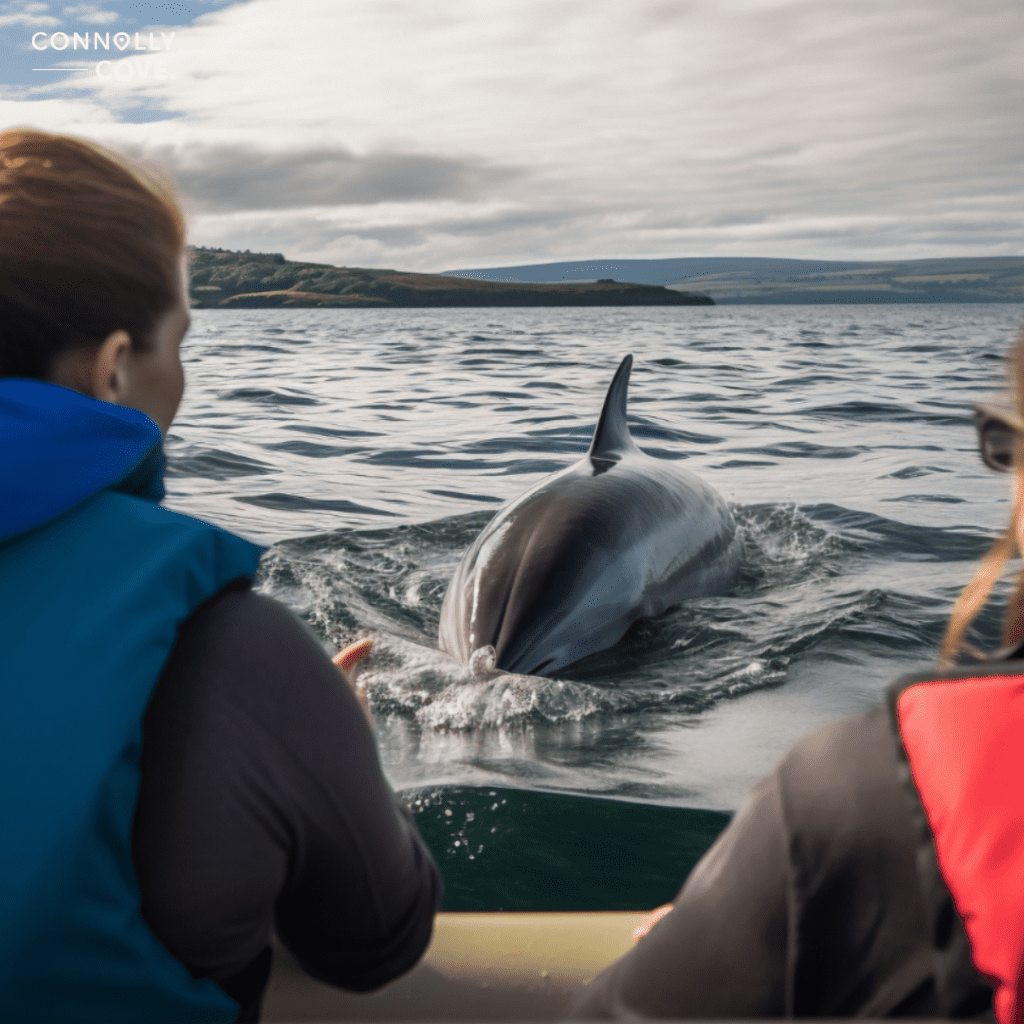
Now that you’ve explored Ireland’s hotspots let’s delve into the exciting world of tours!
Tour Options
- Boat Tours: The most popular option, offering comfortable seating, knowledgeable guides, and expansive ocean views. Choose from smaller RIBs for a thrilling ride or larger vessels for more amenities.
- Kayaking: Consider guided kayaking tours for a closer encounter with the coast and a unique perspective. Suitable for experienced paddlers and available in areas like Dingle and West Cork.
- Coastal Watches: Like cliffs or headlands, land-based watch points offer a budget-friendly alternative. Pack binoculars and patience, as sightings may be less frequent but equally rewarding.
Choosing Responsibly
- Look for accreditations: Choose operators with certifications like IWDG (Irish Whale and Dolphin Group) or Blue Flag, ensuring responsible practices and animal welfare.
- Research operator practices: Opt for tours that limit group size, maintain safe distances from animals, and avoid using intrusive techniques.
- Consider the boat’s impact: Choose operators with fuel-efficient vessels and responsible waste disposal practices.
What to Expect
- Safety briefing: Expect instructions on safety procedures, life jacket use, and responsible behaviour around wildlife.
- Scenic voyage: Enjoy the journey as much as the destination. Keep an eye out for other marine life, like seabirds and seals.
- Species spotting: Experienced guides will scan for cetaceans and identify them once spotted. Patience is key, as sightings are not guaranteed.
- Respectful observation: Observe the animals from a safe distance, avoiding loud noises or sudden movements. Remember, this is their home, and we are guests.
- Educational experience: Guides will share insights into these amazing creatures’ biology, behaviour, and conservation needs.
Additional Tips
- Dress in layers for changing weather conditions, and bring waterproof gear and sunscreen.
- Pack seasickness medication if prone to nausea, especially on boat tours.
- Consider bringing binoculars for a closer look.
- Support local businesses and choose eco-friendly souvenirs to minimise your environmental impact.
Other Notable Locations for Spotting Dolphins in Ireland
There are several other notable locations in Ireland where you can spot dolphins. Along the Northern Ireland coast, places like the Causeway Coast, Donaghadee Harbour, Portstewart, Cranfield, and Malin Head offer great opportunities for dolphin sightings.
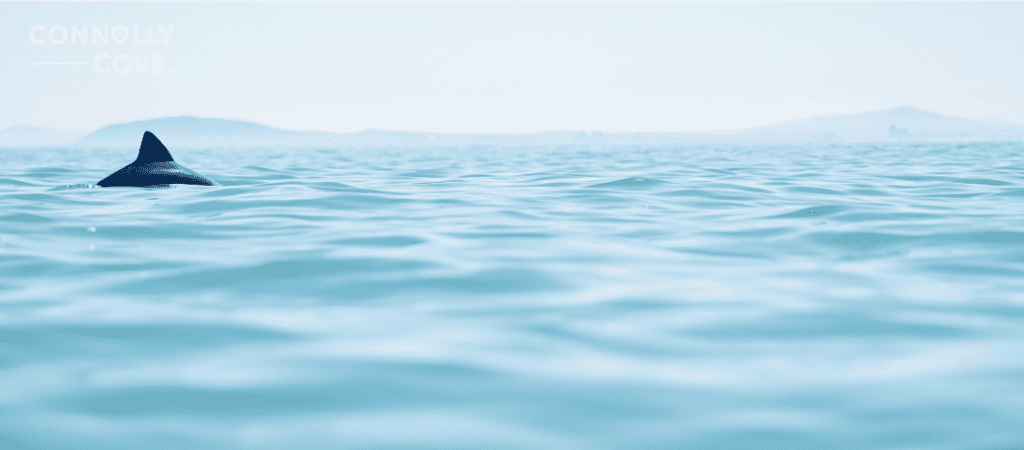
In these areas, you may be able to see humpback whales and fin whales as well. If you’re heading to West Kerry during the summer, it is considered the best place in Ireland to watch dolphins, basking sharks, and even whales. Remember that 24 different species of whales, dolphins or porpoises have been spotted along Ireland’s coast, so keep your eyes peeled while exploring!
What to Do While Visiting the North Coast in Ireland
Visit the Giant’s Causeway: The Giant’s Causeway is a collection of about 40,000 basalt columns formed by a volcanic eruption about 60 million years ago. Visitors can walk along the columns, explore the caves, and learn about the myths and legends that surround the site.
Walk the Carrick-a-Rede Rope Bridge: This rope bridge is suspended 30 meters above the Atlantic Ocean and connects the mainland to Carrick-a-Rede Island. The bridge is only 20 meters long, but it can be quite challenging to cross, especially on a windy day!
See Dunluce Castle: This dramatic castle is perched on the edge of a cliff and has been shown in many shows, such as Game of Thrones. Visitors can tour the castle, learn about its history, and enjoy the stunning views.
Explore the Dark Hedges: This avenue of trees was planted in the 18th century and has recently become a popular tourist destination. The trees are so close together that they form a dark tunnel, which has been used as a filming location for Game of Thrones.
Take a walk along the beach: The North Coast has some of the most beautiful beaches in Ireland. Some famous beaches include Whitepark Bay, Portrush East Strand, and Portstewart Strand.
Go surfing: The North Coast is a popular spot for surfing, with waves suitable for both beginners and experienced surfers. Several surf schools in the area offer lessons and rentals.
Play golf: The North Coast is home to some of the best golf courses in Ireland, including Royal Portrush Golf Club and Portstewart Golf Club.
Go hiking: There are many scenic hiking trails on the North Coast, including the Causeway Coastal Path, the Glens of Antrim, and the Mourne Mountains.
Visit a museum: There are several museums on the North Coast, including the Ulster Folk and Transport Museum, the Titanic Belfast Experience, and the Derry~Londonderry Museum.
As you have read, dolphin and whale watching in Ireland is such a fantastic once-in-a-lifetime adventure that you will keep remembering forever. Whether you encountered playful bottlenose dolphins in sheltered bays, marvelled at the acrobatic displays of humpback whales, or listened to the haunting calls of minke whales, these moments hold a unique power to inspire and connect us with the wonders of the natural world.

Harry Potter Shop at Platform 9 3/4 – London Attractions
England
29/04/2024
Exploring the Isle of Man’s Rich History and Culture
Ireland
29/04/2024
Exploring The Town of Carrickfergus
County Antrim
29/04/2024
Commercial Court: The Dazzling Lights of Belfast
Northern Ireland
29/04/2024

How to Make a Killy Kiss Cocktail By Killyhevlin Hotel
Northern Ireland
28/04/2024