

Skip to content
Updated on: by Avatar image of authorCiaran Connolly

Tucked between Queen’s University Belfast and the bustling streets of the Queen’s Quarter, Botanic Gardens Belfast offers 28 acres of Victorian splendour in the heart of Northern Ireland’s capital. This isn’t just another city park.

Since opening to the public in 1895, these gardens have served as Belfast’s green sanctuary, where historic glasshouses shelter exotic plants from distant continents, where students sprawl across lawns between lectures, and where families gather for summer afternoons beneath towering sequoias. The Palm House and Tropical Ravine stand as monuments to Victorian engineering ambition, their iron frameworks and curved glass panels still captivating visitors more than 175 years after construction.

Whether you’re planning a weekend visit to Belfast, documenting Northern Ireland’s architectural heritage through photography, or simply seeking respite from city streets, understanding what makes these botanical gardens truly special transforms a casual stroll into something memorable.

Victorian Heritage Sites

The architectural treasures within Belfast Botanic Gardens tell the story of Belfast’s golden age of industry and scientific ambition. These aren’t replica structures. They’re the genuine article, carefully restored and maintained as living museums of Victorian engineering.

The Palm House

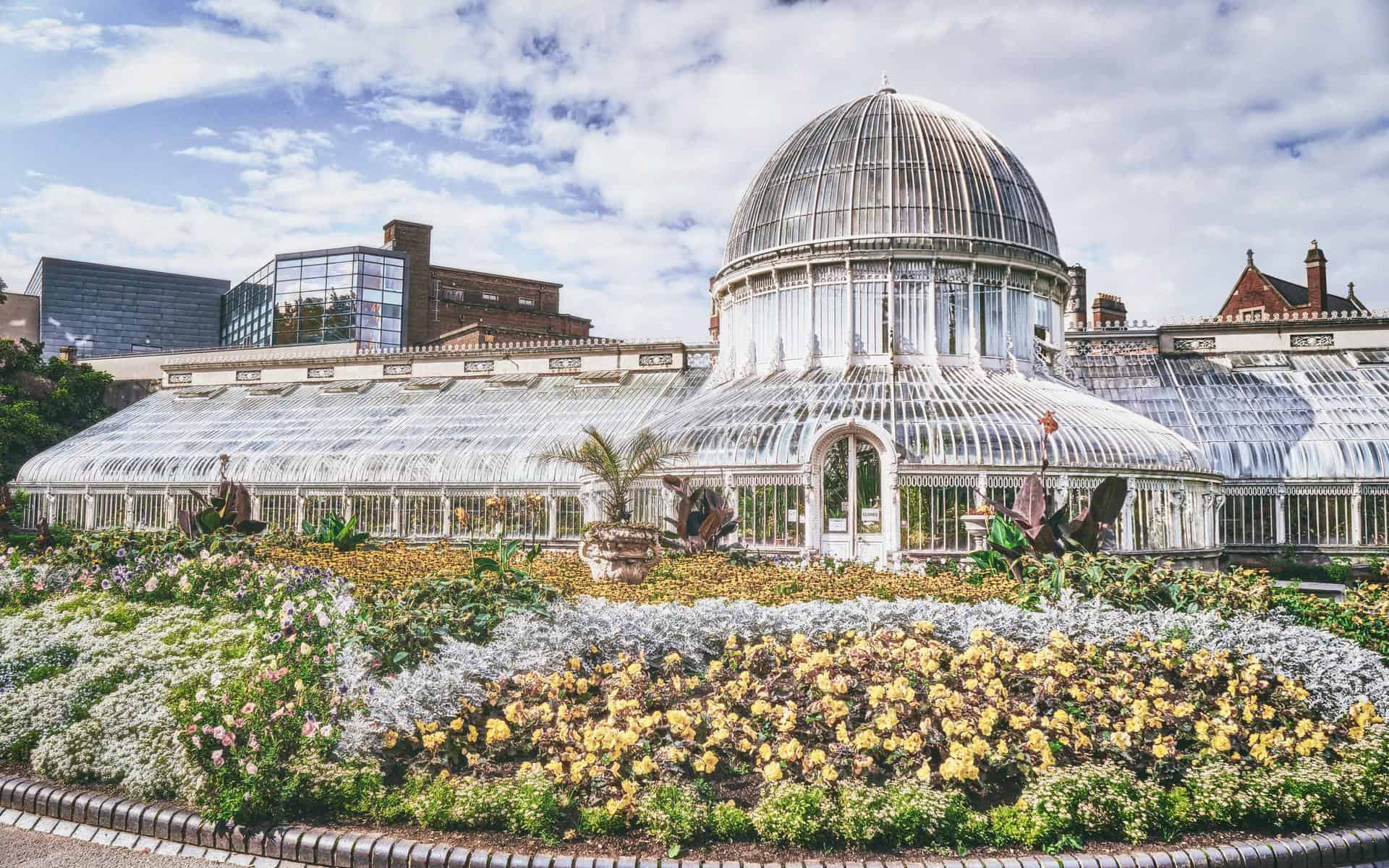
Charles Lanyon designed this curvilinear masterpiece in 1840, creating one of the earliest examples of Victorian glasshouse architecture in the British Isles. The structure predates London’s famous Crystal Palace by more than a decade. Its innovative curved iron framework and expansive glass panels represented cutting-edge technology for the period.

Walk through the Palm House entrance, and you’re immediately transported. The tropical wing maintains temperatures around 27°C year-round, sheltering palms, ferns, and exotic species collected during the height of British botanical exploration. The temperate wing displays Mediterranean and subtropical plants adapted to cooler conditions.

Richard Turner, the Dublin ironmaster who fabricated the Palm House framework, later went on to build the glasshouses at Kew Gardens. His Belfast commission showcases the same attention to structural elegance and horticultural function. Study the joints where curved iron ribs meet, and examine how the glass panels slot into their frames. This is industrial craftsmanship at its finest.

The gardens achieved something remarkable in 2005 when their 400-year-old Xanthorrhoea specimen lived through renovation work. This Australian grass tree, one of the oldest plants in the collection, had arrived in Belfast during Queen Victoria’s reign. Its survival speaks to the careful stewardship these gardens have received across generations.

Tropical Ravine House

A curved pathway winds through a greenhouse filled with potted tropical and succulent plants under a tall, arched glass roof at Botanic Gardens Belfast, labeled “Connolly Cove” in the lower right corner.

Head gardener Charles McKimm designed the Tropical Ravine in 1889, creating Belfast’s most unusual Victorian structure. Rather than building upward like traditional glasshouses, McKimm excavated downward, creating a sunken glen that visitors view from elevated walkways.

The 2018 restoration invested £3.8 million in preserving this architectural oddity. Engineers replaced deteriorating ironwork, renewed the glass canopy, and upgraded environmental controls while maintaining McKimm’s original design intent. The project won multiple heritage awards for its sensitive approach to Victorian infrastructure.

Walking on the balcony offers perspectives impossible in conventional glasshouses. You’re simultaneously at canopy level and ground level, watching tree ferns unfurl new fronds at eye height whilst tropical vines cascade into the ravine below. The spatial experience feels more like exploring a rainforest gorge than touring a municipal greenhouse.

Look for the Dombeya x cayeuxii near the ravine’s western wall. This African flowering tree produces spectacular pink blooms every February, filling the entire glasshouse with its sweet fragrance. Local residents time their visits specifically for this annual display.

Historical Monuments and Statuary

Lord Kelvin’s statue stands near the park’s university entrance, honouring Belfast’s most famous physicist. Born William Thomson in 1824, Kelvin studied at Glasgow University but maintained strong connections to Belfast throughout his career. His contributions to thermodynamics and electromagnetic theory changed how we understand the physical world.

The statue placement isn’t coincidental. The Botanic Gardens Belfast functioned as an extension of Queen’s University’s science departments from the 1850s onward, providing living specimens for botanical study and research space for natural philosophy. That academic connection continues today, with university departments regularly using the gardens for fieldwork and documentation projects.

Creating comprehensive visual documentation of Victorian heritage sites presents unique challenges. These structures contain intricate ironwork details, delicate glass panels with varying light transmission, and interior spaces where natural and artificial lighting interact in complex ways.

Planning Your Visit

Belfast Botanic Gardens occupies the area bounded by Botanic Avenue, Stranmillis Road, and the Queen’s University campus. Getting there requires no special preparation, though understanding logistics helps maximise your time.

Getting to the Gardens

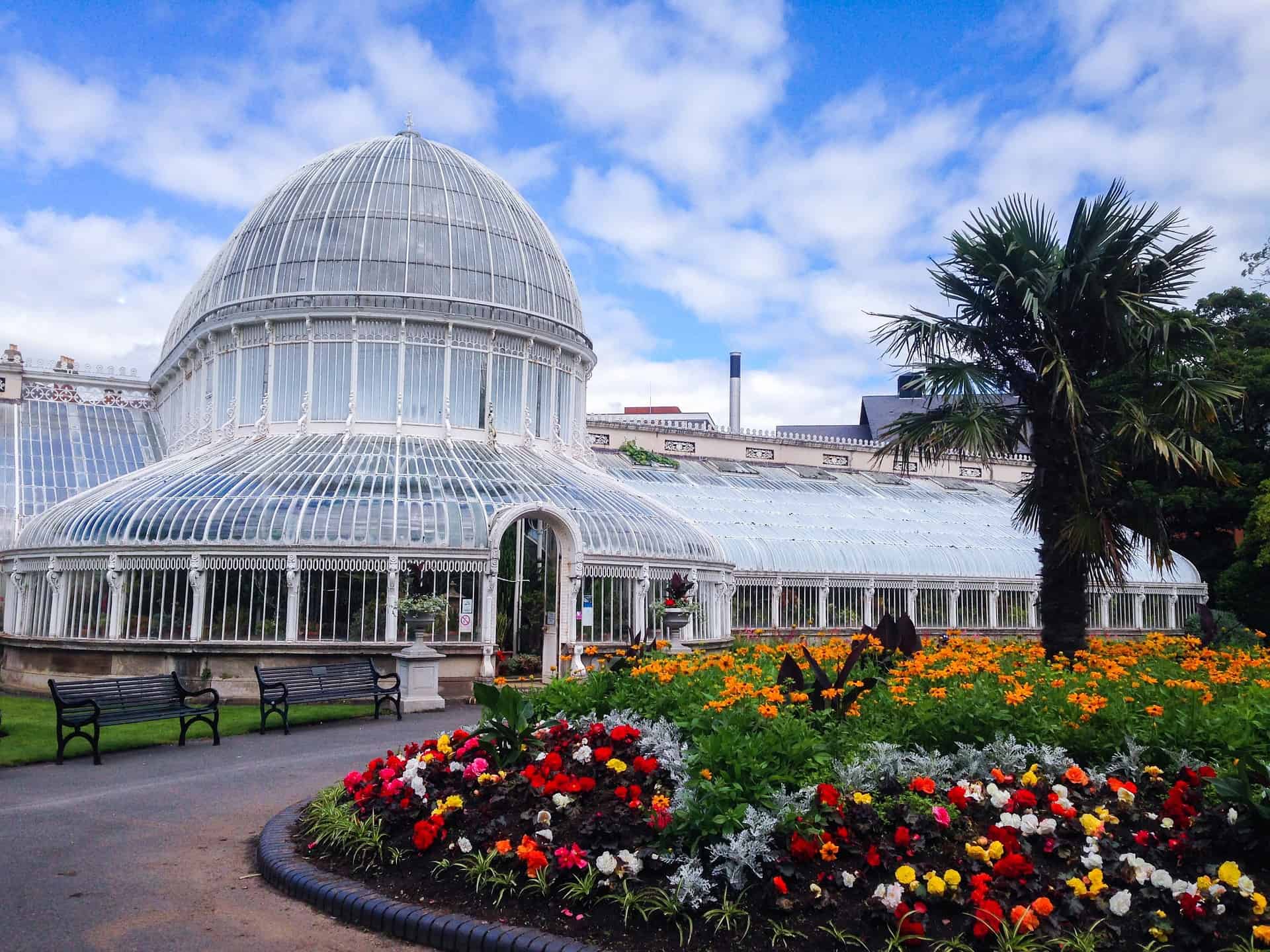
A large Victorian glasshouse with a domed roof stands in the Botanic Gardens Belfast, surrounded by red-brick buildings and a palm tree. People relax on benches in the garden area beneath an overcast sky. Connolly Cove is written in the corner.

From Belfast city centre, walk south along Botanic Avenue for roughly 15 minutes. The street runs straight from Shaftesbury Square directly to the gardens’ main entrance. Multiple bus routes serve the area. Metro services 8A, 8B, 8C, and 9A all stop on Botanic Avenue within a minute’s walk of the park gates.

Visitors arriving by car face limited options. No dedicated car park serves the gardens. On-street parking along Stranmillis Road operates under controlled parking zones, requiring payment Monday through Saturday from 8 am to 6 pm. Current rates sit at £1.50 per hour with a maximum stay of two hours. Sunday parking remains free, but spaces fill quickly during good weather.

The Queen’s University multi-storey car park on College Park Avenue offers alternative parking at approximately £2 per hour. It’s a five-minute walk from there to the gardens’ eastern entrance. For visitors planning extended stays, this represents better value than paying hourly street rates.

Opening Hours and Access

The gardens open daily from 7:30 am until dusk. These aren’t set closing times but rather seasonal adjustments. Summer evenings see gates remaining open until 9 pm or later, whilst winter afternoons close the gardens by 4:30 pm.

The Palm House and Tropical Ravine maintain separate opening schedules. Both glasshouses open daily from 10 am to 4 pm between April and September. Winter hours run from 10 am to 3:45 pm from October through March. The glasshouses close for 30 minutes at midday for staff maintenance rounds.

Entry to Belfast Botanic Gardens costs nothing. No admission fees apply to either the outdoor grounds or the Victorian glasshouses. This free access policy dates back to 1895, when Belfast Corporation purchased the gardens from the Belfast Botanical and Horticultural Society specifically to create public parkland.

Accessibility Information

Paved pathways connect all major areas within the gardens. The main routes accommodate wheelchairs, mobility scooters, and pushchairs without difficulty. Some secondary paths feature gravel surfaces that prove more challenging for wheeled access.

The Palm House presents accessibility challenges due to its Victorian construction. The entrance involves climbing several steps with no ramp alternative. Once inside, the floor level remains consistent throughout both wings. Garden staff report that manual wheelchair users with assistance can access the building, though powered mobility scooters typically cannot negotiate the entrance stairs.

The Tropical Ravine’s 2018 restoration included installing a lift providing wheelchair access to the upper viewing gallery. The sunken ravine floor itself remains accessible only via stairs, but the elevated walkway offers complete views of the planted glen below.

Accessible toilet facilities are located in the pavilion building near the Ulster Museum entrance. These include standard wheelchair-accessible cubicles, baby-changing stations, and additional space for carers or assistance dogs.

Queen’s Quarter Experience

Belfast Botanic Gardens sits at the heart of the Queen’s Quarter, the city’s university district. Understanding this broader context enriches any visit, transforming a simple garden tour into an exploration of Belfast’s academic and cultural centre.

The Student Connection

Queen’s University Belfast borders the gardens along its entire eastern edge. Since the 1850s, students have treated these grounds as an extension of campus life. Warm afternoons see the lawns covered with study groups, friends catching up, or individuals simply enjoying sunshine between lectures.

This isn’t a tourist attraction atmosphere. It’s a genuinely local space where residents and students outnumber visitors most days. That authentic character makes it particularly valuable for content creators documenting real Belfast life beyond typical tourist perspectives.

Botanic Avenue connects the gardens directly to student accommodation areas and the university campus. Walk this street any day during term time, and you’ll encounter the diversity of modern Belfast. International students, local families, university staff, and long-time residents all share this neighbourhood.

Local Cafés and Independent Businesses

The blocks surrounding Belfast Botanic Gardens host Belfast’s highest concentration of independent cafés, bookshops, and small eateries. These businesses evolved to serve student populations but welcome all visitors.

Several cafés along Botanic Avenue offer excellent coffee at reasonable prices. The University area supports quality independent roasters who supply local establishments. Expect to pay £2.50-£3.50 for well-prepared cappuccinos or flat whites.

Lunch options range from quick takeaway to sit-down meals. Several establishments specialise in international cuisines reflecting the student population’s diversity. Vietnamese, Italian, Indian, and Middle Eastern restaurants all operate within five minutes’ walk of the gardens.

These local businesses play important roles in Belfast’s creative economy. Many are run by young entrepreneurs or families who’ve served the Queen’s Quarter for generations. They represent the kind of authentic local character that makes documenting Belfast culture genuinely interesting rather than formulaic tourism content.

Ulster Museum Integration

The Ulster Museum occupies substantial grounds within the botanical gardens complex. Northern Ireland’s largest museum houses collections spanning art, natural history, archaeology, and social history. Entry costs nothing.

Museum galleries complement garden visits particularly well. After walking through the Tropical Ravine viewing exotic plants, head upstairs to the museum’s natural history displays explaining tropical ecosystems. Or follow garden exploration with the museum’s art collections, showcasing how Irish artists have depicted landscape and nature across centuries.

The museum café offers indoor seating with garden views. It’s useful when Belfast weather turns, as it frequently does, allowing you to extend your visit without getting soaked.

Content creators developing comprehensive Belfast guides benefit from treating the gardens and museum as integrated attractions. They share grounds, share audiences, and share Belfast’s commitment to making cultural resources freely accessible. Together, they offer several hours of quality programming without admission fees.

Creating Area Guides and Neighbourhood Content

Digital content about Belfast increasingly focuses on neighbourhood character rather than isolated attractions. The Queen’s Quarter represents one of Belfast’s most distinct districts, offering a blend of academic culture, independent businesses, and Victorian architecture.

Documenting this area effectively requires spending time beyond brief site visits. Walk Botanic Avenue at different times of day. Observe how the neighbourhood shifts from morning coffee runs to lunchtime rush to evening dinner service. Notice how the gardens function differently depending on season and weather.

Local area guides serve practical purposes for visitors whilst also establishing content authority. Explaining where to find good coffee near Botanic Gardens, Belfast, how to navigate between attractions, and what makes the Queen’s Quarter distinct helps readers genuinely plan better trips. This utility builds trust that transfers to other recommendations.

For digital agencies creating location-based content, neighbourhood guides also support local SEO strategies. Content about the Queen’s Quarter can naturally incorporate terms related to Belfast tourism, Northern Ireland travel, university areas, and cultural attractions, whilst providing genuine value to readers.

Seasonal Garden Guide

Belfast Botanic Gardens reveals different characters across the year. Understanding these seasonal patterns helps visitors time trips for specific interests, whilst also guiding content creators documenting how the gardens evolve through annual cycles.

Spring Awakening

March through May brings the gardens back to life after winter dormancy. Daffodils appear first, often whilst frost still threatens. By April, cherry trees along the main avenue burst into blossom, creating temporary tunnels of pink and white flowers that last perhaps ten days before petals scatter across pathways.

Tulip beds reach peak display by late April. The formal planting areas near the Palm House entrance showcase hundreds of bulbs in coordinated colour schemes that change annually. These displays require extensive planning and bulb planting the previous autumn.

Spring photography challenges include unpredictable weather. Belfast’s maritime climate means rain can arrive without warning. Waterproof camera protection proves essential, though breaks between showers often coincide with the best light. The gardens’ trees and structures provide some shelter, allowing continued work during light drizzle.

For visitors planning spring trips, mid-April through early May generally offers the most reliable combination of blooms and tolerable weather. This timing also avoids the school holiday crowds that arrive in the summer months.

Summer Abundance

June through August transforms the gardens into Belfast’s premier outdoor social space. Students finish exams by mid-May, but warm weather brings local families, tourists, and residents seeking green space throughout the summer months.

The Rose Garden reaches its spectacular peak in June. Over 300 rose varieties bloom simultaneously, creating vivid displays and filling the air with fragrance. These specimens require year-round maintenance from dedicated garden staff, but their June performance justifies that effort.

Summer afternoons see the lawns completely covered when the weather cooperates. Office workers arrive during lunch breaks, families spread picnic blankets, and students revise for August resit examinations. This intensive use transforms the gardens’ character from contemplative retreat to vibrant community space.

Content creators documenting summer gardens should consider timing visits for weekday mornings when crowds are manageable. The Rose Garden photographs particularly well before 10 am when fresh morning light illuminates flowers without harsh shadows. Weekend afternoons offer different opportunities, capturing the social atmosphere that makes these gardens genuinely important to Belfast residents.

Autumn Colours

September through November brings the gardens’ mature trees into focus. Copper beech, sycamore, and oak specimens planted during the Victorian era now reach impressive sizes. Their autumn foliage creates dramatic colour displays that rival spring blossoms.

The avenue of lime trees leading from Stranmillis Road to the Palm House turns brilliant yellow by late October. These trees were planted in matching pairs, creating formal symmetry that Victorian garden designers favoured. Their coordinated colour change each autumn demonstrates how carefully considered original plantings continue influencing the gardens’ appearance 150 years later.

Autumn light in Belfast often features low sun angles, creating long shadows and warm colour temperatures. Photographers working during this season benefit from these conditions, particularly during brief windows of clear weather between Atlantic weather systems.

For content focused on Belfast’s quieter seasons, autumn offers excellent opportunities. Tourist numbers decline significantly after August, returning these gardens to primarily local use. This authentic atmosphere serves different narrative purposes than summer’s crowded scenes.

Winter Structure

December through February reveals the gardens’ architectural bones. Without foliage obscuring views, the Victorian glasshouses stand out more prominently. The geometric patterns of paths, the relationships between planted areas, and the careful spacing of specimen trees all become more apparent.

The Palm House and Tropical Ravine maintain their tropical environments year-round, creating interesting contrasts. Step from grey Belfast winter into the humid warmth of the Palm House and you’re immediately transported. This contrast matters particularly during winter months when the glasshouses offer genuine refuge from cold weather.

Winter photography focuses on structure rather than colour. The ironwork of Victorian buildings, the branching patterns of deciduous trees, and the strong lines of pathways through formal beds all serve as primary subjects. Frost occasionally decorates the gardens, though Belfast’s coastal location keeps harsh freezes relatively rare.

Content creators working through winter should emphasise the glasshouses rather than the outdoor areas. The tropical collections remain impressive regardless of external weather. These heated spaces also provide comfortable working conditions when filming or photographing during cold months.

Conclusion

Belfast Botanic Gardens endures as one of Northern Ireland’s most beloved public spaces precisely because it serves multiple purposes simultaneously. It’s a Victorian architectural monument and student study hall, tourist attraction and local residents’ sanctuary, botanical education centre and simple city park where people sit on grass reading books.

For anyone exploring Belfast, whether for tourism, heritage documentation, content creation, or simply personal interest, time spent in these gardens repays attention with discoveries that extend well beyond their 28-acre boundaries into the city’s history, character, and ongoing cultural life.

Leave a comment

Your email address will not be published. Required fields are marked *