The Anyone But You filming locations showcase some of Australia’s most stunning coastal scenery and architectural landmarks. Shot primarily around Sydney, this romantic comedy starring Sydney Sweeney and Glen Powell transforms the city’s iconic sites into the backdrop for a modern love story set against a destination wedding in Australia.
For travellers planning to follow in the footsteps of Bea and Ben, this guide explores the real locations where the film was shot, from the world-famous Sydney Opera House to the secluded beaches of the Northern Beaches. We’ll also examine how the film’s visual storytelling captures Australia’s unique character—insights that matter whether you’re a film enthusiast, a traveller, or someone interested in how destinations are marketed through visual media.
“When filming showcases a destination as beautifully as Anyone But You presents Sydney, it demonstrates the power of visual storytelling in travel marketing. The locations become characters themselves, inviting viewers to experience these places first-hand.” – Ciaran Connolly, Founder of ConnollyCove
Table of Contents
Anyone But You Film Overview & Plot
Anyone But You is a romantic comedy that belongs to the feel-good genre, perfect for audiences seeking escapism with a scenic backdrop. Here are the essential details about this box office success:
Film Details
- Genre: Romantic comedy
- Director: Will Gluck
- Cast: Sydney Sweeney, Glen Powell, Laura Benanti, Michael Braun, Michelle Buteau
- Release Date: December 22, 2023
- Box Office: $79.5 million
- Filming Location: Queensland and New South Wales, Australia
The Story
The film follows Bea (Sydney Sweeney) and Ben (Glen Powell), two strangers who share an excellent first date that ends in disaster. A year later, they unexpectedly find themselves at a destination wedding in Australia, where they pretend to be the perfect couple to keep up appearances. As they navigate the wedding festivities whilst faking their relationship, their initial dislike for each other starts to fade, and they develop real feelings for one another.
Critical Reception
Critics reviewed the film with mixed responses—some praising its humour and charming leads, whilst others criticised its predictable plot and lack of originality. Despite the divided reviews, it proved to be a box office success, grossing over $79 million worldwide.
Behind the Scenes
Anyone But You is loosely based on William Shakespeare’s play Much Ado About Nothing, bringing the classic tale of sparring lovers into a contemporary Australian setting. The film was shot across Queensland and New South Wales, with principal photography taking advantage of Australia’s summer weather. This marks the first time Sydney Sweeney and Glen Powell have starred together, and their on-screen chemistry became one of the film’s most praised elements.
Anyone But You Filming Locations: Sydney’s Iconic Landmarks
The heart of Anyone But You‘s visual appeal lies in its use of Sydney’s world-renowned landmarks. These locations didn’t just serve as backdrops—they became integral to the film’s romantic atmosphere and provided instantly recognisable settings that signal “Australia” to global audiences.
Sydney Opera House
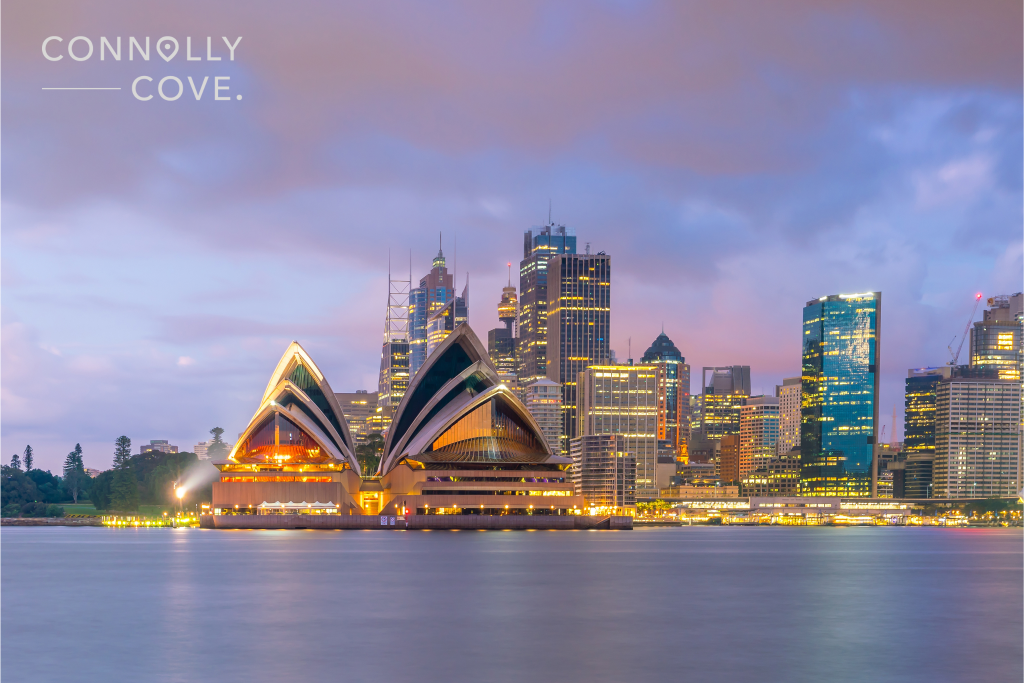
The iconic shell-clad sails shimmer beneath the Australian sun, making the Sydney Opera House more than just an architectural marvel—in Anyone But You, it becomes a silent witness to Bea and Ben’s tempestuous relationship. The Opera House features prominently in several scenes, from a moonlit sequence on the harbourside steps, where laughter echoes against the concrete curves, to moments that showcase the building’s dramatic architectural lines.
The Opera House scenes demonstrate how location choice impacts storytelling. The building’s distinctive silhouette provides instant geographical context whilst its grandeur elevates the romantic stakes of key moments. For filmmakers and content creators, such locations offer multiple advantages: visual interest, cultural recognition, and thematic resonance.
Visiting the Sydney Opera House
The Sydney Opera House isn’t just an architectural landmark; it’s a vibrant performing arts centre and UNESCO World Heritage Site. Here’s what visitors need to know:
The Iconic Shells
Designed by Danish architect Jørn Utzon, the distinctive shell-like structures are instantly recognisable and synonymous with Sydney. Visitors can stroll around the exterior, capture breathtaking photographs, and admire the intricate ceramic tiles that adorn each shell. The building’s design represents a triumph of 20th-century architecture, completed in 1973 after 14 years of construction.
World-Class Performances
The Opera House stages over 1,600 performances annually, ranging from opera and ballet to theatre and contemporary dance. Check their website’s “What’s On” section to see performances during your visit and book tickets for an unforgettable experience.
Tours and Experiences
Visitors can dive deeper into the Opera House’s fascinating history with guided tours. Options include:
- The Classic Tour: General overview of the building’s history and architecture
- The Backstage Tour: Behind-the-scenes access to performance spaces
- Tour and Tasting Plate: Combines sightseeing with culinary experiences from the Opera Kitchen
Dining with Harbour Views
The Opera House precinct offers several dining options with spectacular harbour views:
- Opera Bar: Casual drinks and dining with outdoor seating
- Opera Kitchen: Multiple food outlets serving diverse cuisines
- Bennelong Restaurant: Fine dining experience within the iconic sails
Accessibility Information
The Opera House is committed to providing accessible experiences. All public areas are wheelchair-accessible, and various assistive listening devices and tactile tours are available for visitors with sensory impairments.
Bonus Tip: Visit during Vivid Sydney, the annual winter festival that transforms the city with vibrant light installations. The Opera House becomes a canvas for breathtaking light shows, creating an extraordinary visual spectacle.
Sydney Harbour Bridge
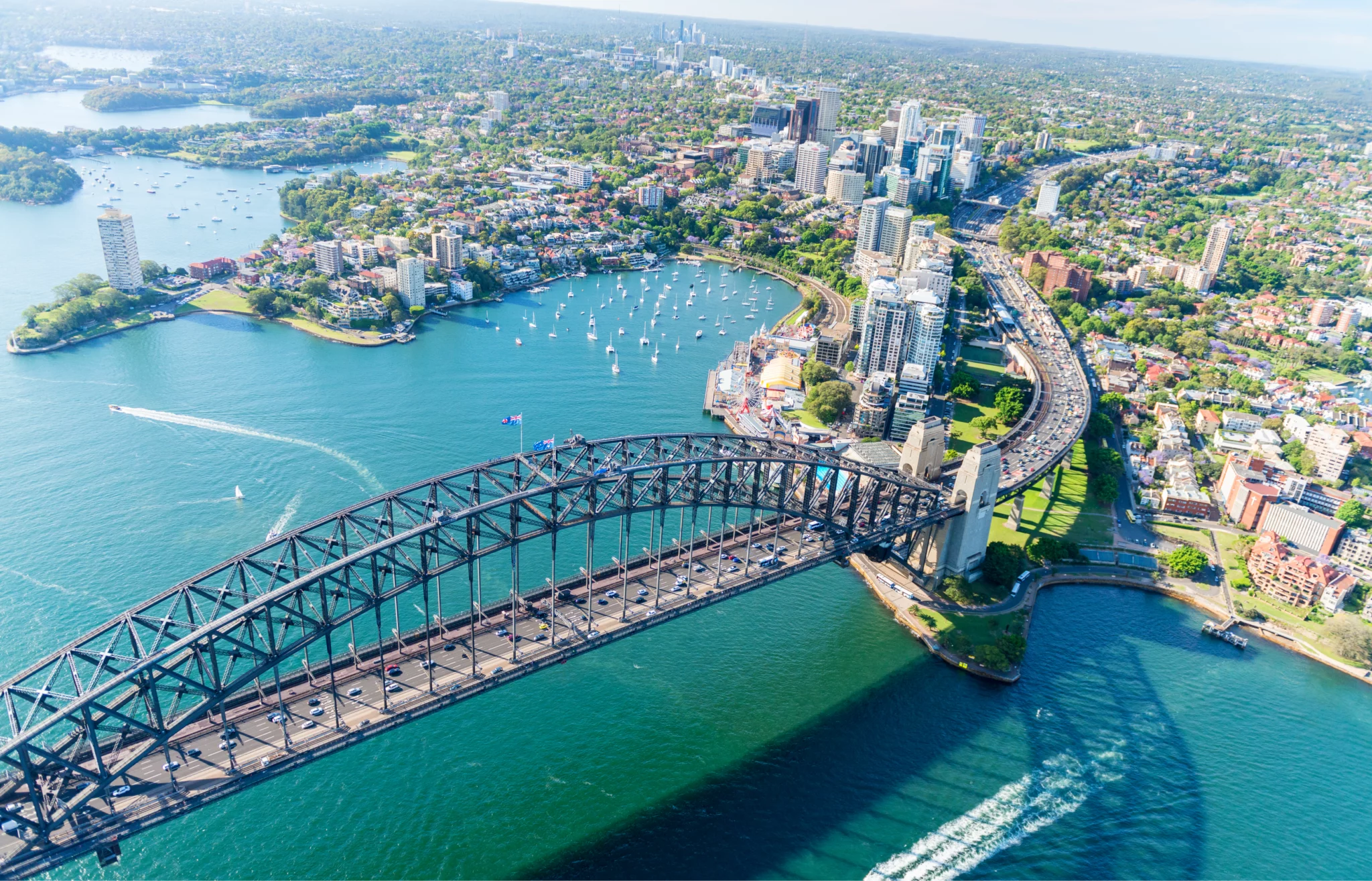
The Sydney Harbour Bridge, with its grand iconic arches, featured prominently in Anyone But You, offering a stunning setting for key moments that required both visual grandeur and instant geographic recognition. The bridge’s majestic presence added a sense of scale and romance to scenes set against this famous landmark’s backdrop, whilst its distinctive silhouette provided filmmakers with one of the world’s most recognisable architectural profiles.
Engineering Marvel and Historical Context
Known affectionately to Sydneysiders as “The Coathanger” due to its distinctive arch shape, the Sydney Harbour Bridge has connected the city’s North Shore with the central business district since its opening on 19 March 1932. The bridge represents a triumph of early 20th-century engineering and remains the world’s largest steel arch bridge, a title it has held for over 90 years.
Key Technical Specifications:
- Total Length: 1,149 metres including approach spans
- Arch Span: 503 metres between bridge supports
- Height: 134 metres from sea level to the top of the arch
- Width: 49 metres, accommodating eight vehicle lanes, two railway tracks, a pedestrian pathway, and a cycleway
- Weight: Approximately 52,800 tonnes of steel
- Construction Time: Eight years (1924-1932)
- Workers: Over 1,400 men employed during construction
- Rivets: Six million hand-driven rivets hold the structure together
The bridge’s construction during the Great Depression provided essential employment whilst creating infrastructure that transformed Sydney’s geography. Its completion allowed northern suburbs to develop rapidly, fundamentally changing the city’s urban planning and residential patterns.
The Bridge in Anyone But You
In Anyone But You, the Harbour Bridge functions as more than mere scenery—it serves as a visual anchor that grounds the film firmly in Sydney whilst providing dramatic scale to romantic moments. The bridge appears in various contexts throughout the film:
Establishing Shots: Wide shots featuring the bridge immediately communicate location to international audiences. This geographical shorthand allows filmmakers to establish setting efficiently without exposition, a technique particularly valuable in contemporary romantic comedies where pacing matters.
Transition Sequences: The bridge’s distinctive arch creates strong compositional elements for transition scenes. Its linear structure naturally guides the eye across the frame, whilst its massive scale provides contrast to intimate character moments filmed in the foreground.
Day and Night Variations: The bridge offers dramatically different aesthetics depending on time of day. Daytime shots emphasise the structure’s grey steel against blue sky and water, whilst night-time illumination transforms it into a beacon of warm light—particularly effective for romantic evening scenes.
Atmospheric Context: The bridge’s presence signals urban sophistication and established infrastructure, contrasting with the more natural beach settings that dominate much of the film. This juxtaposition allows the narrative to move between cosmopolitan Sydney and its relaxed coastal suburbs.
Visual Content and Photography Opportunities
From a content creation perspective, the Sydney Harbour Bridge exemplifies how iconic structures can anchor visual narratives:
Multiple Vantage Points: The bridge can be photographed from countless locations around the harbour, each offering different compositions and contexts. Popular viewpoints include:
- Circular Quay: Classic frontal perspective with Opera House in frame
- Milsons Point: Direct beneath the arch, emphasising scale and structure
- Observatory Hill: Elevated perspective showing bridge in broader harbour context
- Blues Point Reserve: Oblique angle capturing both arch and city skyline
- McMahons Point: Favourite location for sunrise shots with perfect lighting angles
Time-Lapse Opportunities: The bridge’s fixed position and constant traffic flow make it ideal for time-lapse photography. Traffic light trails at night, ferry movements below, and changing weather conditions all create dynamic visual content whilst the structure remains constant.
Compositional Anchor: Professional videographers use the bridge’s strong geometric lines to create balanced compositions. Its arch naturally frames other harbour elements, whilst its horizontal span provides leading lines that guide viewer attention through shots.
Scale Reference: Including the bridge in shots provides immediate scale reference, helping viewers understand distances and sizes of other harbour elements. This proves particularly valuable in aerial footage or wide establishing shots.
Weather and Atmospheric Conditions: The bridge responds dramatically to changing weather—fog partially obscures its span, storm clouds create moody backdrops, and clear days emphasise its steel against blue sky. These variations allow content creators to evoke different emotional tones using the same location.
Cultural Significance and Iconic Status
The Harbour Bridge represents more than infrastructure—it embodies Sydney’s identity and appears in countless cultural contexts. Its image adorns postcards, promotional materials, and brand identities associated with Sydney and Australia generally. For international audiences, the bridge ranks alongside the Opera House as instantly recognisable Sydney imagery.
This iconic status makes the bridge valuable for content creators working in tourism marketing, destination promotion, or cultural storytelling. Its inclusion immediately communicates authenticity and place, whilst its familiarity provides comfort to potential visitors who recognise the landmark from previous exposure.
New Year’s Eve Celebrations: The bridge serves as the centrepiece for Sydney’s world-famous New Year’s Eve fireworks display, broadcast globally to over one billion viewers. This annual event reinforces the bridge’s status as a celebration venue and cultural touchstone.
Maintenance and Preservation: The bridge undergoes continuous maintenance, requiring 30,000 litres of paint every year to protect its steel structure from harbour saltwater corrosion. This ongoing care ensures the bridge remains both functional and visually impressive—a consideration relevant to heritage site management and cultural asset preservation.
Filming and Production Considerations
For content creators considering the Harbour Bridge for video production or commercial photography:
Permit Requirements: Commercial filming on or near the bridge requires permits from Transport for NSW. Restrictions apply to drone usage, particularly near the bridge structure and approach roads due to aviation and traffic safety concerns.
Access Restrictions: Most bridge infrastructure remains restricted for safety and security reasons. Commercial productions requiring special access must apply well in advance and demonstrate appropriate insurance and safety protocols.
Traffic Management: The bridge carries approximately 200,000 vehicles daily, creating constant background activity. This traffic provides authentic atmosphere but also introduces noise and movement that must be managed in production planning.
Lighting Conditions: The bridge’s north-south orientation affects lighting throughout the day. Morning sun illuminates the eastern face, whilst afternoon light favours western perspectives. Understanding these patterns optimises shooting schedules and shot selection.
The Sydney Harbour Bridge’s appearance in Anyone But You demonstrates how architectural landmarks can simultaneously serve narrative functions, provide visual interest, and communicate location. For tourism operators, content creators, and destination marketers, such structures offer reliable production value that enhances storytelling whilst showcasing place identity—essential considerations in effective visual marketing and digital content creation.
Queen Victoria Building
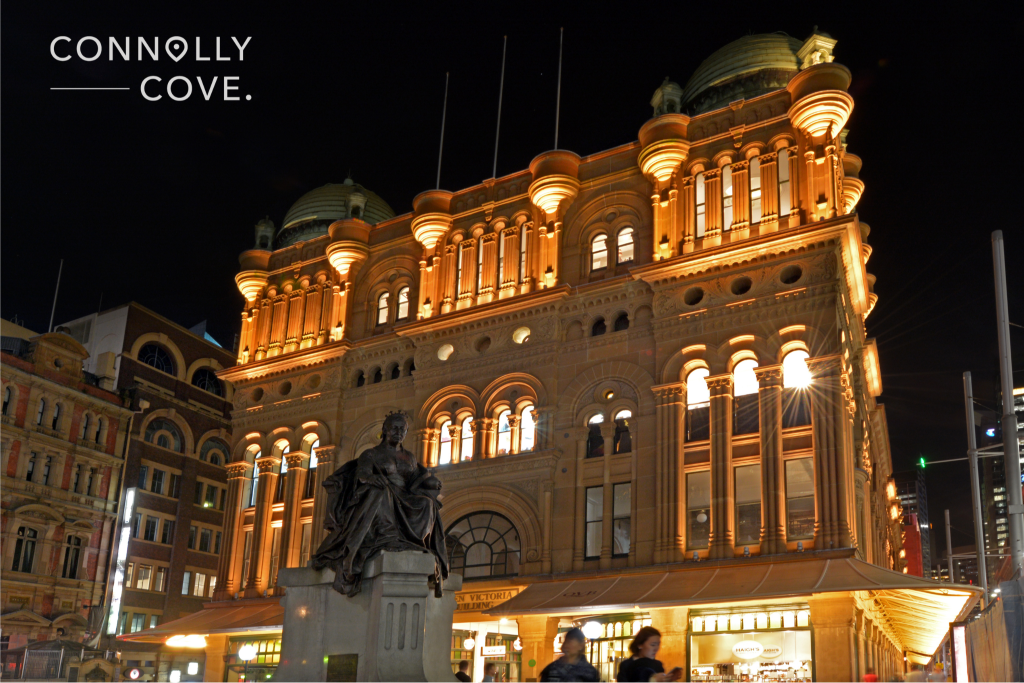
The historic and architecturally captivating Queen Victoria Building added a touch of elegance and old-world sophistication to the film’s setting. Known affectionately as the QVB, this magnificent Romanesque Revival building stands as one of Sydney’s most ornate 19th-century structures, providing a charming backdrop for scenes capturing the essence of the city’s cultural and aesthetic allure.
Architectural Significance
Completed in 1898, the Queen Victoria Building was designed by architect George McRae and originally served as a marketplace during Sydney’s Victorian era. The building occupies an entire city block in the heart of Sydney’s central business district, stretching 190 metres along George Street. Its stunning architecture features elaborate stonework, grand staircases, and a central dome that rises majestically above the shopping floors.
The QVB’s most striking features include:
- Stained-Glass Windows: Elaborate stained-glass windows throughout the building depict historical scenes and heraldic designs
- Central Dome: The magnificent central dome, topped with a copper-clad roof, creates a cathedral-like atmosphere within
- Royal Clock: The stunning Royal Clock, suspended from the ceiling, features automated scenes from English royal history
- Great Australian Clock: This intricate timepiece tells the story of Australia’s colonial history through animated displays
- Tiled Floors: Geometric floor patterns feature intricate mosaic tiling that has been meticulously restored
The QVB in Anyone But You
The Queen Victoria Building’s appearance in Anyone But You demonstrates how period architecture can add visual contrast to contemporary romantic comedies. The building’s ornate interiors and grand arcades provide an elegant setting that differs markedly from the film’s beach locations, offering filmmakers diverse aesthetic options within a compact filming area.
The QVB’s covered arcades and multiple levels create opportunities for various shot compositions—from wide establishing shots that showcase the building’s grandeur to intimate scenes framed by Victorian-era detailing. For content creators, such locations offer weather-independent filming options whilst maintaining visual interest and historical authenticity.
Visiting the Queen Victoria Building
Today, the QVB houses over 180 boutique shops, fashion retailers, jewellers, and cafés across four shopping levels. Visitors can:
- Browse high-end fashion boutiques and Australian designer stores
- Enjoy afternoon tea at one of several elegant cafés
- Admire the building’s architecture from the ground floor or upper galleries
- Photograph the stunning interior details (photography permitted for personal use)
- Access the building seven days a week during shopping hours
The QVB connects directly to Town Hall Station via underground tunnels, making it easily accessible via Sydney’s public transport network. Its central location places it within walking distance of the Sydney Opera House, Darling Harbour, and other filming locations featured in Anyone But You.
For visitors interested in Sydney’s architectural heritage, the QVB represents one of the finest examples of Victorian-era commercial architecture in Australia. Its successful restoration and adaptive reuse demonstrate how historic buildings can maintain relevance whilst preserving cultural significance—a consideration relevant to heritage site management and cultural tourism marketing.
Harbour and Waterfront Scenes
Sydney Harbour played a significant role throughout Anyone But You, offering spectacular backdrops for captivating scenes that showcased the city’s waterfront charm and maritime character. The vibrant energy and scenic beauty of the harbour contributed substantially to the film’s romantic and visually appealing narrative, demonstrating why Sydney Harbour ranks amongst the world’s most photogenic natural harbours.
The Harbour’s Cinematic Appeal
Sydney Harbour, officially known as Port Jackson, stretches 19 kilometres from the Tasman Sea to the Parramatta River, creating countless filming opportunities along its 240 kilometres of shoreline. The harbour’s configuration provides filmmakers with diverse visual options:
Circular Quay: The transportation hub where ferries arrive and depart creates dynamic backgrounds with constant movement. The area’s broad pedestrian promenades offer unobstructed views of both the Opera House and Harbour Bridge, making it ideal for establishing shots that immediately communicate “Sydney” to audiences worldwide.
Harbour Foreshore Walks: Multiple walking paths trace the harbour’s edge, connecting parks, beaches, and lookout points. These paths feature prominently in Anyone But You’s outdoor scenes, providing natural settings for character interactions whilst maintaining visual interest through changing perspectives of the water and city skyline.
Ferry Routes: Sydney’s iconic green and yellow ferries appear throughout the film, representing authentic local transport whilst adding movement and colour to harbour scenes. Ferry services connect Circular Quay to destinations including Manly, Watsons Bay, and various harbour suburbs, each route offering unique visual perspectives.
Harbour Beaches: Unlike ocean beaches, harbour beaches offer calmer waters and different aesthetic qualities. Small beaches dot the harbour foreshore, providing intimate settings distinct from the dramatic surf beaches featured elsewhere in the film.
Waterfront Venues and Locations
The harbour’s commercial and recreational venues add another dimension to the film’s setting:
Waterfront Dining: Sydney Harbour hosts numerous restaurants, bars, and cafés with water views. These venues range from casual fish and chip shops to fine dining establishments, each offering distinctive atmospheres suitable for different types of scenes. The film utilises several such venues for dining and social scenes, though specific restaurant identifications vary between reports.
Marina and Yacht Clubs: Exclusive marinas around the harbour, particularly in areas like Rose Bay and Rushcutters Bay, showcase Sydney’s affluent maritime culture. These locations feature expensive yachts and sailing vessels that underscore the film’s upscale destination wedding setting.
Harbour Parks and Reserves: Waterside parks including Barangaroo Reserve, Bradfield Park, and Mrs Macquarie’s Point provide green spaces with harbour views. These locations offer filming flexibility with natural landscaping, heritage elements, and various viewpoint options.
Visual Storytelling Through Water
From a content creation perspective, Sydney Harbour demonstrates several principles about incorporating water into visual narratives:
Reflective Surfaces: Water surfaces create natural reflections that add visual depth and symmetry to shots. Professional videographers often time shoots around water conditions—calm mornings produce mirror-like reflections, whilst afternoon breezes create texture and movement.
Golden Hour Enhancement: The harbour’s east-west orientation means sunrise illuminates the eastern suburbs whilst sunset bathes the western foreshore in warm light. Anyone But You’s cinematography takes advantage of these natural lighting conditions to create romantic, visually appealing scenes.
Scale and Perspective: The harbour’s size provides opportunities for both intimate foreground focus with expansive backgrounds, and wide establishing shots that communicate scale and grandeur. This versatility allows filmmakers to adjust visual tone whilst maintaining location continuity.
Dynamic Elements: Ferry traffic, sailing vessels, kayakers, and cruise ships add constant movement to harbour scenes. These dynamic elements prevent static compositions and provide authentic local atmosphere that enhances realism in location-based storytelling.
Practical Filming Considerations
For content creators considering Sydney Harbour for video production or photography projects:
Access and Permits: Most harbour foreshore areas remain public, though commercial filming often requires permits from local councils or the Sydney Harbour Foreshore Authority. Understanding permit requirements prevents production delays and ensures legal compliance.
Weather Variables: Harbour conditions change rapidly—wind, tide, and cloud cover all affect visual outcomes. Professional productions monitor weather forecasts closely and maintain schedule flexibility to capitalise on optimal conditions.
Crowd Management: Popular harbour locations attract significant foot traffic, particularly on weekends and during events. Early morning shoots or off-season scheduling can provide clearer filming conditions, whilst crowd presence can enhance authenticity in certain contexts.
Sound Considerations: Harbour environments present audio challenges—ferry engines, seagulls, and wind all create background noise. These factors influence microphone selection and placement for dialogue scenes, though they can enhance atmosphere in non-dialogue sequences.
The harbour scenes in Anyone But You demonstrate how natural maritime settings provide production value that enhances storytelling whilst showcasing destination appeal. For tourism marketing, travel content, and destination promotion, Sydney Harbour exemplifies how geographic features can become signature elements of place identity—instantly recognisable and inherently photogenic.
Northern Beaches Settings
Whilst Sydney’s landmarks provided metropolitan glamour, the Northern Beaches locations gave Anyone But You its sense of escapism and tropical romance. These stunning coastal settings, located north of Sydney’s city centre, capture the relaxed Australian beach lifestyle.
Palm Beach
Palm Beach was chosen as a primary filming location due to its pristine beaches and stunning natural beauty. The idyllic setting perfectly captured the essence of the destination wedding portrayed in the film, offering golden sands, crystal-clear waters, and an exclusive atmosphere that matched the story’s upscale wedding scenario.
Imagine strolling along the coastal path where Bea and Ben first hatch their “fake fiancé” scheme, the salty air tangling with their playful banter. The sparkling waters and dramatic headlands create a romantic setting that feels both intimate and cinematic.
About Palm Beach
Palm Beach, nestled on Sydney’s picturesque Northern Beaches, extends beyond its role in Anyone But You—it’s a haven for sun-seekers, surfers, and adventure enthusiasts. Here’s what this idyllic paradise offers:
Beach Activities
Palm Beach boasts a dazzling stretch of golden sand lapped by crystal-clear turquoise waters. Whether you’re seeking ultimate relaxation, chasing epic waves, or paddling in the calm waters of The Basin, Palm Beach caters to every preference. For those seeking a more secluded experience, Barrenjoey Beach offers quieter stretches away from the main beach area.
Barrenjoey Lighthouse Adventures
No visit to Palm Beach is complete without conquering the iconic Barrenjoey Lighthouse. The scenic trail leads up to this 1881 lighthouse, rewarding hikers with breathtaking panoramas of the coastline and Pittwater. The hike takes approximately 30 minutes and offers various vantage points for photography. The anyone but you hike location features in one of the film’s most dramatic sequences.
Pittwater Playground
Beyond the ocean beach, Palm Beach offers aquatic adventures on Pittwater’s calm waters. Visitors can kayak through serene waters, explore lush mangroves, spot playful dolphins, and discover hidden coves and secluded beaches. Ferry services to Ettalong provide access to charming coastal escapes across the water.
Dining Options
Palm Beach tantalises visitors with diverse cafés and restaurants. Options include:
- The Boathouse: Waterfront dining with stunning views
- The Basin Seafood Bar: Fresh local seafood
- The Beach House: Relaxed beachside atmosphere
Getting There
Palm Beach sits approximately 40 kilometres north of Sydney’s CBD—roughly a 1.5-hour drive. Public buses (routes L90 and 199) connect the area to the city, and ferry services operate from various wharves. The journey itself offers scenic coastal views that preview the beauty awaiting visitors.
Marks Park, Tamarama
Located in the coastal suburb of Tamarama, nestled between the more famous beaches of Bondi and Bronte, Marks Park offers breathtaking ocean views that served as a picturesque location for pivotal moments in the film. The park’s stunning cliffs and panoramic vistas created ideal settings for romantic scenes, with the dramatic coastal landscape providing a natural amphitheatre that frames the Pacific Ocean’s endless blue horizon. Perched on the headland, the park’s elevated position offers unobstructed views that stretch from Wedding Cake Island in the north to the distant southern coastline, making it a favourite location for both filmmakers and photographers seeking dramatic coastal perspectives.
Marks Park sits along the famous Bondi to Coogee coastal walk, one of Sydney’s most spectacular walking tracks that winds six kilometres along the clifftops. This positioning provides dramatic clifftop perspectives that combine rugged sandstone formations with manicured parkland, offering filmmakers varied compositional options within a compact area. The park features well-maintained lawns perfect for picnics, shaded seating areas beneath Norfolk pines, and multiple vantage points that showcase different aspects of Sydney’s eastern coastline. For content creators, the location demonstrates how public parkland can provide production value comparable to more exclusive settings, particularly when natural beauty and dramatic geography are primary concerns.
The park’s accessibility and diverse visual elements make it particularly valuable for filming. Unlike private beaches or restricted areas, Marks Park remains open to the public whilst offering relatively uncrowded conditions outside peak holiday periods. The combination of green space, ocean views, clifftop drama, and the casual presence of surfers in Tamarama Beach below creates authentic Sydney coastal atmosphere. This blend of natural beauty and accessibility explains why the location appears in numerous films, television series, and commercial productions seeking to capture Sydney’s relaxed yet sophisticated coastal lifestyle.
Bondi Beach
Bondi Beach, with its iconic golden sands and vibrant atmosphere, showcased the laid-back coastal lifestyle that defines Sydney’s beach culture in Anyone But You. The beach’s captivating beauty and lively ambience complemented the film’s narrative, adding a sense of carefree romance to the story whilst grounding it in one of Australia’s most recognisable locations. Stretching one kilometre along Sydney’s eastern coastline, Bondi’s distinctive crescent of sand has welcomed beachgoers since the 1800s, evolving into perhaps Australia’s most famous beach and a symbol of the nation’s surf culture. The beach’s consistent presence in popular culture—from surf documentaries to reality television—has made it instantly recognisable to international audiences, providing filmmakers with immediate cultural context without requiring explanation.
Bondi represents Australia’s beach culture in popular imagination worldwide, making it a valuable filming location for international audiences seeking authentic Australian coastal experiences. The beach’s appeal extends beyond its physical beauty to encompass the entire Bondi lifestyle—early morning swimmers braving the cold waters, surfers waiting for the perfect wave, families gathering for weekend barbecues, and tourists experiencing their first taste of Australian beach culture. This authentic activity creates dynamic backgrounds for filming, with the beach’s natural rhythms providing varied atmospheres throughout the day. Dawn brings serious swimmers and surfers, midday sees families and tourists, whilst late afternoon attracts after-work crowds seeking to extend the summer light.
The beach’s infrastructure and surrounding precinct enhance its filming appeal. Campbell Parade, the main beachfront street, offers cafés, restaurants, and shops that provide additional setting options within walking distance of the sand. The iconic Bondi Pavilion, a heritage-listed building dating from 1929, anchors the beach’s southern end and houses community facilities, galleries, and performance spaces. Bondi Icebergs Club, perched on the rocks at the southern headland with its famous ocean pool carved into the cliff face, provides yet another distinctive visual element.
For content creators focusing on lifestyle, travel, or destination marketing, Bondi demonstrates how a single location can offer multiple filming opportunities—beach activities, urban beachfront culture, heritage architecture, and dramatic coastal landscapes—all within a compact, accessible area that captures the essence of Australian coastal living.
Pittwater Region
The serene and picturesque Pittwater region provided tranquil settings for crucial moments in Anyone But You, offering a stark contrast to the film’s more energetic beach and city scenes. Its lush coastal landscapes and peaceful waters offered serene backdrops for scenes depicting moments of reflection and emotional depth, where the narrative required quieter, more intimate atmospheres.
Pittwater extends from Palm Beach in the north to Church Point in the south, creating a protected waterway bordered by Ku-ring-gai Chase National Park to the west and the Barrenjoey Peninsula to the east. This geographical configuration produces calm waters that reflect surrounding bushland and sky, creating naturally beautiful compositions that require minimal enhancement for filming.
Pittwater’s protected waters create a stark contrast to the ocean beaches, offering filmmakers varied aquatic environments within a small geographical area. Whilst the ocean beaches deliver drama, energy, and the iconic Australian surf culture, Pittwater provides serenity, stillness, and a sense of secluded escape.
The waterway’s numerous quiet bays, hidden beaches accessible only by boat, and bush-clad shorelines present a different facet of Sydney’s coastal character—one that emphasises natural beauty and peaceful contemplation over vibrant activity. This versatility allows productions to suggest greater geographic diversity than actually exists, with locations separated by mere kilometres appearing to represent entirely different coastal environments.
The region’s accessibility challenges—many waterfront areas require boat access or lengthy bush walks—contribute to its unspoiled character whilst presenting logistical considerations for film production. However, these same challenges ensure that Pittwater locations retain authentic, uncrowded atmospheres that enhance their appeal for romantic or contemplative scenes. Ferry services, water taxis, and private boat hire provide access options, though each comes with scheduling and cost implications for production planning.
For content creators focusing on travel, wellness, or luxury experiences, Pittwater demonstrates how proximity to urban centres doesn’t preclude natural beauty and tranquillity. The region attracts sailing enthusiasts, kayakers, and those seeking peaceful coastal experiences away from crowded tourist beaches, representing a different but equally valid expression of Sydney’s diverse coastal character.
Terrey Hills
The tranquil retreat of Terrey Hills added rustic charm and residential elegance to Anyone But You‘s setting, providing the primary location for the film’s central wedding sequences. The anyone but you house location in Terrey Hills, known locally through numerous online searches as the “terrey hills house anyone but you,” features prominently in wedding sequences that required a sense of exclusive, secluded luxury.
Terrey Hills itself sits in Sydney’s northern suburbs, approximately 28 kilometres from the CBD, positioned between the urban sprawl and the natural bushland of Ku-ring-gai Chase National Park. This positioning creates a neighbourhood characterised by large residential blocks, native vegetation, and a distinctly peaceful atmosphere that contrasts markedly with Sydney’s dense inner suburbs.
The area’s lush greenery and peaceful surroundings provided serene and intimate backdrops for pivotal moments in the characters’ journey, particularly the wedding scenes that form the narrative’s centrepiece. The private residence used for filming exemplifies the “Hamptons-style” architecture popular in Sydney’s affluent northern suburbs—characterised by white or light-coloured exteriors, expansive windows, open-plan layouts designed to maximise natural light, and seamless indoor-outdoor living spaces.
These architectural choices reflect both the Australian climate and a broader aspirational lifestyle aesthetic that resonates with the film’s romantic comedy genre. The property’s positioning, architectural style, and surrounding landscape combined to create the idyllic wedding venue central to the film’s plot.
The anyone but you house filming location has sparked considerable interest, with many viewers searching for details about the “terrey hills house anyone but you address” or “anyone but you house location sydney.” This audience curiosity demonstrates how successful location choices in film can generate tourism interest and economic activity beyond the immediate production. However, it’s important to note that the property remains a private residence, and whilst the general area welcomes respectful visitors, the specific house itself should not be approached or photographed without permission.
This situation reflects broader considerations in film-induced tourism—balancing the economic and cultural benefits of location exposure against residents’ privacy and quality of life. For content creators and tourism operators, understanding these boundaries whilst still capitalising on location interest represents an ongoing challenge in destination marketing and responsible tourism promotion.
New South Wales Locations
Beyond the specific sites detailed above, New South Wales’s diverse landscapes provided various filming locations that contributed to Anyone But You‘s visual richness and narrative flexibility. The state’s natural beauty and unique landmarks added depth and authenticity to the on-screen portrayal of Australia as a destination wedding location, allowing the production to suggest broader geographic diversity whilst maintaining practical filming efficiency.
New South Wales encompasses dramatic coastal scenery, subtropical rainforests, alpine regions, rural farmland, and vibrant urban centres—all within a state slightly larger than France. This geographic variety means productions can access radically different landscapes without the logistical challenges and expense of interstate or international travel.
This variety demonstrates how regional diversity can serve different narrative purposes within a single production, with each location type offering distinct visual characteristics and thematic associations. Coastal locations provide romance and beauty, urban settings signal sophistication and contemporary life, whilst rural and bushland areas offer tranquillity and natural escape.
For Anyone But You, the strategic use of New South Wales locations created a cohesive visual palette that maintained the film’s Australian setting whilst providing enough variety to sustain visual interest throughout the narrative. The production’s ability to access beaches, harbour views, heritage architecture, and exclusive residential areas within a concentrated filming radius demonstrates why Sydney and its surrounding regions remain popular for international film productions.
From a production planning perspective, New South Wales offers several practical advantages beyond aesthetic considerations. The state provides established film infrastructure including experienced crew, equipment hire facilities, and production support services concentrated in Sydney. Film-friendly local councils have developed streamlined permit processes, whilst state government initiatives offer financial incentives for productions that generate local employment and economic activity.
These practical considerations—combined with the visual diversity, recognisable landmarks, and reliable weather during summer months—explain why New South Wales continues to attract international productions seeking both production value and operational efficiency. For content creators, digital agencies, and video production services, understanding how location diversity, practical logistics, and visual storytelling intersect provides valuable insights for planning efficient, effective productions that maximise creative outcomes whilst managing budgets and schedules responsibly.
Practical Travel Guide for Visitors
For travellers inspired to visit these Anyone But You filming locations, here’s essential practical information to help plan your journey to Sydney’s most photogenic spots.
Planning Your Sydney Film Location Tour
Here are some tips to plan your Sydney tour:
Best Time to Visit
Sydney enjoys pleasant weather year-round, though summer (December-February) offers the warmest beach conditions. The film was shot during Australian summer, capturing the destination at its most vibrant. However, shoulder seasons (March-May and September-November) provide excellent weather with fewer crowds and often better accommodation rates.
Getting Around
Sydney’s public transport network efficiently connects the city’s filming locations:
- Opal Card: Sydney’s integrated transport card works on trains, buses, ferries, and light rail
- Ferry Services: Scenic transport option connecting Circular Quay to various harbour destinations
- Buses: Extensive network reaching Northern Beaches locations
- Ride-Share Services: Uber and local alternatives available throughout Sydney
Sydney Opera House to Palm Beach Journey
The journey from central Sydney to Palm Beach requires planning:
- By Car: Approximately 40km, taking 60-90 minutes depending on traffic
- By Public Transport: Bus routes L90 or 199 from Wynyard Station, taking 90-120 minutes
- By Private Tour: Several operators offer Northern Beaches tours including film location stops
Accommodation Options
Here is where you can stay in Sydney:
Central Sydney (Near Opera House)
- Close to major landmarks and public transport
- Higher price point but maximum convenience
- Easy access to harbour and city filming locations
Northern Beaches (Near Palm Beach)
- More relaxed atmosphere
- Direct beach access
- Requires longer travel times to city landmarks
- Generally more affordable than central Sydney
Photography and Film Location Etiquette
When visiting these locations, visitors should:
- Respect private property boundaries, particularly around the Terrey Hills house
- Be mindful of residents in residential filming areas
- Check for any filming restrictions at public locations
- Consider sunrise or sunset for optimal lighting conditions
- Remember that some interior scenes may have used studios rather than actual venues
Current Conditions & Visitor Information
Sydney Opera House
- Open daily with varying performance schedules
- Tours available in multiple languages
- Booking recommended for tours and performances
- Security screening required for entry
Palm Beach and Northern Beaches
- Patrolled beaches operate with seasonal lifeguard hours
- Marine stinger presence minimal but check local conditions
- Parking can be limited during peak summer weekends
- Barrenjoey Lighthouse track closes occasionally for maintenance
Seasonal Considerations
- Summer (Dec-Feb): Peak beach season, warmest weather, largest crowds
- Autumn (Mar-May): Pleasant temperatures, fewer visitors, ideal for outdoor activities
- Winter (Jun-Aug): Cooler temperatures, lowest accommodation prices, Vivid Sydney festival
- Spring (Sep-Nov): Warming weather, jacaranda blooms, whale watching season
For real-time updates on beach conditions, transport schedules, and event information, visitors should check:
- Transport NSW website for public transport updates
- Sydney Opera House official website for performance schedules
- Bureau of Meteorology for weather forecasts
- Local council websites for beach conditions and facility information
Digital Storytelling and Location Marketing Insights
Anyone But You‘s success demonstrates powerful principles about destination marketing and visual storytelling. The film essentially functions as an extended advertisement for Sydney as a destination wedding location and romantic travel destination, showcasing how strategic location choices in content creation can drive tourism and interest.
How Film and Video Content Showcases Destinations
The Anyone But You filming locations weren’t chosen randomly—each serves specific narrative and visual purposes whilst showcasing Australia’s appeal:
Iconic Recognition: The Sydney Opera House and Harbour Bridge provide instant geographical context. For content creators and tourism marketers, such landmarks serve as visual shorthand that immediately communicates location to global audiences.
Variety of Settings: The film moves between urban sophistication (Queen Victoria Building, city harbour scenes) and natural beauty (Palm Beach, coastal paths), demonstrating Sydney’s diverse offerings within a compact geographical area. This variety keeps visual content engaging whilst showcasing different aspects of a destination.
Aspirational Lifestyle: The Northern Beaches locations, particularly the Palm Beach House and Terrey Hills House, present an aspirational lifestyle. Content that captures luxury and beauty whilst remaining authentic generates strong audience engagement.
Visual Content Strategy Lessons
ConnollyCove’s work in video production and digital marketing aligns closely with the storytelling techniques evident in Anyone But You‘s location showcasing:
Authentic Representation: The film balances iconic tourist sites with local beaches and neighbourhoods, presenting a complete picture rather than just “greatest hits” landmarks. Effective destination marketing requires this authenticity—showing places visitors will actually experience, not just photograph.
Emotional Connection: Scenes set at these locations tie physical spaces to emotional moments in the narrative. Tourism marketing and travel content succeed when they help audiences imagine themselves in these spaces, experiencing similar emotions and adventures.
Seasonal and Lighting Considerations: The film’s summer shooting schedule captured Australia at its most visually appealing, with golden-hour lighting on beaches and clear skies showcasing architectural landmarks. Professional video production requires similar attention to timing, weather, and natural light to maximise visual impact.
Multi-Platform Potential: Locations like the Anyone But You hike location at Barrenjoey Lighthouse offer multiple content opportunities—wide landscape shots, intimate character moments, and dramatic clifftop sequences. When creating travel content or destination marketing materials, choosing versatile locations maximises production efficiency.
Creating Compelling Travel and Cultural Content
For organisations looking to showcase destinations or create engaging travel content, Anyone But You offers several lessons:
Research and Planning: The production team clearly researched Sydney’s most photogenic and thematically appropriate locations. Similar diligence in location scouting ensures content captures a destination’s authentic character whilst meeting visual standards.
Storytelling Through Space: Each location in the film serves the narrative—the wedding happens at an exclusive beach house, emotional confrontations occur at dramatic clifftops, and reconciliation happens against Sydney’s most romantic backdrop. Travel content should similarly match location characteristics to story requirements.
Technical Execution: Professional-quality video production requires proper equipment, skilled operators, and post-production expertise. The film’s polished aesthetic results from Hollywood-level resources, but the underlying principles apply to all scales of video content creation.
Distribution and Reach: Anyone But You‘s success in showcasing Sydney demonstrates how visual content, when distributed effectively, generates interest and action. The film sparked searches for “Anyone But You Australia location,” “where was Anyone But You filmed,” and specific location queries, driving tourism interest.
YouTube Strategy and Travel Content
For content creators focusing on travel and cultural experiences, the film demonstrates several YouTube-friendly strategies:
Searchable Content: The film generated numerous search queries about filming locations, demonstrating audience appetite for “behind the scenes” and location-specific content. YouTube creators can capitalise on this by creating location guides, filming location tours, and comparison videos.
Visual Variety: Successful travel content requires varied shot types—establishing shots of landmarks, intimate details, human elements, and transitions. The film’s cinematography uses all these elements to maintain visual interest.
Pacing and Structure: The way the film moves between locations provides a template for travel video structure—opening with iconic landmarks for immediate context, then exploring secondary locations in more depth, before returning to key sites for climactic moments.
Authentic Experience: Whilst the film presents a heightened, romanticised version of Sydney, it maintains authenticity in its locations. Travel content succeeds when it balances aspiration with practical information, showing both beauty and reality.
Frequently Asked Questions
Where was Anyone But You filmed in Australia?
Anyone But You was filmed primarily around Sydney, New South Wales, with key locations including the Sydney Opera House, Sydney Harbour Bridge, Palm Beach, and various Northern Beaches suburbs. The film also utilised locations in Queensland. Principal filming focused on Sydney’s most photogenic coastal and urban settings.
What beach is Anyone But You filmed on?
The primary beach filming location for Anyone But You is Palm Beach, located in Sydney’s Northern Beaches area. Palm Beach features prominently in the destination wedding sequences and romantic beach scenes. The beach’s pristine golden sands and the adjacent Barrenjoey Lighthouse created the idyllic setting central to the film’s plot.
Where is the Anyone But You house located?
The Anyone But You house location, which serves as the wedding venue in the film, is situated in Terrey Hills, an affluent suburb in Sydney’s Northern Beaches. The property is a private residence, and whilst visitors can appreciate the area’s beauty, the specific house address remains private to respect the owners’ privacy. Searches for “Terrey Hills house Anyone But You” or “Anyone But You house filming location” reflect significant interest in this property.
Can you visit the Anyone But You filming locations?
Yes, most Anyone But You filming locations are accessible to the public. The Sydney Opera House, Sydney Harbour Bridge, Queen Victoria Building, Palm Beach, and Bondi Beach all welcome visitors year-round. The Barrenjoey Lighthouse requires a moderate hike but is open to the public. However, the main house used for wedding scenes is a private residence in Terrey Hills and should be respected as such. Visitors can explore the general area but should not trespass on private property.
When was Anyone But You filmed?
Anyone But You was filmed during 2022 and early 2023, with principal photography taking place during Australia’s summer months to capture optimal weather and beach conditions. The film was released in December 2023, capitalising on the holiday season release schedule for romantic comedies.
What is the hike location in Anyone But You?
The Anyone But You hike location is the Barrenjoey Lighthouse walk at Palm Beach. This moderately challenging 30-minute hike ascends to the 1881 heritage-listed lighthouse at the northernmost point of Palm Beach. The trail offers spectacular panoramic views of the Pacific Ocean, Pittwater, and Sydney’s northern coastline. This location features prominently in the film’s dramatic sequences.
Where is the Anyone But You wedding scene filmed?
The Anyone But You wedding location scenes were filmed at a private property in Terrey Hills, an exclusive suburb in Sydney’s Northern Beaches region. The property’s stunning architecture and waterfront position made it ideal for the film’s destination wedding setting. Additional wedding-related scenes were shot at nearby Palm Beach and the surrounding Northern Beaches area.
Experience Sydney Through Film-Inspired Travel

From the dazzling shores of Palm Beach, where romance blossomed under golden sunrises, to the iconic sails of the Sydney Opera House echoing with stolen moments, Anyone But You takes viewers on a visual tour through Australia’s vibrant character. Each location becomes more than a backdrop—it represents the city’s diverse appeal, from metropolitan sophistication to coastal serenity.
Whether you’re planning a trip to Australia, interested in film locations, or exploring how destinations are marketed through visual storytelling, these Anyone But You filming locations offer inspiration. The film demonstrates how thoughtful location selection and professional video production can showcase a destination’s character whilst serving narrative purposes.
For travellers inspired to visit Sydney, the locations featured in Anyone But You provide an excellent framework for experiencing the city’s highlights. From world-famous landmarks to secluded beaches, the film’s geography captures what makes Sydney a compelling destination—diversity, beauty, and accessibility all within a manageable area.
The magic of Anyone But You lies not just in its story, but in how it presents the breathtaking beauty of its locations. These spots invite exploration, photography, and the creation of your own memorable moments against the same stunning backdrops that captured filmmakers’ imaginations.