


Inside Hollywood’s Dolby Theatre, the World’s Most Famous Auditorium
Updated On: November 08, 2023 by  Noha Basiouny
So I was sitting in excitement, waiting patiently for Jimmy Kimmel to appear from behind the curtains and start his opening monologue to the 95th Academy Awards held, like they have been over the last 20 years, at the Dolby Theatre.
But instead of just appearing from behind the curtains like normal hosts do, Kimmel landed on stage with a parachute after he was dropped off by Tom Cruise. The latter, who did not make it to the show, was not apparently to trade his impossible mission for attending the ceremony, even if it happens to be the most important one in the entire entertainment industry.
Anyways, Kimmel started the show with jokes about almost everyone in the audience. He acknowledged some of the nominees, greeted them for their terrific performances and ended his praise with yet more hilarious jokes. God! His sarcasm has always appealed to me.
I was apparently so mesmerised by the captivating interior design of the theatre, the dazzling lights and the alluring decoration, which made the whole thing feel more like a dream, that I lost track of Kimmel’s speech. Then I suddenly cocked my ears just like an alerted wolf when he said, “The two guys who insisted we come to the theatre did not come to the theatre.”
Oh, he was talking about James Cameron, who sadly was not nominated for Best Director despite his masterpiece sequel to Avatar (2009), which is surprisingly odd. The other guy who did not make it to the theatre either is Tom Cruise. But we already know why.
Kimmel mostly meant returning to the original theatre setup instead of last year’s dinner table seating when covid restrictions were not as loosened. I was still caught up in the incredible transformation the theatre must have undergone to come out in this incredible shape. Then it suddenly dawned on me that only a little is generally known about this outstanding theatre.
Is it just the Oscars that make the Dolby Theatre so special? Is it dedicated to this ceremony only? What does Dolby refer to? And why does that sticker on my laptop read Dolby Audio ™?
Well, that is what we are going to find out about in this article.
The Dolby Theatre
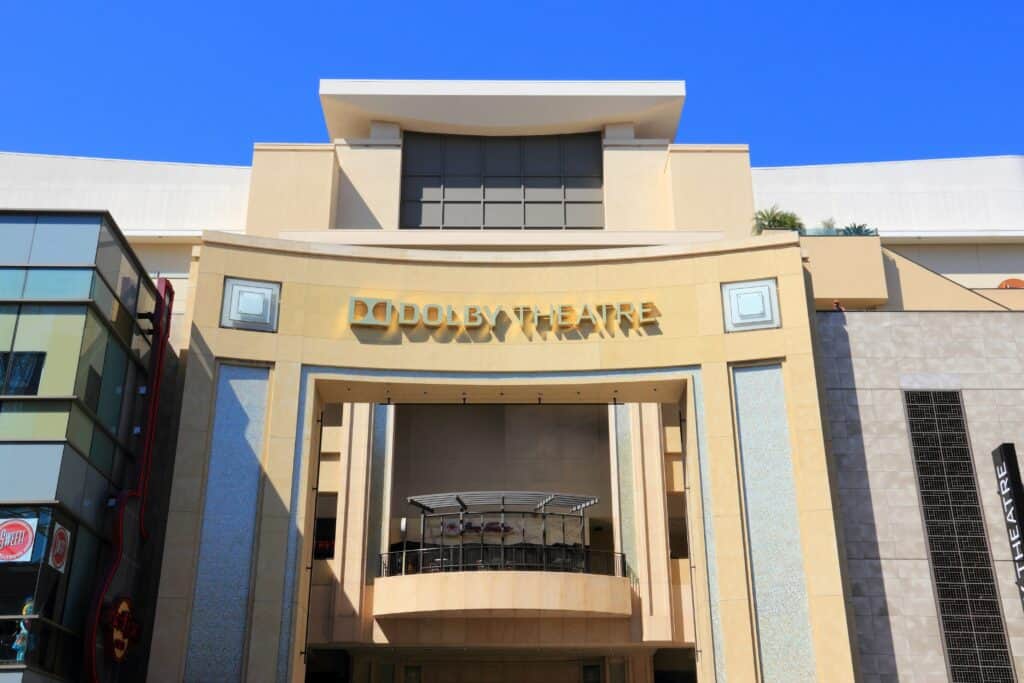
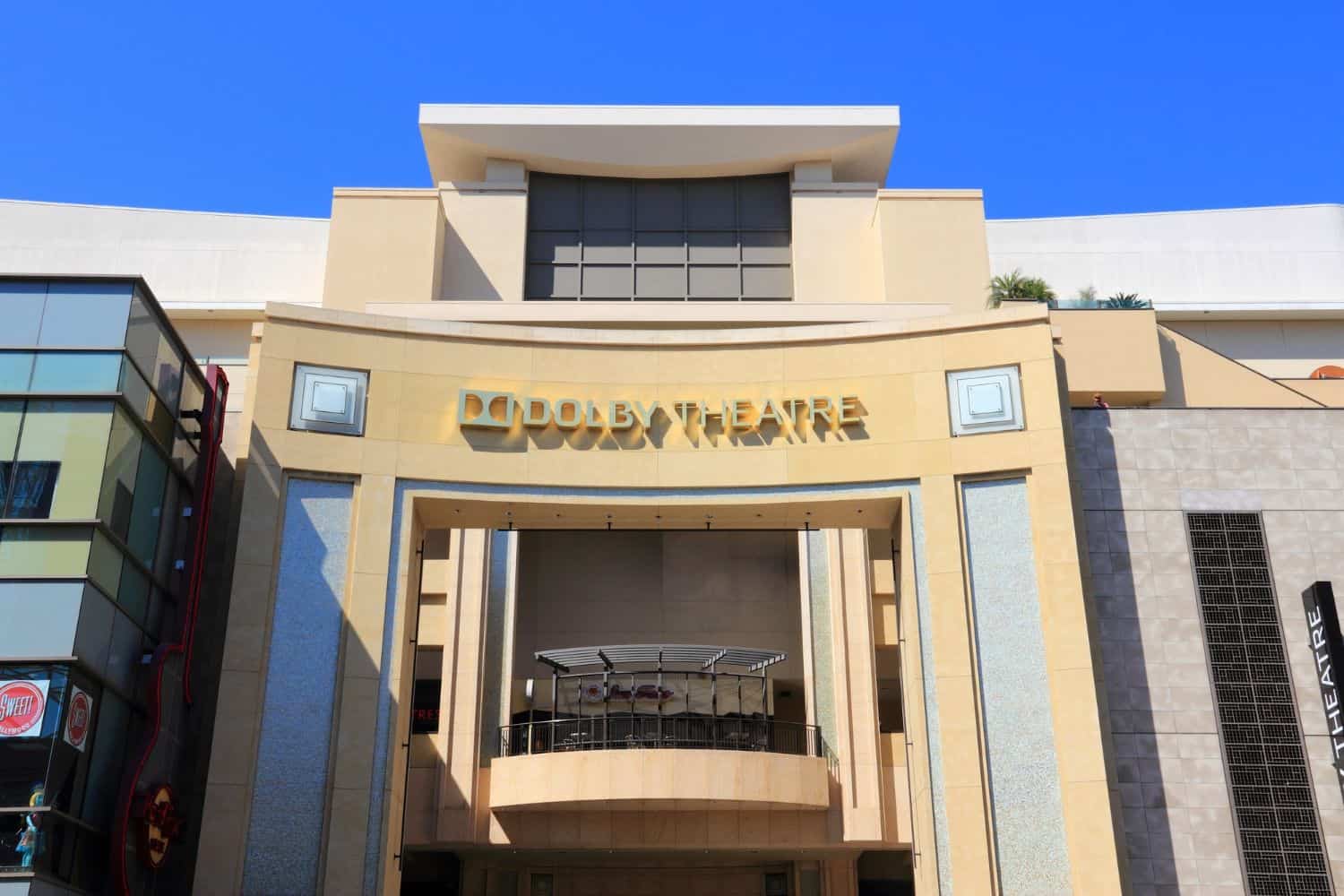
It is not the largest by area or by capacity. It is not even among the 30 largest auditoriums in the world, nor is it distinct for its architecture. However, the fame and worldwide recognition of the Dolby Theatre comes from hosting the Oscars, the world’s most prestigious and well-regarded ceremony that celebrates achievements in the film industry from all corners of the globe.
Besides celebrating achievements in the film industry and giving awards to nominees in 23 categories, the Dolby Theatre also exhibits the latest technological innovations. Well, that makes a lot of sense. The weight of the Academy Awards requires exceptional audio and visual preparation to make the experience unforgettable for both the artists attending the ceremony and the rest of the world viewing it from home.
That said, the Dolby Theatre does just host the Oscars, and neither has it always been home for the Oscars. It was just constructed a little over 20 years ago, mainly for that very purpose. However, it also hosts performances, film premieres and several other artistic events.
Before the Dolby Theatre
Excluding the Dolby Theatre, the Academy Awards annual ceremony was held in 11 different venues, all located in Los Angeles, California. They ranged between super luxury hotels, theatres, auditoriums and even railway stations. Well, that is where the 2021 Oscars were held, the Unions Station. This is Los Angeles’ main railway station and the largest ever in the western United States.
Like everyone seeking but surely never reaching perfection, the Academy of Motion Picture Arts and Sciences always works on getting the event in the best way possible. Despite envelopes getting mixed up or some celebrity slapping another and apologising to someone else, the Academy has always strived for excellence. That is why the venues were constantly changing.
Some of these locations were only used once before they were replaced with other better ones that became the Oscars’ new, yet temporary, home. The venue that was used the longest was the Dorothy Chandler Pavilion. It hosted the Oscars consecutively from 1969 to 1987 and alternately with the Shrine Auditorium from 1988 until 2001.
It seems like the Dorothy Chandler Pavilion was doing really well, and the Academy kept using it for a total of 19 years in a row. But when some logistical issues started popping up and affected the perfect coming-out of the ceremony, the Academy had to move the ceremony to the Shrine Auditorium, only a 10-minute car ride far and with over double the capacity.
But the Shrine Auditorium itself was not any better as it proposed many other disturbing issues. So the Academy went back to the Dorothy Auditorium Pavilion for three years before alternating between the two venues until 1999.
That is probably when the Academy had enough and decided to construct a theatre from scratch and dedicate it entirely to the Oscars. Besides being a way to overcome the issues they have been dealing with for over a decade, one can somewhat think the Academy also wanted to celebrate not just the new millennium but also 70 years of the Oscars by building this new auditorium.
Ovation Hollywood
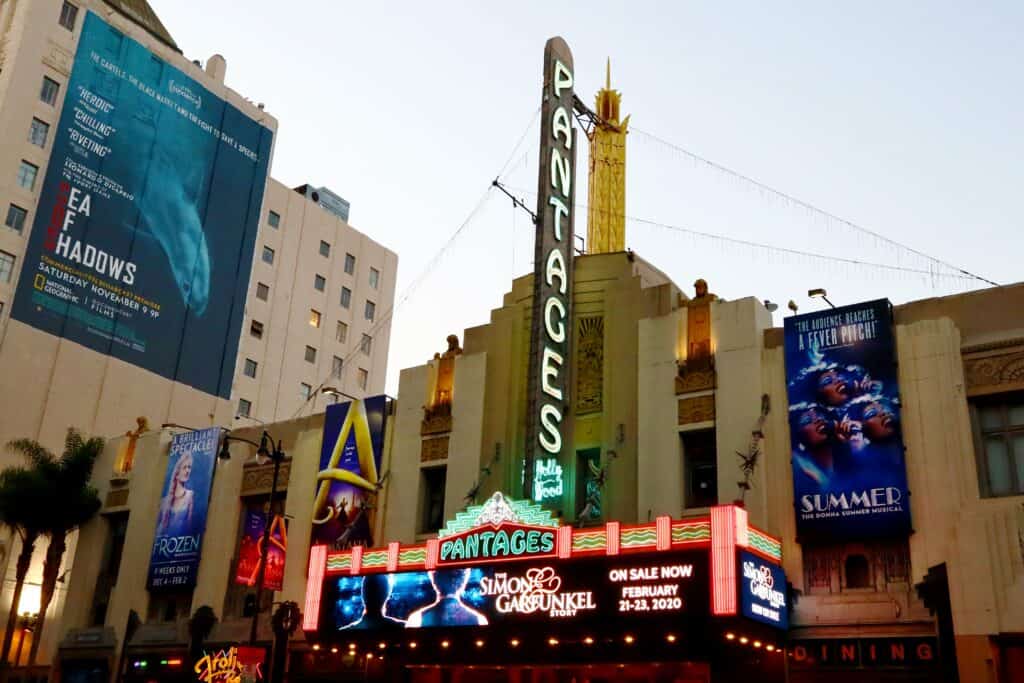
Nowhere but the heart of Hollywood could make a better permanent location for the Oscars. The last time the Oscars were held in Hollywood was in 1960 in the Hollywood Pantages Theatre before it moved out of the entire district to roam Los Angeles.
So in 1997, the Academy asked the development company TrizecHahn to build an entertainment complex right at the intersection of Hollywood Boulevard and Highland Centre—these two are major streets in the district—along the famous Hollywood Walk of Fame.
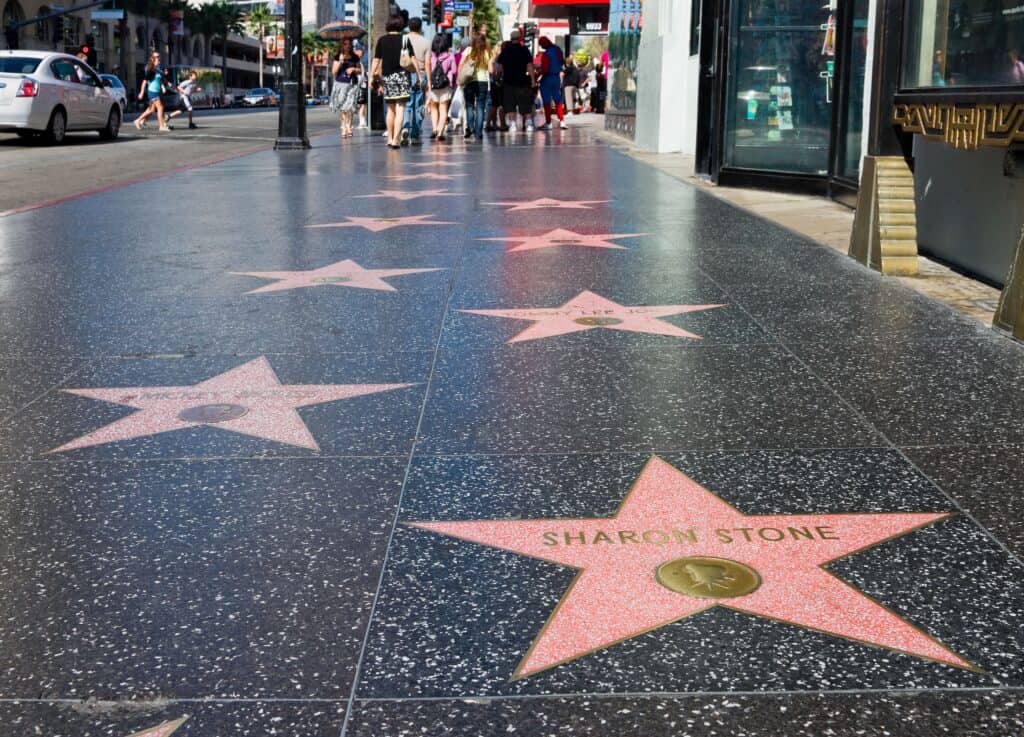
The Hollywood Walk of Fame, by the way, is the sidewalk of 15 blocks that leads to what would later become the Dolby Theatre. It is made of granite with over 2700 stars embedded in it. Each of these stars bears the name of a celebrity that made a remarkable achievement in the film industry.
Anyway, after hundreds of coffees and seven months of negotiations for both parties to come to an agreement, everything was settled that TrizecHahn would build the complex, including the Dolby Theatre, which the Academy would ‘rent’ for 20 years to host their beloved, most honourable ceremony.
With construction work officially starting sometime in 1998 and a total cost of $94 million, the project was completed three years later. On 9 November 2001, Ovation Hollywood was opened.
Ovation Hollywood was built on the very land that once carried the iconic Hollywood Hotel. This was an architectural masterpiece and a glorious hotel that gained even more fame hosting many famous, early Hollywood stars. Yet, the hotel was not meant to stay more than 50 years before a huge ugly, boxy office building replaced it in the mid-1950s.
The Ovation Hollywood is a 36,000-square-metre entertainment complex located at Hollywood Boulevard and Highland Avenue. It comprises a shopping mall, the TCL Chinese Theatre and, most importantly, the Dolby Theatre.
Inside the Dolby Theatre
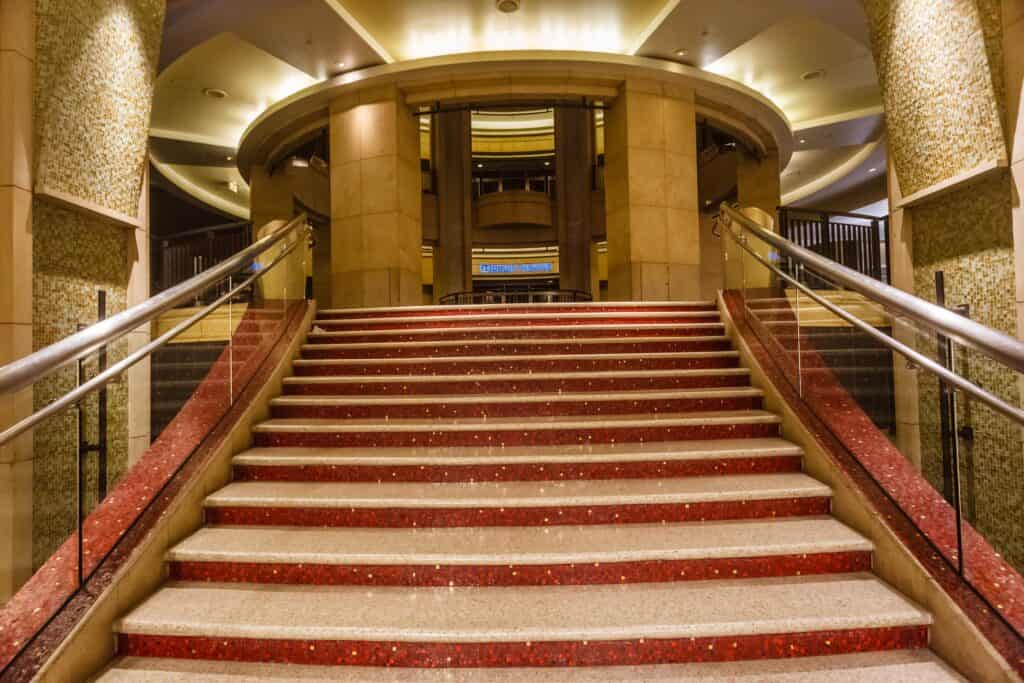
With a primary function of hosting the Oscars, the Dolby theatre was designed by the American architect David Rockwell who was also asked to make the theatre a suitable venue for huge broadcast events such as film premieres.
Inspired mainly by the European opera houses architecture, Rockwell wanted to create a masterpiece that somehow depicts the theatres of the 1920s, and he did. The Dolby Theatre came out in the most incredibly lavish design possible in a way that makes this venue in itself a great tourist attraction.
So what does that incredibly lavish theatre look like from the inside?
Getting into the Dolby Theatre
Though it does not look that spacious from the outside, the Dolby Theatre is genuinely big from the inside.
Everything starts with the main gate. Once crossed, one goes through a wide corridor with glamorous stores on the right and left sides till they reach two sets of stairs that end at the first floor. The first floor hosts a spacious, circular hall crowned with the iconic theatre dome.
The door to the theatre is on one side of that hall. Slipping through it, one can take the grand spiral staircase leading to the Dolby Lounge. There, visitors can see an actual Oscar statuette standing firmly, hands crossed, behind a glass window.
There is also the Winner’s Walk. This is a corridor which every Oscar winner goes through after they finish their I-would-like-to-thank-the-Academy speech and leave the stage. On the walls of this splendid corridor, there are 26 framed pictures of Oscar winners, including the beautiful Grace Kelly and Marlon Brando, who actually did show up the first time he won an Oscar back in 1955—Brando “very regretfully” rejected his second Oscar in 1973 in protest of how Native Americans were portrayed in films.
Speaking of the stage, the Dolby Theatre stage is super large, with a width of 34 metres and a depth of 18 metres. In fact, it is among the three largest stages in the US. Standing on the stage, one can see how enormous the theatre is.
The ceiling has a stunning oval ‘tiara-like’ silver structure that extends vertically on each side of the room. Besides its striking decorative shape, that structure was primarily put up there to hide the incredibly tangled and highly functional network of cables that make the Dolby screening such an unforgettable experience.
The theatre, or the audience chamber as some call it, is five levels comprising 3,400 seats. Each of the five levels is reachable from the outside by the spiral staircase. From the inside, every level is divided into three areas, separated by stairs and comprising about 12 rows of red chairs.
Right in the middle of the second level is a large cockpit dedicated to the orchestra as well as the camera, sound, and stage management. There are also three levels of balcony stalls with boxes on the right and left sides of the room.
The theatre’s full capacity is only made available for the Academy Awards. But if the theatre is used for film screenings, the capacity shrinks to 1600 seats.
Renaming
Ever since it was opened and up until 2012, the now-called Dolby Theatre was named the Kodak Theatre. Do you remember that famous leading company in analogous photography? When the theatre was constructed, Kodak paid $75 million so the theatre would be named after it.
But we all know the sad story of the company’s roll-down for refusing to upgrade, if we just ridiculously boil down what happened to this. In 2012, the Eastman Kodak Company announced bankruptcy and therefore, its name was taken off the theatre.
Such a thing was so sudden that no one thought of an alternative name beforehand. As a result, the theatre was temporarily given the name the Hollywood and Highland Center until a better name was thought of.
Less than three months later, Dolby Laboratories, Inc. bought the naming rights of the theatre for 20 years, eleven of which have already passed as of 2023. That is why the Dolby Theatre is now called the Dolby Theatre.
The Dolby Experience
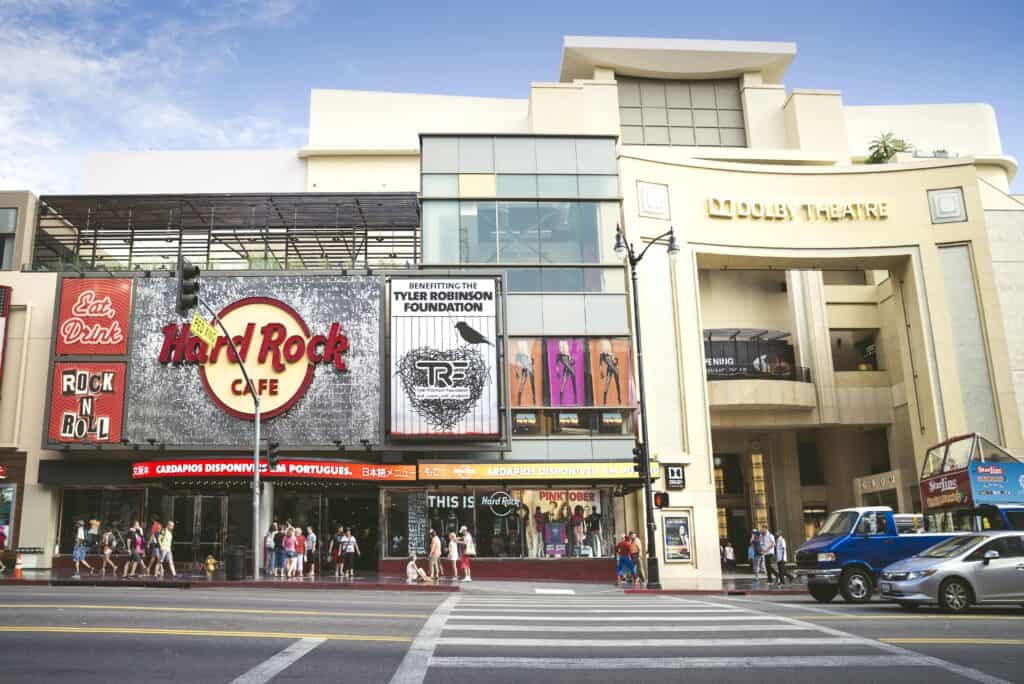
That said, Dolby is not just the name of the theatre, but it is also the provider of the technologies that make this theatre the best venue for artistic events.
Dolby Laboratories is a leading company founded in 1965 and headquartered in San Francisco. Specialising in developing voice, image, and audio for cinemas, Dolby Laboratories provides the world’s most vibrant screening experience, featuring the purest sound and most spectacular picture.
In addition, the company develops sound systems for computers, cell phones and even home theatres through a set of highly advanced and functional products. That is why that sticker on my laptop reads Dolby Audio ™.
So the Dolby Theatre is equipped with the latest technologies in sound and picture, known as the Dolby Atoms, the Dolby Vision, and the Dolby 3D. The latter is especially vital for when the venue hosts film premieres.
Tours
As a significant tourist attraction in itself, the Dolby Theatre provides 30-minute guided tours to almost every part of the theatre with the experience of going on stage and viewing the spacious room from Jimmy Kimmel’s perspective.
Tours take off every half hour from 10:30 am to 4:00 pm on a daily basis. The theatre itself is open all week long from 9:00 am to 5:00 pm, with opening times undergoing change during the holidays.
By now…
You hopefully have more than just a glimpse of the Dolby Theatre, the most famous auditorium in the world that hosts the most famous artistic event in the world, the Oscars.
Hollywood is probably the world’s most recognised district and a great tourist attraction in and of itself. Here are 15 things to do in the City of Stars.
The Irish Mafia: A Closer Look at Organised Crime Syndicates
History and Heritage
26/04/2024

The Ultimate Guide to Eating Out in Ireland: Tips and Recommendations
Food and Cuisine
26/04/2024

Plan Your Perfect Trips to Northern Ireland: A Guide to the Best Tours and Vacation Packages!
Northern Ireland
26/04/2024

Ultimate 7-Day Scotland Driving Itinerary: Explore Edinburgh, Skye, and More!
Scotland
26/04/2024

The Ultimate Scotland Road Trip Itinerary: Exploring the Spectacular Routes and Landscapes
Scotland
26/04/2024