


Palermo, Best 37 Things in the Sicilian Flower
Updated On: November 08, 2023 by  Aya Radwan
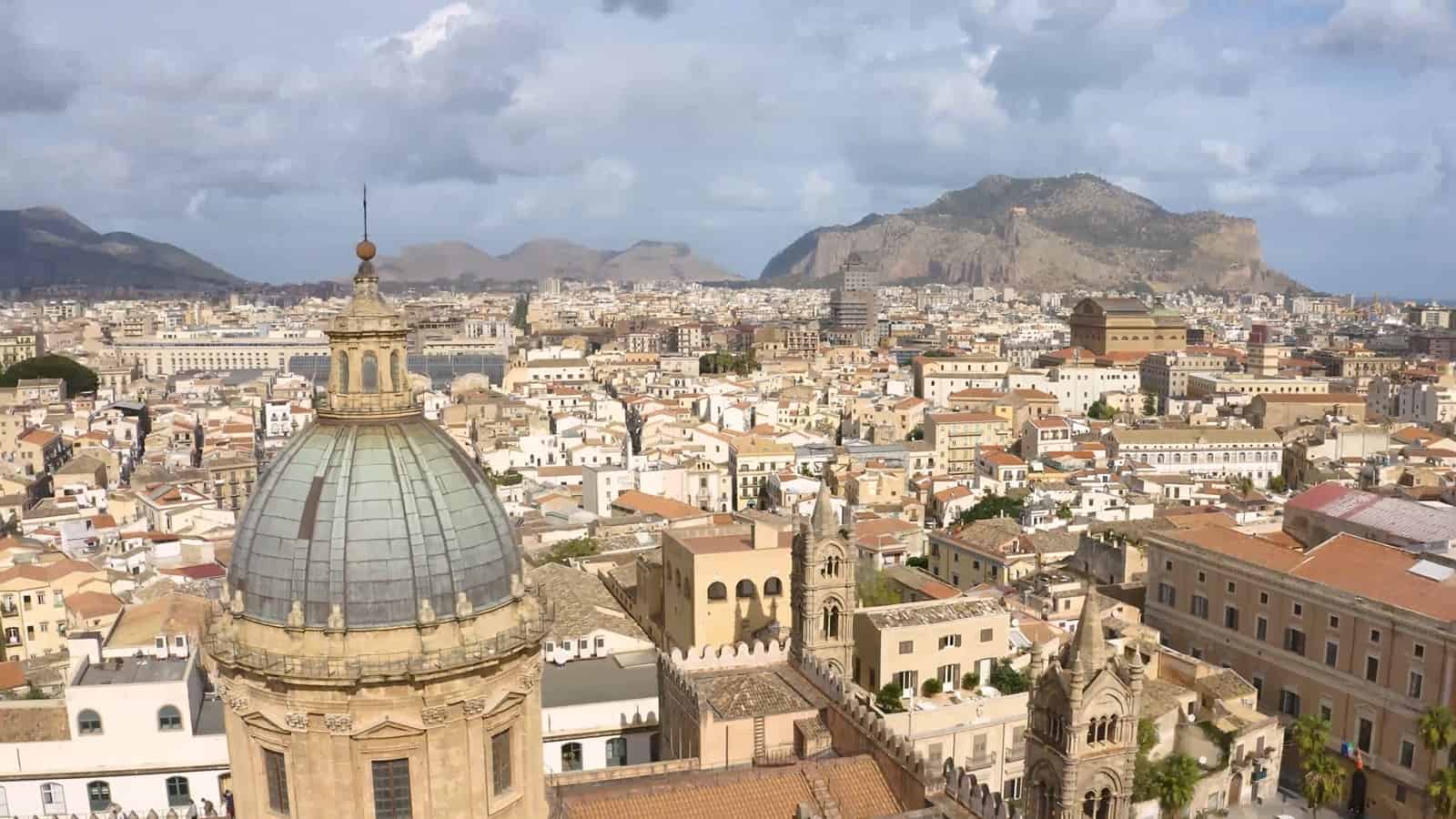
A beauty by the Tyrrhenian Sea, Palermo is a 2,700 years old city in the northwest of the island of Sicily. Palermo is a city with rich history; living through the eras of The Carthaginians, The Romans, The Arab Rule and The Norman Conquest after which Palermo became the capital of the new kingdom of Sicily.
A hot summer and warm weather all year round will greet you when you set your eyes on Palermo as your next tourist destination. Whether buzzing city life is your jam or artistic and cultural activities are your favorite pass time on vacation, Palermo will satisfy your appetite.
How to get to Palermo?
- Fly in:
Palermo has an international airport, so you can choose to fly over anytime you wish. From there, you can use an Airport Shuttle, with a bus leaving every 30 minutes, all for a ticket of 6 Euros if it’s one way or 10 Euros for a return ticket.
You can use the train, for a journey of 60 minutes, with a train taking off every half hour and a cost of 5.80 Euros per ticket. Taxis are not an advisable means of transportation since they can be very costly.
- Ferry boat:
Palermo is connected to other major Italian ports, you can get to the Port of Palermo aboard the ferry from Naples, Genoa, Valletta (Malta) or Cagliara (Sardinia).
- By train:
You can catch the train coming from Rome or Naples, via the train ferry across the strait of Messina.
What to do in Palermo?
Palermo is one of the Italian cities where you can get lost wondering which tourist sites to visit and where. The city is a coastal city emblazoned with jewels of palaces, castles, churches, theaters and markets. This city is oozing with history, here are the amazing things to do and the must do’s if you’re ever in Palermo.
Best Things to do in Palermo
- Palazzo dei Normanni or the Norman Palace:
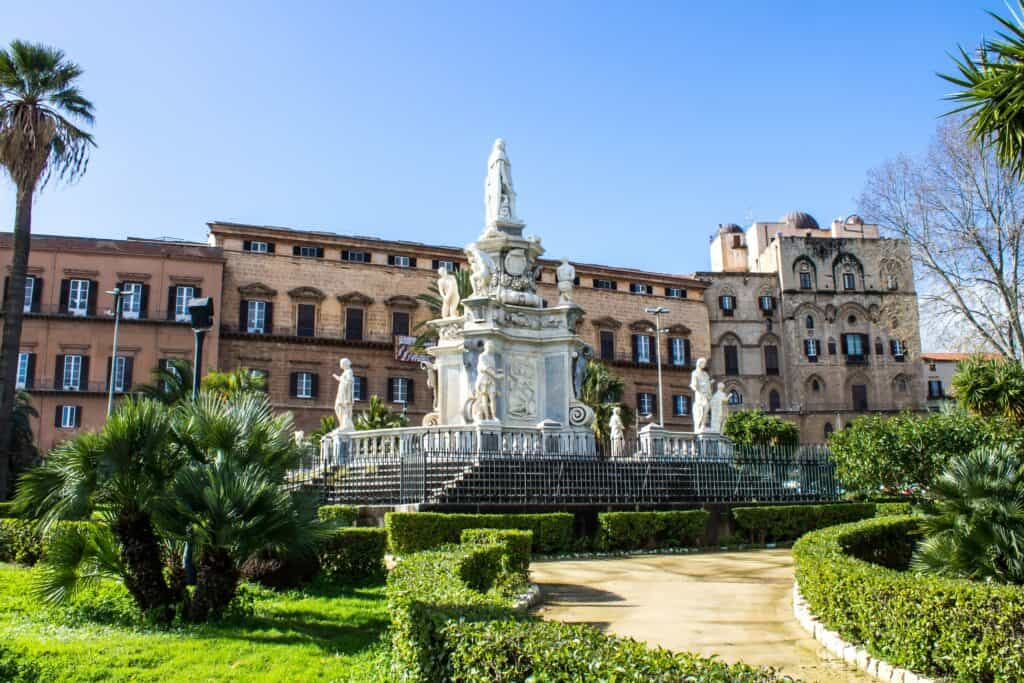
It started as the seat of the kings of Sicily during the Norman domination and became the seat for all the subsequent rulers of Sicily. The Norman Palace in Palermo kept its significance as the seat of the Sicilian Regional Assembly since 1946 and housing the Astronomical Observatory of Palermo.
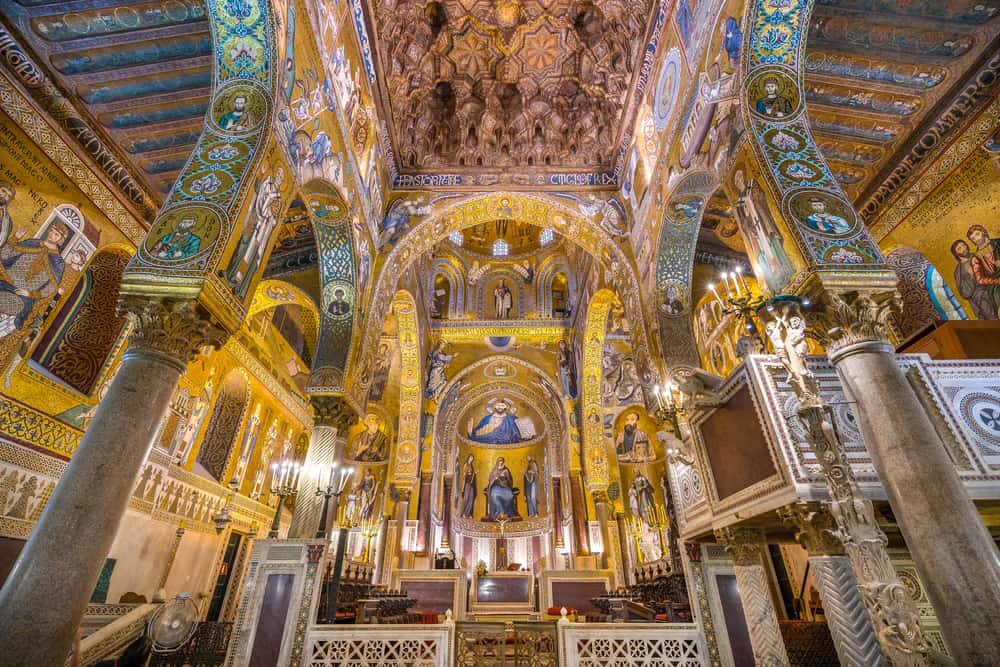
You can marvel upon the beauty of the unique mosaics, the delicately wooden roof and marble work in the palace which are embodied in the Cappella Palatina.
- The Zisa:
Ordered to be built by King William 1 of Sicily, the castle is a UNESCO Arab-Norman Palermo World Heritage Site. Some of the castle’s original Arabic and Islamic features washed away after several modifications to the structure. In present day, some rooms still have Islamic art pieces, tools and artifacts from the Mediterranean area.
- Palazzo Chiaramonte:
Currently a museum, the palace once served as a prison for the nobles who once rebelled against emperor Charles V with some of those nobles’ heads discovered during restoration work in the 20th The palace has a great painted wooden ceiling by Cecco di Naro, Simone da Corleone and Pellegrino Darena.
- Palazzina Cinese:
The formal royal residence of The House of Bourbon-Two Sicilies is now a museum. The three-story palace was originally commissioned by King Ferdinand III of Sicily and is decorated by paintings and frescos of Giuseppe Velazquez and other artisits.
- Palazzo Abatellis:
One of many museums in the rich city of Palermo, this palace is home to the Gallery of Art for the Sicilian Region. The example of Gothic-Catalan architecture building was once the residence of Francesco Abatellis and his wife, later converted to a monastery and several modifications were done to adapt it to the new residence and purpose. You can feast your eyes on many wooden works of the 12th, 14th and 15th centuries. The large fresco of the Triumph of Death is exhibited in the former chapel.
- Antonino Salinas Regional Archeological Museum:
As part of the Olivella monumental complex, the museum exhibits some of the richest collections of Punic and Ancient Greek Art in Italy including the history of Sicily. A famous archeologist; Antonino Salinas, after which the museum is named served as the museum’s director from 1873 to 1914.
In addition to Salinas’ private collection, the oldest collection taking place beside it is the University Museum Collection acquired in 1814. The collection of Pietro Bonci Casuccini; the most important Etruscan collection outside of Tuscany is the third collection you will spot in the museum.
- Palermo Cathedral:
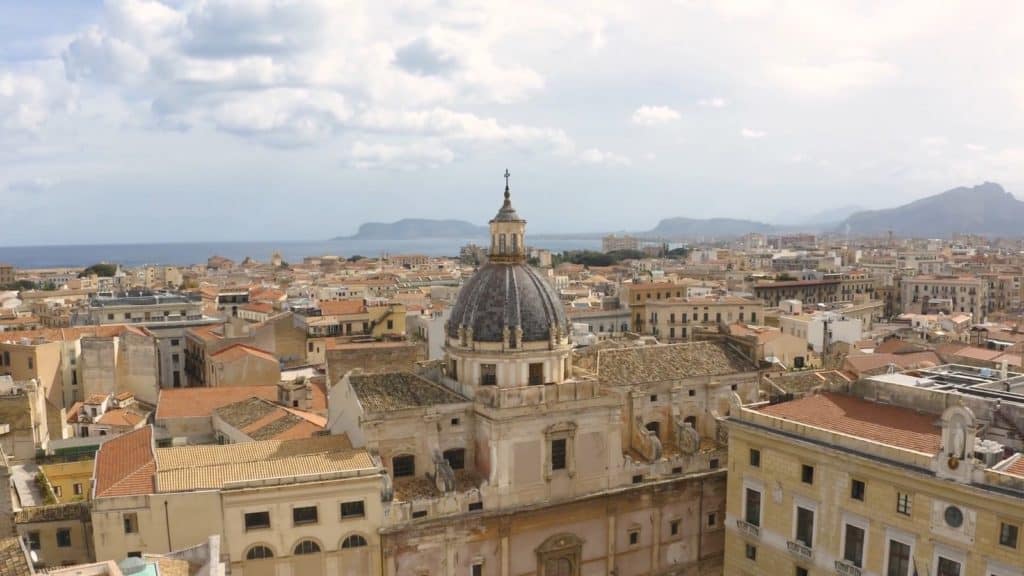
It is an architectural complex dedicated to the Roman Catholic Archdiocese of Palermo. The diversity of its keepers throughout history can be seen in the diverse styles of architecture around the church. It was originally built by Walter Ophamil, the Norman archbishop of Palermo and King William II’s minister in 1185.
The Saracens turned it into a mosque following their conquest of the city in the 9th The final resting place of several royals and imperial characters is enclosed in the church. King Roger II, his daughter Queen Constance I of Sicily, her husband Emperor Henry VI and their son Emperor Frederick II are among many others buried in the Palermo Cathedral.
- Church of San Cataldo:
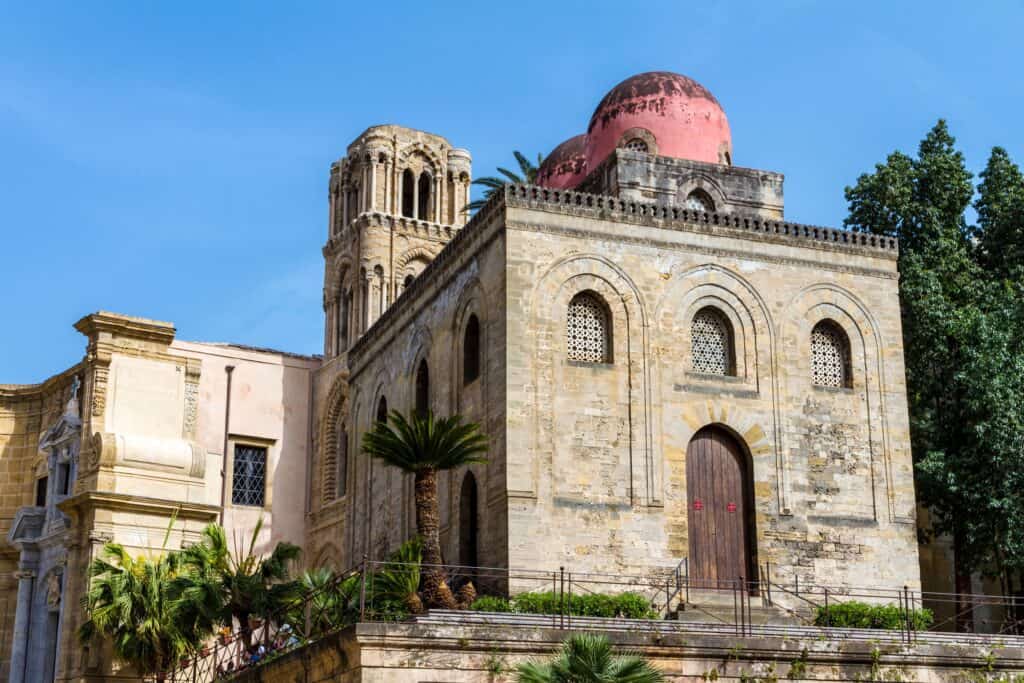
This red-domed church is another great example of the Arab-Norman architecture; one of numerous signs of how architecture flourished under the Norman rule of Sicily. The church acquired a World Heritage Site status in 2015. Inside, you can evidently see how the trademark of Norman architecture which is used in other prestigious churches across Europe, like the Cathedral of Durham in England.
- Church of Santa Maria dell’Ammiraglio:
Another one of Palermo’s churches which has World Heritage Site status, the Church of St. Mary of the Admiral is a church that shows the different architectural and artistic styles that paralleled the history of the city of Palermo.
The elements showing the influence of Islamic architecture both inside and outside the church, it has been compared to another magnificent building; the Cappella Palatina which also exhibits signs of both Islamic and Byzantine architectural influence. Church of Santa Maria dell’Ammiraglio can be found in the Piazza Bellini in Palermo.
- The Church of the Gesù (Casa Professa):
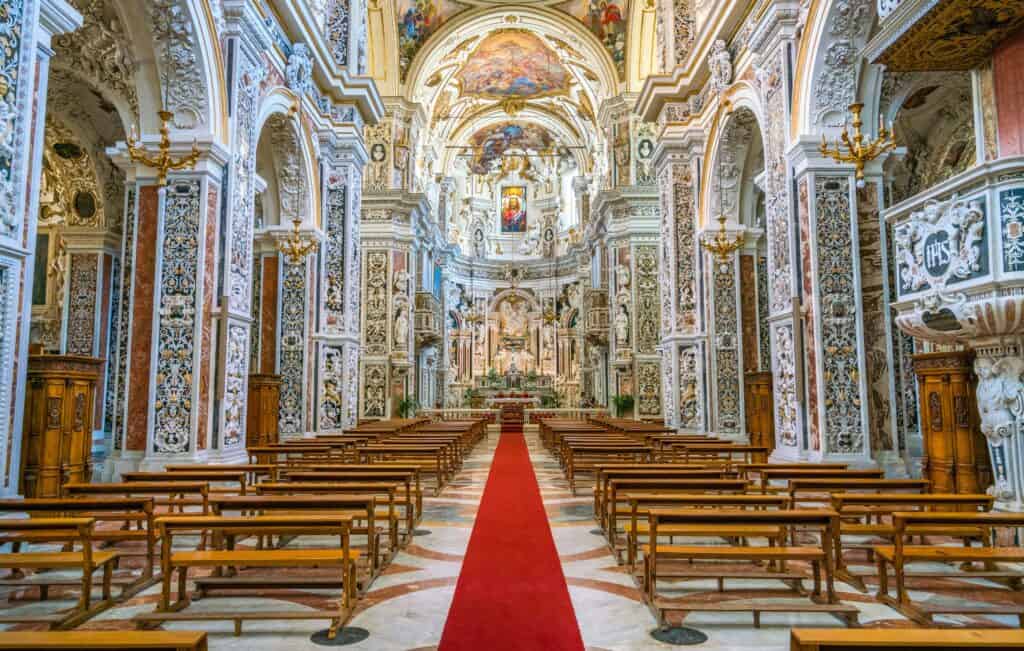
This Jesuit architectural-built church is one of the most important baroque churches in Palermo and in all of Sicily. It was declared a national monument in 1888. During the Second World War, a bomb destroyed the church’s dome, most of the surrounding walls and most of the wall paintings in the chancel and transepts. The church reopened after a two-year restoration plan on February 24th, 2009.
- The Church of Saint Francis of Assisi:
Located in the historic center of Palermo, this church has the title of Minor Basilica. You can explore the beauty of Gothic and Sicilian Baroque while walking around this important church. It suffered several damaging events through the years; an earthquake in 1823 and air raids in the Second World War but the church was restored in recent decade.
- San Giovanni degli Eremiti:
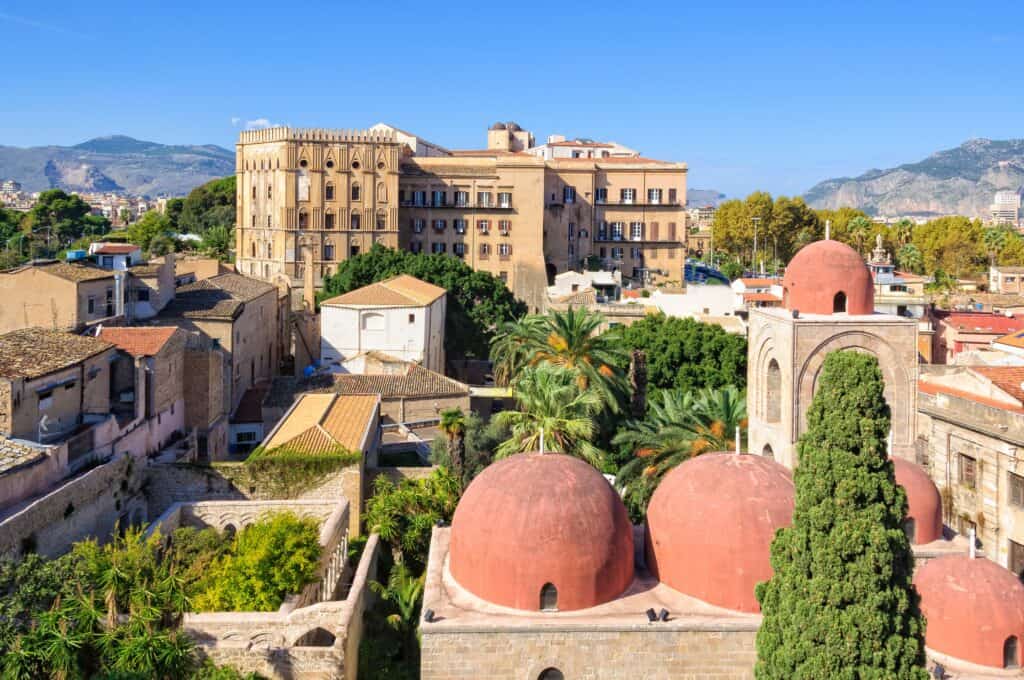
Dating back to the 6th century, St. John of the Hermits church underwent several restorations, one of which attempted to restore its original medieval appearance. Distinguishable by red domes, Frances Elliot described it in her 1882 Diary of an Idle Woman in Sicily as, “….totally oriental, it would fit well in Baghdad or Damascus…”
- Santa Caterina (The Church of Saint Catherine):
Between Piazza Bellini and Piazza Pretoria, in the heart of the historic center, which is the same area where other landmarks exist. Founded as a female monastery under the direction of the Dominican Order, the monastery was dedicated to Saint Catherine of Alexandria. On several occasions though, the church suffered from continuous damages.
- Santa Maria della Catena:
The signature style of this church is late Renaissance and Gothic-Catalan architectural style. Connected to the church is the current house of State Archive, which once was a convent house in 1602.
- San Giuseppe dei Teatini:
Perceived as one of the most unique examples of Sicilian Baroque in Palermo. The construction of the church began with the 17th century, though the unique frescos inside were severely damaged during the Second World War. Apart from beautiful frescos by Filippo Tancredi, Giuseppe Velasquez and other artists, the most important piece of art in the church is a wood crucifix by Fra’ Umile of Petralia.
- San Domenico:
Located in the Piazza San Domenico, the Church of Saint Dominic is known as the Pantheon of Illustrious Sicilians due to the fact that it serves as a burial ground for many Sicilian historical and cultural figures. Francesco Ferrara; an Italian economist and political scientist and Giovanni Meli; an Italian poet are among those esteemed characters buried in this church.
- Oratory of Saint Lorenzo:
Founded in the late 16th century, the Oratory of Saint Lawrence is located near the Basilica of Saint Francis of Assisi, within the historical center of Palermo.
- San Giovanni dei Lebbrosi:
It is believed that the architects responsible for dei Lebbrosi were Fatimid because of the great influence of Arabic architecture such as Kufic script on some of the internals columns of the church. The title of the church comes from a leprosarium which was built to care for King Roger II’s brother who died from leprosy. The church was dedicated to St. John the Baptist.
- Santa Maria della Gancia:
Also known as Santa Maria degli Angeli is located on Via Alloro #27 in central Palermo. Some believe that the name La Gancia comes from the incident where a monk from the adjacent Convent of the Gancia who fished an icon of the Child Jesus from the sea there.
With a façade mixed between late Spanish Gothic portal and awkward Renaissance windows, the church’s interior is decorated using the Baroque style. An act of oppressing the revolution took place outside of the church were a number of patriots and monks were killed by Bavarian mercenaries outside its walls.
On the other hand, two Italian patriots hid themselves among the tombs and were later able to escape through a small opening in the wall which is still marked on Via Alloro.
- Santa Maria dello Spasimo:
Also known as Lo Spasimo, is an unfinished Catholic church is the Kalsa neighborhood in Palermo. Currently the church opens its arms to open air musical, theatrical and cultural events, seeing as it lacks a roof. The construction of the church was never finished because the resources allocated to it, were diverted to reinforce the defensive power of the city against the rising Turkish threats.
- Church of the Magione:
Officially known as the church of the Holy Trinity. This church was built in the Norman style in 1191 by Matteo d’Ajello, who donated it to the Cistercian monks.
Alternative things to do in Palermo
What if palaces and historical religious buildings are not your cup of tea? No problem at all. If you still desire to have a great time in Palermo, all you got to do is ask and the city will fulfill your wishes.
In Palermo there are many other public monuments, squares, markets and opera houses. There’s even the Capuchin Catacombs if you’re interested in mummies.
Or Mandamento Tribunali is a historical quarter in the city of Palermo. Who would believe that the entire place known as La Kalsa was actually underwater, where it is said that Hamilcar and Hannibal used to dock their ships as they prepared their attacks on the Greek city of Himera. The once described Kalsa as the Arab ghetto by Sicilian American novelist Dodici Azpadu, now plays host to art galleries, restored churches and palaces.
- Quattro Canti:
A beautiful Baroque style square in Palermo, it was laid on the crossing of two main streets in the city; the Via Maqueda and the Corso Vittorio Emanuele. The piazza is octagonal with four sides being the streets and the other four sides are all Baroque buildings. The façades of the buildings contain fountains and statues of the four seasons, the four Spanish kings of Sicily and the Patronesses of Palermo; Christina, Ninfa, Olivia and Agata.
- Piazza Pretoria:
Which is also known as the Square of Shame, is at the limits of the district of Kalsa. As suggested by the name of the square, the sixteen statues in the middle of the fountain are said to represent corrupt municipalities.
- Charles V Monument:
It was designed to be placed at the center of the Quattro Canti, the statue represents Charles V as a triumphant Roman Emperor. It was erected to refer to the frequent stops Charles V took in Sicily and Palermo in particular. The statue was created by Scipione Li Volsi of the Li Volsi Family of Sicilian sculptors.
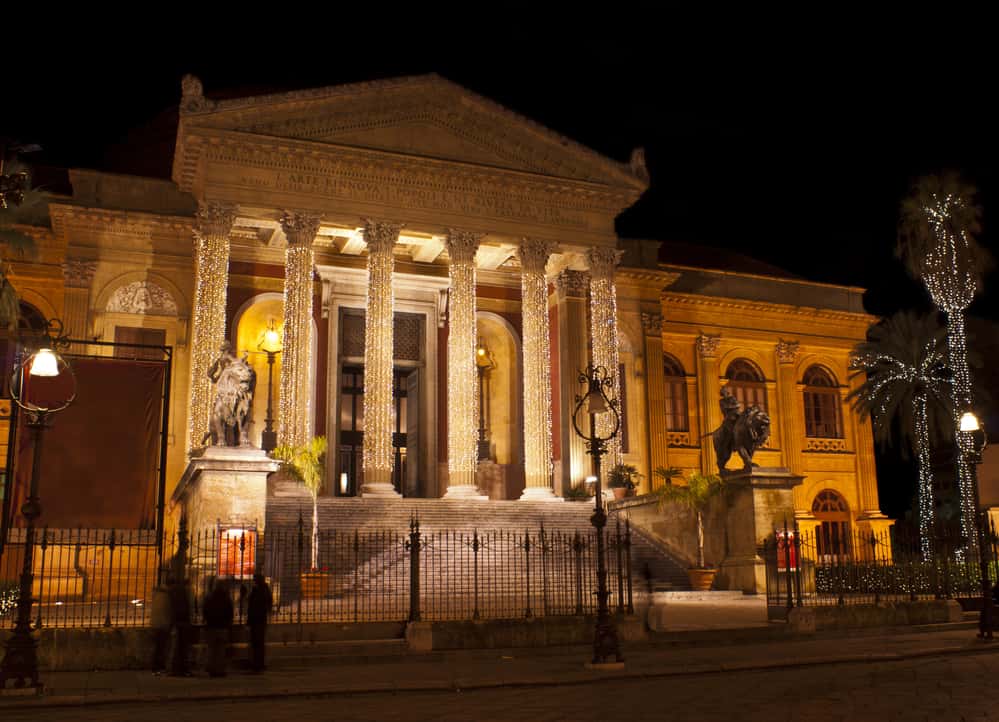
- Teatro Massimo (From October to May):
An opera house and company that are the biggest in Italy and one of the largest in Europe. Over the course of the past decades, the teatro had suffered a great deal of neglect, not due to in-appreciation of its cultural value, but due to political feuds and corruption. You can enjoy these beautiful atmospheres during the Teatro Massimo season which opens in October and it includes ballet, opera and concerts by international artists.
- Teatro Politeama:
Considered to be the second most important theater after Teatro Massimo. It is located in the Piazza Ruggero and is home to the Orchestra Sinfonica Siciliana since 2001.
- Teatro di Verdura (From June to September):
During the summer days, the Teatro Massimo closes its doors and transfers its shows to take place in the open air in Teatro di Verdura in Viale del Fante.
- Festino di Santa Rosalia (From July 9th to 15th):
As suggested by the name, each year, for four centuries the people of Palermo celebrate Santa Rosalia. After saving the city from a dangerous plague in 1600, Santa Rosalia became the patron saint of the city.
During this festival which extends for a week, the city welcomes all visitors to celebrate the patron saint, including traveling theatrical and musical shows giving performances with relevance to the life of the saint. The highlight of the festivities is the procession of the monumental cart that crosses the Cassaro as far as the Marina. All festivities end with a breathtaking firework show which marks the end of the festival.
- Palermo Estate – from June to September (A must-do in Palermo):
During the summer season, which lasts from the beginning of June to the end of September, Palermo livens up and opens its squares and streets to musical shows of all kinds, traveling theater shows, folklore events and lots of other events too.
- Orto botanico di Palermo (Palermo Botanical Garden):
A visit to the Palermo Botanical Garden is one of family things to do in the city. It’s not only the largest botanical garden in Italy, but also a research and educational institution of the Department of Botany of the University of Palermo. The Orto includes greenhouses, the Aquarium, the Bio-ecological and Geographic Zone, the Experimental and Research Zone, Engler’s Zone, The Herbarium and a Gene Bank.
- Festival di Morgana (November):
Since 1985, the Festival di Morgana is organized in celebration of the puppets. Known as the Opera dei Pupi, all around the city of Palermo you can see the various artists practicing this beautiful form of art. The International Puppet Museum is responsible for organizing this festival through the Association for the Preservation of Folk Traditions.
During the festival, historical Sicilian Pupari families partake in a number of puppet shows. This festival was deemed by the UNESCO the first Italian Oral and Intangible Heritage of Humanity.
In this emotional building, you will find the mummies of more than 8,000 people with some intricately preserved they seem very much alive. The corpses in these catacombs belong to people of different backgrounds. The Capuchins, representatives of noble families and representatives of the clergy. This one of a kind place in the world to visit is home to a beautiful reserved corpse of a young girl called Rosalia. Visiting the Capuchin Catacombs is one of the top things to do in Palermo.
- The Heliometer of the Cathedral:
This heliometer is very simple, it is a tiny hole in one of the minor domes which acts as a pinhole camera that projects an image of the sun onto the floor at noon. The purpose of the heliometer is to standardize the measurement of time and the calendar.
- Mount Pellegrino:
Offering the most panoramic view of the city, its surrounding mountains and the sea, Mount Pellegrino is a hill facing east in the bay of Palermo.
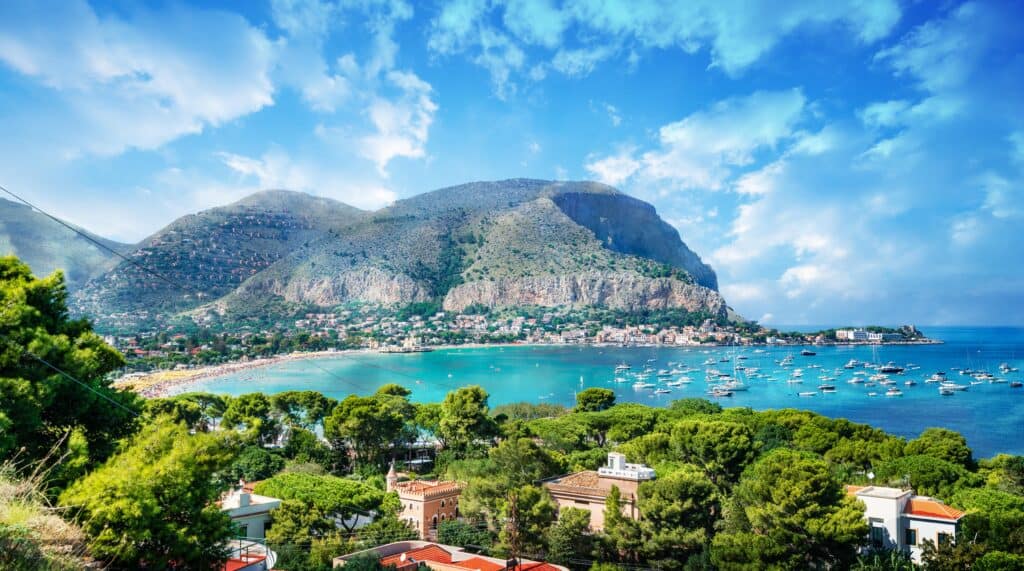
- Monte Gallo near Mondello Beach:
This mountain gives another panoramic view of the sea. Whichever you choose to do on the beach of Mondello, you are guaranteed to have a good time. The Square or the seaside village is equipped to help you with whichever you need. From cafes and restaurants to take-away seafood and sandwiches, your appetite will be satisfied. The wonderful beach of Mondello opens its arms to all world-famous windsurfing champions who participate in the Merit Cup Windsurf World Festival, in May of each year.
- Street food and ancient markets:
The American network Virtual Tourist ranked Palermo as no.5 among the best producers of street food in the world. A street food tour is one of the inexpensive things to do in Palermo and is a must along with tours of the ancient markets of Palermo.
You can take a tour during the day or the night where you would find everything among the stalls full of colorful merchandise. Panelle e cazzilli, bread with spleen, Arancine, Sfinciuni, Stigghiole, Boiled Octopus are just some of the specialties that have made Palermo one of the world capitals of street food. You can go shopping or eat dishes already cooked according to the recipes of the local tradition. One of the markets worth of a visit is the San Lorenzo Market.
If you’re planning your next trip, you should consider coming to Palermo where you can enjoy different festivities all year round. Go sightseeing, sunbathing on the shores of the sea, walking and breathing in the deep fragrances of the street markets while grabbing bites to eat like Palermitans do.
A visit to a palace, a castle or may be both followed by a solemn walk through one of the city’s majestic churches and places of worship is what you need to get away from your everyday busy life.
Welcome to Palermo!
Unveiling the Most Terrifying Haunted Tours in Scotland
Scotland
25/04/2024

7 Top Amusement Parks in England for an Unforgettable Adventure
England
25/04/2024
Miami Tourism Statistics: A Comprehensive Overview of Visitor Numbers and Revenue
Travel Statistics
25/04/2024
The Enchanting Charm of Scotland Wedding Castles!
Scotland
25/04/2024
London in June: An Ultimate Guide to 13 Unmissable Events and Festivals
United Kingdom
25/04/2024