


Outlander: Filming Locations of the Popular TV Series in Scotland
Updated On: April 24, 2024 by  Dina Essawy
The best-selling author Diana Gabaldon has managed to create a world that has captivated fans and readers for decades. Even though she hadn’t set foot in Scotland when she began writing her book series Outlander, the basis of the popular TV series of the same name, she did capture the history and culture of the beautiful country.
This attracted readers from all over the world, prompting the Scottish government’s tourism agency to give Gabaldon an honorary award for generating a flood of tourists to the captivating locations across the country. According to VisitScotland, Outlander has increased tourism by 67% at the sites mentioned in the books or used in filming.
The American author and research professor wrote the first book in the series and part of the second before finally making it to Scotland. When she finally made it to Scotland, she finally visited some of the locations that have either appeared or would, later on, make an appearance in her books, such as the England-Scotland border stone that appears in Book 3, “Voyager”.
The series tells the tale of Claire Randall, a WWII nurse who visits Scotland with her husband, only to be transported back to 18th century Scotland and meets the dashing Jamie Fraser and goes on the adventure of a lifetime. Along the way, they try to manipulate historical events in an effort to save Jaime’s life, such as the Jacobite Uprising in Scotland.
If you’re looking to retrace the steps of these timeless characters, here are some important locations in Scotland that should be on your itinerary.
Outlander Filming Locations
Edinburgh
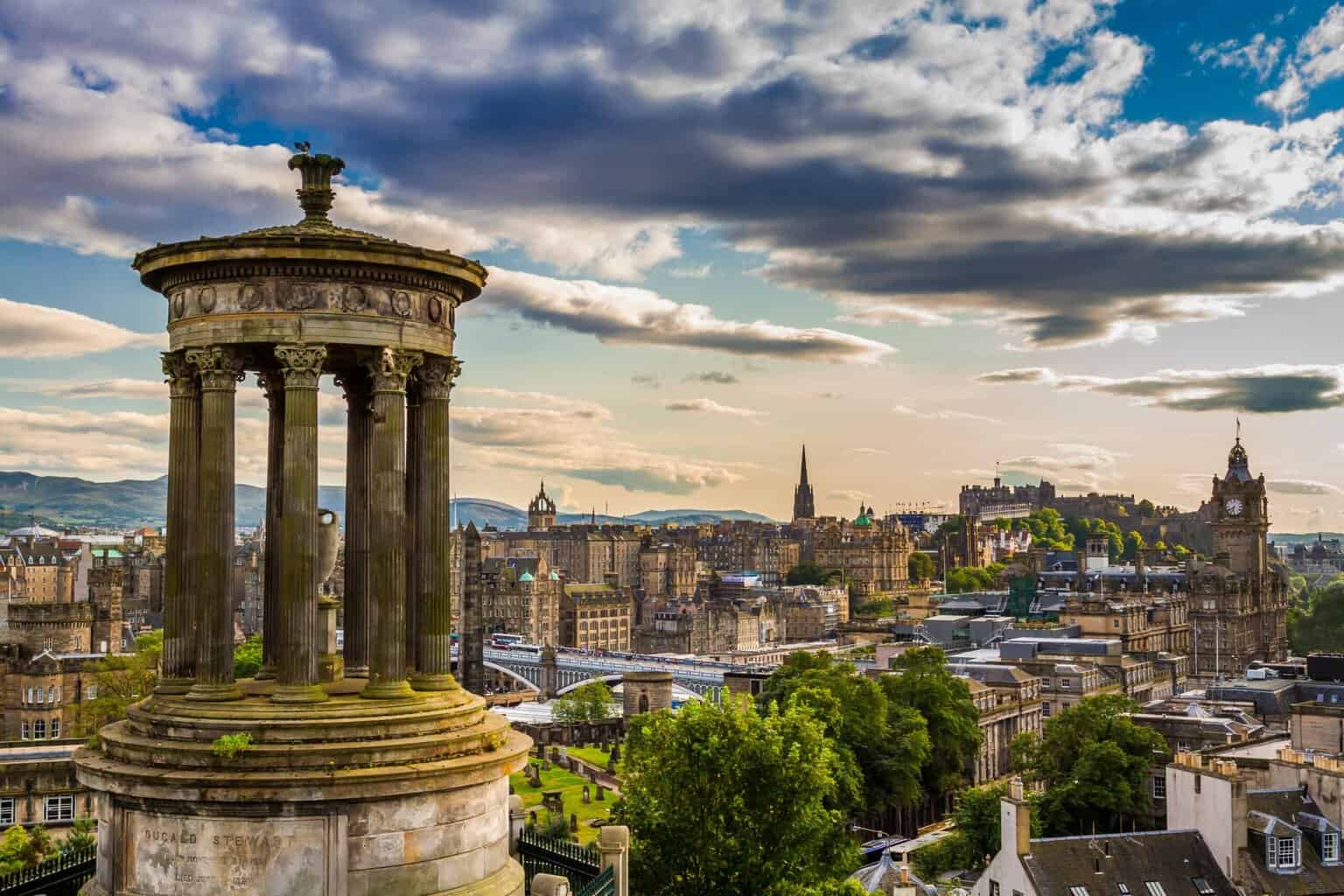
Edinburgh plays a key role in the book and TV series as it is where the Jacobites led by Prince Charles Edward Stuart (Bonnie Prince Charlie( established their base for their uprising, a key event that is prominently featured in the show.
Explore Edinburgh’s Old Town for some of the most well-known Outlander filming locations.
Palace of Holyroodhouse
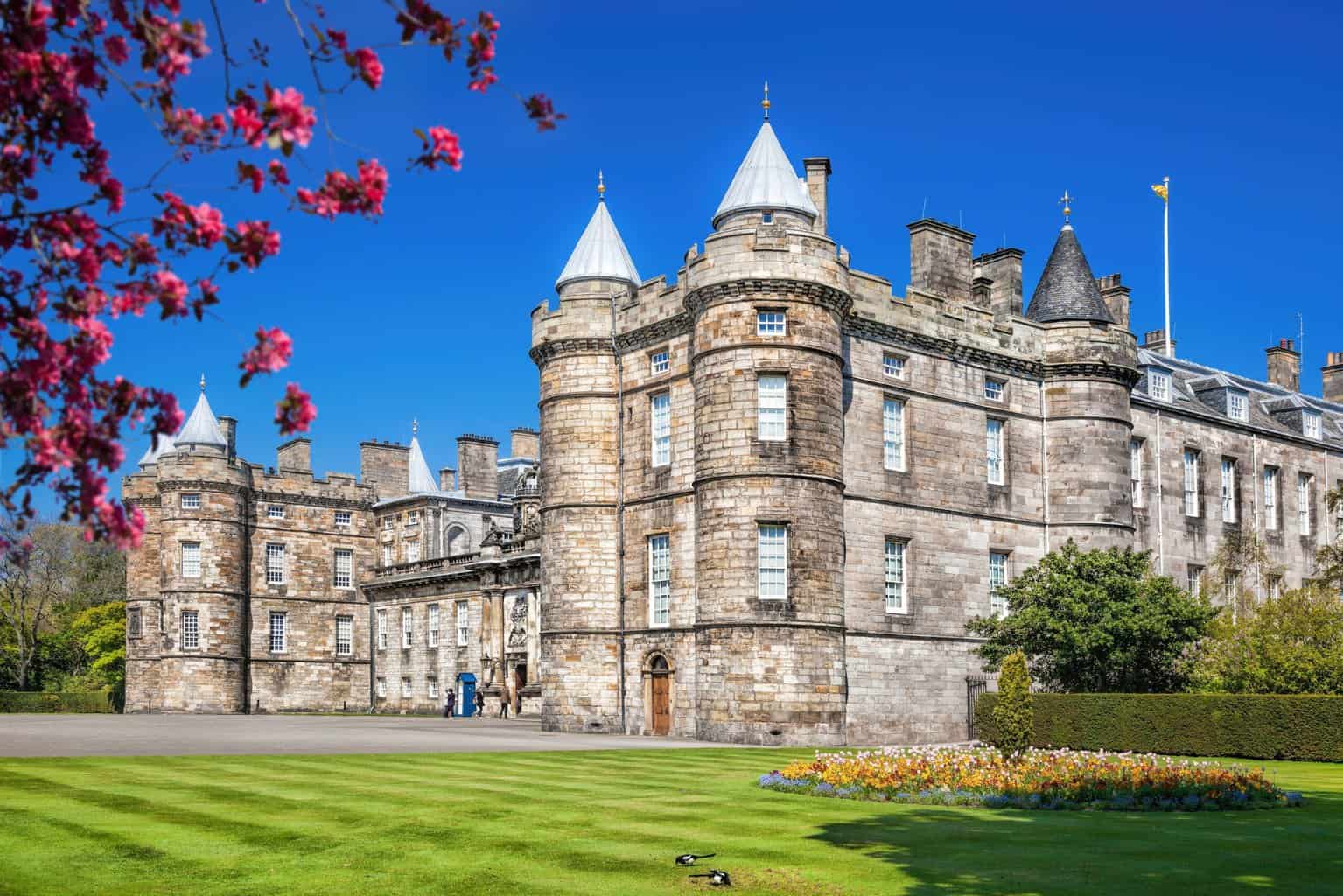
The Palace of Holyroodhouse is a royal residence of Queen Elizabeth located at the bottom of the Royal Mile in Edinburgh, opposite Edinburgh Castle, when Queen Elizabeth II spends one week each summer, for several official engagements and ceremonies.
The 16th-century palace, once the residence of Mary, Queen of Scots, is open to the public throughout the year, except when members of the Royal Family are in residence.
The principal royal residence in Scotland since the 16th century, in September 1745, Bonnie Prince Charlie held court at Holyroodhouse for six weeks, which is portrayed in the Outlander novels when Claire and Jamie visit the Prince to ask him to abandon his cause.
Bonnie Prince Charlie held a lavish ball in the Palace’s Great Gallery and stayed in the current Queen’s Bedchamber. Portraits of Bonnie Prince Charlie painted by Louis Gabriel Blanchet in 1739 can be found in the Royal Dining Room.
Holyroodhouse Palace is open from April to October, from 9:30 am to 6:00 pm, and from November to March, it opens from 9:30 am to 4:30 pm. It closes on Christmas and during royal visits.
Tickets are £16.50 for adults and £14.90 for students and over 60s.
Old Town
Edinburgh’s Old Town is a designated World Heritage Site according to UNESCO. The Old Town is used for three filming locations, including Bakehouse Close where Jamie and Claire are reunited after 20 years apart; Tweeddale Court, the 18th-century market where Claire is reunited with Fergus; and Signet Library; which doubled as the interior of the Governor’s mansion in Jamaica.
The Old Town’s ancient streets are well-preserved. In the center of the Old Town is the Royal Mile, full of Reformation-era buildings from Edinburgh Castle to the Palace of Holyroodhouse.
The Old Town is particularly interesting in August, particularly during the Edinburgh Festival.
Bo’ness & Linlithgow
The Bo’ness & Kinneil Railway
Take a ride in this vintage train from the Bo’ness Station where Claire and Frank said their goodbyes before they headed to their respective wartime duties.
While there, you can also pay a visit to the Museum of Scottish Railways, Scotland’s largest railway museum.
Bo’ness is a 40-minute drive from Glasgow and Edinburgh. So, soak up the atmosphere of this vintage railway station and travel by steam train to explore Scotland.
Linlithgow Palace
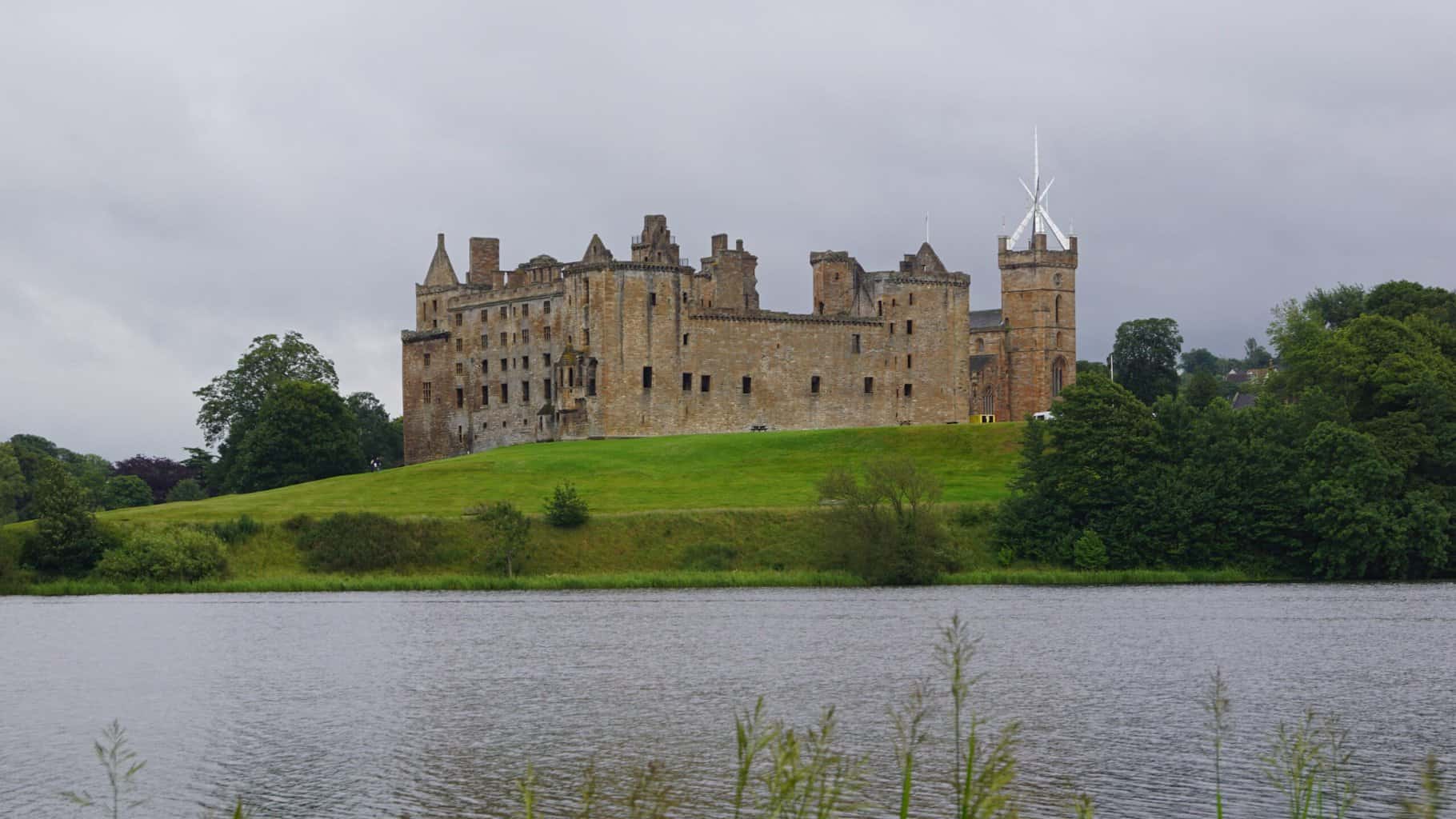
Take a 20-minute train ride from Edinburgh to explore the beautiful Linlithgow Palace and Linlithgow Loch. The palace had a role in the Jacobite Uprising as it was visited by Bonnie Prince Charlie in 1745 on his journey south. Legend says that the courtyard fountain flowed with red wine to mark this important visit.
In the Outlander series, the entrance and corridors of Linlithgow Palace are used as Wentworth Prison where the main character, Jamie, was imprisoned.
Linlithgow Palace was a residence of the Stewart kings and queens from the time of James I. James V and Mary Queen of Scots were both born there as well.
The palace might be temporarily closed but it is usually open from 30 April to 31 March, every day except Sundays and Mondays, from 10:00 am to 4:00 pm, and booking is required.
Tickets are £7.20 for adults and £4.30 for children.
En Route to Stirling
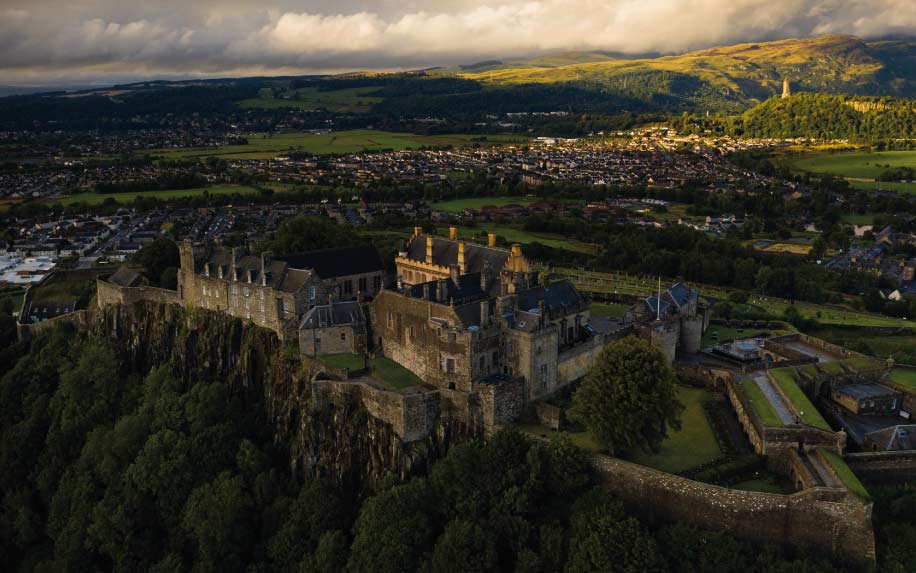
Neostalgic
Hopetoun House
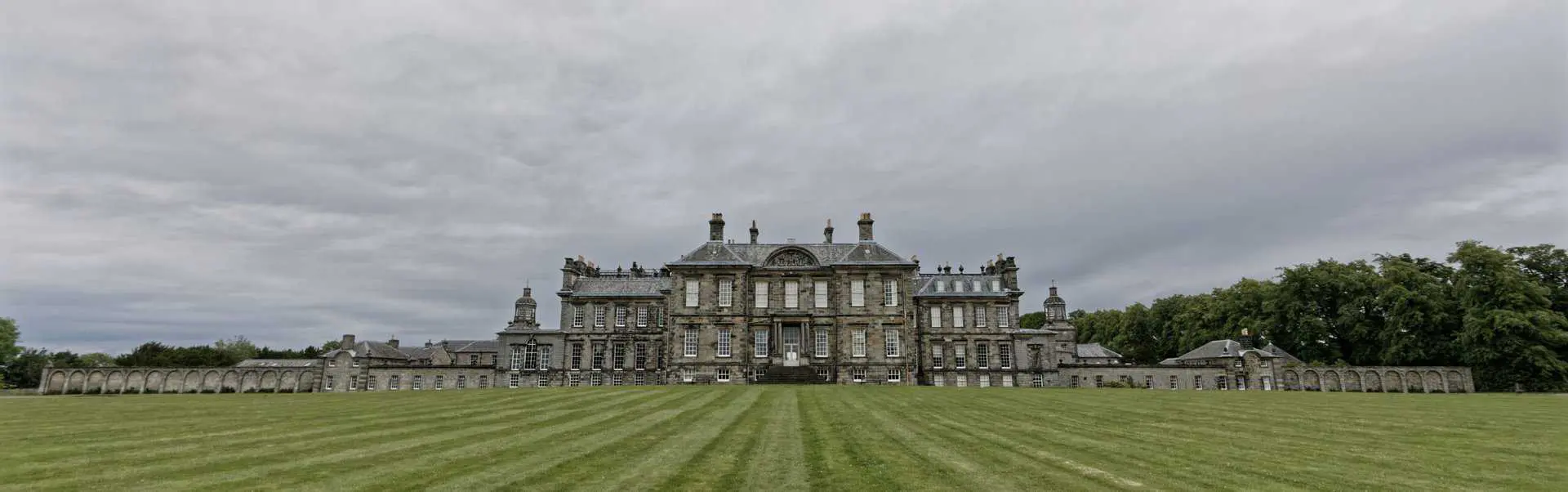
Hopetoun House was used as a filming location for seasons 1, 2, and 3 of Outlander. The 17th-century 6,500-acre estate lies near South Queensferry. In season 1, it was the Duke of Sandringham’s stately home. In season 2, one of its rooms was featured as the spare room in Jamie and Claire’s Paris apartment and was used as the Hawkins Estate and the backdrop for Parisian streets. In season 3, it was featured as the stables at Helwater and the exterior of Ellesmere.
A castle on the estate, Midhope Castle, was used as the exterior of Lallybroch.
However, please note that Midhope is located in a private section of the Hopetoun Estate, so you need to purchase a vehicle permit from the nearby Hopetoun Farm Shop.
Hopetoun House is a fine example of European architecture, designed by Sir William Bruce and William Adam, and is located in South Queensferry, outside Edinburgh.
The estate is open every day from 3 April to 27 September, from 10:30 am to 5:00 pm.
Blackness Castle
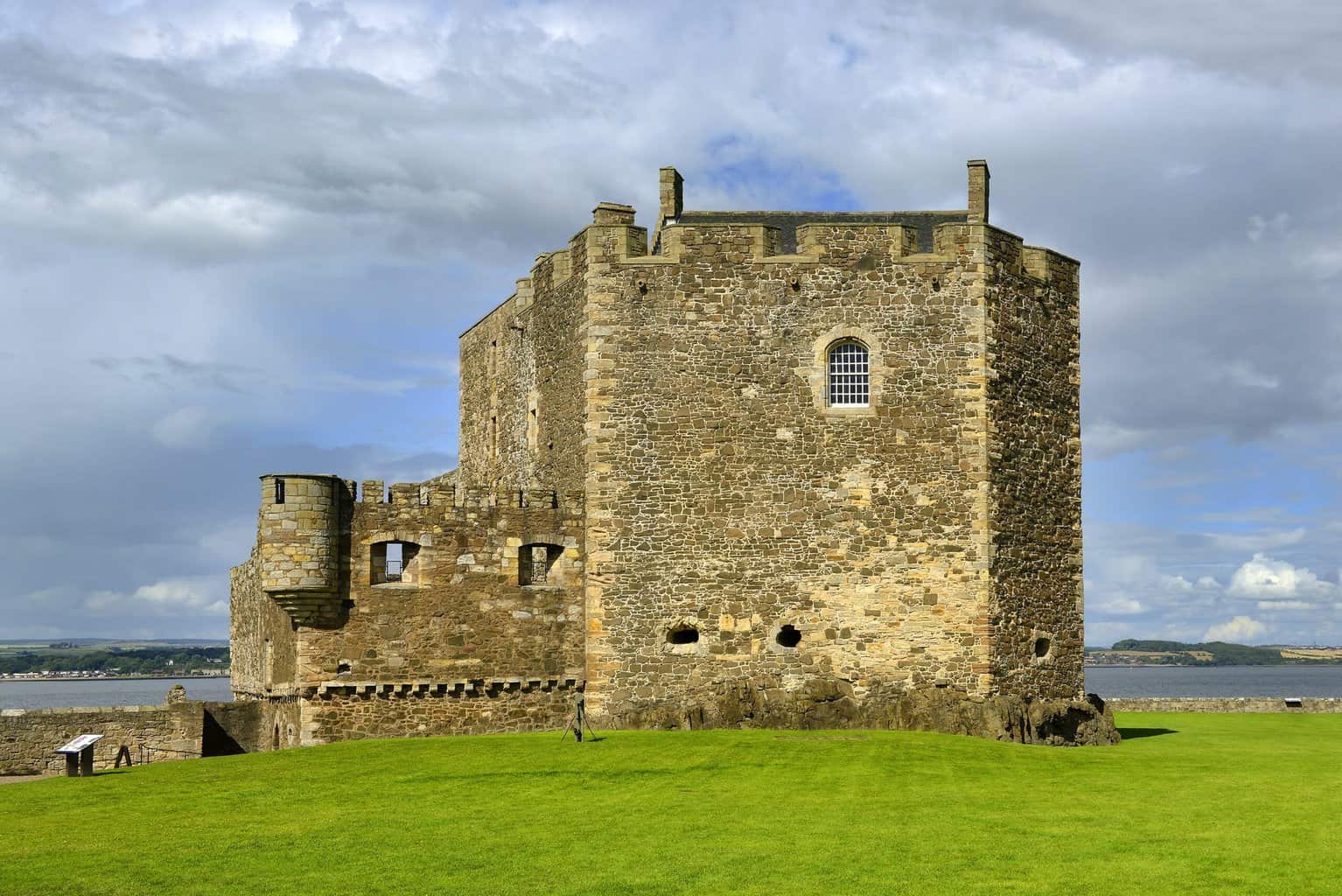
The 15th-century fortress was featured in the show as Black Jack Randall’s headquarters in Fort William, with its courtyard used for the scenes of Jamie’s imprisonment.
Blackness Castle was built by the Crichtons, one of Scotland’s most powerful families.
The castle was continually fortified and used as an artillery fortress, royal castle, prison, and is now used as a film location for productions such as Hamlet and the BBC production of Ivanhoe.
In the 2018 film Mary Queen of Scots, Blackness Castle is featured as the Palace of Holyroodhouse, where she marries Lord Darnley. In the same year, Outlaw King used the castle as the Yorkshire castle where Bruce’s wife, Elizabeth, is imprisoned.
The castle is open from 30 April to 31 March, every day except Fridays and Saturdays, from 10:00 am to 4:00 pm and booking is required.
Tickets to Blackness Castle are £6 for adults and £3.60 for children.
Callendar House
The 14th-century Callendar House in Falkirk is located within Callendar Park. Throughout its history, it has hosted many famous historical figures, including Mary, Queen of Scots, Cromwell, and Bonnie Prince Charlie.
In Outlander, the house’s Georgian kitchen appeared as part of the home of the Duke of Sandringham.
The House features several displays about the Story of Callendar House, The Antonine Wall, Rome’s Northern Frontier, and Falkirk: Crucible of Revolution 1750-1850.
What is interesting about this location is the costumed interpreters who create an interactive experience and offer 19th-century food.
The castle is open on Mondays, Wednesdays, and Sundays from 10:00 am to 5:00 pm.
Drummond Castle Gardens
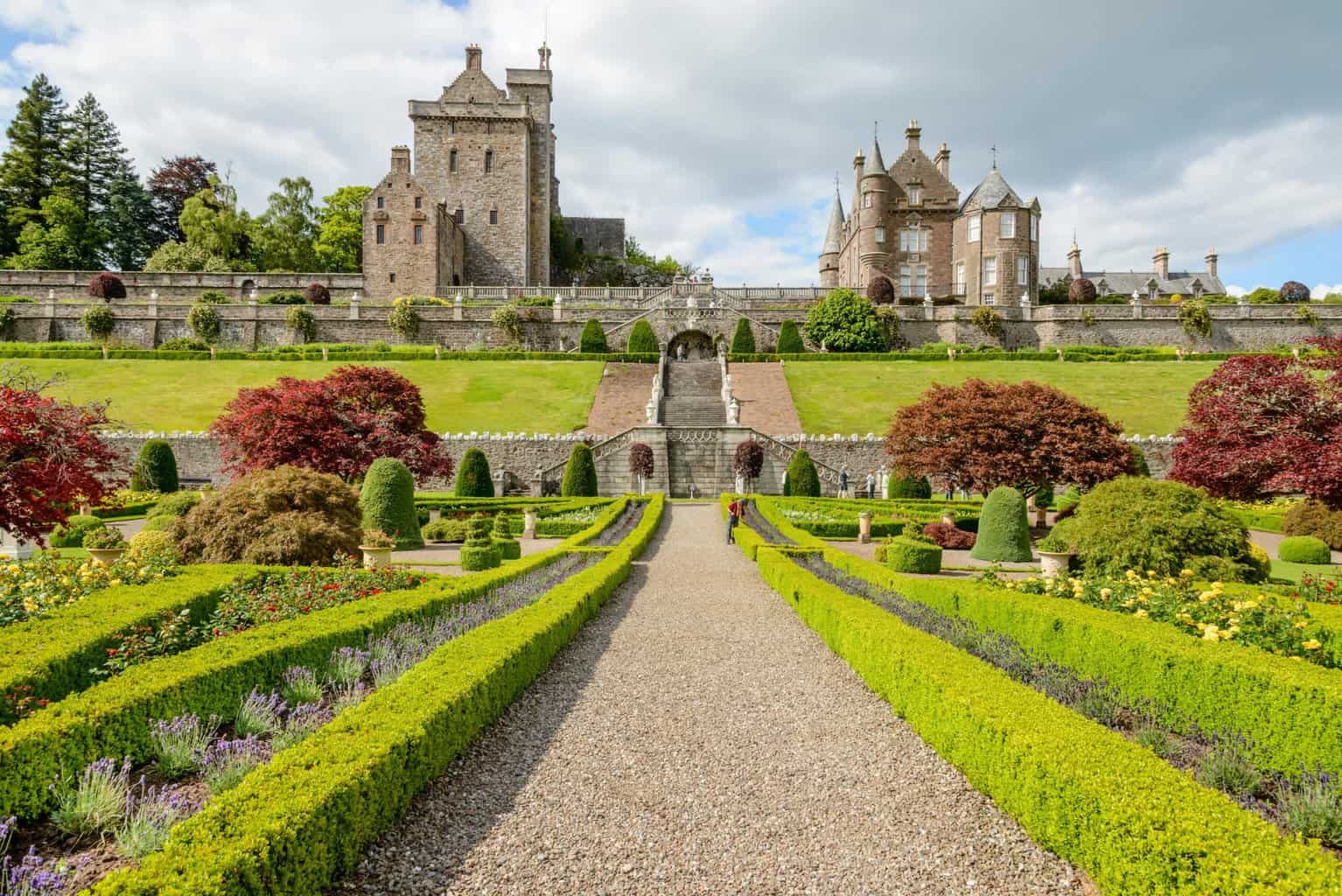
Drummond Castle has some of Europe’s most beautiful gardens, which is why they were used in Outlander as the park surrounding the Palace of Versailles in France.
Two beautiful copper beech trees were planted by Queen Victoria herself in 1842.
The gardens date back to the 17th century and were redesigned in the 19th century, before being replanted in the 1950s. The gardens were also used as a backdrop for the film Rob Roy.
While the castle is not open to the public, the gardens are and they offer a great view of the castle.
The estate is open on specific dates, such as Easter Weekend from 1:00 to 6:00 pm, and from the 1st of May to 31st of October, every day from 1:00 to 6:00 pm, and during June, July, and August, from 11:00 am to 6:00 pm. From September to October, it is open from 1:00 to 6:00 pm.
Tickets are £10 for adults and £3.50 for children until 16 years old.
Deanston Distillery
The former cotton mill located 8 miles from Stirling is now a famous whisky distillery and was used in Outlander as Jamie’s cousin’s wine warehouse on the docks of Le Havre.
The area is 45 minutes away from Edinburgh and Glasgow. The distillery overlooks the River Teith by the Loch Lomond and Trossachs National Park.
Used as a cotton mill for 180 years, Deanston was transformed into a distillery in the 1960s. You can visit the distillery to find out how it works and operates and creates its whisky, or spend some time at their café, Coffee Bothy, which offers a selection of delicious food.
Deanston Distillery is open every day from 10:00 am to 5:00 pm. Tours are also held every hour from 10:00 am to 4:00 pm.
The Coffee Bothy is open from 10:00 am to 4:30 pm.
Doune Castle
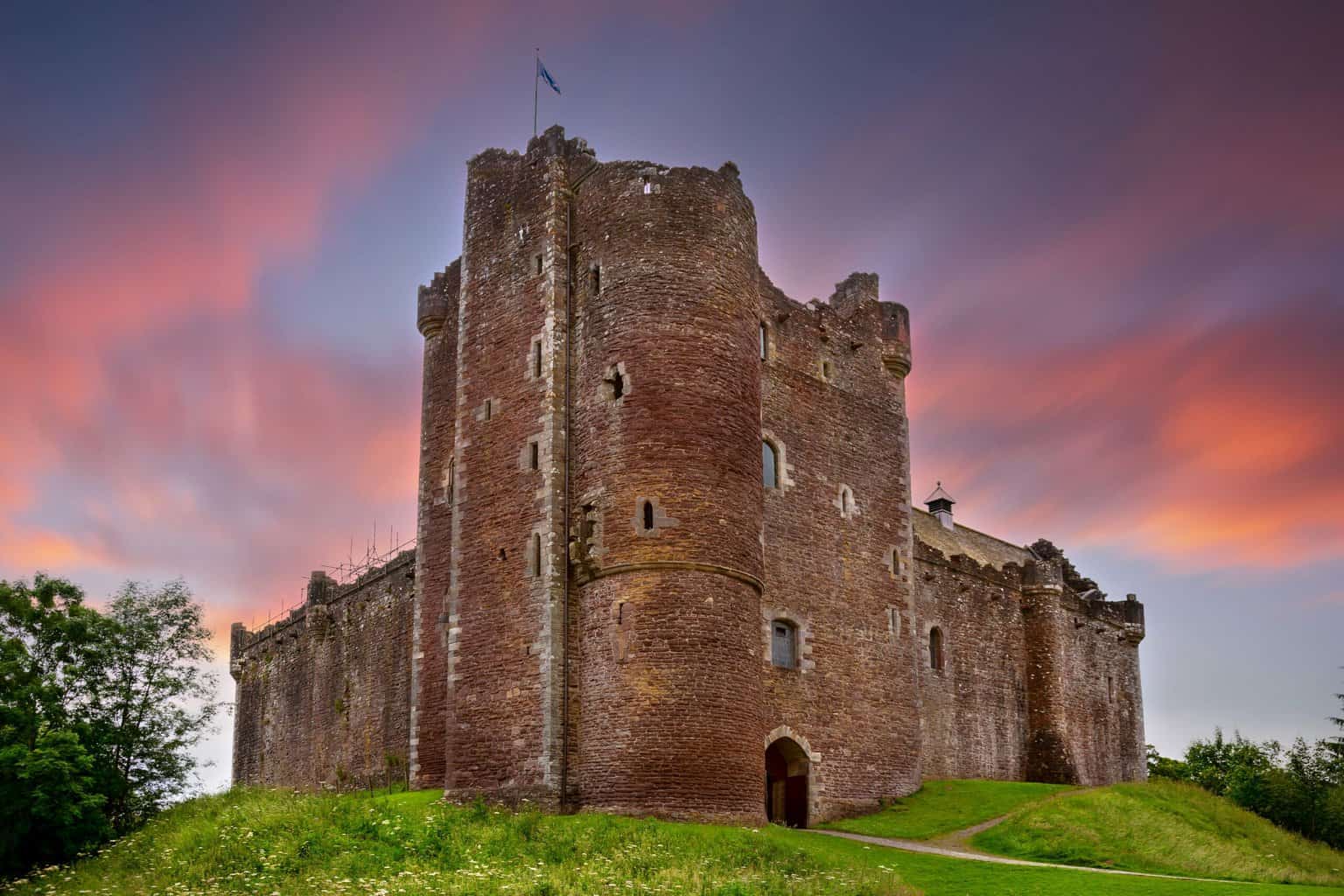
This beautiful castle doubled as the exterior of Castle Leoch, the home of Colum MacKenzie and his clan in the 18th century in Outlander’s first season. It also appears in the episode where Claire and Frank visit the castle on a day trip.
The 14th-century castle is rooted in real history as well. The Jacobites took the castle from the state troops in 1745 and, following the Battle of Falkirk in 1746, and prisoners were held there. The castle has a striking 100 feet gatehouse and an amazingly preserved great hall.
Doune Castle was built for the Regent Albany. The castle’s keep includes living quarters, the Lord’s Hall, musicians’ gallery, and double fireplace. It was also used in the BBC production of Ivanhoe as well as the popular film Monty Python and the Holy Grail.
Doune Castle was also used as Winterfell in the pilot episode of the popular TV series Game of Thrones.
The castle is temporarily closed but it is usually open from 30 April to 31 March, every day from 10:00 am to 4:00 pm.
All Around Fife
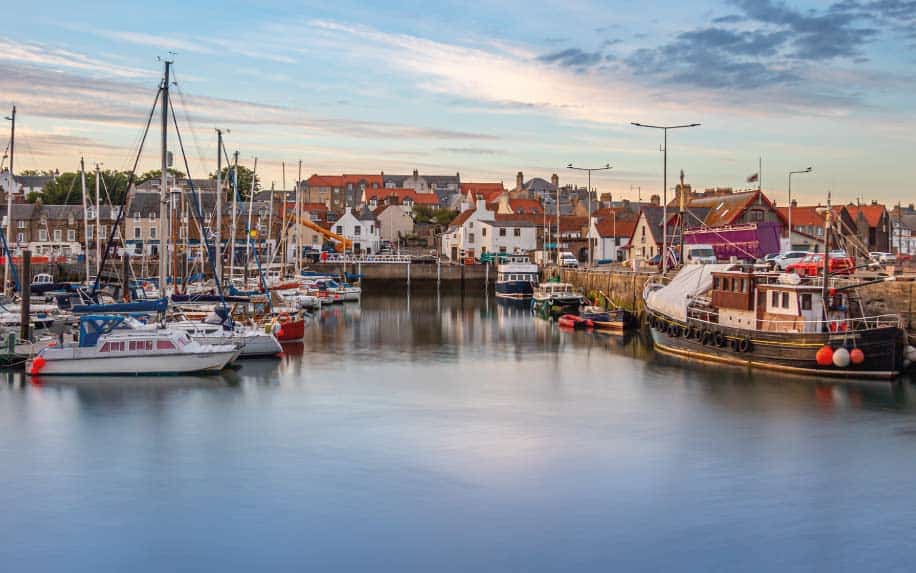
Neil and Zulma Scott
Royal Burgh of Culross
Culross is one of Scotland’s most picturesque towns with its cobbled streets and historic cottages. You will feel like you’re stepping back in time to the 17th and 18th centuries.
The center of the town was featured as the village of Cranesmuir in Outlander, where one of the titular characters, Geillis, lives, while the garden behind Culross Palace was used as Claire’s herb garden at Castle Leoch.
Culross is located in the southwest of Fife and was founded by St Serf.
Interesting locations that are also worth visiting include the Town House, where witches were tried and held awaiting execution. There is also Culross Palace, which was built in the late 16th century by George Bruce, a wealthy coal merchant.
You can walk up the alleyway called Back Causeway, where you’ll spot its central aisle that was used by noblemen to separate them from the ‘commoners’, leading up to the Town House and then the Study, a house that was built in 1610.
Falkland
You can explore the beautiful historic streets of this scenic town and the grand Falkland Palace, which was built in the 1500s as a country residence favored by many kings and queens.
In Outlander, the town of Falkland is used as 1940s Inverness where Claire and Frank go on their second honeymoon. Also, the Covenanter Hotel stood in for Mrs. Baird’s Guesthouse, and the Bruce Fountain was featured as where Jamie’s ghost looks up at Claire’s room. The Fayre Earth Gift Shop was used as Farrell’s Hardware and Furniture Store and finally Campbell’s Coffee House and Eatery became Campbell’s Coffee Shop.
Built between 1501 and 1541 by James IV and James V, the Falkland palace is distinguished by its architecture.
Uncovering Scottish History
Highland Folk Museum
The Highland Folk Museum in Newtonmore is where you can find out more about life in the Highlands from the 1700s to the 1960s.
In Outlander, the museum is shown when Claire joins Dougal to collect rent from the tenants.
The Highland Folk Museum showcases the daily life and working conditions of earlier Highland peoples, how they built their homes, how they tilled their lands, and how they dressed.
The museum employs actors to create an interesting interactive experience for its visitors.
Families can spend 3-5 hours exploring the Museum, and there are also picnic and play areas, a cafe, and shops to accommodate all its visitors.
The museum is open every day, except Mondays and Tuesdays, from 10:30 am to 4:00 pm.
Culloden Battlefield
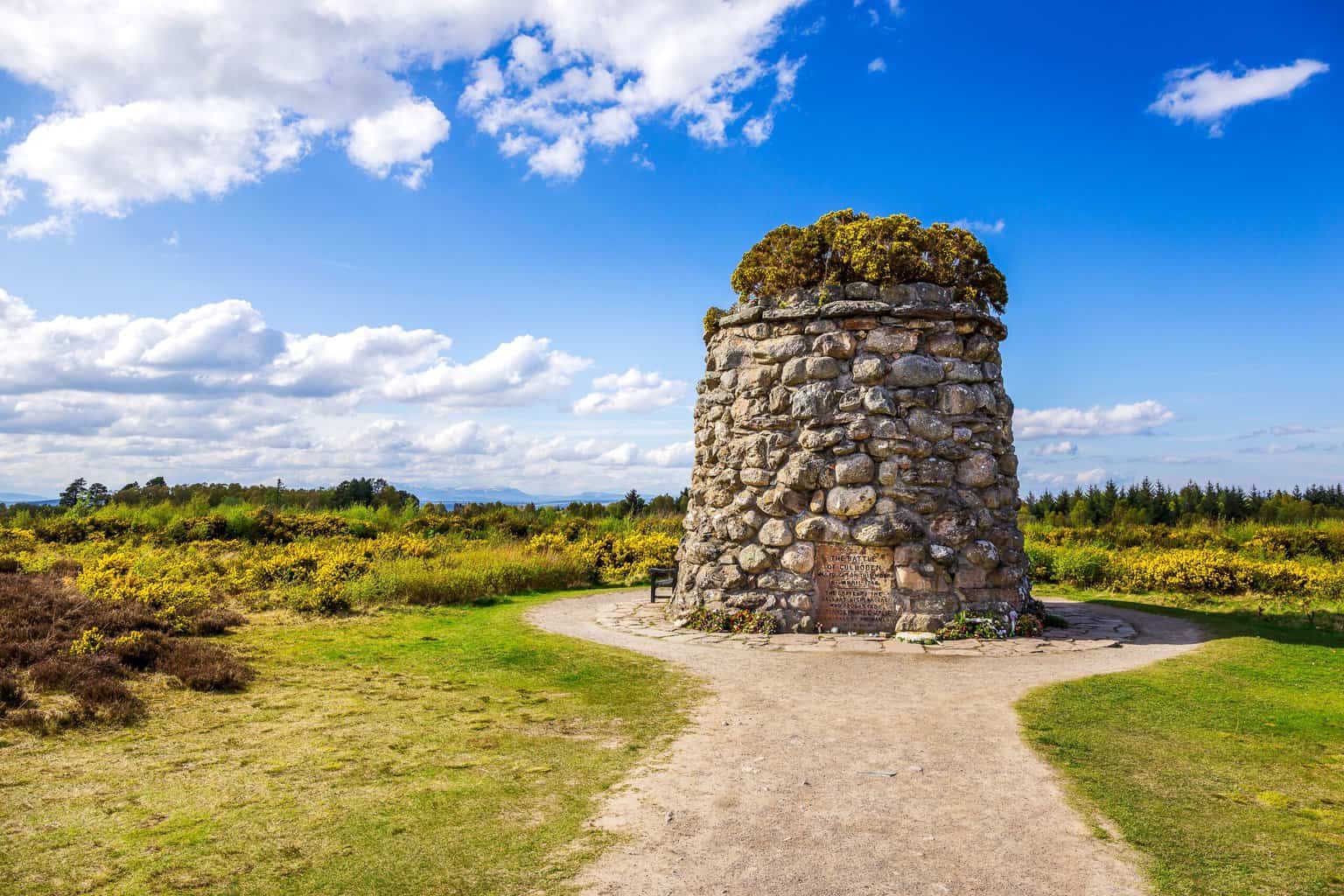
One of the most important sites where a major historical event took place in Scotland is Culloden Moor where the 1746 Battle of Culloden, an important event in Scottish history, took place.
Culloden Moor is where the Jacobites made a final attempt to succeed in their uprising. There, Bonnie Prince Charlie and his followers, including Scottish clans such as the Frasers and MacKenzies, were defeated by the government’s troops. On 16 April 1746, Jacobite supporters attempted to restore the Stuart monarchy to the British throne, and they came head to head with the Duke of Cumberland’s government troops. In the Battle of Culloden, around 1,500 men were slain, 1,000 of which were Jacobites.
This event features prominently in both the novel and series as Jamie fights in the 1746 Battle of Culloden.
The current location now has an interactive visitor center, where you’ll find artifacts from both sides of the battle, with interactive displays that reveal the background to the conflict and an immersive surround cinema.
There are also headstones marking the graves of hundreds of clansmen who gave their lives for the Jacobite cause.
Clava Cairns
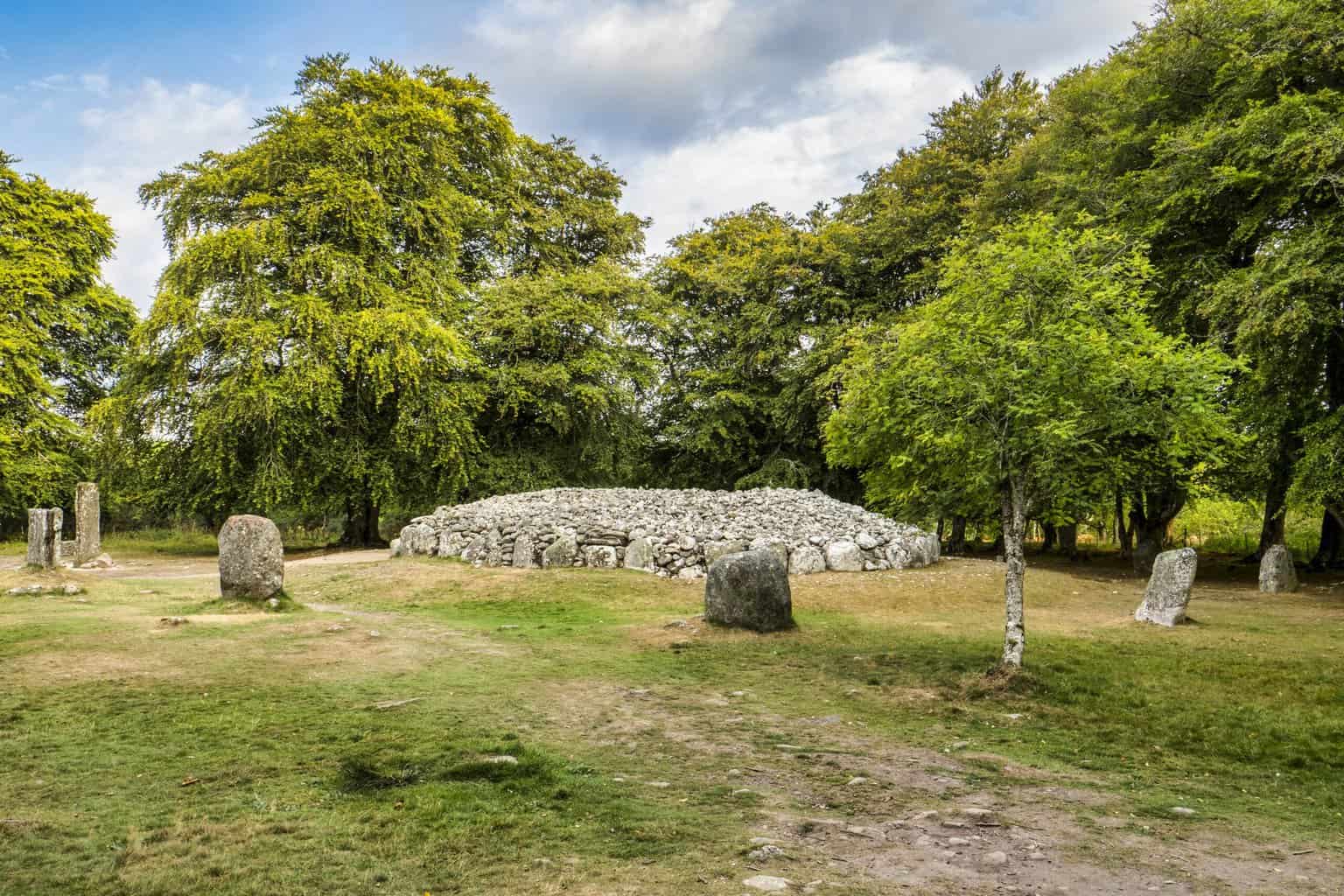
A few minutes’ drive from Culloden Moor is the Clava Cairns that was the inspiration for Outlander’s Craigh na Dun, the standing stones that take Claire back in time.
Used as a burial place during the Bronze Age, this site with its cairns and standing stones dates back to around 4,000 years ago.
Clava Cairns is free to visit and open year-round.
Inverness and Loch Ness
Inverness
The next stop on our Outlander journey is at Inverness where Claire and Frank spend their second honeymoon in the novels.
There are many places to explore in the city, including the Inverness Museum & Art Gallery to see the many Jacobite memorabilia, or head to the Victorian Market to browse the many shops there, or enjoy the beautiful sights at the Inverness Botanic Gardens. You can also visit Leakey’s Bookshop to look through the shelves, as well as River Ness to stroll along the river and cross the bridge to the Ness Islands.
Loch Ness
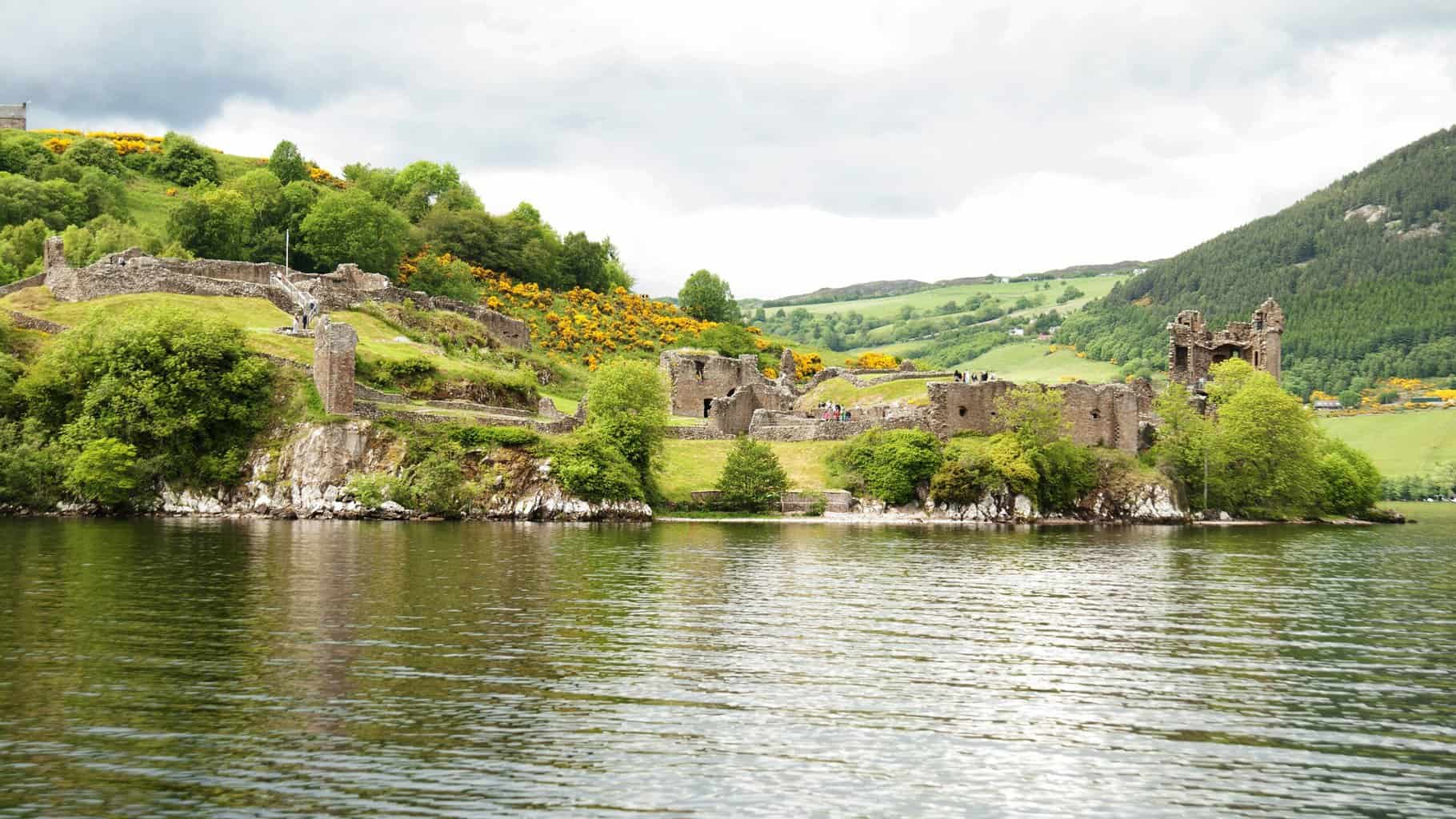
The world-famous Loch Ness is one of the biggest lakes in the UK. In the novels, Claire and Frank take a cruise on the water, and in the 18th-century events, Claire encounters the Loch Ness Monster there.
Many legends surround the existence of a mythical creature in the lake called the Loch Ness Monster since a photograph emerged in 1933 with a blurry figure emerging from the lake.
Several boat tour companies can take you out for a cruise on this iconic lake.
Urquhart Castle
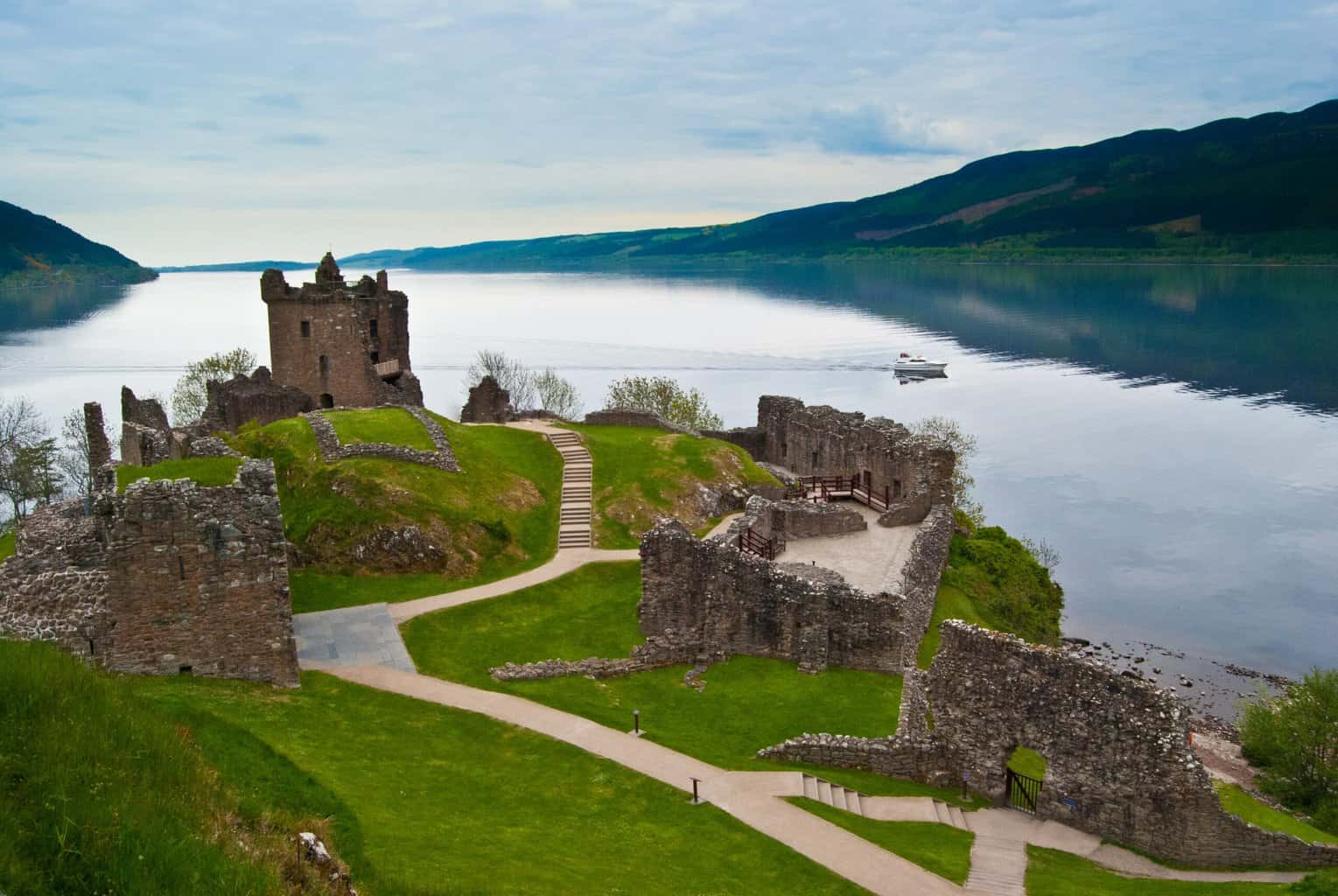
North of Loch Ness is the ruins of Urquhart Castle. The castle was visited by St Columbia around AD 580 and worked her miracles and where events from the Wars of Independence took place and where the MacDonald Lords of the Isles struggled with the Crown.
In 1692, after the end of the first Jacobite Rising, government forces blew up the castle to prevent it from falling under Jacobite control and it has lain in ruins ever since.
Discover the castle’s 1,000 years of history, medieval life, and stunning views of Loch Ness from the ruins of the castle by climbing Grant Tower or going into one of the prison cells.
Urquhart also displays a large collection of artifacts for public viewing.
The castle is open from 30 April to 31 October, every day from 9:30 am to 6:00 pm, and from 1 November to 31 March, from 10:00 am to 4:00 pm, and booking is required.
Tickets are £9.60 for adults and £5.80 for children.
Along The Great Glen
Glenfinnan Monument
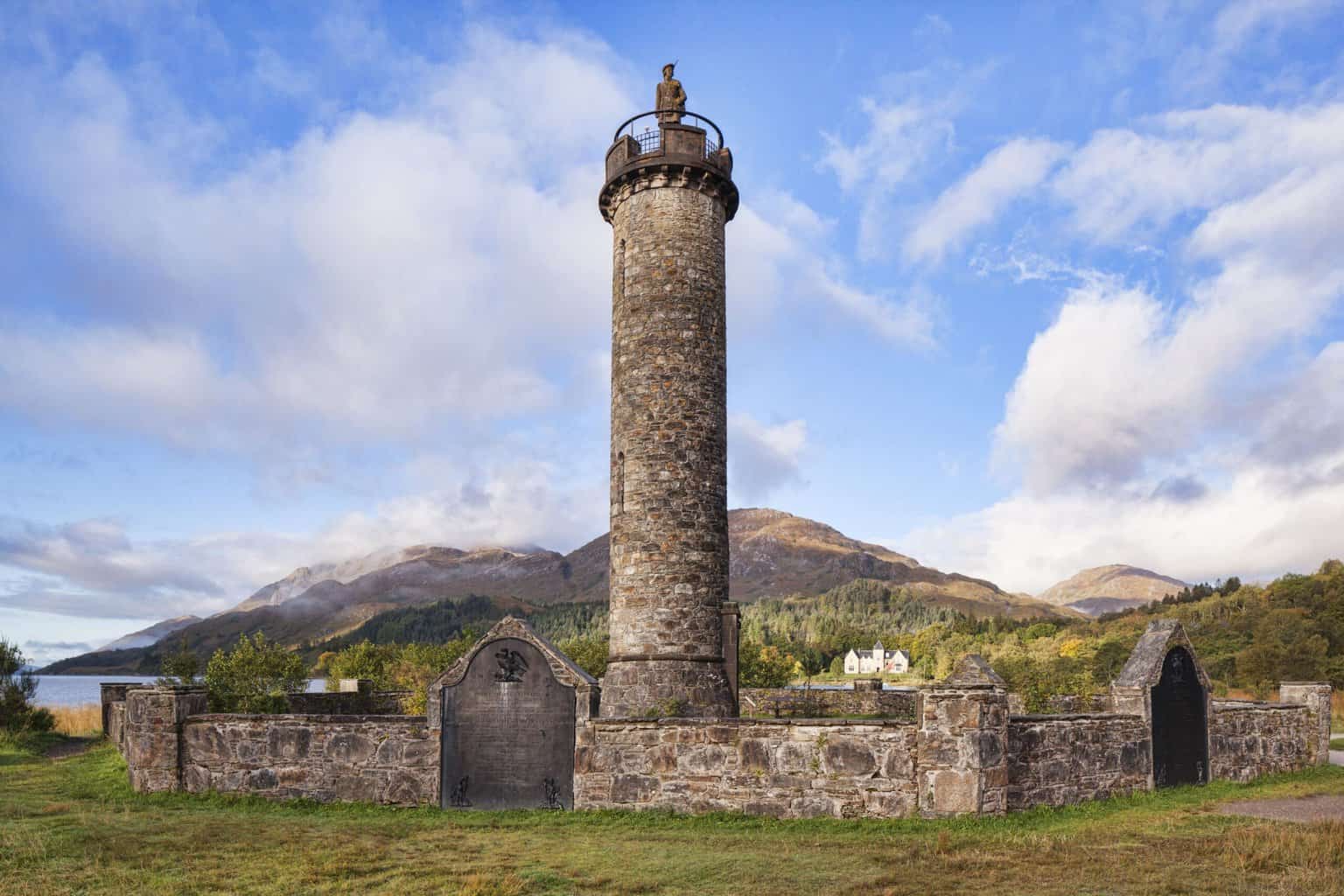
Built in 1815, Glenfinnan Monument was designed by Scottish architect James Gillespie Graham as a tribute to the Jacobite clansmen who fought for Prince Charles Edward Stuart. You can take a tour of the monument and climb to the top to enjoy the views across the mountains out to Loch Shiel.
In the Visitor Centre, you’ll find an exhibition of the story of Prince Charles Edward Stuart and the 1745 Jacobite Rising.
The area was also used to film Harry Potter, including the Glenfinnan viaduct and the island where the Triwizard Tournament was held.
West Highland Museum
The West Highland Museum is famous for its Jacobite exhibits as well as a collection of artifacts from local history to the present day.
The museum’s collection gives an overview of the turbulent history of the West Highlands, including eight rooms displaying fascinating objects, such as Rob Roy’s sporran and treasure from the shipwrecked Spanish Armada galleon and even the bagpipes played at Bannockburn in 1314. You can also admire the collection of Jacobite weapons, medals, and miniatures, as well as Bonnie Prince Charlie’s embroidered silk waistcoat.
Nevis Range Mountain Gondola
Another attraction in Fort William is Nevis Range with the UK’s only Mountain Gondola that takes visitors on a 15-minute 650-meter journey up the mountain of Aonach Mor.
Located at the Gondola Top Station is the Snowgoose Restaurant & Bar which serves delicious home-cooked meals and fresh baked goods made from local produce. There is also the Pinemarten Cafe, with stunning picturesque windows looking up to the mountain slopes.
This attraction is open daily from 9:00 am to 5:00 pm. Tickets are £19.50 for adults and £11 for children.
Glen Coe to Glasgow
Eilis Garvey via Unsplash
Glencoe
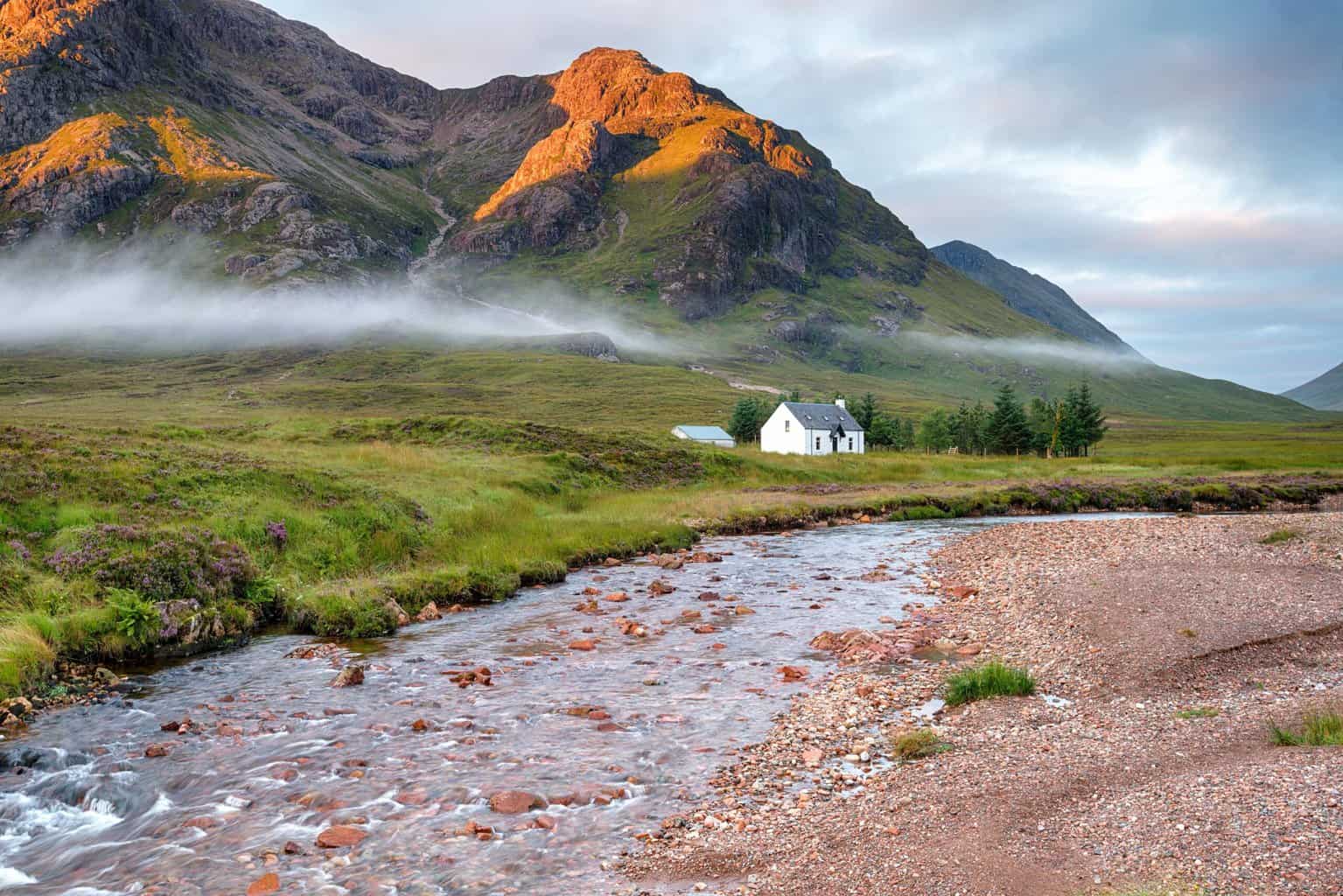
The Glen Coe Mountain and valley at Lochaber Geopark were carved out by icy glaciers and volcanic explosions centuries ago.
There is a road through the glen that takes you through the heart of an ancient volcano. You can also walk the Glen Coe Geotrail to learn about how the mountain was carved through glaciers and explosions, and take in the beautiful scenery at the same time. You can visit the Glencoe Visitor or ski, snowboard, or mountain bike at the Glencoe Mountain resort, sea kayak on Loch Leven, or explore Lochaber Geopark.
The area can be seen in Outlander’s opening credits and was also featured in James Bond’s Skyfall and several Harry Potter movies.
Glasgow Cathedral
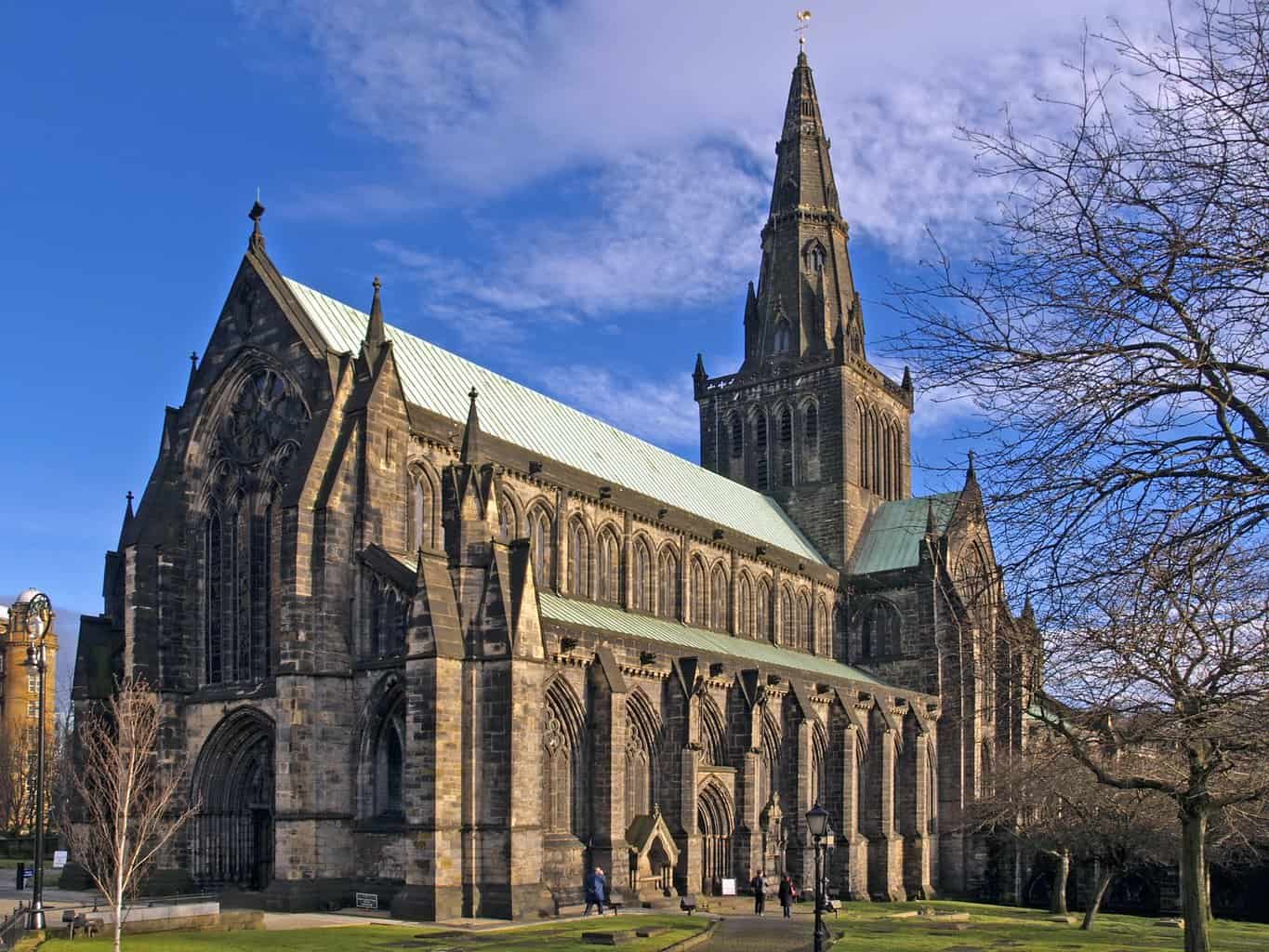
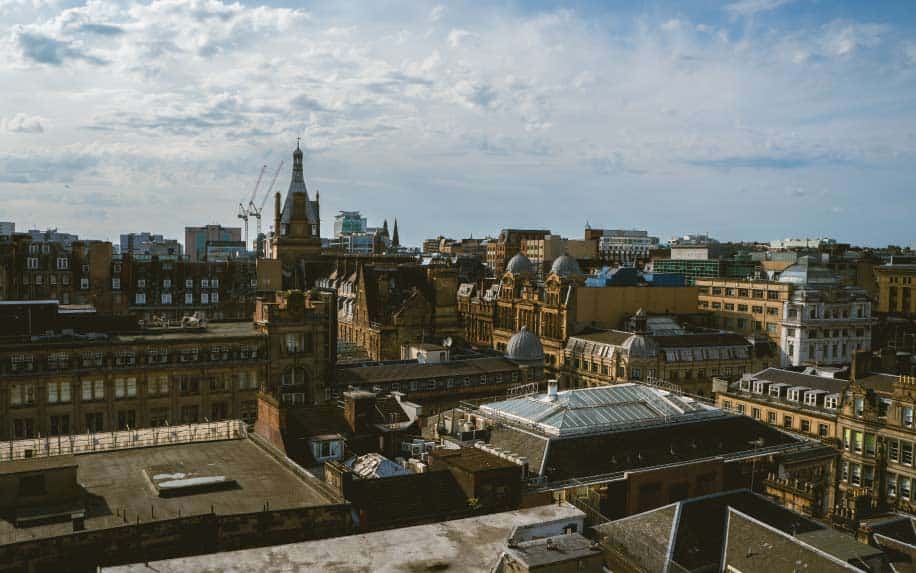
Featured in Season 2 of Outlander, Glasgow Cathedral was built in the 1100s and is one of the oldest buildings in the city and one of the most intact medieval cathedrals in Scotland.
The cathedral’s Gothic architecture is fascinating to behold. You can also explore and its historic crypt, which was built to house the tomb of St. Kentigern (died AD 612), the first bishop within the ancient British kingdom of Strathclyde, marking the birthplace of the city of Glasgow.
In Outlander the cathedral’s crypt is used to film the scenes featuring L’Hopital Des Anges in Paris, where Claire volunteers to work.
The Cathedral is open from 30 April 2021 to 30 September 2021, every day from 10:00 am to 4:00 pm, except Sundays as it opens from 1:00 pm to 4:00 pm.
George Square
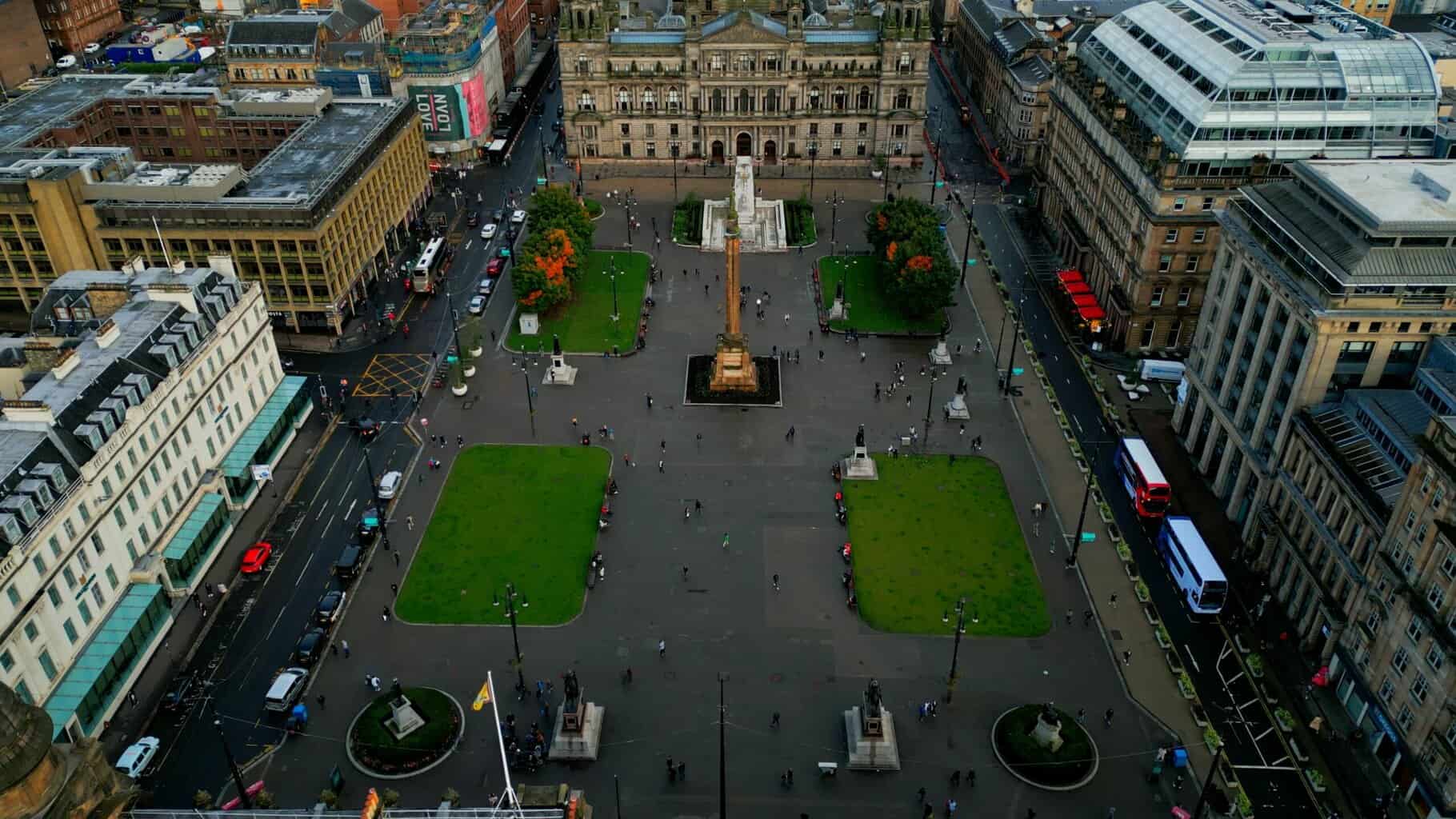
Used to film a few scenes in season 1, George Square was the 1940s spot where Frank spontaneously proposes to Claire.
The square took the name of King George III when it was developed in 1781 but it took around twenty years to take shape.
George Square includes a number of important buildings, including the palatial Municipal Chambers (built in 1883).
The square houses several statues and monuments of important figures, including statues of Robert Burns, James Watt, Sir Robert Peel, and Sir Walter Scott.
Exploring Glasgow
Pollok Country Park
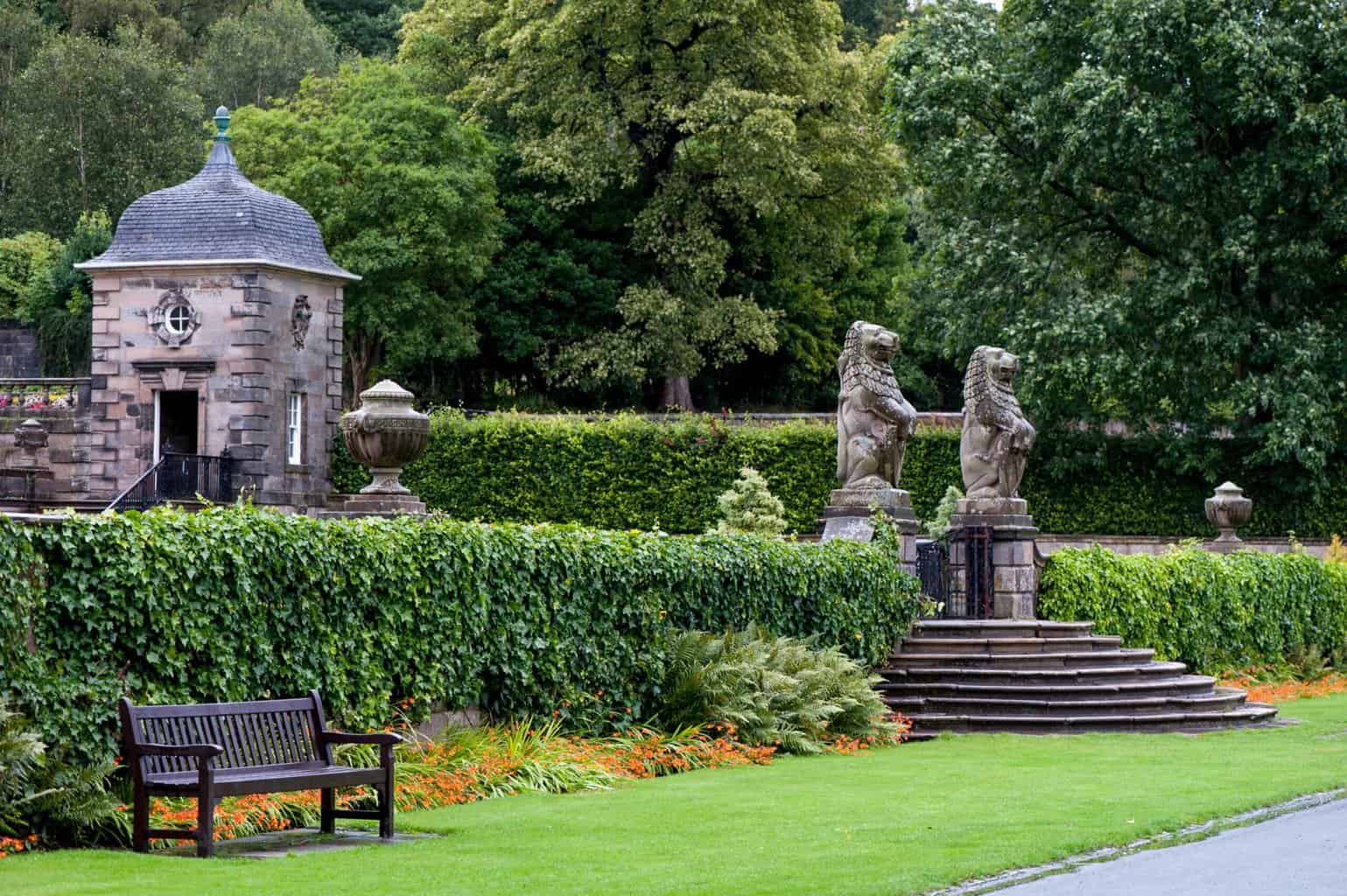
The historic building of Pollok House in Glasgow has magnificent grand rooms and servants’ quarters. The house was built in 1752 and was featured on Outlander during the scenes from the 18th century in seasons 1 and 2.
The park was used to film many outdoor scenes in Outlander as well as doubling as the surroundings of Doune Castle, and the duel scene between Jamie and “Black Jack” and when Jamie and Fergus ride out.
At Pollok Country Park, you can enjoy many activities and explore the gardens, woodland, and different cycle routes.
Kelvingrove Park & The University of Glasgow
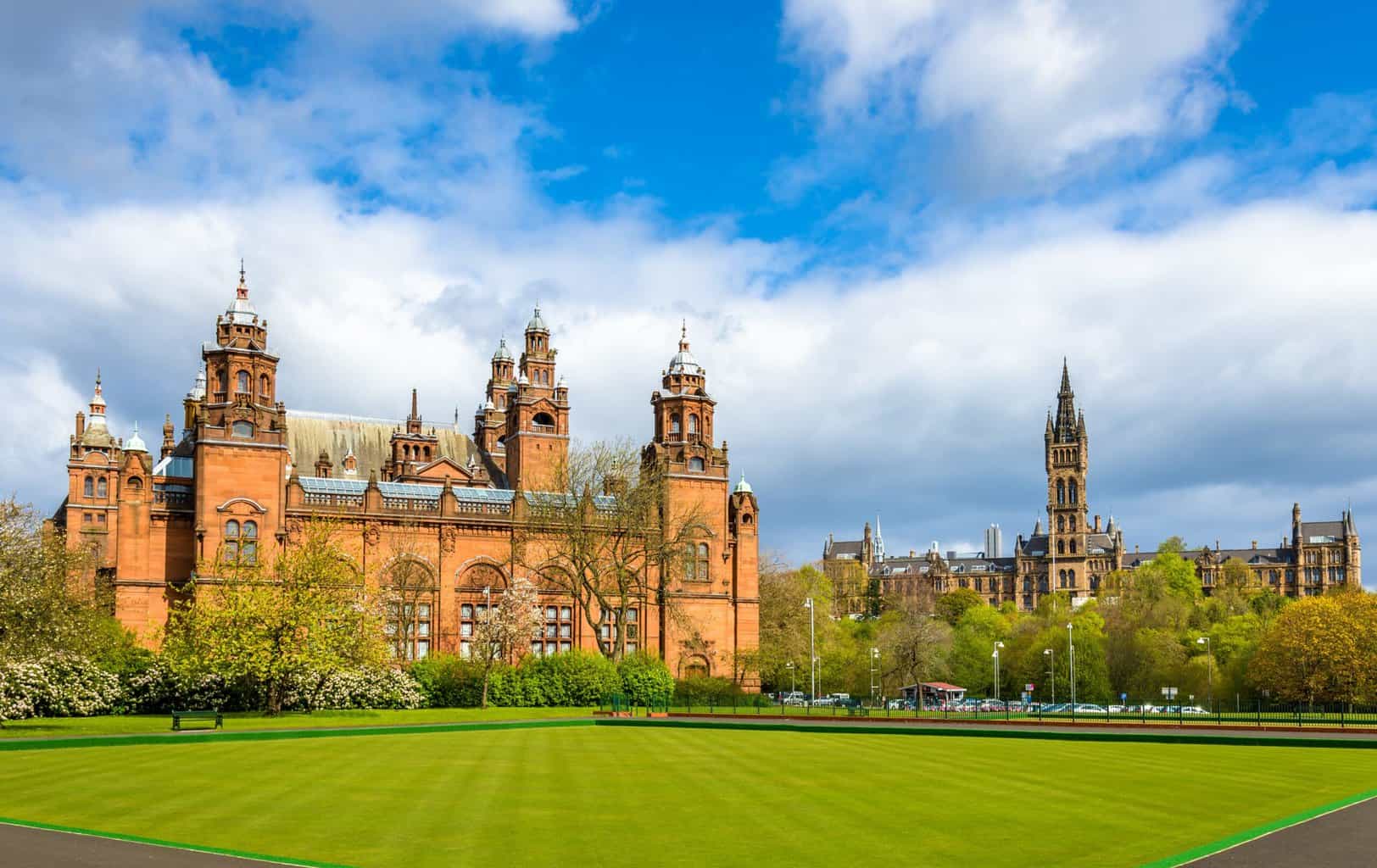
A backdrop for scenes in Outlander’s third season, the grounds of Kelvingrove park, is where Claire enjoyed walking in the show. The University of Glasgow was used as Harvard University, where Frank teaches.
Sir Joseph Paxton designed the park and it has become a classic example of a Victorian park. It overlooks the River Kelvin and includes many magnificent buildings, such as the world-renowned Art Gallery and Museum.
There is also the Kelvingrove bandstand where various events are held, four tennis courts, three children’s play areas, three cafes, riverside walks, and a skateboard park.
Hunterian Museum
Located in the historic University of Glasgow buildings, the Hunterian Museum has several exciting exhibits. Also, be sure to visit Mackintosh House that was designed by Charles Rennie Mackintosh and his wife Margaret Macdonald Mackintosh.
The Hunterian Museum was built in 1807 and is Scotland’s oldest public museum. It displays one of the largest museum collections in the country, which includes numerous scientific instruments used by James Watt, Joseph Lister, and Lord Kelvin.
Ashton Lane
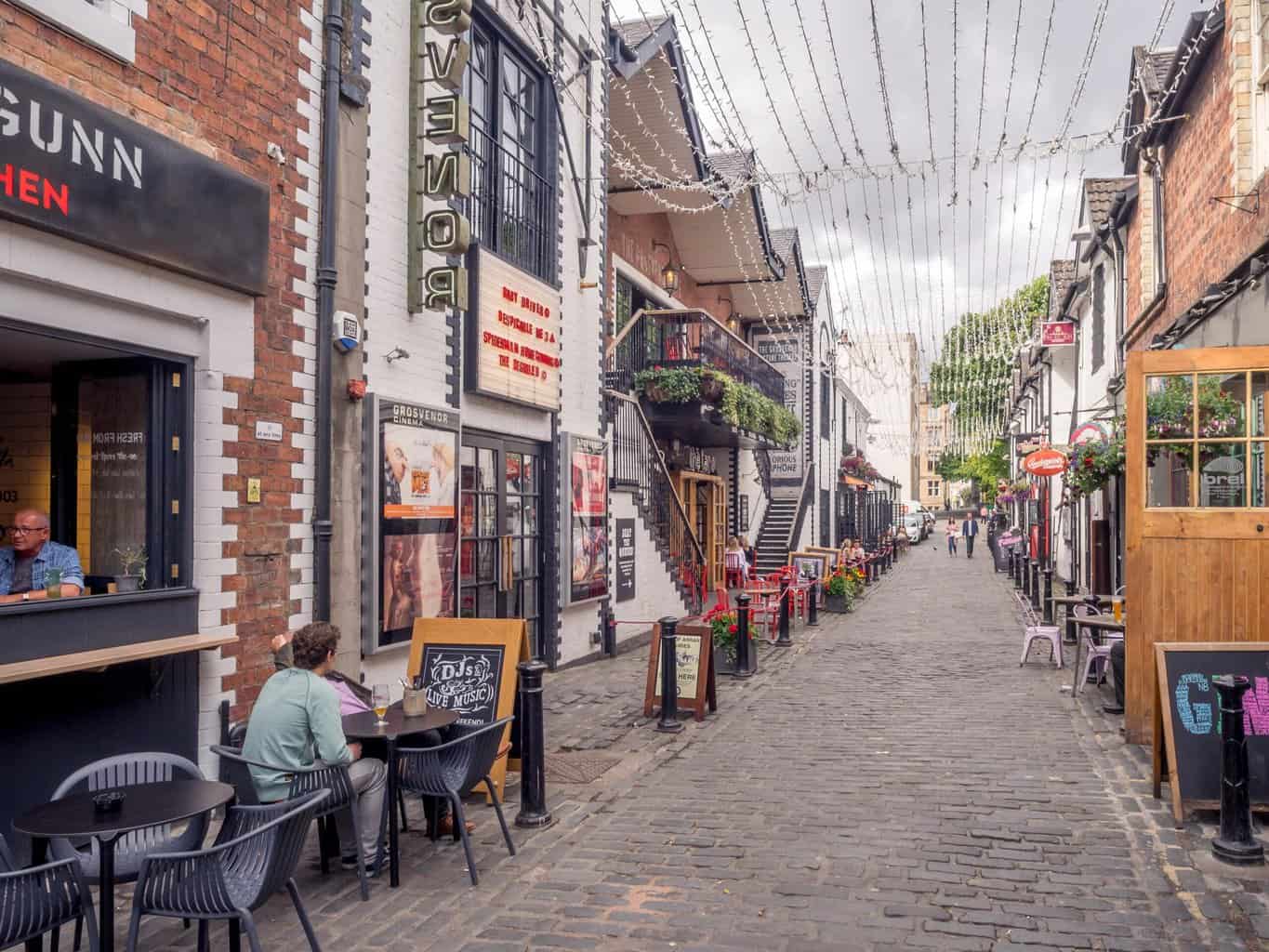
In the evening, you can visit Ashton Lane for some wining and dining at some of its great bars and restaurants or visit its independent cinema for some entertainment. Located in the city’s West End, this beautiful cobbled street is decorated with fairy lights and is a perfect place to spend a beautiful quiet evening.
Ayrshire & Galloway
Dean Castle Country Park
This 14th century Dean Castle in Kilmarnock appears in Outlander’s second season as Beaufort Castle in the Highlands where Claire and Jamie visit Lord Lovat to persuade him to aid Charles Stuart.
The castle’s incredible collections include armor, early musical instruments, and more.
Although Dean Castle is currently closed for restoration, the surrounding 200-acre park – with its walking routes – is the ideal place to spend the day with the entire family and do some pond dipping and nature walks with the Countryside Rangers as well as Harvest Festivals.
Nearby is the Dick Institute Museum and Gallery with collections from Dean Castle on display.
Dean Castle’s keep dates back to c.1350 and now features displays that tell the story of the Boyd family and medieval life.
Dunure Harbor
In Outlander, Dunure Harbor doubles as Ayr Harbor, where Claire and Jamie leave Scotland in pursuit of Young Ian. It is also the port where Jamie and Claire once again meet Jared and board the Artemis for their journey to Jamaica. The surrounding countryside was used for scenes set near Ardsmuir prison.
Dunure is a fishing village on the coast of South Ayrshire which dates back to the early 19th century. Today the location has a picnic area, and nearby is Kennedy Park with a skate park and a children’s play area.
Drumlanrig Castle
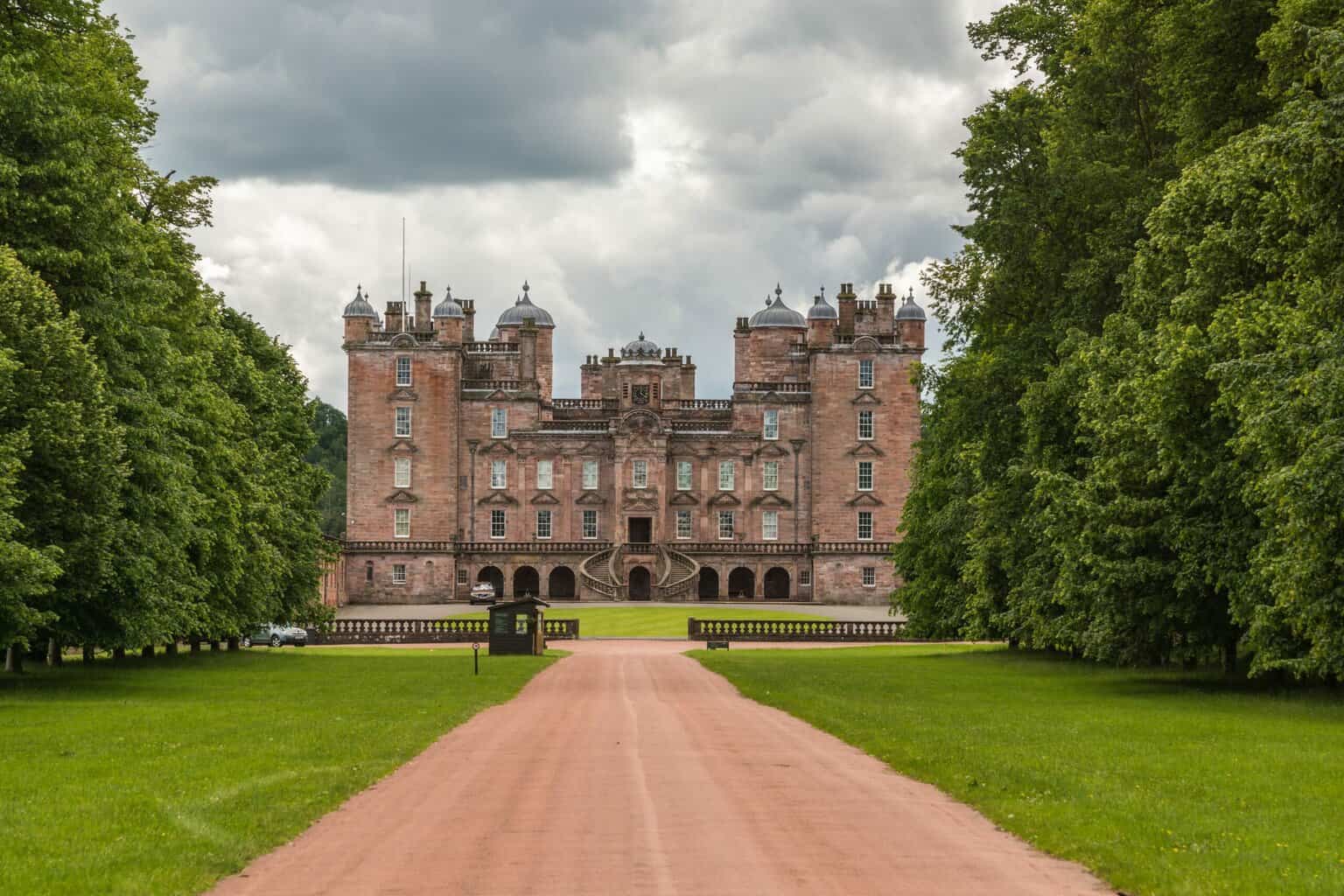
The 17th-century Drumlanrig Castle is filled with artwork, French furniture, and antiques. The 90,000-acre estate also includes championship mountain biking trails.
In Outlander, the exterior and rooms of the castle were used to portray Bellhurst Manor, including a bedroom where Bonnie Prince Charlie once slept, as he was on his way to Culloden.
The castle, home of the Duke and Duchess of Buccleuch, is one of the most important Renaissance buildings in the country. It features spectacular collections of silver, porcelain, French furniture, and art, including Rembrandt’s Old Woman Reading.
You can spend the whole day exploring the estate on foot through one of its many trails, which range from 1.5 km to 7 km.
Circling Back to Edinburgh
Traquair House
This is Scotland’s oldest inhabited house, and a former royal hunting lodge dating back to 1107. In the 1700s, the earls of Traquair were known supporters of the Jacobite cause and Bonnie Prince Charlie even visited the house in 1745.
Traquair was an important stop in the Jacobite Uprising in Southern Scotland. Walk up the same steps as the kings of Scotland as you climb the turnpike staircase and discover how priests escaped in times of danger. You can also browse the collections of embroideries, letters, and relics from different eras.
Robert Smail’s Printing Works
During a certain period of the show, Jaime comes to own his own print shop on the Royal Mile. This historic print shop was used to film those scenes, so feel free to explore its premises and learn more about how stationery and newspapers would have been printed before the time of computers.
Robert Smail founded R Smail and Sons in 1866, and it was passed onto his descendants after him. The print shop still works to this day and it produces commercial work using Victorian letterpress techniques and machinery.
Craigmillar Castle
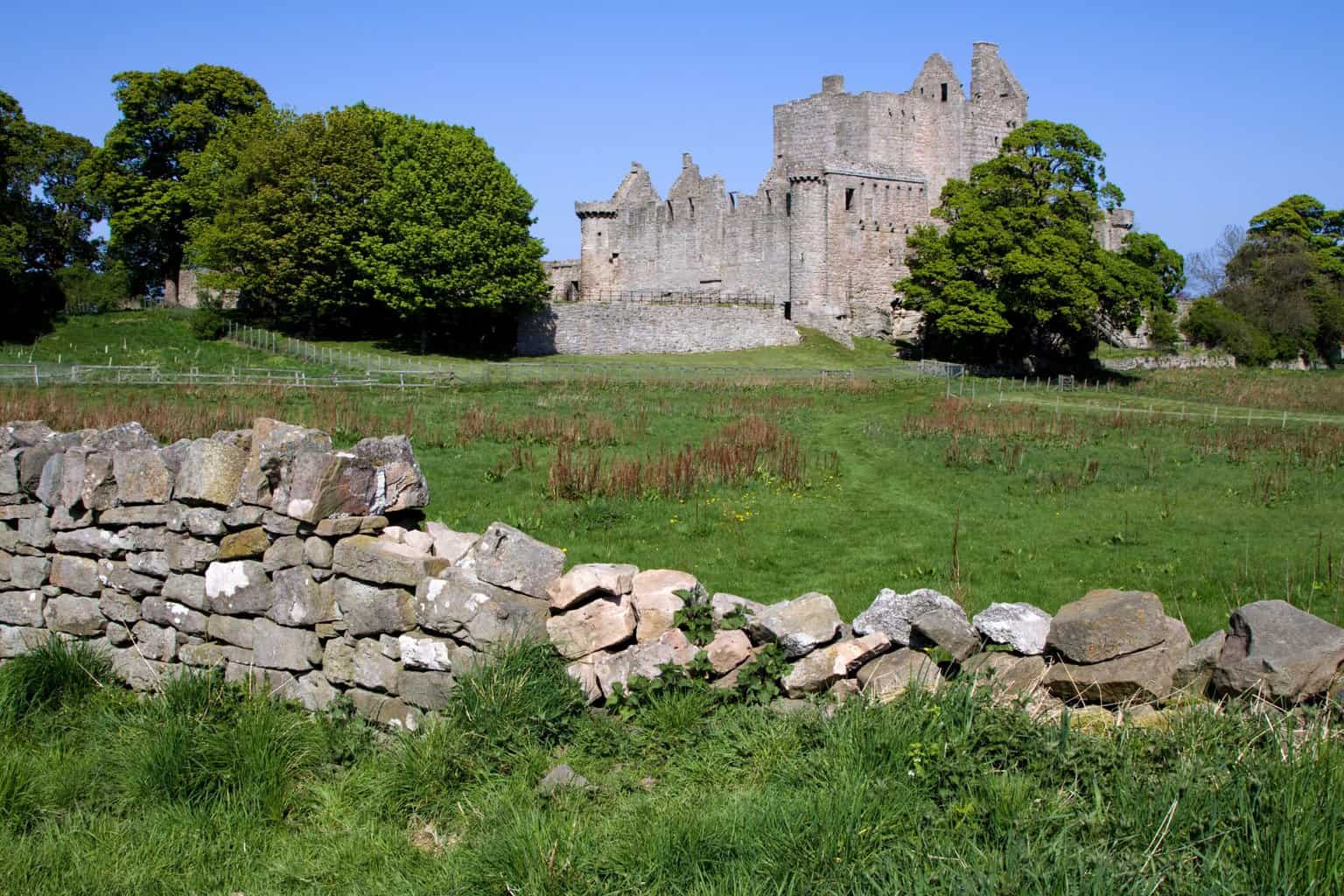
Featured on Outlander’s third season, the Craigmillar Castle in Edinburgh has plenty of interesting rooms for you to explore. The tower house is the oldest part of this ruined castle and dates back to the 1300s.
In Outlander, it doubled as Ardsmuir Prison, where Jamie was incarcerated.
Whether you admire the city views from above by climbing to the high ramparts of the castle, or explore its labyrinth of chambers or have an enjoyable picnic in its courtyards, this castle certainly has a lot to offer its visitors.
The castle was built in the 15th century, and it played an important part in the story of Mary Queen of Scots who fled to Craigmillar Castle following the murder of Rizzio. It was in this very castle that the plot to murder Mary’s husband, Lord Darnley, was devised.
The castle is open daily from 10:00 am to 4:00 pm. Tickets to Craigmillar Castle are £6 for adults and £3.60 for children.
Scotland is a beautiful country to explore and has been a desired destination for filmmakers for a long time, so it is now surprise that the popular Starz TV series Outlander also had a hand in increasing its tourism. These locations and more have a huge part in Scotland’s past and will now be even more appreciated for the role they played in different eras of Scottish history.
See also our guide to Game of Thrones filming locations in Ireland.
The Ultimate Guide for London One Day Tours!
England
27/04/2024

Key Insights: Global Medical Tourism Statistics and Market Growth Analysis
Travel Statistics
26/04/2024
The Irish Mafia: A Closer Look at Organised Crime Syndicates
History and Heritage
26/04/2024
The Ultimate Guide to Eating Out in Ireland: Tips and Recommendations
Food and Cuisine
26/04/2024
Plan Your Perfect Trips to Northern Ireland: A Guide to the Best Tours and Vacation Packages!
Northern Ireland
26/04/2024