

Irish Heritage | Around the World and Beyond
Updated On: April 15, 2024 by  Ciaran Connolly
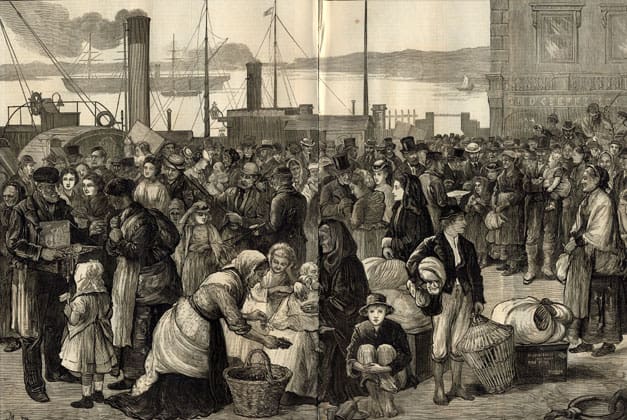
Mass Irish emigration over the past few centuries started the Irish Heritage around the world and has caused many place names worldwide to be renamed after Irish towns and cities.
Bangor is the name of 28 towns around the world, including Bangor, County Down. Some of these, such as Bangor, Maine are named after either Bangor in Wales or Bangor in Northern Ireland.
There are over 56 Northern Irish place names and over 100 place names from the Republic of Ireland that exist in different parts of the world, named after counties on the island of Ireland. Even beyond Earth, there are Irish place names. On Mars, there are several, including Beltra crater; Clogh crater, Dromore crater, Fenagh crater, Glendore crater, Lismore crater, Louth crater, Navan crater, Tara crater and Wicklow crater.
Irish Diaspora
These places that exist outside of the island of Ireland are due to what is commonly referred to as Irish diaspora more than Irish Heritage. Irish diaspora refers to Irish people and their descendants who live outside of Ireland.
These people and their descendants then named their new-found-land after Irish place names and that is why today there are so many around the world, predominantly in the US where over 36 million people claim Irish as their primary ethnicity.
Other countries who have large Irish-descendant populations and rich Irish Heritage are Argentina; Bermuda, Canada, Puerto Rico, Chile, Uruguay, Mexico, Australia, South Africa and New Zealand.
A Tale of Two Cities
The two biggest cities in Northern Ireland are Belfast, County Antrim and Derry, County Londonderry. Belfast was granted city status by Queen Victoria in 1888. Despite being viewed as one of the most dangerous cities to live in the world during the 70s and 80s, it is now regarded as one of the safest cities within the United Kingdom according to a survey conducted in 2016.
The city of Derry gained city status in 1604 with a Royal Charter from the Kingdom of Ireland. Derry (Londonderry) is thriving as a city nowadays and is now one of the most popular places for tourists of Northern Ireland to visit.
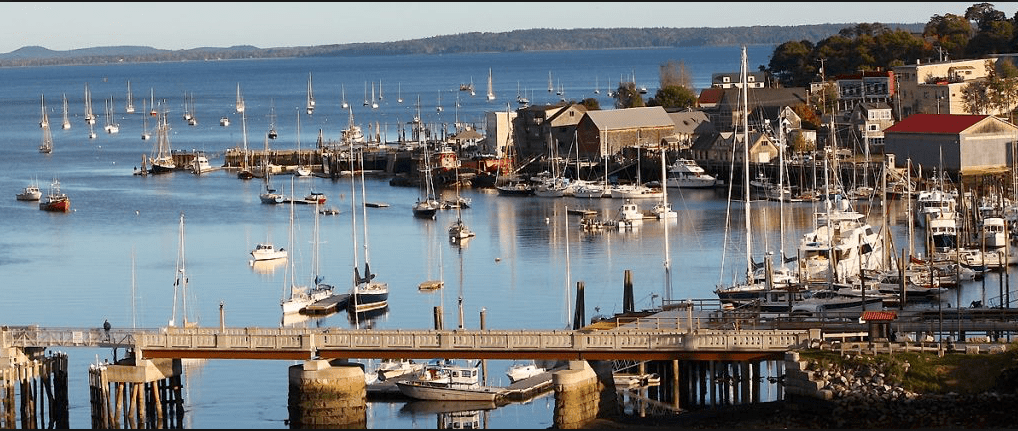
Both of these cities have strong Irish Heritage ties across the North Atlantic Ocean. Belfast, Maine is a city in Waldo County, Maine, USA. Around 7,000 people live there and it is popular with tourists due to its antique architecture and historic districts.
Likewise, the names Derry and Londonderry exist outside of Ireland too. There is a town called Derry situated right beside another town called Londonderry in New Hampshire in the United States. There are also Londonderrys in Yorkshire, England, in Vermont, United States, in Nova Scotia, Canada as well as in northern and eastern Australia. Just off Tierra del Fuego in Chile, there is an island called Londonderry Island.
Belle of Belfast City
Belfast, Maine was settled by Scottish and Irish families from Londonderry, New Hampshire in the Spring of 1770. It is often rumoured that the name Belfast, after the Northern Irish city, was decided via a coin-toss.
During the American Revolution, fear of British attack led the original residents to abandon Belfast. However, they returned in the 1780s to build a vibrant, prosperous city that would become the main market centre for the surrounding areas.
Two catastrophic fires consumed most of the downtown area in 1865 and 1873 respectively. Merchants rebuilt the city with brick, which created a long-lasting commercial district.
In the 1900s the city’s prosperity was mainly focused on shipbuilding and commerce, similar to the original Belfast during this time as it built the Titanic. Today, Belfast, Maine is a quiet, small town with an appealing Irish Heritage, culture and community spirit that is attractive to both tourists and potential residents.
What Did the Natives Think of the Irish Settlers?
When Britain renounced Catholicism they tried to implement Protestantism upon Ireland and the people of Ireland refused it, which sparked wide hatred towards Irish people from the rest of Britain.
Racism towards Irish people can be traced as far back as the year 1190 with the Norman chronicler Giraldus Cambrensis. To justify the Norman invasion of Ireland, he wrote disparagingly of the country in his aim to seek promotion by Henry II within the English church.
Stereotyping of the Irish continued into more modern times such as the 19th century. Victorian Britain branded the Irish as violent and alcoholic.
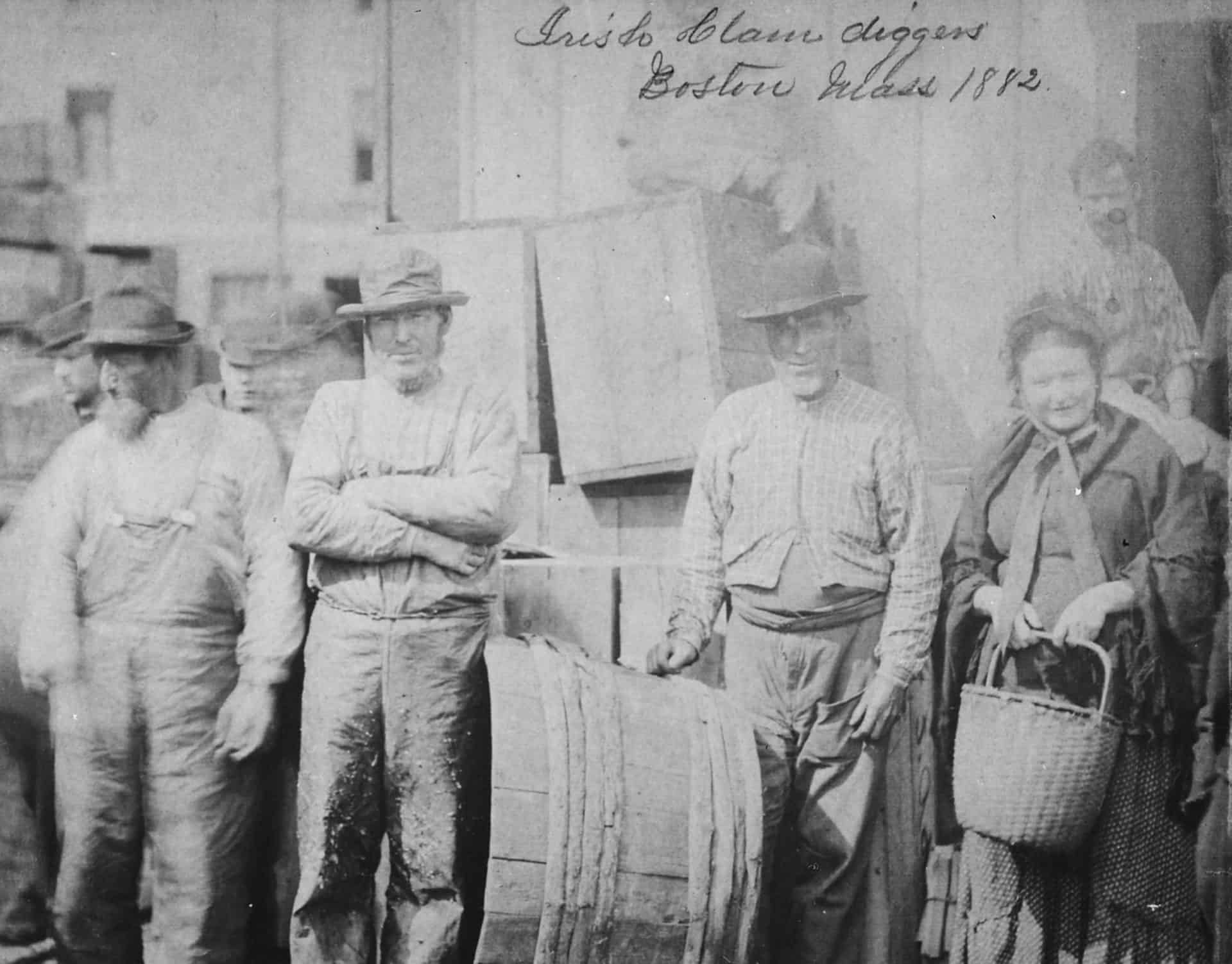
Irish emigration to Boston originally began in the colonial period with the arrival of predominantly Protestant migrants from Ulster, who came seeking relief from high rents, repressive taxes, and other pressures.
They were followed by many Catholic Irish settlers shortly after. Wary of Boston’s Anglo-Saxon Puritans, who were hostile to the Irish, many moved to the outskirts of the Bay Colony and founded towns such as Bangor and Belfast in Maine.
The roots of Irish Heritage are rooted deep in people all around the world. Since there are more than 80 million people of Irish descent worldwide, many cultures, accents and traditions are influenced by historical Irish traditions. Irish diaspora is one of the largest of any other nation despite the population of the island of Ireland, being just over 6 million.
Did you know the popularity of the Irish Heritage? Are you of Irish descent but are from a different country? Let us know in the comments below.
Other great Irish Blogs: Toasts of Ireland | History of the Tuatha de Danaan | Unfolded History of Gaelic Ireland | History of the Troubles | History of Belfast City

Discover the Best Scenic Drives in Northern Ireland
Northern Ireland
28/04/2024

Exploring Ireland’s Ancient East
Ireland
28/04/2024
Viking History: Insight into the Age of Phantom Travellers
History and Heritage
28/04/2024
The Symbolism and Meaning of the Dara Knot
Culture Exploration
28/04/2024
An Overview of Michigan Tourism Statistics: Visitor Spending, Growth, and Industry Impact
United States
28/04/2024