

Hagia Sophia: A Symbol of Faith and Culture
Updated On: April 22, 2024 by  Yasmin Elwan
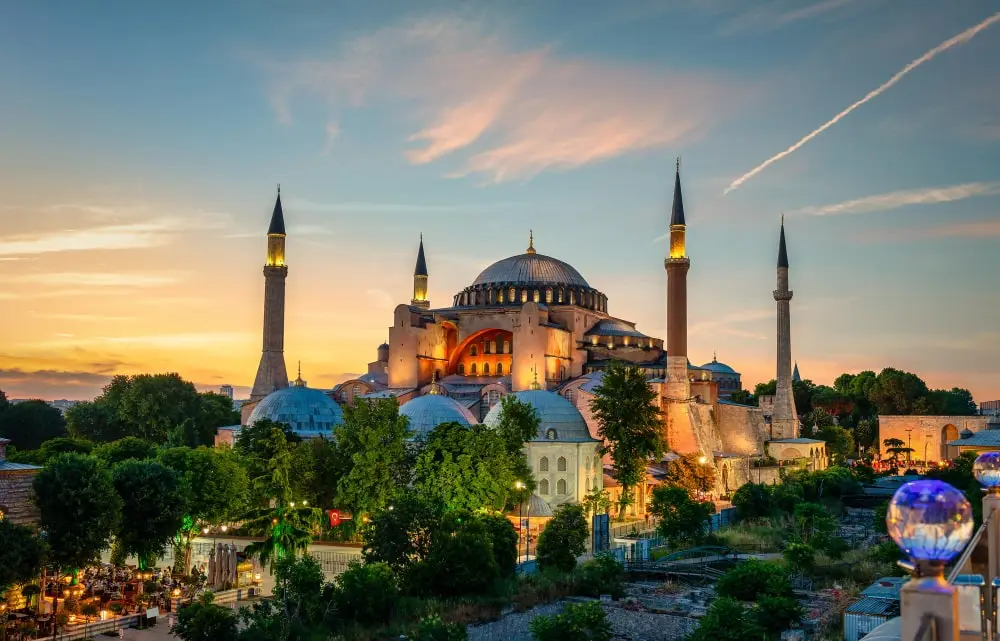
Hagia Sophia is a stunning architectural masterpiece that has captivated the hearts and minds of people all over the world for over 1500 years. This magnificent work of art was constructed in the 6th century under the reign of the Byzantine Emperor Justinian I in Istanbul, Turkey.
For nearly a millennium, it stood as a church before being transformed into a mosque during the rule of the Ottoman Empire. Until 2020, millions of visitors were drawn to the museum of Hagia Sophia before the Turkish government turned it back into a mosque. The mosque now stands as a testament to its rich and diverse history.
The Iconic Architecture of Hagia Sophia
Behold the building’s awe-inspiring beauty, which includes a gigantic dome, wonderful mosaics, and gorgeous marble columns that will take your breath away. This building’s design has left an everlasting effect on architecture, inspiring countless projects throughout history and continuing to serve as a source of inspiration for designers and architects today.
Hagia Sophia spans 269 feet (82 metres) in length and 240 feet (73 metres) in width, with a magnificent domed roof that towers 180 feet (55 metres) above the ground. The breathtaking structure was constructed in the captivating Christian basilica style and stands today as the most notable remaining example of Byzantine architecture. The building boasts some noteworthy features, such as:
Construction Materials
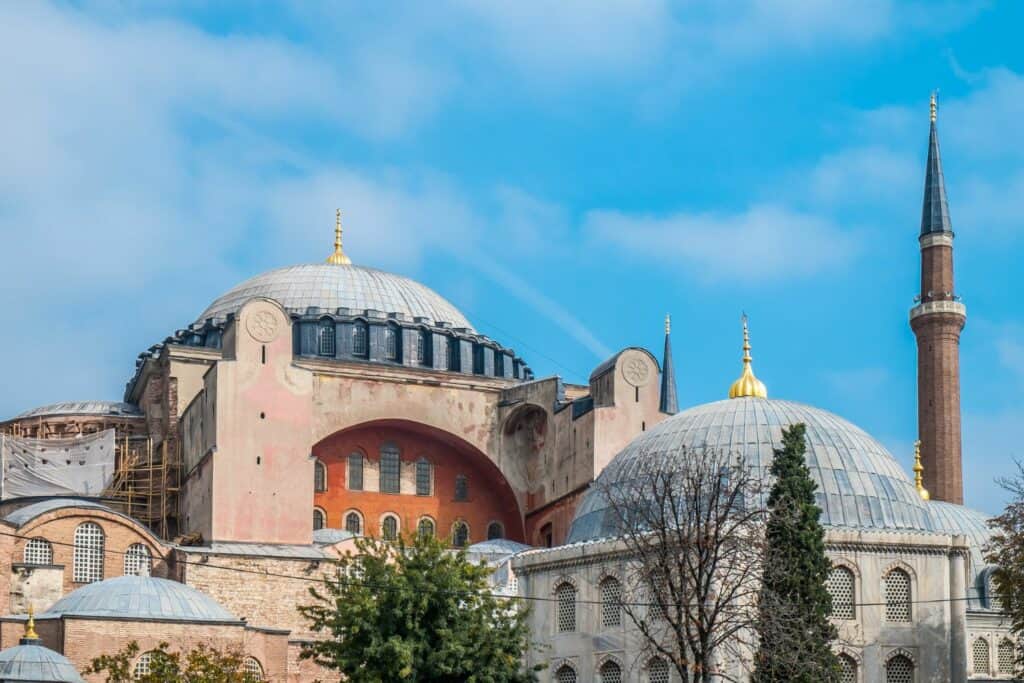
Emperor Justinian had a grand vision of constructing a basilica that would embody the essence of the entire Byzantine Empire. To achieve this, he sourced materials from every province, ensuring that each one was represented in the outstanding structure.
The stunning marble flooring of this place came from Anatolia, a region that spans eastern Turkey and Syria. The walls and certain sections of the floor were constructed using bricks that came from the lands of North Africa.
Flooring and Columns
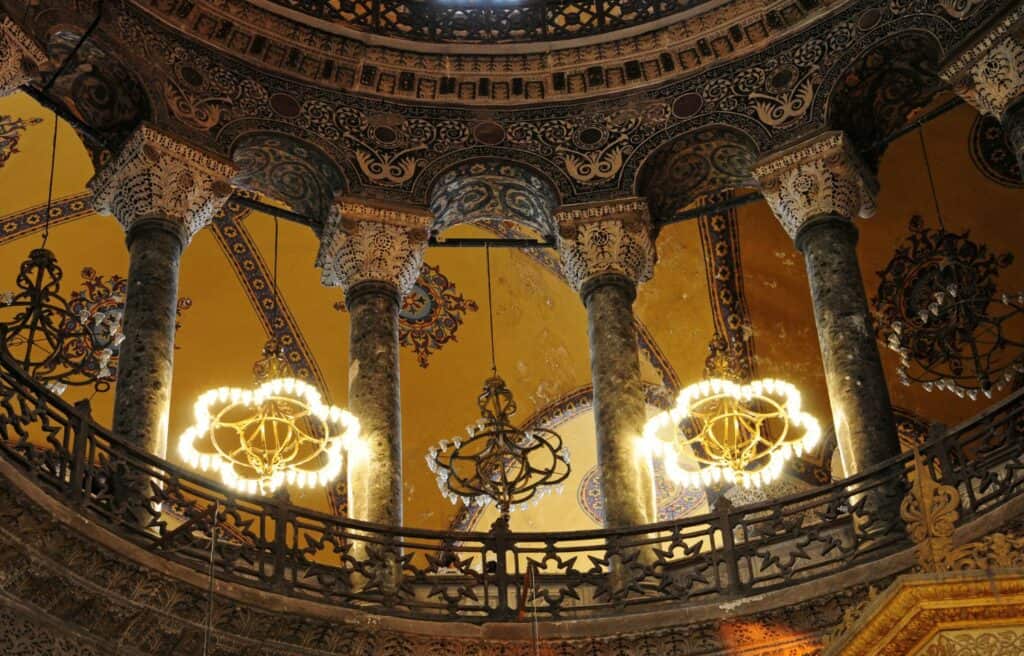
The structure boasts an almost perfectly square design. When you step into this stunning space, you’ll find yourself surrounded by three spacious aisles, each adorned with grand columns and featuring an astonishing gallery of mosaics. The roof of the galleries seems to be floating on air, thanks to the 40 windows positioned above them.
But that’s not all! Hagia Sophia contains 104 columns, some of which are made of luxurious marble. Interestingly, many of these columns were actually imported from the Temple of Artemis in Ephesus, an ancient city located near modern-day Selçuk, Turkey, as well as from Egypt.
Mosaics
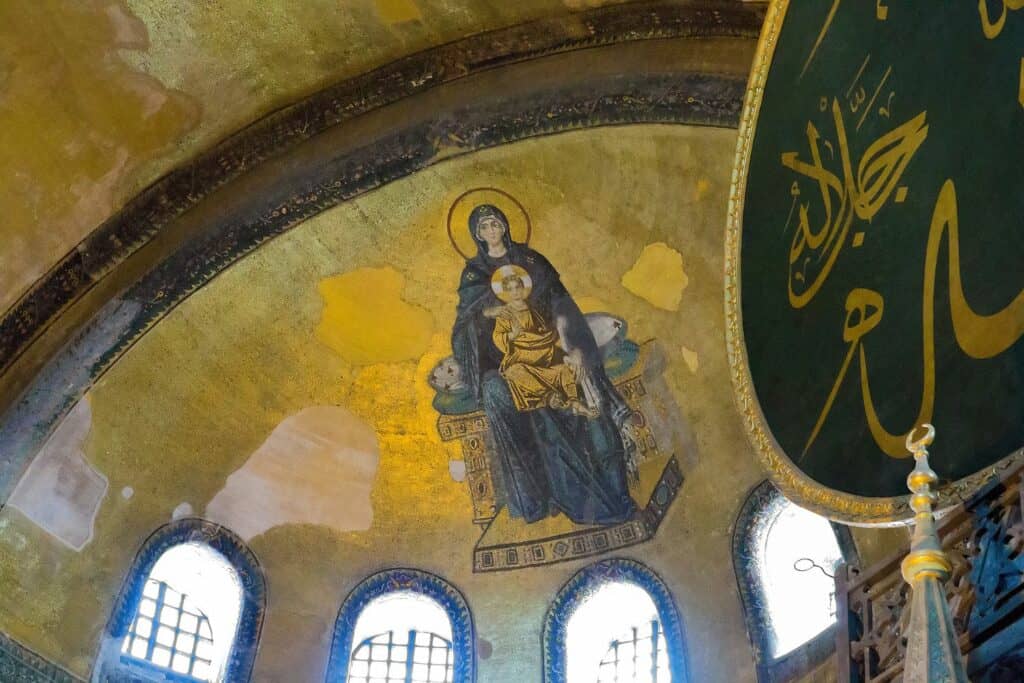
Christians had lavishly decorated the ancient Hagia Sophia with mosaics and frescoes. However, the Ottoman Turks covered many of the early Christian artworks with fascinating Islamic works of art.
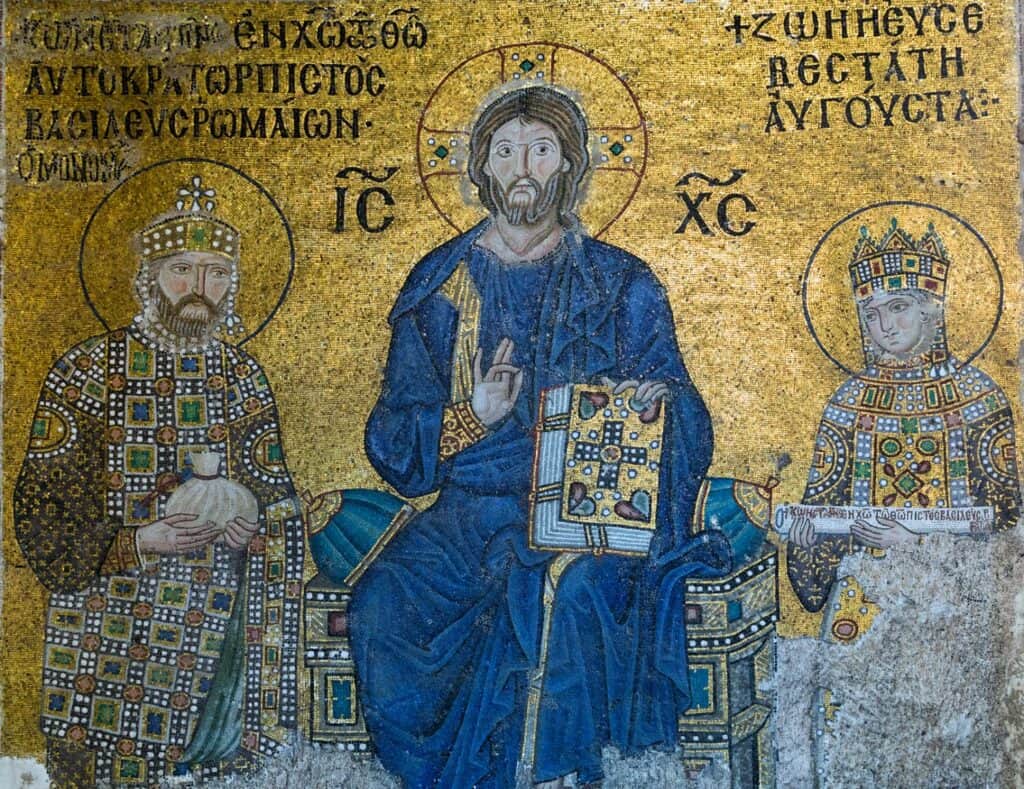
The mosaic of the Virgin Mary holding the baby Jesus on a gold mosaic backdrop is one of the most famous of the Hagia Sophia’s mosaics that have survived to the present day. Above the Hagia Sophia’s southwest entrance is a mosaic depicting the Virgin Mary with Byzantine Emperors Justinian I and Constantine.
Domes
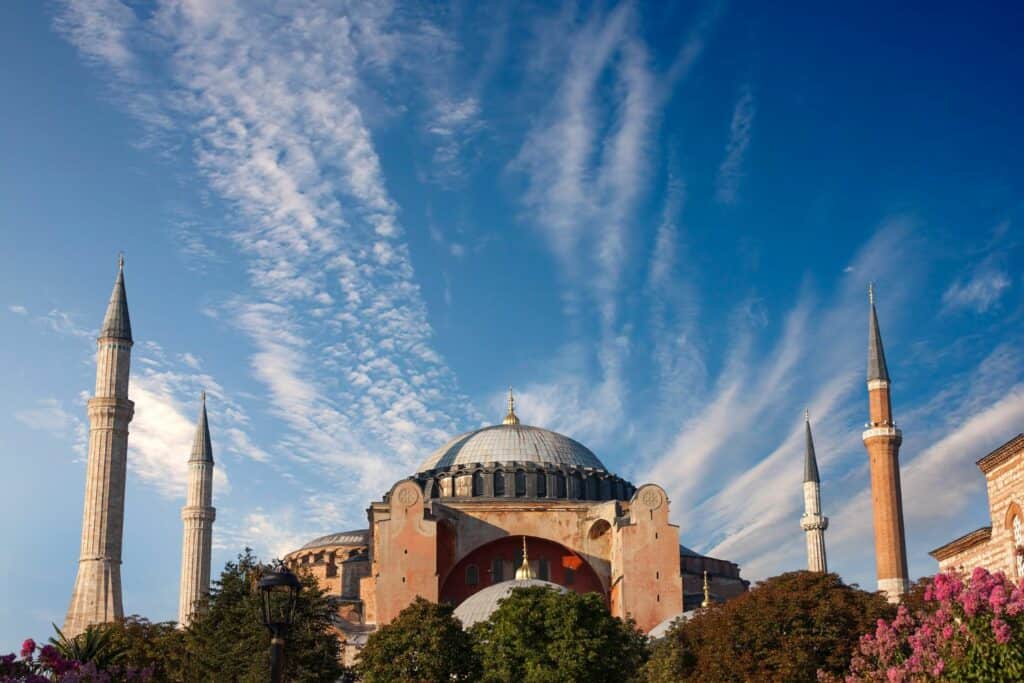
The central dome of the main nave is an impressive sight to behold, spanning a whopping 107 feet (32.6 metres) in diameter and soaring 180 feet (55 metres) above the ground. One of the most remarkable features of the dome is its innovative support system, which utilises four pendentives—a groundbreaking technique for its time!
It is interesting to know that the Hagia Sophia has the second-largest pendentive dome in the world. Only St. Peter’s Basilica in Rome surpasses it in size! Flanking the altar and the main entrance, you’ll find two striking semi-domes that add a touch of architectural grandeur to the space.
Calligraphic Art
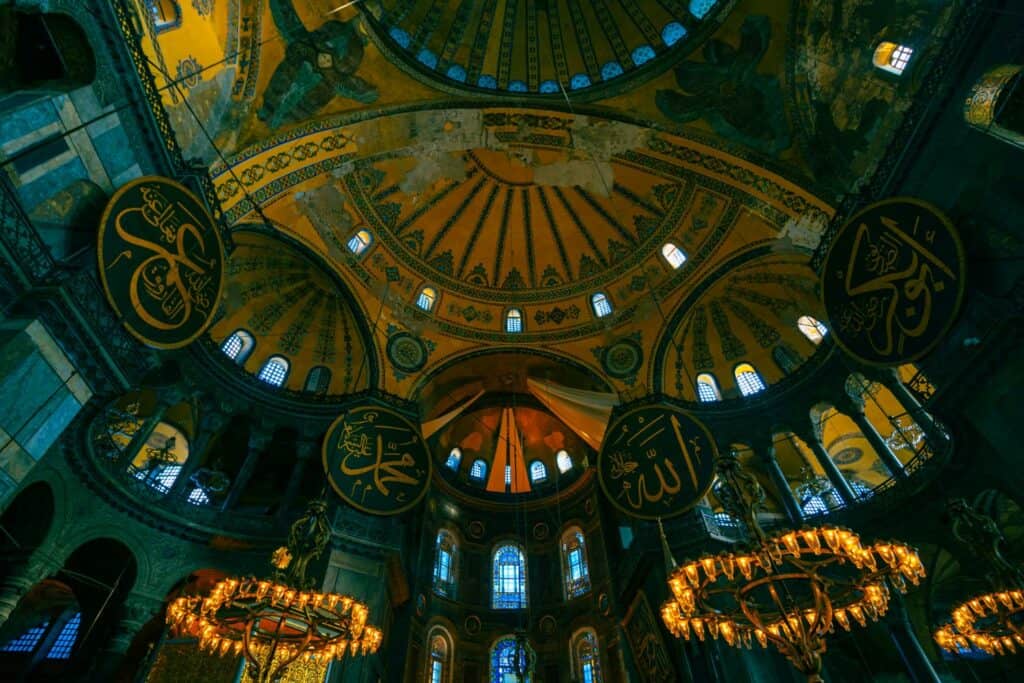
Admiring the detailed beauty of the main hall, one cannot help but notice the stunning calligraphic roundels hanging on the walls. These exquisite pieces were crafted by Kazasker Mustafa İzzet Efendi, a renowned calligrapher of the 19th century. During the reign of Sultan Abdulmejid, between 1847 and 1849, the hall underwent repairs, and Mustafa İzzet Efendi was commissioned to create these impressive works of art.
Behold the magnificent 7.5-metre diameter calligraphic roundels adorned with the names of the most revered figures in Islamic history, from the mighty “Allah”, the Creator of the universe, to the great Prophet “Muhammad” and his noble grandsons “Hasan” and “Hussain”. Not to mention the four caliphs “Abu Bakr”, “Uthman”, “Umar”, and “Ali”—each name etched with the utmost care and precision and adorned with a luxurious touch of gold gilding.
The eight boards were crafted using linden wood for its remarkable combination of lightweight and long-lasting properties. On top of that, dazzling bronze lamps flanking the mihrab (a prayer niche) at the mosque were actually gifted by the great Kanuni Sultan Süleyman himself. Legend has it that he brought them back from his travels to Budin and generously donated them to the mosque as a symbol of his devotion.
Overview of the Hagia Sophia’s History
The Hagia Sophia has been welcoming both Christian and Muslim worshippers over its turbulent 1500 years. This architectural marvel has stood the test of time and witnessed numerous historical events. From its construction in 537 AD to its conversion into a mosque in 1453, the Hagia Sophia has undergone several transformations.
The First Versions of Hagia Sophia
Hagia Sophia was originally commissioned by the Byzantine Emperor Constantius II in 360 AD. Istanbul was then known as Constantinople and was the seat of the Byzantine Empire. Back then, the official religion in the Byzantine Empire was Greek Orthodox, and the first Hagia Sophia was actually built for this church.
In 404 AD, a devastating fire destroyed the first Hagia Sophia church in Constantinople, leaving nothing but ashes and ruins in its wake. The fire was sparked by political riots that erupted in the city, causing widespread destruction and chaos. The Hagia Sophia has a tumultuous history, having been rebuilt by Roman Emperor Theodosius II in 415 AD, only to be burned down once again during the Nika riots.
The present Hagia Sophia dates back to 537 AD when it was commissioned by Byzantine Emperor Justinian I. The task of constructing the new church was entrusted to the skilled architects Isidore of Miletus and Anthemius of Tralles.
The Fourth Crusade was a turbulent time in history, marked by the fall of Constantinople to the Latin Empire. During this period, the Hagia Sophia was not spared from the chaos, as Crusaders ransacked and looted the iconic structure.
Remodelling During the Muslim Empire
In 1453, the Ottoman Empire, led by the legendary Sultan Mehmed II, conquered Constantinople and brought about some significant changes to the iconic Hagia Sophia. The city underwent a major transformation when it was renamed Istanbul, the main religion changed to Islam, and the renowned Hagia Sophia was refurbished into an imperial mosque.
Following the Ottoman conquest, a fascinating transformation took place as Islamic calligraphy adorned the once-Christian mosaics. The wall facing Mecca was adorned with a glorious mihrab (a prayer niche), and the structure was further enhanced with the addition of four minarets.
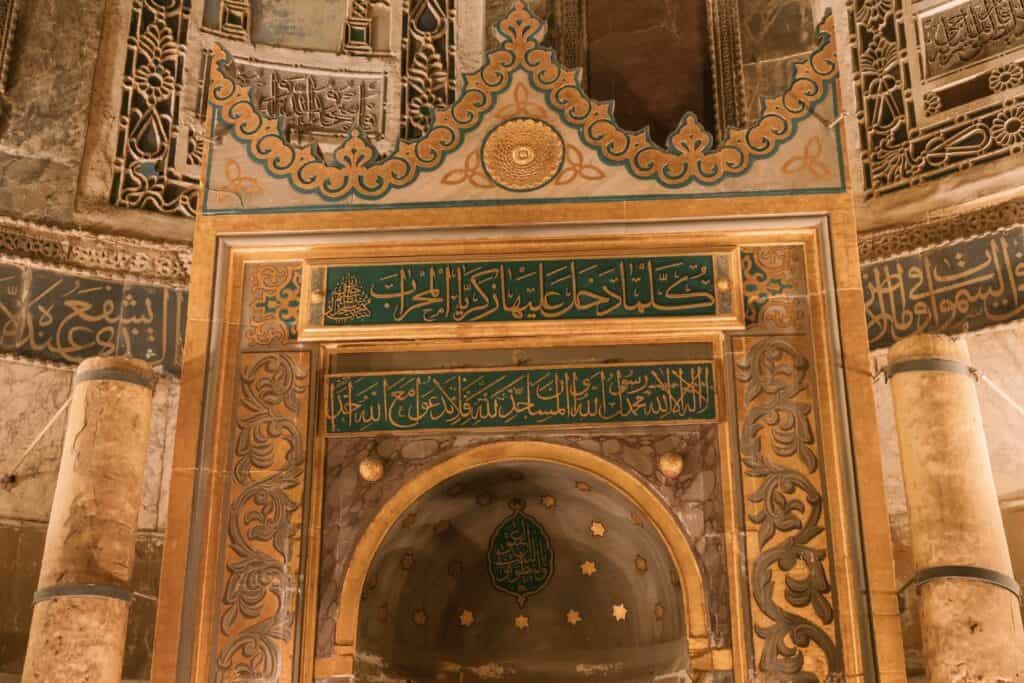
In 1934, the first president of the Turkish Republic, Kemal Atatürk, made a historic decision to secularise the significant building. Later on, Hagia Sophia was recognised as a UNESCO World Heritage site in 1985. It’s part of a group of buildings known as the Historic Areas of Istanbul. Until 2020, the Hagia Sophia Museum was under the administration of the Ministry of Culture.
The Hagia Sophia was once again used as a place of worship when the Turkish Council of State and President Recep Tayyip Erdogan reinstated the mosque’s status there in July 2020.
Where to Eat Near Hagia Sophia
Turkish cuisine is a must-try for every foodie, focusing on fresh ingredients and harmonious flavours. When visiting Hagia Sophia, you will be able to treat yourself to delicious traditional dishes and desserts at the numerous remarkable restaurants surrounding this outstanding attraction.
Buhara Ocakbasi Restaurant
If you’re looking for a scrumptious meal in the midst of the gorgeous city of Istanbul, Buhara Ocakbasi Restaurant is the perfect spot to gather with your loved ones and indulge in some mouthwatering culinary delights. At Buhara Ocakbasi Restaurant, you can enjoy a hassle-free dining experience with their range of services. From making reservations to delivering your favourite dishes right to your location, they’ve got you covered.
They also accept credit cards so that you can pay for your meal with ease. The restaurant has both indoor and outdoor seating, and on warm days, the outside seating area is ideal for dining. Buhara Ocakbasi Restaurant boasts a lively atmosphere that’s perfect for a relaxed get-together with friends. The noise level is just right, making it an ideal spot for a casual meal.
Stay connected with their complimentary WiFi and unwind with a refreshing selection of beer and wine. Not only that, but you will get to catch up on your favourite shows or sports games on their TV while you savour your meal. You can satisfy your cravings any day of the week at this restaurant, which is open from 11:30 a.m. to 11:30 p.m.
Sultanahmet Ottoman Terrace Fish House
Experience the ultimate seafood indulgence at Sultanahmet Ottoman Terrace Fish House, located a few metres away from Hagia Sofia. Savour the freshest catch of the day while taking in the breathtaking panoramic view of the majestic Bosphorus.
This restaurant offers a mouthwatering selection of fresh fish dishes, featuring the delectable mixed fish platter and the perfectly grilled sea bass. Dine in style on the terrace, surrounded by lush astroturf and a warm, inviting atmosphere.
The ambience of the place is simply captivating with its elegant yet minimalistic interior design. The tables are well-spaced, and the surroundings are immaculately clean, making it a perfect spot to unwind and enjoy a delightful meal.
This eatery is a fantastic option for those on a budget, as the prices are very reasonable and won’t leave you broke. Also, with its convenient location, Sultanahmet Ottoman Terrace Fish House is an ideal choice for tourists exploring the iconic Blue Mosque and Hagia Sophia. Outdoor seating is available, and the welcoming, English-speaking staff is another standout feature.
Indulge in a diverse selection of beverages at this restaurant, including Turkish wine, refreshing cocktails, soft drinks, and soothing tea. Sultanahmet Ottoman Terrace Fish House is a top-notch dining destination that offers an exceptional experience in terms of quality, taste, and ambience.
Old Ottoman Cafe & Restaurant
Once you’ve taken in the stunning beauty of Hagia Sophia, why not treat yourself to a delicious meal at this charming cafe? Embark on a culinary adventure and tantalise your taste buds with the exotic flavours of Mediterranean and Turkish cuisine at the cosy Old Ottoman Cafe & Restaurant.
The salivating flavours of succulent meat kebabs, juicy turkey, and perfectly grilled sea bass are sure to delight your palate. When it’s dessert time, the heavenly flavours of vanilla ice cream, halva, and baklava at this delightful spot will pamper your senses.
Guests are highly encouraged to drown their sorrows with an amazing array of house wine, beer, or white wine. If you are not in the mood for alcohol, you can try their renowned apple tea, creamy latte, and refreshing iced tea. The staff has been praised for their friendliness and proficiency by many reviewers.
Top Hotels Near Hagia Sophia
Enjoy the luxury of the hotels near Hagia Sophia that offer a range of amenities, from relaxing spas and refreshing pools to distinguished restaurants. Make sure you choose a hotel that provides these amenities if they are crucial to your stay.
Hotel Poem
This special class category hotel in the heart of Sultanahmet is a few steps away from the Hagia Sophia and the Blue Mosque, and it also provides stunning views of the Bosphorus at an affordable price.
Immerse yourself in the rich history of Istanbul with ease when you stay at Hotel Poem. Their prime location puts you within walking distance of the city’s best-known sites, including the majestic Topkapi Palace. You can easily reach the Grand Bazaar with just a short 10-minute stroll.
For getting about Istanbul, there are several fantastic transportation options close by. Looking for some insider tips on the best local spots? Their staff is always willing to offer help, no matter the hour. In fact, the hotel’s 24-hour front desk is always available to assist you, and their room service is just a phone call away.
Hotel Poem offers an extensive list of amenities to ensure your comfort and enjoyment. Stay connected with complimentary WiFi available throughout the entire property and enjoy the convenience of their airport shuttle service.
When choosing your room, you will find a wide variety of options, including cosy family rooms and non-smoking rooms. The AC will keep your room at the ideal temperature, and each of the rooms has a tea/coffee maker, so you may always have a warm beverage on hand.
My Dream Istanbul Hotel
With a prime location just 500 metres from the Basilica Cistern and 2.4 km from the breathtaking Hagia Sophia, you’ll be in the heart of the action. You may order breakfast in your room in the morning and use their WiFi for free.
The hotel is conveniently located near some of the most popular attractions in the city, including the historic Grand Bazaar, the impressive Column of Constantine, and the aromatic Spice Bazaar.
My Dream Istanbul Hotel offers a range of amenities to make your stay comfortable and enjoyable, including an airport shuttle service, nice non-smoking rooms, round-the-clock front desk assistance, heating and air conditioning, daily housekeeping, and a tea/coffee maker in every room.
Royal Bosphorus Hotel & SPA Hamam
Experience the allure of Istanbul from the heart of the city at the Royal Bosphorus Hotel & SPA Hamam. This property is just a stone’s throw away from some of Istanbul’s most iconic landmarks, including the stunning Suleymaniye Mosque, the majestic Hagia Sophia, and the historic Galata Tower. With so much to explore, you’ll never run out of things to do!
Guests can enjoy a stress-free stay at this accommodation with 24/7 assistance from the friendly front desk staff. For those arriving by plane, convenient airport transportations are available. Furthermore, the shared lounge is the perfect spot to relax and mingle with fellow travellers. With free WiFi throughout the property, guests can stay connected and entertained during their entire stay.
Indulge in the comfort of air-conditioned rooms at the hotel, complete with all the amenities you need for a relaxing stay—a spacious wardrobe, a kettle for your morning cuppa, a well-stocked minibar, a safety deposit box to keep your valuables secure, a sleek flat-screen TV for your entertainment and a private bathroom with a cool shower.
At the Royal Bosphorus Hotel & SPA, you can get the most relaxing experience possible in their Hamam rooms, which have soft sheets and fluffy towels. Start your day off the right way with a delicious breakfast at the accommodation, where you can choose from various options, including buffet and halal dishes.
Hagia Sophia’s rich history is a shred of evidence of the resilience of human creativity and ingenuity, making it a significant symbol of cultural heritage that continues to stir up amazement and admiration. It is a must to visit this splendid attraction whenever you are in Istanbul. This structure’s stunning architecture will leave you speechless no matter how many times you see it. You can check out Connolly Cove’s recommendations for an even more exciting trip to Turkey: The Wonderful City of Bursa, Turkey | Top 10 Things to do in Cappadocia, Turkey.

7 Top Amusement Parks in England for an Unforgettable Adventure
England
25/04/2024

Miami Tourism Statistics: A Comprehensive Overview of Visitor Numbers and Revenue
Travel Statistics
25/04/2024

The Enchanting Charm of Scotland Wedding Castles!
Scotland
25/04/2024
London in June: An Ultimate Guide to 13 Unmissable Events and Festivals
United Kingdom
25/04/2024
The Perfect Day Trip from London: Where Will Your Adventure Take You?
United Kingdom
25/04/2024