


El Zaafarana Palace: A Huge Witness to Egypt’s History
Updated On: March 21, 2024 by  Dina Essawy
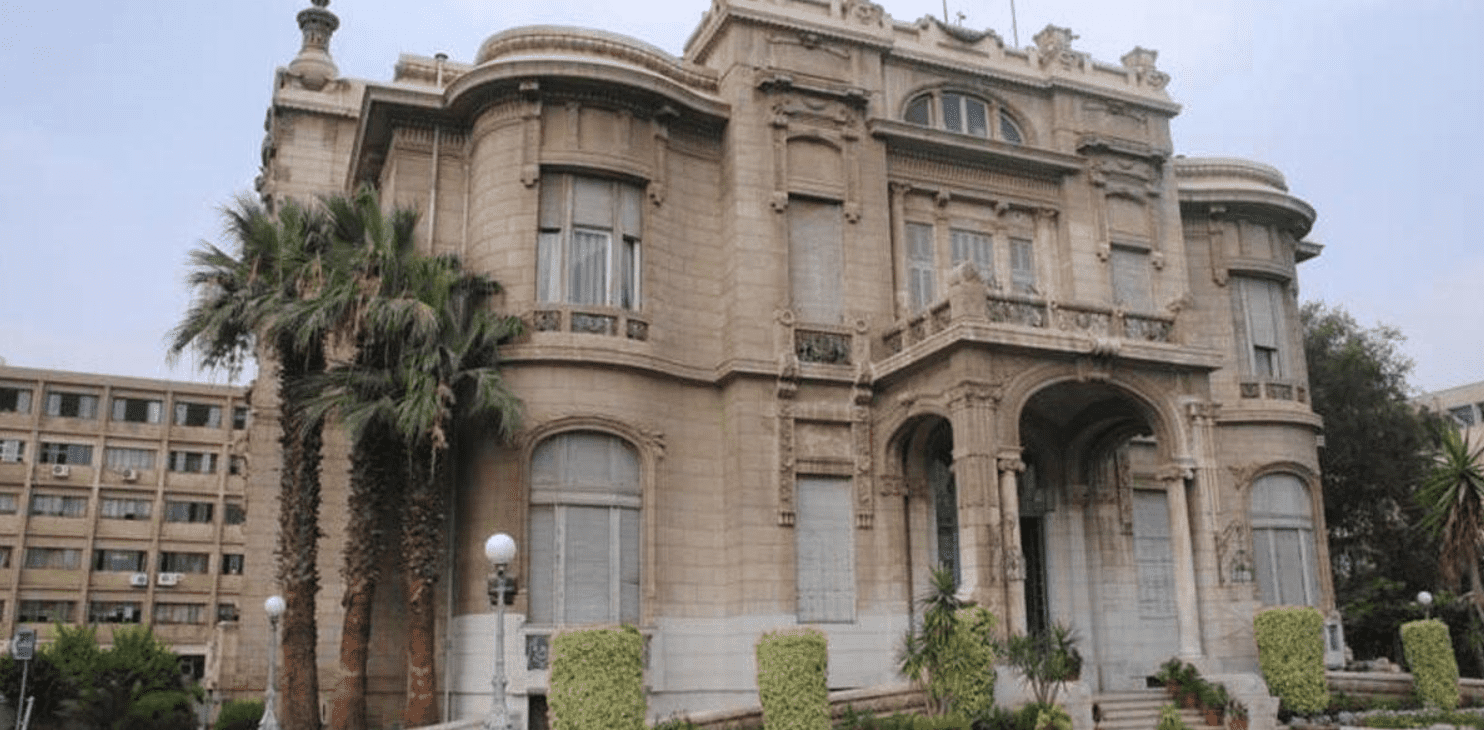
El Zaafarana Palace (Saffron Palace) is located in Cairo. It was an Egyptian royal palace that is rumored to have been the birthplace of the last King of Egypt, King Farouk. It was named after the saffron plantations which surrounded the palace at the time. It was built on the ruins of the Haswa Palace which was built by Muhammad Ali. It was designed by the Egyptian architect Maghrabi Bey Saad during the reign of Khedive Ismail in 1870. Khedive Ismail stipulated that the palace would be built similar to Versailles Palace in France in which the Khedive had spent his education period.
In 1872, Khedive Ismail gifted the palace to his mother Khoshyar Hanim who was ill as her physicians advised her to remain in the fresh air, so the palace was suitable for her condition as the grounds surrounding the palace were filled with gardens and natural landscapes.
In another story, it is said that the aforementioned palace was replaced by the current palace that was designed by Italian architect Antonio Lasciac at the request of two of Khedive Ismail’s wives as a tribute to their late husband.
After their death, El Zaafarana Palace was bought by King Fouad I of Egypt, who in turn sold it a few years later to the government to establish a university.
A Witness to History
El Zaafarana Palace witnessed many important historical events in Egypt, such as the entry of the English into the country, and the signing of the famous 1936 treaty between Lampson and Nahhas Pasha by which the UK agreed to withdraw all its troops from Egypt, except those necessary to protect the Suez Canal and its surroundings and except in the cases of war. The table on which that treaty was signed is still in its place in the salon of the main hall surrounded by gilded chairs.
The palace also witnessed the founding of the Arab League of Nations in March 1945, and the negotiations for the final evacuation of British troops in 1946. Additionally, King Emmanuel of Italy, King Albert I of Belgium, and his wife Queen Elizabeth were among the first foreign dignitaries to stay at El Zaafarana Palace.
The palace also witnessed many royal balls and celebrations, such as the celebration of King Farouk’s birthday in 1942, 1944, and 1945, as well as the anniversary celebration of his ascension to the throne in 1950.
In 1908, the Ministry of Education decided to turn the palace into a high school named after the then-current king of Egypt, Fouad the 1st. Then, it became the headquarters of the University of Ibrahim Pasha, before becoming the property of Ain Shams University, and holds the administration offices of the university in the 1950s.
Architecture and Design of El Zaafarana Palace
Khedive Ismail’s initials and his crown are carved at Zaafarana Palace gate and the entrances of the halls and rooms. The palace includes a winter garden and next to it a colored glass wall reflecting all the colors of the flowers and garden plants.
The palace’s design combines two styles, the Gothic style, and the Baroque style, two of the most important architectural styles used in the designs of many palaces in the 19th century. Zaafarana Palace consists of three main floors as well as an underground floor designated for palace services, including kitchens, laundries, and stores, and a third floor was designated for the accommodation of courtiers and servants. The underground floor alone is 1504 m2, while the ground floor and the first floor combined are 1377 m2.
The palace door, made of stained glass, is a wonderful masterpiece of art, with its colors and the shapes of flowers and a large tree with fruits.
The four façades feature windows and balconies with semicircular arches, and stucco decorations in the form of plant branches and very simple and delicate wreaths of flowers, and the ceilings are colored in the colors of the sky.
The main entrance to the palace is topped by a large balcony. The visitor can ascend to the entrance by foot through the marble stairs in the middle.
The first floor of the palace is the reception, as it includes the main hall to the left of the entrance, and next to it are two other reception halls, while the dining room is located to the right, which can accommodate about 49 people.
The second floor of the palace includes eight bedrooms, each room is attached to a reception and a large Turkish bath made of marble and equipped with pieces of colored glass that make it appear illuminated with natural lighting all the time, and the walls of the rooms are decorated with shapes of roses and colorful flowers in addition to gilding with French gold.
The wooden doors of the palace are about four meters high, while the ceilings reach six meters, which helps moderate the air temperature, especially in the summer. The colored ceilings are the most important characteristic of the second-floor rooms as they are painted the color of the sky, and it is said that the architect of the palace implemented it in this way in the bedrooms, because Khedive Ismail used to like looking at the sky while he was lying on his back before sleeping.
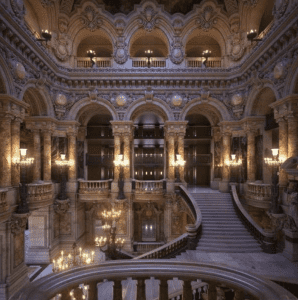
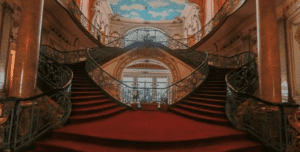
The palace is unique from the inside with a group of rare decorative elements, as well as its unparalleled architecture, and this is evident in the large lobby staircase made of copper and covered with a gilded layer.
The ceiling of the Saffron Palace is a masterpiece in itself, which is made of frosted glass inlaid with lead, and it was painted in bright colors that reflect the colors of the sky, and the first floor includes a group of columns in the Greco-Roman style made of green and yellow marble with gilded crowns.
Without a doubt, El Zaafarana Palace is one of the most beautiful palaces in Egypt with its stunning design and beautiful ceilings as well as its long and rich history and the fact that it witnessed so many events that were turning points in the history of Egypt and the world. It is a unique landmark in Cairo that will transport you back in time to an era of splendor and grandeur that defined the country’s future.

Bluegrass Music: Rich History and Influences
Music and Arts
14/05/2024

Discovering the Charms and History of Enniskillen: A Guide to County Fermanagh’s Largest Town!
Travel Guides
14/05/2024
Beijing: A City of History and Modernity
Destinations
14/05/2024

Things To Do in Pisa – Amazing Historical Sites
Italy
14/05/2024

The History and Uses of the Ogham Celtic Alphabet
History and Heritage
14/05/2024