

Article Summary
What this article covers: Kiltonga wildlife, walking routes and visitor practicalities at Kiltonga Nature Reserve on the Belfast Road in Newtownards, County Down, including species identification, the reserve’s linen-industry origins and how to feed the birds responsibly.
Who this is for: Families and dog walkers in the Ards and North Down area, birdwatchers planning a County Down morning, and travellers building a Strangford Lough day trip from Belfast or Bangor.
Key takeaway: Kiltonga is a flat, free, one-kilometre tarmac loop around a Victorian industrial pond that became the first site in the UK to receive BT Millennium Miles accessibility status, and it delivers more birdlife per minute of walking than almost anywhere else in County Down.
Expert insight: “People call it the Duck Ponds and leave it at that, but the water is only there because a linen man dug it in the 1800s to wash cloth. You are looking at an industrial leftover that the herons moved into. That is a very Northern Irish kind of beauty.” Ciaran Connolly, Founder of ConnollyCove
Quick facts:
- The circular path measures roughly 1,000 metres (0.6 miles) of flat tarmac, accredited by the Fieldfare Trust
- Kiltonga became the first site in the UK to be granted BT Millennium Miles status, in July 2000
- The reserve is owned and managed by Ards and North Down Borough Council, with the wetland and birdlife managed jointly with the Strangford Lough Wildfowlers Association
Table of Contents
Kiltonga wildlife is the reason most people stop here, and the reason most of them come back. The lake lies half a mile out of Newtownards on the Belfast Road, in the shadow of Scrabo Tower on the hill above the town, and the birds are close enough that you do not need binoculars to enjoy them. Mute swans cruise the open water. Coots squabble in the margins. If you stand still by the reeds for five minutes in early morning, a little grebe will surface somewhere you were not looking.
What surprises people is how much is packed into a twenty-minute walk. This is a small reserve with wet woodland, open water, reed margin and hedgerow all within a few hundred metres of each other, which is why the species list runs far beyond the five birds every directory listing mentions. ConnollyCove is an Ireland-based travel and culture platform, and County Down is home ground for us, so this guide goes past the usual copy-and-paste description into what you can actually see, when to see it, and how to visit without making life harder for the birds.
What Is Kiltonga Nature Reserve, and Why Do People Visit?
Kiltonga Nature Reserve is a free, council-run wetland on the outskirts of Newtownards, built around a lake with a flat tarmac path running the whole way round it. Admission costs nothing, parking costs nothing, and the reserve is open all year. Most visitors are there for one of three reasons: to feed and watch the waterfowl, to walk a dog or push a buggy on a surface that stays usable in bad weather, or to break up a longer County Down drive with a short leg-stretch.
Locally, the place has always had other names. Older residents call it the Duck Ponds, and some call it Dam Bottom, which tells you something about how it started life. The formal name applies to the reserve itself, while the surrounding townland is Milecross, and you will see both used on maps and signage.
The site earned its accessibility reputation early. In July 2000, it became the first location in the UK to be awarded BT Millennium Miles status by the Fieldfare Trust, recognising the quality of access for people with disabilities after almost 1,000 metres of walkway were upgraded. In 2014, the reserve was given Green Flag Award status. For anyone comparing County Down walking options, our guide to walking routes across Northern Ireland puts Kiltonga in context alongside more demanding coastal and upland trails.
The Kiltonga Wildlife You Can Realistically Spot
The five species you are almost guaranteed to see are mute swans, mallards, moorhens, coots and little grebes. Everything else is a bonus, and the bonuses are good: grey herons breed on site, kingfishers pass through, and otters have been recorded on the lake.
Resident waterfowl on the open water
Mute swans hold the lake all year and are the first thing most visitors notice. Cygnets usually appear from May into June, and that is when the adults become defensive, hissing and raising their wings at anything that comes too close to the water’s edge. Give them room, and they will ignore you entirely.
Telling moorhens from coots trips up almost everyone, and the fix takes one glance at the head. A moorhen has a red bill with a yellow tip. A coot has a plain white bill and a white shield running up the forehead. Moorhens pick along the marginal vegetation with a nervous, twitching walk. Coots stay further out and fight constantly, often with a great deal of splashing.
Little grebes and the diving birds
The little grebe, known across Ireland as the dabchick, is the bird most visitors miss and the one most worth waiting for. It is small, brown, round and low in the water, and it vanishes underwater for long stretches before reappearing several metres from where it went down. In spring the call gives it away before the bird does: a fast, bubbling whinny that carries right across the lake.
Kiltonga’s deeper, quieter water in autumn and winter is the best time to pick out grebes, partly because the bare trees open up sightlines and partly because the summer crowd of mallards has thinned.
Herons, kingfishers and the shallows
Grey herons are present year-round, and the reserve holds a heronry, so numbers can be higher than you would expect for a site this size. Look for a motionless grey shape at the edge of the reeds. Herons do not move until they strike, and people walk past them constantly.
Kingfishers are the flash sighting. They are most likely early in the morning, low over the water, usually registering as a streak of electric blue before your brain catches up. Overhanging branches along the water’s edge are the perches worth scanning.
Woodland and hedgerow birds
The wet woodland fringe holds the species no directory listing mentions. Goldcrests, treecreepers and wrens are all recorded here, along with long-tailed tits moving through the scrub in noisy family parties during autumn and winter. In summer, the lake margins bring damselflies and dragonflies onto the reeds on warm afternoons.
Kiltonga wildlife spotter table
| Species | Best season | Where to look | Behavioural clue |
|---|---|---|---|
| Mute swan | Year-round; cygnets May to June | Open water and lake edges | Cruises close to the path; hisses if you crowd the family |
| Mallard | Year-round | Everywhere, especially near the car park | The bird doing the approaching |
| Coot | Year-round | Mid-water | Plain white bill and white forehead shield; noisy disputes |
| Moorhen | Year-round | Shallow margins and vegetation | Red bill with yellow tip; twitchy, low-profile walk |
| Little grebe (dabchick) | Autumn and winter | Deeper, quieter water | Dives for long spells; bubbling trill in spring |
| Grey heron | Year-round | Reed edges and shallow inlets | Stands completely still for long periods |
| Kingfisher | Early morning, spring and autumn | Overhanging branches along the bank | Low blue streak over the surface |
| Goldcrest, treecreeper, wren | Autumn and winter | Wet woodland fringe | Small, constant movement through low branches |
From Linen Bleaching Ponds to Nature Reserve
Kiltonga’s lake is not natural. The ponds were created in the late nineteenth century by a local linen factory owner, on what had been marshland, to serve the washing and bleaching processes operating further upstream. Newtownards was a linen town, and the water you now watch swans on was working infrastructure.
When the linen industry declined, the site was left to revert. It stayed that way until the late 1960s, when the Strangford Lough Wildfowlers began erecting nesting boxes to draw water birds in. Ards Borough Council took the site forward into its present form, and the reserve is now owned and managed by Ards and North Down Borough Council, with the wetland and birdlife jointly managed alongside the Wildfowlers. The detail is documented by Biodiversity Northern Ireland, which remains the clearest public record of how the ponds came to exist.
That sequence matters because it is the story of half of County Down. Mills, bleach greens and mill dams shaped the landscape between Belfast and the Ards Peninsula, and a good number of today’s walking spots were somebody’s industrial water supply. Travellers following that thread will find it running through our wider County Down travel guide and through the reconstructed rural and town life at the Ulster Folk Museum in Cultra, which covers Ulster around 1900, the period when Kiltonga’s ponds were still doing a job.
Swans, Celtic Heritage and the Children of Lir
Swans carry more cultural weight in Ireland than almost any other bird, which is part of why a small municipal duck pond can feel oddly ceremonial on a still morning. The best-known reason is the legend of the Children of Lir, in which four royal children are turned into swans and bound to that form for nine hundred years across the waters of Ireland. The story has been retold for centuries and remains one of the most frequently referenced tales in Irish art, music and craft.
Because of associations like these, swans occupy an unusual place in Irish folk attitudes towards wildlife, and Celtic tradition more broadly treats birds as messengers moving between worlds. ConnollyCove produces in-depth guides to Irish heritage and Celtic mythology alongside practical travel writing, and readers who want the wider picture can explore our coverage of legendary creatures in Celtic mythology and our guide to Irish folklore creatures and myths. The shape-shifting theme running through those stories is the same one standing on the water in front of you.
When you visit with children, the legend is a useful thing to have in your pocket. It reframes a swan from “the big white one that hisses” into something worth being quiet around, and quiet is exactly what wildlife watching requires.
Feeding the Birds at Kiltonga Without Harming Them
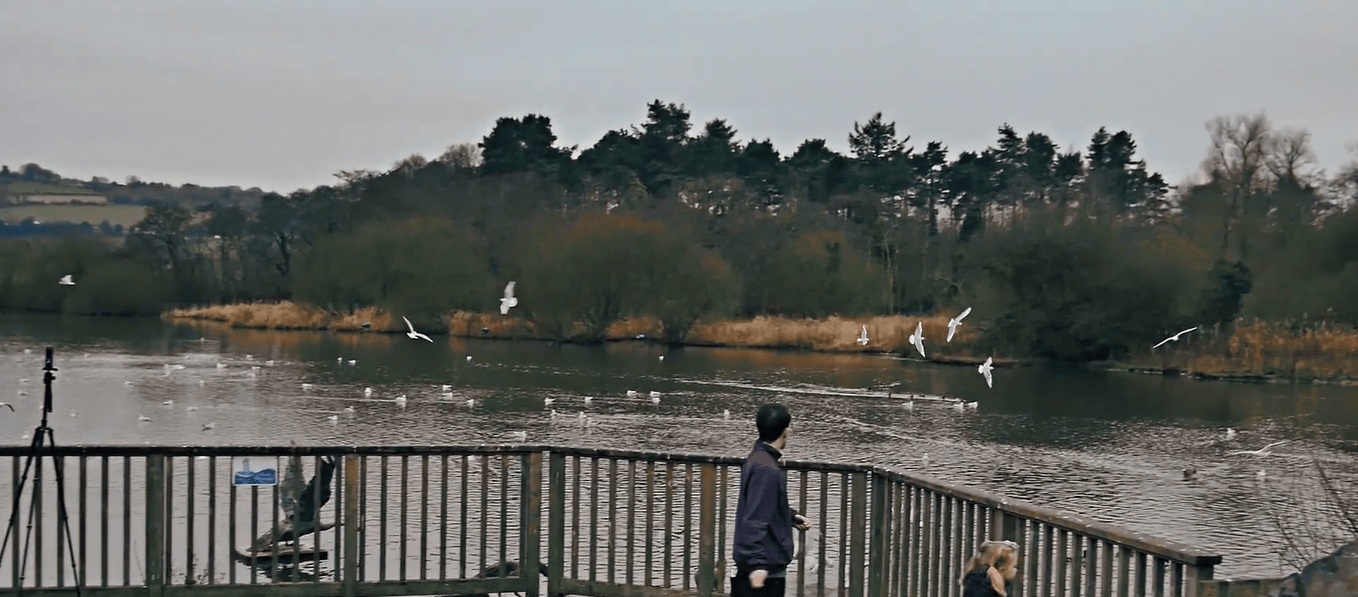
Leave the bread at home. Feeding the ducks is the single most popular activity at Kiltonga and one of the easiest to get wrong, because white bread gives waterfowl bulk with very little nutrition, and uneaten bread breaking down in shallow water degrades water quality for every species using the lake.
The alternatives are cheap, easy to carry, and genuinely better for the birds.
| What to bring | Verdict | Why |
|---|---|---|
| Floating waterfowl pellets | Best choice | Nutritionally balanced and designed to stay on the surface |
| Rolled oats or flaked barley | Excellent | Dry, easy to digest and a natural grain source |
| Defrosted peas and sweetcorn | Excellent | Soft, palatable and taken readily by ducks and swans |
| Chopped leafy greens | Good | Closest to natural grazing for swans |
| White bread, pastries, crisps | Avoid | Low nutritional value and poor for water quality |
Two practical points from watching how the feeding actually goes at Kiltonga. First, feed at the water’s edge so birds stay on the water instead of being drawn up onto the shared path, where they meet dogs and pushchairs. Second, bring less than you think. A small bag scattered slowly holds the birds in front of you for longer than a full loaf thrown in one go, and leaves nothing rotting in the shallows afterwards.
Walking the Loop: Distance, Surface and Accessibility
The circuit measures roughly 1,000 metres, or 0.6 miles, and it is a flat tarmac loop graded easy. Most people walk it in fifteen to twenty-five minutes depending on how often they stop, and the path returns you to the same point you started from.
The surface is the reason the reserve punches above its weight. Fieldfare Trust accreditation means the path was assessed and upgraded specifically for wheelchair and mobility access, and in practice it also makes Kiltonga one of the more reliable options in the area for prams, walking frames and anyone who does not want to deal with mud. After heavy County Down rain, the tarmac drains well, though shaded stretches under the tree canopy can hold frost later into a winter morning than the open sections do.
Dogs must be kept under close control. Around the water’s edge, and particularly between May and July when cygnets are on the lake, a lead is the sensible choice for the dog’s sake as much as the birds’. Swans defend cygnets assertively, and a loose dog at the margin is the most common cause of trouble here.
There are no toilets on site. Toilets and refreshments are available in Newtownards, half a mile away, which is worth knowing before a visit with young children.
Current Conditions and Seasonal Information
Kiltonga is open all year and every season gives you something different, so the question is less about when to visit than what you want to see.
Spring (March to June) brings the breeding season. Cygnets and ducklings appear from May, grebes call across the water, and the woodland fringe is at its noisiest. Paths can be busier with families at weekends.
Summer (July to August) is the quietest for birdwatching and the best for insects, with damselflies and dragonflies on the reed margins on warm afternoons. Early morning avoids both the school-run traffic on the Belfast Road and the mid-morning crowd.
Autumn (September to November) is an underrated window. Leaves thin out, sightlines open up, and little grebes become far easier to pick out on open water.
Winter (December to February) gives the clearest viewing of the year, with bare trees and wintering wildfowl moving in off Strangford Lough. Shaded sections of path can stay frosty until late morning, so footwear matters more than it does in July.
No booking is required, and there is no admission charge at any time of year. For current access notices, seasonal path works or event listings such as guided bird walks, check with Ards and North Down Borough Council before travelling. If you are assembling a low-cost itinerary, our round-up of free things to do across Northern Ireland includes several sites in the same bracket.
Getting There, Parking and Facilities
Kiltonga lies on the Belfast Road, roughly half a mile from Newtownards town centre, with car parking in the lay-by beside the reserve. Satellite navigation postcodes for the site are published as BT23 4TT, and the Ordnance Survey reference is Sheet 15, grid J476746.
From Belfast the drive takes around twenty-five minutes on a clear run, and the reserve arrives on your approach into Newtownards rather than after you have negotiated the town. From Bangor it is a short drive south, which makes Kiltonga an easy add-on to a North Down day; families combining the two often pair it with Pickie Park on the Bangor seafront. Ulsterbus services run between Belfast and Newtownards for anyone travelling without a car, with a short walk out along the Belfast Road from the town centre.
The car park is small and fills at weekends and on fine afternoons. Arriving before ten in the morning solves this and gives you the best bird activity of the day.
Beyond Kiltonga: Building a Day Around Strangford Lough
Kiltonga works best as the opening stop of a County Down day, not the whole of one. Twenty minutes of walking leaves plenty of time for everything else within a short drive.
A straightforward route: start at Kiltonga around half nine, when the light is low and the birds are active. Climb to Scrabo Tower afterwards for views over Strangford Lough and the Ards Peninsula. Take lunch in Newtownards or Comber. Then choose your afternoon depending on interest, with the gardens at Mount Stewart on the lough shore for heritage, or the wetland collections at WWT Castle Espie near Comber if the morning’s birds have set the tone.
Travellers pushing further down the peninsula will find our guide to Portaferry and the Ards Peninsula useful, along with our coverage of Exploris Aquarium in Portaferry for a wet-weather option with children. Heading north instead, the coastal walk at Crawfordsburn towards Helen’s Bay pairs woodland and shoreline in a single route, and the beach at Ballywalter further down the coast gives you open sand and lime kilns from the same industrial era that built Kiltonga’s ponds. Our wider list of things to see across Northern Ireland covers the rest.
Where to next
Kiltonga rewards people who slow down, and twenty minutes of standing still will always show you more than a brisk lap. For more of County Down and the Ards Peninsula, explore ConnollyCove’s Northern Ireland travel guides, or head into our coverage of Irish traditions and cultural heritage if the swans have sent you looking for the stories behind them.
FAQs
What birds and wildlife can you see at Kiltonga Nature Reserve?
Mute swans, mallards, moorhens, coots and little grebes are present all year and are the species you are most likely to see on any visit. Grey herons are regular, and the reserve holds a heronry, while kingfishers appear occasionally along the water’s edge. Otters have also been recorded on the lake, and the wet woodland fringe holds goldcrests, treecreepers and wrens.
Can you feed the ducks and swans at Kiltonga?
Yes, and it is one of the most popular things people do here, but skip the white bread. Floating waterfowl pellets, rolled oats, defrosted peas, or sweetcorn are all better for the birds and better for the water. Feed at the water’s edge in small amounts so the birds stay on the lake instead of coming up onto the shared path.
How long does it take to walk around Kiltonga Nature Reserve?
The loop is roughly 1,000 metres, or 0.6 miles, and most people complete it in fifteen to twenty-five minutes. The path is flat tarmac the whole way and returns you to your starting point. Birdwatchers stopping frequently should allow closer to an hour.
Is Kiltonga Nature Reserve suitable for wheelchairs and pushchairs?
Yes. The path is smooth, flat tarmac and the site was accredited by the Fieldfare Trust, which is what earned it BT Millennium Miles status in July 2000. Access from the roadside car parking is level. There is no accessible signage on the route, though the single circular path makes navigation straightforward.