


Ultimate Guide to Travelling by Train from London to Scotland

Updated On: April 24, 2024 by  Panseih Gharib
Have you ever considered travelling by train from London to Scotland but felt overwhelmed by the many choices and complex details? You’re not alone—arranging travel plans can be like trying to solve a complex puzzle without being able to see!
This valuable resource contains helpful information about the best London to Scotland routes, ticket prices, travel times, and more. So prepare for an unforgettable adventure filled with breathtaking scenery you will want to experience.
Popular Train Trips from London to Scotland
Many travellers love taking the train from London to Scotland. It’s a fast trip with lots of pretty views outside your window. The top London-to-Scotland routes include Edinburgh, Inverness, and Aberdeen. Here is an overview of the most recommended train trips.
LNER Azuma Train from London to Scotland
The LNER Azuma is a high-speed train between London King’s Cross and Edinburgh, with stops in major cities like York, Leeds, Newcastle, and Durham. It’s the fastest option for travelling from London to Scotland by train, with a journey time of around 4 hours and 30 minutes.
Azuma trains are built using Japanese bullet train technology and offer a smooth, quiet, and reliable ride. There are two types of Azuma trains: 9-coach and 10-coach. The 10-coach trains operate on the London-Leeds route, while the 9-coach trains serve other destinations.
Features
- Spacious and comfortable seating: The Azumas offer more legroom and wider seats than older trains, making your journey more relaxing.
- Free Wi-Fi: Stay connected throughout your journey with free Wi-Fi available at every seat.
- Plug sockets: Charge your devices quickly with plug sockets at every seat.
- Onboard catering: In coaches B and G, enjoy various food and drinks from the Let’s Eat Cafe Bar.
- First Class: Upgrade your journey for extra comfort with wider seats, more legroom, and access to a dedicated lounge.
- Accessibility: The Azumas are fully accessible, with wheelchair spaces, accessible toilets, and hearing loops available.
Avanti West Coast Train from London to Scotland
Avanti West Coast is a train operator that runs services between London and various destinations in Scotland, including Edinburgh, Glasgow, Motherwell, and Preston. It’s a popular choice for travellers due to its direct routes, modern trains, and competitive fares. While slightly slower than LNER Azuma (journey time around 4 hours 42 minutes to Edinburgh), Avanti West Coast often provides more flexible departure times and ticket options.
Features
- Modern fleet: Avanti West Coast operates a fleet of modern Intercity 225 trains, offering a comfortable and reliable journey.
- Onboard catering: Enjoy a selection of hot and cold food and drinks from the onboard shop or cafe bar.
- Free Wi-Fi: Stay connected throughout your journey with free Wi-Fi available at every seat.
- Plug sockets: Charge your devices quickly with plug sockets at every seat.
- First Class: Upgrade your journey to First Class for extra comfort, with wider seats, more legroom, and access to a dedicated lounge.
- Accessibility: Avanti West Coast trains are fully accessible, with wheelchair spaces, accessible toilets, and hearing loops available.
Lumo Train from London to Scotland
Launched in 2021, Lumo is a relatively new player in the train industry, shaking things up with its focus on affordability and sustainability. They operate exclusively on the East Coast Main Line, directly connecting London and Scotland’s capital. With journey times of around 5 hours and 20 minutes, Lumo might not be the fastest option to travel from London to Scotland, but it makes up for it with significantly lower fares than competitors.
Features
- 100% electric: As the name suggests, Lumo prioritizes sustainability by using electric trains, contributing to a greener travel experience.
- Modern and comfortable: Although not offering as many frills as other operators, Lumo trains are clean, spacious, and feature comfortable seating with ample legroom.
- Free Wi-Fi: Stay connected throughout your journey with complimentary Wi-Fi access onboard.
- Digital experience: Lumo embraces a paperless approach, with tickets and information readily available through their app.
- Luggage: You can bring two suitcases and one piece of hand luggage onboard free of charge.
The Caledonian Sleeper Train from London to Scotland

The Caledonian Sleeper is a fleet of overnight trains that offer various trips from London to Scotland. It’s more than just a mode of transport; it’s an experience, immersing you in the magic of train travel with elegant cabins, delicious meals, and stunning scenery upon arrival.
Accommodation Options
- Caledonian Cabin: The most basic option, offering comfortable bunk beds and en-suite shower facilities.
- Classic Room: This room is more spacious than the Caledonian Cabin. It has a double or twin bed, an en-suite shower, and additional amenities like a washbasin and wardrobe.
- Club Room: The most luxurious option, featuring a double bed or twin beds, en-suite shower, complimentary toiletries, and access to the Club Car with its exclusive lounge and restaurant.
- Family Room: Perfect for families travelling together, with bunk beds, a double bed, en-suite shower, and ample space for luggage.
- Pet-Friendly Rooms: Bring your furry companion along for the journey in designated pet-friendly rooms.
Features
- Onboard Meals: Enjoy delicious meals prepared by chefs and served in the comfortable surroundings of the restaurant carriage. Breakfast is also included in most fares.
- Club Car: Upgrade your experience to the Club Car, offering a dedicated lounge with comfortable seating, refreshments, and stunning views.
- Guest Lounges: Relax and unwind in comfortable lounges at select stations before or after your journey.
- Scenic Routes: Depending on your chosen route, you might wake up to breathtaking views of the Scottish Highlands, including mountains, lochs, and charming villages.
Things to Consider
- Price: Caledonian Sleeper fares are generally more expensive than standard train tickets, but the unique experience and overnight accommodation can be worth the splurge for some travellers.
- Travel Time: As an overnight service, journey times are naturally longer than daytime trains. However, you arrive well-rested and ready to explore your destination.
- Limited Destinations: While offering diverse routes within Scotland, Caledonian Sleeper only covers some major cities.
The West Highland Line Train from London to Scotland
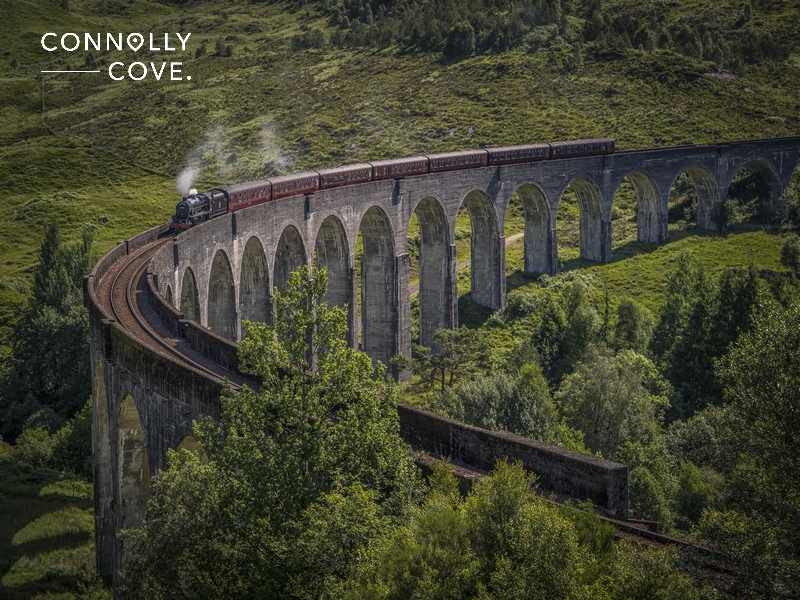
The West Highland Line, nicknamed the “Road to the Isles” in Gaelic (Rathad Iarainn nan Eilean), is renowned for being one of the most scenic train journeys in the world. It snakes its way through the breathtaking landscapes of the Scottish Highlands, connecting Glasgow with the port towns of Mallaig and Oban.
The West Highland Line starts in Glasgow Queen Street Station and takes you on a 268-kilometre journey northwards, passing through Loch Lomond & The Trossachs National Park, Rannoch Moor, and along the shores of Loch Awe. It then splits at Crianlarich: one branch goes west to Oban, while the other continues north to Fort William and Mallaig.
Prepare to be mesmerized by stunning mountain ranges, shimmering lochs, dramatic coastlines, and charming villages as the train winds through the Scottish Highlands. Keep your eyes peeled for iconic landmarks like Glencoe, Ben Nevis, the highest peak in the UK, and the Glenfinnan Viaduct, featured in the Harry Potter films.
Things to Do
- Hop off at stops: Break your journey at charming towns like Crianlarich, Fort William, or Oban to explore the local sights, indulge in delicious food, and immerse yourself in Scottish culture.
- Take in the views: Capture the stunning scenery with your camera, or sit back and relax, letting the breathtaking landscapes unfold.
- Enjoy onboard amenities: Depending on the train operator and class you choose, you might have access to Wi-Fi, catering services, and comfortable seating.
Things to Consider
- Travel time: The journey from Glasgow to Mallaig takes approximately 6 hours while reaching Oban takes about 4 hours. Make sure to factor in travel time when planning your itinerary.
- Booking in advance: Especially during peak season, booking your tickets is highly recommended to secure your spot on this popular route.
- Scenic vs. direct: While the entire West Highland Line offers stunning scenery, the section between Crianlarich and Mallaig boasts theatrical landscapes.
Experience the Beauty of Scotland with a Train Trip
Embark on a train journey from London to Scotland and immerse yourself in the country’s breathtaking beauty.
Attractions to visit in Scotland
Scotland offers a wealth of unique attractions, making it a perfect destination for a train trip. However, deciding where to focus your time can be challenging with so much to see and do. Here are some of the top attractions you can visit on your train journey through Scotland, categorized by region:
Central and Southeast Scotland
- Edinburgh: Scotland’s vibrant capital boasts majestic Edinburgh Castle, the historic Royal Mile, and the charming Arthur’s Seat, offering panoramic views.
- Stirling: Immerse yourself in medieval history at Stirling Castle, a key landmark in Scottish battles, and explore the charming Old Town.
- Falkirk Wheel: Witness the engineering marvel of the Falkirk Wheel, a rotating boat lift connecting two canals.
- Glasgow: Scotland’s largest city offers vibrant museums, stunning Victorian architecture, and a thriving cultural scene.
Highlands and Western Scotland
- Glencoe: This dramatic valley, famously featured in movies like “Skyfall,” offers breathtaking mountain scenery and hiking trails.
- Loch Ness: Cruise the legendary Loch Ness in search of the elusive Nessie monster, or explore the charming nearby village of Fort Augustus.
- Skye: This magical island boasts otherworldly landscapes, including the Old Man of Storr rock formation and the Fairy Pools.
- West Highland Line: Take a scenic train journey on the West Highland Line, known for its breathtaking views and iconic Glenfinnan Viaduct.
Northeast Scotland
- St Andrews: Home to the world-famous Old Course, St Andrews is a golfer’s paradise and offers beautiful beaches and historic sites.
- Aberdeen: Scotland’s third-largest city boasts stunning granite arc
- Cairngorms National Park: Hike through Scotland’s highest mountain range, offering diverse landscapes and wildlife, including the picturesque Marischal College.
- Dunnottar Castle: Perched dramatically on a clifftop, this ruined castle offers breathtaking views and a glimpse into Scotland’s turbulent past.
Conclusion
Enjoy the magnificent views and comfortable seats as you travel from London to Scotland. Explore landmarks such as Edinburgh Castle and the Isle of Skye during your journey. So, why wait? Start planning your train adventure today and enjoy a tranquil alternative to flying!
FAQ
What are some train options for travelling from London to Scotland?
For a direct trip, you can take the East Coast route from London to Edinburgh. If you want to enjoy a scenic tour, weekend and overnight train trips are available.
Can I get single tickets via the fast and scenic train route from London to Scotland?
Single tickets are part of many options on most train routes, including the East Coast route directly connecting London and northern Scotland.
What is it like travelling from London to Scotland in a Caledonian Sleeper private room?
A Caledonian sleeper private room gives a comfortable and relaxed experience when taking overnight journeys such as weekends or other planned trips between London and Northern Scotland.
What should I know about the best train trips from London to Scotland?
The best tours combine an alternative relaxing journey with a stunning scenery view and direct trains, providing optimal schedules benefitting your plan in connecting cities within your reach.
Any tips or advice for getting train tickets from London to Scotland?
It’s wise to always check upon various ticket options, schedules, and routes before planning your trip, thus ensuring both comforts plus stunning scenes during this ultimate guide towards efficient travel by trains between these two beautiful countries.

The Dying Gaul: Unraveling the Meaning and History of an Ancient Roman Masterpiece
History and Heritage
29/04/2024

Discover The Mystery of the Paviland Red Lady: Unearthing Its Secrets
Culture Exploration
29/04/2024

Downpatrick Town: Saint Patrick’s Final Resting Place
Northern Ireland
29/04/2024

Breton Language: Safeguarding the Rhythmic Pulse of Brittany’s Celtic Heart
Culture Exploration
29/04/2024

The Enchanting Helen’s Bay Beach – Northern Ireland
Northern Ireland
29/04/2024