


Top 11 Things to do in Koprivshtitsa, Bulgaria
Updated On: November 08, 2023 by  Aya Radwan
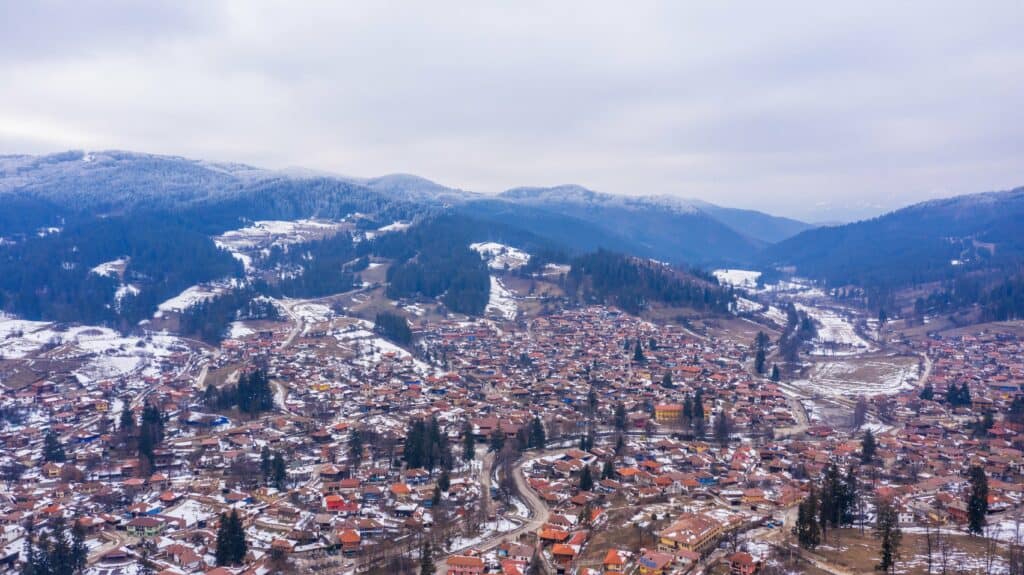
Home of the first shot of the April Uprising against the Ottoman Empire, Koprivshtitsa is a town soaked in history. Located at 111 kilometers east of Sofia, huddled between the mountains of Sredna Gora by the Topolnitsa river, it is a historic town in the Koprivshtitsa Municipality in the Sofia Province in Bulgaria.
The town of Koprivshtitsa is known for its architectural monuments, 383 to be exact that are a poignant example of the Bulgarian National Revival architectural style of the 19th century.
Being southeast of Sofia, the town enjoys a slightly cold weather all year round. During the summer season, the highest temperature can be 16 degrees Celsius in October. During the winter season, the average temperature is -4 degrees Celsius in January.
There are only legends surrounding the origin of the town of Koprivshtitsa, there are two legends exactly. The first one says that the town was actually a crossroad to the towns of Zlatarica, Pirdop and Klisura. While the other legend says that Koprivshtitsa was actually founded by refugees.
Whichever the origin of the town, it has carved its name in history by the significant role it played during the April Uprising and the lives it gave for the Liberation of Bulgaria. The town was reduced to ashes several times during the Ottoman Rule, its people robbed and driven away.
It was up to Koprivshtitsa’s wealthy merchants who employed Bulgaria’s best painters and woodcarvers using the proceeds from the local wool industry. This architectural movement in the town turned it into a spectacular display of the Bulgarian National Revival architectural style.
The local traders paid bribes to the Ottoman Bashibazouks to spare Koprivshtitsa from being torched during and after the April Uprising. It was also due to these bribes that the town enjoyed several privilages which enabled it to maintain its Bulgarian traditions and atmosphere of the town.
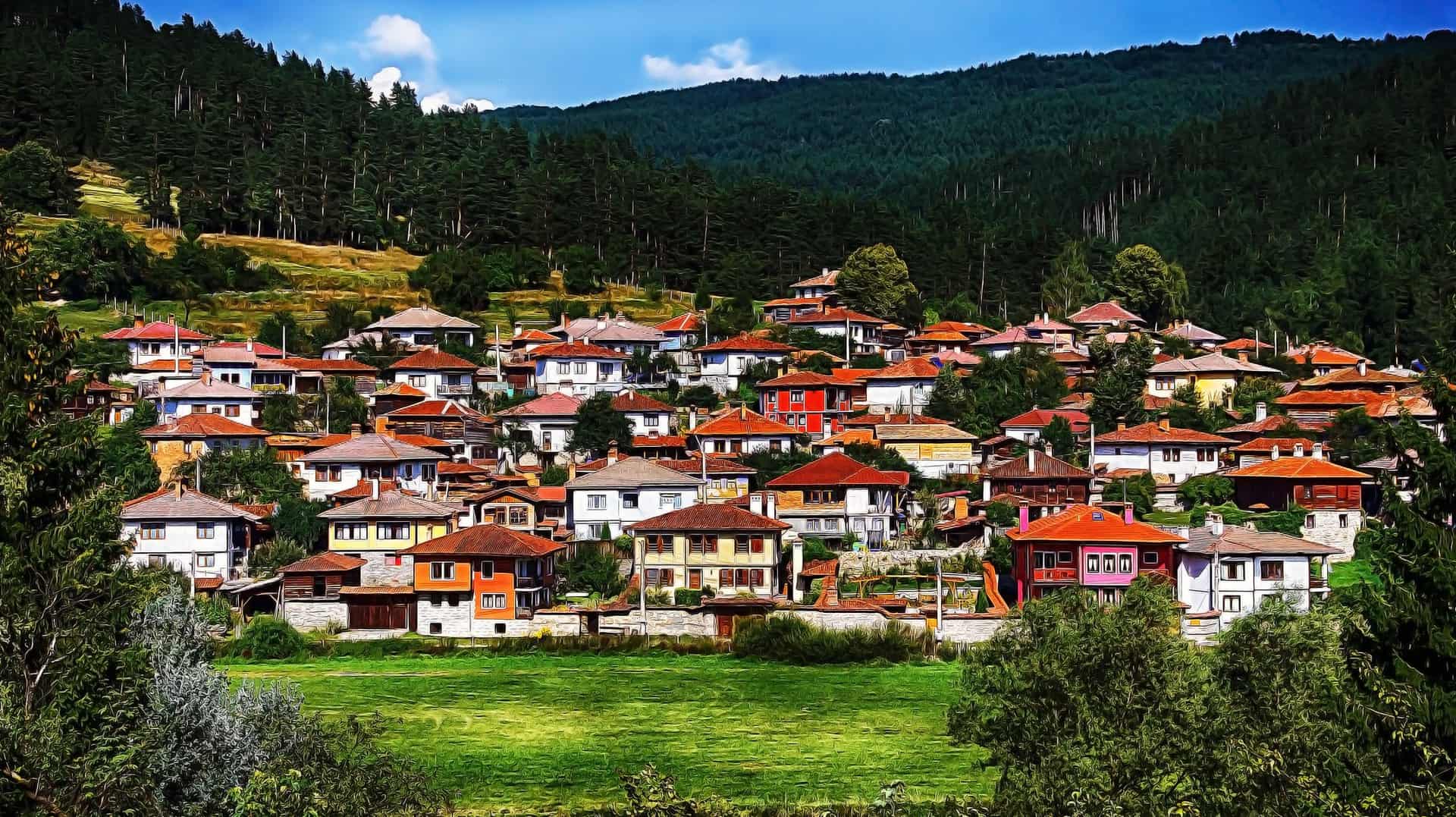
One of Koprivshtitsa’s unique traits is the beauty of its houses; each house is a work of art. There are blue, yellow and red houses with verandas and bay windows and eaves. Wood carvings distinguish every room which is complimented by a colorful use of rugs and cushions. The town’s streets are paved with cobblestone leading you through high white stone walls and gardens.
Since 1965, the town of Koprivshtitsa has been hosting the National Festival of Bulgarian Folklore. This festival shows Bulgarian music as it was always played by the ancestors who first played it. Thousands of musicians and singers call the hillside houses home for some days to take part in this colorful festival.
In this article we’ll get to know how to get to Koprivshtitsa, where to stay, what to see and do there and we’ll know the Bulgarian Folklore Festival in depth. Not to mention the best places you can visit to enjoy the best food you can think of.
How to get to Koprivshtitsa?
There are several ways to get from Sofia to Koprivshtitsa. You can use the train, the bus, a taxi or you can drive the way yourself if you feel like it.
1. By train:
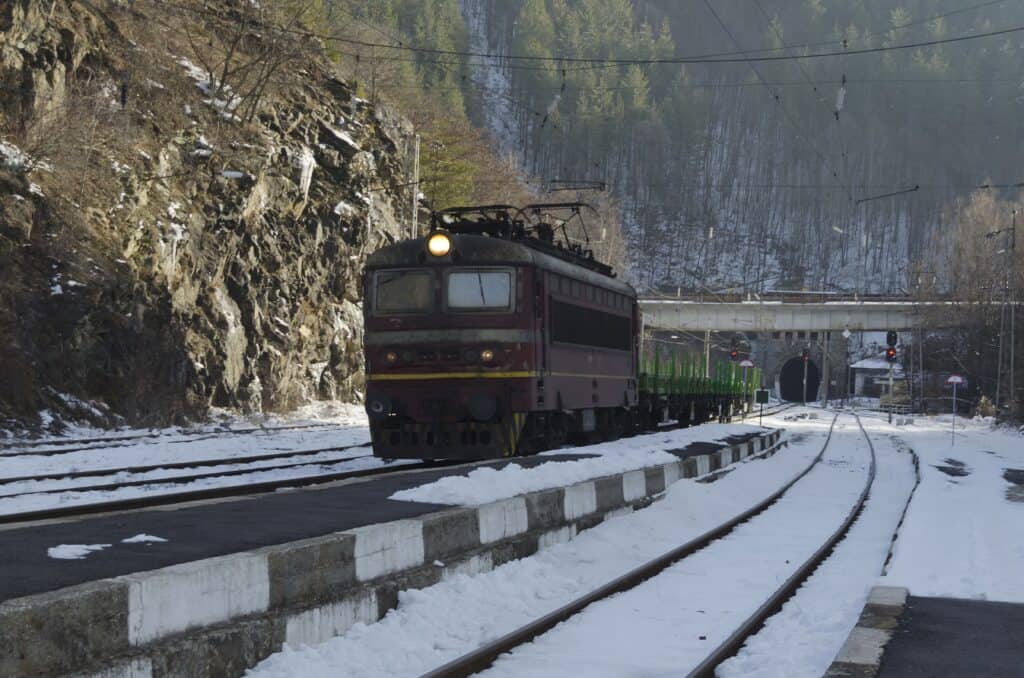
The train from Sofia leaves to Koprivshtitsa every three hours, the ticket price ranges from 3 Euros to 5 Euros. The route is operated by Bulgarian Railways. When you arrive in Koprivshtitsa, you can take a taxi from Koprivshtitsa Municipality to the town of Koprivshtitsa in less than 10 minutes with about 5 Euros. The entire journey is nearly two hours and a half.
You can also take the train from Sofia to Zlatitsa. The almost two hours journey costs from 2 to 4 Euros. There’s a train leaving from Sofia to Zlatitsa every three hours. When you get to Zlatitsa, you can take a bus from there to Koprivshtitsa that will take you there in less than an hour with a cost of 2 Euros.
A bus leaves from Zlatitsa to Koprivshtitsa 3 times a-day. The entire journey from Sofia is close to 4 hours.
2. By bus:
The bus is considered the cheapest way to get from Sofia to Koprivshtitsa. There are up to three buses leaving from Sofia to Koprivshtitsa each day. The bus ride takes a bit less than 2 hours and 40 minutes. The bus ticket is only 5 Euros. There are several bus operators you can check such as Chelopech Municipal Buses and Angkor Travel Bulgaria.
3. By taxi:
The taxi journey from Sofia to Koprivshtitsa will take about an hour and a half. The fare usually starts at 45 Euro to 55 Euros. There are several operators you can check such as Za Edno Evro and Yellow Taxi.
4. By car:
If you fancy renting a car and going for a drive, you can rent a car from Sofia for prices starting from 15 Euros. The approximate fuel cost ranges from 10 euros to 14 Euros. A good website for renting cars is Rentalcars.
Where to stay in Koprivshtitsa?
There are different accommodation options available in Koprivshtitsa that you can choose from. There’s even an entire property for hire if you’re a family traveling together and wish to rent such a place.
1. Guest House Bashtina Striaha (16 Nikola Belovezhdov Str, 2077 Koprivshtitsa):
Only 0.1 kilometers away from the city center, this Guest House is at the heart of the town. It offers you a lovely garden full of beautiful roses. Ljutova House, Todor Kableshkov House Museum and Saint Bogorodica Church are less than 150 meters away. For a double room with one double bed for three nights is for 66 Euros. There are restaurants and cafés nearby, only 0.3 kilometers away.
2. Family Hotel Bashtina Kashta (32 Hadji Nencho Palaveev Blvd., 2077 Koprivshtitsa):
Only 50 meters away from Koprivshtitsa’s 20th April Square, this Family Hotel is close to many landmarks such as the Church of the Dormition of the Theotokos. It’s also close to the main shopping street, eco walking paths and the local bus stop.
For a three-night stay at the Family Hotel Bashtina Kashta, you will pay 92 Euros for either a comfort double or twin room or 123 Euros for a one-bedroom suite. The hotel’s restaurant offers great choices for vegetarians during breakfast which is included in the suite package.
3. Family Vacation Home Topolnitza (Liuben Karavelov 34, 2077 Koprivshtitsa):
This family home is great if you’re a family traveling together. The home offers great city view, mountain view, landmark view and quiet street view as well. It is less than half a kilometer away from the city center. They also offer an airport shuttle service.
The entire home can be rented, for three nights for example, that would be 481 for a six people traveling together. The breakfast available is vegan friendly for an extra charge of 4 Euros.
4. Chuchura Family Hotel (66 Hadji Nencho Palaveev, 2077 Koprivshtitsa):
Less than half a kilometer from the city center, this hotel is surrounded by a fascinating area for cycling and is even close to horse-riding facilities. For a three-night stay, a double room costs 87 Euros. The hotel’s restaurant serves all delicious types of traditional Bulgarian dishes.
Things to see and do in Koprivshtitsa
The town of Koprivshtitsa is full of Bulgarian National Revival architecture. The town’s half-timbered houses are a vibrant example of this unique school of architecture. Koprivshtitsa is home to more than 300 monuments that tell the history of the town and its people.
All the architectural monuments of the town have been restored to their original state. Other collections have been preserved including ethnographical treasures, old weapons, National Revival works of art, fretwork, household weaves and embroidery, national costumes and typical Bulgarian jewelry.
There’s a unified ticket to visit all house museums in Koprivshtitsa, the ticket price is equivalent to 3 Euros.
1. Church of the Dormition of the Theotokos (Church of Sveta Bogoroditsa):
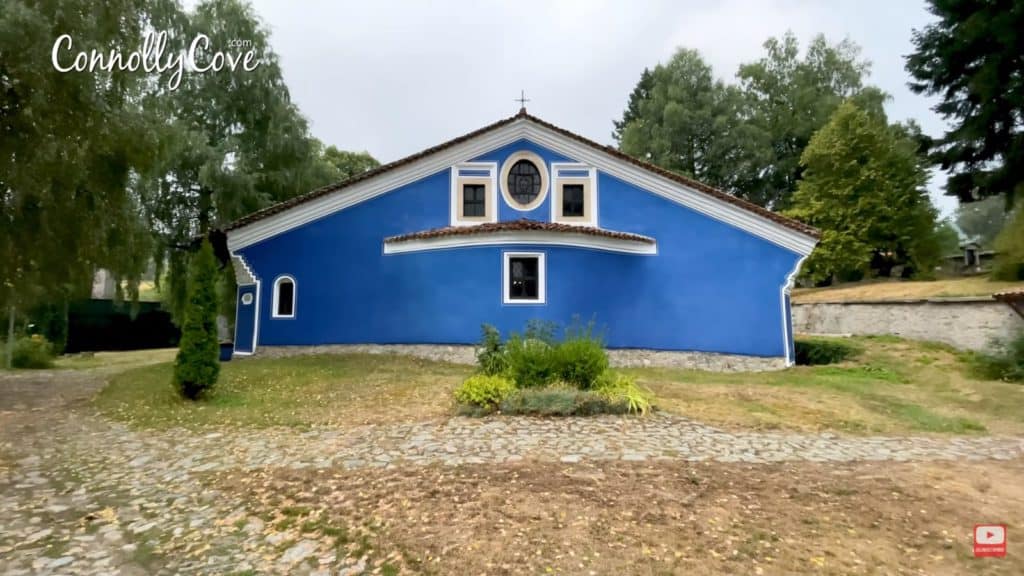
The bell of Sveta Bogoroditsa was the one that rang in April 1876 to announce the beginning of the April Uprising. The church was rebuilt in 1817 after its demolition a few years earlier. The church was built in compliance with the rules set by the Ottomans that govern Christian churches hence the relatively low building of the church.
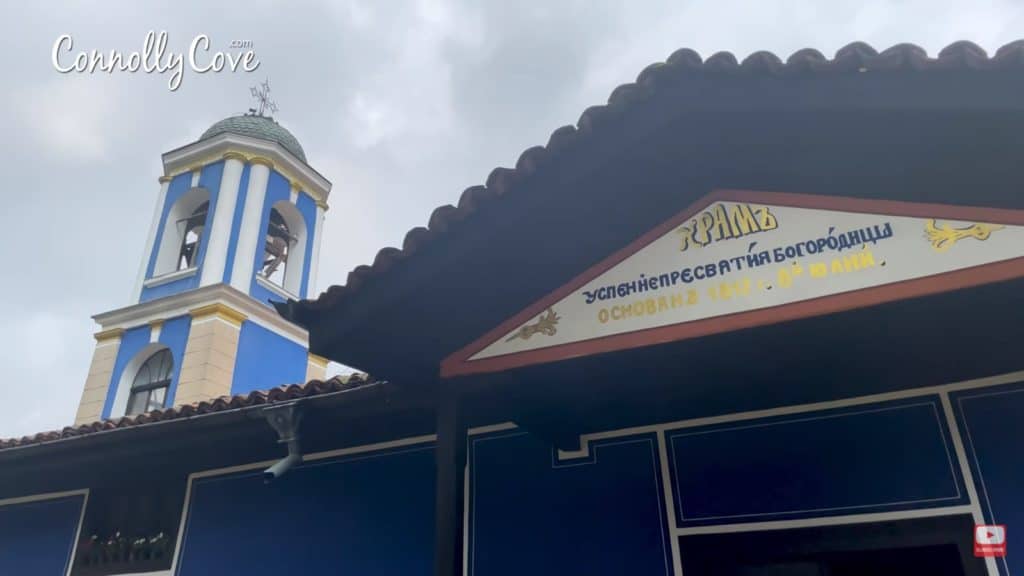
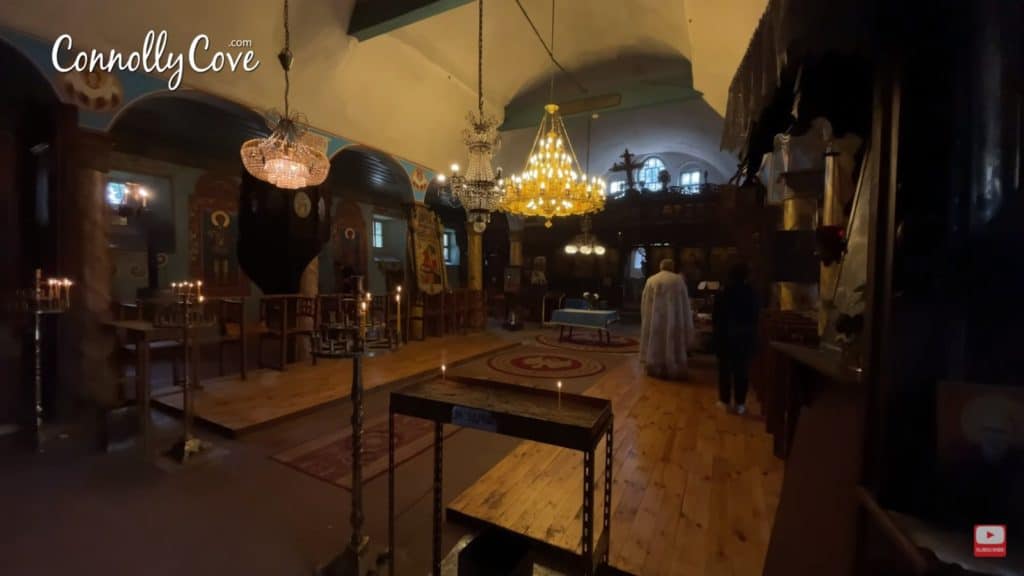
Sveta Bogoroditsa is distinguishable by its beautiful blue color which is in a serene contrast of the red roof tiles. Locally known as the Blue Church, it is located on the hills of Koprivshtitsa. The church’s location provides a peaceful sanctuary for the people of Koprivshtitsa from the everyday life. Above the church there’s a cemetery with many impressive headstones and memorials.
2. Mausoleum Ossuary of the 1876 April Uprising:
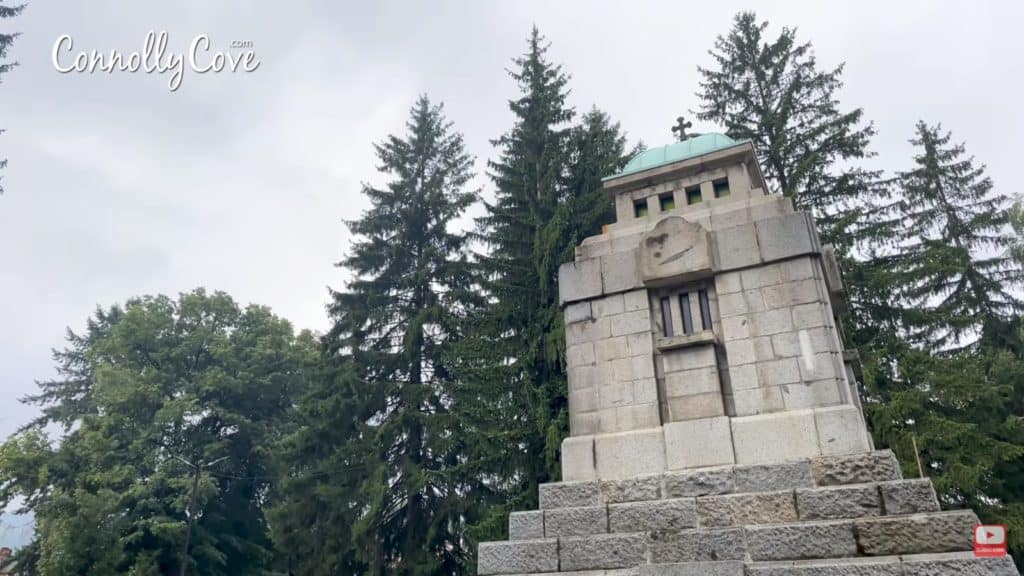
This memorial was built to remember those who sacrificed their lives for the independence of Bulgaria from Ottoman Rule. The mausoleum houses the bones of the heroes who gave their life for their country and the impressive monument is only a fitting memorial.
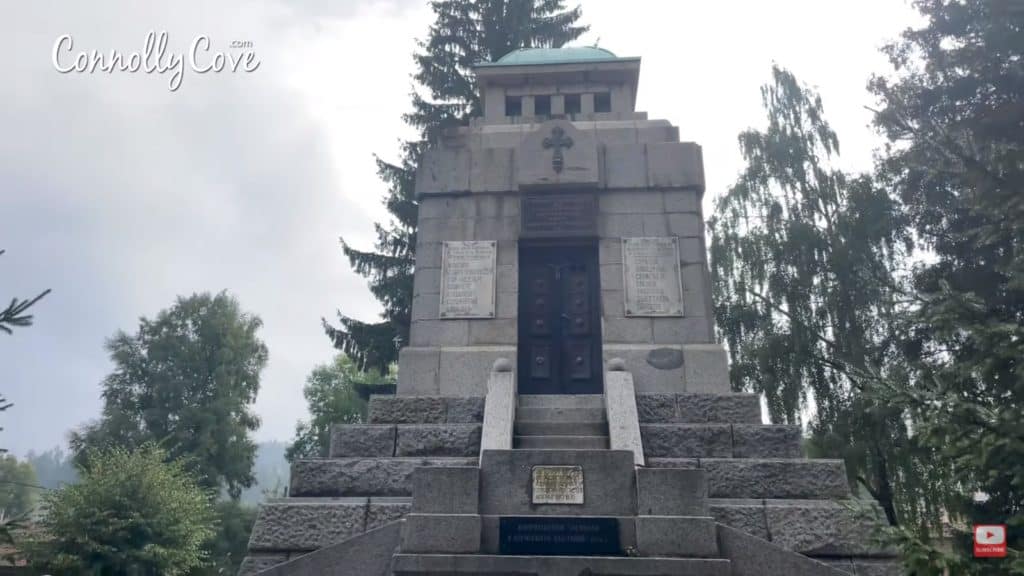
The building was built in 1926 and also contains a worship place in the form of a chapel. The memorial is there to as a remembrance that the struggle for independence is never forgotten.
3. Dimcho Debelyanov’s House Museum:
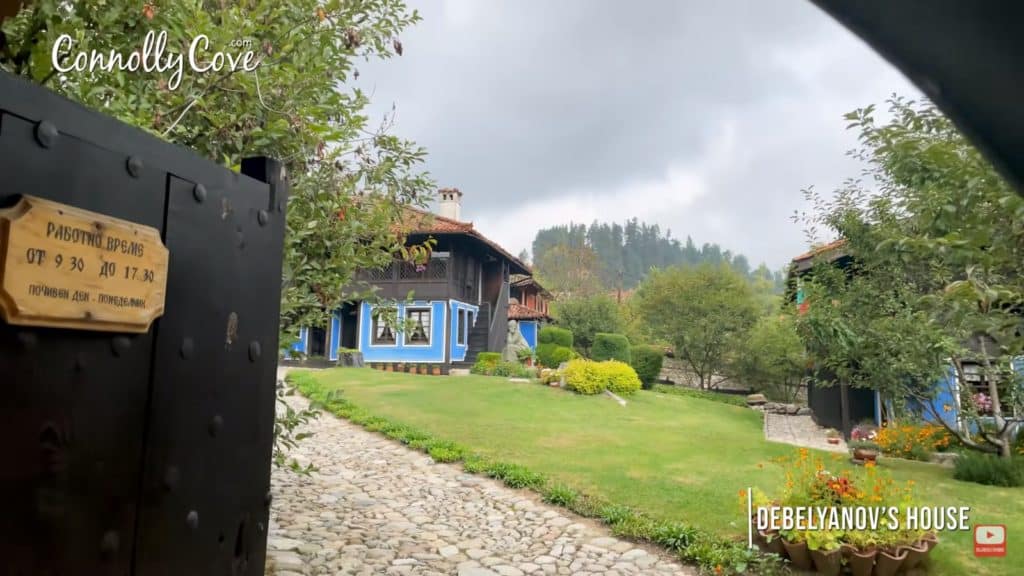
Dimcho Debelyanov was a Bulgarian author and poet who was born in Koprivshtitsa in 1887. At one point he was dubbed the Symbolist Poet since the first poems of his to be published were satirical with symbolist qualities and subjects such as dreams, idealism and the stylizing of medieval legends. He moved with his family to Plovdiv after his father’s death, later moving to Sofia.
Debelyanov’s love for Koprivshtitsa never faded; he always longed for his hometown and often wrote about it. He called Plovdiv the sorrowful city and often spoke of his years there with regret. He studied Law, History and Literature at the Faculties of Law and History and Philosophy at Sofia University and translated works in both English and French.
Debelyanov worked several jobs including a translator and a freelance journalist. He was mobilized into the Balkan army during the Balkan Wars and got discharged in 1914. He later volunteered in the army in 1916 and killed the same year in a battle with an Irish division near Gorno Karadjovo which is Monokklisia in Greece.
The poetry of Dimcho Debelyanov was greatly influenced by his time serving with the army. His poetry changed from idealist Symbolism to a simplified and more object focused Realism. After his death, his works were gathered by his friends, later published in a series of two volumes in 1920 under the title Stihotvoreniya (it means Poems) along with a collection of letters and personal writings.
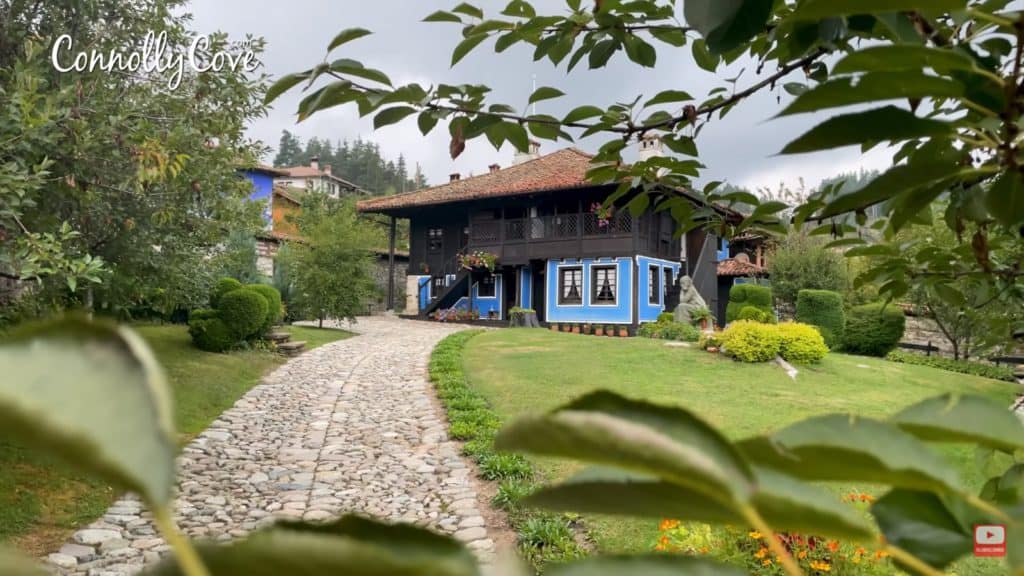
The Dimcho Debelyanov House Museum is located in the house where he was born and was originally built by his grandfather. Inside the small blue house with red tile roof, there are several portraits of the poet and you can hear his poems in the house. You will get to see Debelyanov in different stages of his life, his never-ending love for Koprivshtitsa along with many of his belongings and personal artifacts.
In the big yard in front of the house there’s a statue depicting Dimcho’s mother as she awaited her song to return from the war but alas, she only got the news of his death. A replica of the statue is erected in front of his grave in the Koprivshtitsa’s cemetery.
4. Dimcho Debelyanov’s Grave:
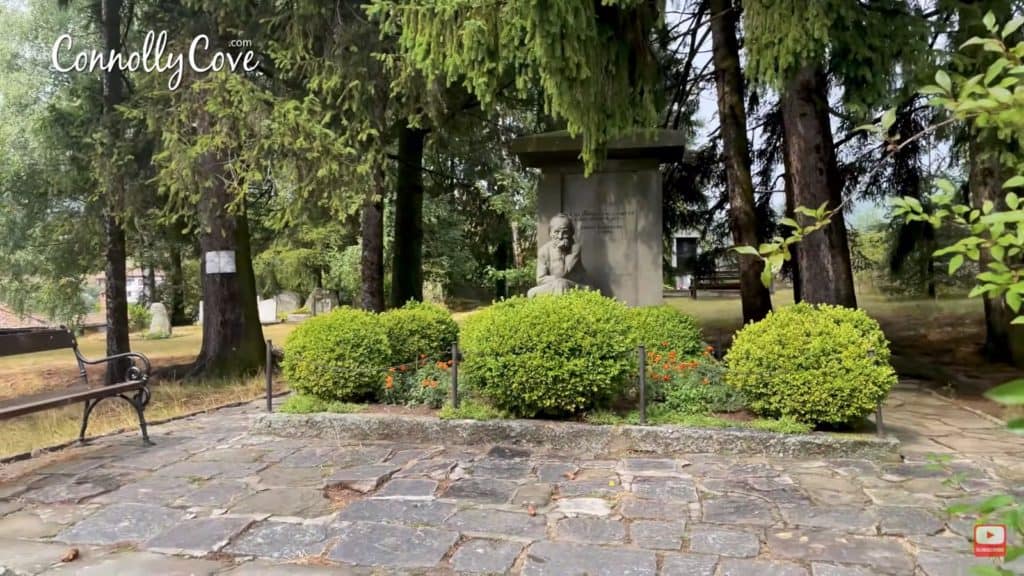
The grave of the famous Bulgarian author and poet is at the Koprivshtitsa cemetery. He was born in 1887 and died in 1916. The poet was famous for his symbolist poetry especially when he expressed his sadness of the time he spent with his family in Plovdiv. A Koprivshtitsa native, he had to leave the town after the passing of his father and eventually settled with his family in Sofia.
His poems were first published after he began sending them to Bulgarian literary magazines in 1906. Debelyanov got deployed in 1912 during the Balkan War and was later discharged in 1914. He later volunteered to join the army in 1916 and was killed later in the same year.
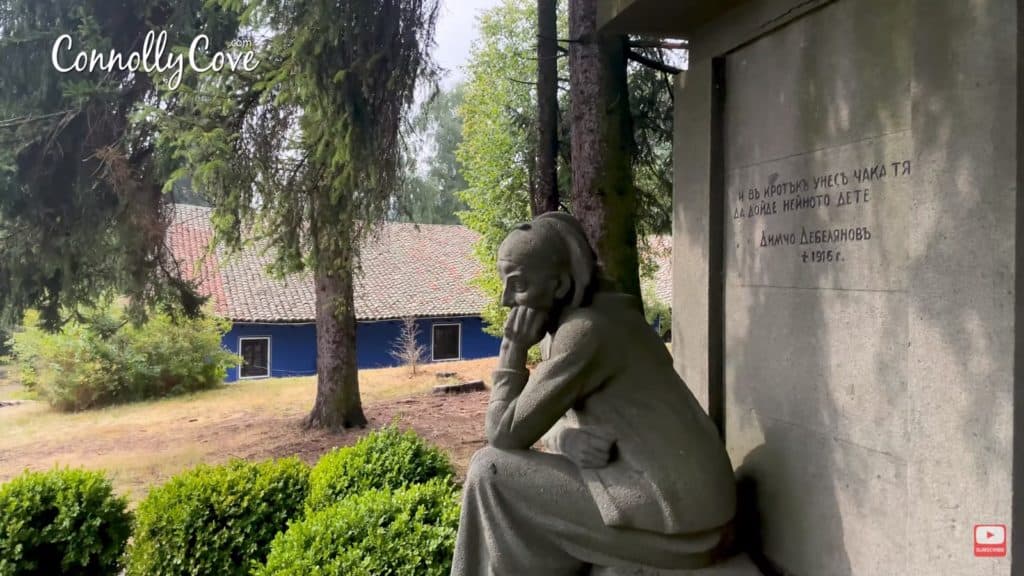
The war had a great effect on Debelyanov’s poetry. Instead of satirical and symbolist qualities and subjects, he wrote about more simplified subjects with a realistic touch.
His grave has the mourning statue depicting his mother as she was waiting for him to come back from the war. This statue was designed Ivan Lazarov. The same statue exists in a symbolic pedestal in the front yard of his family home in Koprivshtitsa.
5. Todor Kableshkov House Museum:
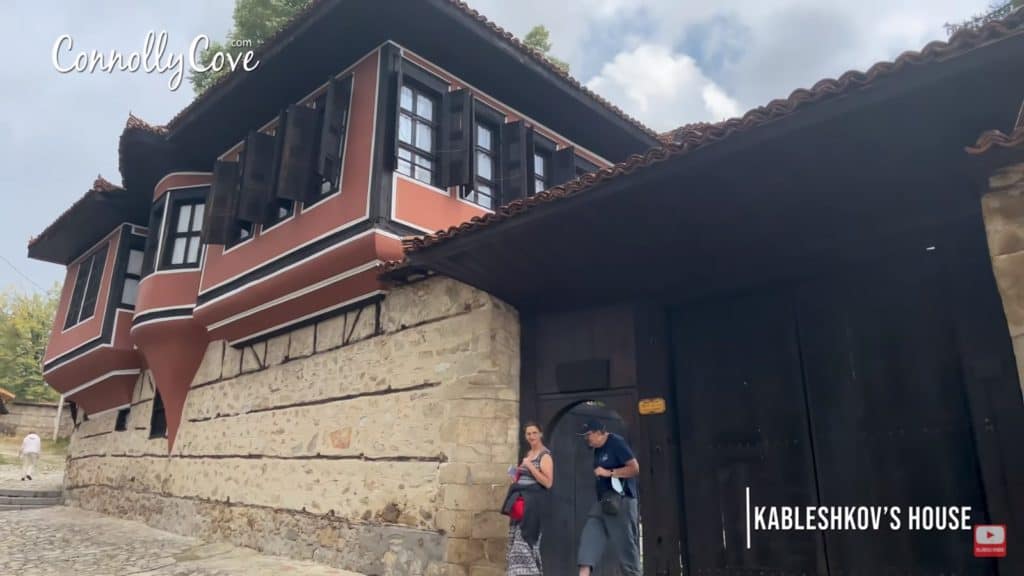
Remembered through history for many things; one of the most courageous Bulgarian revolutionaries, one of the leaders of the April Uprising and the author of the infamous Bloody Letter to the neighboring Panagyurishte Revolutionary district. Todor Kableshkov was born in 1851 in Koprivshtitsa to a wealthy family. He first studied in Koprivshtitsa then Plovdiv and then abroad in Istanbul.
Todor returned to Koprivshtitsa in the beginning of 1876 where he devoted himself to revolutionary work. He had established an enlightenment society by the name of Zora during his years in Plovdiv. Following his return to his home town of Koprivshtitsa, he was assigned the head of the local revolutionary committee.
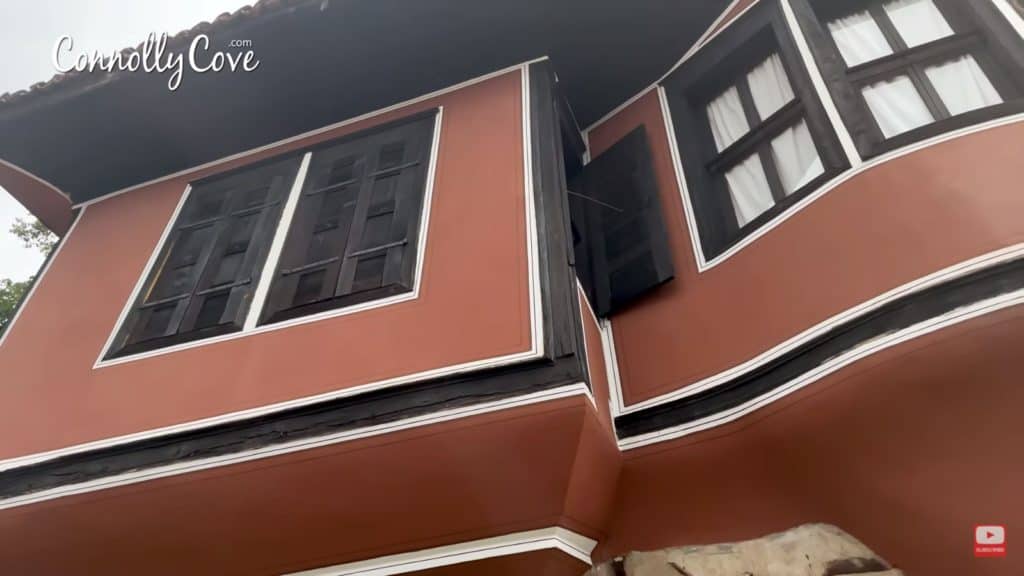
The Bloody Letter, for which Todor Kableshkov was famous, derived its name from the fact that Todor signed it using the blood of a local Ottoman governor who was killed by the revolutionary Georgi Tihanek.
The letter was addressed to the Panagyurishte revolutionary committee and to Georgi Benkovski in particular. The letter made its journey from Koprivshtitsa to Panagyurishte in the hands of Georgi Salchev.
After the suppression of the April Uprising by the Ottomans, Todor Kableshkov was eventually captured by them even though he succeeded in escaping and hiding in the beginning. He was tortured in the Lovech and Veliko Tarnovo prisons and ended up committing suicide in 1876 at the age of 25 in the Gabrovo police office.
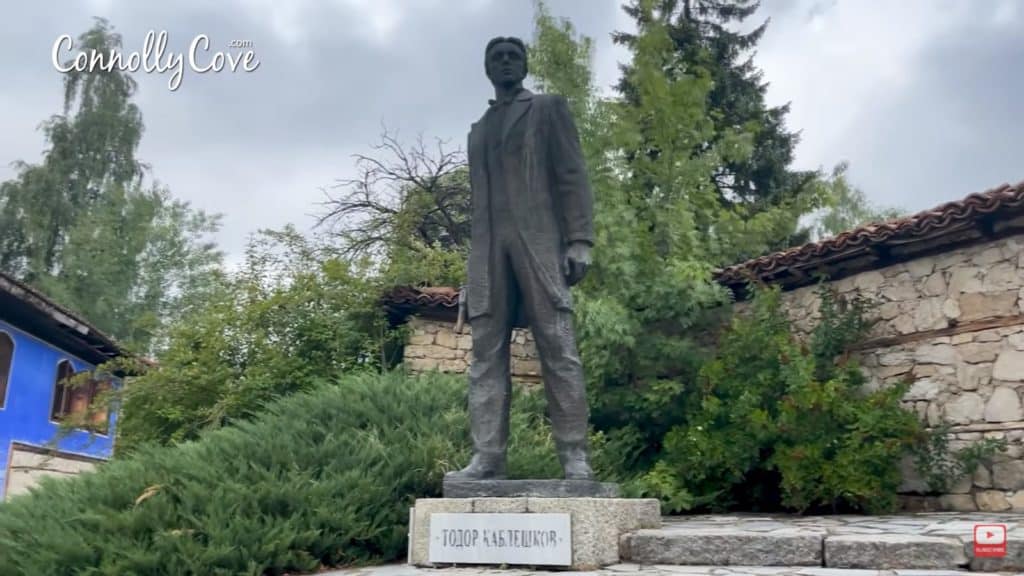
Kableshkov is considered one of the most courageous Bulgarian revolutionaries mainly because of the young age at which he started his revolutionary work.
His family home in Koprivshtitsa where he was born was turned into a house museum. The house displays personal belongings of Todor and the famous Bloody Letter is put on display as well. As you walk through the house, you will learn new and interesting stories about the life of this young man and his family.
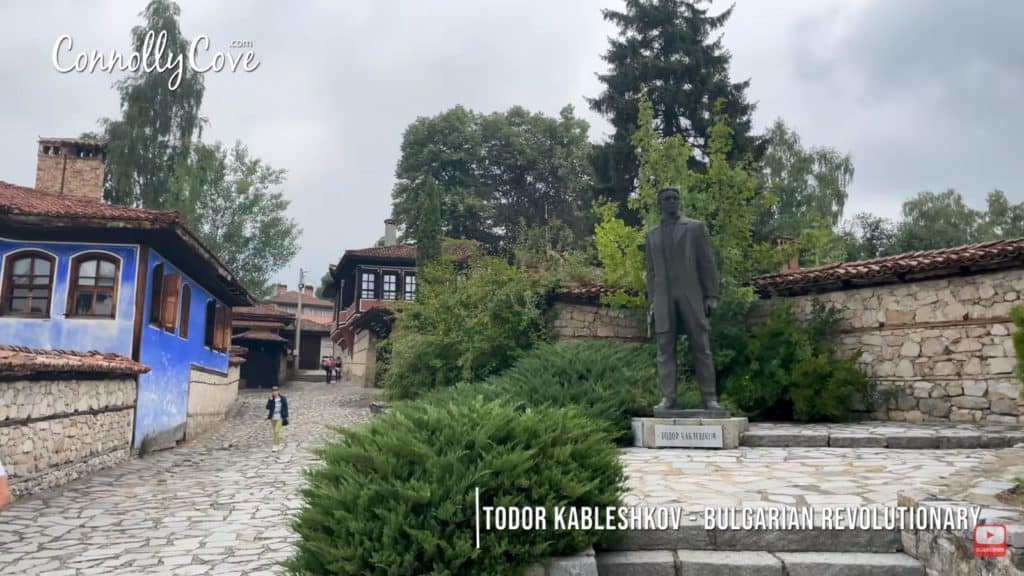
There’s a monument dedicated to Todor Kableshkov near his family house in Koprivshtitsa and a bust of Kableshkov was carved and set up in the yard beside the house. The complete script of the Bloody Letter was inscribed in stone near the place where it was written by Kableshkov.
6. Georgi Benkovski House Museum:
Known as the Apostle of the fourth revolutionary district, Georgi Benkovski is the pseudonym of Gavril Gruev Hlatev. He was born around 1843 in Koprivshtitsa to the family of a small-time merchant and craftsman and had two sisters. Due to his difficult childhood he had to drop out of school and acquire a profession. He was initially trained by his mother to become a tailor then a frieze dealer leaving with a friend to Asia Minor to sell their products.
Georgi Benkovski had several jobs during his years abroad, he worked in Istanbul, İzmir and Alexandria including the bodyguard of a Persian consul. During his travels he learned seven languages; Arabic, Ottoman Turkish, Greek, Italian, Polish, Romanian and Persian.
He became involved in the revolutionary activities of the Bulgarian Revolutionary Central Committee after meeting Stoyan Zaimov. Gavril adopted the Benkovski pseudonym after he’d joined a group of revolutionaries who intended to set Constantinople on fire and kill Sultan AbdulAziz, he was given the French passport of a Polish immigrant named Anton Benkowski.
Anton Benkowski was anti-Russian who had attempted to assassinate the Russian governor of Warsaw after which he had to serve a life sentence. He succeeded in fleeing to Japan, acquired a passport and fled again to the Ottoman Empire when he met Zaimov and sold him his French passport for 5 Turkish liras.
Georgi Benkovski was selected as the head apostle of the 4th Revolutionary District of the April Uprising when the initial apostle conceded his position to Benkovski. After the April Uprising broke out in Koprivshtitsa, Benkovski, who was in the nearby Panagyurishte, formed a band of over 200 revolutionaries called The Flying Band. They toured the entire region to gather more insurgents.
After the suppression of the uprising, only three members of the band survived beside Benkovski. They escaped to the Teteven Balkan Mountains where their location was betrayed by a local shepherd. Benkovski was shot in Ribaritsa.
Georgi Benkovski’s home house in Koprivshtitsa was turned into a house museum where you can learn more about his life and that of his early years with his family. You can see the hopes and dreams of a free country in the folds of the well-preserved house. There are family photos of Georgi and his mother radiating love in the house, the summer quarters are upstairs while the winter quarters are downstairs.
There are two monuments in Koprivshtitsa that are dedicated to Georgi Benkovski. The first is a statue depicting Benkovski riding his horse calling for the rebellion erected on the hill above the house. There’s also a bust of Georgi Benkovski outside his house museum in town. There are another two monuments dedicated to him, one in Sofia and the other in Ribaritsa where he was killed.
7. Georgi Benkovski Monument:
This monument was unveiled in 1976 on the 100th anniversary of Benkovski’s death after the suppression of the April Uprising. The sculpture is made of granite showing Benkovski riding his horse as he looked over his shoulder calling for his fellow revolutionaries. The monument is located on the hill atop his house museum in Koprivshtitsa.
8. Lyuben Karavelov House Museum:
Lyuben Karavelov was a Bulgarian writer and an important figure of the Bulgarian National Revival. He was born in 1834 in Koprivshtitsa where he began his education in a church school before moving to a school in Plovdiv followed by a Greek school then another Bulgarian school where he studied Russian Literature.
He studied the culture and ethnography during his time in Constantinople. Karavelov enrolled in the Faculty of History and Philology at the Moscow University in 1857. He was influenced by Russian revolutionary democrats and took part in student riots in 1861.
Along with other Bulgarian student radicals, they published a journal where he wrote prose and long short stories in Bulgarian and scholarly publications on Bulgarian ethnography and journalism in Russian. He went to Belgrade in 1867 as a correspondent for Russian newspapers and started publishing prose and journalism in Serbian.
Karavelov spent some time in a Budapest prison for alleged participation in a conspiracy after coming in contact with the Serb opposition. His first newspaper, which he established in Bucharest where he settled, witnessed his work and friendship with poet and revolutionary Hristo Botev.
In 1870, Karavelov was elected chairman of the Bulgarian Revolutionary Central Committee where he worked with Vasil Levski, who was the leader of the Internal Revolutionary Organization.
Between 1873 and 1874, Karavelov and Botev started a new newspaper under the name Nezavisimost (Independence). The two writers set the standard up high for Bulgarian language and literature. Sometimes it was difficult to tell who the author of the unsigned masterpieces was, although Karavelov was the recognized master.
After the capture and execution of Vasil Levski in 1873, Karavelov was devastated and retired from the political scene under Botev’s disapproval. Karavelov started a new journal by the name of Znanie (Knowledge) along with popular science books. He died in Rousse in 1879 shortly after the Liberation of Bulgaria.
The Lyuben Karavelov House Museum doesn’t only display information and insight into the life of the Bulgarian writer but also into the life of his brother Petko who served as the Bulgarian Prime Minister on several occasions in the late 19th century.
The house is divided into two parts; each part for one brother. There are pictures on display showing the different stages of the lives of the brothers along with insightful information about their lives. Out in the small yard in front of the house, there’s a bust of Lyuben Karavelov.
9. Lyutov House Museum:
This house was originally built in 1854 by masters from Plovdiv for the wealthy citizen of Koprivshtitsa, Stefan Topalov. The house was bought by the Lyutov’s family; local milk merchants in 1906. The bright blue of the house paired with the double entrance stairway give the house an elegant hue.
The original furniture of the house has been preserved as it was imported from Vienna. The ground floor showcases a beautiful collection of 18th and 19th centuries grey felt rugs that were a trademark of Koprivshtitsa alongside traditional dresses and costumes.
The most impressive room is called “The Hayet’ which displays a variety of paintings from the Orient since Lyutov used to trade in Egypt. The house has the typical wooden carved ceiling which was a signature of the Bulgarian Revival architectural style. Another interesting feature of the house is the air-refreshing fountain on the second floor.
The Lyutov House Museum is a lively example of how the people lived back during those times. The garden of the house is a lovely place that you’ll surely enjoy with a book as well. Unlike the other house museums in Koprivshtitsa, this is the only house museum that you’d visit for its ethnographic exhibits and attractive architecture.
10. Nencho Oslekov House Museum:
Nencho Oslekov was a wealthy Koprivshtitsa merchant, the house he lived in was built specially for him by Usta Mincho and Kosta Zograf who were considered representatives of the Samokov architectural school. Built between 1853 and 1856, the house is a fascinating masterpiece with both its exterior design and interior beauty.
Due to the small building area, the house is designed in an asymmetrical shape. The house a central area and an additional wing. The second floor is supported by three cedar columns and the house features a staircase on the outside.
Decorated with scenes from Venice, the façade also has scenes from other cities around the world and are beautiful to admire as you approach through the courtyard. The interior of the house is also well preserved and has the traditional carved wooden ceiling of all houses from that era in Bulgaria.
The house is divided into the winter quarters downstairs with small windows to keep the heat inside while the summer quarters are upstairs with bigger windows. Kept inside the house is a collection of bells that were used to keep track of livestock back in the day, the bigger the animal the bigger the bell. One of the rooms of the house is known as the Red Room, it has beautiful decorative wooden ceiling and paintings.
During the April Uprising, Nencho Oslekov helped the rebels by sewing wool clothes for them in his workshop and helped them in several other ways. After the suppression of the rebellion, he was caught and hanged in Plovdiv for his role in helping the rebels. His house was turned into a museum in 1956 and is a notable example of the life of the wealthy people back in time.
11. The First Rifle Shot Bridge (Parva Pushka):
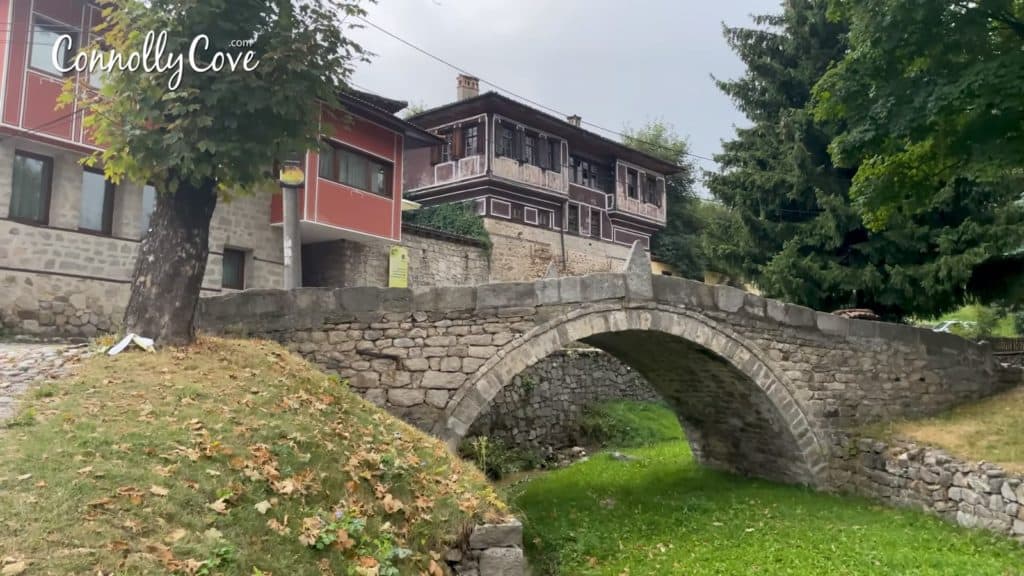
This little bridge was originally built in 1813 as indicated by a plaque on one side of the bridge. What is now a serene place, was once the scene of the spark of the April Uprising; the killing of the first Ottoman.
The bridge is built above the Bayla River and has interesting architectural surroundings. Nearby there’s a monument dedicated to Todor Kableshkov; the leader of the uprising. There are several hiking trails that start from behind the bridge.
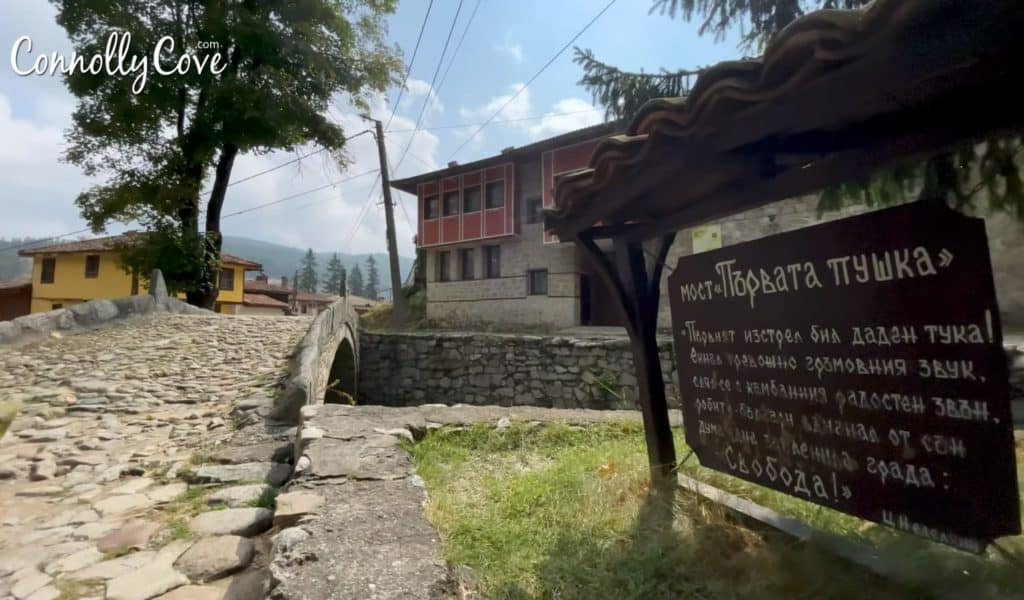
The town of Koprivshtitsa is full of beautiful houses at every corner, most of them date back to the Bulgarian Revival architectural style of the 19th century. During your walk through the town, you will feel like you’ve stepped back in time and are walking through history. The town hosts the National Festival of Bulgarian Folklore since 1965.
National Festival of Bulgarian Folklore in Koprivshtitsa
Since 1965, the town of Koprivshtitsa hosts the National Festival of Bulgarian Folklore, every five years. The festival is held under the supervision of the Ministry of Culture and the Koprivshtitsa Municipality and with the help of Bulgarian National Television, Bulgarian National Radio, the Institute of Ethnology and Folklore Studies with the Ethnographic Museum and the Institute for Art Studies Community Centers.
The festival is the gathering spot of singers and dancers from all over the country as they all help promote the Bulgarian folklore. Traditionally, the festival is held in the Voyvodenets area in Koprivshtitsa.
The festival is a competition where all participants must present a program based on the folklore of the area from which they come. Local and much smaller festivals are held all over the country to choose the best performers who get to be sent to the national festival in Koprivshtitsa.
The National Folklore Festival is a mix between a pop festival and a medieval fair where shows are performed on 8 different stages in the open air. Foreign performers are also welcome to participate in the fair as they try their hands at traditional Bulgarian music.
The beautiful and colorful traditional Bulgarian costumes are also celebrated as they are worn by different participants in the festival. Beside traditional singing and dancing shows, storytelling events, gaming and craftsmanship events take place as well.
Since its beginning, the festival’s main objective has been the protection of the traditions that were endangered by factors such as urbanization and commodification. The festival helps raise awareness about the importance of preserving traditions and living heritage.
Since 2016, the festival has been on the UNESCO Intangible Cultural Heritage List. The last edition of the festival was postponed from 2020 until the 6th and 8th of August 2021 fearing for the safety of the participants during the Covid-19 pandemic. The last edition of the festival got together over 12,000 participants from all over Bulgaria and abroad.
Cuisine in Koprivshtitsa
Restaurants serving great food are in different spots in Koprivshtitsa. You can find, beside traditional Bulgarian food, European,AQ Eastern European and vegetarian friendly cuisines. Here’s a list of some of these wonderful places.
1. Tavern “Starata Krusha” (Nencho Palaveev 56, Koprivshtitsa 2077):
With a delicious menu and inviting atmosphere, you will spend a great time at this restaurant. The place has all the qualities of a mehana; traditional Bulgarian outlet. The restaurant offers dishes such as bacon on a skewer with onions or you can try the Koprivshtitsa kavrma.
Prices are lower than many of the other Bulgarian cities. The restaurant is open from 8:30 am to 12am everyday and open all day on Sundays.
2. Diado Liben (Hadzhi Nencho 47, Koprivshtitsa 2077):
Along with European, Eastern European and Barbeque, this restaurant is vegetarian friendly. The name means “Grandfather Liben” which takes after the local hero Lyuben Karavelov. You can have such tasty dishes such as Kashkaval Pane, homemade sausage and typical Bulgarian flatbread Parlenka. The place is open everyday from 10am to 12pm and closes on Tuesdays.
3. Restaurant Bulgaria (G Salchev 4, Koprivshtitsa 2077):
Open everyday from 12pm to 12am and closes on Mondays, this restaurant serves European, Central European and Eastern European Cuisine. The price range is good, most around 9 Euros for an entire meal of appetizers, main course along with green salad.
4. Chuchura (Hadzhi Nencho 66, Koprivshtitsa 2077):
Another vegetarian friendly restaurant in town, Chuchura serves traditional Bulgarian dishes. Deliciousness such as Patatnik and homemade pie are available for great prices around 17 Euros. The restaurant is available by reservations.
The town of Koprivshtitsa will certainly captivate you no matter when you decide to visit. One thing to be certain of, is that you will lose yourself between the streets of this historic little town.

A Walk in Ireland Guide: Best Trails, Routes, and Tips
Ireland
26/04/2024
An Ultimate Guide to 6 of the Finest Castle Tours in England
England
26/04/2024
Unveiling the Most Terrifying Haunted Tours in Scotland
Scotland
25/04/2024

7 Top Amusement Parks in England for an Unforgettable Adventure
England
25/04/2024
Miami Tourism Statistics: A Comprehensive Overview of Visitor Numbers and Revenue
Travel Statistics
25/04/2024