

Skip to content
Updated on: by Avatar image of authorPanseih Gharib Review By: Esraa Mahmoud

Aruba’s position in the Caribbean tourism landscape continues to strengthen, with the island welcoming over 1.3 million international visitors annually. This “One Happy Island” has built its reputation on consistent sunshine, pristine beaches, and a tourism model that prioritises quality over quantity.

The impact of travel and tourism in Aruba extends far beyond the beaches. Tourism contributes more than 80% to the island’s GDP, making it one of the most tourism-dependent economies in the Caribbean. Understanding these Aruba tourism statistics reveals not just visitor numbers, but where tourists actually spend their time and the concentrated impact on specific island locations.

For tourism professionals, content creators, and cultural heritage organisations, Aruba represents a compelling case study in managing visitor distribution across a limited geography. The data tells a story of concentrated development along specific coastlines whilst protecting interior landscapes, creating opportunities for both mass tourism and authentic cultural experiences.

Understanding Aruba’s Tourism Industry and Visitor Arrivals

Aruba tourism has evolved into a carefully managed sector that shapes every aspect of island life. The Aruba travel and tourism economic impact reaches into employment, infrastructure development, cultural preservation, and environmental management. Recent statistics from the Aruba Tourism Authority reveal an industry that has not only recovered from pandemic disruptions but has exceeded pre-2019 performance levels.

The island’s tourism model differs markedly from many Caribbean competitors. Rather than pursuing maximum visitor volume, Aruba focuses on attracting high-value tourists who spend more per day and engage more deeply with local culture. This strategy influences where development concentrates and which areas remain protected from intensive tourism activity.

Aruba Tourism Statistics: Key Visitor Arrival Data

The latest Aruba tourism statistics show visitor arrivals surpassing 1.3 million in 2023, representing an 18% increase over 2022 and a 17% increase compared to pre-pandemic 2019 levels. These figures demonstrate remarkable resilience in the global tourism recovery landscape, but more importantly, they reveal patterns in where these tourists concentrate once they arrive.

Stay-over visitors, who remain on the island for at least one night, account for approximately 1.1 to 1.2 million arrivals annually. These tourists concentrate overwhelmingly along the northwestern and western coastlines, where hotels, resorts, and vacation rentals cluster. The average length of stay holds steady at approximately 7.9 days, significantly higher than many competing Caribbean destinations, giving tourists time to explore beyond their resort properties.

Monthly arrival patterns reveal distinct seasonal concentrations that affect specific tourist areas differently. Peak season runs from December through April, with January and February seeing the highest visitor concentrations. During these months, Palm Beach and Eagle Beach can feel notably crowded, with beach chairs occupying much of the available sand. Summer months (June through August) show strong performance from the North American market, whilst September and October see the quietest conditions across all tourist areas.

The question “how many tourists visit Aruba each year” has seen consistent growth over the past decade, with annual visitor arrivals progressing from approximately 900,000 in 2014 to over 1.3 million in 2023. This growth has intensified development pressure along established tourist corridors whilst sparking debates about expanding tourism infrastructure into currently undeveloped areas.

Economic Impact and Tourist Spending Patterns

Tourism receipts in 2023 exceeded $2.8 billion USD, demonstrating the sector’s dominant role in Aruba’s economy. The Aruba travel and tourism report indicates that direct tourism contribution to GDP reached approximately 84%, with spending concentrated in specific geographic areas and business types.

Average daily spend per tourist ranges from $200 to $250 USD, depending on accommodation type and travel season. Restaurant dining represents the largest spending category beyond accommodation, with tourists gravitating toward established dining districts in Palm Beach, Eagle Beach, and downtown Oranjestad. Tour activities generate substantial revenue, particularly water sports along the western beaches and off-road excursions through Arikok National Park.

The population of Aruba with tourists creates unique density dynamics during peak season. Aruba’s resident population stands at approximately 110,000 people, meaning that during peak season, tourists can represent an additional 12-15% of the people on the island at any given time. This concentration is not evenly distributed – tourist areas like Palm Beach and Eagle Beach can see ratios far higher, whilst interior communities and the southeastern coast remain largely unaffected by tourist presence.

Geographic spending patterns reveal interesting concentrations. The “high-rise hotel district” along Palm Beach generates the highest absolute tourism revenue, followed by the “low-rise hotel district” around Eagle Beach and Manchebo Beach. Oranjestad captures significant spending from cruise ship passengers on day visits and stay-over tourists seeking shopping and dining. The interior and eastern coastline see far less tourist spending despite containing significant natural and cultural attractions.

Source Markets and Where Different Tourists Go

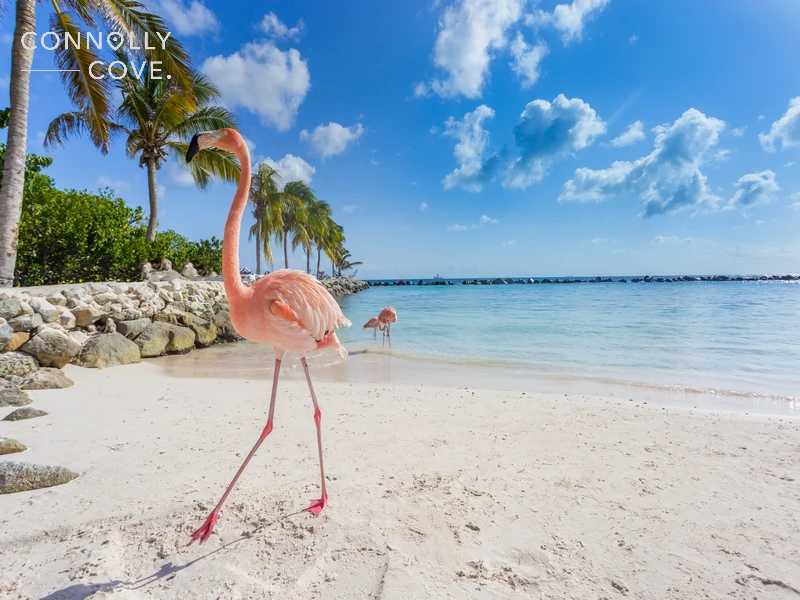
A scenic beach with soft white sand, turquoise waves, rough rocks, and scattered green plants under a clear blue sky at sunset highlights the beauty celebrated in Aruba tourism. The words Connolly Cove appear in the lower right corner.

United States visitors account for approximately 69% of all stay-over arrivals, overwhelmingly concentrating in the Palm Beach and Eagle Beach resort areas. American tourists typically book package holidays at all-inclusive or large resort properties, venturing out for specific activities but spending much of their time within resort complexes.

Netherlands visitors represent approximately 7-8% of arrivals and show distinctly different behaviour patterns. Dutch tourists more frequently book vacation rentals or boutique hotels, stay longer, and explore the island more thoroughly. They’re more likely to visit residential neighbourhoods, seek out local restaurants away from tourist districts, and spend time in interior areas like Arikok National Park.

Colombian visitors (5-6% of arrivals) concentrate heavily in shopping districts, particularly the Renaissance Marketplace in Oranjestad and the Palm Beach Plaza Mall. Colombian family groups often travel for both beach relaxation and shopping opportunities, creating a noticeable presence in retail areas during peak Colombian holiday periods.

Canadian visitors (2-3% of arrivals) behave similarly to American tourists, concentrating in established resort areas during the winter months. Brazilian visitors, though smaller in number, tend to seek all-inclusive properties and show high interest in water sports activities along the western beaches.

Where Tourists Actually Go: Aruba’s Primary Visitor Destinations

Understanding Aruba tourism statistics requires understanding the geographic concentration of visitor activity. The island measures approximately 30 kilometres long and 9 kilometres at its widest point, yet tourist activity concentrates in perhaps 20% of this total area. This concentration creates both economic benefits through infrastructure efficiency and challenges through overtourism in popular locations.

The majority of tourism infrastructure and visitor activity occurs along the western and northwestern coastlines, leaving large portions of the island – particularly the rugged northeastern coast and much of the interior – relatively undisturbed by mass tourism. This pattern reflects both natural factors (calm beaches on the western side versus rough seas on the eastern side) and deliberate development policies.

Palm Beach District: The High-Rise Hotel Zone

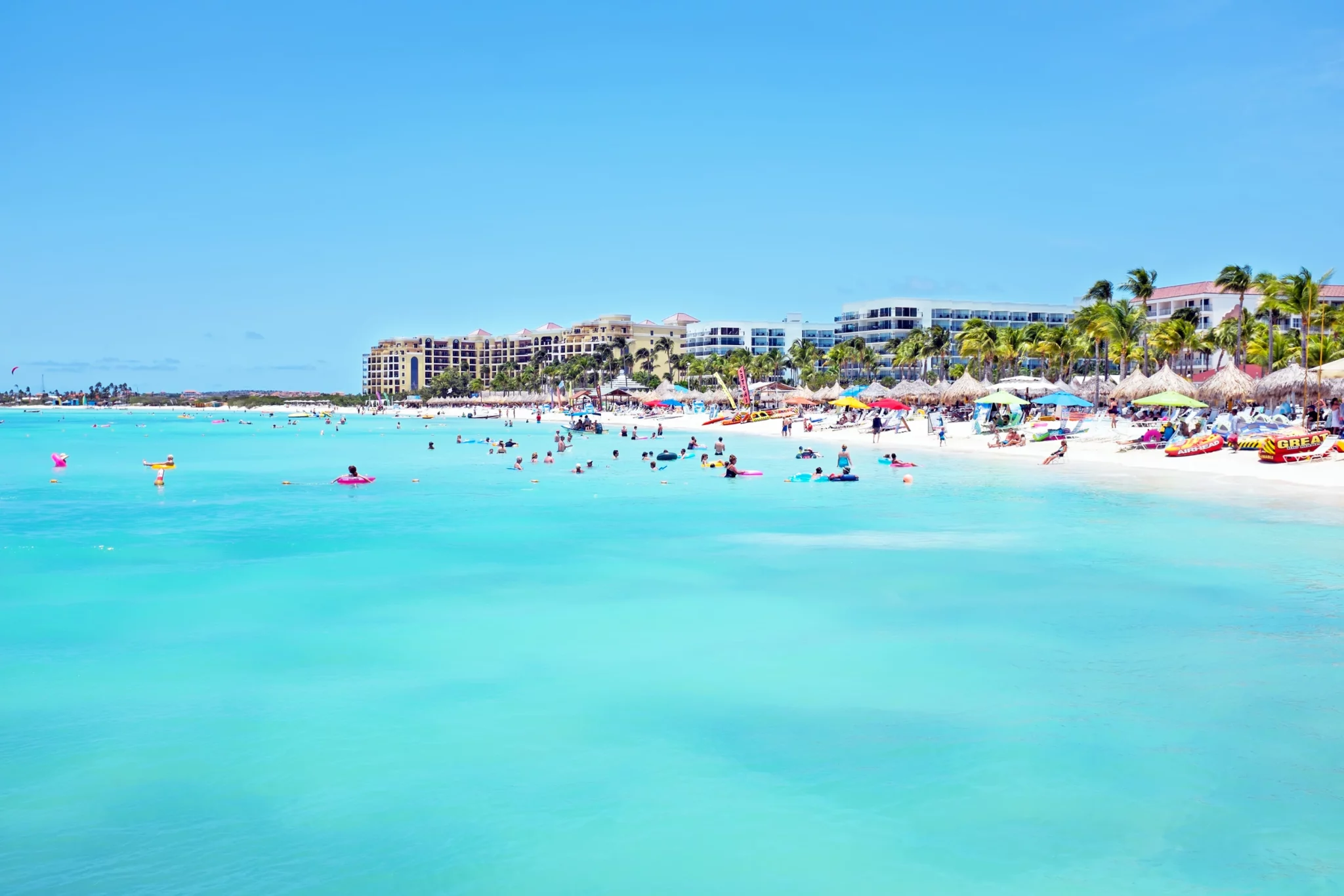
Palm Beach represents Aruba’s most developed and visitor-dense tourism district, stretching approximately 2 kilometres along the northwestern coast. This area contains the island’s largest concentration of high-rise hotels, including major international chains like Marriott, Hilton, Hyatt, and Ritz-Carlton properties. During peak season, Palm Beach hosts an estimated 15,000 to 20,000 tourists at any given time.

The beach itself offers calm, clear turquoise waters protected by the island’s position outside the hurricane belt and the western orientation that reduces wave action. White sand beaches stretch the entire length of the district, though finding unoccupied space during peak season (December through March) can prove challenging, particularly in front of major resort properties.

Palm Beach’s commercial infrastructure caters specifically to tourists. The Paseo Herencia shopping and entertainment complex offers dining, retail, and evening entertainment, including a nightly water and light show. The Palm Beach Plaza Mall provides air-conditioned shopping with international brands. Casino facilities within major resorts attract gamblers from across the Caribbean and North America.

Water sports operations line the beach, offering jet ski rentals, parasailing, banana boat rides, and catamaran charters. Stand-up paddleboard and kayak rentals provide less intensive options. The calm waters make Palm Beach ideal for swimming and beginner water activities, contributing to its popularity with families and less adventurous visitors.

Restaurant density along Palm Beach exceeds anywhere else on the island. The beachfront promenade features continuous dining options from casual beach bars to upscale establishments. Cuisine spans American standards, Italian, steakhouses, seafood, and limited Asian options. Prices trend higher than elsewhere on the island, reflecting prime location and captive tourist audiences.

The district’s tourism intensity means that experiencing “authentic Aruba” requires deliberately leaving the Palm Beach area. Local residents rarely frequent Palm Beach except for employment purposes, as prices and atmosphere cater specifically to international tourists. This concentration allows visitors seeking familiar resort experiences while isolating tourism impacts from residential communities.

Eagle Beach and Manchebo Beach: The Low-Rise Resort Area

Eagle Beach, located immediately south of Palm Beach, offers a markedly different atmosphere despite being only 2 kilometres away. Development restrictions limit buildings to four storeys, creating a more spacious, less intensive tourism experience. The beach itself consistently ranks amongst the world’s best beaches, offering wider expanses of sand and the iconic divi-divi trees that appear in countless Aruba photographs.

Tourist density at Eagle Beach runs lower than Palm Beach, creating a more relaxed atmosphere that appeals to couples, honeymooners, and visitors seeking quieter beach experiences. The beach’s width means that even during peak season, finding space remains possible. Shallow, calm waters extend far from shore, making Eagle Beach particularly popular with families with young children.

Several boutique hotels and smaller resort properties line Eagle Beach, including the Amsterdam Manor Beach Resort, Costa Linda Beach Resort, and La Cabana Beach Resort. These properties attract visitors seeking more intimate settings than the mega-resorts of Palm Beach, whilst maintaining resort amenities and beachfront access.

Manchebo Beach, continuing south from Eagle Beach, extends the low-rise resort zone toward Druif Beach. This area sees lower tourist concentrations than either Palm Beach or Eagle Beach, despite hosting several quality properties, including the Manchebo Beach Resort and Bucuti & Tara Beach Resort. The latter, an adults-only property, has built a reputation as a romantic, sustainable luxury option, attracting eco-conscious couples.

The commercial infrastructure along Eagle Beach and Manchebo Beach remains less intensive than Palm Beach. Dining options concentrate within resort properties rather than lining the beach, requiring visitors to travel to Palm Beach or Oranjestad for greater restaurant variety. This limited commercial development preserves the area’s quieter character whilst potentially frustrating visitors seeking evening entertainment options.

Water sports availability runs lower than in Palm Beach, though major activities remain accessible. Several operators offer catamaran charters departing from this area, and beach equipment rentals (chairs, umbrellas, snorkel gear) operate from resort properties and independent beach vendors.

Arashi Beach and California Lighthouse Area

The northwestern tip of Aruba, anchored by the California Lighthouse, represents a distinct tourist destination attracting day visitors from across the island. The lighthouse itself, though no longer operational for navigation, serves as Aruba’s most photographed landmark and provides panoramic views encompassing the entire northwestern coastline.

Arashi Beach, located immediately below the lighthouse, offers excellent snorkelling conditions with coral formations close to shore and generally calm waters. Tourist concentration here fluctuates dramatically throughout the day, with morning and late afternoon seeing manageable crowds, whilst midday brings tour groups and cruise ship passengers creating congestion in the small parking area.

The reef at Arashi suffered damage during Hurricane Lenny in 1999 but has partially recovered through natural processes and restoration efforts. Snorkellers regularly encounter colourful fish species, occasional sea turtles, and diverse coral formations. The beach’s relatively undeveloped state – no commercial facilities exist directly on the beach – attracts tourists seeking more natural settings than the resort beaches offer.

Malmok Beach, just south of Arashi, draws serious snorkellers and divers to its easily accessible reef system. Tourist concentration here leans heavily toward activity-focused visitors rather than sunbathers. The rocky shoreline and strong currents in some areas make this less suitable for children or inexperienced swimmers, creating natural filtering that reduces crowding.

Several beach bars and restaurants have developed along the coast road south of California Lighthouse, including Faro Blanco Restaurant adjacent to the lighthouse and various small establishments serving day visitors. These facilities capture tourist spending that might otherwise remain concentrated in resort areas, distributing economic benefits slightly more broadly.

Tour operators frequently include California Lighthouse as a stop on island tours, creating predictable surges of 30-50 people arriving simultaneously, taking photographs, and departing within 20-30 minutes. This pattern creates brief crowding followed by relative quiet, particularly during the shoulder season when fewer total tourists visit the island.

Aruba’s Beaches and Coastal Tourist Concentrations

The places of interest in Aruba centre predominantly on coastal areas, with beaches representing the primary draw for most visitors. Understanding which beaches attract different tourist segments and what activities concentrate where helps explain both tourism’s economic impact and its environmental and social effects on specific locations.

Aruba’s western beaches benefit from calm, clear waters protected from Atlantic swells by the island’s position and orientation. Eastern beaches face rougher conditions, limiting tourism development and creating distinct zones of tourist intensity versus relative isolation.

Baby Beach and San Nicolas Area: Southern Tourist Destination

Baby Beach, located at Aruba’s southeastern tip near San Nicolas, represents the island’s second most popular beach destination after the Palm Beach/Eagle Beach corridor. The beach occupies a shallow lagoon created by natural reef formations, offering exceptionally calm, clear waters that justify the “baby” name. Depths remain shallow (1-2 metres) for much of the lagoon, making this genuinely safe for young children and nervous swimmers.

Peak crowding at Baby Beach occurs between 11:00 and 15:00, when tour groups arrive, and independent day-trippers reach the beach after morning activities elsewhere. Parking capacity limits total visitor numbers, with the small lot filling completely during peak season middays. Morning hours (before 10:00) and late afternoon (after 16:00) offer substantially less crowded conditions for visitors willing to adjust timing.

Basic facilities exist at Baby Beach, including a beach bar serving food and drinks, restroom facilities, and equipment rental (snorkel gear, beach chairs, umbrellas). The infrastructure remains notably more basic than resort beaches, creating a more authentic, less commercialised atmosphere that appeals to some visitors whilst disappointing others expecting resort amenities.

San Nicolas, Aruba’s second-largest town, located near Baby Beach, has deliberately positioned itself as a cultural tourism destination. The Art Walk programme has transformed building facades into large-scale murals created by international artists, attracting tourists interested in street art and cultural experiences beyond beaches. Several restaurants in San Nicolas serve traditional Aruban cuisine, offering alternatives to the international fare dominating resort areas.

Boca Catalina and Tres Trapi: Hidden Beach Destinations

Boca Catalina, a small cove between Malmok and Arashi beaches, exemplifies Aruba’s “hidden gem” beaches that attract tourists seeking alternatives to crowded resort beaches. The tiny beach accommodates perhaps 30-40 people comfortably, with rocky entries on either side funnelling visitors to a narrow sand strip.

Snorkelling conditions at Boca Catalina rival anywhere on the island, with coral formations immediately offshore and remarkable fish diversity. Sea turtles frequent the area, virtually guaranteeing sightings for patient snorkellers. The intimate size creates immediate crowding when even modest numbers arrive, making timing essential for enjoyable visits.

Tres Trapi, even smaller than Boca Catalina, sits adjacent to it and attracts advanced snorkellers and free divers exploring deeper waters. The beach name derives from three sets of stairs (“tres trapi” in Papiamento) carved into the limestone rock providing access to the water. Tourist numbers here remain low due to limited awareness, difficult access, and conditions better suited to experienced water users.

These smaller beaches demonstrate the information asymmetry in tourism. Well-informed visitors using local knowledge, blog recommendations, or guidebooks discover these locations and enjoy less crowded experiences. Tourists remaining within resort complexes or following major tour operators typically miss these alternatives, concentrating instead on established high-traffic locations.

Mangel Halto and Druif Beach: Quieter Alternatives

Mangel Halto, located on the southeastern coast between the resort areas and Baby Beach, offers excellent snorkelling in a setting that sees far fewer tourists than western beaches. Mangrove formations along the shoreline create unique ecosystems and snorkelling opportunities distinct from open reef environments elsewhere on the island.

Access requires driving to a small parking area, then walking a short trail to the beach, creating modest barriers that reduce casual visitors. No commercial facilities exist at the beach itself, requiring visitors to bring food, water, and equipment. This lack of infrastructure appeals to self-sufficient visitors seeking natural settings whilst deterring those expecting resort conveniences.

Druif Beach, technically a continuation of Manchebo Beach but separated by a small point, receives far lighter tourist traffic despite similar beach quality. The absence of major resort frontage means fewer beach chairs and umbrellas, providing more open sand and less visual clutter. Locals favour Druif Beach, creating opportunities for authentic interactions between residents and tourists willing to venture beyond resort boundaries.

Tourist distribution across Aruba’s beaches reveals clear patterns. The northwestern beaches (Palm Beach, Eagle Beach, Manchebo) host perhaps 70-80% of all beach tourists on any given day. Baby Beach captures perhaps 10-15%, whilst all other beaches combined see the remaining visitors. This concentration allows substantial portions of Aruba’s coastline to retain a relatively natural character despite overall high tourism intensity.

Interior Attractions and Cultural Destinations

Beyond beaches, Aruba tourism statistics reveal growing interest in interior landscapes, cultural sites, and authentic local experiences. Approximately 30-40% of tourists venture inland during their stays, with organised tours making up the majority of these interior visitors. Independent exploration remains less common, though rental vehicle usage has increased as visitors seek to escape resort confines.

The contrast between coastal resort areas and interior landscapes provides dramatic evidence of Aruba’s geographic diversity. Within 10 minutes of driving from Palm Beach, tourists encounter dramatically different environments featuring desert-like terrain, cacti-covered hillsides, and rugged limestone formations.

Arikok National Park: Natural Interior Attraction

Arikok National Park protects approximately 18% of Aruba’s total land area, encompassing the island’s rugged northeastern interior and portions of the eastern coastline. The park attracts an estimated 200,000 to 250,000 visitors annually, representing perhaps 15-20% of total tourists. Visits concentrate heavily in specific locations within the park, whilst vast areas see minimal human presence.

Natural Pool (Conchi), accessed via a rough off-road track in the park’s northeastern section, represents Arikok’s most popular single destination. This natural rock formation creates a protected swimming area where Atlantic waves crash against the outer rocks whilst interior waters remain relatively calm. During peak season, 500-1,000 visitors per day reach Natural Pool, creating congestion that degrades the experience many seek.

The journey to Natural Pool requires either 4×4 vehicles, which tourists can rent, or organised tours in rugged vehicles with experienced guides. Tour operators dominate access, with dozens of companies offering half-day and full-day trips that include the Natural Pool along with other park attractions. Independent visitors must navigate rough tracks that damage conventional rental vehicles, limiting self-guided access.

Oranjestad: Cultural and Commercial Tourism Centre

Oranjestad, Aruba’s capital and largest urban centre, serves multiple tourism functions as a cruise ship port, shopping district, dining destination, and cultural attraction. The population of Aruba concentrates substantially in and around Oranjestad, creating the closest thing to authentic local life that most tourists experience.

Cruise ship passengers arriving at the port terminal immediately enter Oranjestad’s waterfront shopping district, with Renaissance Marketplace and adjacent retail streets designed specifically for cruise tourism. On days with multiple ships in port, 5,000 to 10,000 cruise passengers flood this compact area between approximately 09:00 and 16:00, creating intense crowding in restaurants, shops, and streets.

Stay-over tourists visit Oranjestad with different patterns, typically exploring during morning or evening hours to avoid cruise ship crowds. The colourful Dutch colonial architecture along Wilhelminastraat and surrounding streets provides photographic opportunities and cultural character distinct from resort areas. Many buildings house shops, restaurants, and small hotels, creating a walkable urban environment rare in Caribbean beach destinations.

Fort Zoutman, Aruba’s oldest building, dating to 1798, houses the Historical Museum, providing context about the island’s colonial history, indigenous heritage, and cultural development. Tourist visitation remains modest despite the central location, suggesting that many visitors prioritise beaches and activities over cultural education. The weekly Bon Bini Festival held in the fort grounds attracts more visitors with music, dance, and food representing local culture.

Alto Vista Chapel and Rural Interior Experiences

Alto Vista Chapel, a small Catholic chapel on Aruba’s northern interior, represents the island’s spiritual heritage and attracts tourists seeking peaceful reflection away from beach crowds. The simple yellow chapel, rebuilt in 1952 on the site of the island’s first church from 1750, occupies a windswept hilltop with expansive views.

Tourist visitation to Alto Vista remains modest – perhaps 100-200 visitors daily during peak season, far fewer during shoulder periods. The chapel appears in most island tour itineraries, creating predictable arrival patterns when multiple tour vehicles converge simultaneously. Independent visitors arriving outside tour hours often find complete solitude, creating contemplative experiences that many tourists specifically seek.

The approach to Alto Vista follows a “pilgrim’s path” marked with white crosses and religious stations, designed for reflective walking, though most tourists arrive via vehicle. The surrounding landscape showcases Aruba’s rural interior – low vegetation, scattered divi-divi trees, occasional farmsteads, and a dramatic difference from coastal resort areas.

Tourism Infrastructure and Its Geographic Impact

The physical infrastructure supporting Aruba tourism concentrates overwhelmingly along the northwestern and western coastlines, creating both efficiencies through clustering and challenges through overtourism in specific locations. Understanding this geographic concentration reveals both the economic rationale for resort development and the sustainability concerns arising from intensive land use in limited areas.

Infrastructure investment patterns reflect market demand, development regulations, and topographic constraints. The calm, swimmable western beaches naturally attract tourism development, whilst the rugged eastern coastline remains largely undeveloped due to rough seas and strong currents unsuitable for most beach activities.

Accommodation Distribution and Tourist Housing Patterns

A tropical beach with turquoise waves crashing onto white sand, palm trees along the shore, rocky outcrops, and two birds flying under a blue sky with scattered clouds—an inviting scene highlighting Aruba tourism. Connolly Cove is written in the bottom right corner.

Aruba’s approximately 9,000 hotel rooms concentrate heavily in the Palm Beach and Eagle Beach corridors. The “high-rise district” along Palm Beach contains perhaps 5,000 rooms in large resort properties, whilst the “low-rise district” around Eagle Beach and Manchebo Beach offers approximately 2,000 rooms in smaller properties. Remaining accommodation is dispersed across Oranjestad and other locations, accounting for roughly 2,000 rooms.

This geographic concentration means that perhaps 80-85% of stay-over tourists sleep within a 5-kilometre coastal strip. During peak season, when occupancy exceeds 85%, this area hosts 10,000 to 12,000 hotel guests nightly, plus substantial numbers in vacation rentals that have proliferated throughout these same neighbourhoods.

Vacation rental properties, now numbering over 2,000 listed units, concentrate in the same coastal areas as hotels, particularly in residential neighbourhoods adjacent to Eagle Beach and Manchebo Beach. This growth has raised housing affordability concerns, as property owners find short-term tourist rentals more profitable than long-term residential leases. Some residential neighbourhoods now house more tourists than permanent residents during peak season.

The government has implemented licensing requirements and occupancy taxes to manage vacation rental growth while capturing revenue for infrastructure maintenance. Enforcement challenges persist, with illegal, unlicensed rentals operating despite regulations. The balance between accommodation diversity (which tourists desire) and resident housing security remains contested.

Transportation Networks and Tourist Movement Patterns

Queen Beatrix International Airport, located near Oranjestad’s southeastern edge, processes all arriving international tourists. The airport handled approximately 2.3 million passengers in 2023 (including arriving and departing), operating from a relatively compact terminal that shows strain during peak-period simultaneous arrivals.

Tourist transportation from the airport follows predictable patterns. Resort guests typically use hotel shuttles or pre-arranged private transfers proceeding directly along the coastal highway to hotel properties. Independent travellers rent vehicles or use taxis. Public bus service exists but sees minimal tourist usage due to limited route information, infrequent schedules, and unfamiliarity amongst international visitors.

Rental vehicles represent the primary means for tourists to explore beyond resort areas. Multiple international and local rental agencies operate from the airport and resort areas, with an estimated daily rental volume of 3,000 to 4,000 vehicles during peak season. This adds substantially to traffic on the island’s limited road network, creating congestion along main routes, particularly during morning and evening periods.

Traffic concentration follows tourism geography. The coastal highway linking the airport through Oranjestad to Palm Beach carries by far the heaviest traffic, with congestion particularly noticeable at roundabouts and intersections near resort areas. Interior roads see far lighter traffic except for specific routes leading to Arikok National Park entrances and popular attractions like California Lighthouse.

Restaurant and Dining Infrastructure Concentration

Restaurant infrastructure concentrates heavily in tourist zones, with perhaps 100+ establishments along the Palm Beach corridor, 30-40 in Eagle Beach/Manchebo area, and 60-80 in downtown Oranjestad. This concentration serves tourist demand whilst creating employment for significant portions of Aruba’s workforce.

Dining prices in tourist areas substantially exceed prices in local neighbourhoods, reflecting both prime locations and tourists’ typically lower price sensitivity compared to residents. Restaurants in Palm Beach and Eagle Beach cater explicitly to international tastes, with menus offering familiar American, Italian, and seafood options alongside limited “authentic Aruban” dishes often modified for tourist palates.

True local dining experiences require venturing to restaurants in residential neighbourhoods like Tanki Leendert, Noord’s non-tourist areas, or San Nicolas. These establishments serve Aruban and Dutch-influenced Caribbean cuisine to primarily local clientele at substantially lower prices. Tourist presence remains low, partly due to the location away from resort areas and partly due to limited awareness amongst visitors.

Conclusion

Aruba tourism statistics reveal an industry where 1.3 million annual visitors concentrate overwhelmingly in the northwestern beach resort corridor, creating intense tourism impacts in specific locations whilst leaving substantial portions of the island relatively unaffected by mass tourism. Understanding where tourists go – Palm Beach, Eagle Beach, Baby Beach, Arikok National Park, and downtown Oranjestad – explains both tourism’s economic success and the sustainability challenges that arise from geographic concentration of visitor activities.

Leave a comment

Your email address will not be published. Required fields are marked *