


A delectable Macaron Tour in Paris
Updated On: April 16, 2024 by  Aya Radwan
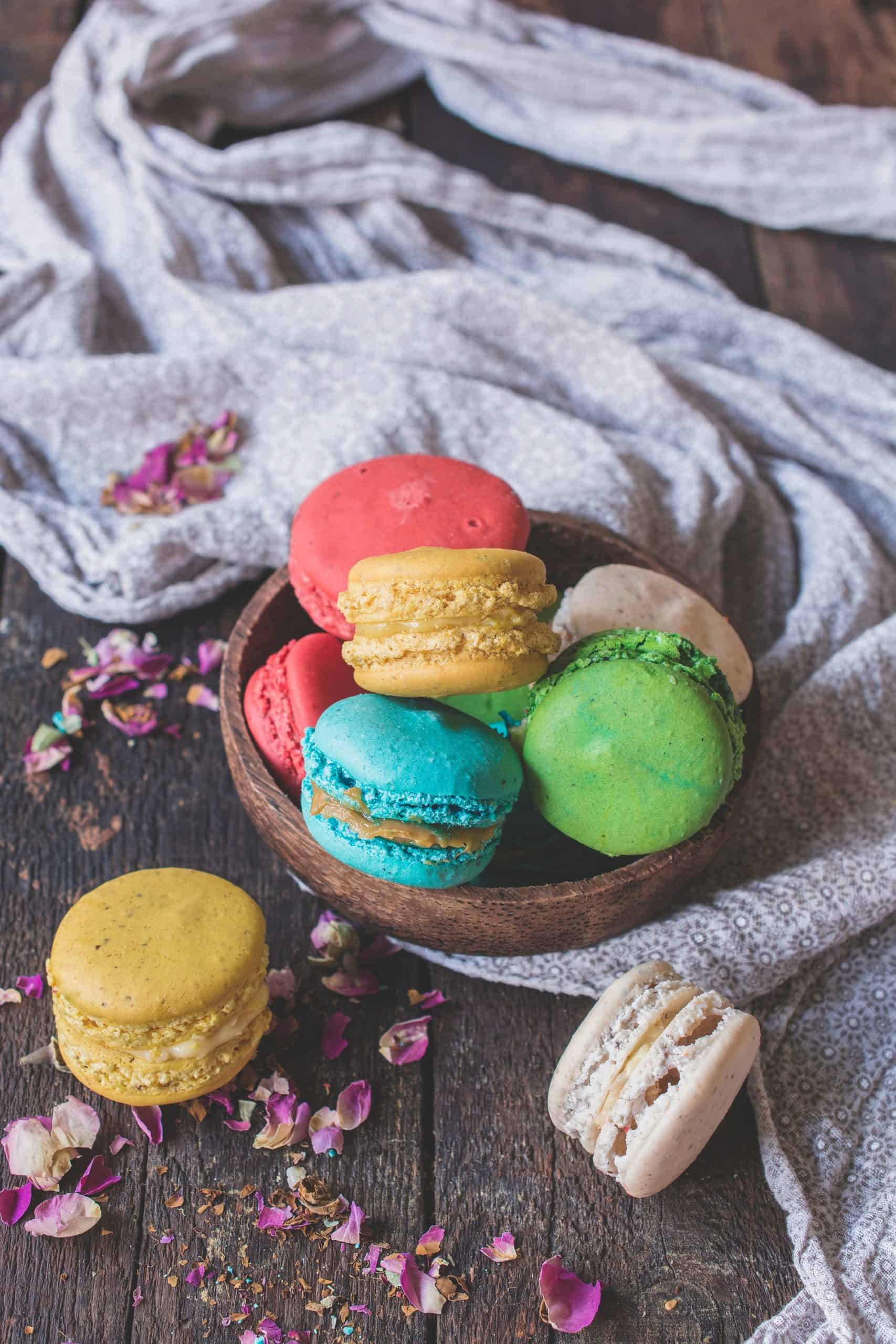
Opinions differ when it comes to delicate cookies, but for me a macaron is the most delicate of them all. When made correctly, with the dedication and love, they are the perfect sweet treat to completely transform your mood and lighten up your day.
Since Macarons are traditionally a French cookie, a Macaron Tour is often offered on different travel websites and agencies. In this article, we’ll talk a bit about this delicate cookie, its history and the top rated tours in Paris you can check online. In the end, I’ll share with you a foolproof recipe, which you can make and enjoy at home.
Let’s go!
What is a Macaron?
Present-day macaron is made using almond flour and sweet meringue. Its modern shape is similar to a cookie sandwich; it is made using two macaron biscuits, joined together using jam or buttercream.
The perfect macaron is judged by the shine and smoothness of its surface. This means, there must not be any bubbles of air appearing on the biscuit, if the little bubbles didn’t go away when the baking tray was tapped several times on the counter, then the mixture wasn’t properly incorporated together.
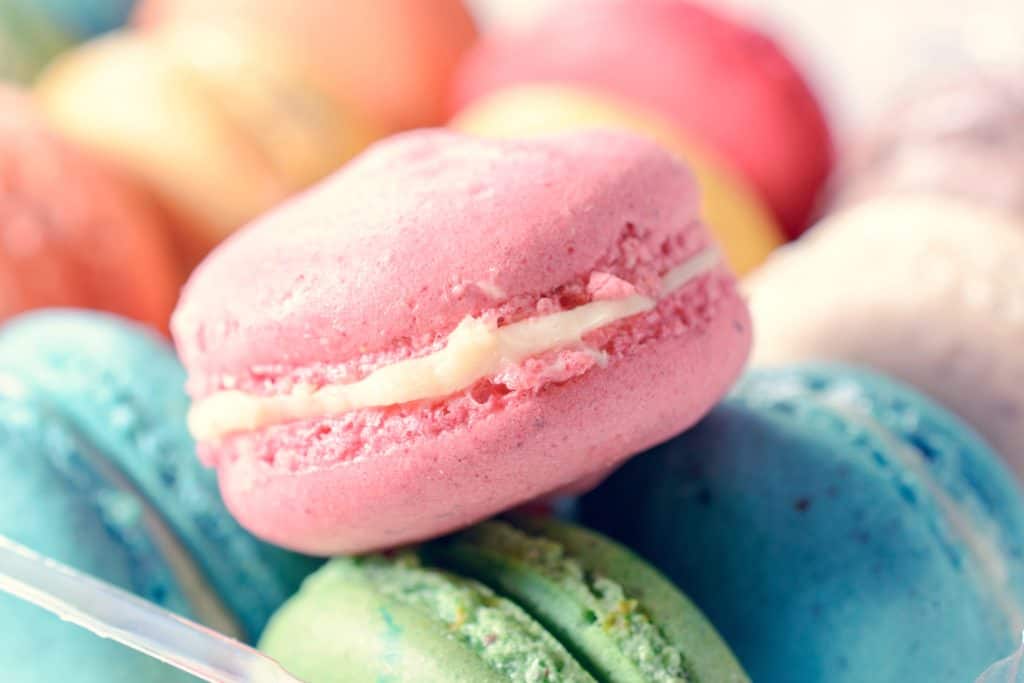
Since a macaron is basically a sweet meringue, it is made using egg whites, icing sugar, granulated sugar, almond flour and edible food coloring. Typical flavor is vanilla, also known as Parisian-style macaron. Recently however, there have been some unusual flavors, not necessarily likeable, such as foie gras and matcha.
In addition to smoothness and shine, the perfect macaron has to be delicate. Meaning, when you bite into it, it melts in your mouth. This is achieved by the right meringue consistency and the non-existence of egg yoke residue in the egg white.
Macaron or Macaroon?
A macaron shouldn’t be confused with a macaroon. Even though the difference in spelling is one letter, it constitutes a huge difference between the two. A Macaron is similar to a cookie sandwich, mentioned earlier. A Macaroon is usually made with ground almonds, coconut or other nuts, sugar, cherry glaze, jam or chocolate and is usually coconut flavored.
The French spelling of Macaron is commonly adopted in North America today to signify the meringue-based cookie and distinguish between the two cookies. While in the UK, the term “Macaroons” is still being used by many bakeries. A Linguistics Professor in Stanford, Daniel Jurafsky, states that the spelling of French words adopted in the English language is characterized by “-oon” such as cartoon.
The History of Macarons
There are different sources regarding the history of the Macaron. While one source traces the biscuit to northern Africa, Tunisia in particular, another source traces it back to Arabia. Other sources trace the cookie back to the French monastery in Cormery. Other history sources state they were made in Venetian monasteries since the 8th century AD and Catherine de Medici was the one who introduced them to the Royal Court.
The first source is cited by Daniel Jurafsky, a Linguistics Professor, that new pastry-making techniques were introduced by Arab troops, from Ifriqya which is now Tunisia, during their occupation of Sicily in 827. The new baking techniques included papermaking, using lemons, rice, pistachios and other nuts, and many nut-based pastries such once known as Faludhaj and Lausinaj.
These pastries were handed down among people in Persia and the almond cake was made in celebration of Nouruz; the Zoroastrian New Year. The pastries were also handed down through Sicily and in the city of Toledo in Spain, and even developed into other almond-based desserts such as marzapane and caliscioni. The Italian term Maccheroni was derived from the Arabic word “Maccarruni” from which the cookie name Macaron is derived.
It is said that Macarons were made in Venetian monasteries as early as the 8th century AD. Which would explain how Catherine de Medici’s Italian pastry chefs used to make them, upon her orders, when she came to France in 1533 and became Queen of France by marrying Henry II. Catherine had brought the Italian chefs with her when she came to France.
Another source tracing the origin of the Macaron to Arabia is an online Swiss encyclopedia on the history of baking. It cites that the almond-based biscuit dates to the 11th century, when it was known as Ghouryeba and was mainly served during the month of Ramadan. Under the rule of Yusuf ibn Tashfin; Sultan and first King of the Almoravid Dynasty. The almond-based biscuits spread from Arabia to Sicily and Venice, where the word Macarone was used to describe fine buiscuits.
Larousse Gastronomique; a culinary encyclopedia, traces the making of Macarons to a monastery near Cormery in 1791. The following year, the delicious cookie began to gain fame, as two Carmelite nuns, who sought asylum in Nancy during the French Revolution, baked the cookies to sell them and be able to pay for their housing. At the time, the cookies were simple cookies, no flavorings or fillings.
The Macaron as a cookie-sandwich was only introduced in the 1930s. Even the origin of the modern-day Macaron, originally called Gerbet or Paris Macaron, as a sweet meringue based confection joined with jam, buttercream or ganache, is disputed. Some say the credit in this technique goes to Pierre Desfontaines of the French pâtisserie Ladurée. However, another baker; Claude Gerbet claims to have come up with it first.
The earliest known recipe of Macaron was found in an early 17th century cookbook and appears to have been inspired by a French version of the cookie. There are several Italian cookbooks of the 16th century mentioning almond biscuits resembling macarons but with different names.
How are Macarons Made?
The two ways of making a macaron, the French way and Italian way, differ in the process of making the meringue. Meringue, the French way, is made by whisking egg whites are whisked until stiff peaks form and from there ground almonds and powder sugar are gently folded into the meringue; to knock the air out of the egg whites.
The Italian way involves whisking the egg whites with hot sugar syrup to form the meringue. On the side, raw egg whites are mixed with sifted ground almonds and powder sugar to form a paste. From there, the meringue and the almond paste are mixed together forming the macaron mixture.
From there, both the French and Italian ways, the mixture is piped on a baking tray, gently tapped on the counter for the cookies to set and form a shiny skin, then they are baked. When they’re out of the oven, they are left to cool then each two cookies are joined together using buttercream, jam or even ganache.
What is the Macaron Tour Paris?
The Macaron Tour Paris is basically a visit to some of the most famous macaron boutiques in Paris, where you will learn about the history of Macarons and how they are made. You will take part in a fun macaron tasting activity as part of your tour and you will get to choose which macarons you’d like to sample.
The tour mainly takes place around the area of Saint-Germain of the 6th arrondissement in Paris. You will visit five Macaron boutiques, where you’ll get to choose one macaron from each one. The tour typically ends at the Luxembourg Gardens where the tasting event will take place. Sometimes, if the weather is cold or rainy, the tasting can be held in a café instead.
Top Recommended Macaron Tour in Paris
One of the best Macaron Tours offered in Paris is by Le Bon Paris Tours. The gathering point is the Church of Saint-Germain, one of the oldest churches in Paris. Your tour guide will take you on a stroll through the streets of the Quarter of Saint-Germain, while telling you about the history of Macarons, when and where they were first made and how they affected life since then.
You will visit five gourmet macaron boutiques and you will choose one macaron from each one. It’s worth nothing that the flavors change frequently. Then your stroll will take you to a picnic in the Luxembourg Gardens, where you will all sample and judge the macarons you chose from the boutiques. You will take part in a discussion with the group on which was the best one and why.
The tour usually takes about two and a half hours and is 43 Euros for adults and 39 Euros for children. This tour is offered on both the Le Bon Paris Tours website and on TripAdvisor.
You can make Macarons at home yourself (A foolproof recipe)
Baking seems intimidating for a lot of people, while it is actually very relaxing. It’s all about the process and practice! Lots and lots of practice! Here’s a simple macaron recipe, if you’re craving this sweet delicacy and would like to enjoy it at home. I know I do!
Ingredients:
- To make the macarons:
- 3 egg whites, at room temperature.
- 1 cup almond flour (finely ground and sifted)
- 1 cup and ¾ powdered sugar.
- 1 teaspoon salt, divided in two.
- ¼ cup granulated sugar.
- ½ teaspoon vanilla extract.
- 2 drops of whichever food coloring you choose, if you’d like.
- To make the buttercream:
- 1 cup of unsalted butter, at room temperature.
- 3 cups powdered sugar.
- 1 teaspoon vanilla extract.
- 3 tablespoons heavy cream.
Preparation:
- To make the macarons:
- In the food processor, make the almond flour and powder sugar mix by adding them together with half the teaspoon of salt. Then sift them through, put aside.
- In another bowl, beat the egg whites with the second half of salt until soft peaks start to form. Then gradually add the granulated sugar and continue whisking the egg whites until stiff peaks form. You can know this by flipping the bowl upside down without the mixture falling out.
- Add the vanilla first and whisk until combined then add your choice of food coloring, if you chose one.
- Gently fold 1/3 of the sifted almond flour mixture into the egg whites, now meringue, using a spatula. Continue until you’ve incorporated the almond flour mixture completely into the meringue.
- Put the mixture into a piping bag and secure the baking sheet onto the baking tray by placing four small dots on the tray in each corner.
- Start piping the macarons onto the baking sheet by making circles about 3 centimeters in diameter. Make sure the cookies are about 2 centimeters apart from each other.
- Gently tap the baking tray onto the table to release any air bubbles, about five times. Then let them sit for about 30 minutes, until they form a soft crust.
- In the meantime, preheat the oven to 150 degrees Celsius.
- Bake the macarons for 17 minutes until they’ve risen and don’t seem to stick to the baking sheet anymore. After taking them out, let them cool until you make the buttercream.
- To make the buttercream:
- Add the butter in the mixing bowl and whisk until it’s light and fluffy.
- Sift the powdered sugar and gradually add it to the butter until it’s completely incorporated.
- Add the vanilla and whisk then add each heavy cream spoon at a time.
- Transfer the buttercream into a piping bag.
- Joining the macaron:
- Add a small dollop of buttercream onto one macaron shell then top with another shell to form a sandwich. Repeat with all macaron shells.
E voila!
The Irish Mafia: A Closer Look at Organised Crime Syndicates
History and Heritage
26/04/2024
The Ultimate Guide to Eating Out in Ireland: Tips and Recommendations
Food and Cuisine
26/04/2024
Plan Your Perfect Trips to Northern Ireland: A Guide to the Best Tours and Vacation Packages!
Northern Ireland
26/04/2024

Ultimate 7-Day Scotland Driving Itinerary: Explore Edinburgh, Skye, and More!
Scotland
26/04/2024

The Ultimate Scotland Road Trip Itinerary: Exploring the Spectacular Routes and Landscapes
Scotland
26/04/2024