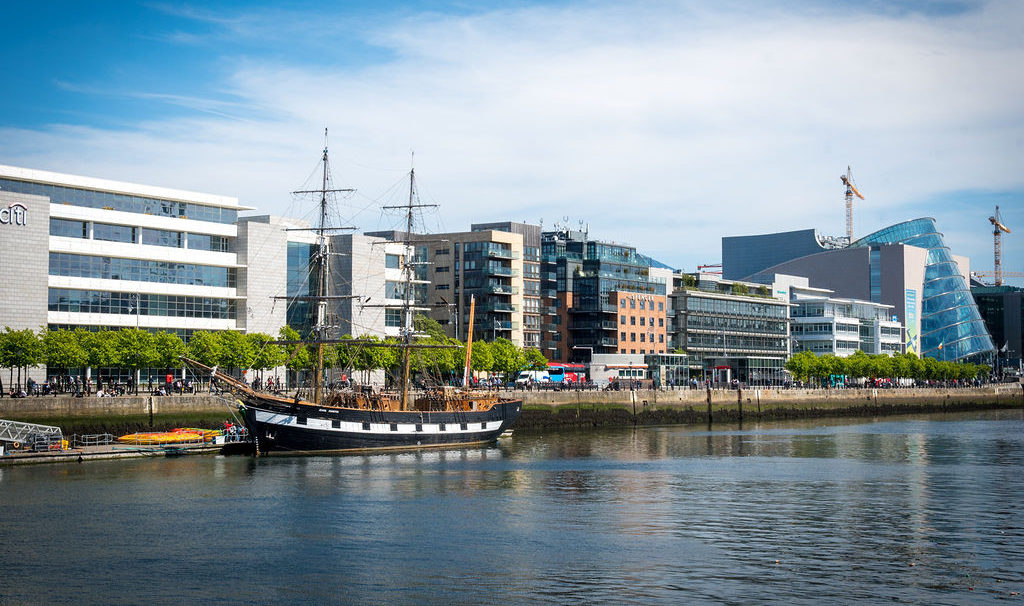


Jeanie Johnston tells the story of the thousands of Irish people who fled the Famine and embarked on a treacherous voyage, hoping for a better life in North America.
The Great Famine hit Ireland in 1845 and lasted until 1852. The failure of the potato crop and the rise in food prices led to starvation and disease, which killed between 1 and 1.5 million people and forced another 1 million people to flee the country.
Ireland had lost ¼ of its population by the time the famine ended. Step on board, and you will be transported back in time to join them on their gruelling journey.
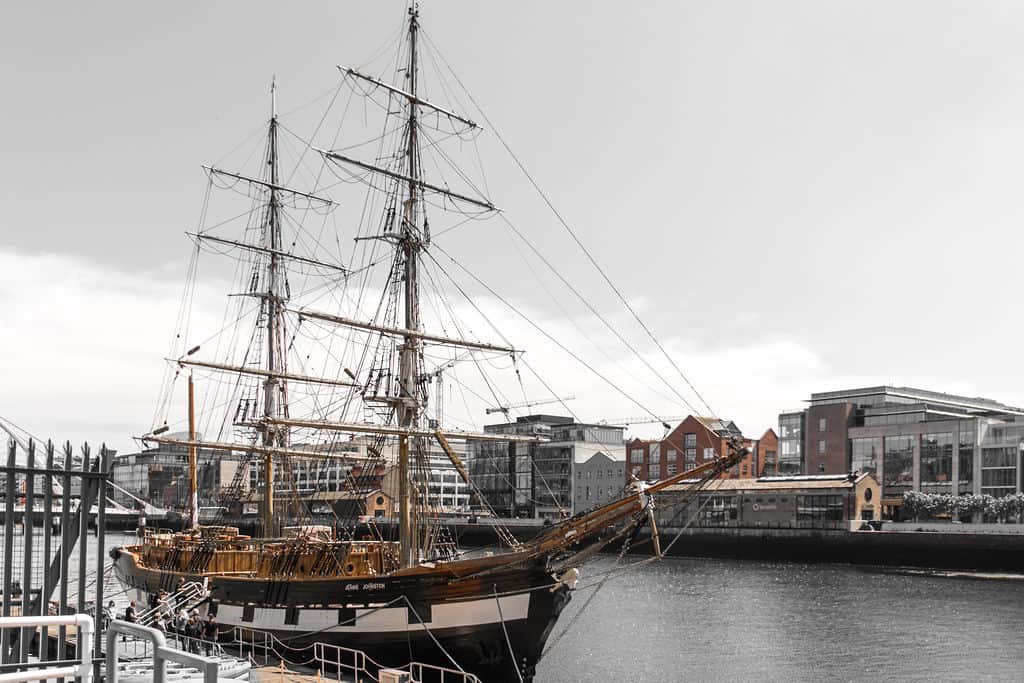
Table of Contents
1. The Origins and Construction of the Original Jeanie Johnston
The original Jeanie Johnston was built in 1847 by Scottish-born shipbuilder John Munn in Quebec, Canada. Designed as a cargo ship, it was initially intended to transport timber from North America to Europe. However, as the Great Famine (1845-1852) ravaged Ireland, the ship’s role evolved significantly. John Donovan and Sons of Tralee, County Kerry, purchased the vessel to serve as an emigrant ship, transporting desperate Irish men, women, and children across the Atlantic to North America.
The Jeanie Johnston was a three-masted barque, a type of sailing vessel characterised by its square-rigged foremast and mainmast and a fore-and-aft rigged mizzenmast. Measuring approximately 123 feet in length, 26 feet in breadth, and with a depth of hold of 18 feet, the ship had a gross tonnage of about 408 tons. Despite its relatively modest size, the ship was renowned for its robust construction and seaworthiness, attributes that were crucial for the perilous transatlantic voyages it undertook.
2. The Remarkable Voyages and Safety Record
Between 1848 and 1855, Jeanie Johnston made 16 transatlantic voyages, transporting over 2,500 emigrants from Ireland to North America. The destinations included Quebec, Baltimore, and New York. These journeys were complex, as emigrants faced the dangers of rough seas, disease, and overcrowded conditions. Despite these challenges, the Jeanie Johnston is remembered for its exceptional safety record.
Remarkably, not a single life was lost on board the Jeanie Johnston during its voyages. This outstanding safety record is attributed to the ship’s competent crew and the humane treatment of its passengers. The ship’s captain, James Attridge, and the ship’s doctor, Dr. Richard Blennerhassett, played pivotal roles in ensuring the well-being of the emigrants. Dr Blennerhassett, in particular, was known for his dedication to maintaining hygiene and providing medical care, significantly reducing the incidence of diseases such as typhus and cholera rampant on other emigrant ships.
The ship’s relatively lower passenger capacity than other vessels also contributed to its safety record. The Jeanie Johnston typically carried around 200 emigrants per voyage, which allowed for better living conditions and more effective disease control. This humane approach starkly contrasted to the era’s infamous “coffin ships”, notorious for their overcrowding and high mortality rates.
3. The Tragic Fate and Rediscovery
After it served as an emigrant ship, the Jeanie Johnston operated as a cargo vessel, transporting timber and other goods between North America and Europe. However, its career came to a tragic end in 1858. During a voyage from Quebec to Hull, England, the ship encountered severe weather in the North Atlantic. On 17 October 1858, the Jeanie Johnston foundered off the coast of Newfoundland. Despite the crew’s efforts, the ship could not withstand the fierce storm and began to take on water.
In a testament to the ship’s legacy of safety, all 17 crew members managed to survive the ordeal. They were rescued by a Dutch ship, the Sophie Elizabeth, and brought to safety. The Jeanie Johnston, however, was lost to the depths of the Atlantic, where it remained for over a century.
The story of Jeanie Johnston might have ended there, but the ship was rediscovered in the late 20th century. In the 1980s, efforts began to research and document its history. These efforts culminated in constructing a faithful replica of the ship to serve as a memorial to the emigrants and as an educational tool for future generations.
4. The Replica and Its Role Today
The replica of the Jeanie Johnston was constructed between 1998 and 2002 in Blennerville, County Kerry. The project was a collaboration between Irish and international shipbuilders, historians, and craftsmen, who worked meticulously to recreate the original ship using traditional techniques and materials. The construction of the replica was not only a technical achievement but also a labour of love, reflecting the dedication to preserving an essential part of Ireland’s maritime heritage.
The replica Jeanie Johnston was launched on 6 May 2000 and undertook its maiden voyage to North America in 2003. This journey, which included visits to major ports such as Boston, New York, and Baltimore, was a symbolic retracing of the original ship’s routes. The voyage garnered significant media attention and was warmly received by the Irish diaspora and local communities at each port of call.
Today, the Jeanie Johnston is a museum ship docked at Custom House Quay in Dublin. It offers guided tours that provide a vivid and immersive life experience on an emigrant ship during the 19th century. Visitors can explore the ship’s cabins, learn about the emigrants’ experiences, and gain insights into the historical context of the Great Famine and Irish emigration.
The ship also serves as an educational platform, hosting school groups and engaging in cultural and historical programmes. Through these activities, Jeanie Johnston continues to fulfil its mission of preserving and sharing the stories of the Irish emigrants who sought a new life across the Atlantic.
5. The Cultural and Historical Significance

The Jeanie Johnston is unique in Ireland’s cultural and historical landscape. It is a powerful symbol of the resilience and hope of the Irish people during one of the darkest periods in their history. The ship’s remarkable safety record and the humane treatment of its passengers stand as a testament to the potential for compassion and care, even in the most challenging circumstances.
The story of Jeanie Johnston also highlights the broader context of Irish emigration. The Great Famine forced over a million people to leave Ireland, seeking refuge and opportunities in countries such as the United States, Canada, and Australia. These emigrants’ experiences, contributions to their new homelands, and enduring connections to Ireland are integral to understanding the Irish diaspora and its impact on global history.
Jeanie Johnston’s legacy is also reflected in its role as an educational and cultural resource. Through its museum and educational programmes, the ship continues to engage and inspire new generations, fostering a deeper understanding of Ireland’s maritime heritage and the experiences of the emigrants.
In addition to its historical and educational significance, Jeanie Johnston has inspired artistic and literary works. The ship’s story has been featured in books, documentaries, and plays, contributing to its enduring presence in the cultural imagination. The Jeanie Johnston remains a symbol of hope, resilience, and the enduring spirit of the Irish people.
An Informative 50-Minute Tour of the Jeanie Johnston Ship
The tour takes approximately 50 minutes and is led by one of our knowledgeable guides. The tour begins with a walk around the upper deck, where you will see the majestic masts, admire the craftsmanship and learn about the ship’s history.
They endured overcrowding, seasickness, disease, filth, starvation and storms…And they were the lucky ones.
Take a deep breath and go below deck to experience the cramped quarters where up to 250 passengers spend most of their time, only emerging for half an hour of fresh air each day.
It cost 3 pounds 10 shillings to flee the Famine. 100,000 people paid with their lives.
Find out how they paid for it. Learn about their grim voyage in cramped and filthy conditions and the risks they faced from disease, starvation and disaster. Hear how they passed the time on their traumatic journey and discover what fate awaited them.
You can book a tour of this historic vessel through their official website!
Tour Times
OPEN 7 DAYS A WEEK, TOURS DAILY
Mon-Sun: 10.00, 10.30, 11.00, 11.30, 12.00, 12.30, 13.30, 14.00, 14.30, 15.00, 15.30, 16.00, 16.30
Tour Prices
- Adults (Age 18 – 64)€32.00
- Senior (Age 65+)€29.00
- Student (ID)€29.00
- Teenager€23.00
- Child (Age 6-12)€17.00
- Infant (Age 0-5)FREE
Concession and group rates are available.
Free entry with Dublin Pass.
Conclusion
The Jeanie Johnston is more than just a ship; it symbolises a pivotal moment in Irish history. Its story of resilience, compassion, and hope continues to resonate with people today. From its construction and voyages to its tragic fate and eventual rediscovery, Jeanie Johnston’s legacy is a testament to the strength and spirit of the Irish emigrants who embarked on a perilous journey searching for a better life. Through its replica, now serving as a museum and educational resource, Jeanie Johnston continues to educate and inspire, ensuring that the stories of those who sailed on her are not forgotten.
How do you feel after reading this emotional story of survival? Please share your thoughts in the comments below!