

Experience the Magical Northern Lights Ireland

Updated On: April 22, 2024 by  Ciaran Connolly
The Northern Lights Ireland are an incredible experience you will want to witness!
Created when a large volume of electrically charged particles moving at high speed towards the Earth, along its magnetic field help to create beautiful colourful auroras in the sky.
Most notably they can be seen in the Northern or Southern hemisphere making Ireland a perfect place to catch the stunning light show.
There are many places you can experience the Northern Lights in Ireland, so you can conquer both a visit to the emerald Ireland and witnessing the Northern Lights off your bucket list in one place.
You’ll want to make sure you have your camera handy to capture the moment because it’s truly something special that you want to share with others and keep an as unforgettable memory of your trip in Ireland.
Keep reading to find out more about one of the world’s most phenomenal solar displays.
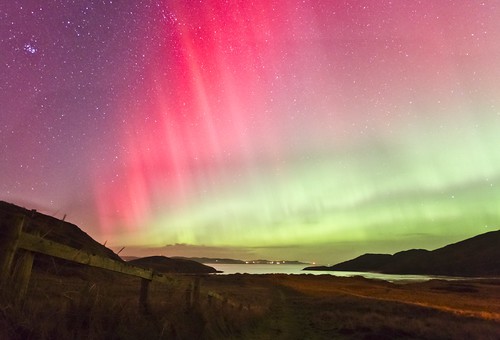
Where Can You See the Northern Lights in Ireland?
There are plenty of amazing places in Ireland that will offer you a front row seat to the stunning Northern Lights display.
The remarkable natural skylight experience is also known as ‘Aurora Borealis’ comes in various colours from bright blue and green to beautiful pinks and oranges that shimmer across the night sky with an otherworldly glow.
To get the best opportunity to see the Northern Lights Ireland, you need to find the place with the least light pollution, meaning you need to get away from the chaotic Irish cities and heading to undisturbed Wild Atlantic Way, Donegal or Malin Head. These are just some of the popular spots to see the Northern Lights in Ireland. The further north you go the better chance you have of catching the Aurora Borealis display.
What’s super special about Ireland is that its located between the 52nd and 55th Latitude, meaning it offers a brilliant place to catch the Northern Lights. Unlike places such as Iceland where people can experience the lights from above, people in Ireland get a stunning look at the aurora display on or above the Northern Horizon.
Inishowen Peninsula along the Wild Atlantic Way is another spot to discover the light show due to its great location and lack of light pollution.
Best Time to See the Northern Lights in Ireland
It might seem obvious, but of course, the best time to enjoy the Northern Light is when its completed dark. Get away from any light pollution that may surround you; whether it’s from street lights or buildings, you need to have a clear view north to get a glimpse.
However, it can be very hard to predict when exactly the Northern Lights will appear, a lot of its due to being in the right place at the right time. But there are things you can do to give yourself better odds.
Firstly the time of year is an important aspect, winter is considered the best time as the nights stay darker for longer. Unfortunately for anyone wishing to experience the Northern Lights in Ireland you will have to put up with freezing Irish winter, so make sure you a wrap up nice and warm.
Its recommended that the best time to view the spectacular Northern Lights in Ireland is between 9 pm and 1 am through November to February time
Another thing you must consider is the weather, this is where things start to get more complicated. To truly experience the Northern Light you need to be aware of two weather systems
Geometric Storms and Local Irish Weather
The captivating light display is the work of Geometric Storms, its a short disturbance in the Earth Magnetosphere that is caused by the solar wind shock waves. Geometric Storms can be ranked from G1 (smallest) to G5 (biggest), the bigger the storm the better chance you have of seeing the Northern Lights in Ireland.
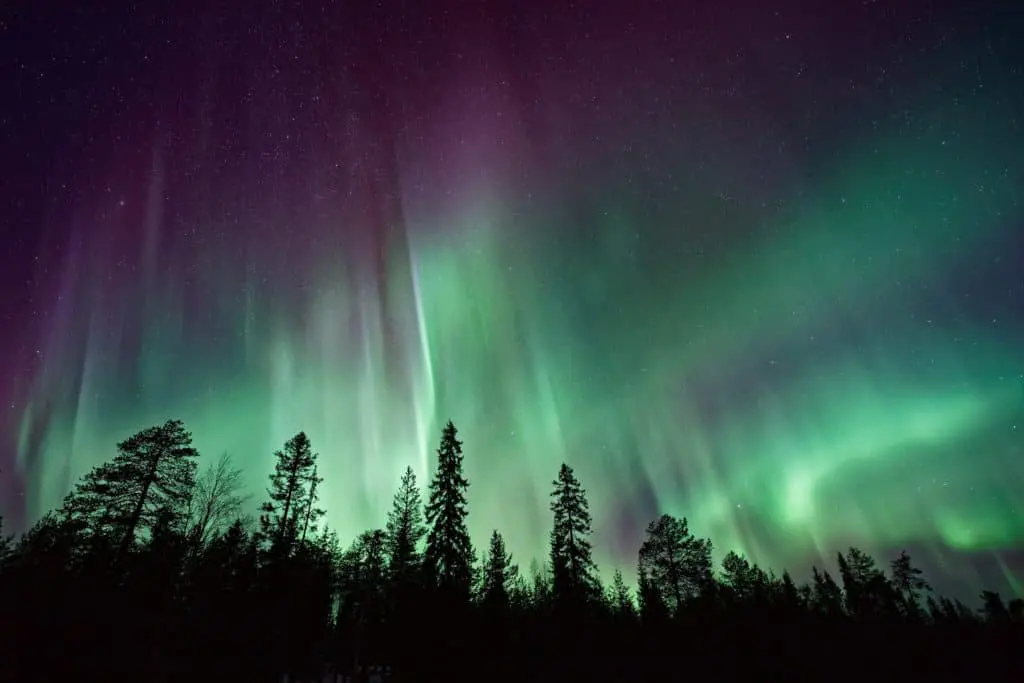
A second thing for you to be aware of is the local weather, as Ireland is famous for its unpredictable weather. It’s all great hearing that a huge geometric storm is approaching but if the Irish skies aren’t clear, you’ll most like not to get to experience the sky display. So always keep a close eye at the local weather to be sure there will be no clouds in the sky.
How to Capture the Northern Lights
Anyone who plans to see the Northern Lights in Ireland will want to make sure they can capture the best photos of the lights display. We have some top tips to helping you get a beautiful photo of the Northern Lights.
Whether you have an iPhone or professional camera you can still take impressive photos just follow these photo tips;
- Set your camera to manual; This means you can control a variety of settings from exposer, lighting, shutter speed and more; so you can find what works best. Make sure you don’t have a flash on or you’ll sabotage a perfectly good photo of the Northern Lights.
- Be very steady: Make sure that you are using a tripod for your camera or phone to help steady it as the Northern Lights are always moving across the sky and you’ll want to capture this without it being shaky.
- Have a variety of lenses – If you are using a digital camera you’ll want to try different lenses. A wide angle lens will be great for capturing as much of the sky as possible.
Getting to see the Northern Light up close in Ireland will be something that you’ll remember forever. It’s one of the most astonishing wonders of the world, and what better way to see them that in one of the best countries in the world.
Have you ever been lucky enough to see the Northern Lights in Ireland? Share your stories with us below!
More blog that you may enjoy:
The Dingle Peninsula: A Beautiful Part of Ireland|The Famous Carrick-a-Rede Rope Bridge|Malahide Village: A Great Seaside Town Outside Dublin|Reasons to visit Ireland; From Medieval Castle’s to Enchanting Landscapes
Discover the Top 15 Best Places to Visit in Northern Ireland
Travel Guides
24/04/2024
How to Find the Best Scotland Travel Guide: An Ultimate Guide
Scotland
24/04/2024

The Ultimate Guide to the Best Shopping Areas in London
England
24/04/2024

The Absolute Guide to the Best Restaurants in Bath, England: Unveiling the Culinary Gems of Bath!
Food and Cuisine
24/04/2024
Planning a Trip to Scotland: Your All-Inclusive Guide to Exploring the Great Highlands
Travel Guides
23/04/2024