

Chicago: Top 9 Super Sites in The Windy City
Updated On: November 10, 2023 by  Marwa Abdel Moniem
In the heart of the Midwest, by the shores of the lake,
There’s a city that’s legendary, make no mistake.
It’s a place with a history, a story to tell,
I’m talking ’bout Chicago, where the people dwell
This verse cuts a long story short, but how about if we take you on a virtual journey between the lines to give you a closer look at the Windy City—Chicago?! With its skyscrapers, landscape and museums, Chicago stands out among American states, boasting a variety of attractions that will never fail its visitors. It is the go-to city for casual travellers and history enthusiasts.
A state known for its world-class cuisine, Chicago has its signature dishes and drinks that will cater to the appetites of all its visitors. For all groups of visitors, we are offering all the information you need to know before you go.
Table of Contents
The History of The Windy City
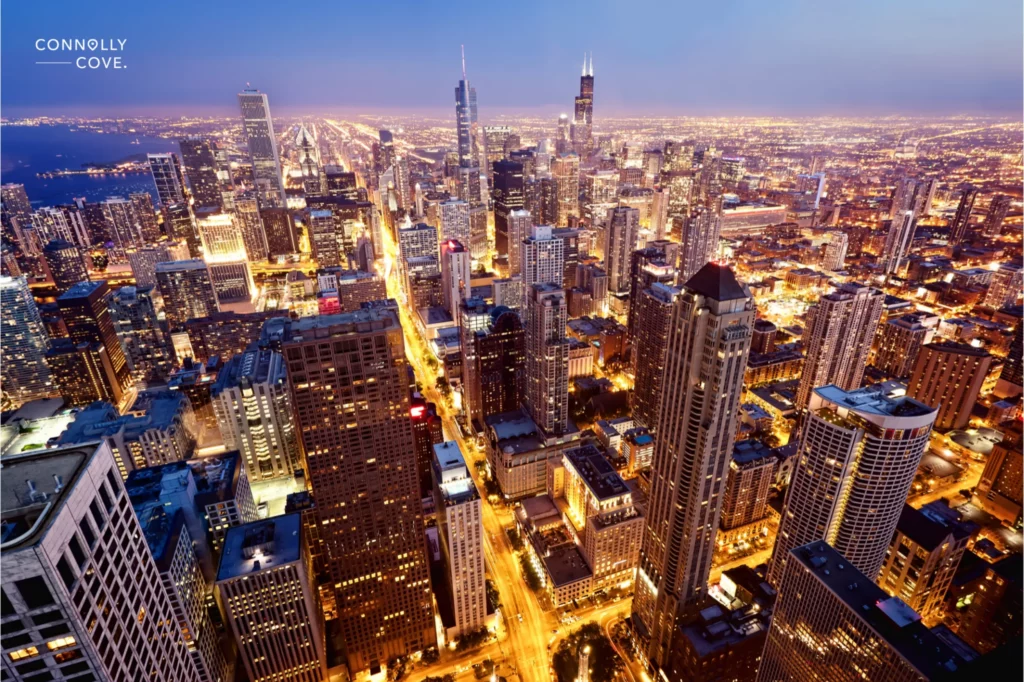
Now a major industrial and economic hub, Chicago was founded in the early 19th century as a small trading post. By the mid-1800s, it developed into a metropolis that even the Great Chicago Fire of 1871 could not curb its rapid growth—instead, it stimulated the city’s remarkable rebirth and architectural renaissance.
The city also played a central role in the development of jazz and blues music. It also became synonymous with the Prohibition-era gangster, which was epitomised by Al Capone, who dominated organised crime in the state from 1925 to 1931.
Today, Chicago stands out as a vibrant global city renowned for its diverse culture, incredible architecture, and contributions to art, music, and business. At the same time, its history remains a testament to resilience and reinvention.
The Jewel of the Midwest
Situated in the state of Illinois, along the shore of Lake Michigan, Chicago is the third-largest city in the United States. It is a major city in America’s Midwest region that seamlessly blends the past and the present.
The Culinary Scene in Chicago
Welcome to this American state whose culinary landscape is a melting pot of cultures and flavours. Known for its deep-dish pizza, Chicago-style hot dogs, Italian beef sandwiches and classic steak houses, the city’s food culture has evolved far beyond these prominent dishes to embrace a wide range of culinary influences and styles.
This state is home to numerous Michelin-starred restaurants, making it a destination for foodies seeking high-end dining experiences. Restaurants like Alinea, Grace, and Oriole have earned international acclaim for their innovative cuisine and impeccable service.
Chicago’s passion for food involves all kinds of dishes, which guarantees all visitors will find something to satisfy their palate. The food scene is undoubtedly one of the major attractions in the Chi-Town.
The Bubble Tea Scene
Drinks have also evolved over time. Bubble tea, also called boba tea, has taken the city by storm in recent years. This trendy and refreshing beverage has found a special place in the hearts of Chicagoans, offering a delightful combination of flavours that make it a perfect treat for people of all ages.
Bubble tea shops in the city cater to a diversity of tastes and preferences. From traditional flavours like classic milk tea, taro, and matcha to more innovative options such as fruit teas, cheese foam teas, and exotic fruit combinations — you will find your craving.
Many stores allow customers to customise their drinks, choosing the level of sweetness and ice, as well as adding various toppings like tapioca pearls, fruit jelly, or aloe vera. Bubble tea has introduced Chicagoans to Asian flavours and has become an integral part of the city’s culinary landscape. It has captured the taste buds of locals and visitors alike.
Places To Visit in The Chi-Town
From the tranquil shores of Lake Michigan to its bustling downtown, Chicago is one place that all visitors can find enjoyable on their own terms. Punctuated by some of the world’s most iconic skyscrapers, the city has many attractions to explore. We are listing them here to help you check the boxes you like for an unforgettable trip to the Windy City.
“Chicago is one town that won’t let you down.”
Frank Sinatra
The Loop
The Loop is the historic business district in Chicago. The Loop is named after the looped circuit of elevated train tracks that encircle this area, providing an eminent and convenient means of transportation. Multiple subway lines, buses, and commuter rail services converge here, making it easy for people to access different parts of the city.
The Loop dates back to the city’s early days when it was a trade-and-entertainment plaza. Over the years, it has evolved into a modern urban centre while preserving its historical architecture and charm.
Millennium Park
Millennium Park is one of Chicago’s most acclaimed and beloved public spaces, located in the heart of the city’s downtown area. This urban oasis, spanning 25 acres, is a vigorous cultural point, hosting numerous free events, festivals, and concerts over the year.
The park features the Jay Pritzker Pavilion, an open-air venue that hosts a variety of performances, from classical music to jazz and rock concerts. It is also home to beautifully landscaped spaces, such as the Lurie Garden.
Millennium Park is also acknowledged for its Crown Fountain. This interactive art installation is made of two 50-foot glass block towers, displaying the faces of people, which appear to “spit” water into a shallow reflecting pool. It is a popular spot for cooling off in the summer.
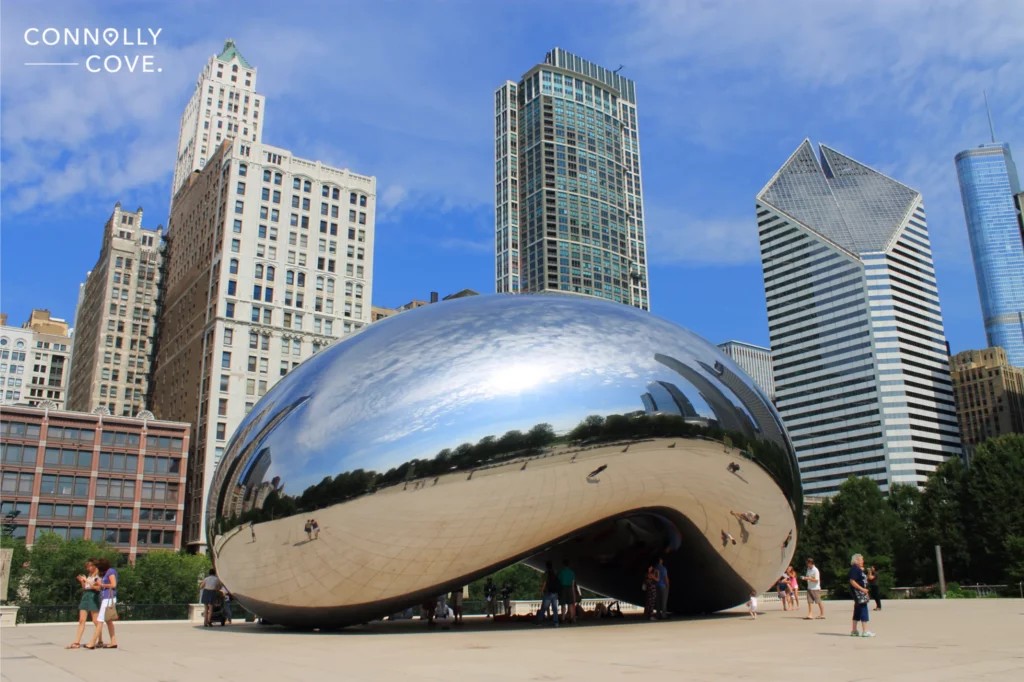
The most attractive part of the park is Cloud Gate, affectionately known as “The Bean”. This is a highly polished sculpture consisting of 168 stainless steel plates that are meticulously welded together in the shape of a massive bean, which reflects the surrounding cityscape, the sky, and the people who visit it.
It is equally striking during the day when it mirrors the bright blue sky and the skyline, as well as at night when it reflects the city’s illuminated buildings. Unveiled in 2004, the Bean has become a symbol of the city. It is a favourite spot for taking photos.
The Observation Decks
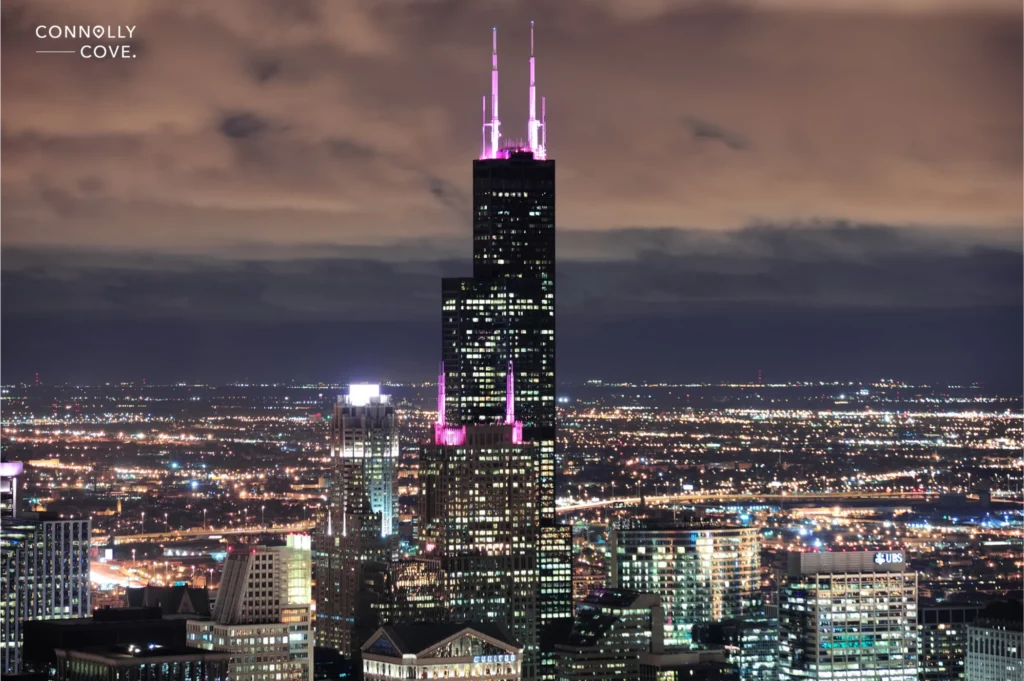
The observation decks in Chicago are breathtaking vantage points that offer visitors an unparalleled opportunity to take in the stunning views of the city’s impressive skyline and its magnificent surroundings.
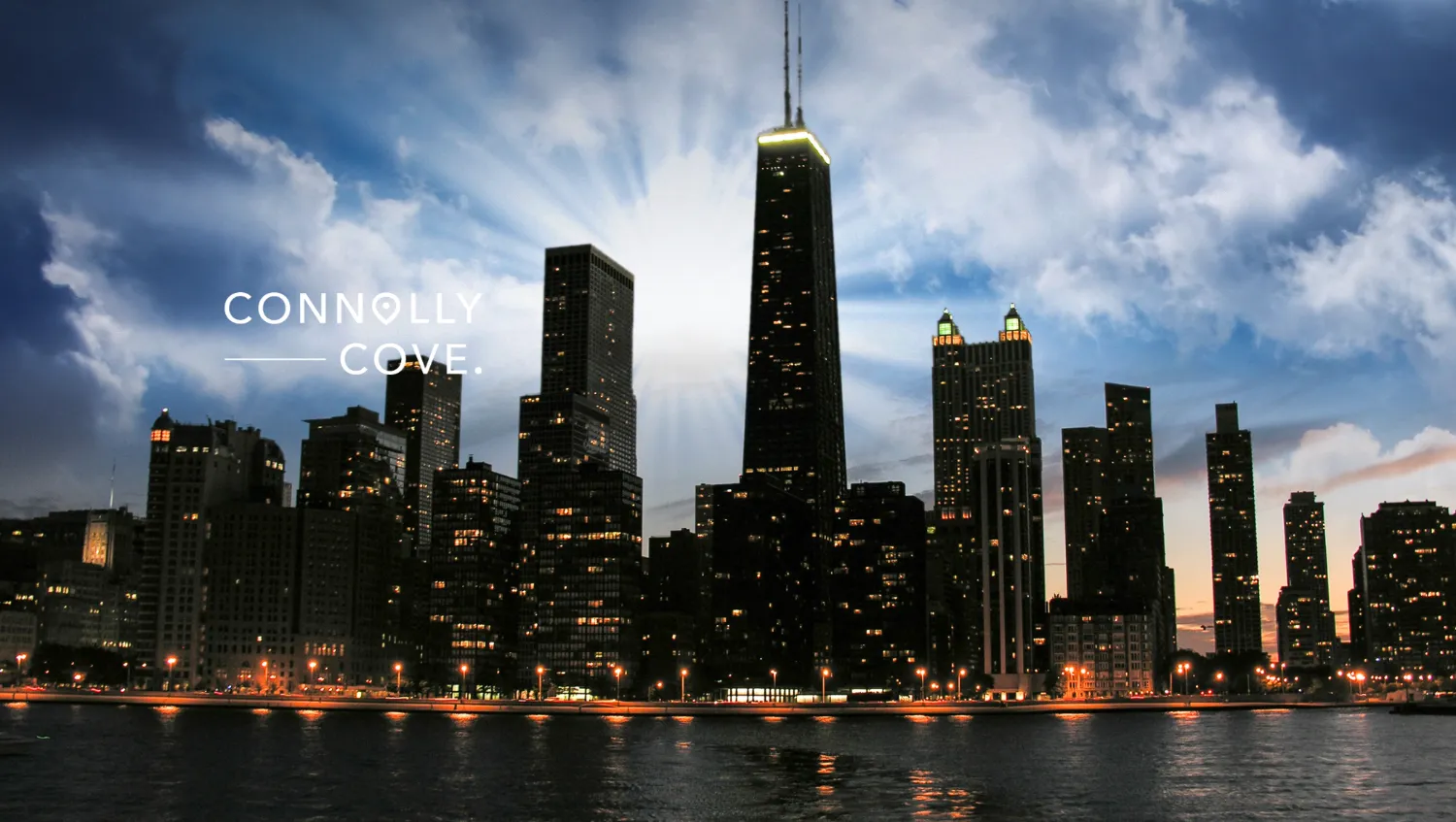
One of the most popular observation decks in the city is the Skydeck at the Willis Tower. This towering skyscraper, once the tallest building in the world, rises high above the city at 1,450 feet. The Skydeck is found on the 103rd floor and is a remarkable feat of engineering and design, offering visitors a panoramic view of Chicago, Lake Michigan, and the vast expanse of the surrounding landscape.
The Skydeck’s most remarkable feature is “The Ledge”, which is a set of glass-bottomed boxes that extend out from the building, allowing brave visitors to step out and look straight down at the city streets below. It is a thrilling experience worth a try.
Another popular observation deck is 360 Chicago, which is situated on the 94th floor of the John Hancock Center. This observatory is known for its 360-degree sights of the city and its unique Tilt attraction. Tilt is an enclosed platform that tilts outward at an angle, providing an exhilarating sight of the city as you lean against the glass.
The Centennial Wheel is the third observation deck in the city. This attraction combines a giant Ferris wheel with enclosed gondolas, offering a splendid outlook of both the city and Lake Michigan.
The observation decks in this state are more than just viewpoints; they are gateways to experiencing the heart and soul of the city.
Grant Park
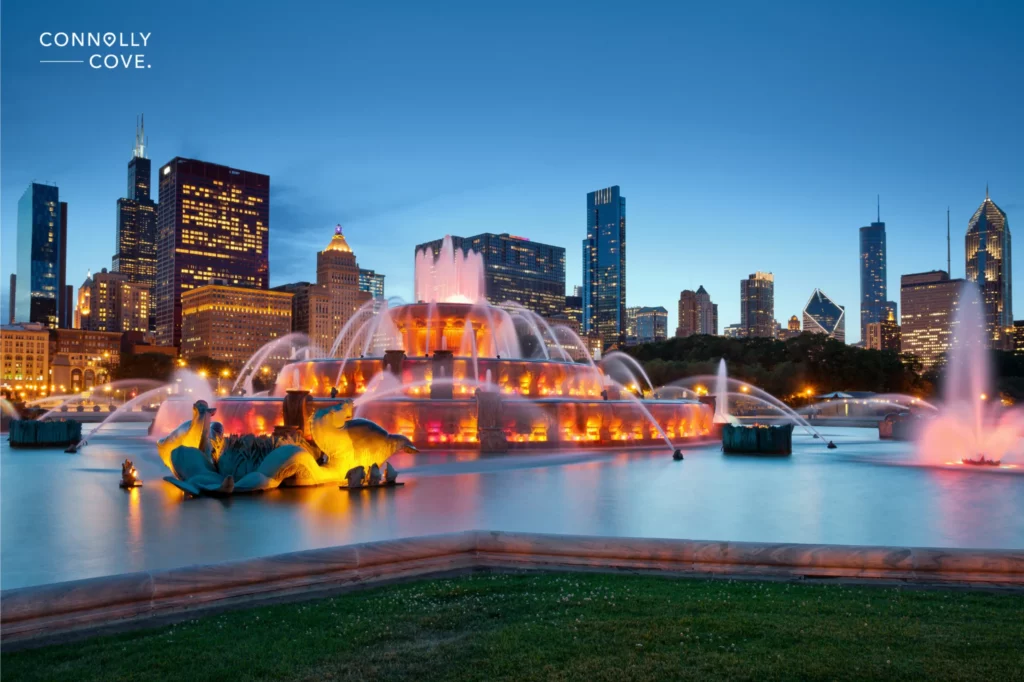
Grant Park is a sprawling urban oasis located in the heart of downtown Chicago. Covering 319 acres, this park is often referred to as the city’s “front yard”. Its vast green expanse stretches along The Lake Michigan shoreline and provides a lively mix of recreational, cultural, and natural attractions.
One of the most known landmarks in the park is the ornate and grand Buckingham Fountain. Designed in the Beaux-Arts style in 1927, the fountain features a dazzling water and light show. This magnificent water display is often referred to as the “Front Door to Chicago”.
The fountain’s central focal point is the grand Rococo-style structure featuring a bronze seahorse sculpture, which symbolises the four states surrounding Lake Michigan: Illinois, Indiana, Michigan, and Wisconsin. This central piece is surrounded by four sets of majestic bronze sea horses that represent the four seasons.
Buckingham Fountain is also famous for its nighttime displays. As the sun sets, the fountain is illuminated with a range of colourful lights, making it a captivating spectacle against the city’s skyline. The lights are often accompanied by music, creating a multisensory experience for visitors.
Chicago Riverwalk
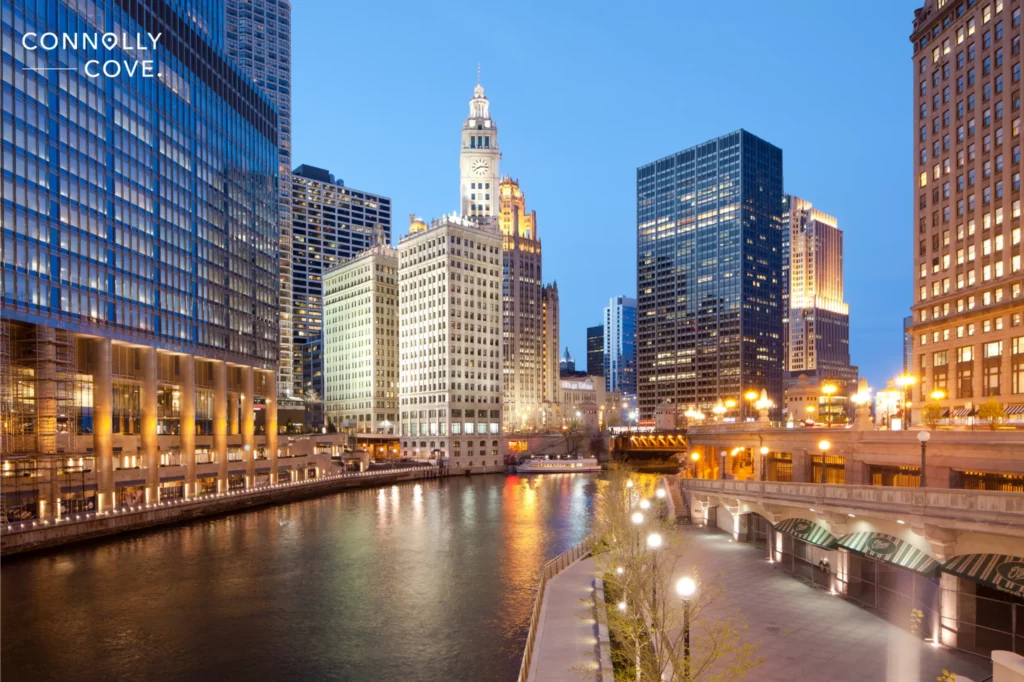
The Chicago Riverwalk is a picturesque promenade that runs along the south bank of the Chicago River. Stretching for approximately 1.25 miles from Lake Street to Lake Shore Drive, the Riverwalk has evolved into one of the city’s most popular destinations.
It has a diverse range of waterfront dining options. Visitors can have a meal or a drink in restaurants and cafes that line the river’s edge. From casual to upscale, there is something to suit every taste.
The Riverwalk is designed with plenty of seating areas, providing people with spaces to relax, soak in the spectacle, and enjoy the peaceful ambience of the river. Benches, tables, and comfortable seating options are scattered throughout the walkway.
You can take a stroll along the Chicago River or enjoy any of its outdoor activities, such as renting kayaks and paddleboards and taking architectural boat tours. The Riverwalk connects various parks, bridges and landmarks, making it the perfect way to explore the city on foot.
Navy Pier
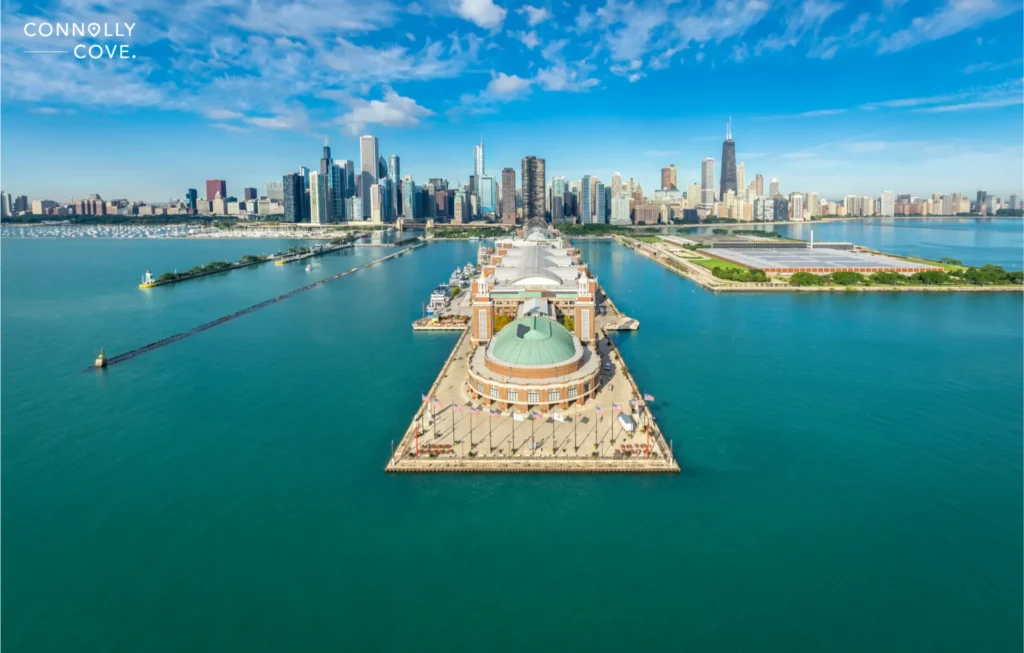
Navy Pier is one of the highlights of Chicago. Extending on the shores of Lake Michigan, the historical pier offers a wide range of cultural attractions, dining, and recreational activities. It has changed over the years from a shipping facility to a multifaceted entertainment complex.
Navy Pier has a rich history dating back to its construction in 1916. Today, Navy Pier boasts a Navy Pier Park, which features a giant Ferris wheel that provides fantastic sights of the city’s skyline. The Pier also has a Chicago Shakespeare Theater, IMAX theatre, and a wide array of family-friendly rides and amusements.
The location of Navy Pier on Lake Michigan’s shoreline makes it a picturesque destination. The pier provides opportunities for boat tours, water taxis, and leisurely walks along the scenic lakefront.
Lincoln Park Zoo
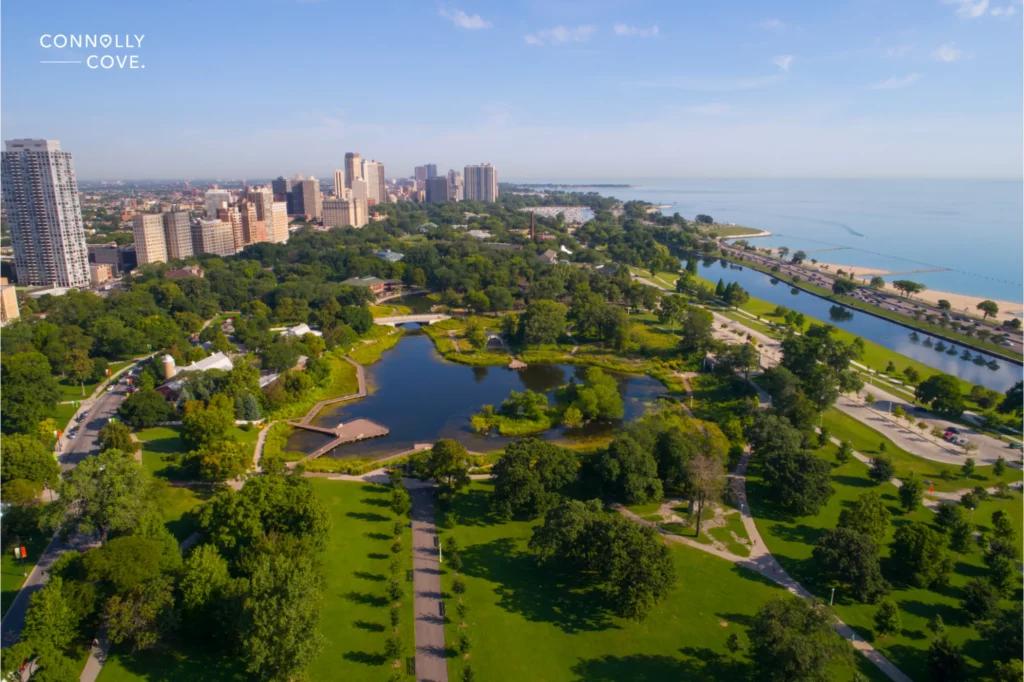
Lincoln Park Zoo is considered among the oldest and most well-thought-of zoos in the United States. Established in 1868, it extends over 35 acres within the expansive Lincoln Park, making it one of the few significant zoos in the world to be situated within a city’s public park.
The zoo is home to over 1,000 animals from around the world, representing a diverse range of species. There, you can find big cats like lions and tigers, as well as birds, reptiles, and even sea lions. One of the zoo’s standout exhibits is the Regenstein Center for African Apes, where you can witness the daily lives of western lowland gorillas and common chimpanzees.
Lincoln Park Zoo hosts a variety of events throughout the year, including the popular “ZooLights” during the holiday season, which features festive light displays, ice carving, and seasonal activities.
Chicago Cultural Center
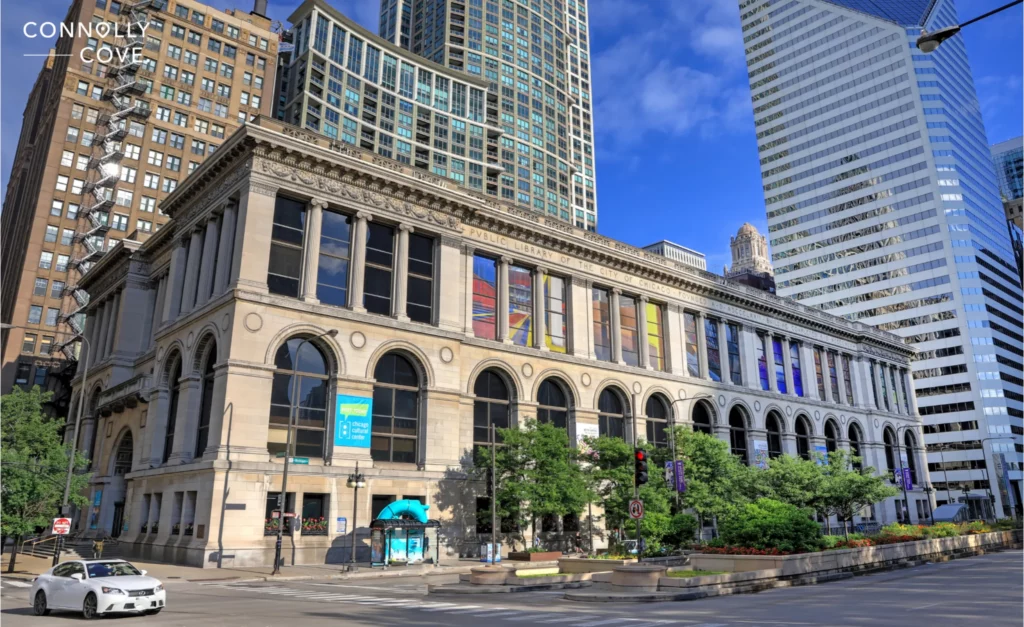
The Chicago Cultural Center is a cultural gem that hosts various art exhibitions and events. It is situated on 78 E. Washington Street and occupies the former Chicago Public Library building, a structure distinguished by its excellent architecture and rich history.
Established in 1897, the building features a grand, neoclassical design with a monumental Tiffany glass dome in its Preston Bradley Hall. The Tiffany dome is adorned with intricate mosaic work and glass art.
Visitors can experience a broad spectrum of art, from contemporary and avant-garde to traditional and historical. The Cultural Center also offers guided architecture tours for visitors who are interested in the history and design of the building.
The Magnificent Mile
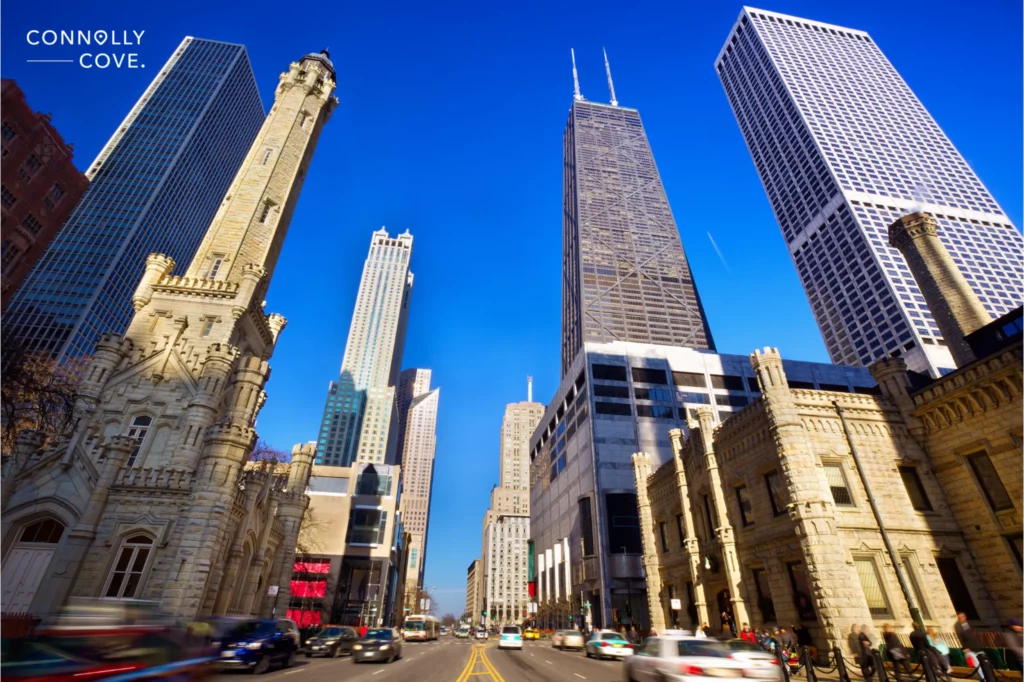
Shop at upscale boutiques and department stores, dine at top-notch restaurants and enjoy the city’s cheerful nightlife along this well-known shopping district—the Magnificent Mile.
Simply known as “Mag Mile”, this is one of the most amazing thoroughfares in the city. Stretching for a mile along North Michigan Avenue, the Magnificent Mile is a world-noted shopping destination that boasts high-end luxury boutiques, flagship department stores, and designer outlets. Some of the world’s most famous brands, such as Chanel, Gucci, Louis Vuitton, and Tiffany & Co., have storefronts here.
The Magnificent Mile also features some world-class dining options. Whether you are in the mood for gourmet cuisine or a casual bite, you will find various restaurants and eateries to satisfy your culinary desires. Mag Mile is certainly a must-visit by all shopping lovers during their visit to the City by the Lake.
A Popular Show Set in Chicago
Remember the medical drama that aired between 1994 and 2009? Yup, the show starring George Clooney — ER. Well, this long-running medical drama series was set and filmed in Chicago. Short for “Emergency Room”, ER became a cultural phenomenon during its 15-season run.
Filming in Chicago gave ER a distinct urban feel. The gritty realism of the city streets and the unique charm of the Windy City provided an authentic backdrop for the series. The streets, neighbourhoods, and landmarks were frequently featured in the show, making the city almost a character in itself.
Several outdoor scenes brought the city on TV, including the opening credits sequence, which showed the city’s L train rushing by, and the skyline was often seen in the background. The creators also used local landmarks like Millennium Park and Navy Pier to stage dramatic and memorable moments.
Indeed, ER brought worldwide recognition to the city of Chicago. Fans from all over the globe tuned in to watch the medical drama, and many were inspired to visit the city and explore the locations featured in the show.
A City Full of Life
In the heart of the Windy City, the pulse of life beats strong, leaving an indelible mark on all who wander its vivid streets. It is such a city of contrasts and creativity, where the past meets the future, forever mesmerising the soul. Come embrace the spirit of Chicago — a city that truly captures the essence of the American experience!

The Top 10 Irish Musicians of All Time: A Billboard Ranking
Music and Arts
02/05/2024

Fairy Island: Lusty Beg Island and Spa Hotel
County Fermanagh
02/05/2024

Exploring Aillwee Caves in County Clare, Ireland
County Clare
01/05/2024
Visiting Glasgow | Ultimate Travel Guide
Scotland
01/05/2024

Discovering Ireland | Explore County Tyrone
County Tyrone
01/05/2024