


Chetham’s Library: Britain’s Oldest Free Public Reference Library
Updated On: April 23, 2024 by  Ciaran Connolly

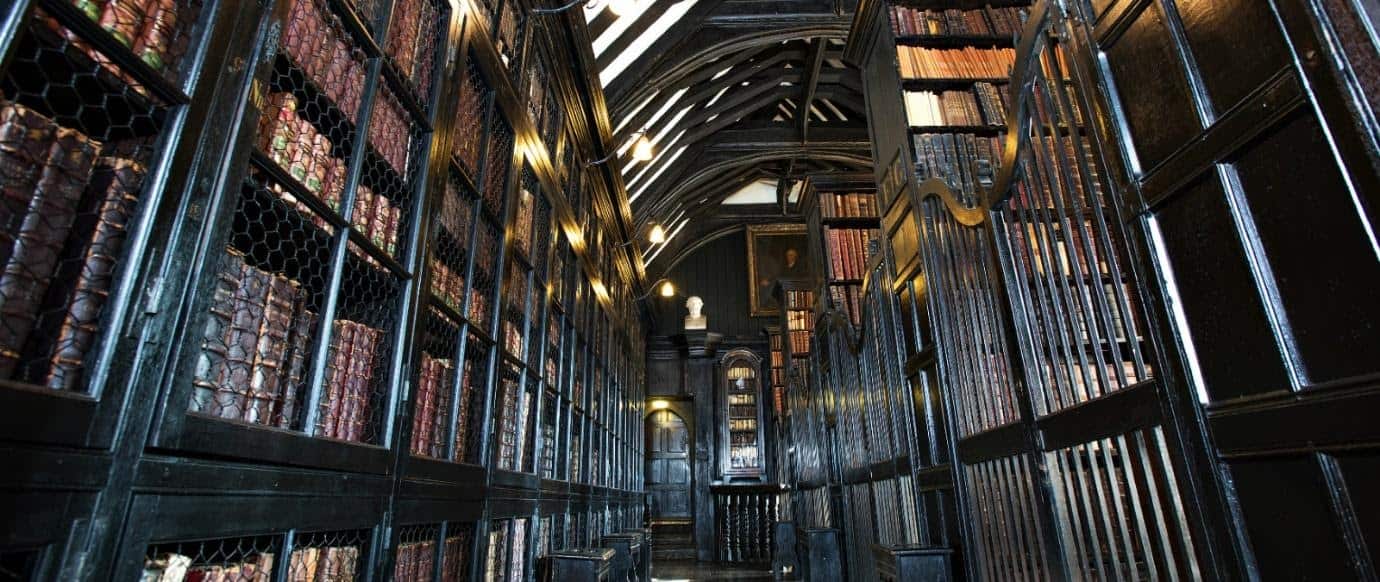
Chetham’s Library, in the heart of Manchester’s Medieval Quarter, is the oldest free public reference library in the United Kingdom. A former hospital, it is a beautiful sandstone building dating from 1421, originally built to accommodate the priests of Manchester’s Collegiate Church. The library shares its space with Chetham’s School of Music, both of which were opened in honour of Humphrey Chetham in 1653.
Humphrey Chetham (1580 – 1653) was an English textile merchant, financier and philanthropist known for his generous nature. After his trading partnership in textiles with his brother George became immensely successful, Chetham acquired Clayton Hall in Manchester as his place of residence and later bought Turton Tower, a grand manor house in Lancashire.
Chetham refused a knighthood from the crown after they became aware of his vastly accumulating wealth and was harshly fined for declining. Fearful parliament would obtain his money after his death, Chetham decided to donate it to a Charity School, otherwise known as Blue Coat Schools, which encouraged the education of the poorer children in the community. The building later became a hospital, then a Music School and library. Chetham left money specifically to pay for books for the library, famously stating that the library was for the use of scholars and “the sons of honest, industrious and painful parents”, and told the librarian to “require nothing of any many that cometh into the library.”
Home to a Unique Collection
Beginning its accumulation in August 1655, Chetham’s Library is home to an ever-expanding unique collection. It has more than 100,000 volumes of printed books, 60, 000 of which were published before 1851. It has a distinctive compilation of 16th and 17th century printed works, periodicals and journals, local history sources, and broadsides, large one-sided sheets designed for posters, ballads, advertisements, and the announcement of important events.
It has over forty medieval manuscripts, including the 13th century Flores Historiarum of Matthew Paris – a chronicle of the world and English history; a 15th century Aulus Gellius, bound for Matthias Corvinus, King of Hungary; and an important compendium of Middle English poetry. Fans of the Gothic tradition may be fascinated by the financial accounts of Horace Walpole, who documented his spending’s on his eccentric and excessive Gothic home Strawberry Hill.
Chetham’s Library also preserves a wide range of ephemeral works: these are printed works intended for one-time use and were not designed for preservation or retainment. Chetham’s Library has preserved the likes of letters, pamphlets, postcards, bookmarks, certificates, trading cards, and invitations.
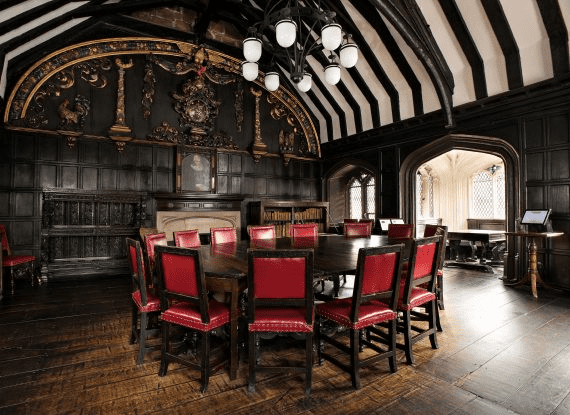
Unlike many libraries, Chetham’s Library also has an extensive fine arts collection, which includes portraits of Rev. John Radcliffe, Robert Thyer, William Whitaker, Elizabeth Leigh and Rev. Francis Robert Raines. One of their prized possessions is an oil canvas painted called An Allegory with Putti and Satyrs attributed to Vincent Seller, a 16th century Flemish Renaissance painter known for his depictions of classical mythology, folklore, and religious stories.
One of its most unusual collections pertains to the Belle Vue Zoological Gardens, which opened in 1836. This exclusive exhibition hall hosted a variety of events including circuses, an amusement park, sporting events such as football and boxing, and a was a popular music venue. Chetham’s Library has preserved thousands of posters promoting Belle Vue, along with programmes and photographs. These are available to browse online; Chetham’s Library was granted £45, 000 in 2014 to digitise its collection and make it more accessible to the public.
This distinctive collection earned the right to be an accredited museum granted under England’s Art Council. It is considered to house a collection of national and international importance.
Famous Faces: Karl Marx and Fredrich Engles
Alongside being the oldest free public reference library in the English-speaking world, Chetham’s Library has also played host to notable historical figures.
In the early 1840s, Manchester was home to German Marxist and Industrialist Fredrich Engles. Employed by his father’s cotton manufacturing firm in nearby Weaste, Engles spent many an afternoon among Chetham’s Library’s extensive collection and his readings led him to observations that informed one of his most famous works, The Condition of the Working Class in England.
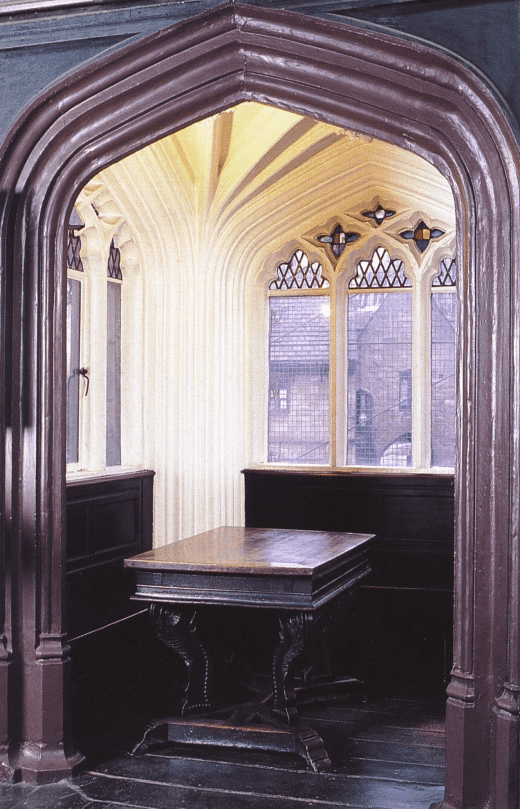
Marx was living in London at the time, but he made an effort to visit his friend in Manchester as much as possible. By 1845 the pair had made it a habit, known to all in the library, of working together at a small table in the Reading Room’s alcove. It remained a beloved and memorable part of their friendship, Engles reflecting on it years later in a letter to Marx: “During the last few days I have again spent a good deal of time sitting at the four-sided desk in the alcove where we sat together twenty-four years ago. I am very fond of the place. The stained-glass window ensures that the weather is always fine there. Old Jones, the Librarian, is still alive but he is very old and no longer active. I have not seen him on this occasion.”
The alcove is available to the public, and although the stained-glass had to be replaced due to a storm in the winter of 1875, it remains unchanged from the early days of Marx and Engles that led to The Communist Manifesto. The volumes they studied are still housed by the Library.
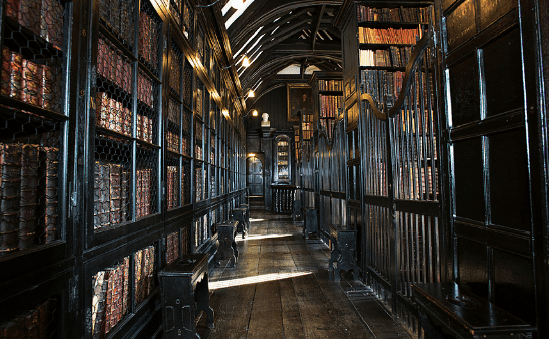
Chetham’s Library is located in Long Millgate, Manchester. Its opening times are Monday to Friday, from 9 am – 12.30 and 1.30 – 4.30. It is closed at the weekends. Admission is free, adhering to Chetham’s original vision, but donations are welcomed. Booking for tours and events can be done online, via telephone, or in person. Full details can be found at Chetham’s and The Stoller Hall. Booking fees are applied accordingly. Enjoy Britain’s oldest free public reference library.

Unveiling the Enigma of Cronk Sumark: A Mesmerising Ancient Celtic Hill Fort with Stunning Views!
Culture Exploration
03/05/2024

Dylan Thomas: Exploring The Life of Wales’ Creative Wordsmith!
Language and Literature
03/05/2024

The Mythical Power of Viking Ravens: Huginn and Muninn!
Mythology and Folklore
03/05/2024

Exploring the Remote Beauty of the magnificent Shetland Island!
Scotland
03/05/2024

Understanding the Meaning and Symbolism of Heraldry Symbols!
History and Heritage
03/05/2024