
Burj Khalifa: The Tallest Building in the World
Updated On: April 15, 2024 by  Ahmed Samir
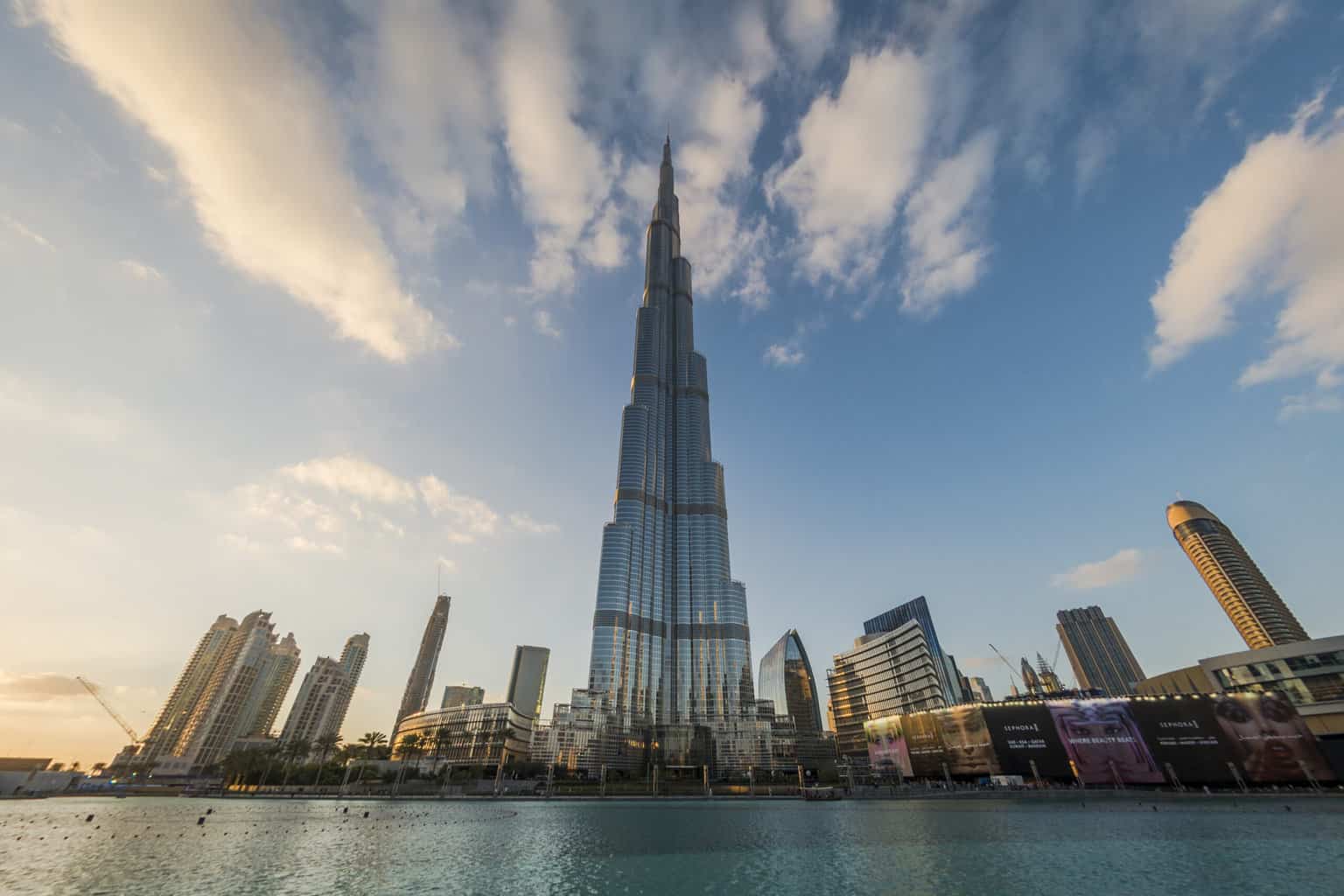
No one would have imagined that we would see a tower this high except in movies, but Burj Khalifa has changed that idea and changed our perspective and concept of the world of architecture.
Burj Khalifa is located in Dubai in the United Arab Emirates and was named after, and in honour of the ruler of the Emirate of Abu Dhabi, Sheikh Khalifa bin Zayed Al Nahyan. It was called Burj Dubai during its construction, and it is noteworthy that its height remained a secret throughout that period until its opening in 2010.
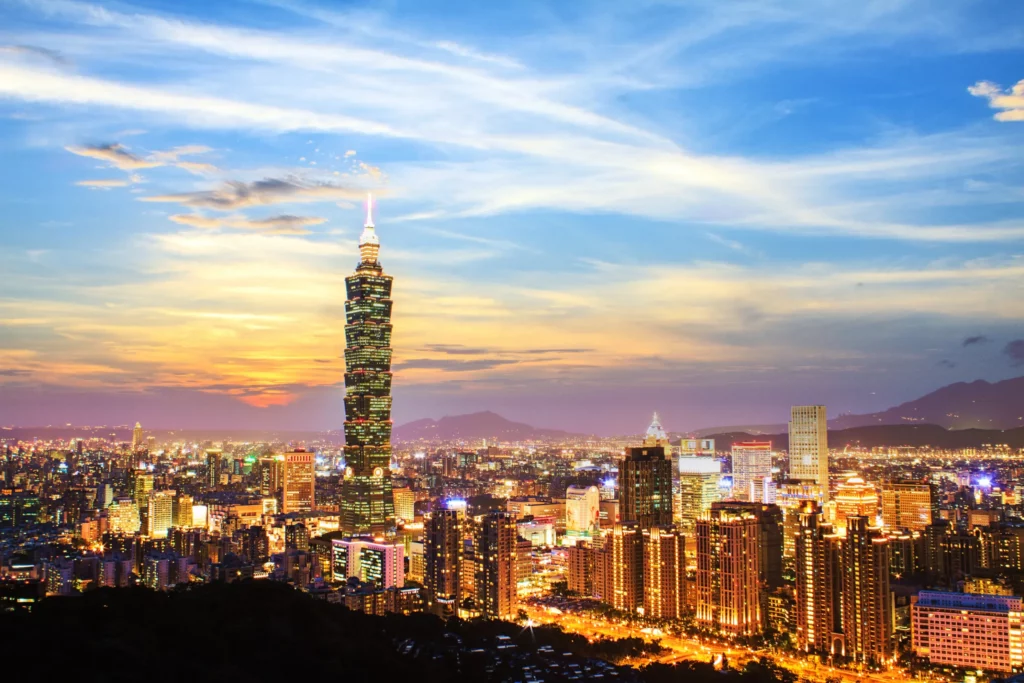
It became the highest building in the world, exceeding the 508 metres tall Taipei Financial Building in Taiwan. Burj Khalifa was built to accommodate a set of commercial, residential, and guesthouse projects.
The Idea of Building Burj Khalifa
The reason behind the consideration of building Burj Khalifa was that the government will is to diversify its economy, which was based mainly on the oil sector, and it was interested in the tourism sector as another economical source.
Dubai made a great effort to complete this vast project. Also, Emaar Properties took over the construction process with the help of other companies. The number of skilled engineers and technicians who contributed to the project’s construction reached 380 people, who started the construction work on 21 September 2004. The construction of the outer structure of the tower was completed on 1 October 2009.
Design and Construction of Burj Khalifa
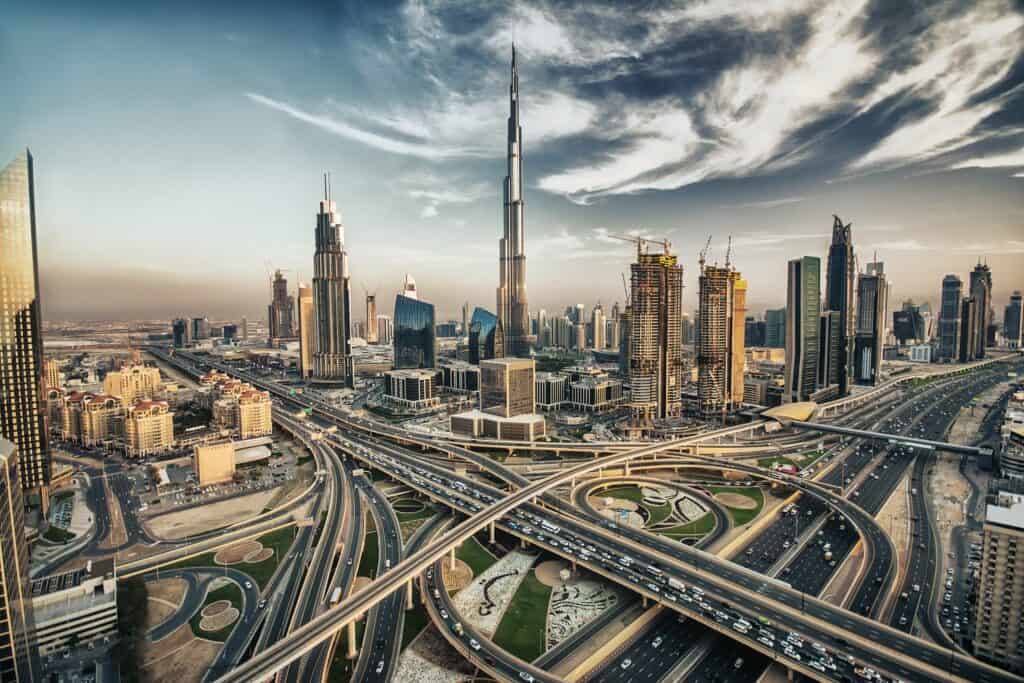
Burj Khalifa was designed by the architecture firm Skidmore, Owings & Merrill. Its head office is located in Chicago and is managed by architect Adrian Smith.
There were about 330,000 m3 of concrete used in the construction of the tower, an amount of steel reinforcement estimated at 39,000 metric tons, 103,000 m2 of glass, in addition to 15,500 m2 of stainless-steel panels, and more than 26,000 glass panels that were used to cover the external facade of the tower.
More than 12,000 professional and specialised workers from more than 100 countries worked on the project and were present daily on the site to complete the construction work of the tower. For the tower’s glazing works, more than 300 workers specialised in this field were relocated from China for this project.
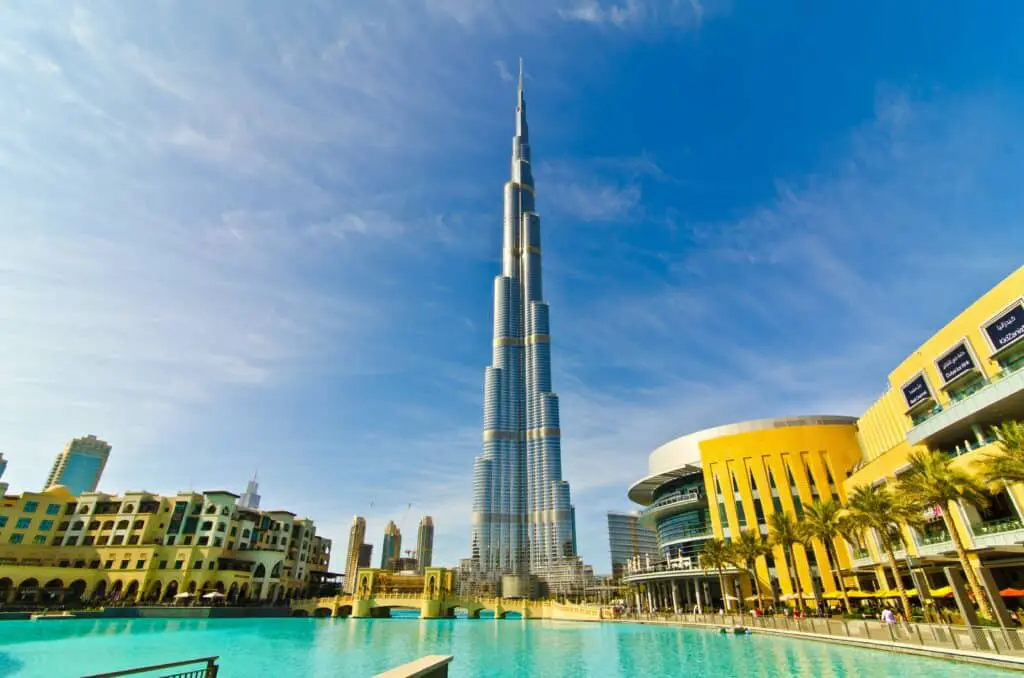
Burj Khalifa takes the shape of the local hymenocallis flower. It consists of three leaves or the shape of the letter Y, which helps reduce the influence of wind force on the tower. The central core is in the form of a hexagon and is supported by a group of wings with concrete columns.
Number of Floors in Burj Khalifa
Burj Khalifa includes 162 floors, which is considered the most significant floors’ number in the world. It is divided into Armani Hotel Dubai on the first floors, then apartments, corporate suites, and restaurants.
Burj Khalifa Interior Design
The interior design and construction of the Burj Khalifa building consisted of glass, wood, stainless steel, polished dark stones, silver and stone floors, stucco walls, and handcrafted carpets. It is divided into different facilities including:
The luxury apartments section, which is divided into 900 apartments. They are located on floors from the 19th to the 37th, the 43rd to the 72nd, and the 76th to the 108th.
The Armani Hotel Dubai includes 160 rooms, spread from the 1st to the 39th floors, and besides that, there are 144 suites.
Sky Lobby facilities, they are located on the 123rd, 43rd, and 76th floors, where you can find Jacuzzis, fitness facilities, and swimming pools.
Also, the top of the tower, which is the highest reachable section, is on the 124th, 125th, and 148th floors. It has a magnificent view of the city skyline. A Residents Library is included in the tower only for the residents.
Finally, the Atmosphere Restaurant is located on the 122nd floor at the height of 422 m. The restaurant offers you a variety of delicious dishes from different cuisines. Anyone visiting Burj Khalifa will love the place and wish for an extended stay, where they can find all the facilities and entertainment they wish for.
Burj Khalifa Facilities
Many beautiful facilities are located in the area surrounding Burj Khalifa, where visitors can go sightseeing and enjoy the magnificent views. Among the facilities in the Burj Khalifa area are the following:
The Dubai Fountain
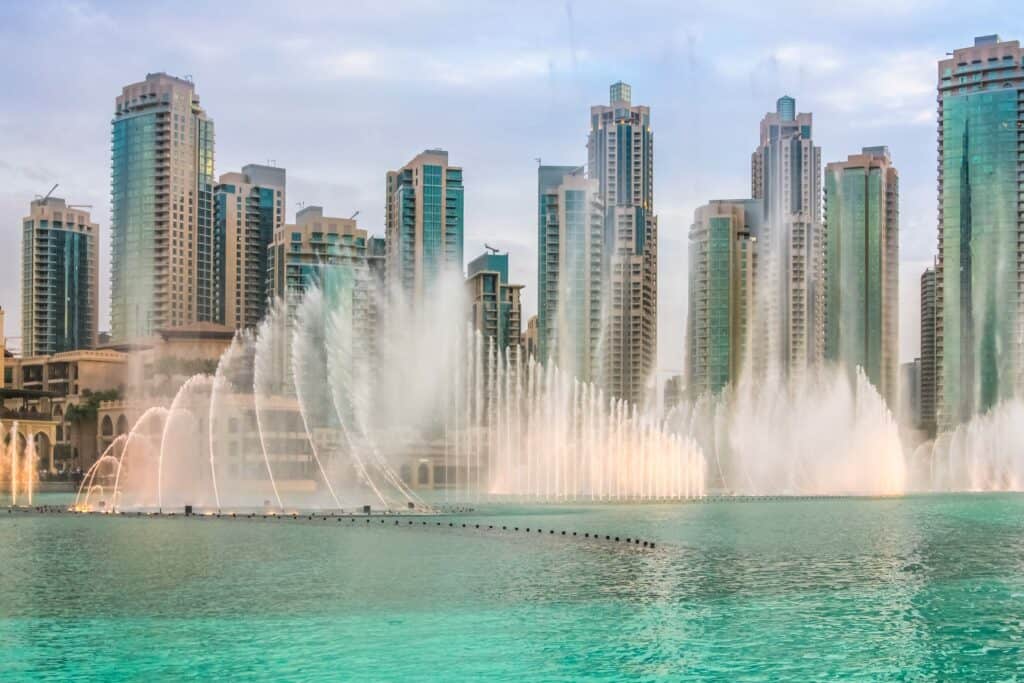
Its construction cost was about 800 million AED, it is equipped with 6,600 lights and 50 coloured devices, and when you pay a visit, you will see that it shoots water 150 metres into the air going with the music rhythm. It is also considered the second-largest fountain in the world.
Burj Khalifa Park
It is located on an open space of 11 hectares; it was built in the form of a desert Hymenocallis flower, and in the middle, there is a water room that you can use for swimming as you enjoy the water jet fountains.
The External Observation Platform
It is located on the 124th floor and contains an electronic telescope through which visitors can view the scenic views directly.
Best time to Visit Burj Khalifa
The best time to visit Dubai, specifically Burj Khalifa, is between October and April, as it is too hot in summer. That’s why tourists prefer to visit Dubai during the winter months.
Tourists can also choose to visit Dubai in summer when it’s not as crowded as it is in winter, but they will suffer scorching weather. Whenever you visit Dubai, there are many other attractions that you can enjoy, such as the Mall of the Emirates, Palm Islands, Dubai City Centre, and the Gold and Diamond Complex.
New Year’s Eve celebrations at Burj Khalifa
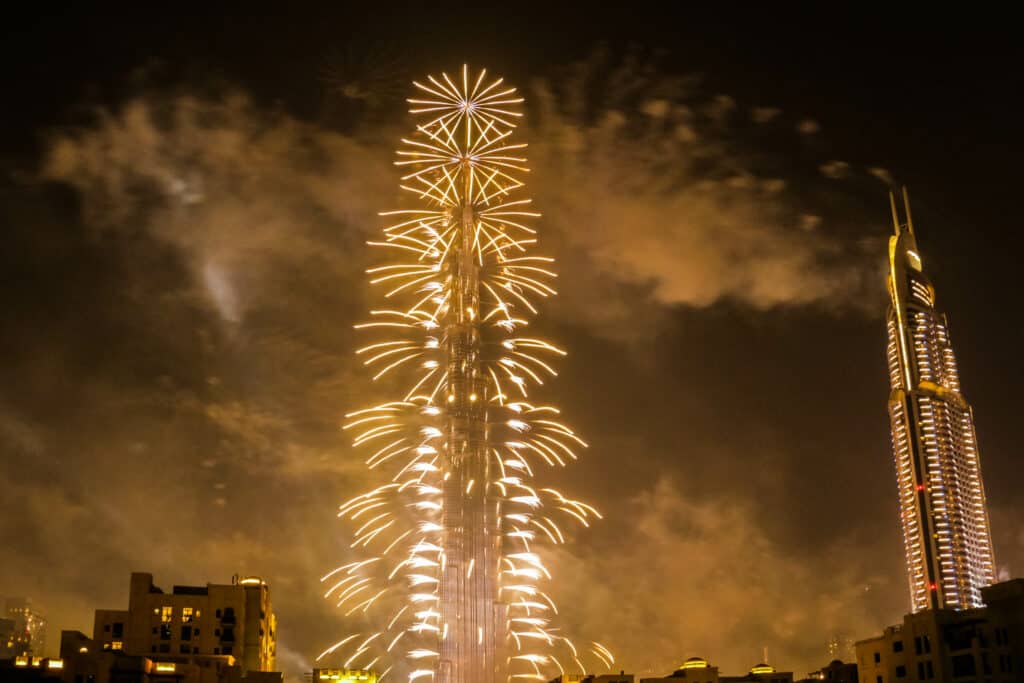
Every year, Burj Khalifa presents one of the most magnificent performances during the New Year celebrations. Citizens and residents from inside and outside the United Arab Emirates wait eagerly for fireworks displays. That forms enchanting views of the sky in multiple colours, with creative laser lights show that starts before the countdown begins on Burj Khalifa ushering in the New Year.
More Information about Burj Khalifa
- The number of apartments in the tower is 1,044 apartments.
- Burj Khalifa consumes about 946,000 litres of water per day.
- Electricity consumption is maximised by lighting approximately 500,000 lamps simultaneously.
- The tower has 3,000 underground parking spaces.
- The tower contains 54 electric elevators with a speed of up to 65 kilometres per hour.
- The cost of building the Burj Khalifa was about 1.5 billion dollars as part of Dubai’s 20-billion-dollar redevelopment programme.
- 500,000 tons is the weight of the tower when it is empty.
- 5,500 kg load weight accommodated by the central service elevator in the building.
Burj Khalifa Awards
Burj Khalifa has received many important awards, such as:
- Best Tall Building Award in the Middle East and Africa in June 2010.
- Best Project Award in the Middle East on 28 September 2010.
- Arab Achievement Award 2010.
- Excellence in Engineering Award for Heating and Refrigeration Engineers from the American Society.
- Emporis Skyscraper Award Silver Medal.
- Global Voices Sculpture Merit Award 2012.
- Chicago Interior Architecture Award 2011.
- Commercial Structure Award from the Institute of Structural Engineers.
- 2010 International Architecture Prise.
2 commments on “Burj Khalifa: The Tallest Building in the World”

A Walk in Ireland Guide: Best Trails, Routes, and Tips
Ireland
26/04/2024
An Ultimate Guide to 6 of the Finest Castle Tours in England
England
26/04/2024
Unveiling the Most Terrifying Haunted Tours in Scotland
Scotland
25/04/2024

7 Top Amusement Parks in England for an Unforgettable Adventure
England
25/04/2024
Miami Tourism Statistics: A Comprehensive Overview of Visitor Numbers and Revenue
Travel Statistics
25/04/2024
Awesome, Great information thanks for sharing. I am very happy to read this blog.
Thank you for the kind feedback.
So glad you enjoyed our blog on the Burj Khalifa 🙂