


Your Travel Guide to the Wonderful City of Rio De Janeiro
Updated On: November 08, 2023 by  Esraa Mahmoud
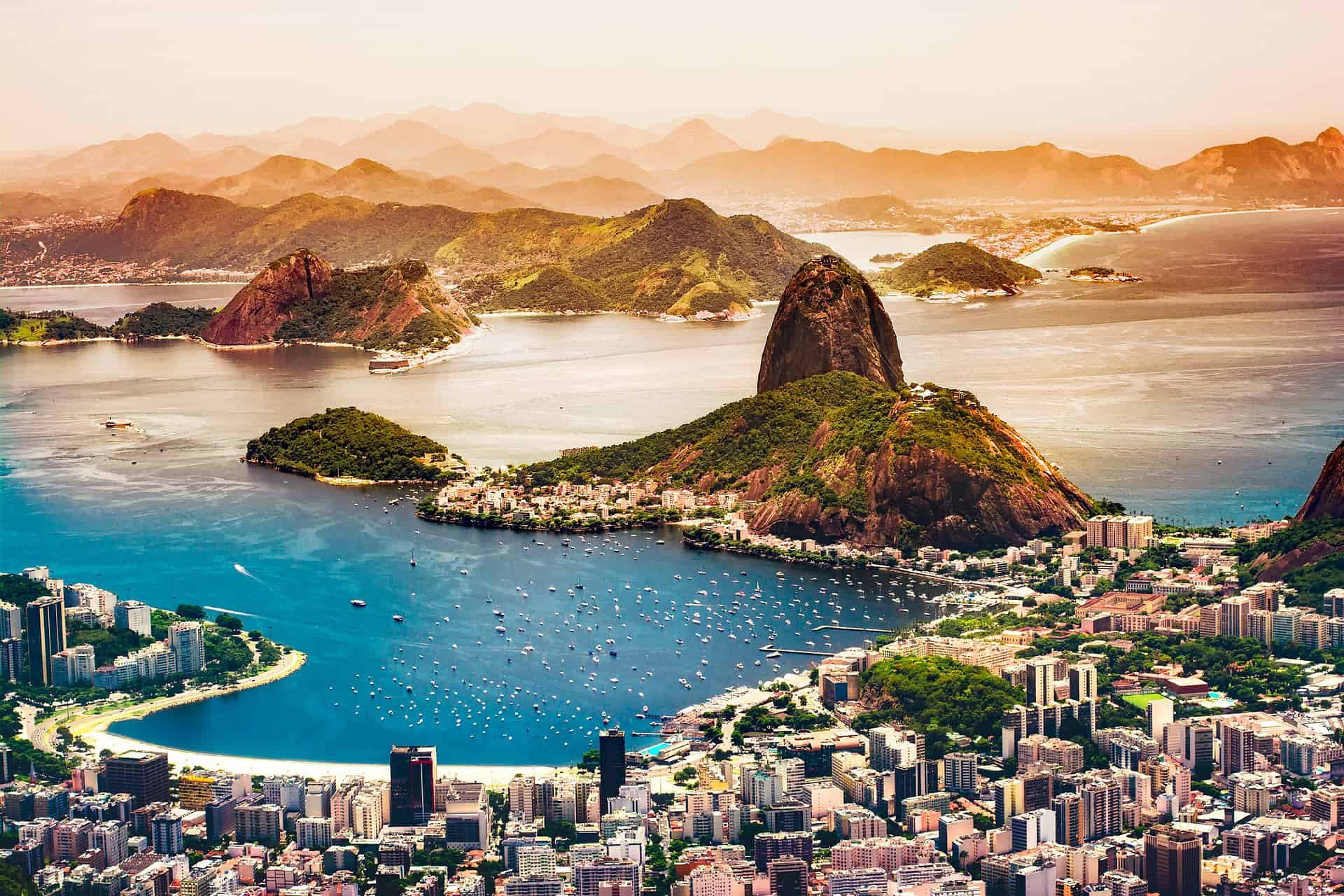
You know those cities that when someone mentions their names, you instantly think of a particular image that got stuck in your mind, even if you didn’t go there…. Well, Rio de Janeiro is one of those cities. We bet this happened when you first read its name in the title… didn’t it?! Perhaps Cristo Redentore, which dominates the city from the top of Corcovado, or Sugarloaf Mountain with its cable car.
Wide beaches and green mountains, subtropical forests and urban life, colonial neighbourhoods and modern buildings, samba rhythms at night, and spectacular soccer matches. Welcome to Rio de Janeiro, or simply Rio, the Cidade Maravilhosa (the wonderful city), where the day is anything but boring.
When it comes to tourist attractions, Rio de Janeiro plays in a league of its own! There is no shortage of attractions in the city; Rio de Janeiro has been able to renew itself over the centuries, preserving its strong identity and managing to harmonize the modern buildings with the historical ones, creating incomparable panoramas.
With so much to do and so many great places you don’t want to miss, here are the top things to do and places to visit while in Rio!
Sugarloaf
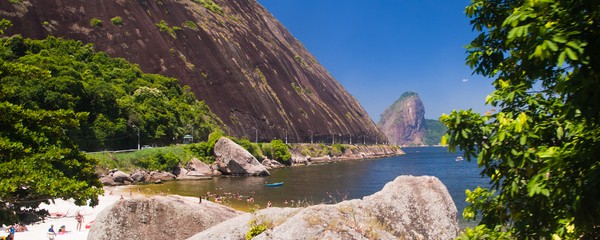
A visit to Rio de Janeiro is not complete without seeing Sugarloaf Mountain or Pão de Açúcar, as the locals call it. The mountain, which is one of the symbols of Brazil worldwide, stretches from the Bay of Guanabara to 396 meters above sea level before diving into the Atlantic Ocean in a beautiful play of colours between green and blue.
On 1 March 1565, Estacio de Sá founded the city of Rio de Janeiro at the foot of this mountain and built a defensive structure. Since then, the mountain has been climbed by numerous people, especially since 1912, when the cable car was activated to reach the top.
The view from Sugarloaf Mountain is spectacular, stretching from the city to the beaches, and it is especially romantic at sunset. But if you are not particularly romantic, you can also go hiking, climbing, or fishing at the foot of the mountain.
The best way to reach the famous mountain is, of course, by cable car; the ride is an attraction on its own. The cable car goes up in two stages. Every 20 minutes, a cable car departs from Urca, one of Rio’s most charming neighbourhoods. Then, the ride stops at Morro da Urca, from where a second cable car takes you up to Sugar Loaf Mountain.
At the height of 396 meters, you will have the BEST view of Rio. On one side to the Copacabana and on the other side to the Guanabara Bay. You won’t get enough of the beautiful view…It is simply brilliant!
It’s best to visit Sugarloaf sometime in the late afternoon. Then you can enjoy the sunset from the top and watch the city slowly transform into a sparkling and glittering sea of lights as darkness falls. Such a beautiful experience!
Urca Hill
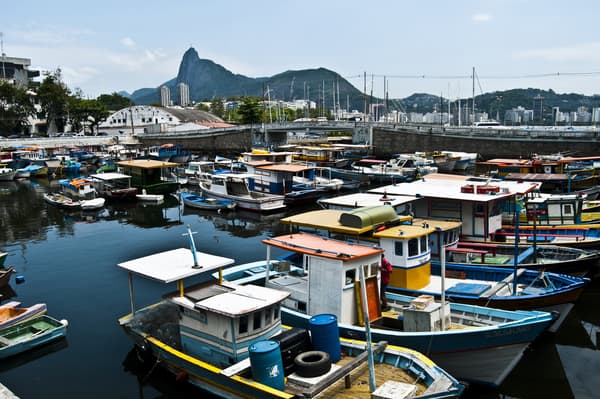
Rio de Janeiro is a city where the mountains and hills are not just the setting but are integrated into the urban fabric of the place. The hill of Urca, with its 220 meters above sea level, is considered by many as only the station where you change from the bus to the cable car to get to Sugarloaf Mountain. However, you can still enjoy a magnificent view from Urca
The hill is just the perfect place to enjoy a nice walk and take some great photos. It is a walk of about forty minutes, but trust us, it is absolutely worth it. Along the way, there is a pleasant surprise; you can even meet monkeys…How cool is that!
Corcovado
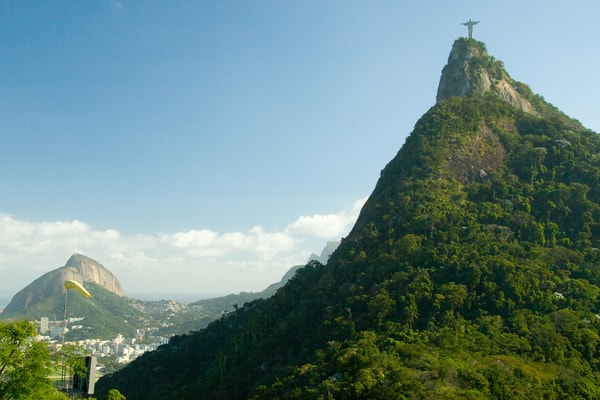
The city of Rio de Janeiro carries in its heart the Corcovado or Monte Cristo, a 710-meter-high mountain located in the Tijuca National Park. Corcovado, which means hunchback in Portuguese, houses the statue of Christ the Redeemer on its top, and its image is famous all over the world.
You can climb Corcovado, a granite mountain, on its 54 trails, but if you are not so sporty, you can reach the top by the Corcovado Track Railway, a railroad with electric trains that can carry about 300 people per hour. The ride to the top is a fun one!
At the top, you can enjoy a unique view of the city of Rio de Janeiro, Sugarloaf Mountain, Rodrigo de Freitas Lake, Maracanã Stadium, and the beaches of Copacabana and Ipanema. Being a true symbol of Brazilian culture, Corcovado has featured many celebrity visitors such as Albert Einstein, Pope John Paul II, and Princess Diana of England.
Tip: You should go to the Corcovado as early as possible. It is best to be there around eight o’clock in the morning to be able to take tons of pictures before it gets crowded!
In the Presence of the Majestic Christ the Redeemer
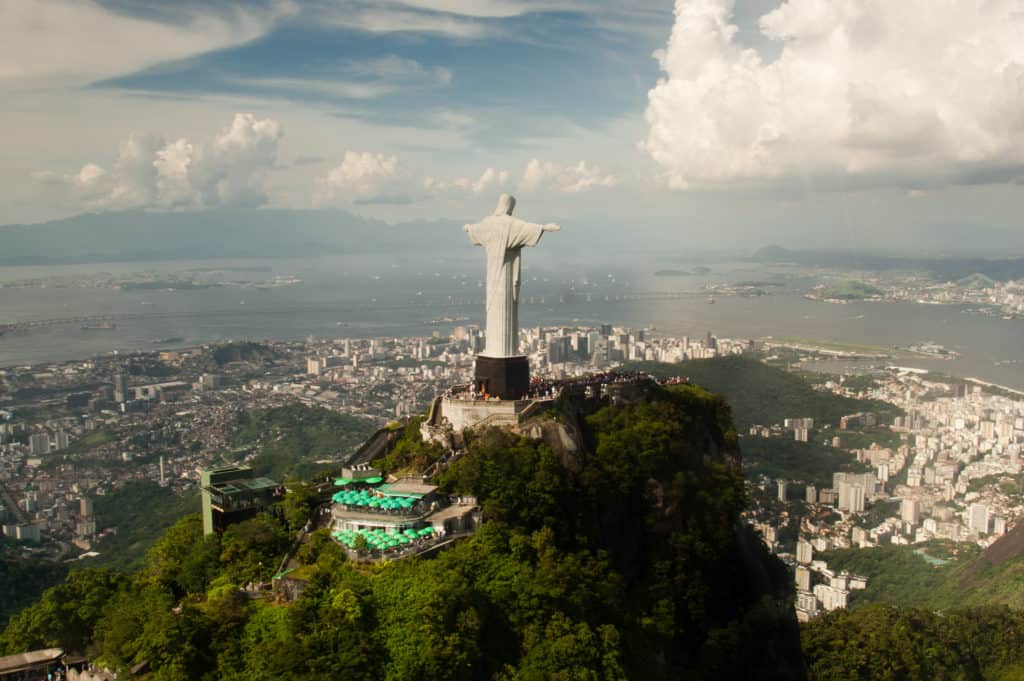
One of the new seven wonders of the world will be before your eyes: the statue of Christ the Redeemer, or Cristo Redentor as the locals call it, which stands on Corcovado. The figure was designed as a symbol of Christianity in the world, and today it is considered the symbol of independence of Brazil.
Thirty meters high, built on a base 8 meters high, and with open arms 28 meters long in perfect Art Deco style, the statue was built between 1922 and 1931 in concrete and soapstone.
The statue, designed by the French sculptor Paul Landowski, is today equipped with three panoramic elevators and eight escalators that allow visitors to see the 222 steps that covered the distance between the end of the railroad line and the statue itself. The sight of the gigantic statue is a beauty to behold; next to it, you would feel quite small!
Rio Botanical Garden
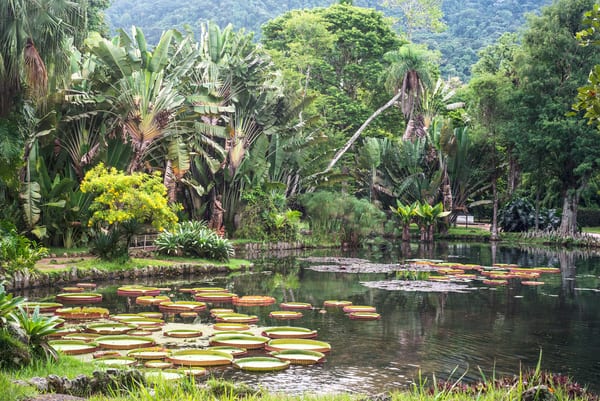
A walk to the Rio de Janeiro Botanical Garden will leave you dreaming. The park at the foot of Corcovado welcomes you with an avenue of palm trees before opening up with all its 137 hectares.
The Botanical Garden was founded in 1808 by King John VI of Portugal with the intention of acclimatizing some imported plants, but since 1822 it has been open to the public as a park. The park is the home of 11,000 species of plants.
The Botanical Garden is also inhabited by hundreds of species of birds that find refuge in its branches. Your visit to the Botanical Garden will also be enriched by the historical buildings in the area, such as the Casa dos Piloes or the Casa de Los Cedros and the entrance to the Academy of Fine Arts, designed by Grandjean de Montigny.
Santa Teresa
Characterized by small houses and village-like flair, the picturesque neighborhood of Santa Teresa sits on a hill overlooking the city center. In the past, a yellow tram used to run there, and you could just jump on it. Since a tragic accident in which the tram derailed, service has been suspended.
Santa Teresa has rough edges, but that is precisely like the residents living there. Many artists have settled there and restored the old buildings. Another sight in Santa Teresa is the colorful tile staircase of Selarón.
In the Santa Theresa district, the Chilean artist has decorated 215 steps with 2000 tiles from about 60 countries. According to National Geographic, it is the world’s largest sculptural work of art from the hand of a single individual. However, it would be best if you avoided the area in the evening.
The Santa Teresa district is a fantastic place to take a leisurely stroll where you can admire the extraordinary architecture and take a short break in one of the cute cafés and restaurants.
Parque das Ruínas
The Parque das Ruìnas Municipal Cultural Center is a public park located in the Santa Teresa neighborhood of Rio de Janeiro, offering an incomparable view of Guanabara Bay and the city center from its interior.
It was the residence of art patron Laurinda Santos Lobo, a wealthy heiress with a prestigious status quo in society who lived between Rio de Janeiro and Paris. Laurinda loved to surround herself with intellectuals and artists of the early 20th century. The villa’s park still has a strong connection to culture and often hosts open-air concerts and an art gallery. We highly recommend attending one of these events while in the area.
In 1997, the remains of the original building were transformed into a cultural center by architect Ernani Freire, who managed to preserve the structure of the original buildings and give them a contemporary look. The center is an architectural project that will delight you as much as the panoramic view!
Maracanã Stadium
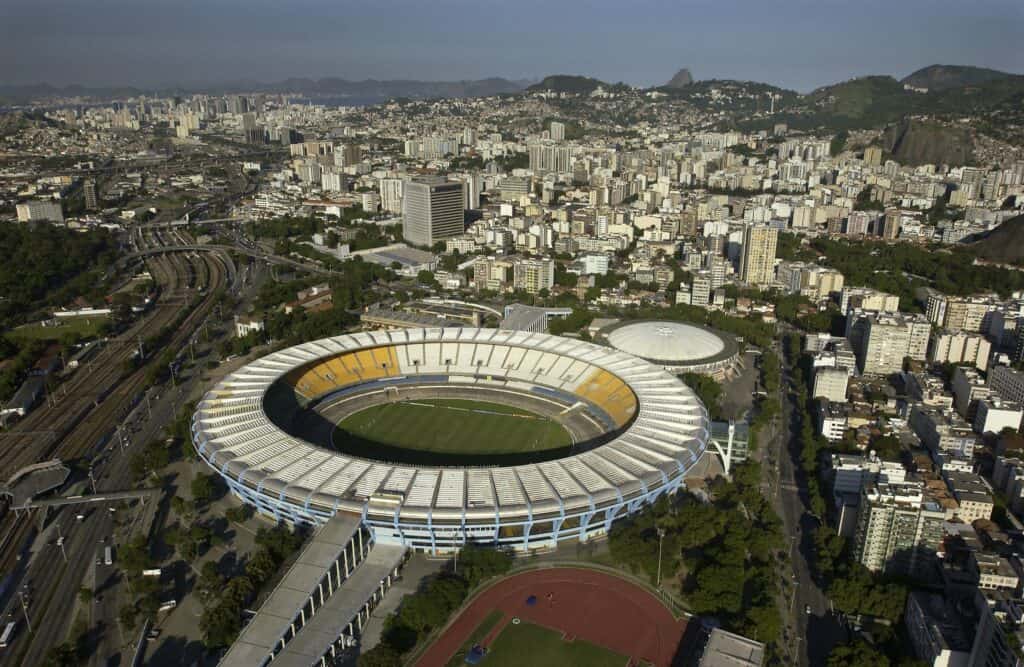
Officially it is called Estádio Jornalista Mário Filho, but football fans around the world know it as Maracanã, and it is the stadium par excellence in Brazil. This is the same place that hosted the World Cup and other world-class sporting events on several occasions.
Built with the intention of hosting the first post-war World Cup, the stadium was designed by engineer Paulo Pinheiro Guedes. In 1964, it was named after journalist Mário Filho. The nickname Maracanã, which means parrot in the indigenous language of Tupi, comes from the river that flows in the neighborhood, which has always been inhabited by a unique species of parrots.
With its circular layout, its natural lawn, and a 3-meter-deep moat surrounding it, the Maracanã is simply impressive. Inside, you can also visit the museum dedicated to the late football player Manoel Francisco dos Santos, the Garrincha. Make sure to pay a visit to Maracanã Stadium and see the place where the legendary football player Pelé scored his thousandth goal.
Tijuca Forest National Park
The Tijuca Forest is known today as the tropical forest that characterizes Rio de Janeiro. It is one of the largest urban forests in the world, along with Johannesburg and Singapore.
The forest shares its name with the neighborhoods of Tijuca and Barra da Tijuca. The Tijuca Forests are located about 15 kilometers outside the city center of Rio de Janeiro and are easily accessible by bus.
Since 1961, the Tijuca Forest has been declared a national park. Inside Tijuca Forest National Park, you will find the sculpture of Christ the Redeemer, Corcovado Mountain, and the Mayrink Chapel. The forest is also home to hundreds of plant and animal species, some of which are endangered.
Mayrink Chapel
At 460 meters above sea level, in the Tijuca Forest National Park, there is a pink building that seems to come out of a children’s storybook…. It is the Mayrink Chapel.
The story of the Mayrink Chapel begins in 1850, when Viscount de Souto, an influential Brazilian banker, bought the farm of Boa Vista, which belonged to the estate of Count Gestas. Inside the estate was a small Tuscan palace with columns, from which a chapel was built in honor of Our Lady of Bethlehem.
When the banker went bankrupt in 1864, the farm had to be sold, and it passed from hand to hand until it became the property of Alderman Mayrink, from whom it took its name. In 1897, it was expropriated to become part of the Tijuca National Park, but the chapel was not demolished.
The residents of Boa Vista decorated the chapel with works by Candido Portinari, while landscape architect Roberto Burle Marx was responsible for the design of the gardens surrounding it. Mayrink Chapel is not like any other chapel that you have seen before!
Paineiras Street
Paineiras street or Estrada das Paineiras in Rio de Janeiro is not your typical city street where you go shopping or other attractions; it is a street in the middle of greenery that will take you to the world of wonders of Brazilian nature.
While in Paineiras street, there is so much you can do; you can climb up to Corcovado to reach the statue of Christ the Redeemer on foot or by bike, you can take advantage of the many rest areas where you can find water, or you can stop to catch your breath and take some pictures of the splendid landscape.
The narrow and winding Estrada das Paineiras is eight and a half kilometers long, and it is located in the heart of one of the largest urban forests in the country, in the Tijuca National Park.
Afonso Viseu Square
You can choose to drive to the Afonso Viseu Square by jeep if you’re feeling a bit adventurous and enjoy racing through the greenery, or you can get there on foot, along the scenic Paineiras street.
In Rio de Janeiro, Afonso Viseu Square is known by all the athletes who like to meet there before going to the Tijuca Forest National Park to train.
In the center of the square is a large granite fountain that was built in 1848 by the famous French architect Auguste Henri Victor Grandjean Montigny, who greatly influenced the development of architecture in Brazil. Originally designed for Onze de Junho Square, the fountain has found its final location in the center of Afonso Viseu Square.
The Afonso Viseu square will delight you with its simplicity and magnificent views; make sure not to miss it.
Copacabana
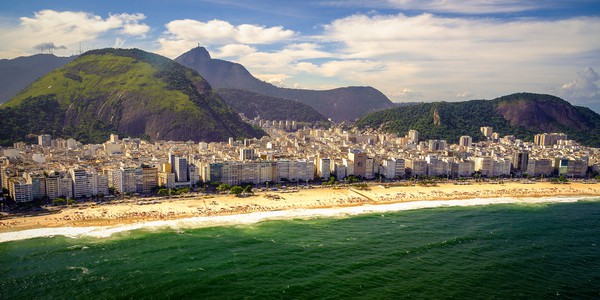
Copacabana is synonymous with beach and fun. With its 6 kilometers of sandy beach, it is easy to understand why this place south of Rio de Janeiro has become world-famous. Full of hotels, restaurants, bars, and nightclubs, Copacabana is a paradise for those who are looking to have fun dancing all night or drinking cocktails on the beach.
But in Copacabana, you can also do sports by the sea. Copacabana beach is equipped for all sports and has often hosted significant events such as the FIFA Beach Soccer World Cup or the men’s and women’s Olympic Games beach volleyball competitions.
Since 1981 Copacabana has been an independent barrio of the city of Rio de Janeiro, but until the eighteenth century, it was an area that stood outside the city and was called Sacopenapa. The name was changed after the construction of a votive chapel with a copy of the Virgin of Copacabana, which is very revered in South America.
Pack your swimsuit or buy one from there and make sure to go swimming and dancing in Copacabana. It would be a waste to go to Rio without spending some days there.
Ipanema Beach
Thanks to the famous Bossa Nova song, Garota de Ipanema (The Girl from Ipanema) by Frank Sinatra & Antônio Carlos Jobim, Ipanema has become quite popular. The neighborhood is famous for its beach, which is equipped for both relaxation and sports on the sand. The 2.6 kilometers of sand is just the right spot to get in the best mood and relax with the Morro Dois Irmaos rock formation in the background.
Put your swimsuit on and lose yourself between the colorful umbrellas, rickety deck chairs, and bodies slowly sizzling in the sun, and just soak up the whole atmosphere. While there, make sure to try the iced acai (a type of mush made from South American acai berries) from the beach vendors with granola, sweet, condensed milk, and peanuts on top. So delicious and healthy!
Beach of Botafogo
Rio de Janeiro has 70 beaches, but one of the most photographed ones in the world is the beach of Botafogo. The beach is 700 meters with a curve that seems to embrace the sea, and in the distance, there is a unique view of Sugarloaf Mountain and the hill of Urca. From there, you can also see the imposing Maracanã Stadium, and on clear days you can also see Christ the Redeemer.
Botafogo beach is also very popular among Brazilians, who choose it for sports, walking, or biking on the bike path that connects it to Flamengo Park on one side and goes towards Copacabana on the other. As for shopping lovers, there is a mall right in front of the beach with a rooftop terrace that offers a breathtaking view of the bay and where concerts also get held.
Museum of Fine Arts
Rio de Janeiro is not only the city of Carnival ; there are also countless museums. The Museu Nacional de Belas Artes is one of Brazil’s most important cultural institutions and the most important museum of Brazilian art, housing mainly paintings and sculptures from the 19th century.
Opened in 1938 at its current location on Avenida Rio Blanco, the art museum has a long history dating back to 1904, when the King of Portugal at the time, John VI, settled in Rio de Janeiro during the invasion of French troops, bringing with him numerous works from the royal collection. Upon his return to Portugal, the King decided to leave the works in Rio de Janeiro, where they remained at the center of the European art collection displayed in the museum.
The museum is a great chance to discover the rich history of the region and we assure you; you don’t want to miss it.
It could be its breathtaking gardens, or unique historical monuments, or those spectacular beaches; Rio de Janeiro is not like any other place in the world! The city is full of amazing things to do and hidden gems to discover; it would be a shame not to have Rio de Janeiro on your bucket list!

A Walk in Ireland Guide: Best Trails, Routes, and Tips
Ireland
26/04/2024

An Ultimate Guide to 6 of the Finest Castle Tours in England
England
26/04/2024

Unveiling the Most Terrifying Haunted Tours in Scotland
Scotland
25/04/2024

7 Top Amusement Parks in England for an Unforgettable Adventure
England
25/04/2024

Miami Tourism Statistics: A Comprehensive Overview of Visitor Numbers and Revenue
Travel Statistics
25/04/2024