


SS Nomadic, Belfast-The Titanic’s Sister Ship
Updated On: April 07, 2024 by  Noha Nabil
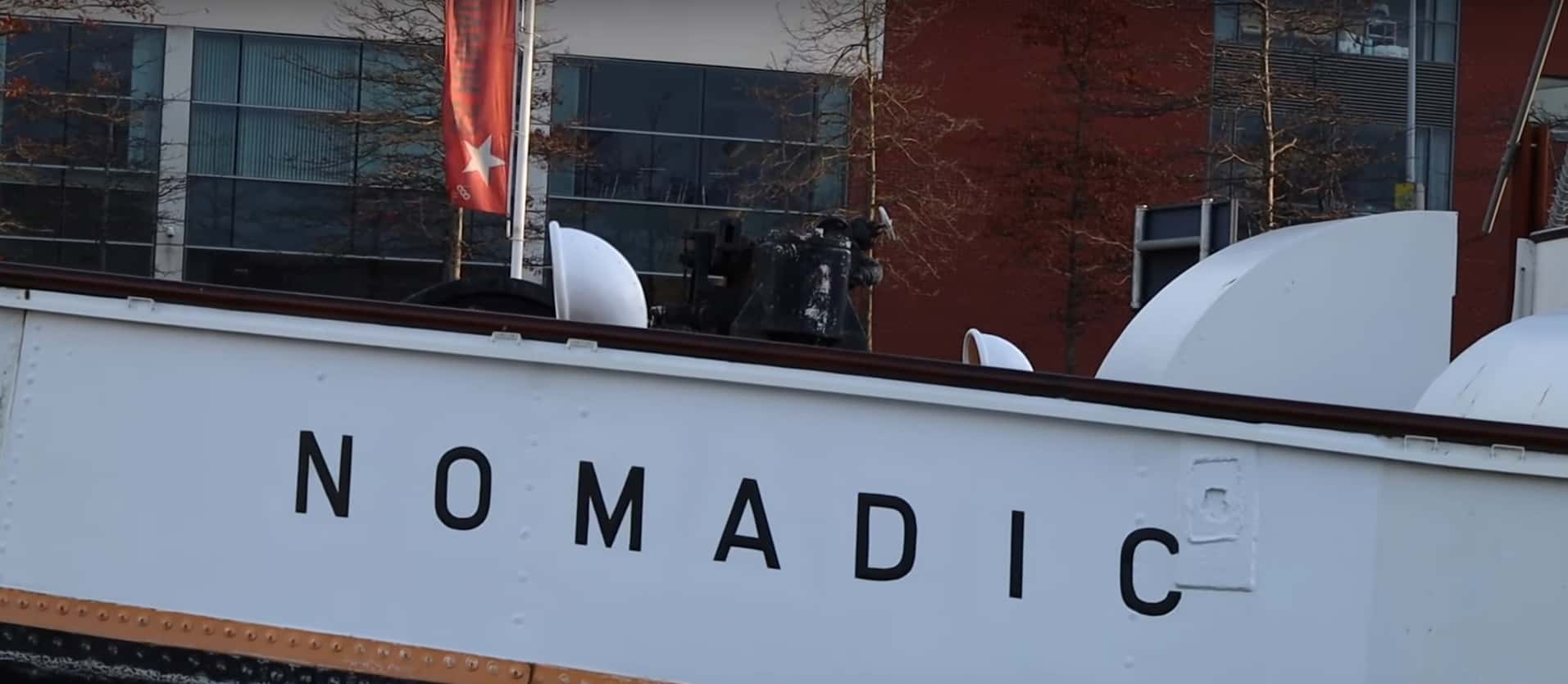
SS Nomadic is the last remaining White Star Line ship. Designed by Thomas Andrews—also the designer of the RMS Titanic—and built by Harland and Wolff in the Belfast shipyards, the SS Nomadic was launched on 25 April 1911 in Belfast. It is now on display in Belfast’s Titanic Quarter. The ship’s original job was to transfer passengers and mail to and from RMS Titanic and RMS Olympic.
History and Construction of the SS Nomadic
SS Nomadic was constructed at yard 422 in Belfast, next to the RMS Olympic and RMS Titanic. The 1,273-ton ship is 230 feet long overall and 37 feet wide. It’s made up of a complete steel frame, contains four decks in total, and can carry up to 1,000 passengers. It was one-quarter the size of the Titanic.
The vessel was divided into first and second class areas, as first-class passengers could enjoy the lower and upper decks and the open deck on the bridge and flying bridge decks.
Voyages of the SS Nomadic
On 10 April 1912, the vessel took its maiden voyage, transporting 274 passengers to the RMS Titanic, including New York millionaire John Jacob Astor IV, American journalist and United States Army officer Archibald Butt, Denver millionairess Margaret Brown, whose interesting story we’ll get into later on, as well as mining tycoon Benjamin Guggenheim.
During WWI, the French government requisitioned the SS Nomadic to transport American troops to and from the harbour in Brest, France.
In the 1930s, the SS Nomadic was sold to the Société Cherbourgeoise de Sauvetage et de Remorquage and renamed Ingenieur Minard. During WWII, the ship took part in the evacuation of Cherbourg. She finally retired from duty on 4 November 1968.
Five years later, Yvon Vincent bought the vessel and converted it into a floating restaurant, taking it to the Seine in Paris. In 2002, the Paris harbour authorities seized the Nomadic due to the company’s financial difficulties.
Back Home
On 26 January 2006, the Northern Ireland government Department for Social Development bought the vessel at an auction for an estimated €250,001.
SS Nomadic returned to Belfast on 12 July 2006 and arrived close to where she was built on 18 July 2006.
The ship is now incorporated into the Titanic Belfast visitor attraction.
Restoration of SS Nomadic
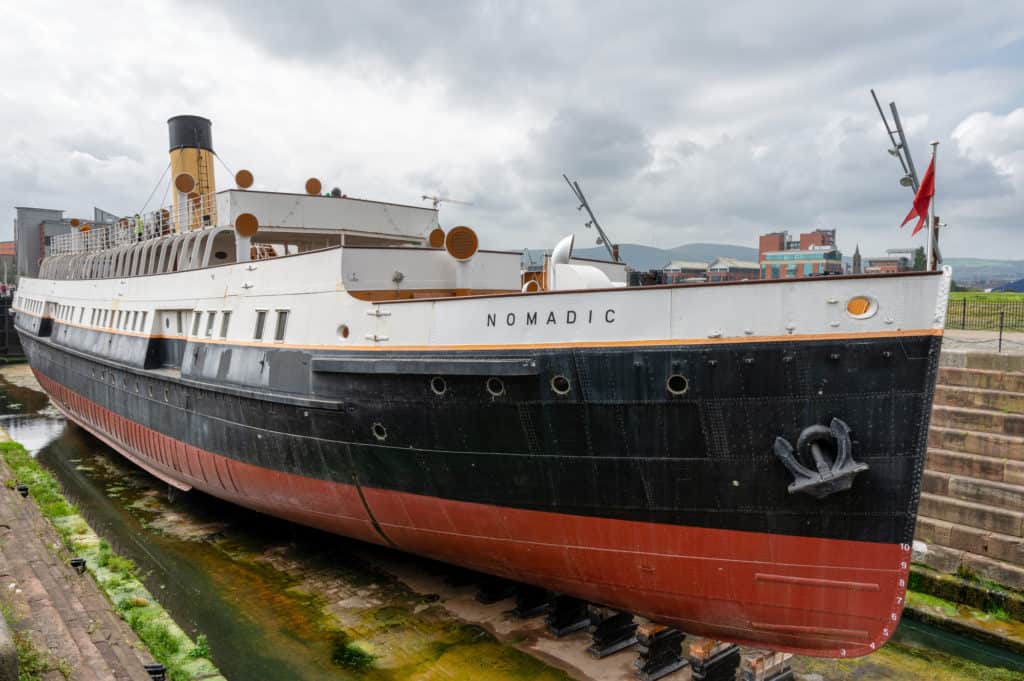
Major benefactors, including the EU Peace III fund, UK Heritage Lottery fund, Belfast City Council, Ulster Garden Villages, and Northern Ireland Tourist Board, contributed to raising the funds (£7 million) required for restoration.
By late 2009, the significant conservation and restoration work began on the vessel, and Harland and Wolff, the ship’s original builders, were in charge of the repairs.
Role in the Titanic Story
While the Titanic’s fate is well-documented, the Nomadic’s role in the tragedy is less widely known. As the Titanic prepared for its maiden voyage from Southampton in April 1912, the Nomadic played a crucial role in facilitating the embarkation of passengers and supplies. Docked alongside its sister ship in Cherbourg, France, the Nomadic shuttled passengers from shore to the Titanic’s gangway, ensuring a seamless boarding process.
However, during the Titanic disaster itself, the Nomadic proved its worth. Following the tragic sinking, the Carpathia, another liner in the vicinity, rescued survivors from lifeboats and brought them to the safety of its decks. Yet, with limited capacity to accommodate the hundreds of survivors, the Carpathia’s crew faced a daunting task.
In a remarkable display of seamanship and compassion, the crew of the Nomadic, under the command of Captain Smith, raced to the scene to assist in the rescue efforts. Over several hours, the Nomadic ferried survivors from the lifeboats to the Carpathia, providing much-needed relief and comfort to those who had endured the horrors of the sinking.
Legacy and Cultural Significance
The SS Nomadic’s story is more than a tale of a single ship; it is a testament to the enduring legacy of maritime heritage and the power of preservation to safeguard our collective past. As the last remaining vessel of the White Star Line, the Nomadic serves as a poignant reminder of an era when ocean liners ruled the seas, and travel was synonymous with adventure and elegance.
Moreover, the Nomadic’s association with the Titanic ensures its place in popular culture and historical memory. While the Titanic’s tragic fate looms large in the public consciousness, the Nomadic offers a different perspective—a story of resilience, heroism, and the human spirit prevailing in the face of adversity.
In Belfast, the Nomadic stands as a symbol of the city’s rich maritime heritage and its enduring connection to the Titanic story. As a popular tourist attraction and cultural landmark, it attracts visitors from around the world who pay homage to the Titanic and explore the fascinating history of its sister ship.
Modern Day Attraction
After a century-long career, the SS Nomadic is now a historical exhibition. If you visit the Titanic Belfast Exhibition, you can also visit the SS Nomadic. Do not miss the opportunity to walk down the paths of history.
Famous Passengers
The SS Nomadic has had its fair share of renowned passengers from all walks of life. Below is a glimpse into the lives of some people who journeyed on the ship.
Sir Bruce Ismay
Joseph Bruce Ismay was the Chairman and Director of the White Star Line company. He accompanied the Titanic on her maiden voyage to New York and became infamous for deserting the ship while women and children were still on board, earning the nickname of the “Coward of the Titanic.”
The “unsinkable” Molly Brown
A millionaire American socialite and philanthropist, Molly Brown travelled on the SS Nomadic to board the RMS Titanic in April 1912. She survived the disastrous sinking of the Titanic and later became renowned and known as “The Unsinkable Molly Brown” for her efforts to persuade the crew of the lifeboat she had boarded to continue searching the water for survivors.
Marie Curie
The first woman to win the Nobel Prize, Marie Curie was a Polish physicist and chemist who was famous for her radioactivity research. In 1921, she travelled aboard the SS Nomadic from Cherbourg on a fundraising tour of the United States.
Elizabeth Taylor and Richard Burton
World-renowned actress Elizabeth Taylor was one of the world’s most famous film stars, participating in massive productions like Cleopatra.
1964 Elizabeth and her husband, actor Richard Burton, arrived in Cherbourg on the RMS Queen Elizabeth. The SS Nomadic transported them from the liner to the quayside, where local photographers and journalists waited eagerly.
James Cameron and John Landau
No introduction is needed for the director of the iconic film Titanic. James Cameron’s 1997 box office smash hit, produced by Jon Landau, won 11 Oscars. 2012, during a visit to Belfast, Cameron and Landau requested a tour of the SS Nomadic, which was still being restored. A depiction of Nomadic was briefly seen alongside the Titanic in the James Cameron movie.
Tourism
The Titanic Belfast project was initially created to enhance Northern Ireland’s tourism. The building opened in 2012 on the 100th anniversary of the sinking of Titanic.
The Titanic Experience consists of nine galleries, allowing visitors to explore the ocean and discover the truth behind the myths revolving around the Titanic right in its city of origin.
The Nomadic Experience
With four significant decks, walking aboard the SS Nomadic allows you to experience what it was like to be a passenger on your way to the RMS Titanic on her maiden voyage. Feel free to walk around and explore the ship and a take journey through over 100 years of legendary maritime history.
Visit the SS Nomadic for a fantastic experience. Opening times and prices are below.
Nomadic Opening Times
The SS Nomadic has set opening times throughout the year, so it is best to know the times as they change almost monthly. The attraction is also open seven days of a week. Below are the times
- January to March – 11 am – 5 pm
- April to May – 10 am – 6 pm
- June – 10 am – 7 pm
- July to August (Sunday – Thursday) – 10 am – 7 pm
- July to August (Friday – Saturday) – 10 am – 8 pm
- September – 10am – 6pm
- October (Monday – Friday) – 11 am – 5 pm
- October (Saturday – Sunday) – 10 am – 6 pm
- November to December – 11 am – 5 pm
Nomadic Prices
The SS Nomadic offers a range of standard admission prices. They’re as follow:
- Adult – £7
- Child – £5 (Age 5-16)
- Child-Free (4 years or younger)
- Concessions – £5 (Students and Pensioners 60+)
- Family Ticket – £20
- Carer – Free (With Customer who needs assistance)
The Nomadic Today
Today, the SS Nomadic stands proudly on display in the Titanic Quarter of Belfast, just a stone’s throw away from where she was originally constructed over a century ago. Open to the public as a museum ship; visitors can step aboard and explore her meticulously restored interiors, gaining insight into the luxurious travel experience of the early 20th century.
Guided tours offer a glimpse into the Nomadic’s storied past, from her role in ferrying passengers to the Titanic to her service during wartime and beyond. Exhibits and displays showcase artefacts and memorabilia related to her illustrious history, providing a comprehensive overview of her life and legacy.
Conclusion
The SS Nomadic may not have achieved the same fame and notoriety as her sister ship, the Titanic, but her story is no less compelling. From her humble beginnings as a tender for the White Star Line to her vital role in maritime history, the Nomadic has left an indelible mark on the annals of seafaring.
Today, as a lovingly restored museum ship in her hometown of Belfast, the Nomadic is a tangible reminder of a bygone era—when ocean liners ruled the seas, and luxury travel was the epitome of sophistication. Her continued presence is a testament to the skill and craftsmanship of Belfast’s shipbuilders. It ensures that her remarkable story will be preserved for future generations to appreciate and admire.
The concessions ticket only operates during weekdays (Monday to Friday Only)
The SS Nomadic advises booking tickets only. If you wish to visit the SS Nomadic, visit the Titanic Belfast Website.
The Ultimate Guide for London One Day Tours!
England
27/04/2024

Key Insights: Global Medical Tourism Statistics and Market Growth Analysis
Travel Statistics
26/04/2024

The Irish Mafia: A Closer Look at Organised Crime Syndicates
History and Heritage
26/04/2024

The Ultimate Guide to Eating Out in Ireland: Tips and Recommendations
Food and Cuisine
26/04/2024

Plan Your Perfect Trips to Northern Ireland: A Guide to the Best Tours and Vacation Packages!
Northern Ireland
26/04/2024