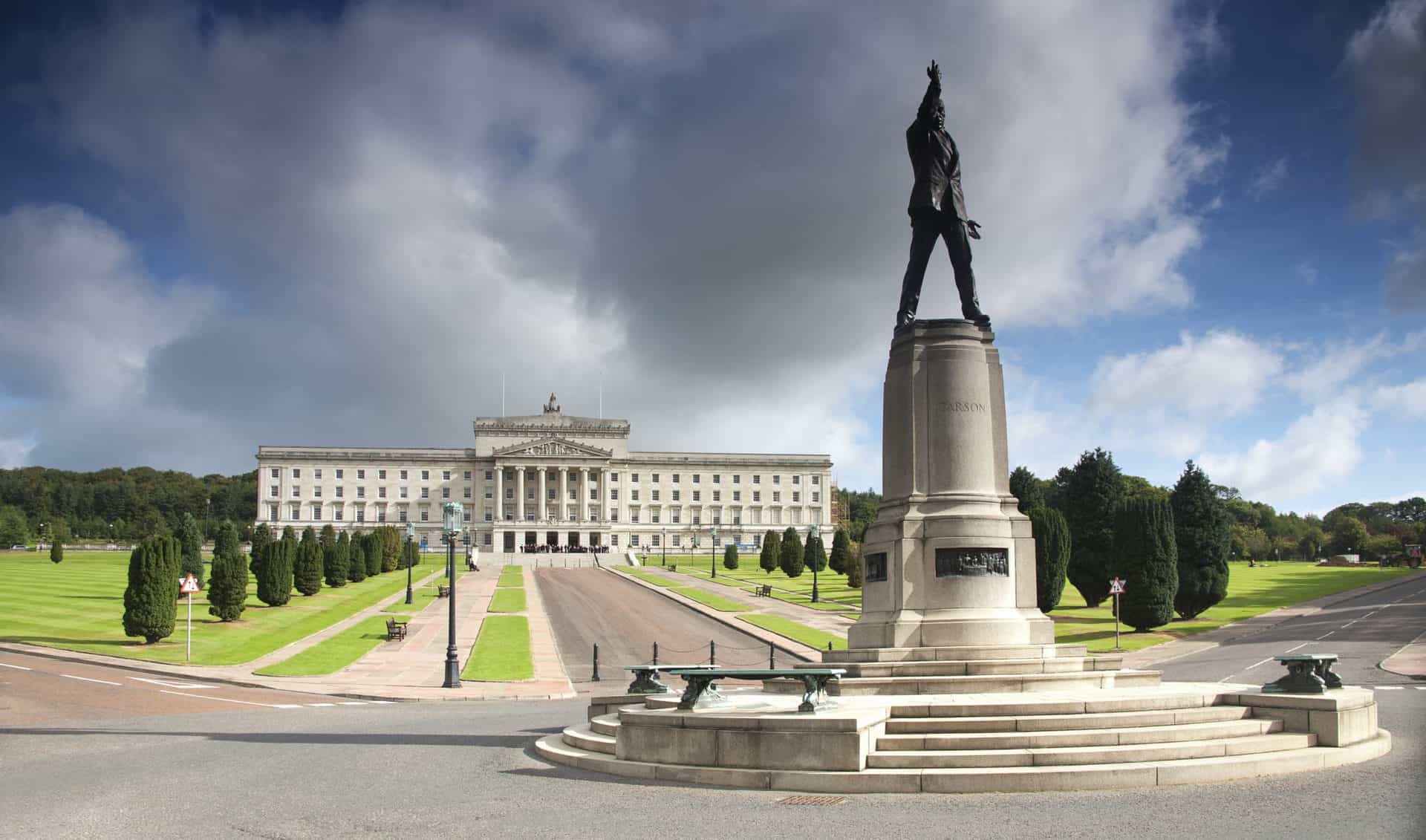


Stormont Estate stands as one of Belfast’s most iconic landmarks and significant visitor attractions, combining political importance with natural beauty, historical significance, and recreational opportunities. Located in the east of Northern Ireland’s capital city, this 224-acre estate encompasses far more than the imposing Parliament Buildings that have become synonymous with the name “Stormont” in contemporary media. For travellers seeking to understand Northern Ireland’s complex political history whilst enjoying beautiful parkland walks, monuments, and family-friendly facilities, Stormont Estate offers an essential Belfast experience that rewards both casual visitors and those wishing to delve deeply into the region’s story.
The Location and Geography of Stormont Estate
Stormont Estate sits approximately five miles east of Belfast city centre on the Upper Newtownards Road (A20), within the townland of Ballymiscaw. The estate occupies a prominent elevated position that affords spectacular panoramic views across Belfast towards Cave Hill and the surrounding countryside. This strategic location places Stormont Estate at the heart of East Belfast, an area that has undergone remarkable transformation in recent years to become a thriving hub of culture, heritage, and community spirit.
The estate’s elevated position was no accident when it was selected as the seat of Northern Ireland’s Parliament in 1921. The commanding views and the symbolic statement of a grand building visible from across Belfast were central to the choice. Today, this same positioning makes Stormont Estate an attractive destination for visitors, offering not just political and historical interest but also some of the finest parkland walks in the Belfast area.
The wider East Belfast context provides additional attractions for travellers staying in the vicinity. The area connects to the famous Titanic Quarter, home to the world-class Titanic Belfast visitor centre, and features the Connswater Community Greenway—a £40 million regeneration project that has created traffic-free walking and cycling routes through East Belfast. C.S. Lewis Square, celebrating Belfast’s most famous literary son with bronze sculptures from The Chronicles of Narnia, sits just a short distance from Stormont Estate along the Upper Newtownards Road.
The History and Origins of Stormont Estate
Understanding the history of Stormont Estate enriches any visit considerably. The estate was established in the early 19th century by Reverend John Cleland, who built Stormont Castle in 1830. Contemporary descriptions characterised it as a “large plain house with very little planting about it,” a far cry from the grand edifice it would become. The name “Stormont” itself carries some mystery—it may derive from “Storm Mount,” the recorded name in 1834, or possibly from a district in Perthshire, Scotland, where the Gaelic origin means “place for crossing the mountain.”
In 1858, the castle underwent a dramatic transformation when architect Thomas Turner redesigned the exterior in the fashionable Scottish Baronial style, adding ancillary buildings including a glasshouse and stables. Terraced gardens and a walled kitchen garden completed the Victorian country estate aesthetic. The Cleland family continued to own Stormont until 1893, when they moved abroad and the property was let to tenants.
The estate’s destiny changed forever in 1921 when the newly formed Parliament of Northern Ireland sought a suitable site for its Parliament Buildings following the partition of Ireland. The Government of Northern Ireland purchased the 224-acre Stormont Estate for approximately £21,000, including 100 acres of valuable woodland. Stormont Castle became the headquarters of the Government of Northern Ireland, whilst plans were drawn up for the magnificent Parliament Buildings that would dominate the landscape.
Construction of Parliament Buildings began in 1928 under the direction of architect Sir Arnold Thornely, working in the Greek classical style. The building was designed with deliberate symbolism: exactly 365 feet wide to represent one foot for every day of the year, with six grand columns at the front and six internal floors symbolising the six counties of Northern Ireland. The Prince of Wales, later King Edward VIII, officially opened Parliament Buildings on 16 November 1932 in a ceremony that attracted 60,000 people to the grounds.
Parliament Buildings: The Centrepiece of Stormont Estate
Parliament Buildings remains the architectural and political heart of Stormont Estate. The imposing white Portland stone structure sits majestically at the end of the mile-long Prince of Wales Avenue—often simply called “The Mile”—lined with 305 red-twigged lime trees planted in the 1920s in a deliberate perspective design to enhance views of the building as visitors approach.
The building houses the Northern Ireland Assembly, the devolved legislature for Northern Ireland, where local policies are debated and decisions made that affect daily life across the region. The interior features the Great Hall, originally called the Central Hall, which boasts a large gold-plated chandelier—a gift from King George V that originally hung in Windsor Castle and had been gifted to him by German Emperor Wilhelm II. The chandelier was removed from Windsor during World War I and found its permanent home at Stormont following the building’s completion.
Two separate chambers were created within Parliament Buildings: the House of Commons with blue benches (green being considered inappropriate given their association with Westminster) and the smaller Senate chamber with red benches. A devastating fire on 2 January 1995, blamed on an electrical fault, destroyed the entire House of Commons chamber. The reconstruction allowed for the creation of a modern, less confrontational chamber design now used by the power-sharing Northern Ireland Assembly, though some critics noted at the time that the fire conveniently facilitated this change from the original adversarial seating arrangement.
Visiting Parliament Buildings
Parliament Buildings welcomes public visitors between 9:00 AM and 4:00 PM, Monday to Friday (excluding public holidays). Free guided tours lasting approximately 45 minutes operate on Wednesday, Thursday, and Friday at 12:00 noon and 2:00 PM. These tours provide fascinating insights into the building’s architecture, history, and the workings of the Northern Ireland Assembly. Booking tickets in advance is essential, particularly during busy periods, though the booking process is straightforward through the Northern Ireland Assembly website.
Even without joining a formal tour, visitors can explore the Great Hall and appreciate the building’s grandeur. The Members’ Dining Room, staffed by award-winning chefs committed to using locally sourced fresh produce, opens to the public Monday through Friday from 12:00 PM to 3:00 PM. Dining at Stormont offers the unique experience of enjoying excellent food in the same space used by Northern Ireland’s political representatives—advance reservations on 028 9052 1041 are necessary.
The building also houses a café and gift shop where visitors can purchase souvenirs and refreshments. Security procedures require visitors to pass through screening points, so allowing extra time for entry is advisable. Parliament Buildings is fully accessible, with wheelchair-friendly ramps at the front, east, and west entrances, a changing places facility on the ground floor, and a braille tour guide available for visually impaired visitors.
Monuments and Memorials Across Stormont Estate
Stormont Estate functions as an open-air museum of Northern Ireland’s political history, with numerous monuments and memorials scattered across the grounds that reward exploration and provide context for understanding the region’s complex past.
The Lord Carson Memorial Statue
The most prominent monument stands on an elevated circular island at the junction of two avenues on the front lawns, facing south along the principal avenue towards the main gates. This 12-foot bronze statue of Sir Edward Carson (1854-1935) stands atop a 13-foot Irish granite plinth, designed by renowned sculptor Leonard Stanford Merrifield and unveiled in 1933 with Lord Carson himself in attendance.
Carson, a prominent Irish lawyer and politician, led the unionist campaign against the Home Rule movement and served as a member of the British War Cabinet during World War I. His animated posture and the monumental scale reflect his pivotal role in Northern Ireland’s history. Four rectangular bronze relief panels corresponding to the cardinal points depict important events from Carson’s political career, whilst four elaborate cast bronze seats with nude figures supporting garlands provide resting spots for visitors. The monument’s inscription reads: “Erected by the Loyalists of Ulster as an expression of their love and admiration.”
Lord Craigavon’s Tomb
On the east side of Parliament Buildings lies the tomb of Viscount Craigavon—James Craig, Northern Ireland’s first Prime Minister who served from 1921 until his death in 1940—and his wife Cecil. Designed by Roland Ingleby Smit and completed in 1942, the solid Portland limestone structure features a stepped top and corners on a shallow plinth base, set on a stepped platform. Craig succeeded Edward Carson as leader of the Ulster Unionist Party and was instrumental in establishing Northern Ireland’s government structures following partition.
The Reconciliation Sculpture
One of the most moving monuments on Stormont Estate is the Reconciliation sculpture by Josefina de Vasconcellos. Originally created in 1977 and entitled “Reunion,” it depicts a man and woman embracing. It was renamed “Reconciliation” upon request of the Peace Studies Department at the university and unveiled under its new name on the artist’s 90th birthday, 26 October 1994.
In 1995, to mark the 50th anniversary of World War II’s end, bronze casts of the sculpture were placed in four locations of international significance: Stormont Estate, Coventry Cathedral, Hiroshima Peace Park in Japan, and later in 1999, the newly rebuilt Reichstag in Berlin as part of the Berlin Wall memorial. This placement links Stormont Estate to a global narrative of conflict and peace, reflecting hopes for reconciliation in Northern Ireland during the peace process years.
The Somme Memorial
The estate features a memorial to the 36th (Ulster) Division and their sacrifice at the Battle of the Somme in 1916. This memorial connects Northern Ireland’s complex relationship with both British and Irish identities, as the battle has particular resonance within unionist communities who commemorate those who fell fighting in the British Army during World War I.
The Gleaner Statue
Created by sculptor John Knox and shown in 1951 as part of the Festival of Britain, The Gleaner statue adds an artistic dimension to the estate’s collection of monuments. Its placement along the woodland walking routes provides an unexpected discovery for visitors exploring the less formal areas of the grounds.
World War II Heritage
Scattered throughout Stormont Estate are fascinating remnants of World War II, including the original barrage balloon anchors that held balloons protecting the government buildings from bombing raids. These anchors provide tangible connections to Belfast’s wartime experience, when the city suffered devastating German air raids and Stormont’s role as the seat of government made it a potential target requiring protection.
Walking Trails and Outdoor Activities on Stormont Estate
Beyond its political and historical significance, Stormont Estate functions as one of Belfast’s premier public parks, recognised with twelve consecutive Green Flag awards—the benchmark national standard for parks and green spaces in the United Kingdom. The estate has also received the Green Heritage Award three times, recognising its historic importance.
The Long Woodland Walk
The waymarked Long Woodland Walk covers approximately 4 kilometres and follows orange-coloured arrows around the estate grounds. This route provides the most comprehensive exploration of Stormont Estate, taking walkers through mature woodland, past monuments, and offering varied perspectives on Parliament Buildings and the surrounding landscape.
The recommended route begins at the car park near the playground, following the gravel path whilst keeping left. After crossing Prince of Wales Avenue, the walk continues through woodland skirting the estate boundary, ascending a hill before crossing a bridge. The path eventually reaches open parkland where walkers circle the base of a bank and cross Massey Avenue. At the Gleaner sculpture, the route turns right and follows paths up through a glen, with optional diversions to viewpoints overlooking a steep ravine. The walk continues past the Reconciliation sculpture, across grass to Massey Avenue, pausing at the Carson statue and Parliament Buildings before descending halfway down Prince of Wales Avenue, turning left, and following paths around a wildlife refuge and sports pitches back to the car park. Allow 60 to 90 minutes for the complete circuit depending on your pace and how many stops you make to appreciate monuments and views.
The Short Woodland Walk
For visitors with less time or seeking a gentler option, the Short Woodland Walk covers approximately 2 kilometres whilst still providing an excellent taste of what Stormont Estate offers. This route passes key monuments and provides representative samples of the estate’s woodland character without the full circuit.
The Fitness Trail
The dedicated fitness trail spans 1.6 kilometres with outdoor gym equipment positioned at various points along the route. This facility has proven enormously popular with local residents and visitors alike, offering a free outdoor workout opportunity in beautiful surroundings. The equipment includes stations for cardiovascular work, strength training, and stretching, with instructional signs explaining proper use.
Stormont Parkrun
Every Saturday morning, Stormont Estate hosts the free weekly Stormont Parkrun—a timed 5-kilometre run open to all abilities. This community event attracts hundreds of participants ranging from serious runners to families walking with pushchairs and dogs. Registration through the Parkrun website is free and allows participants to track their times across any Parkrun event worldwide. The atmosphere is welcoming and supportive, making it an excellent way for visitors to experience Stormont Estate alongside local residents.
Facilities for Families and Children
Stormont Estate offers excellent provisions for families visiting with children, making it an ideal destination for a day out that combines education with recreation.
The Mo Mowlam Play Park
Named after the former Secretary of State for Northern Ireland who played a crucial role in the peace process, the Mo Mowlam Play Park represents one of Belfast’s finest inclusive playgrounds. Specially designed so children of all abilities can play together, it features over 40 separate pieces of equipment including climbing frames, slides, swings, sensory play elements, and wheelchair-accessible features.
The play park implements a “Quiet Hour” every Sunday from 9:30 AM to 10:30 AM, creating a calmer environment for children with additional needs, particularly those on the autism spectrum who may find typical playground noise and activity overwhelming. This thoughtful provision demonstrates Stormont Estate’s commitment to accessibility and inclusion.
Picnic tables and facilities for tabletop barbecues surround the playground, whilst parking is available in a dedicated car park approximately 100 metres beyond the main gates. Parents can relax on numerous benches whilst maintaining sight of their children across the well-designed playground.
The Bullfield Dog Area
Recognising that many visitors to Stormont Estate arrive with canine companions, a special enclosed area called “The Bullfield” allows dogs to exercise off-leash safely. This fenced zone includes picnic tables and seating for owners to relax whilst their dogs socialise and play. The provision reflects the estate management’s understanding that quality public spaces must accommodate diverse users, including the substantial population of dog walkers who use the grounds daily.
Barbecue and Picnic Facilities
Throughout Stormont Estate, designated barbecue and picnic areas provide opportunities for families and groups to enjoy outdoor dining. Tabletop barbecue facilities are available, allowing visitors to bring portable barbecues (though regulations require these to be elevated to protect grass), whilst numerous picnic tables scattered across the grounds provide comfortable spots for packed lunches with views of the estate’s most attractive features.
Stormont Castle and Government Buildings
Whilst Parliament Buildings houses the Assembly, nearby Stormont Castle serves as home to the Northern Ireland Executive and the offices of the First Minister and deputy First Minister. The castle, originally built in 1830 and redesigned in 1858 in the Scottish Baronial style, functions as the building where the Executive meets to agree government policy.
From 1922 until 1940, Stormont Castle served as the official residence of Northern Ireland’s first Prime Minister, Sir James Craig. Subsequently, it provided offices for the Prime Minister and Cabinet Office, and during the period of direct rule from Westminster, it accommodated the Secretary of State for Northern Ireland’s office.
By the late 1990s, Stormont Castle had suffered considerable deterioration and required extensive restoration. The renovation work maintained the building’s Victorian character whilst adding modern facilities. The Grade B1 listed glasshouse adjacent to the castle also received restoration, maintaining its Victorian origins whilst incorporating state-of-the-art plant propagation facilities, modern office accommodation, and a well-equipped meeting venue.
Whilst Stormont Castle is not generally open for public tours, visitors can appreciate its impressive architecture from the grounds, and it features prominently in views from various points around the estate.
How to Get to Stormont Estate
Stormont Estate is easily accessible from Belfast city centre through various transport options, making it straightforward for visitors to incorporate into Belfast itineraries.
By Car
When travelling from Belfast along the Upper Newtownards Road (A20), the large entrance gates to Stormont Estate appear on the left-hand side approximately five miles from the city centre. The entrance is highly visible and well-signposted, making it virtually impossible to miss.
Parking is available at several locations:
- A small parking area directly in front of the main gates on Upper Newtownards Road (spaces limited and often full)
- The Visitors Car Park to the left of Parliament Buildings, which also contains two electric vehicle charging points
- The play park car park, located approximately 100 metres beyond the main gates on the left
- Additional parking along Prince of Wales Avenue
Blue Badge holders can arrange upper car park access in advance, subject to availability and security policy, though the estate’s wheelchair-friendly paths mean the lower car parks remain accessible options.
By Public Transport
Belfast’s comprehensive public transport network provides excellent connections to Stormont Estate:
The Glider G1 service (Belfast’s rapid transit system) stops directly at Stormont, with a stop conveniently located next to the gatehouse parking area. Glider services run frequently throughout the day, offering a quick, comfortable journey from Belfast city centre in approximately 15-20 minutes.
Metro bus services 3G, 3H, and 7H all serve Stormont Estate, providing regular connections from various parts of Belfast. These services operate Monday through Saturday with reduced Sunday service.
The Ulsterbus service 4 from Bangor also passes Stormont Estate, making it accessible for visitors staying along the North Down coast.
Translink’s website and app provide up-to-date timetables, real-time service information, and journey planning tools. The Metro service to Stormont Estate typically costs between £2-3 for a single journey from Belfast city centre, with day tickets and other value fares available.
By Bicycle
Belfast’s expanding network of cycle lanes includes routes to Stormont Estate, and secure bicycle parking is available at various points around the grounds. The estate’s position on East Belfast’s greenway networks makes it particularly accessible for cyclists, and the flat to gently rolling terrain suits most fitness levels.
On Foot
For those staying in East Belfast, particularly around the Newtownards Road corridor, Stormont Estate is accessible on foot. The Massey Avenue entrance provides a convenient pedestrian access point for those approaching from residential areas.
Opening Hours and Best Times to Visit
Stormont Estate grounds are open to the public daily, with opening hours that generally follow daylight patterns and vary throughout the year:
Summer months (approximately April-September): 7:30 AM – 9:00 PM Winter months (approximately October-March): 7:30 AM – 8:00 PM or dusk
These times may vary slightly, so checking the official Stormont Estate website or calling ahead for specific dates is advisable. The estate opens early to accommodate early-morning runners, dog walkers, and those wishing to experience the grounds in peaceful dawn conditions.
Best Times to Visit for Different Experiences:
Early morning (7:30-9:00 AM): Ideal for photographers capturing Parliament Buildings in golden light, runners enjoying quiet paths, and those seeking peaceful contemplation. Saturday mornings feature the Stormont Parkrun community event.
Mid-morning (9:00 AM-12:00 noon): Excellent for families with young children visiting the play park before it becomes busy, and for booking tours of Parliament Buildings.
Lunchtime (12:00-2:00 PM): Popular with local workers on lunch breaks; consider dining at the Members’ Dining Room (weekdays only, reservations required).
Afternoon (2:00-5:00 PM): Good for joining scheduled Parliament Buildings tours, enjoying tea and cake at the café, and exploring the grounds when light is optimal for photography.
Late afternoon/early evening (5:00 PM onwards): Beautiful golden hour lighting on Parliament Buildings, quieter paths, and pleasant temperatures in summer months make this an atmospheric time for walks.
Seasonal Considerations:
Spring brings blossoming trees, daffodils, and fresh green growth that transforms the estate. Autumn offers spectacular foliage colours throughout the extensive woodland areas. Winter provides crisp, clear views across Belfast with the possibility of frost and occasional snow creating magical conditions, though daylight hours are limited. Summer ensures the longest opening hours and warmest weather, though weekends can be busy with families.
Practical Information for Visitors
What to Bring
Comfortable walking shoes are essential, as paths vary from paved surfaces to woodland trails that can be muddy after rain. Belfast’s unpredictable weather makes waterproof jackets advisable regardless of the forecast. Bring water bottles for longer walks, and consider packed lunches for picnics, though the café at Parliament Buildings and nearby establishments on the Upper Newtownards Road provide food options.
Accessibility
Stormont Estate receives high marks for accessibility. Wheelchair-friendly paths traverse most of the estate, though some woodland trail sections may present challenges. Parliament Buildings offers comprehensive accessibility features including ramps at all entrances, lifts to all floors, accessible toilets, a changing places facility, and accommodation for assistance dogs. The play park includes equipment suitable for children with varying abilities.
Regulations
Regulations governing Stormont Estate use are displayed at entrances. These include requirements for dogs to be on leads in most areas (except The Bullfield dog area), restrictions on cycling to designated paths, prohibitions on barbecues except at designated facilities, and general behaviour expectations appropriate to a formal government estate that also functions as a public park. Security measures remain in place throughout the estate, and visitors may encounter security personnel, particularly near government buildings.
Admission and Costs
Entry to Stormont Estate grounds is completely free. Tours of Parliament Buildings are also free but require advance booking. The Members’ Dining Room charges standard restaurant prices for excellent quality meals. Car parking throughout the estate is free, though spaces are limited at peak times.
Combining Stormont Estate with Other East Belfast Attractions
Visitors to Stormont Estate can easily combine their visit with other East Belfast attractions, creating a full day exploring this revitalised area of the city.
C.S. Lewis Square (10 minutes by car, 20 minutes by bus) features seven bronze sculptures from The Lion, The Witch and the Wardrobe, created by Irish artist Maurice Harron. The adjacent EastSide Visitor Centre offers information on East Belfast attractions, and JACK Coffee Bar provides excellent refreshments. The square sits at the intersection of the Connswater and Comber Greenways, offering pleasant traffic-free walking and cycling routes.
Titanic Belfast (15 minutes by car) represents Belfast’s premier visitor attraction, exploring the story of RMS Titanic in the city where she was built. The world-class museum, located beside the historic Harland & Wolff shipyard, provides an essential Belfast experience.
George Best House allows visitors to step inside the childhood home of Belfast’s footballing legend, guided through a 1950s/1960s working-class Belfast experience.
Streamvale Open Farm (10 minutes by car) offers a family-friendly farm experience with opportunities to meet animals, watch feeding times, and enjoy outdoor play areas—an excellent complement to Stormont Estate for families with young children.
Conclusion: Why Visit Stormont Estate
Stormont Estate rewards visitors with a multifaceted experience that transcends simple sightseeing. The combination of significant political history, architectural grandeur, beautiful parkland, family facilities, and genuine local community atmosphere creates something rare: a formal government estate that genuinely functions as an accessible, welcoming public space.
For visitors seeking to understand Northern Ireland’s complex political history and constitutional position within the United Kingdom, Stormont Estate provides essential context through its buildings, monuments, and the opportunity to witness where decisions affecting 1.9 million people are debated and made. The free tours of Parliament Buildings offer perspectives on governance, peace-building, and power-sharing that illuminate Northern Ireland’s journey from conflict towards stability.
Beyond politics, Stormont Estate delivers peaceful woodland walks, well-maintained facilities, and that increasingly rare commodity in modern cities: genuinely accessible green space where different communities mix naturally around shared activities like running, walking dogs, and children playing. The estate’s twelve consecutive Green Flag awards testify to management standards that maintain both heritage significance and public amenity value.
Whether you’re a political enthusiast keen to understand devolution, a family seeking quality outdoor recreation, a runner joining the Saturday Parkrun community, a photographer capturing iconic architecture, or simply a traveller wanting to experience an authentic Belfast location away from the commercial tourist circuit, Stormont Estate offers something valuable. The views alone—across the estate towards Parliament Buildings, or from the elevated positions overlooking Belfast and beyond—justify the journey from the city centre.
As Belfast continues to evolve as a confident, forward-looking city whilst honouring its complex past, Stormont Estate stands as a symbol of both continuity and change. It represents government and democracy, conflict and reconciliation, heritage and community—all wrapped in 224 acres of accessible, beautiful parkland that welcomes over a million visitors annually. For any comprehensive Belfast itinerary, Stormont Estate deserves its place as an essential destination that enriches understanding whilst providing genuine enjoyment.