

On the southern tip of Rhoda Island in Cairo, where the Nile flows past one of Egypt’s most historic locations, stands an architectural marvel that has measured the lifeblood of Egyptian civilisation for over 1,100 years. The Nilometer represents far more than an ancient measuring device—it embodies the profound relationship between Egypt and its river, a connection that determined prosperity or famine, abundance or drought, for millennia. This remarkable structure, built in 861 AD during the Abbasid Caliphate, remains one of Cairo’s most fascinating yet underappreciated treasures, offering visitors a tangible link to Egypt’s pharaonic past whilst showcasing the sophisticated engineering knowledge of medieval Islamic scientists.
Understanding the Nilometer: Egypt’s Ancient Prediction Device
For travellers seeking to understand the essence of Egyptian civilisation, the Nilometer provides essential context. Egypt has long been described as the “gift of the Nile,” and this ancient measuring instrument demonstrates precisely why. For five millennia, Egyptians developed and refined nilometers to predict the annual flood of the Nile—the single most crucial event in the agricultural calendar. The concept dates back approximately 5,000 years to pharaonic times, with the tradition continuing through Greek, Roman, and Islamic periods until the construction of the Aswan High Dam in the 1960s finally rendered these devices obsolete.
The principle behind nilometers was elegantly simple yet critically important. Each year between July and November, the Nile would flood, depositing nutrient-rich silt across the floodplain and determining the agricultural success for the coming year. Minor flooding meant drought and potential famine, while excessive flooding could prove catastrophically destructive. The Nilometer enabled priests, rulers, and administrators to measure flood levels with precision, allowing them to predict harvest yields, set appropriate tax rates, and prepare communities for whatever the Nile delivered.
Three main types of nilometers existed across Egypt. The simplest design featured a vertical column submerged in a stilling well connected to the river, with graduated markings indicating water depth. The Rhoda Island Nilometer exemplifies this design, though housed within an elaborate architectural structure. The second type comprised stepped staircases descending directly to the Nile, with indicator markings at various levels—the nilometer on Elephantine Island in Aswan follows this pattern. The third variety used canals or culverts to channel water away from the river into cisterns where measurements could be taken, as seen at the Temple of Kom Ombo.
The Rhoda Island Nilometer: History and Architecture
The Nilometer on Rhoda Island represents one of the oldest Islamic structures in Cairo that survives in its original form, making it invaluable both historically and architecturally. Evidence suggests that nilometers existed at this strategic location since the Pharaonic period, although the current structure dates back to the Islamic era. In 715 AD, during the Umayyad Caliphate under Caliph Sulayman ibn Abd al-Malik, a simpler nilometer was constructed on Rhoda Island by Usama bin Zayd bin Adl, who was responsible for collecting land taxes in Egypt. This reflected the nilometer’s dual purpose: predicting agricultural outcomes and determining tax rates based on expected prosperity.
The original Umayyad structure was restored in 815 AD by Caliph al-Maamoun, but suffered damage from an exceptionally high flood in 850 AD. The current Nilometer was commissioned in 861 AD by Abbasid Caliph al-Mutawakkil and designed by the renowned astronomer Abu’l Abbas Ahmad ibn Muhammad ibn Kathir al-Farghani, known in the West as Alfraganus. This demonstrates the high status of the project, as astronomical expertise was applied to create the most accurate measuring device possible. The structure underwent restoration by Ibn Tulun between 872 and 873 AD, and again in 1092 by Fatimid Caliph al-Mustansir, testifying to its continuous importance across different Islamic dynasties.
The Nilometer’s architectural design reflects sophisticated engineering knowledge. The structure consists of a deep stilling well, 10 metres wide and square at the top, descending 13 metres below the Nile’s level. Creating this well required removing approximately 1,300 cubic metres of earth and clay—a substantial undertaking. To prevent the structure from sinking into the clay substrate, builders raised it on foundations of thick tree trunks, demonstrating an advanced understanding of soil mechanics and structural stability.
The well is lined with stone and features a rectangular shape at the top, transitioning to a circular shape at the bottom. Three tunnels at different levels once allowed Nile water to flow into the well, enabling accurate measurement as water levels rose and fell. These tunnels are now blocked, meaning the Nilometer no longer functions; however, visitors can descend the interior staircase all the way to the bottom—an impossibility when the structure was filled with water.
At the centre of the well stands an octagonal marble column rising 19 cubits (approximately 9.2 metres) from the base, topped with a Corinthian capital and supporting a wooden beam that spans the well’s width. A cubit equals slightly more than half a metre, so that this column could measure floods up to about 9.2 metres high. The column’s surface bears graduated markings indicating water levels, whilst the well’s walls feature four recesses with pointed arches and thin columns, adorned with zigzag framing decorations carved into stone voussoirs. Remarkably, these arches predate Gothic architecture by approximately four centuries, suggesting possible influence on European architectural development.
The walls display the earliest surviving examples of architectural epigraphy in Egypt—plain Kufic inscriptions executed in white marble on blue backgrounds. These inscriptions, taken from Quranic texts, reference water, vegetation, and prosperity, serving both decorative and talismanic purposes, while also incorporating secular texts. The sophisticated calligraphy and artistic integration of religious texts demonstrate the nilometer’s status as more than merely functional—it represented a sacred connection between divine providence and earthly sustenance.
The Nilometer’s Dome: A Story of Destruction and Restoration
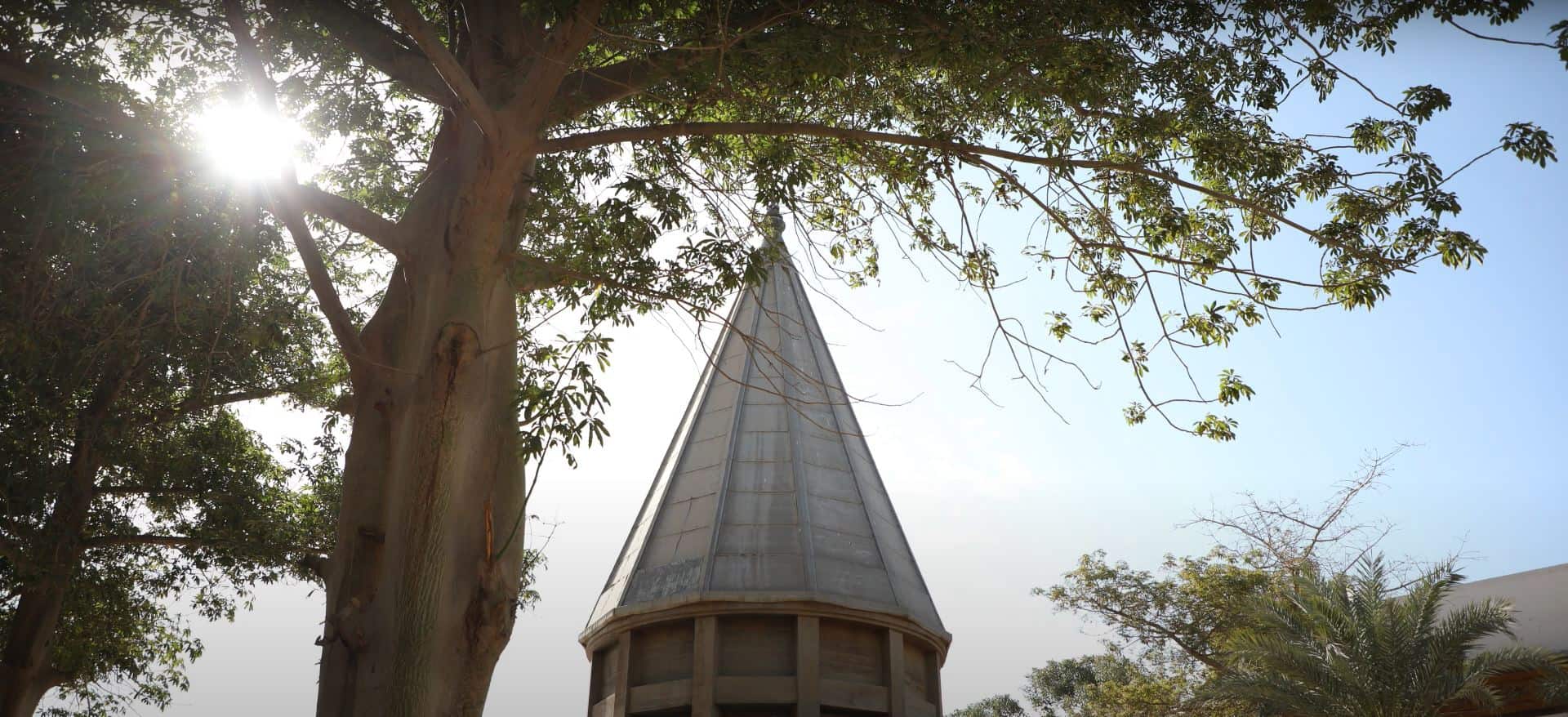
The distinctive conical wooden dome crowning the Nilometer today represents a 20th-century restoration with a fascinating history. Initially, the structure featured a hemispherical dome, but this was destroyed when French troops bombarded the Nilometer during Napoleon’s occupation of Egypt in the late 18th century. An interim dome replaced it but was subsequently destroyed by a nearby factory explosion in 1825.
Fortunately, Fredrik Ludvig Norden, a Danish traveller and artist who visited Egypt in the 18th century, had created detailed paintings and descriptions of the Nilometer, including its architectural features. When Egypt undertook restoration work, these historical records enabled architects to recreate the dome structure. The current painted conical dome, completed during the reign of King Farouk I (Egypt’s penultimate monarch), follows this historical model whilst incorporating modern construction techniques. The restoration exemplifies how historical documentation enables preservation of cultural heritage even after destruction.
The Nilometer’s Role in Medieval Egyptian Life
Understanding the function of the Nilometer illuminates its central importance in medieval Cairo. The ideal flood level reached 16 cubits—when the column’s markings showed this measurement, Egypt could anticipate bountiful harvests, stable food supplies, and prosperous conditions. Measurements below 16 cubits presaged drought and potential famine, whilst readings above 19 cubits warned of catastrophic flooding that could destroy homes, infrastructure, and crops.
Because the Nilometer’s readings determined Egypt’s economic prospects for the coming year, the structure became the focal point for Cairo’s grandest celebration: the Fath al-Khalij, or Festival of the Opening of the Canal. The Khalij Canal began opposite Rhoda Island, bordering medieval Cairo to the west and irrigating the city’s gardens and fields. Each year, the canal was blocked with an earth dam and cleaned before the flood. When the Nilometer showed water reaching the sixteenth cubit, the caliph—and later sultans and pashas—would inaugurate festivities that lasted several days.
Contemporary accounts describe this festival as Cairo’s most spectacular celebration. Decorated boats crowded the waters, with the ruler’s vessel standing out as the most splendid. The summer flood filled the Khalij and numerous ponds, their shores lined with entertainment, whilst pleasure boats filled the waters throughout the hot summer months. Near the Nilometer stood a mosque for prayers during the flood celebration and a palace for banquets hosted by various rulers.
However, the festival wasn’t guaranteed to be held annually. In years when floods appeared uncertain, celebrations were cancelled and replaced with prayers and fasting as communities sought divine intervention for adequate water levels. This uncertainty reinforced the Nilometer’s religious and mystical significance—in the days preceding expected floods, the column would be anointed with saffron and musk to help induce favourable water levels, blending practical measurement with ritual practice.
The Fath al-Khalij continued until 1899, when the Khalij Canal was filled in as Cairo modernised, though the Nilometer itself continued to measure floods until approximately 1970, shortly after the Aswan High Dam’s completion fundamentally altered the Nile’s behaviour.
Visiting the Nilometer: Practical Information for Travellers
For contemporary visitors, the Nilometer offers a peaceful respite from Cairo’s bustling energy whilst providing insights into ancient and medieval Egyptian life. The structure is situated on the southern tip of Rhoda Island, in the El-Manial district of southern Cairo, facing Old Cairo (Coptic Cairo) across the Nile.
How to Get There
From the Cairo city centre, the most efficient transportation options include:
By Taxi or Ride-Sharing Services: Uber and Careem operate throughout Cairo. Request a ride to “Nilometer, Sharia Al Malek As Salih, Rhoda Island” or show the driver the address in Arabic. The journey from downtown Cairo takes 15-30 minutes, depending on traffic conditions, which can be substantial at any time of day in Cairo. Taxis remain affordable by international standards.
By Metro: Cairo’s metro system provides an economical option. The nearest station is Sayyida Zeinab, located on Line 1 (the Red Line). From the station, it’s a 15-20 minute walk to the Nilometer, or you can take a short taxi ride. The walk passes through interesting local neighbourhoods, offering travellers a glimpse of everyday Cairo beyond the tourist zones.
By Public Bus: Various bus routes serve Rhoda Island, though navigating Cairo’s bus system can prove challenging for visitors unfamiliar with the city. For most international travellers, taxis or ride-sharing services offer more straightforward access.
From Cairo International Airport: The airport is approximately 25 kilometres from the Nilometer. Taxis and ride-sharing services typically take 30-40 minutes in light traffic, although they allow up to an hour during peak periods. Pre-booking airport transfers through hotels or tour operators ensures fixed pricing and avoids negotiation hassles.
Opening Hours and Admission
The Nilometer’s opening hours vary, but it typically opens from 9:00 AM to 5:00 PM daily. However, as a lesser-visited site, it may be kept locked between visitor groups. The entrance is on Sharia Al Malek As Salih, where visitors purchase tickets from the site guard, who then accompanies them down the path to the Nilometer building and unlocks it. This personalised access means you often have the structure to yourself—a rare luxury at Egyptian historical sites.
Admission typically costs around 40-60 Egyptian pounds (approximately £1.50-2.50 or $2-3 USD), although prices may be higher for foreign visitors compared to Egyptian nationals—a common practice at Egyptian heritage sites. Bring cash in Egyptian pounds as card payments may not be accepted. A small tip (10-20 pounds) for the guard who opens the structure and provides information is customary and appreciated.
What to Expect During Your Visit
Upon entry, visitors descend a spiral staircase with depth markings along the walls, leading down to the octagonal marble column at the well’s bottom. The descent can feel quite precipitous, with steep steps, so take your time and watch your footing. Those with mobility issues should be aware that accessing the bottom requires navigating these stairs, though the architectural details remain visible from upper levels.
The interior provides a cool respite from Cairo’s intense heat, especially during the summer months. The painted conical dome creates beautiful filtered light effects, whilst the Kufic inscriptions and architectural details reward close examination. The site remains remarkably atmospheric, evoking centuries of history whilst revealing the sophisticated understanding of hydrology possessed by medieval Islamic engineers.
Guided tours can significantly enhance the experience, with knowledgeable guides explaining the nilometer’s function, historical context, and architectural significance. Many Cairo tour operators include the Nilometer in packages exploring Islamic Cairo or Old Cairo, or you can hire private guides through hotels or reputable tour companies. Alternatively, armed with this background knowledge, independent visitors can appreciate the site’s significance whilst enjoying its peaceful ambience.
Best Times to Visit
The Nilometer remains mercifully uncrowded compared to Cairo’s other major attractions, making almost any time suitable for a visit. However, consider these factors:
Season: Autumn (September-November) offers the most pleasant weather, with cooler temperatures making Cairo’s outdoor exploration more comfortable after the intense summer heat. Spring (March to May) also provides favourable conditions. Winter (December-February) is generally mild, though occasional cool days occur. Summer (June-August) brings extreme heat, making early morning or late afternoon visits advisable.
Time of Day: Early mornings and late afternoons offer cooler temperatures and beautiful light for photography. The gentle morning light particularly enhances the Nilometer’s architectural features, whilst evening light creates atmospheric shadows in the well’s depths.
Day of the Week: Weekdays tend to see fewer visitors than weekends, allowing for a more intimate exploration experience. Fridays are the Islamic holy day, which may affect opening hours; please confirm in advance.
Photography: Photography is generally permitted, and the site offers excellent opportunities—the play of light through the dome, the architectural details, and the dramatic perspective looking down into the well all make compelling images. Bring a good camera or smartphone, and consider a wide-angle lens to capture the well’s full depth.
Nearby Attractions on Rhoda Island and Beyond
The Nilometer’s location on Rhoda Island positions it conveniently near several other significant Cairo attractions, enabling visitors to combine multiple sites in a half-day or full-day exploration.
Manial Palace and Museum (15-minute walk or 5-minute taxi)
The magnificent Manial Palace, built between 1899 and 1929 by Prince Mohamed Ali Tewfik (uncle of King Farouk), stands as one of Cairo’s hidden gems. This former royal residence features five distinctively styled buildings surrounded by Persian gardens within an English landscape park estate. The palace showcases an extraordinary fusion of architectural styles, with Ottoman, Moorish, Persian, Syrian, Fatimid, Mamluk, and Andalusian influences blending with European Art Nouveau and Rococo elements.
Visitors can explore the Reception Palace with its grand halls decorated with tiles, chandeliers, and carved ceilings; the Residential Palace featuring the famous Blue Salon with glorious faience tiles; the Throne Palace with its gaudy gold styling and rococo Aubusson Room; a private museum housing the prince’s art collections; a hunting museum displaying taxidermied animals; and a mosque with rococo-inspired ceiling. The gardens offer a lush oasis, featuring jasmine, towering trees, Mexican cacti, and rare tropical plants collected during the prince’s extensive travels worldwide.
The palace opens from 9:00 AM to 5:00 PM daily. Admission is separate from the Nilometer. Please note that only Visa cards are accepted for ticket purchases (cash is not accepted for the entrance fee in some cases), so confirm your payment options before arrival. Allow at least 2-3 hours to thoroughly explore the complex.
Coptic Cairo (15-20 minutes by taxi)
Across the Nile from Rhoda Island, Coptic Cairo (also known as Old Cairo) preserves Egypt’s Christian heritage in a compact historic district. Key sites include:
- The Hanging Church (Al-Muallaqa): Built in the 4th century atop the Roman Babylon Fortress’s gatehouse, this church appears to “hang” above ground level. Its beautiful interior features wooden screens, icons, and a marble pulpit.
- The Coptic Museum: Founded in 1908, this museum boasts the world’s finest collection of Coptic art, spanning Christianity’s earliest days in Egypt through the early Islamic period, and is housed in a beautiful building featuring mashrabiya screens and fountains.
- Church of St. Sergius and Bacchus (Abu Serga): Dating back to the 4th century, this is Cairo’s oldest church, built over a crypt where the Holy Family allegedly took shelter during their flight into Egypt.
- Ben Ezra Synagogue: Occupying a 4th-century Christian church, this 9th-century synagogue gained fame for its geniza (repository of documents), discovered in the 19th century, which provided invaluable insights into medieval Mediterranean Jewish life.
Mosque of Amr ibn al-As (20-minute walk)
Built in 642 AD, this represents Africa’s first mosque, constructed by the Muslim commander who conquered Egypt. Though rebuilt and expanded numerous times, it remains one of Cairo’s most historically significant Islamic sites, offering insights into early Islamic architecture in Egypt.
The National Museum of Egyptian Civilisation (NMEC) (10-15 minutes by taxi)
Opened in Fustat (Old Cairo) in 2021, this state-of-the-art museum showcases over 50,000 artefacts chronicling Egyptian civilisation from prehistoric times through pharaonic, Greco-Roman, Coptic, Islamic, and modern periods. The spectacular Royal Mummies Hall displays 22 royal mummies, including 18 kings and 4 queens, in climate-controlled chambers.
Ibn Tulun Mosque (10-15 minutes by taxi)
Dating from 876 to 879 AD during the Tulunid period, this represents one of Cairo’s oldest and largest mosques, featuring a distinctive spiral minaret based on Iraqi architectural models. The mosque’s spacious courtyard and harmonious proportions create a serene atmosphere, whilst the adjacent Gayer-Anderson Museum (a restored 17th-century house) showcases Islamic art and furnishings.
Practical Tips for Visiting the Nilometer
What to Bring: Comfortable walking shoes are essential as you’ll be navigating stairs. Bring water, particularly in warm months. Modest clothing is appropriate—shoulders and knees should be covered as a sign of respect, though this isn’t as strictly enforced as at active mosques. A small torch or phone light can help illuminate architectural details in shadowy areas. Bring Egyptian pounds in small denominations for admission and tips.
Combining Sites: A logical itinerary might include the Nilometer in the morning, followed by a visit to Manial Palace (combined visit takes approximately 3-4 hours), then crossing to Coptic Cairo for afternoon exploration. Alternatively, combine the Nilometer with the nearby Umm Kulthum Museum (dedicated to Egypt’s most famous singer) for a half-day cultural immersion.
Guided Tours: Various Cairo tour operators offer packages that include the Nilometer, along with other Islamic Cairo or Old Cairo sites. Private guides can be arranged through hotels or reputable companies, providing historical context and facilitating transportation between sites. Guided tours are particularly beneficial for those who are uncomfortable navigating Cairo independently or seeking a deeper historical understanding.
Safety and Comfort: Cairo is generally safe for tourists, although you should remain vigilant about your surroundings and follow standard urban safety precautions. Traffic is chaotic, so take care when crossing streets. Persistent touts and vendors are commonly found near popular sites, but they are less prevalent at the Nilometer, likely due to its lower tourist profile. Polite but firm refusals suffice.
Language: Arabic is Cairo’s primary language, though many people in tourism-related roles speak English. Having your destination written in Arabic helps with taxis. Phrasebooks or translation apps help with fundamental interactions.
The Nilometer’s Significance Today
Though no longer functional for its original purpose—the Aswan High Dam’s construction in the 1960s eliminated the Nile’s annual flood cycle—the Nilometer retains profound significance as a monument to human ingenuity, scientific advancement, and the enduring relationship between Egypt and its river. It stands as one of the rare historical structures that connects ancient pharaonic traditions directly through the Islamic medieval period to the present day.
For travellers seeking to understand Egypt beyond the pyramids and temples, the Nilometer offers essential context. Here is tangible evidence of how Egyptians mastered their environment, predicted natural phenomena, and organised society around the Nile’s rhythms for millennia. The structure’s survival through various dynasties, religions, and political systems testifies to its universal importance—whether pharaonic, Christian, or Islamic, Egyptian civilisation depended on accurately measuring the Nile.
The Nilometer also rewards those seeking Cairo’s hidden treasures away from tourist crowds. In an era of mass tourism, finding a significant historical site that you can explore in relative solitude is becoming increasingly rare. The Nilometer delivers this experience whilst offering architectural beauty, historical depth, and that intangible connection to past lives that makes visiting historical sites so compelling.
Conclusion: A Hidden Treasure Worth Discovering
The Nilometer on Rhoda Island represents one of Cairo’s most underappreciated yet historically significant attractions. This remarkable structure embodies 5,000 years of Egyptian ingenuity in measuring and predicting the Nile’s behaviour, housed in a beautiful example of early Islamic architecture featuring sophisticated engineering and artistic achievement. For the modest investment of time and money required to visit, travellers gain insights into the fundamental relationship between Egypt and its river—the connection that made Egyptian civilisation possible and sustained it across millennia.
Whether you’re a history enthusiast fascinated by ancient technology, an architecture lover appreciating the beauty of Islamic design, or simply a curious traveller seeking Cairo’s hidden gems, the Nilometer rewards your visit. Its peaceful atmosphere, dramatic architecture, and profound historical significance create an experience that enriches understanding of Egypt whilst providing a welcome respite from Cairo’s intensity. Combined with nearby attractions like the Manial Palace and Coptic Cairo, a visit to the Nilometer anchors a memorable day of exploring layers of Egyptian history, from pharaonic origins through Islamic medieval glory to the modern present.
In a city where ancient wonders compete for attention, the Nilometer stands quietly on Rhoda Island, waiting to share its story with those wise enough to seek it out. For travellers wanting to understand Egypt truly—not just see its famous monuments but comprehend the fundamental forces that shaped this extraordinary civilisation—the Nilometer provides essential insights delivered in architectural beauty and historical depth that few sites can match. Make the journey to Rhoda Island, descend those ancient stairs, and stand beside the marble column that measured Egypt’s destiny for over a millennium. The Nilometer remains, as it has for centuries, a bridge between past and present, between human ingenuity and natural forces, between the practical and the sacred—a monument to Egypt’s eternal relationship with its lifegiving river.