

10 of the World’s Most Famous Active Volcanoes to See
Updated On: November 08, 2023 by  Miranne Khaled
There is no doubt that active volcanoes are dangerous to be around. They emit gases with scorching temperatures along with ashes and rocks with destructive properties. However, they also do offer an unforgettable experience. They are deemed natural wonders and can give you this euphoric sense, especially if you’re one with a daring soul and adventuring nature.
Active volcanoes are still present and scattered around different places in the world. Yet, most of them happen to lie a bit far away from residential areas, but you can observe many if you know where to find them. More interestingly, some communities live nearby active volcanoes, depending on their geothermal energy. Besides, volcanoes are known to keep nearby soils laden with minerals, offering great farming chances.
In other words, despite being hazardous and dangerous, active volcanoes can be essential for nearby communities’ survival. There are different types of volcanoes, and each has its own properties; however, active volcanoes remain the most dangerous of them all. Let’s get acquainted with interesting facts about volcanoes and search for active ones for an enthralling experience of a lifetime.
How Are Volcanoes Formed?
Before we explain how a volcano forms, let’s take a quick look at what a volcano is in the first place. Volcanoes are openings in a planet’s surface where hot substances escape from beneath the planet’s crust. More often, volcanoes occur in mountain-like shapes or hills, where several rock and ash layers build up and then escape from the opening at the top.
The process of materials escaping to the surface is known as eruption. These materials include gases, molten rocks, and other Earth substances quite hotter than their surroundings. Most volcanic activities happen at sites near the sea or ocean, where plate tectonics either collide or separate in processes known as converging and diverging, respectively.
Interestingly, most volcanic activities take place deep down near the ocean bottom, where they’re tucked away from our sights. Yet, that doesn’t mean that it doesn’t occur on the surface of the Earth as well. In fact, our planet is laden with all types of volcanoes, which volcanologists classify into active volcanoes, dormant volcanoes, and extinct volcanoes.
Active Volcanoes
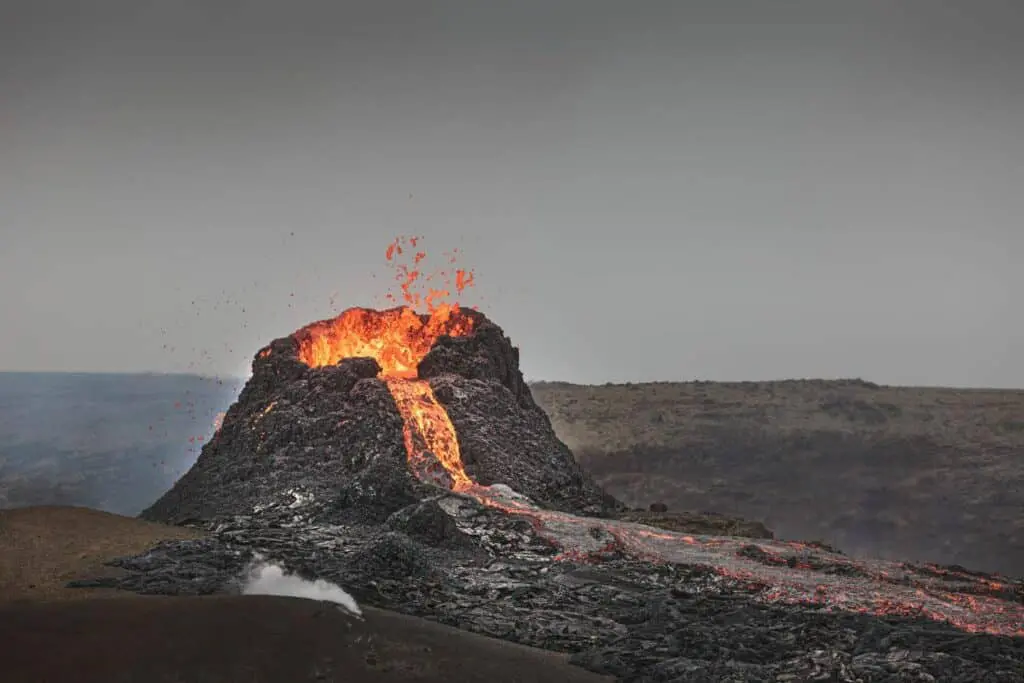
Volcanoes are classified on the basis of age or how long they have or haven’t erupted. So, volcanoes are classified as active if an eruption occurred throughout the past 10,000 years, either once or on a frequent basis. This means these volcanoes still have a considerable supply of lava flowing beneath the surface.
Dormant Volcanoes
Dormant volcanoes have never erupted before yet have higher chances of blasting in the future or at any given time. This type is also commonly referred to as inactive volcanoes or sleeping volcanoes.
Extinct Volcanoes
Extinct volcanoes are also known as dead volcanoes. They’re ones that experienced eruption many centuries ago with no potential to erupt again. That’s because a dead volcano no longer has a lava supply flowing beneath the surface of the Earth.
10 Famous Active Volcanoes You Can Visit From Afar
Living with a volcano nearby sounds like a terrifying experience. However, several advantages are reaped from volcanic activities, including discovering precious gems, having fertile soils perfect for farming, and creating lush landscapes. These elements are sufficient for turning volcanoes into fantastic tourist attractions.
People from around the globe with daring souls like to venture into new journeys and would put seeing an active volcano on their bucket lists. There are more than a few famous active volcanoes around the world with unprecedented picturesque scenes that you can visit. More eager venturers would even go on extreme adventures like taking a hot air balloon trip over the volcano or climbing it.
You can still watch the scenic views from afar if you prefer. Here’s a list of the world’s most famous active volcanoes that you can pay a visit for an enthralling experience:
1. Mount Aso in Japan
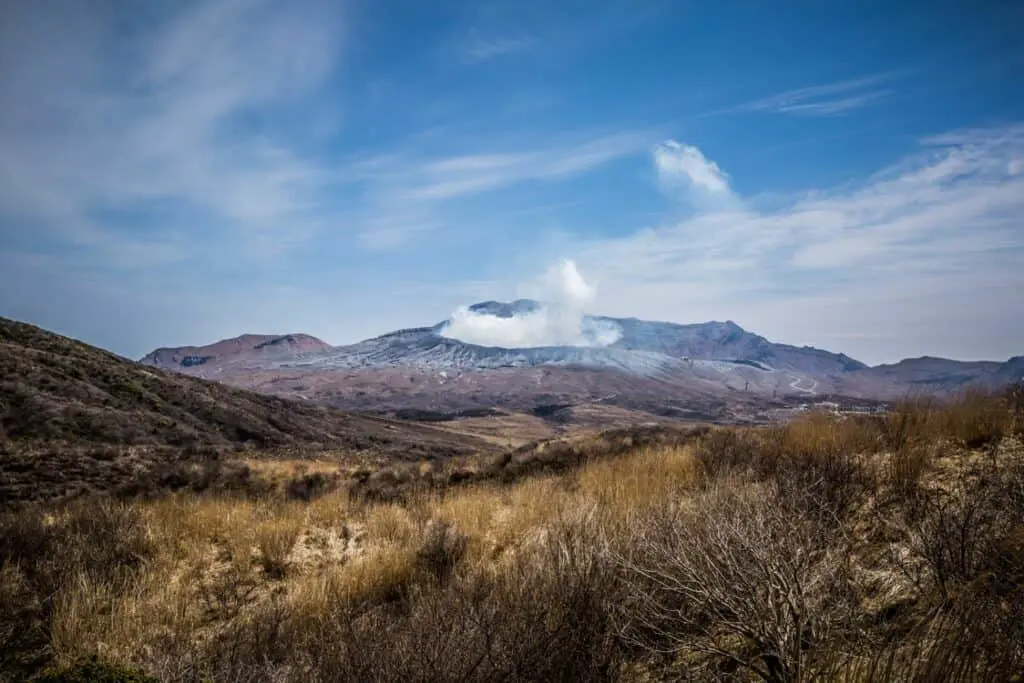
Mount Aso is one of Japan’s most famous active volcanoes, also known as Aso-san Volcano. This volcanic mountain isn’t only the largest ever in all of Japan, but it’s also one of the world’s largest active volcanoes, ranking second after Mauna Loa in Hawaii. No wonder it has attracted people from all countries, urging them to take the risk of climbing it.
Mount Aso in Kyushu was a great tourist destination until the recent eruptions in 2016 and 2021. This has led to many restrictions; however, many were lifted this year, permitting visits worldwide. Note, however, that the entry permissions may change according to the levels of gases, visibility conditions, and weather.
The fact of it being an active volcano can be enough to attract daring souls, yet there’s more to the renowned Mount Aso. Its location is fascinating because it features multiple peaks and vast green landscapes to observe during your challenging journey. Moreover, you will spot rare plant species grown around along with wildlife roaming about.
2. Mount Merapi in Indonesia
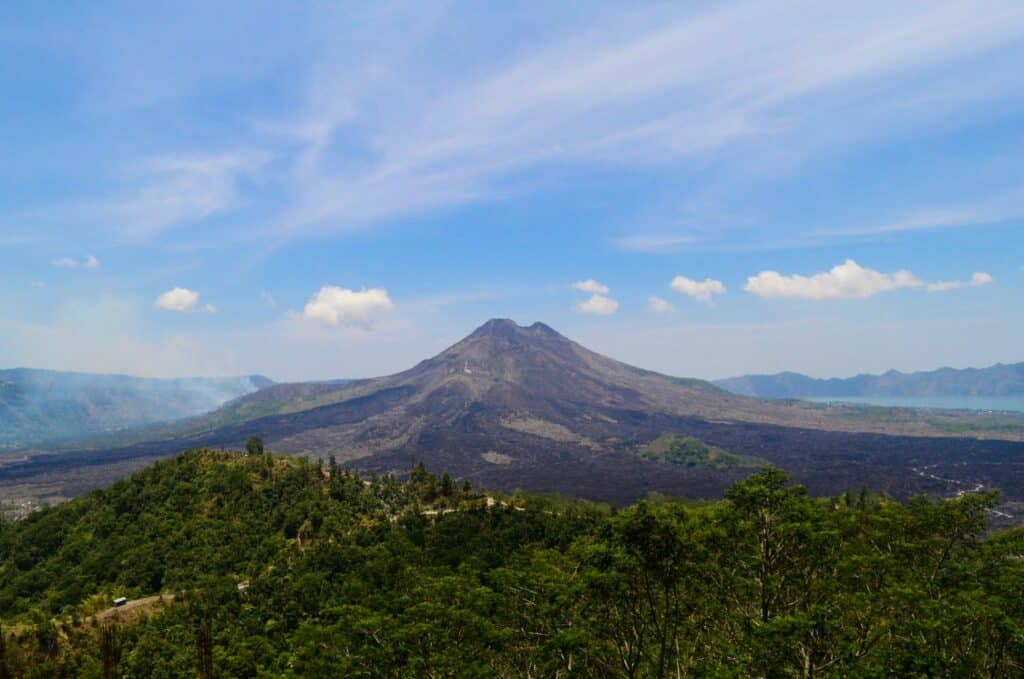
Indonesia is home to one of the world’s most active volcanoes, with a recent eruption taking place in 2020—Mount Merapi. It lies between two lively provinces, located on the borders of the Special Region of Yogyakarta and Central Java province. This volcano is the most active in Indonesia, with a long history of regular eruption.
Merapi is known as a stratovolcano, which has several layers alternating between ashes and lava. Lots of adventurous activities happen around this region, with climbing being permitted. However, given its high temperature, most visitors would not climb the volcano during the day. On the other hand, people tend to hike to the peak in the evening.
This active volcano holds great significance to the Javanese. People’s belief in the sacredness of the mountain has led to several ceremonies believing to appease the spirits coming out of the volcano. Besides visiting the restless Indonesian volcano, there’s much more to do around the Merapi region, where you can visit nearby villages and enjoy the mountain’s scenic views.
3. Pacaya in Guatemala
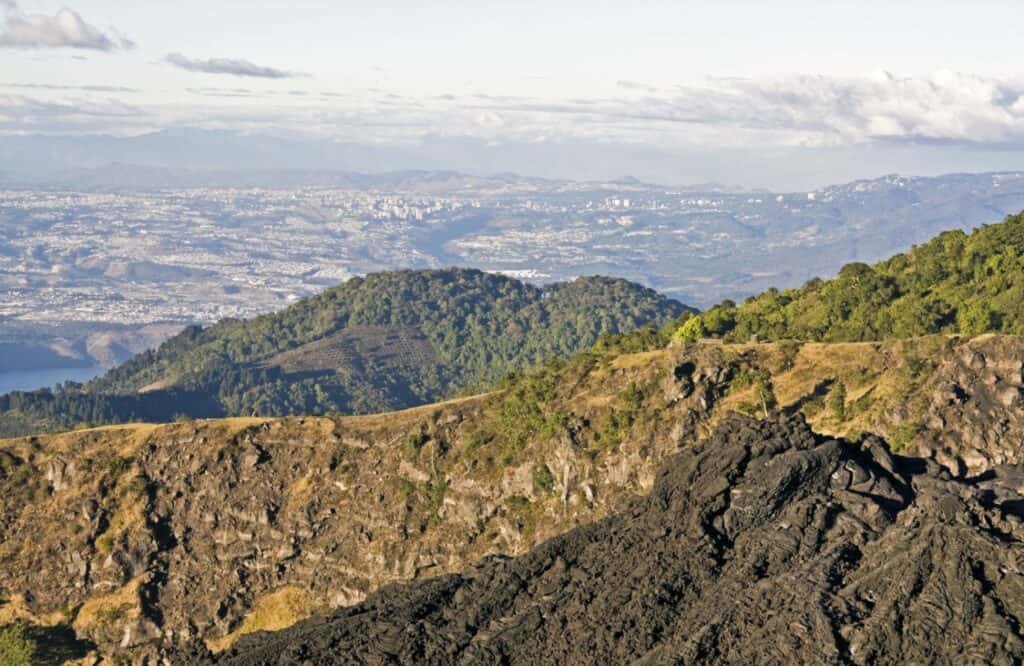
Pacaya is one of Guatemala’s youngest active volcanoes that passionate hikers should add to their Antigua itinerary. Many tours are held, offering an awe-inspiring volcanic experience where you get to see blazing lava. This otherworldly experience has made Pacaya on top of the attractions of Antigua.
Pacaya is one of the active mountains with the highest eruption streaks, erupting at least 23 times throughout history, with the most recent eruption occurring in 2021. Not only that, but Pacaya is a complex volcano with multiple vents from which the lava flows. Besides its exciting eruption history, visitors have reported it is a good hiking spot suitable for different fitness levels.
Visitors get mind-blown by the fascinating landscapes, making it one of the most impressive scenes in Central America. Night tours also take place, offering a fantastic experience where you can observe the lava flows illuminating the night sky. If you’re a fan of camping, night camps are also a thing. People gather and roast marshmallows over the hot spots of the volcano—a fitting end to an impactful day!
4. Kīlauea in Hawaii
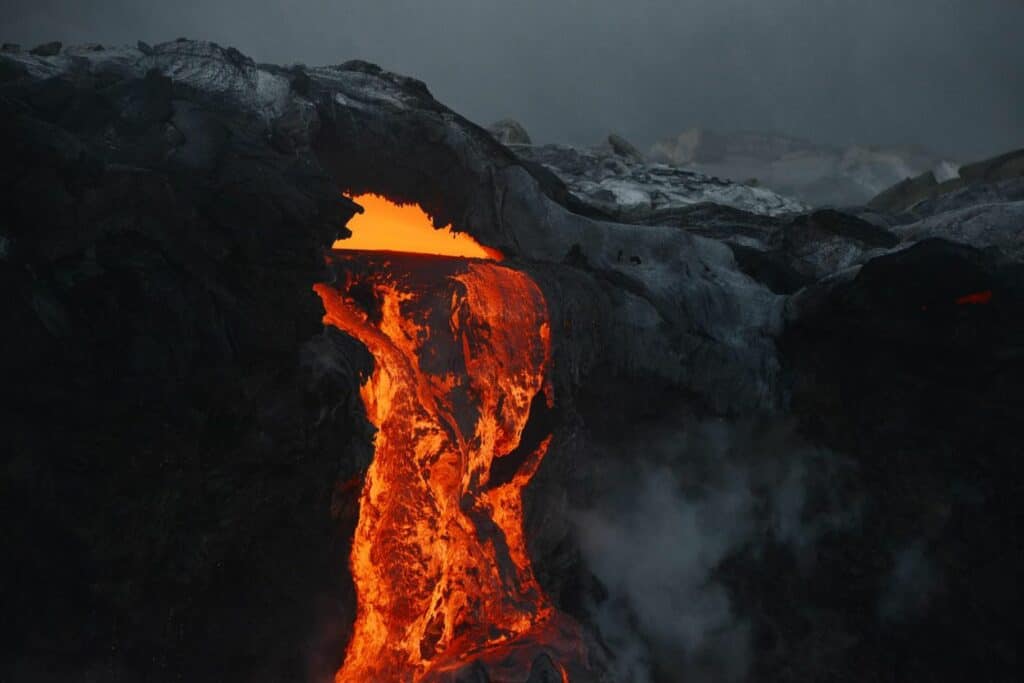
Hawaii is home to various volcanoes, most of which are active. Kīlauea is Hawaii’s most famous active volcano, with a reputation for constant eruptions. Not only is it the most active volcano on the island, but it’s also among the world’s most active volcanoes. This volcano proudly sits on the northeastern shore of Kauai, with Hilo town being the closest residential area to the mountain.
Geologists and scientists say the past century hasn’t witnessed a volcano with that many eruptions as Kīlauea volcano. It now has over two dozen craters, much more than any regular active volcano. Its consistent eruptions have made it quite famous, but it also plays a vital role in Hawaiian history, not a positive one, though.
The first blasting eruption occurred in 1983 when lava fountains formed throughout the following years. Kīlauea lastly erupted in January 2023, producing a breathtaking lava lake. However, it can’t be compared to the most disastrous eruption in 2018, where the active volcano was shooting lava into the air, burning whole forests and neighbourhoods to the ground.
5. Meradalir in Iceland
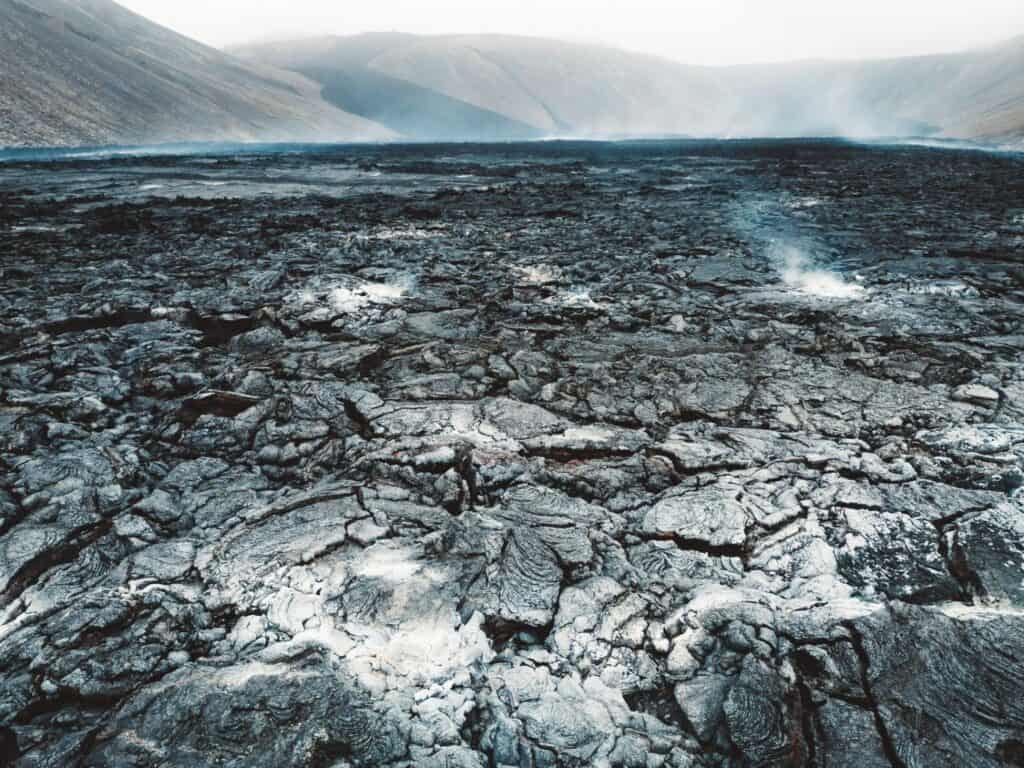
People always imagine Iceland to be a vast icy landscape with snow-capped mountains and hundreds of glaciers. While this is all still true, it’s also home to several volcanoes, with some of them known to be the most active volcanoes in the world. This explains why people call Iceland the land of fire and ice, a beautiful paradox that combines magnificent elements of nature.
While Iceland possesses hundreds of volcanoes, only 30 of them are deemed active volcanoes, with Meradalir being the last erupted one, which took place in 2022. Meradalir sits on the Reykjanes peninsula, an inhabited area embracing another famous active volcano, the Fagradalsfjall.
The latest eruption resulted in lava fields that became literally hot tourist attractions. Meradalir volcano became a famous hiking spot. Hiking to the eruption site is a whimsical experience with surreal sightings to behold. Yet, the hike to this site is known to be a bit challenging and requires high fitness levels. It spans around 12 kilometres, taking almost 3 to 4 hours, which can be tough for beginners.
6. Villarrica in Chile
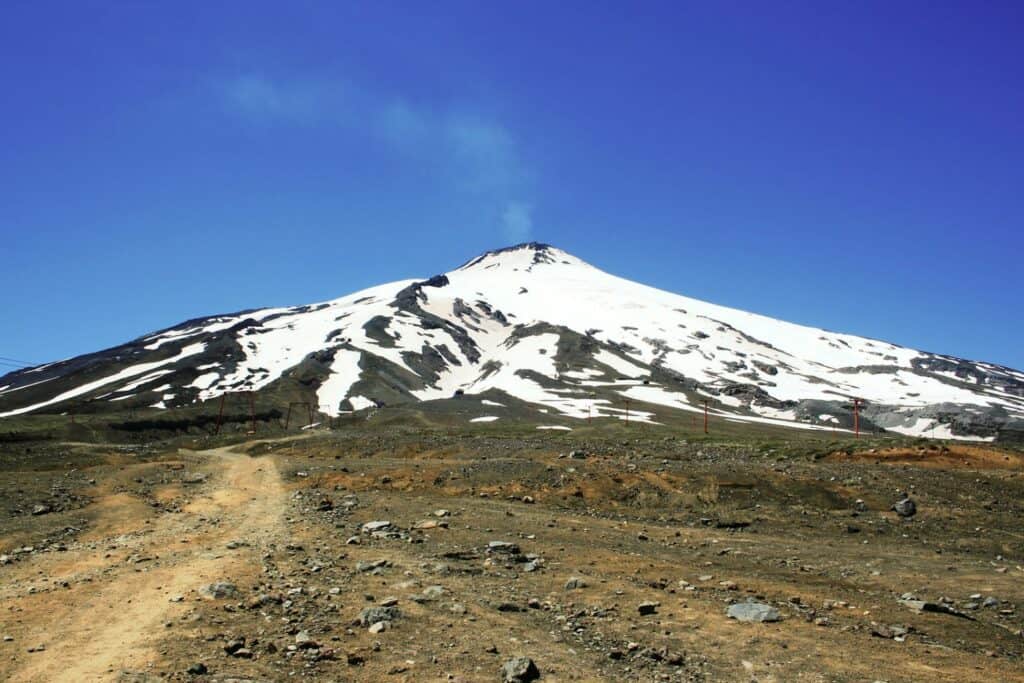
The Ring of Fire region circles parts of the Pacific Ocean, displaying lands where active volcanoes and frequent earthquakes occur. Chile is one of the countries that sit on the Ring of Fire, proposing several active volcanoes, with the Villarrica being the most famous and active volcano.
Villarrica volcano’s last major eruption occurred in 2015, evacuating thousands of people living nearby. It’s also said that the 2015 eruption is deemed the largest ever since the destructive 1985 eruption. Although it’s still one of the world’s active volcanoes, it has become a top tourist spot during summer and winter.
People enjoy skiing over Chile’s most famous active volcano in winter and climbing to its rugged summit in summer. Climbing is only allowed during summer, for there isn’t snow that could lead to dangerous slippery. Few could reach the peak, but they’re rewarded with fascinating views of the bright lakes, Panguipulli, Pelleufa, and Calafquen.
7. White Island in New Zealand
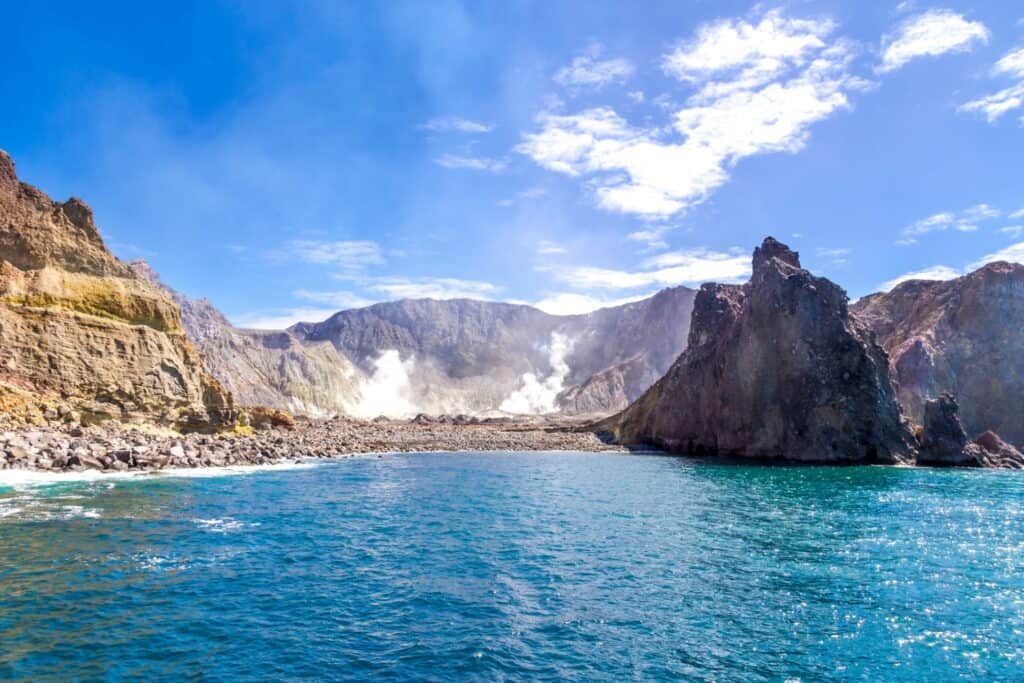
New Zealand is home to several active volcanoes, given that it’s among the 15 countries within the Pacific Ring of Fire. Among the various active volcanoes of New Zealand, the White Island volcano is known to be the most famous. It also goes by the name Whakaari, which is a Māori name.
Whakaari means “exposed to view.” It makes sense as the volcano sits in the middle of the water, around 50 kilometres offshore. The volcano’s last eruption occurred in December 2019, ensuing several injuries and even fatalities. People residing around the island were evacuated, and the island has been closed to the public up to this point, for the volcano is still active and is expected to erupt again soon.
However, the victims’ families were allowed to visit the island in December 2022 for a memorial. The island has always been a popular tourist destination in New Zealand, full of steamy hot springs and breathtaking scenes. Interestingly, people can still experience the splendid sightings of this island but only through flights or boats. The land is still off-limits for the safety of the visitors.
8. Minoan in Greece
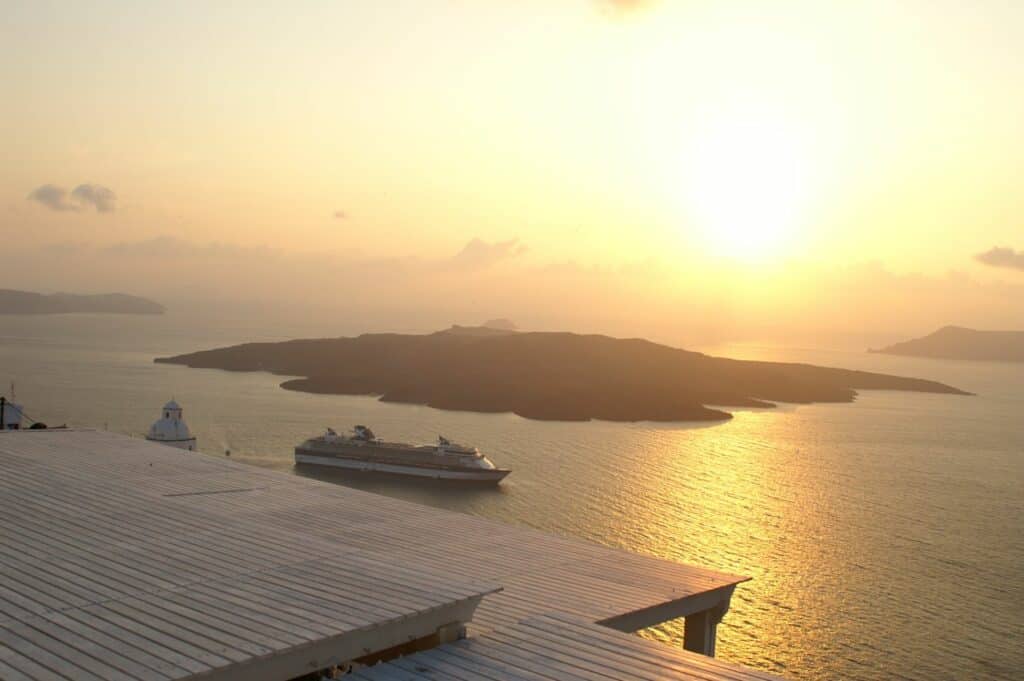
Greece is home to unprecedentedly glorious ancient temples and monuments, where rich layers of history lie between its structure and even hang in the air. However, it also embraces more than a few volcanoes that tourists usually overlook and head straight to its historical sites. It’s also noteworthy that Greece doesn’t possess as many active volcanoes at the moment.
If you’re looking for a surreal and different experience, put Minoan on your itinerary. The Minoan volcano lies on the ancient island of Thera, which is most commonly known as Santorini. Its eruption was one of the world’s largest, and it took place during the Bronze Age when it wreaked havoc on the Minoan settlement and some nearby agricultural areas.
The volcano also wiped out various communities. Although it hasn’t erupted recently, it still shows some slight volcanic activity, yet it’s safe to visit. The active volcano lies underwater, displaying a surreal scene, evoking the birth of the Atlantis legend. This island possesses some whimsical beauty, featuring black sand, black lava islands, and the renowned Caldera of Santorini, all formed during the largest eruption ever, which occurred in 1600 BCE.
9. Arenal Volcano in Costa Rica
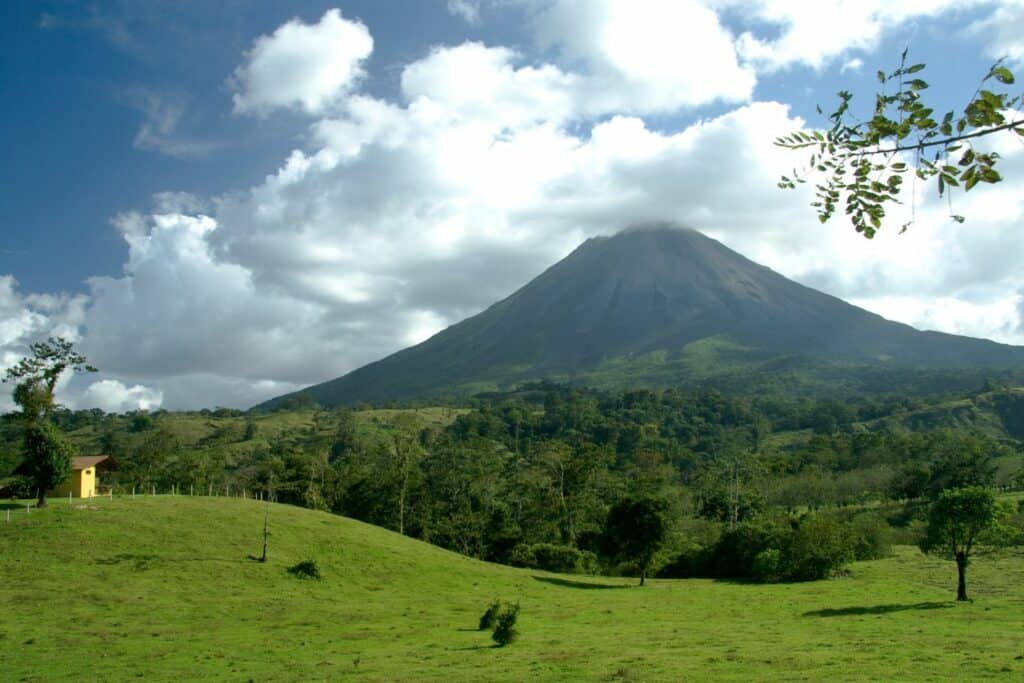
Natural wonders, signature coffee aroma, and rich biodiversity coexist in Costa Rica. It’s a land where nature proudly shows itself, exhibiting natural beauty for us to observe. Among all the raw elements of nature Costa Rica possesses, several active volcanoes add an otherworldly allurement.
Arenal Volcano is one of the most famous and active volcanoes in Costa Rica. It’s also the largest active volcano in the country. Although it experienced consistent eruptions throughout the years, none of them was as devastating as that of 1968. This volcano recently erupted in 2010, but scientists and geologists confirm that it’s now in a resting state.
Sightings of the renowned volcanoes take place from The Arenal Volcano National Park. In other words, observing the volcano means doing many more activities. Tourists take tours around the area to access the rainforest and beautiful cascading waterfalls. The national park also embraces the largest lake in Costa Rica, Arenal Lake.
10. Mount Etna in Italy
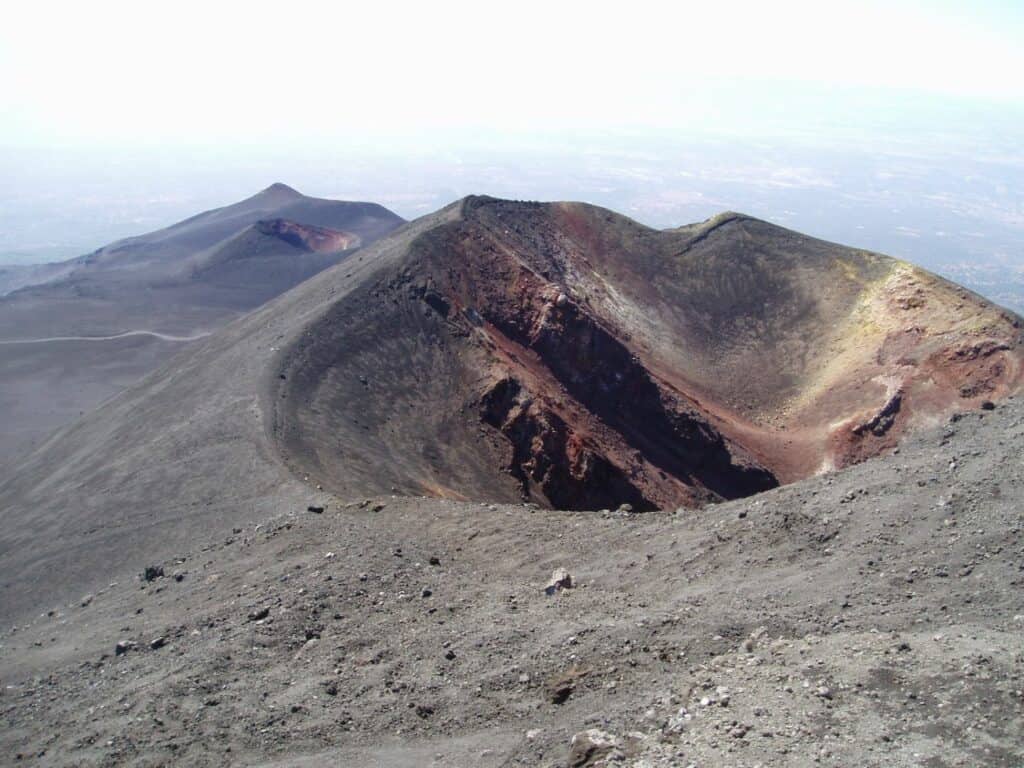
The Mediterranean region has no shortage of active volcanoes, with Mount Etna in Italy being the most popular. Etna happens to be the highest mountain on the Mediterranean Island as well as being the world’s most active stratovolcano, given its always being in a constant active state. It lies in Sicily and is one of the city’s most iconic sites.
Etna’s last eruption occurred at the beginning of 2023, ranking first as the very first eruption of the year. Despite being one of the world’s most active volcanoes, it permits visitors to hike all year round as long as it’s stable. It offers surreal scenes and breathtaking landscapes that make it worth visiting. People can also ski the volcano’s slopes; some different paths and trails fit all levels.
Mount Etna is the reason the surrounding soil is extremely fertile, allowing for extensive activities of agriculture, especially vineyards. Besides being a tourist landmark, it has great significance in history and legends, especially for the ancient Greeks. They believed this extremely active volcano was where the Cyclops were brought to life.
While active volcanoes can be hazardous and dangerous, they offer the most fertile soils and dreamlike views. It’s an adventure you’ll never forget or experience anything like it elsewhere.

The Kingdom of Ireland: King Henry VIII’s Declaration as the King of Ireland
Ireland
19/04/2024

The Truth about the Claddagh Ring Curse: Debunking Myths and Exploring the Symbolism
Mythology and Folklore
19/04/2024

Top 10 Irish Public Holidays and Traditions to Experience on Your Ireland Holidays
Festivals and Events
18/04/2024

6 Top Mourne Camping Sites for an Unforgettable Experience Under the Stars
Northern Ireland
18/04/2024

Eostre: The Germanic Goddess of Dawn and Spring Equinox Celebrations
Mythology and Folklore
17/04/2024