

Skip to content
Updated on:May 21, 2025 by Avatar image of authorCiaran Connolly

What is Westminster Abbey, and where is it? For those visiting Big Ben, Westminster Abbey is just on the other side of the street, and it takes only one or two minutes to walk to reach it. Westminster Abbey has been the coronation church since 1066, and it’s the final resting place for 17 monarchs. The church, which we are exposed to today, was started by Henry III in 1245; it is one of the most important Gothic buildings in the country and has the medieval shrine of an Anglo-Saxon saint at its heart.

More about Westminster Abbey

Westminster Abbey London – Places to Visit in London

The parts of Westminster Abbey include the institute, which works with the public service institutions around Parliament Square to promote moral and spiritual values in public life. There is also a library and research place in Westminster Abbey, which houses extensive and historic collections of books, manuscripts, archival material, photographs and much more; those who want to use this research place should make an appointment before heading there.

Westminster Abbey has some visits paid by the Kings and Queens, for it is an important place and church, and there are even some crucial weddings held in this church of great importance, such as the Royal Wedding of Prince William. In addition, Westminster Abbey is where critical historical figures, including kings, queens, musicians, writers, scientists, and more, are buried. The essential famous characters we are talking about are Stephen Hawking, Jane Austen, Sir Isaac Newton, William Blake, Noel Coward, Charles Darwin, and Jenny Lind.

Westminster Abbey, formally the Collegiate Church of St. Peter at Westminster, is just west of the Palace of Westminster. It is one of the United Kingdom’s most notable religious churches and places.

Westminster Abbey is a historical church that still holds great importance today. It is one of the attractions in the city that visitors and travellers visit when they are in London, exploring and learning more about the history behind this beautiful and old city.

The Coronation Church

Westminster Abbey is perhaps most famous for being the Coronation Church of English and later British monarchs. Since the coronation of William the Conqueror in 1066, every monarch has been crowned at Westminster Abbey, making it a place of profound significance in the royal story of the United Kingdom.

The coronation takes place in the Coronation Chair, a simple yet historic piece of furniture crafted in 1296 by King Edward I. It was initially made to hold the Stone of Scone, a symbol of Scottish kingship captured by Edward and brought to England. The chair has been used in the coronations of nearly every monarch since its creation, standing as a testament to the enduring traditions of British royalty.

Queen Elizabeth II’s coronation in 1953 was a global spectacle, broadcast to millions worldwide and cementing the abbey’s place as a stage for significant national and international events. Most recently, King Charles III’s coronation in 2023 followed the same ancient traditions, demonstrating the continuity of the British monarchy.

Royal Weddings and Funerals

Westminster Abbey has also hosted some of British history’s most memorable royal weddings. The abbey has been the venue for royal weddings since Henry I married Matilda of Scotland in 1100. More recently, in 2011, the world watched as Prince William married Catherine Middleton, now the Prince and Princess of Wales, in a spectacular ceremony attended by international dignitaries and broadcast to billions of viewers globally.

Royal funerals have also taken place within the abbey’s sacred walls, including the funeral of Princess Diana in 1997, a heart-wrenching event that was watched by millions across the globe. The abbey provided a fitting venue for a service of national mourning, reflecting its importance as a place where the country comes together to commemorate significant events in the royal family’s life.

Architectural Brilliance of Westminster Abbey

Westminster Abbey | Collegiate Church | London | England | Things To Do In London

Westminster Abbey’s stunning Gothic architecture is one of its defining features. The abbey as it stands today owes much of its appearance to King Henry III, who ordered a grand rebuilding of the original Norman church in the mid-13th century. Henry was a devout follower of Edward the Confessor and sought to honour him by creating a magnificent new shrine church.

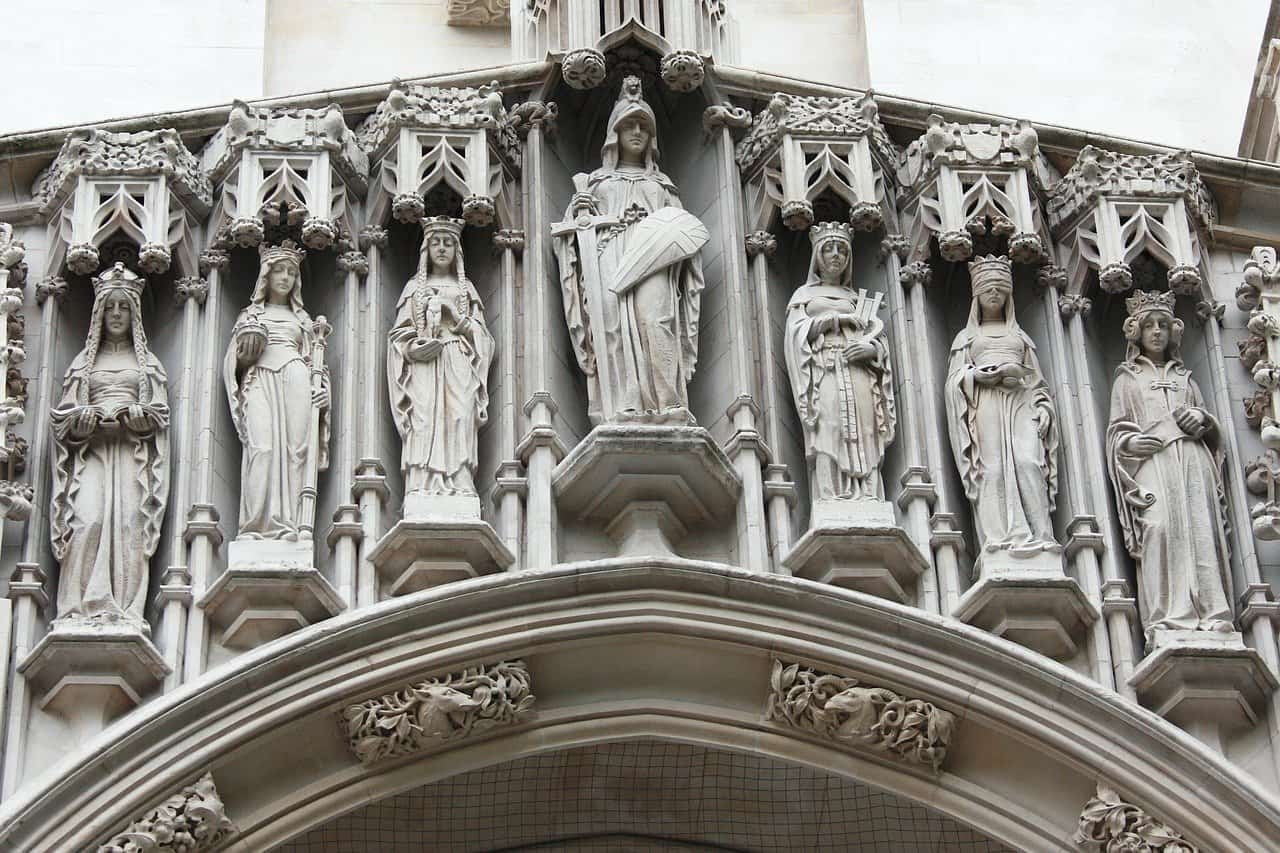
The abbey’s towering Gothic spires, intricate stone carvings, and expansive stained-glass windows are a testament to medieval craftsmanship. Its sheer scale and beauty are awe-inspiring, often considered one of the world’s finest examples of Gothic architecture.

The West Front, with its twin towers, is one of the most iconic views of Westminster Abbey. Added in the early 18th century by architect Nicholas Hawksmoor, the towers are a Baroque addition to the otherwise Gothic structure, blending two architectural styles seamlessly.

Inside the abbey, the grandeur continues. The nave, the central part of the church, is the highest in England and features stunning vaulted ceilings. The Chapter House, dating from the 13th century, is another architectural gem, with its octagonal shape and breathtaking medieval murals.

Royal Tombs and Memorials

Westminster Abbey
Westminster Abbey

Westminster Abbey is a place of worship and royal ceremony and a final resting place for a host of monarchs, statesmen, poets, and scientists. The abbey contains over 3,000 tombs and memorials, making it one of Britain’s most important burial sites.

Many of England’s most famous monarchs are interred within the abbey. Edward the Confessor’s shrine is the spiritual heart of the abbey, and nearby lie the tombs of Henry III, Edward I, Henry V, and Elizabeth I. The magnificent Lady Chapel, added by Henry VII, houses his tomb and that of his granddaughter, Elizabeth I, and her rival, Mary, Queen of Scots.

Beyond royalty, Westminster Abbey is also the burial site of significant figures from British history. The Poets’ Corner is home to the graves of literary giants such as Geoffrey Chaucer, Charles Dickens, and Rudyard Kipling. Isaac Newton, Charles Darwin, and Stephen Hawking are famous scientists buried here, marking the abbey as a place of national and intellectual reverence.

The Abbey’s Role Today

Top 10 Things To Do In Westminster UK – London Attractions

In modern times, Westminster Abbey plays a central role in British life. While it remains a place of worship and pilgrimage, it also serves as the venue for state occasions, national services of thanksgiving, and remembrance events. The abbey was the site of a service to commemorate the 70th anniversary of the end of World War II in 2015 and each year; it hosts Remembrance Day services to honour those who have fallen in conflict.

The abbey is also a vibrant working church with daily services and prayers. Its community of clergy and laypeople maintains its spiritual mission, and visitors worldwide can experience its sacred atmosphere.

Visitor Experience

Westminster Abbey offers tourists a journey through British history, culture, and religion. Visitors can explore its rich history through guided tours or by following an audio guide available in multiple languages. Specialised tours, such as those focusing on the abbey’s architecture or the Coronation Chair, provide deeper insights into the abbey’s heritage.

One of the most popular features for visitors is the Quire, where choral services are still held, and the High Altar, where royal weddings and coronations occur. The Henry VII Lady Chapel is a beautiful part of the abbey, with its elaborate fan-vaulted ceiling and striking stained glass.

The Cloisters, peaceful walkways surrounding a central garden, offer a quiet reflection and are also home to the abbey’s museum. The museum contains fascinating artefacts from its long history, including royal effigies and ancient manuscripts.

The Coronation Chair and the Stone of Scone are unmissable for those interested in British history. The chair has been used in the coronation of almost every British monarch since the 14th century, while the stone, returned to Scotland in 1996, has a long and storied history as a symbol of kingship.

Westminster Abbey has not only been a focal point in British history and religion but has also permeated popular culture. It frequently appears in films, literature, and television, symbolising the grandeur and majesty of British tradition. Its iconic status was further enhanced by the global attention it received during the funerals of Princess Diana and Queen Elizabeth, The Queen Mother, and the wedding of Prince William and Catherine Middleton.

Plan your Visit to Westminster Abbey

Have you ever seen Westminster Abbey in real life, apart from all the photos and appearance on the television or computer screen? If you have ever been there, tell us what you liked about the place the most. If you haven’t been there yet, place this destination on your list, and don’t miss the chance.

Final Thoughts

Westminster Abbey is a jewel in London’s cultural and architectural crown. Its significance as a place of royal ceremony, its breathtaking architecture, and its unparalleled collection of tombs and memorials make it a truly unique destination. Whether you’re drawn to its deep historical roots, its role in the life of the British monarchy, or simply its sheer beauty, Westminster Abbey is an essential stop for anyone visiting London.

Beyond being a tourist attraction, it remains a working church and a place of reflection, where the past and present converge in a powerful reminder of the enduring traditions that have shaped Britain. As you explore its ancient halls and gaze upon the monuments of kings, poets, and scientists, it’s impossible not to feel the weight of history that permeates every corner of this magnificent edifice.

Leave a comment

Your email address will not be published. Required fields are marked *