


Unravel the Grandeur of the Greek History in these 15 Endearing Spots
Updated On: April 16, 2024 by  Miranne Khaled
Greece is one of the incomparable countries when it comes to beauty, culture, and history. It’s popular for being the cradle of Western Civilization. Not only that, but it’s also where democracy was brought into being along with many other things.
The influence of the Greek history is undeniable. Not only on the Roman culture, but on several cultures across Europe. Moreover, the Greek history is also multiple mythological tales that everyone knows originated. Even if most of the world confuses Greek literature with Roman, it still shines through.
Let’s talk about the fascinating country of Greece. It’s one of the world’s sunniest places, so no matter when you decide to go, you’ll have the sun keep you warm. Moreover, it encompasses thousands upon thousands of islands and impressive mountains.
Greece embraces a myriad options of beautiful sightseeings to behold. No matter where you go, you’ll always find a scene that leaves you spellbound. However, since you’re a history buff, searching for tales from the past, we have the best destinations for you. Check this list where you can witness splendid sceneries while unearthing the mystery of the Greek history.
1. Acropolis of Athens
Taking a trip to Athens cannot be complete without visiting the awe-striking icon of the Greek history, the Acropolis. It has always been the highlight of every trip to Greece. The name “Acropolis” translates into “the city at the top.” That’s why we can find this magnificently oriented district sitting on the highest ground.
The Acropolis is a couple of thousands years old; its construction started back in 447 BC. It used to be home to several kings throughout the years. Moreover, it also served as a fortress to protect the beloved city as well as a religious center. Let’s not forget that it’s also the birthplace of the world’s most popular mythical gods and goddesses.
This extravagant district has endured a lot through the years, including massive earthquakes, bombardment, and severe damages. Yet, it still stands tall, attracting tourists from all around the globe. Once you set foot into the Acropolis, you can’t help but feel the strong Greek history lingering in the air.
You can dive deeper into the Greek history by touring the ancient buildings the Acropolis encompasses. It happens to be home to the renowned Parthenon and other famed ancient buildings with rich historical significance.
2. Meteora Monastery
One of the fascinating tourist attractions that you shouldn’t miss is the Metero Monastery. It’s a natural rock formation that sits proudly in central Greece near Kalambaka. Not only that, but it’s also considered a UNESCO World Heritage Site. The height on which the Meteora stands paves the way to overlook the Kalambaka town.
Unfortunately, the location in which the Meteora is located makes it overlooked by many tourists, especially that it sits a little far from Athens. Yet, we are here to ensure you that it’s a worth a visit. Around this area, you can explore the magnificent outdoors through hiking, paragliding, or even rock climbing.
The landscapes are quite phenomenal, looking as it was taken straight out of a fantasy movie. In fact, the Meteora was used as a film backdrop in several famous movies and TV shows. Besides indulging in the beauty of the area, you will still find what you’re here for, history. There’s so much Greek history residing in this area that will leave all the history buffs content.
Many historical monasteries and complexes fill the place. You’ll get to have a deep glimpse into the Greek history and delve even more. In the past, there were far more monasteries than now, but many of them were damaged. The damages were either caused by natural causes as erosion or during the raid of the Turkish forces.
3. Parthenon
The Parthenon is located within the borders of the Acropolis of Athens. These huge columns that we see today are the remnants of a former temple dedicated to Athena, the Greek goddess. The majestic Parthenon, standing on the highest point of the Acropolis hilltop, is deemed the most holy site of the Ancient World.
Unfortunately, tourists are not allowed to explore the interior of the Parthenon. Yet, you are free to tour around the structure and admire every part of it. The damages that seeped into the formerly sturdy temple resulted from a bomb. It took place during the 17th-century war between the Turks and the Venetians. However, the remnants are here to remind us of the temple’s glorious history.
This Parthenon holds a historical significance in the Greek history. That’s why we see the ancient monument proudly dominating the Acropolis. At some point in history, the Parthenon served as a Christian church. It also served as an Islamic mosque during the Ottoman Empire.
4. Navagio Beach
Navagio happens to be the most popular beach in Greece, for earning the name of the shipwreck beach. This ship has earned many names and owners throughout the years, yet the only aspect that remains unchanged is its popular sea accident. It’s said that the ship sailed into the waters during poor weather conditions.
There are so many stories to hear about this shipwreck. While it may not belong to the ancient parts of Greek history, it still holds mystery that history buffs may enjoy breaking. Besides, the beach is home to splendid scenes and breathtaking sights. Many tourists flood to this area to take fascinating pictures, especially with the shipwreck complementing the sight.
5. Temple of Apollo
The Temple of Apollo is the most important part of Delphi and is a significant icon of the Greek history. Moreover, the site was considered sacred to the Greeks throughout the years.
It proudly sits on top of a giant terrace that the polygonal wall supports.
The importance of this temple goes back to the speech of Pythia. It’s the site in which she delivered her words in the restricted room of the Adyton.
Besides the temple, Delphi plays a significant role in the Greek history and mythology. According to legends, it’s where Zeus sent the eagles to discover the navel of the world. When the eagles found Delphi, Zeus set the sacred stone of Omphalos to mark this site as the navel.
6. Odeon of Herodes Atticus
To be honest and straightforward, if you’re digging deep into the Greek history, Athens will give most of the answers. After all, it is home to the historical Acropolis that embraces many of the historical complexes in Greece.
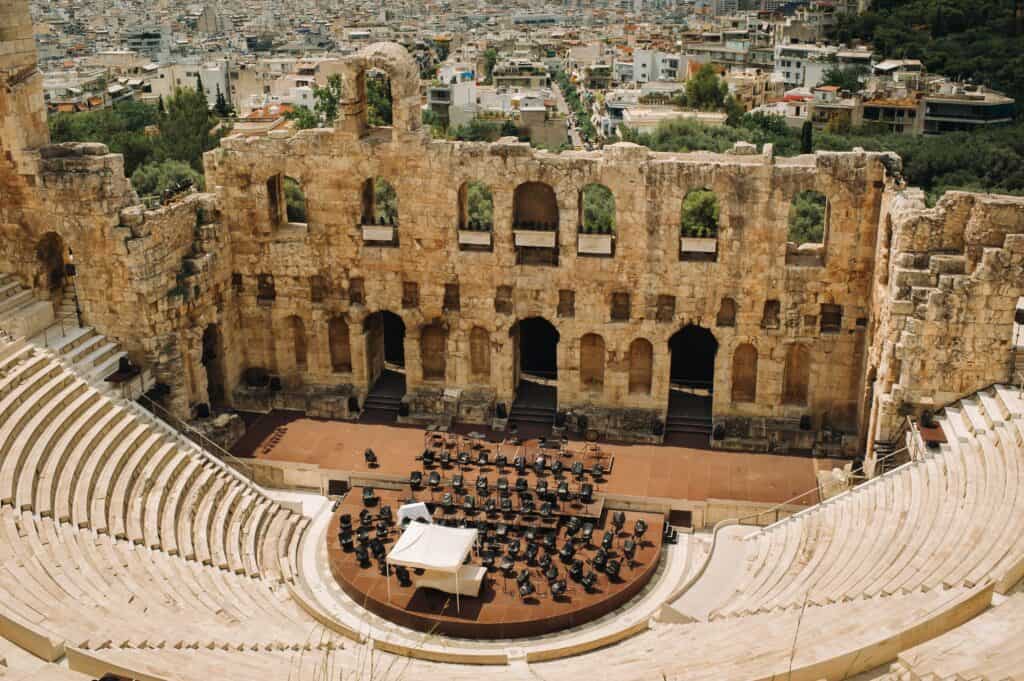
One of the main highlights of the Acropolis is the Odeon of Herodes Atticus. It’s an ancient theater that requires tickets purchase for admission. This theater holds the name of the well-known Athenian figure, Herodes Atticus. He also happened to be a Roman educator and philanthropic magnate.
When Herodes built the theater, he did it to honor his wife, Regilla. Nowadays, the theater is used to hold several festivals and live performances. It offers the tourist a rare experience from the far past.
7. Temple of Olympian Zeus
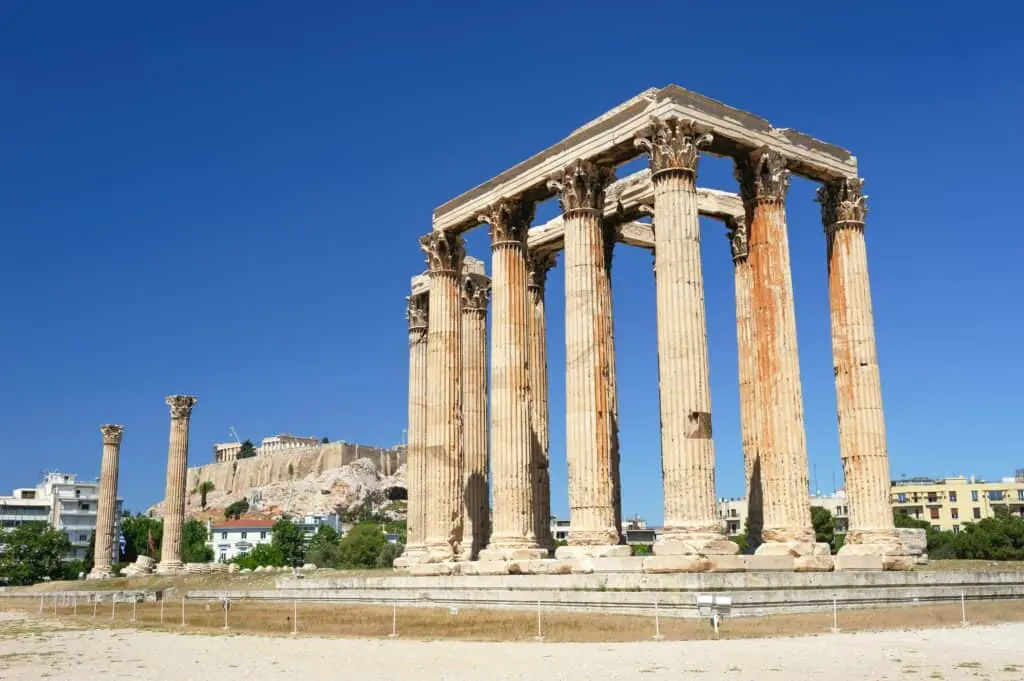
You definitely expected to see Zeus’s name in many corners around Greece. Well, the Temple of Olympian Zeus is one of the most prominent monuments in the Greek history. It goes back to several centuries, yet, like many other landmarks, was reduced to beautiful ruins. Apparently, the main purpose of this temple’s construction was to honor the father of all Gods, Zeus.
In fact, this building was one of the largest ever in the ancient world. The temple lies within the borders of Athens’ Acropolis, with unusually huge columns that attract tourists from everywhere. Back then, it used to host the ancient Olympic Games, hence the name. Those games were at their peak in 470 B.C when the temple was brought into being.
While there isn’t much to do around the temple, it is still worth visiting. History gurus will surely find joy in exploring remnants from a past life. Moreover, there are several monuments that surround the enormous temple that you can explore.
8. Melissani Cave (The Cave of the Nymphs)
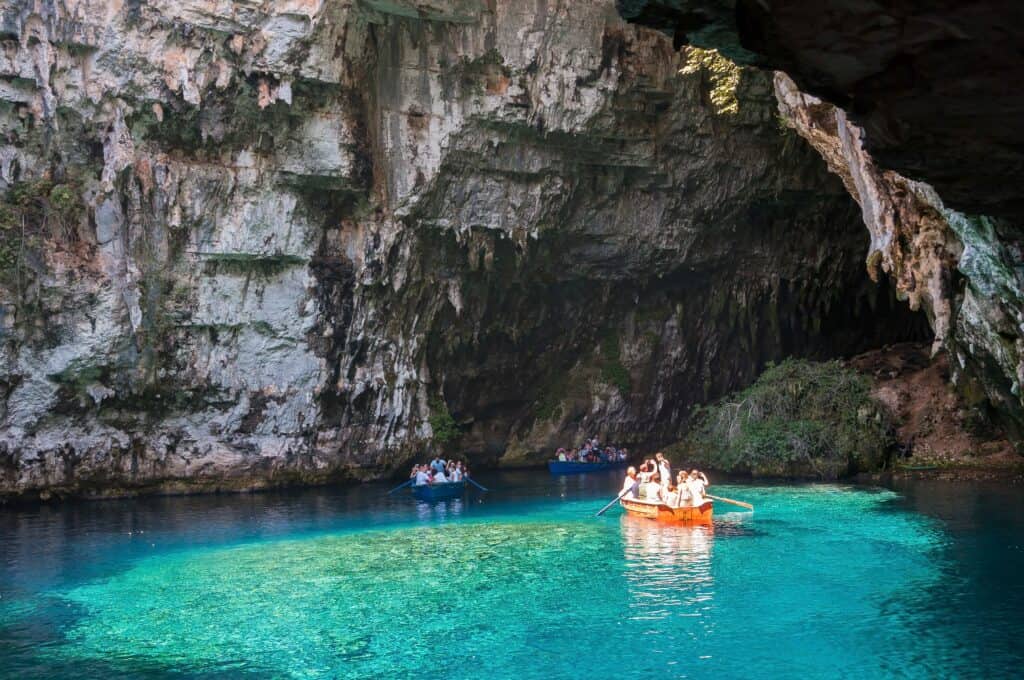
You don’t have to be into history at all to visit the magnificent Melissani Cave. While it has its own significance in Greek history and literature, it is still an unmissable destination for everyone. The unprecedentedly beautiful cave is found on Kefalonia, a fascinating Greek island.
Scientists believe it is over 20,000 years old, formed by the erosion of rocks. Yet, it was only discovered in the 50s after the collapse of another cave, revealing a secret lagoon. It also holds another name, which is the Cave of the Nymphs. The artifacts found inside portray the God of nature, Pan. Thus, it’s said to have formerly been a place of worship.
This cave also has a great significance in the Greek mythology. Legends have it that Melissani drowned herself in the lagoon after being heartbroken by God Pan. Swimming may not be allowed in the lagoon; however, you can’t help but admire the brilliantly turquoise waters.
9. Acropolis Museum
The Acropolis Museum is found in, obviously, the Acropolis of Athens. Once you visit this destination, you won’t need to see anymore museums. It holds many artifacts and findings that narrate the long timeline of the Greek history. No wonder it’s rated as one of the world’s best museums.
Whether you’re interested in Byzantine Greece, the Greek Bronze Age, or Roman Greece, you will find layers of history within the walls of this museum. This museum was founded in 2009, not far back. However, its main purpose was to house every historical evidence or archaeological artifact found around the Acropolis and the surrounding areas. For
We promise you a unique experience in exploring the Acropolis museum as it holds parts of both ancient and modern Greece. You may need to have a guided tour in order for him/her to point out the highlights of the place. They will also aid in leading you through the Greek history, leaving no significant facts along the way.
10. The Fortress of Palamidi
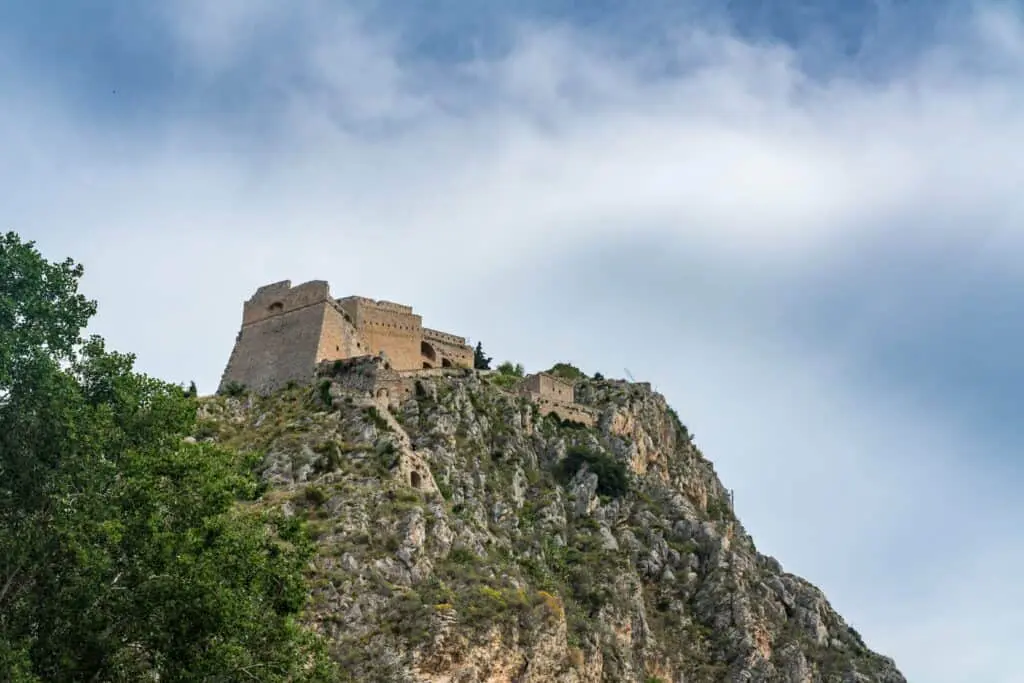
Nothing beats the historic breeze found in historical landmarks like ancient fortresses. And, The Fortress of Palamidi is one that surely holds layers of the Greek history that you’d like to unravel yourself. This fortress is found in Southern Greece, in the town of Nafplio. It sits on a high hill, overlooking breathtaking scenes.
This architectural masterpiece was brought into being by the Venetians when they occupied the area for the second time in 1686. The occupation lasted until 1715, and the fortress stood from the ground during that time.
Thanks to the great preservation of this structure, tourists are encouraged to walk on the worn stones safely. There is so much to see around this area, including the Ag. Andreas Church. One thing that we’re sure of is the strong sense of history that will hit you while walking between the massive walls and ancient buildings.
11. The Erechtheion Complex
One of the prevalent monuments that date back to ancient Greece is the Erechtheion Complex. It is also situated within the Acropolis, symbolizing the wealth of the Golden Age. This temple dates back to 421 BCE; its purpose was to glorify the city and symbolize its power in the ancient world.
The complex houses several highlights that you should see to glimpse a significant part of the Greek history. A century ago, a new sanctuary housed the eastern part of this complex to be the Temple of Athena Polias that we see today. Moreover, the western part also houses an important structure which is the Tomb of King Erechtheus.
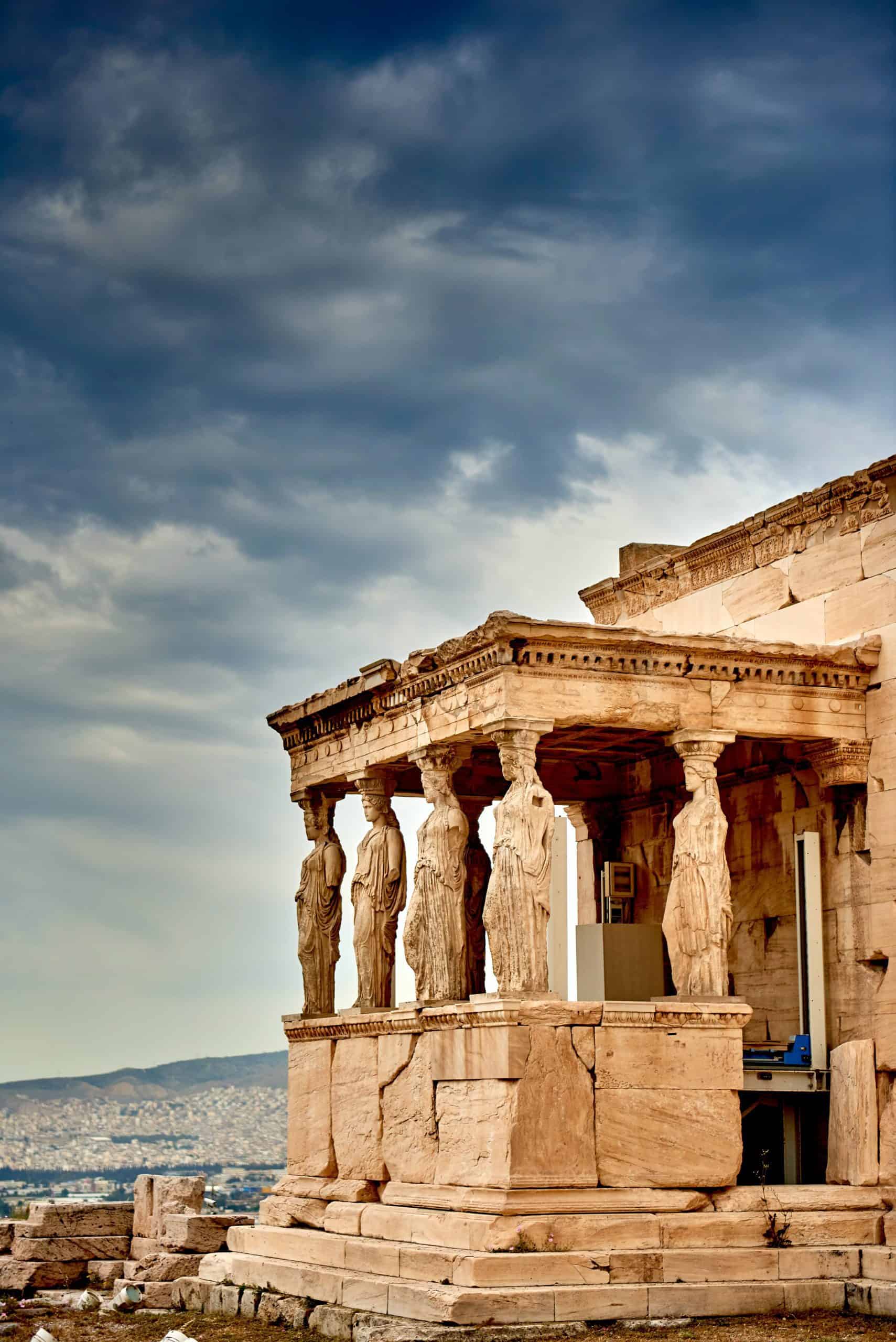
Before moving on to another monument, you shouldn’t miss the highlight feature of the Erechtheion, the Porch of the Caryatids. These sturdy columns have been attracting tourists for many years now. The columns display sculptures of maiden figures that seem to have the roof of the building resting on their heads.
12. Temple of Poseidon
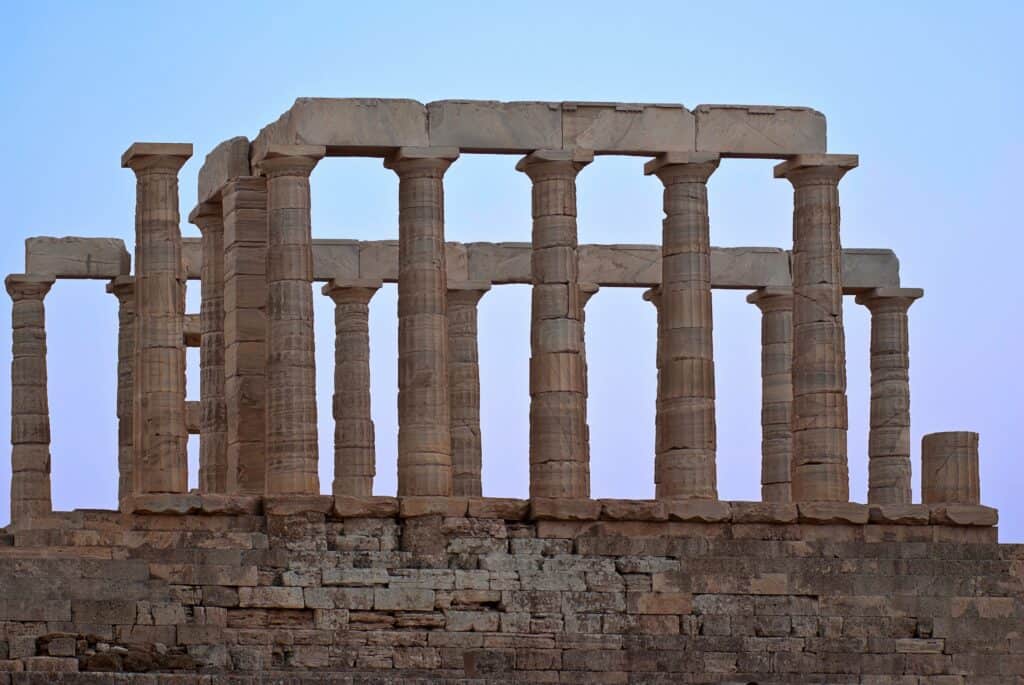
It makes no sense to be rummaging through the Greek history and miss out on the Temple of Poseidon, God of the sea. This temple is located inside a fort at Cape Sounio in south Attica. The fort was there to protect the coast from potential attacks.
Apparently, the 5th-century temple was built in order to honor Poseidon. It still stands quite strong, given its archaic nature and being situated near the sea. The best part is where the temple is positioned. It offers dramatic views of the sea that you will definitely fall in love with.
13. Temple of Athena Nike
Temples are a prominent part of the ancient world and play a great role in shaping the culture and history of many countries. The Greek history is no exception; several temples stand tall in Athena, presenting the best eras of ancient Greece.
The Temple of Athena Nike is deemed a very popular one in the Acropolis area. It’s one of the most sophisticated buildings around although it’s as old as 432 BC. However, it’s a well-maintained structure thanks to the restorations of the 19th and 20th centuries.
Needless to say, the temple was devoted to the Goddess Athena as being the deity that brings victory. You can find the temple freely standing on a spur of rock, offering some views over the other features of the area.
14. The Legendary Olive Tree of the Pandroseion
This beautiful tree lies within the Erechtheion and the Old Temple of Athena Polias. It happens to be one of the main features of the Acropolis, and not just a random tree around. The tree sits before the Pandroseion Temple, which was named after Pandrosos, the daughter of the Athens’ first king.
This tree was deemed sacred in the tales of the Greek history and literature. Legends have it that Athena presented this tree after her victory (Nike) over the God of the Sea, Poseidon. Today, it stands there signifying the survival of the beautiful city of Athens despite all the destructive events that once took place.
15. The Castle Town of Mystras
For several decades, the town of Mystras came second during the Byzantine Empire right after Constantinople. It’s home to a renowned castle that is deemed the last stronghold to fall into the hands of the Ottomans. Besides the castle, you can also find the Palace of the Despots that you can also explore while observing the splendid views offered from up there.
The whole town of Mystras is actually a great source to find layers of the Greek history. It was also home to the last emperors that descended from the Paleologos family. Once you’re done with the castle and the palace, take the time to wander about the town. It embraces more than a few Byzantine churches with fascinating wall paintings that tell history.
Well, the Greek history is a strong and prominent part of both the ancient and the modern worlds. There are so many historical places to wander about, yet we tried to gather the best ones that you shouldn’t miss in Greece.

Top 10 Irish Public Holidays and Traditions to Experience on Your Ireland Holidays
Festivals and Events
18/04/2024

6 Top Mourne Camping Sites for an Unforgettable Experience Under the Stars
Northern Ireland
18/04/2024

Eostre: The Germanic Goddess of Dawn and Spring Equinox Celebrations
Mythology and Folklore
17/04/2024

Explore the Top Hotels in County Cavan for Your Ultimate Getaway
County Cavan
17/04/2024

Irish Golf: Exploring the Top Golf Courses in Ireland
Culture Exploration
17/04/2024