


Traditional Irish Food – Delicious and Heart-warming Meals
Updated On: November 08, 2023 by  Ciaran Connolly
In this article we will explore traditional Irish food and the history explaining why each recipe has stood the test of time.
Nowadays these traditional Irish meals are commonly eaten for lunch or dinner as they are quite filling. As you will see throughout this article, food in Ireland was very functional. The majority of people had active lives, working on busy farms all day. Their breaks were far and few between so nutritious and filling meals were made.
Throughout history and up until a few decades ago, Ireland was a relatively poor country and families tended to be quite large. Food was never thrown out or wasted, and much of the meat and vegetables were produced on the farm or shared between neighbours. This was reflected in what we ate, namely large filling meals that could be prepared in one pot over a fire. So throughout this article you may notice a common theme in the types of traditional Irish food and the way in which it is prepared.
It is also worth noting that a lot of iconic meals was made using whatever ingredients were available. Many poor people could not afford to buy specific ingredients for meals, most ingredients were grown or produced by families, with essentials being bought in shops. So each family recipe is usually different in various parts of Ireland.
Traditionally, meals were eaten together as a family; it was one of the only times in the day where everyone would be together and many Irish older people are nostalgic of the food they grew up with because of this. Even as more food options became available and wealth increased, people enjoyed the food they grew up with and the things it represented.
So to sum the importance of traditional Irish food up: many dishes in Ireland were made with scarce ingredients for large families. They are not fancy, but they remind us of home and are hearty and nostalgic dishes
Traditional Irish Food – Everything You’ll find in this article
- Traditional Irish Soda Bread
Traditional Irish Breakfast Foods:
- A Full Irish Breakfast
- The Breakfast Roll
- Boxty
Traditional Irish Meals:
- Traditional Irish Stew
- Shepard’s Pie
- Bacon and Cabbage
- Colcannon and Champ
- Dublin Coddle
- Seafood
Traditional Irish Sweet food:
- Baírín Breac or Barmbrack
- Bread and Butter Pudding
- Gur Cake
The perfect way to end a meal of Traditional Irish food:
- Irish Coffee
Traditional Irish Soda Bread
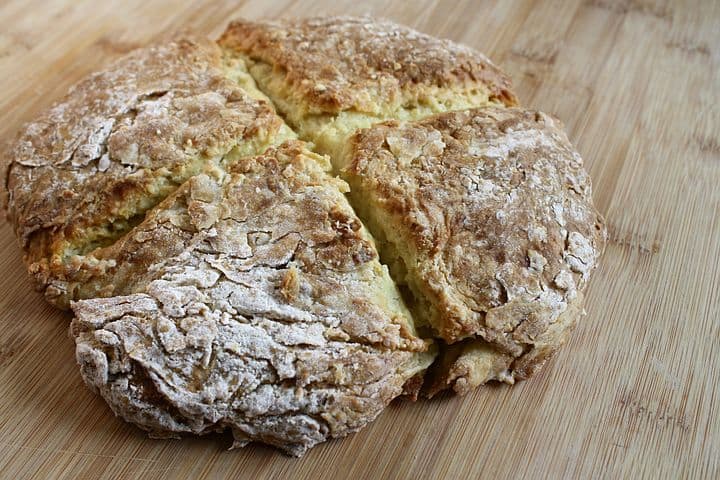
Starting off our list is a food that was commonly eaten throughout the day in traditional Ireland, as a simple breakfast or quick snack at lunch and supper. Soda bread was usually buttered and paired with a mug of tea when eaten. It is a simple classic and nearly every family in Ireland has their own unique recipe.
The history of making soda bread, like many Irish foods, began for practical purposes. The first people to actually use soda itself were the Native Americans. The Irish earned a worldwide reputation for their soda bread.
Traditional Irish Soda Bread was first created during the late 1830s when baking soda was introduced in the UK. Ireland was going through financial strife and had little access to ingredients. Soda bread was considered a necessity as you didn’t need expensive ingredients to make it.
These ingredients include wheat flour, baking soda, buttermilk and salt. To make soda bread soft wheat flour was preferred and the Irish climate was considered one of the only places suitable for growing this type of wheat, which definitely helped raise its popularity.
From then on soda bread became the perfect Irish recipe that families could make at home as it was a simple and filling dish. Many of the lower class homes would cook the bread in Iron pots or on griddles over open hearths. This is how the bread got is signature texture; a hard crust and slight sourness that the bread is now famous for.
Eating soda bread makes many people nostalgic as it was a staple of Irish life growing up.
Traditional Irish Foods – Breakfast
The following foods were common breakfasts in traditional Ireland. Breakfast was definitely considered one of the most important meals of the day in Ireland. A busy day of physical work would lie ahead, and the prospect of breaks were rare.
A Full Irish Breakfast
There’s no denying that the Irish love their food. There has been a long Irish tradition of having a fried breakfast (simply called a ‘Fry’) because it is a meal that fills you up and gives you energy for the day ahead.
What is in a traditional fried breakfast?
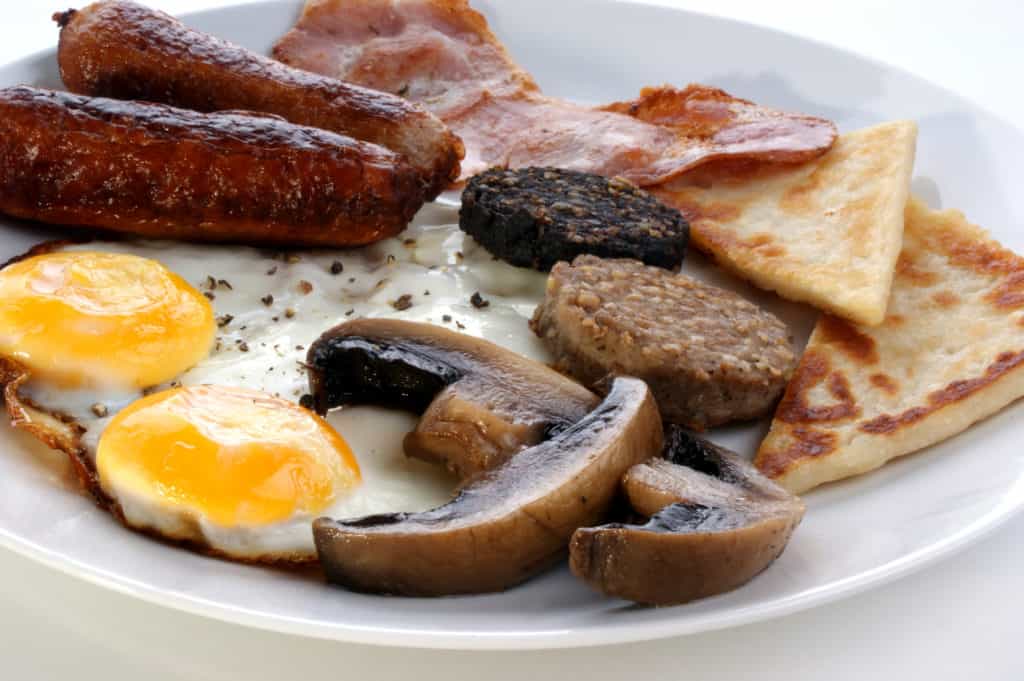
A traditional Irish breakfast includes a variety of meats and other items including:
- Bacon (we call them rashers)
- Sausages
- Black Pudding
- White Pudding
- Fried Eggs
- Hash browns
Other possible breakfast components that can be substituted in include:
- Baked Beans
- Fried Mushrooms
- Fried tomatoes
- Fried Potato
- Boxty
The hearty breakfast is also served with homemade Irish soda bread, a strong cup of tea, or a glass of fresh orange juice.
It was originally a tradition to have a fry to help prepare people for a full day of work on the farm. Many farmers would spend hours working outside before returning for lunch or dinner.
People are definitely more health aware nowadays and wish to avoid eating large quantities of fried food regularly. Even the healthiest Irish people will find it difficult to turn down this traditional Irish dish though.
The tradition of preparing a fry serves as a staple treat in many Irish households. It is usually prepared on a Saturday or Sunday morning when people have time to make and enjoy the breakfast. It’s also a meal that you can have for your evening dinner if you wish.
The Breakfast Roll
A change in our working lives meant that many people did not have time to fry a breakfast each morning. As a result the breakfast roll was created; it’s impossible to deny that we aren’t able to adapt our lives or create new inventions when it comes to the important things in life!
Essentially a breakfast roll is a full Irish fry inside a baguette with butter and ketchup. The breakfast roll is iconic in modern Ireland and its quality is usually a good measure of a shop or deli. As our careers have diversified and we are no longer predominantly a farming country, people who work outside the home usually don’t have time to cook a fried breakfast.
The breakfast roll consists of sausages, rashers, pudding, eggs and hash browns. The only item which may rival its popularity is the chicken fillet roll which is also popular which contains a breaded chicken fillet, lettuce and cheese in a baguette.
Boxty
Boxty, also known as potato cakes or potato bread is a mixture of mashed potatoes, salt, flour and butter that is fried in a pancake-like batter.
Traditional Irish Food – Dinner
There is so much delicious traditional food in Ireland. so we have included the most iconic meals on our list. As you will soon learn, many Irish dishes were created to use up leftovers. Food was scarce many times throughout history in Ireland and because of this it is valued highly, even when plentiful. Food was never thrown out or wasted, and this sustainable way of life created many popular dishes.
Traditional Irish Stew
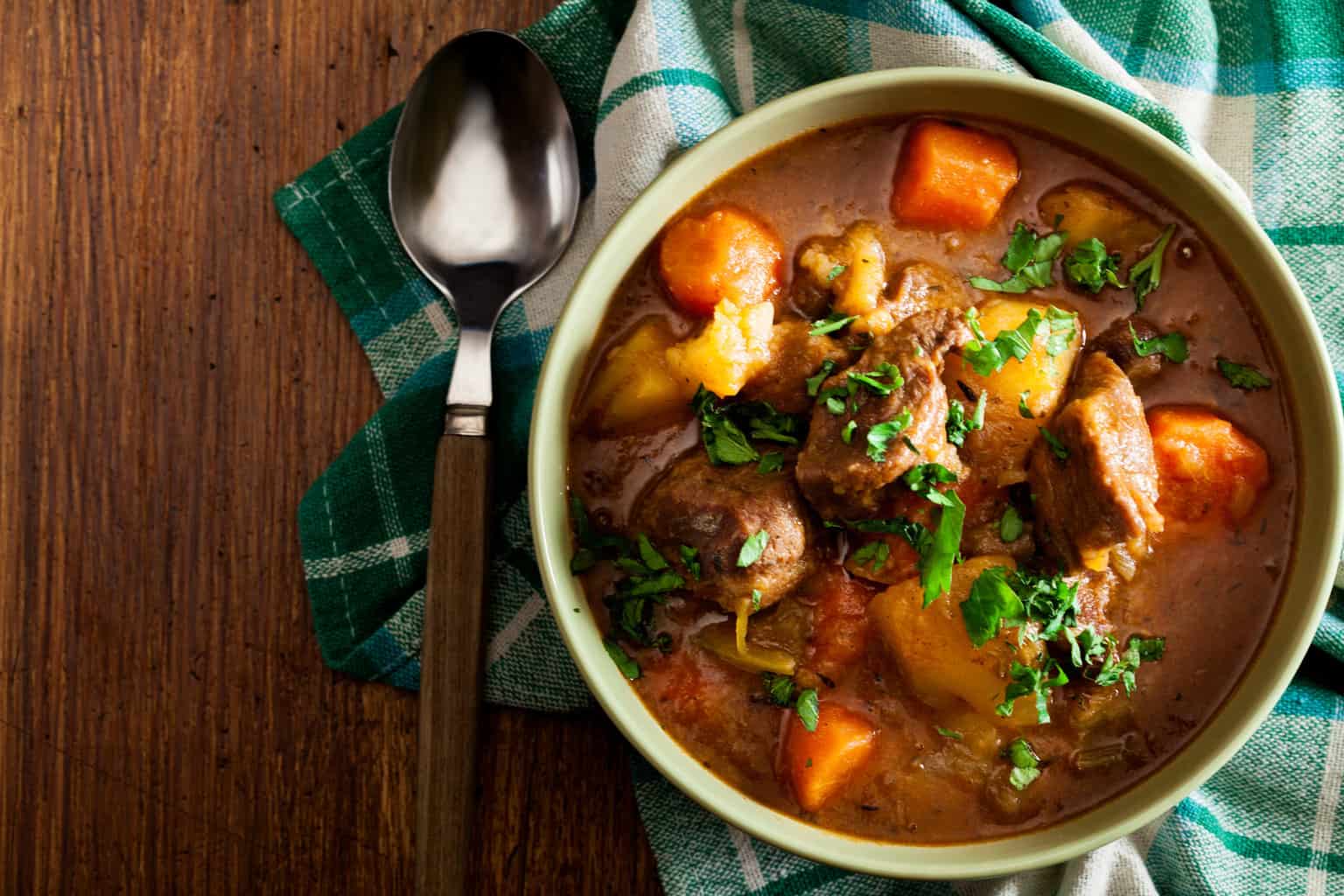
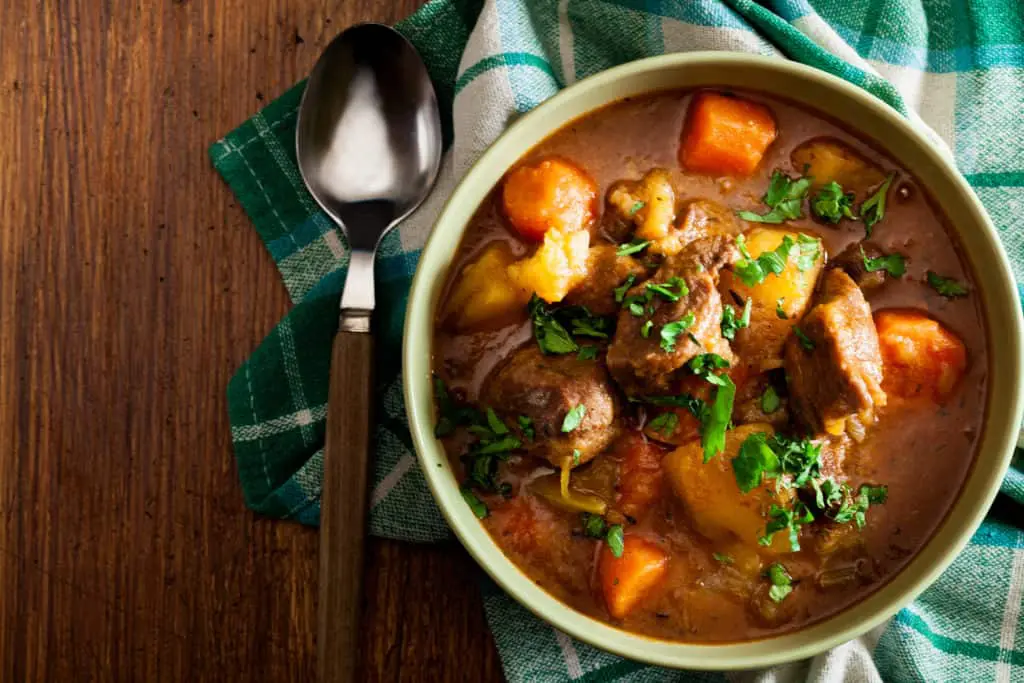
This is one of our most beloved classical Irish food dishes and it is actually thought of as the national dish of Ireland. It is very common to have Irish Stew on St. Patrick’s Day. The most popular ingredients you would find in Stew are lamb, mutton, potatoes, carrots, turnips and onions. Lamb can be substituted for beef without comprising on taste or flavour.
When Irish people started immigrating to America they brought their food traditions with them. They started to adapt and evolve recipes over time to include local offerings. You’ll find a lot of places around Ireland still serve the traditional style of stew; it is a must try next time you’re at a pub or restaurant in Ireland. Characteristics of a traditional stew are that it is slow cooked and has a variety of vegetables as well as a thick gravy.
This dish has been around for many centuries and is most popular in the winter months. Irish stew is served with some form of potatoes, usually jacket ‘spuds’ or mashed potatoes.
Guinness Stew:
Guinness, a popular pint of stout famous for being Irish can be used as a cooking ingredient, most commonly in Guinness stew. The Guinness adds a more intricate flavour to the dish, and makes a rich, creamy sauce. Beef is favoured over lamb for this dish, but it really goes down to personal preference and whatever is on hand!
Traditionally, Irish meals are slow cooked which creates amazing flavours. Practically speaking, many dishes were cooked over open fires in the past without any modern appliances, so slow cooking was the only way to cook meats. As dishes could be left alone for hours to slow cook, whoever was making the meal had more time to do other things while they waited. Traditional Irish food is nothing if not practical!
Shepard’s Pie
Shepard pie is very similar to stew and mash, it is just prepared a bit differently. It is a staple of any Irish dinner table, with a rich filling comprised of lamb, vegetables and gravy topped with mashed potatoes. The dish is the definition of a comfort food and Irish people love to have it during the cold, dark winter months.
Popular ingredients include:
- Beef or Lamb
- Seasonings & Gravy
- Carrots
- Parsnips
- Turnips
- Mashed Potatoes
- Cheese
Shepherds pie was first introduced by housewives in the late 1700s who were looking for ways to incorporated leftovers into their meals. Even though it was created to use up leftovers, it soon became a popular Irish dish in its own right.
As time has gone on Irish people have loved to put their own spin on the dish with different seasonings and vegetables. Everyone makes their own version of mash potatoes, so depending on where you are having it eating the pie can be a very diverse experience. For many Irish people, even the most skilled chefs in the world could not improve the recipe they grew up with!
You will find shepherds pie in most Irish pubs and you may notice different tastes depending on what part of Ireland you’re in.
Bacon and Cabbage
A firm favourite in many households, Bacon and Cabbage are boiled together in a pot and are usually accompanied by boiled potatoes, turnips and carrots as well as a parsley sauce.
It is another simple dish, but it is hearty and serves it’s original purpose to be a nutritious meal for farmers working long days in the field. Once again, many Irish people experience great nostalgia eating the dish. The secret is boiling your cabbage in the same pot as the bacon. The saltiness of the meat flavours the cabbage nicely.
The American version of this dish is corned beef and cabbage. While this is not traditionally eaten in Ireland, it is interesting to see how recipes can evolve over time. Bacon was probably more expensive or less common in America and so corned beef became the substitute and a traditional Irish-American dish in its own right.
Bacon and Cabbage is one of the most popular traditional Irish foods you can find.
Colcannon and Champ
Both of these dishes are variations of mashed potatoes many Irish people will be familiar with.
Colcannon is made using potatoes, cabbage, spring onions, butter and milk. Salt and pepper should be added to taste.
Potatoes are boiled and cooked until tender. Then butter and milk are added to create mashed potatoes. Once you have achieved your desired mash, add finely chopped spring onions and steamed cabbage.
Donal Skehan’s Colcannon recipe is a simple guide for anyone wishing to make the dish.
Champ is mashed potato with spring onions or scallions added. It is more commonly eaten as it is faster to make. The scallions can be added raw, or cooked in milk until soft. These dishes prove that traditional Irish food does not have to be complicated or include lots of different ingredients to be enjoyed.
Throughout history the potato was the main food source in Ireland, making the potato blight all the more devastating. It is still very common in Ireland to enjoy potatoes; it is not unusual to have potatoes with dinner every day in traditional Irish homes.
Dublin Coddle
Traditional Irish food doesn’t get as iconic as Coddle, a dish that is most popular in Dublin.
Coddle has a very traditional backstory. In the past Catholics were not allowed to eat meat on Fridays, so many Irish people would have left over meat to use on Thursday. Dublin’s answer to this was Coddle; which most commonly consists of sliced sausages, rashers, chunky potatoes, onions, and any left over veg (usually carrots). The meat can be fried beforehand for extra flavour.
The ingredients are braised in the meats stock water, and ingredients are then steamed. Chicken stock or soup is a handy alternative that has been used in more recent years. While not traditional, Irish food has always been about using the ingredients you have and creating your own version of dishes.
Coddle was said to be the favourite food of many famous Irish authors, including Sean O’Casey and James Joyce.
Seafood
Considering we live on an island, Ireland has always had plenty of access to seafood. I feel as though Irish seafood can be overlooked when its comes to Irish cuisine. While the following dishes may not be considered as traditional as the items we have already mentioned, seafood deserves a spot on this list!
From Molly Malone‘s fish market stall to the Galway Oyster Festival, there is plenty of ways to enjoy seafood in Ireland.
Fish Pie:
A dish that originated in Scotland, fish pie uses many different types of fish that has been skinned and boned, including haddock, hake, monkfish and trout. The fish is added to a tray with white sauce. Vegetables including carrots, parsnips and onions are added and mashed potato is placed on top and baked.
Irish Chowder:
Irish seafood chowder is a simple and delicious recipe. Haddock, mussels, prawns and any other white fish as well as boiled potatoes are added to the thick smooth chowder sauce and combined.
Fish cakes:
Irish fishcakes are a combination of fileted fish mixed with potatoes which is fried until golden. It’s a delicious dish that follows the Irish tradition of using up leftover ingredients. Fishcakes are common dishes all over the world; there are so many delicious variations of the tasty dish.
Dublin Lawyer:
The Dublin Lawyer is a lobster dish which dates back for many years. It is a lobster cooked in whiskey and cream. It is thought to have been named after the cities wealthy lawyers who loved whiskey! The dish is so old that its impossible to know for sure how it got its name however.
Once upon a time, lobster was common in Ireland so the dish itself wasn’t reserved for the elite.
Smoked salmon with brown bread:
This item is more of a modern Irish food tradition, but smoked salmon on traditional Irish brown bread with cream cheese is a delicious snack that highlights the best of Irish seafood, dairy and bread.
Salmon is also an important fish in Irish mythology, featuring in ‘The Salmon of Knowledge’. Essentially the legend tells us that the first person to taste the salmon of knowledge would gain infinite wisdom. A wizened poet spent seven years fishing for the salmon of knowledge. When he finally caught it, he gave it to his servant/student Fionn to prepare the fish, under the strict instruction not to eat any of it.
Fionn did not eat the salmon as instructed, but when cooking the fish, a drop of oil splashed out and burnt his finger. The boy instinctively sucked his thumb to ease the pain, instantly gaining the knowledge of the world. You can read more about the story in our article about the Tuatha de Danann, Ireland’s ancient Gods.
Seaweed:
Seaweed is a popular ingredient in traditional Irish cooking, especially along the coast and on islands such as the Aran Islands. It was used as a fertiliser as it was high in nutrients and helped to produce rich fertile soil. It is also considered a ‘super-food’ by some due to its high nutritious value and considerable volume of vitamins, protein and iron.
It is tradition in the Aran islands to harvest seaweed, and has been done for generations. Eating seaweed has become a modern trend as the health benefits of the food have become known. Rich in minerals and vitamins, the food is surprisingly versatile in cooking. You can sprinkle seaweed flakes over any meals, cook as a spaghetti substitute or even eat the smoky and salty leaves raw as a snack.
Bláth na Mara is an Irish business on the Aran islands that produce high quality organic seaweed products.
Traditional Irish Food – Desserts
Dessert was not traditionally eaten after meals in Ireland. They would be served on very special occasions and were not commonplace. More commonly, tea and bread was eaten after dinner. We have already covered soda bread, so these are other supper options that would have been eaten after dinner.
Baírín Breac or Barmbrack
A cake of bread mixed with fruits and spices, “Brack” as it’s colloquially known is often enjoyed with a cup of tea. It is eaten all year round, but has its own Halloween Tradition.
A traditional Barmbrack recipe includes mixed fruit, cold tea, mixed spices and maybe even a dash of whiskey.
Traditionally at Halloween a ring is placed in the brack, and whoever receives the slice of brack with the ring in it is said to be the next to get married. Sometimes a coin is also placed inside and the lucky recipient is said to become rich within the next year!
This tradition is still popular today as you’ll find brack in almost every house you visit during Halloween. Did you know that Halloween originated in Ireland? The pagan festival of Samhain was celebrated on the 31st of October, and many Halloween traditions such as dressing up and carving pumpkins started in Celtic Ireland.
You can find out more about Samhain by reading our articles ‘Irish Halloween traditions through the years‘ and ‘7 facts about Samhain‘.
Bread and Butter Pudding
A traditional pudding in British and Irish cuisine, bread and butter pudding consists of (you guessed it) slices of buttered bread layered with raisins and seasonings which include nutmeg and vanilla.
The bread is mixture is placed in an oven dish and then covered with an egg custard mixture.
Gur Cake
Gur cake is a pastry associated with Dublin. It is known as Chester cake in other parts of Ireland and the UK. Gur cake consists of a thick layer of filling between two thin layers of pastry.
The filling is a dark brown paste which is made up of a cake or bread crumbs, dried fruits such as sultanas and raisins, a sweetener and a binder. As a gur cake was made from leftovers, It was always one of the cheaper pastries in a shop, and that is how it got its name.
Gur is a shortened version of gurrier, the name given to a child who skipped school. The act of skipping school became known as being ‘on the gur’. As the pastry was much cheaper than others, it was usually the only cake gurriers could afford, and so over time pastry became known as a Gur cake
Pancakes
This item might raise a few eyebrows on our list of traditional Irish food; I haven’t seen it on any other lists of Irish food and it definitely wasn’t invented in Ireland, so why is it here? Well there is a story behind traditional Irish pancakes that is quite interesting.
In the past fasting was very strict in Ireland during the 40 days of lent. Shrovetide was the pre-Lenten season that specifically prepared for the upcoming period of fasting and prayer.
On the day before Lent, foods that would not be eaten for the 40 days would be used up. Many foods that were not allowed during lent included meat and animal based products.
Families would feast on Shrove Tuesday, using all of the ingredients that would not keep fresh over the 40 days, such as eggs, milk, butter and sugar. Pancakes became popular as they contain all of the ingredients that would spoil, but also they could be altered easily to accommodate for extra or missing ingredients and were quick to make. Salt, flour, butter, eggs, milk and sugar were all that was needed to make the pancakes.
Nowadays Every Irish person looks forward to Pancake Tuesday, or Shrove Tuesday as it is also known as. Pancake Tuesday is more popular than ever and is often celebrated in schools and at home, marking the beginning of the countdown to Easter. Fasting isn’t as common and our pancakes definitely have more toppings nowadays!
Irish Coffee
What better way to finish a traditional Irish meal than with an Irish Coffee? Irish coffee is a caffeinated alcoholic beverage, consisting of of hot coffee, hot whiskey, sugar and usually a bit of cream.
Hot coffee is poured into a mug. whiskey and sugar is then added to taste. Fresh cream that has been lightly whipped floats on top.
Baileys Coffee
Sometimes Baileys liquor is used with the whiskey or by itself for a Baileys coffee. Baileys is a cream liqueur. It is an alcoholic drink flavoured with cream, cocoa and whiskey and so naturally fits the criteria for an Irish coffee. A baileys coffee is more creamy than an Irish coffee and is a popular alternative to the most traditional Irish drink.
Traditional Irish Food – Final Thoughts
We hope you have enjoyed our article on Traditional Irish Food! Which Traditional Irish dish would you like to try first? We apologise if this article has made you hungry. What is you’re favourite traditional Irish food or traditional meal from another country? We’d love to hear them in the comments below!
If you would like to find out more about other aspects of Irish tradition, such as sports, festivals, holidays, clothing, music, folklore, language and more why not check our our blog on Irish Traditions!
Other Connolly Cove articles that may interest you:
Best Places to get Food in Galway | Galway Pub Guide: 25 Traditional Irish Pubs and Trendy Bars | Best Asian Food in Belfast | Healthy Irish Restaurants
The Truth about the Claddagh Ring Curse: Debunking Myths and Exploring the Symbolism
Mythology and Folklore
19/04/2024

Top 10 Irish Public Holidays and Traditions to Experience on Your Ireland Holidays
Festivals and Events
18/04/2024

6 Top Mourne Camping Sites for an Unforgettable Experience Under the Stars
Northern Ireland
18/04/2024

Eostre: The Germanic Goddess of Dawn and Spring Equinox Celebrations
Mythology and Folklore
17/04/2024

Explore the Top Hotels in County Cavan for Your Ultimate Getaway
County Cavan
17/04/2024