
Belfast, the heart of Northern Ireland, has undergone a remarkable transformation in recent years, evolving from a city burdened by historical strife to a vibrant cultural hub. Nestled between the Mourne Mountains and the Lough, Belfast’s rich history, lively arts scene, and stunning landscapes make it an unforgettable destination. This 360-degree tour explores Belfast’s key attractions, blending its storied past with its modern vibrancy, offering you a thorough introduction to this incredible city.
Table of Contents
Explore Belfast With a 360’ Tour of Belfast City

Belfast, the capital of Northern Ireland, is always the first thought when exploring it. Here is a 360-degree tour of Belfast City to offer some suggestions.
Belfast City is located on the banks of River Lagan on the east coast of Ireland. Not only is Belfast the capital, but it’s also the largest city in Northern Ireland. Belfast is also the second largest on the island of Ireland. Belfast’s history started when it played an essential role as a port. Also when it was the biggest linen producer in the world. Thus played a crucial role in the Industrial Revolution and earned the nickname “Linenopolis”.
A Historical Overview of Belfast

Belfast’s history is both complex and captivating. The city rose to prominence during the 19th century due to its shipbuilding industry. Its most famous creation, the RMS Titanic, was built here, and the city’s maritime legacy is still visible today in the Titanic Quarter. However, Belfast’s history is not just one of industrial glory—it also carries the scars of conflict. The Troubles, a violent political and sectarian struggle that lasted from the late 1960s until the Good Friday Agreement in 1998, profoundly impacted the city. Today, Belfast has reconciled its troubled past and embraced a future of cultural growth, with stunning examples of its transformation visible throughout the city.
Start Your Journey at City Hall: A Monument to Belfast’s Evolution
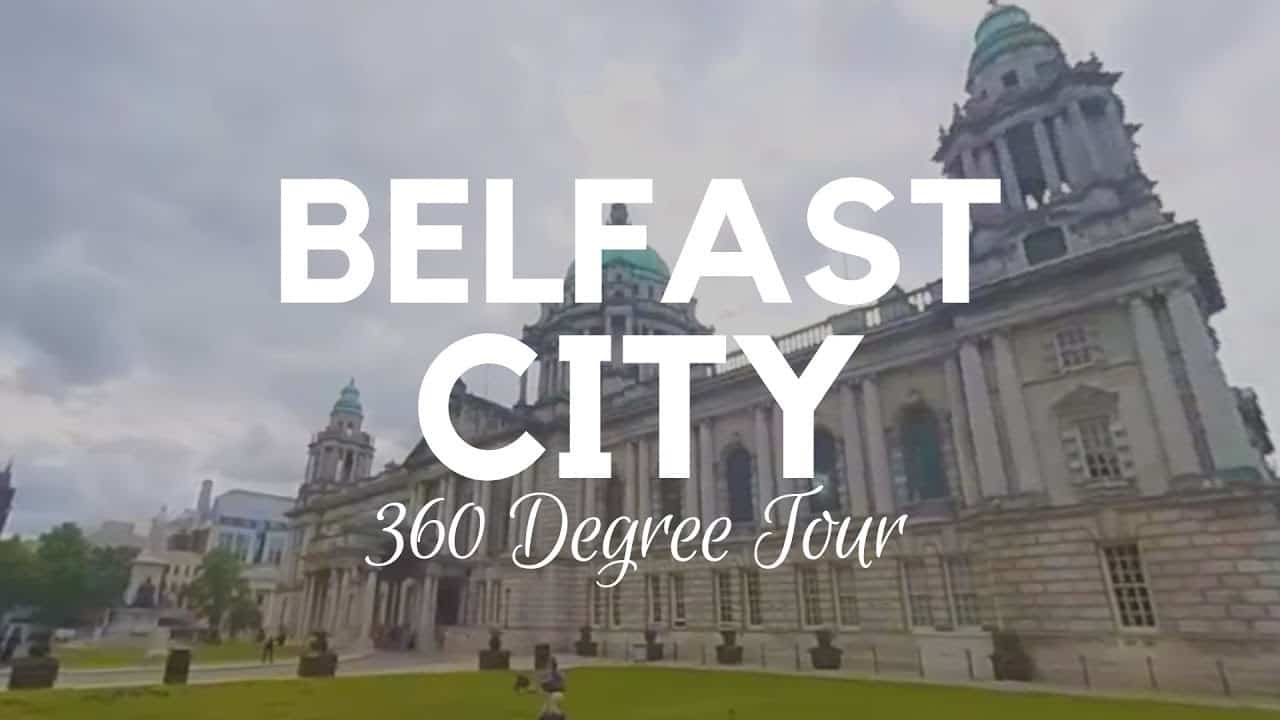
Your 360-degree tour begins at Belfast City Hall, one of the city’s most iconic buildings. This magnificent Edwardian Baroque structure, designed by Sir Alfred Brumwell Thomas, dominates Donegall Square with its impressive green dome and grand stone columns. Completed in 1906, City Hall is an architectural gem symbol of Belfast’s journey from an industrial powerhouse to a modern metropolis.
The building’s interior is equally captivating, with its intricate marble floors and historic stained glass windows. A free guided tour provides a deeper understanding of the city’s civic history and rapid growth during the Victorian and Edwardian eras. A visit to the Titanic Memorial Garden, located in the grounds, is a poignant reminder of the city’s maritime legacy, commemorating the tragic loss of life from the sinking of the Titanic.
The Titanic Quarter: Where History Meets Innovation
Belfast’s Titanic Quarter is the perfect next stop on your tour. Once dominated by the shipyards that produced the Titanic, this area has been rejuvenated into a hub of innovation and culture. At the heart of the Titanic Quarter is Titanic Belfast, a striking building designed to resemble a ship’s bow. This world-class museum offers a fully immersive experience, telling the story of the Titanic from its conception to its fateful voyage and tragic end.
Inside, you’ll find various interactive exhibits exploring the ship’s construction, its passengers, and the disaster’s lasting impact. Beyond the museum, the Titanic Slipways are a fascinating site to visit, where the Titanic was launched initially. Here, you can view the Titanic Dock and Pump-House, which housed the ship during its construction and the dry dock where it was launched.
The HMS Caroline, a former Royal Navy ship that saw service during World War I, is now a museum in Belfast Harbour. The ship offers an educational and hands-on experience aboard a naval vessel in the early 20th century.
The SS Nomadic, the last surviving White Star Line ship, is another highlight of the Titanic Quarter. This vessel once served as the Titanic’s tender, transporting passengers from the shore to the grand ship. Today, it stands as a testament to Belfast’s shipbuilding heritage.
St George’s Market: Belfast’s Vibrant Heartbeat
A short walk from the Titanic Quarter brings you to St George’s Market, one of Belfast’s oldest and most beloved landmarks. With its Victorian-era architecture and bustling atmosphere, St George’s Market is the place to experience the city’s lively spirit. The market operates on Fridays, Saturdays, and Sundays, offering an eclectic mix of fresh local produce, artisan foods, handmade crafts, and live music performances.
Visitors can sample local delicacies such as Irish stew, soda bread, and freshly caught seafood or browse the stalls for unique gifts, antiques, and artwork. The market is also a hub for independent traders, offering a chance to pick up locally crafted jewellery, handmade pottery, and vintage clothing.
The market’s food section is trendy, with an array of global cuisines reflecting Belfast’s diverse population. Whether you’re looking to enjoy a hearty breakfast, grab lunch, or pick up fresh ingredients for dinner, St George’s Market has something for everyone.
Cathedral Quarter: The Cultural Soul of Belfast
Belfast’s Cathedral Quarter is one of the most vibrant areas in the city, filled with creativity, history, and character. The quarter is named after St Anne’s Cathedral, a beautiful example of neo-Romanesque architecture, whose stunning mosaics and intricate stonework are a sight to behold. The cathedral is a central point in the area, and from here, the streets of the Cathedral Quarter are lined with pubs, galleries, and cultural spaces that celebrate Belfast’s artistic scene.
Walking through Commercial Court, one of the city’s most photographed streets, you’ll encounter colourful murals, quirky coffee shops, and independent boutiques. This is the place to discover the more artistic side of Belfast, where creativity thrives in every corner. The murals and street art throughout the quarter often tell the stories of Belfast’s turbulent past, offering a poignant and eye-catching visual history of the city.
Belfast is home to a thriving arts community, and The MAC (Metropolitan Arts Centre) is the jewel in its crown. Located in the Cathedral Quarter, the MAC is a state-of-the-art venue that hosts contemporary art exhibitions, theatre performances, and film screenings. Its striking modern architecture contrasts beautifully with the surrounding historic buildings.
Nearby, The Black Box is an intimate venue offering a variety of performances, from live music to theatre and comedy shows. It’s the ideal spot to experience Belfast’s avant-garde and experimental art scene.
The Peace Walls: Reflecting on Belfast’s Divided Past
Belfast’s Peace Walls are an enduring reminder of the city’s complex past. These walls, which divide predominantly Catholic and Protestant communities, were initially erected to prevent violence during the Troubles. Today, they remain a significant part of the city’s landscape.
To fully appreciate the significance of the Peace Walls, consider taking a Black Cab Tour, which offers an insightful commentary on the history of the Troubles, the role of the Peace Walls, and the impact of the conflict on the community. As you drive through areas like Falls Road and Shankill Road, you’ll encounter vibrant murals that depict political messages, historical events, and portraits of those who lived through the Troubles. These murals have become essential to Belfast’s identity, with many telling stories of struggle, resilience, and hope for peace.
Botanic Gardens and Queen’s University: A Stroll Through Tranquility
One of Belfast’s most beautiful green spaces is the Botanic Gardens, located south of the city. This Victorian park offers a tranquil escape from the bustle of city life. The Palm House is one of its most famous features, with its impressive glass structure housing exotic plants from around the world, including tropical ferns, orchids, and palms. The Tropical Ravine, another architectural marvel, is home to a collection of rare and endangered species from rainforests.
Adjacent to the Botanic Gardens is Queen’s university, one of the UK’s oldest and most prestigious universities. The university’s stunning Lanyon Building, with its neo-Gothic architecture and red brick facade, is one of Belfast’s most iconic landmarks. The campus is a peaceful spot to wander, with its lovely courtyards and impressive academic buildings.
Crumlin Road Gaol: A Journey into Belfast’s Dark Past
For a more thought-provoking experience, head to Crumlin Road Gaol, a former prison that housed some of Northern Ireland’s most infamous inmates. Built in the 19th century, the prison was in use until 1996 and is now a museum that provides a chilling look into Belfast’s troubled past.
The guided tours take you through the dark, cold cells and courtyards, sharing stories of the political prisoners held here, tales of daring escapes, and the hardships faced by the inmates. The prison’s unique history—a symbol of oppression and a site of resistance—offers visitors a deeper understanding of the social and political tensions that shaped Belfast.
Belfast Castle and Cave Hill: A Scenic Escape
For stunning views of Belfast, head to Belfast Castle on the slopes of Cave Hill Country Park. Built in the 19th century, the castle proudly overlooks the city and Belfast Lough. Surrounded by landscaped gardens and woodland, it is perfect for a peaceful walk or picnic. The grounds also feature a popular café and visitor centre.
Hikers can explore the trails of Cave Hill, a popular spot for outdoor enthusiasts. The hill offers panoramic views of the city, the lough, and the surrounding mountains. The summit is known for its distinct shape, resembling a sleeping giant. It offers a sense of tranquillity and natural beauty that contrasts with the city’s urban energy below.
Victoria Square: A Modern Twist to the City’s Landscape
To wrap up your tour, head to Victoria Square, Belfast’s premier shopping centre. With its sleek glass dome and rooftop viewing platform, Victoria Square offers stunning views of the city and beyond. It’s a great spot to grab a coffee and relax, with a wide variety of high-end stores, restaurants, and entertainment options.
Conclusion: Belfast’s Dynamic Blend of Old and New
From its turbulent history to its vibrant cultural scene and stunning landscapes, Belfast offers visitors a 360-degree experience that blends the past with the present. Whether exploring the rich maritime heritage at the Titanic Quarter, reflecting on the legacy of the Peace Walls, or relaxing in the lush Botanic Gardens, Belfast invites you to discover a city full of contrast and charm.
As Belfast continues to evolve, it remains a city where history and modernity coexist, providing an enriching experience for anyone who visits. Whether you’re a history buff, an art lover, or simply someone looking to enjoy the beauty of Northern Ireland, Belfast promises to leave a lasting impression.
check out some of our related blogs that might interest you such as 360 video tour of Northern Ireland, 360 degrees Tour of Narnia Trail, 360 tour of Ballygally Beach,360 tour of the Peace Walls.