
The Saltee Islands are a pair of islands on the southern coast of County Wexford in Ireland. They are known for their natural beauty and are one of the world’s major bird sanctuaries.
The Neale family privately owned the islands, which bought them in late 1943. Prince Philip, the first, was the buyer, and his six children now privately own the islands: five sons and one daughter, Anne. His oldest son inherited his title in early 1998 when Philip sadly died.
Table of Contents
A Brief History of the Saltee Islands
The Saltee Islands have a history as rich and varied as the flora and fauna that inhabit them. Archaeological evidence suggests that the islands were known to humans as far back as the Neolithic period. These early inhabitants were likely drawn to the islands for their abundant resources, including fish, birds, and marine mammals.
In the centuries that followed, the islands played a role in the maritime activities of the region. During the medieval period, pirates and smugglers used the Saltee Islands as a refuge, taking advantage of their strategic location and the numerous coves and inlets that provided perfect hiding spots. The island’s proximity to the major ports of Waterford and Wexford made them an ideal base for illicit activities.
The Saltees also have a fascinating connection to the history of Irish royalty. In 1943, the islands were purchased by Michael the First, Prince of the Saltees, a colourful character who declared himself the ruler of the islands. A local farmer and former Royal Air Force officer, Michael Neale assumed the title and established a peculiar micro-nation. His self-styled monarchy, complete with coronations and royal regalia, added a touch of whimsy to the islands’ history. Although the title is symbolic mainly today, it is a testament to the unique and intriguing character of the Saltees.
Geology and Geography
The Saltee Islands’ geological makeup is both diverse and fascinating. Formed over 400 million years ago during the Devonian period, the islands primarily comprise granite. This ancient rock gives the islands their rugged and enduring character. The weathering of the granite over millennia has created a landscape of cliffs, rocky shores, and sandy beaches that provide diverse habitats for wildlife.
Great Saltee, the larger of the two islands, covers approximately 89 hectares. It features a varied topography with high cliffs on the western side, offering dramatic views of the Atlantic Ocean. The eastern side is more sheltered, with gentler slopes leading to sandy beaches and coves. Little Saltee, although smaller at around 37 hectares, boasts similar geological features and offers its unique charm.
The islands are situated in the Celtic Sea, just 5 kilometres off the coast of Kilmore Quay in County Wexford. Their proximity to the mainland makes them easily accessible, yet their relative isolation has helped preserve their pristine condition.
Wildlife: A Naturalist’s Paradise
The Saltee Islands are renowned for their incredible biodiversity. They are particularly famous for their seabird colonies, making them a haven for ornithologists and bird watchers. The islands are home to one of the largest and most important seabird colonies in Ireland, hosting a variety of species that come to breed and nest.
Birdlife
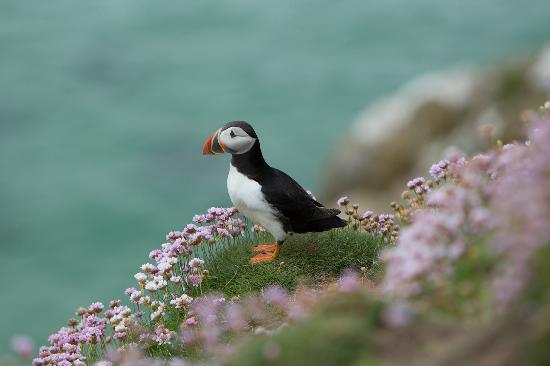
One of the most iconic birds of the Saltees is the Atlantic puffin. These charismatic birds are a delight to observe with their colourful beaks and distinctive waddling gait. The puffin colony on Great Saltee is one of the largest in Ireland, with thousands of birds returning each year to breed. Visitors can watch these delightful creatures as they nest in burrows and take to the sea in search of fish.
In addition to puffins, the islands host large populations of gannets, razorbills, guillemots, and kittiwakes. The cliffs of Great Saltee are significant for gannets, which nest in large numbers on the rocky ledges. The sight of these majestic birds diving into the sea from great heights is a spectacle not to be missed.
The islands also attract other bird species, including storm petrels, fulmars, and shearwaters. During the migration season, the Saltees serve as a vital stopover point for numerous species, adding to the island’s avian diversity.
Marine Life
The waters surrounding the Saltee Islands are equally rich in marine life. The islands’ marine ecosystem benefits from mixing warm waters from the Gulf Stream with the calmer waters of the Celtic Sea, creating a nutrient-rich environment supporting diverse marine species.
Seals, both grey and harbour seals, are common around the islands. These playful marine mammals can often bask on the rocks or swim gracefully in the clear waters. The islands are also a prime location for spotting dolphins and porpoises, and they frequently visit the area.
The underwater habitats around the Saltees are teeming with life. The rocky reefs and kelp forests shelter various fish species, including wrasse, pollock, and conger eels. The area is also home to crustaceans, such as lobsters and crabs, which thrive in the crevices and nooks of the underwater landscape.
Terrestrial Wildlife
While the birdlife and marine creatures often steal the spotlight, the terrestrial wildlife of the Saltee Islands is equally fascinating. The islands support a range of plant species, many of which are adapted to the harsh coastal conditions. The flora includes maritime grasses, sea thrift, and sea campion, which add splashes of colour to the landscape during the blooming season.
In addition to the flora, the islands are home to various invertebrates, including butterflies, moths, and beetles. The rocky terrain and sandy beaches provide habitat for these small but vital creatures, contributing to the islands’ overall biodiversity.
Exploring the Saltee Islands
Visiting the Saltee Islands is an adventure in itself. The journey begins at Kilmore Quay, a charming fishing village in County Wexford. From here, visitors can take a short boat trip to the islands. Several local operators offer trips to Great Saltee, the most accessible of the two islands. Little Saltee, being more rugged and less developed, is generally not open to the public.
Upon arriving at Great Saltee, visitors are greeted by a landscape that seems almost otherworldly in its beauty. The island’s rugged cliffs, sandy beaches, and verdant meadows provide a stunning backdrop for exploration. The island is crisscrossed by a network of paths and trails, allowing visitors to explore at their own pace.
Walking and Hiking
One of the best ways to experience the Saltee Islands is on foot. The network of trails on Great Saltee offers a variety of routes, from gentle strolls along the coastline to more challenging hikes up to the island’s highest points. The trails provide access to some of the best viewpoints on the island, offering panoramic views of the surrounding sea and coastline.
The western cliffs of Great Saltee are a must-visit for bird watchers. Here, visitors can observe the bustling seabird colonies up close, with gannets, puffins, and other species going about daily activities. The cliffs also offer breathtaking views of the Atlantic Ocean, with the waves crashing dramatically against the rocks below.
For those interested in history, a visit to the ruins of the island’s old monastery is highly recommended. The monastery, which dates back to the early medieval period, provides a glimpse into the island’s past and the lives of its early inhabitants.
Wildlife Watching
The Saltee Islands are a paradise for wildlife enthusiasts. Bird watchers will be in their element, with opportunities to observe various seabirds in their natural habitat. The best time to visit for bird watching is during the breeding season, which typically runs from April to August. During this period, the islands are alive with the sights and sounds of thousands of birds nesting, feeding, and rearing their young.
Marine wildlife can be observed from the shores or boat tours around the islands. Seals are a common sight, and with some luck, visitors may also spot dolphins or porpoises swimming in the surrounding waters.
Photography
The Saltee Islands are a photographer’s dream. The dramatic landscapes, abundant wildlife, and ever-changing light conditions provide endless opportunities for capturing stunning images. Whether it’s the vibrant colours of a puffin’s beak, the majestic flight of a gannet, or the rugged beauty of the island’s cliffs and beaches, there is no shortage of subjects to photograph.
Photographers will particularly appreciate the golden hours between sunrise and sunset when the light is soft, and the landscape is bathed in warm hues. The reflections on the water and the play of light and shadow on the cliffs create a magical atmosphere perfect for photography.
Conservation and Preservation
The Saltee Islands are a place of natural beauty and an essential site for conservation. The islands’ unique ecosystems and the wildlife they support are protected under various conservation initiatives.
Great Saltee is a designated Special Protection Area (SPA) under the European Union’s Birds Directive. This designation recognises the island’s importance as a seabird breeding site and legally protects the habitats and species. The SPA status helps preserve the island’s natural environment for future generations.
In addition to the SPA designation, the Saltee Islands are part of the Saltee Islands Nature Reserve, managed by the National Parks and Wildlife Service (NPWS) of Ireland. The reserve aims to protect the islands’ unique habitats and wildlife through habitat management, monitoring, and research.
Visitors to the Saltee Islands are encouraged to respect the natural environment and follow Leave No Trace principles. This means not disturbing the wildlife, staying on designated paths, and returning all litter to the mainland. By following these guidelines, visitors can help ensure that the islands remain a pristine and unspoiled haven for wildlife.
Visiting Saltee Islands
Visitors are allowed to visit the island during the day. Only approved and arranged visitors to the island by Kilmore Quay are granted entry. If you arrive at the island on an unplanned trip, you will be asked to leave.
The Neale family kindly wishes that people respect the islands and various rules while visiting.
These rules include:
- No staying overnight. Including camping.
- No fires on the island.
- No dogs allowed.
- No drones.
- No rubbish.
- Don’t visit Little Saltee as it’s dangerous.
- Don’t visit the Neale family residence.
- Be respectful.
Birds of Saltee Island
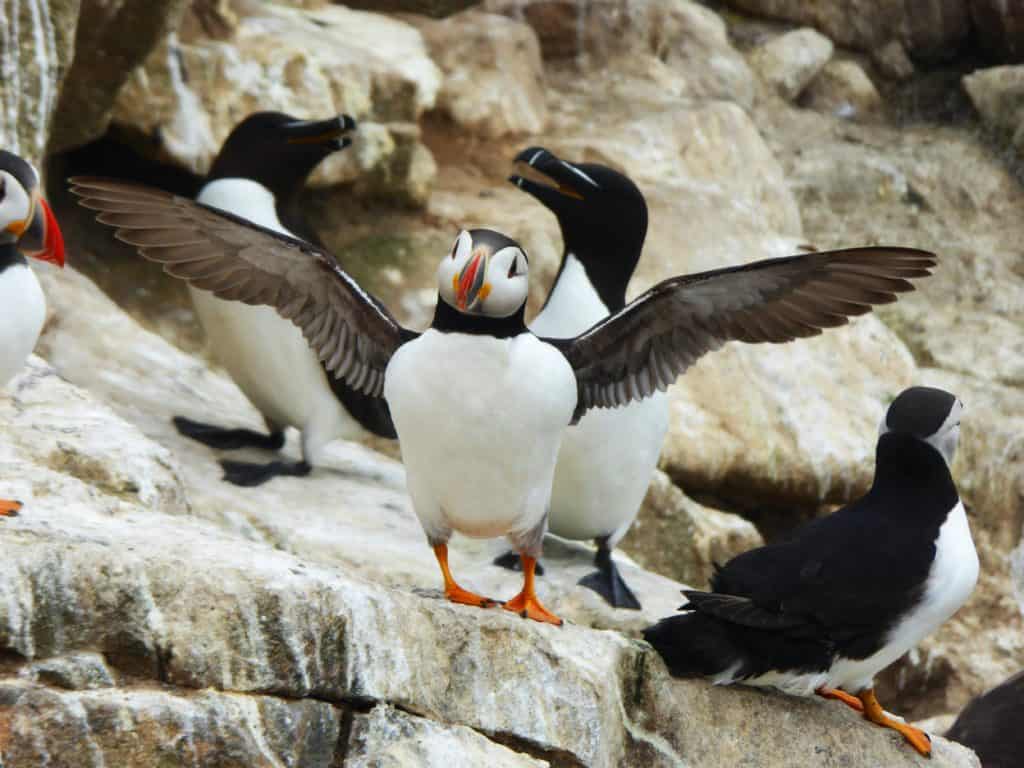
The bird is a world-recognized bird sanctuary, with over 220 species of birds recorded on the island annually.
There are three main groups of birds on the island: breeding sea birds, resident land birds, and migrant birds from across the world.
Birds that you can find on the island include:
- Gannets
- Puffins
- Manx Shearwater
- Fulmar
- Kittiwake
- Razorbill
- Guillemot
- Great Black Backed Gull
Conclusion
The Saltee Islands are a true hidden gem in County Wexford, offering a unique blend of natural beauty, rich history, and abundant wildlife. Whether you’re a bird watcher, a wildlife enthusiast, a photographer, or simply someone looking to escape the hustle and bustle of everyday life, the Saltee Islands have something to offer. The breathtaking landscapes, the vibrant seabird colonies, and the tranquillity that pervades the islands make them a must-visit destination for anyone exploring Ireland’s southeastern coast.
As you explore the rugged cliffs, the sandy beaches, and the verdant meadows of the Saltee Islands, you’ll be captivated by their timeless beauty and the rich tapestry of life they support. In the words of Michael the First, Prince of the Saltees, “The Saltees are a place apart, a world unto themselves, where nature reigns supreme and the spirit finds peace.”
The islands are a source for bird research, and many bird watchers and ornithologists visit them.
Have you ever visited the Saltee Islands? Please share your experience and why you visited in the comments below.
More amazing blogs to read:
Irish National Heritage Park, County Wexford | Giza Zoo, Animal Kingdom | Loftus Hall, Ireland’s Most Haunted House | A Guide to Surfing in Ireland