


The 30 Most Popular Haunted Places in Italy
Updated On: April 20, 2024 by  Dina Essawy
A lot of countries believe in different superstitions, but Italy is known to be one of the most superstitious countries in the world, so it’s no surprise that many abandoned locations have gained notoriety as haunted and of course, no one can deny or confirm such rumours as no one dares comes close to these places.
Now, we’ve brought you some of our favourite haunted locations in Italy to find out what made them gain such a notorious reputation.
The Haunted Chapel of the Dead (Cappela Mortiti) in Otranto
Chiesa Dei Morti, or the Church of the Dead, is a small church in the medieval town of Urbania, in central Italy.
Built by the Normans in the 11th century in Otranto, a town in the province of Apulia, the church gained its notoriety from the stacked bones and skulls of 813 Otranto martyrs who were tragically beheaded during the Turkish massacre of 1480. Furthermore, the stone on which these massacres were performed is exhibited in glass cases behind the altar. On top of that, there’s also a dungeon-like crypt that brave visitors can enter.
A macabre display of mummies behind the altar has been going on since 1833. They are held in individual glass cases, eighteen mummies to be exact. The bodies have been mummified via a special mould that dries all of the moisture out of the bodies.
If you’re accompanied by a tour guide, they’ll surely be able to tell you how each of the mummies passed away.
Seems like a perfect destination for the whole family, doesn’t it?
The Haunted Ca’Dario in Venice
Built in the 15th century, the Ca’Dario building is known as one of the most haunted buildings in Venice. It was originally owned by Giovanni Dario who lost his son to murder and daughter to suicide while they lived in the house. There were two more murders and suicides in Ca’Dario and the 13 successive owners have all died mysteriously.
Architecturally beautiful Ca’Dario is a home on the edge of the Canal Grande; locals refer to it as the ‘house of no return’ because of the eerie and mysterious deaths that have occurred to anyone who has owned the building.
Haunted Capuchin Catacombs in Palermo
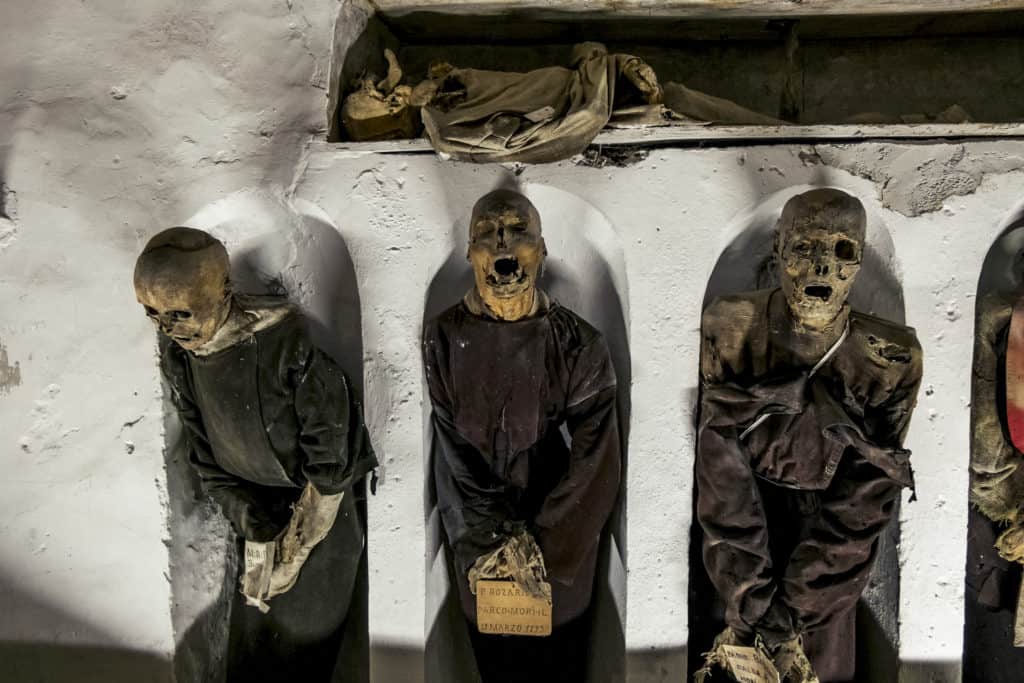
It’s not enough that the Capuchin Catacombs is a burial crypt, but it is known for its scary and haunted atmosphere because of the 8,000 mummies that line its walls in varying with some of them morbidly set up in different poses. The crypt is located off the mainland in Palermo, Sicily, and was originally meant for the monks of the Capuchin monastery, but eventually, other people of status were allowed to be buried there.
Where did it get its sinister reputation though? It’s because many tourists reported hearing whistling, and whispering, and even returned to a room to find that the skeletons have moved into different positions!
The Mummies of Ferentillo in Umbria
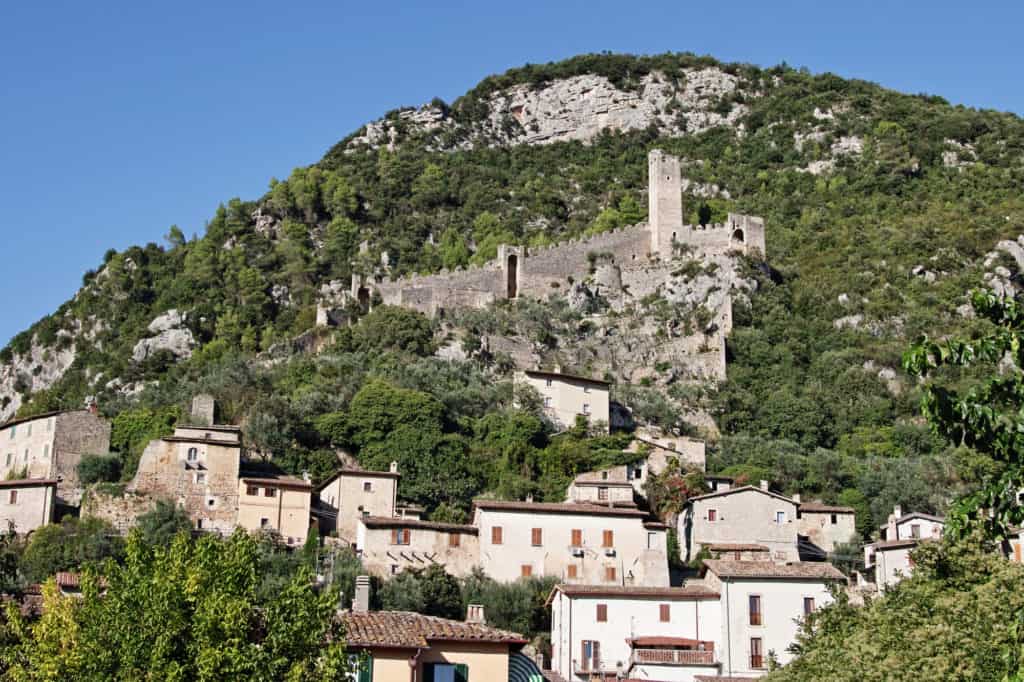
Mummies are usually embalmed on purpose due to the request of the deceased’s family, but what about the dead bodies that were transformed into mummies on their own? Many of the bodies buried at the Church of Santo Stefano in the town of Ferentillo in southern Umbria were preserved by a rare microfungus.
The phenomenon is so bizarre that some of the bodies are on display at the Museum of the Mummies of Ferentillo at the bottom of the church. The bodies are so well preserved that some of the corpses still have hair, beards, and teeth, and a few are wearing clothes. Among the corpses on display is that of a mother with her baby and even more sinister are the bodies of a lawyer who was murdered and his murderer.
The Haunted Museum of Purgatory in Rome, Italy
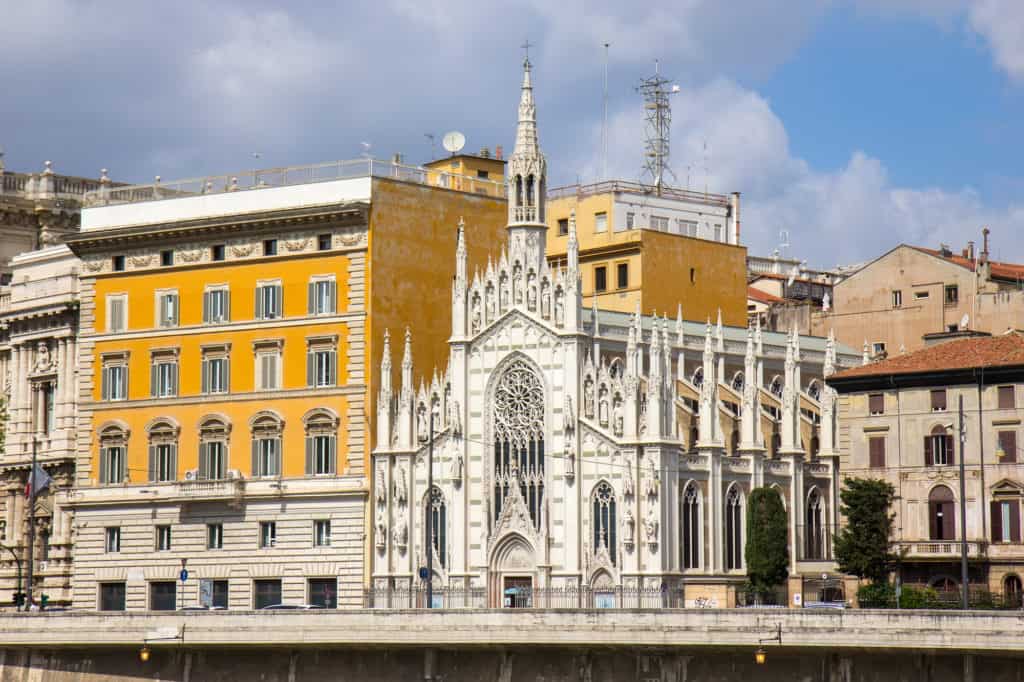
The Museum of Souls in Purgatory is located in the small church of Sacra Cuore Suffragio near Castle Sant’Angelo in the centre of Rome. It alleges to have recorded various “instances” of souls trapped between heaven and hell trying to draw the attention of the living to ask them for their prayers and help them pass into heaven.
You can see ‘evidence’ of purgatory (and the paranormal), such as photos of imprints on sleeves and handprints burned onto the pages of prayer books.
Haunted Witches Village of Triora in Liguria
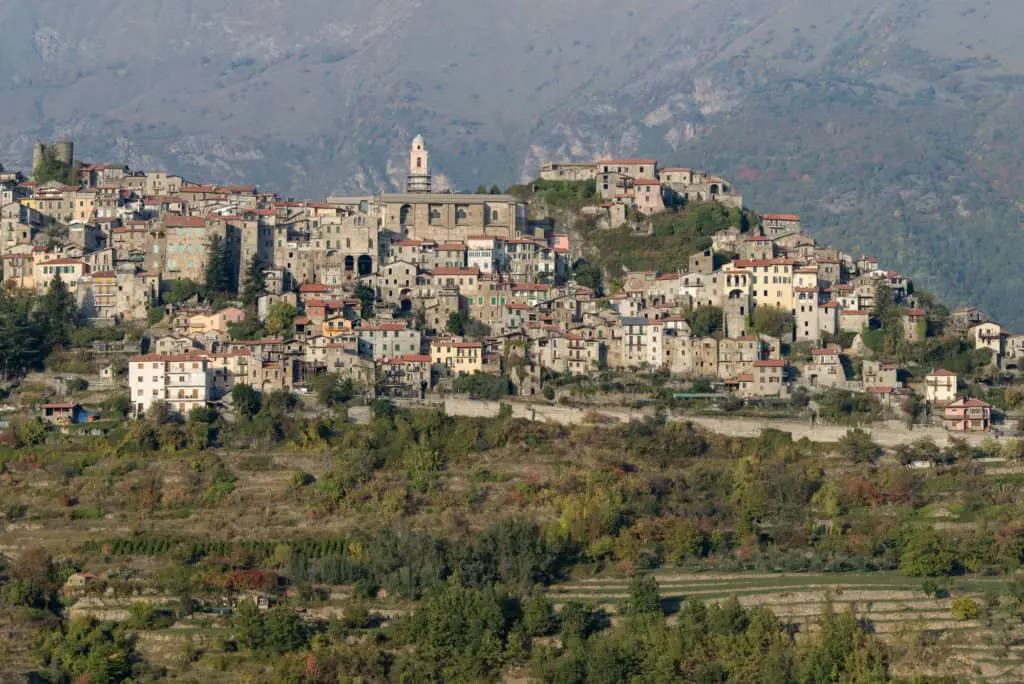
Many legends and stories spur from natural tragedies, such as famines, like the two-year famine that occurred in 1587, in the village of Triora in the region of Liguria. Like many things at the time, the famine was blamed on witchcraft and a group of women were blamed for it.
During the witch trials, 300 women were accused and fifty of them were tortured, and some died during the interrogations. The Triora museum is dedicated to the women who were tortured and killed and records of their confessions are on exhibit. If that isn’t a chilly story, we don’t know what is.
Medieval Criminal and Torture Museum in Tuscany
There are many types of museums around the world, some dedicated to the history and others to art, but this is the first time that we’ve come across a torture museum. Located in San Gimignano in Tuscany, this Medieval Criminal and Torture Museum showcases disturbing equipment used to torture victims during the Roman Inquisition, including Iron Maidens, guillotines, and torture chairs used on those considered Heretics.
So, it comes as no surprise that this is listed as one of the most haunted locations in Italy.
The Haunted Island of Poveglia in Venice
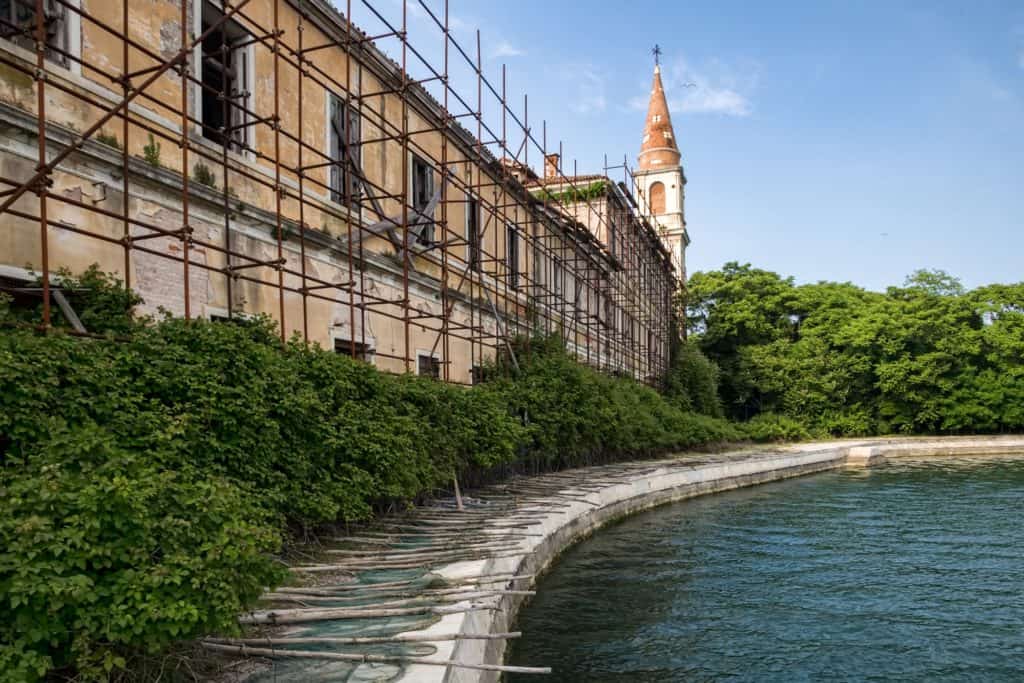
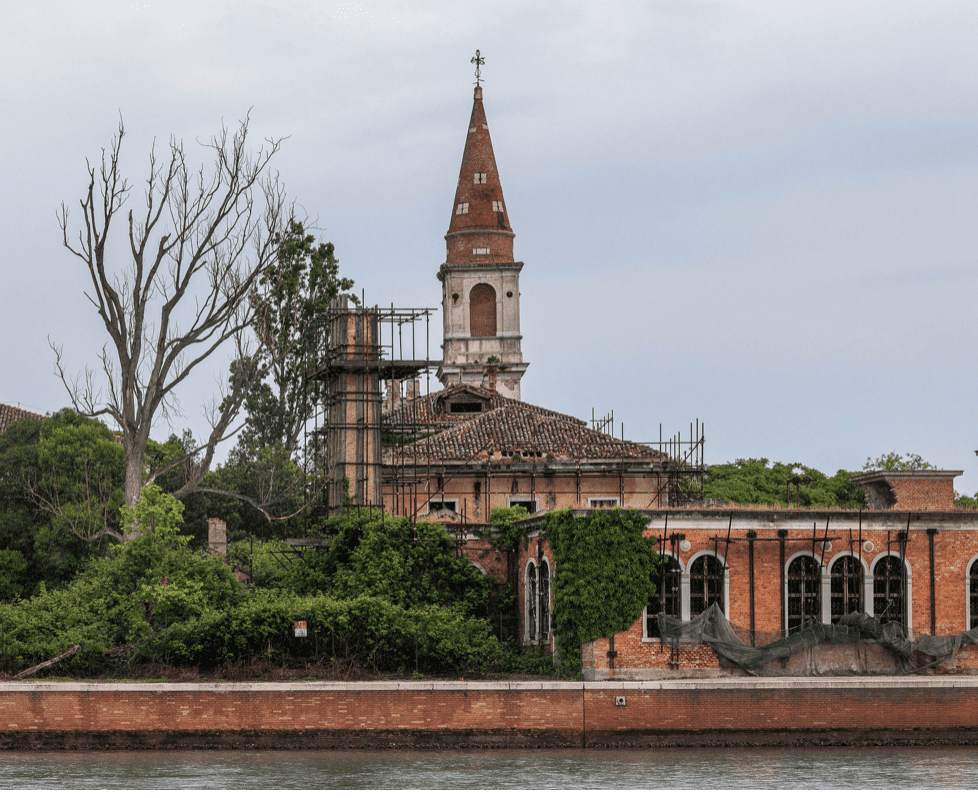
One of the creepiest places in Italy is the island of Poveglia. Known as ‘The Forbidden Island,’ it is closed to tourists. The famous legend surrounding the island is that a witch cursed it so that it will not be inhabited again. Either the curse worked or rumour of it is what drove people away from the island because it is indeed uninhabited to this day.
What added to the island’s creepy atmosphere is that it was used as a mass burial ground during the Black Death and other plagues. Moreover, when ships entering the Lagoon were found to carry the plague, passengers were quarantined on Poveglia.
If you thought that was enough, think again! At some point in its history, the island housed a hospital for the mentally ill where a doctor reportedly tortured and butchered patients with experimental therapies. Legend says that he went mad and jumped from a window to his death, but his body was never found.
It is believed that at least 160,000 people died on Poveglia throughout its long history, earning its status as one of the places in the world with the highest amount of deaths per square meter. Allegedly, the island is haunted by the people who died there, with passersby reporting that they’ve heard cries and screams coming from there.
Venice is also riddled with many other legends and reported ghost sightings. Some claim that you can sometimes see the ghost of Fosco Loredan near the Rialto bridge, holding the head of his wife whom he had murdered in a fit of jealousy.
Palazzo Dario – Venice
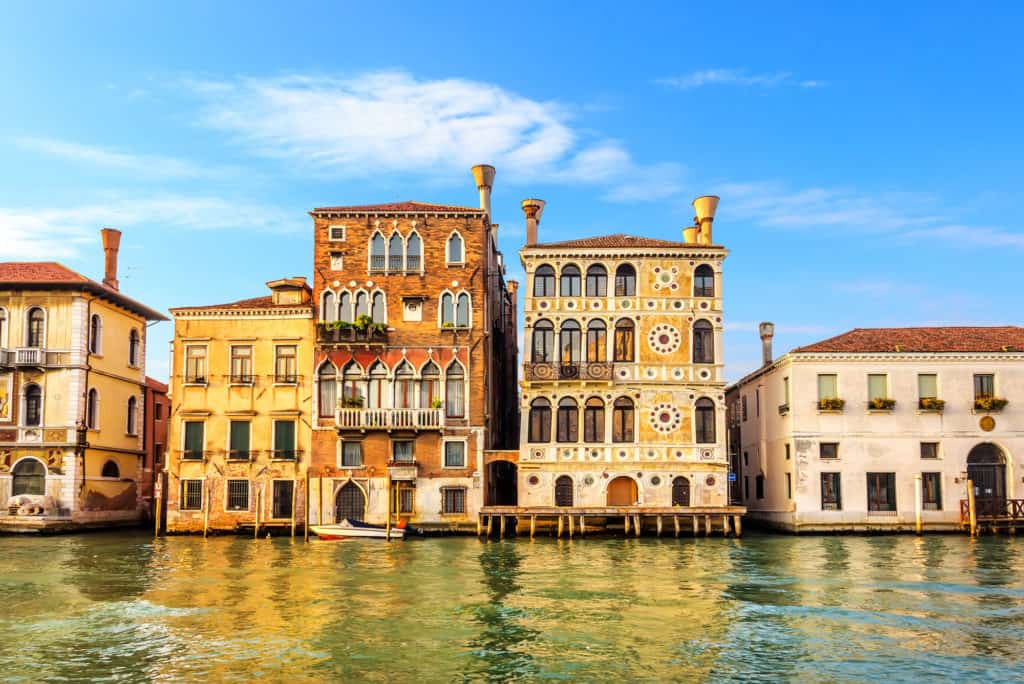
One of the most well-known haunted houses in the world, the Dario Palace has been called ‘the house that kills’, and for good reason as almost everyone who has owned, lived, or been associated with the house has died tragically, be it through murders, suicides, accidents or bankruptcy.
The daughter of Giovanni Dario, the local official who built the palace on the Grand Canal in the 15th Century committed suicide and since then there have been around ten deaths that also occurred at the palace, the most recent of which happened in 2002. Rumours claim that you can sometimes hear the echo of the cries of various Venetian residents who’ve died there.
Castello di Fenis, Aosta
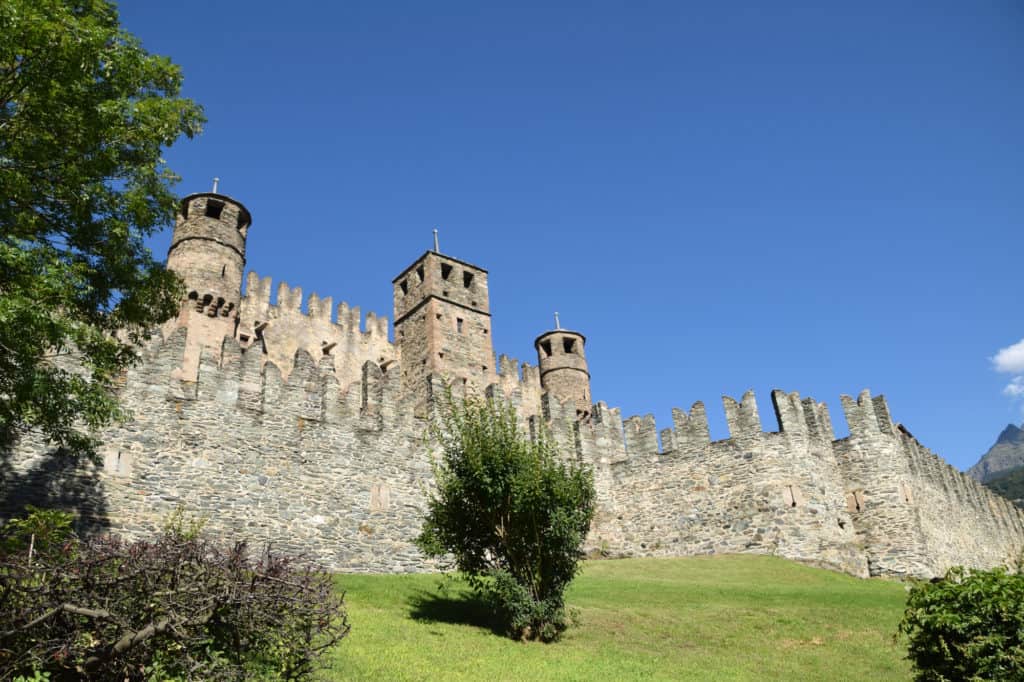
Now owned by the Regional Council, the castle once belonged to the Fénis branch of the lords of Challant until 1716, when it was sold to Count Baldassarre Castellar of Saluzzo Paesana. Then it was turned into a rural dwelling with the ground-floor rooms transformed into stables, and the first floor was used as a barn. In 1895, it was purchased by Alfredo d’Andrade, who started restoration works that were completed by Mesturino.
At first glance, it may seem like any other castle, but visitors claim it is haunted, as they have heard voices from the restricted area of the castle. Allegedly, the voices belong to spirits trying to communicate with humans to help them with their unfinished tasks.
Ca’Delle Anime (Haunted House of Souls), Voltri
While most of these castles and houses have a history of hauntings, this house has a history of mysterious disappearances. It used to be an inn for travellers who frequented the road between Lombardy and Piedmont. Allegedly, the innkeeper would greet the travellers and lead them to a quiet and secluded room to rest and sleep after sharing drinks. Once the travellers fell asleep, the ceiling would cave in and crush them. Afterwards, the innkeeper would dispose of the remains and gather their valuable belongings.
Recently, a bag was uncovered near the house containing bones dating back to the 19th century. The inn remained empty until World War II when a family took refuge there.
They reported strange occurrences like objects moving on their own and even screams coming from the room where all the murders had happened. It all came to a head when one night, a girl knocked on the door asking about her missing fiancé. The girl clearly came from another era and spoke of people dead for at least 200 years.
Despite its mysterious and spooky history, the house is still inhabited today, but those who live there claim to have experienced paranormal activity as they glimpsed apparitions on more than one occasion.
Ospedale Montecatone, Imola
Previously used as a hospital specialized in the treatment of tuberculosis, Ospedale Montecatone was designed by Mussolini in 1930. It is said that the hospital is haunted by the spirits of those who died there. The rumours continued to spread over the years that local ghost hunters have attempted to explore the haunted hospital and claimed to have seen a little girl running down the halls. This particular building has been the subject of so much speculation and debate due to the mysterious sightings, so much so that no one has tried to restore it in all these years.
Monastero Santa Radegonda, Milano
Most people in Italy know of the haunted Monastero Santa Radegonda in Milano and the stories of the strange apparition that screams in torment. According to legend, Bernarda, daughter of Bernabò Visconti was locked in the Rocchetta di Porta Nuova towards the end of the 14th century on accusations of adultery.
Sadly, she died a few months later due to the harsh treatment and being unable to bear the lock-up of course. It is said that her ghost roams this church. Many have claimed to have seen her screaming at her father. It seems that even centuries later, her soul has not forgiven him.
Villa Clara, Ferrara
Villa Clara in Ferrara is one of the creepiest and most haunted places in the country. The fog that usually surrounds it also contributes to the eerie atmosphere as well. It is said to look so frightening that people usually avoid even walking near it. The story surrounding the villa states that a girl or woman named Clara was buried alive there by her father.
That’s where the story ends because no one knows why she was murdered, although that did not stop people from speculating. Some say that she was clairvoyant and this scared her father to such an extent that he decided to kill her himself. Others say that she had an affair with a servant. Passersby, when there are any, reported hearing Clara crying out and screaming for help.
Castello Aragonese, Pizzo Calabro
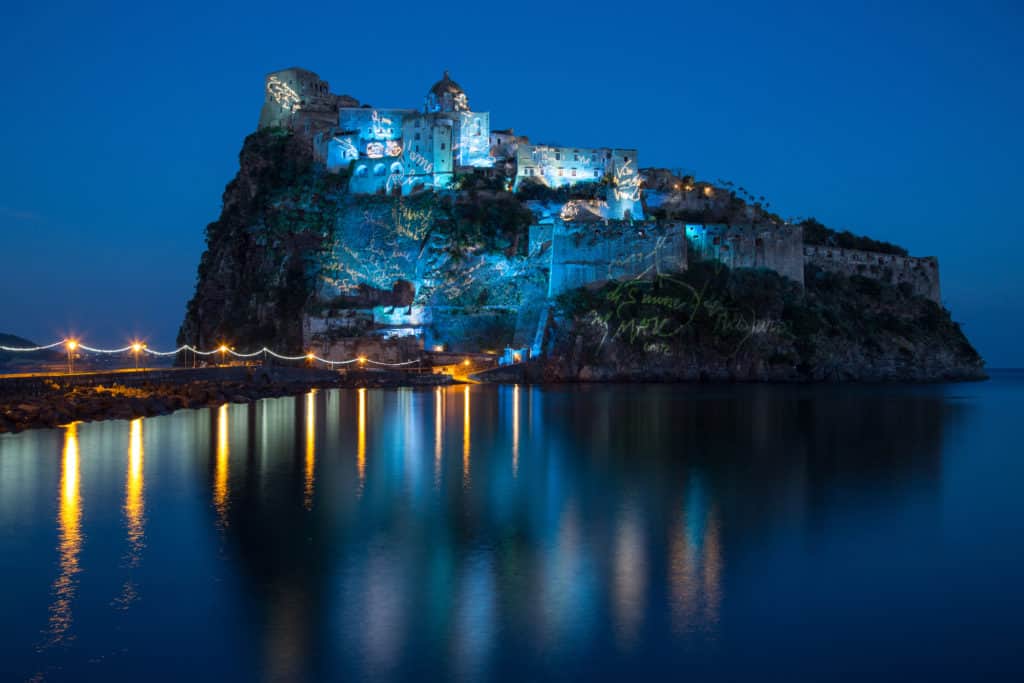
Castello Aragonese is where King Gioacchino Murat was shot to death after Napoleon was defeated in 1815. That is more than enough to make people suspect the occurrence of supernatural activity. Visitors claim to have experienced strange occurrences that indicate that the ghost of Murat still roams the place, perhaps looking for vengeance.
Evil Tower, Castello di Poppi
If its name isn’t enough to rouse fear, then perhaps its story will. The story goes that a woman named Matelda allegedly killed her lover after a night of love-making. It is said that she was buried in this tower and her spirit continues to live on and roam this creepy tower. Even today, people claim that they have come across her ghost Matelda in the tower.
Castello di Montebello, Torriana
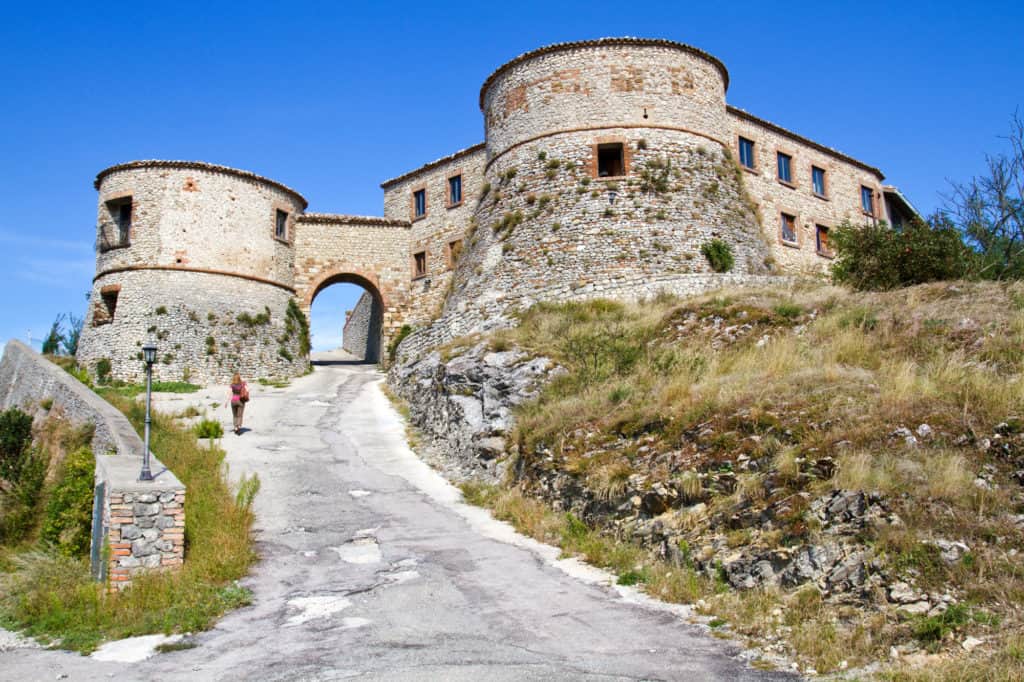
The haunted Castello di Montebello in Torriana has one of the most famous legends in Italy. Unlike most other legends, this one has a specific date, which makes it more believable and therefore infinitely scarier. On 21 June 1375, a girl named Guendalina Malatesta, the 5-year-old daughter of Lord Ugolinuccio da Montebello, was playing in the castle when she lost her toy down the stairs of the basement. Some believe that her spirit still exists in the castle and every 5 years, people can hear her crying.
The girl was always guarded by two men because she was an albino and couldn’t get out in the sun or the village. Such people were burnt at the stake at the time because they were believed to have been sent by evil powers. Her mother dyed her hair blue using natural herbs to protect her, but the colour usually faded into a bluish hue, which led to everyone calling the small girl Azzurrina (The Little Blue One).
Unfortunately, Guendalina was forever lost in the dungeon. It is believed that her ghost is still in the castle and can be heard crying out on the summer solstice every five years.
The Ghost of Donna Olimpia, Rome
Ghosts in Italy are not only confined to buildings, they seem to be able to roam the streets as well, making the country one of the most haunted in the world! One of the famous ghosts in the country is that of Donna Olimpia, a social climber who fled Rome with two cases of gold coins when her brother-in-law, Pope Innocent X, died, but his successor Pope Alexander VI exiled her and she reportedly died of the plague shortly afterwards.
It is said that her ghost appears in a carriage drawn by black horses riding at full speed around the Ponte Sisto and in Piazza Navona, where she used to live.
Botanical Garden – Lucca
Once owned by the famous Lucinda Mansi, the legend says that the noblewoman was obsessed with her beauty and with her young lovers. Like Matelda, Lucinda used to kill each one of her lovers after a night of lovemaking by pushing them down a trapdoor into sharp blades beneath. Furthermore, she sold her soul to the devil in exchange for another 30 years of youth because she was afraid of losing her beauty.
Where does the scary legend come in? It is believed that if you visit the Lake at the botanical garden in Lucca (where she’s from) and submerge your face in the water, you can see Lucinda’s face right there as if she was looking at herself in the mirror. Another story says that at night, people may see a burning carriage driving underneath or crossing the garden, apparently carrying Lucina inside.
Monastera Di St. Anna Foligno
At this haunted monetary, it is said that you can hear Sister Teresa Margherita Gesta’s mourning and also see her creepy burnt handprint on the door of her successor sister Anna Felix. Sister Teresa died on 4 November 1859, of a sudden apoplectic stroke at the age of 62, after 34 years of devout religious life where she was known for her charity and cheerfulness.
Twelve days later, on November 16, a sister named Anna Felicia, who succeeded her in office, was about to enter her room when she heard moans coming from inside, but when she opened the door, it was empty.
Then she heard a clear voice calling out: “Oh! my God, how I suffer! Oh, I Dio, che peno tanto I”. Then the spirit of Sister Teresa appeared, moving towards the door, and crying aloud, “Behold a proof of the Mercy of God”! She then held her hand along the upper panel of the door, leaving a handprint of her right hand, burnt into the wood, before she disappeared.
The news of the event quickly spread and many within the walls of the convent and outside prayed for the souls of the departed in an effort to relieve Sister Teresa’s suffering.
This seemed to work as a few days later Sister Teresa appeared before Sister Anna once again to proclaim that she is to “enter into eternal glory. Be strong to bear the Cross, be courageous to suffer, love poverty”.
An investigation was held where the tomb of Sister Teresa was exhumed, and it was proved that it was indeed her handprint left on that door.
Villa Santoro – Salerno
This abandoned haunted house in Salerno also has a scary legend of a filthy rich couple who live there with their servants, but the husband discovered his wife’s affair with one of their hired help. He got so angry that he killed them both and buried them in the garden and then planted an apple tree on top of the grave. People who have tried to live in this house reported seeing strange shadows and horrible voices coming from some rooms.
Villa Magnoni – Cona, Ferrara
Another abandoned home shrouded in mystery, Villa Magnoni in Cona near Ferrara has been empty for decades. Very little is known about the villa, who built it, or why it was abandoned. What adds to its mystery is the fact that all attempts to sell the house failed miserably for the longest time, but it is now owned by the University of Ferrara which wanted to turn it into research labs.
Yet, nothing has been done so far. Perhaps that is because la maledizione di Villa Magnoni (the curse of Villa Magnoni), which sprang in the 1980s when four teenagers ventured into the villa and they heard children’s voices coming from the opposite direction where they were and ran towards it.
They found no one there, until they saw an old woman behind one of the windows, screaming at them in rage, ordering them to leave immediately and never return. The teens ran away in terror and were suddenly hit by a car and three of them lost their lives. The fourth who managed to return, unscathed, but terrified, is the one who told the story.
Due to this tragic event, the town council of Cona had all the windows and doors at Villa Magnoni walled up, but strangely a week later, the window where the teen reported to have seen the old woman, was open. Since then, many have said that they heard a woman whispering threateningly whenever they pass near the house.
Palazzo Carmagnola – Milan
Built in the 14th century and used now as a theatre, this palace is known for two famous ghosts, the original owner of the palace, Francesco Bussone, the Count of Carmagnola, and the famous Lady with an Ermine – Cecilia Gallerani, notably depicted in a well-known portrait, as she was a favourite mistress of Ludovico Sforza, the married Duke of Milan and da Vinci’s patron.
The two ghosts are reportedly seen on All Soul’s Day, every November 2nd, staring out the window. While the Count of Carmagnola died of decapitation, Cecilia Gallerani died naturally.
Palazzo Donn’Anna – Napoli
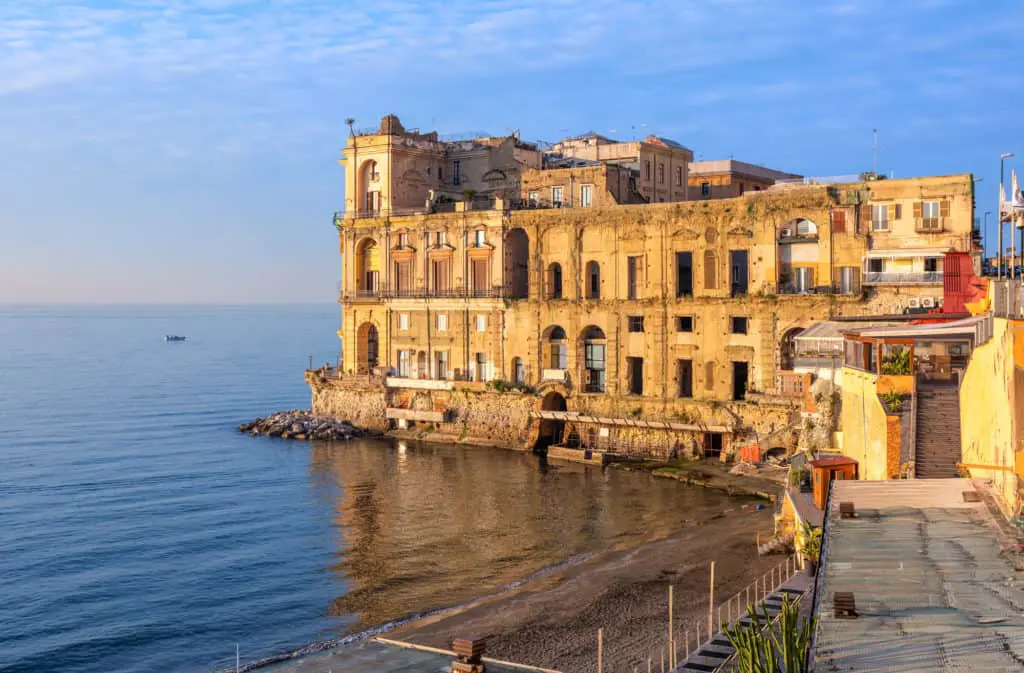
According to local legends, Donn’Anna, the owner of the Palace was known for her multiple affairs. She used to make love with her lovers and then dump them in a trapdoor, similar to the story of Lady Matelda. We hope that this wasn’t the usual practice of the time.
While some say that the trapdoor led directly to the sea, others say that she bred crocodiles brought directly from Africa down there. Therefore, the palace is reportedly haunted by the ghosts of the dead men.
It also seems to be haunted by other ghosts. This story comes two hundred years later when the place was inherited by Princess Anna Carafa. It is said that she used to compete with her niece Mercedes de la Torre for a lover, and while they fought over him one night, the latter disappeared, never to be seen or heard from again, until people started reporting seeing or hearing her ghost as well, wandering the rooms and screaming. Even more terrifyingly, local fishers can sometimes hear the screams while at sea.
Rocca Di Maiolo – Rimini
This haunted village has a strange story attached to it. According to legends, the inhabitants of the town used to practice rituals related to witchcraft called “The Angelic Dance”. Sadly, the village was destroyed by a landslide in the 18th century, killing all those who lived there. It is believed that the ghosts of those who died are still dancing and wandering the place because they can’t find inner peace.
Devil Monk’s Monastery
As the story goes, one day a scared traveller stopped by a monastery to ask for help, and he was fed and given shelter. He felt so indebted to them for the warm welcome he received that he decided to work in the monastery to pay them back for their kindness. As the years went by, he decided to become a monk, but after he took his religious vows, he fell in love with a woman.
Things did not go smoothly afterwards as he started having doubts that she was a witch and he began torturing her to extract a confession. The woman died as a result of his torture and he eventually lost his mind, changed his appearance, and started to scare everyone around him. His actions became so erratic that all the monks and most of the villagers abandoned the village because they suspected him of committing murders.
One day, a lost homeless couple asked for help and the monk welcomed them with open arms. However, the next day the man that was welcomed by the monk walked into the village with his skull broken and the woman was nowhere to be found. The king ordered the monk to be hanged, but it is said that his ghost is still wandering the monastery, scaring all those who come near.
Casin Degli Spiriti – Venice
This beautiful palace facing the bay north of Cannaregio served as headquarters for many religious sects where they would invoke spirits and demons. It is said to be haunted by the spirit of Luzzo, a famous 16th painter who killed himself because of his unfulfilled love for Cecilia, the lover of another famous painter named Giorgione. Luzzo’s ghost roams the rooms of the palace, calling out for his love and lamenting her loss.
Another story surrounding the house comes from the 1950s when a young woman was murdered, dismembered, and put in a trunk before it was thrown in the bay. When her body was discovered years later, the palace regained its reputation of being haunted and no one dared to live there again. Its reputation is so scary that even the fishermen avoid sailing nearby.
Palazzo Mastelli – Venice
Back to Venice, which seems to have the lion’s share of haunted mansions, this Venetian palace has its own mysterious legend as well. In 1100, it is said that three very wealthy merchants tried to sell a poor quality fabric to a Venetian lady for a large amount of money. When she discovered the scam, the woman gave them cursed money which turned them into stone statues. You can actually see the statues if you happen to visit the square behind the palace and also visit the place, which is very creepy but makes the story all too real.
Castello Di Bardi – Parma
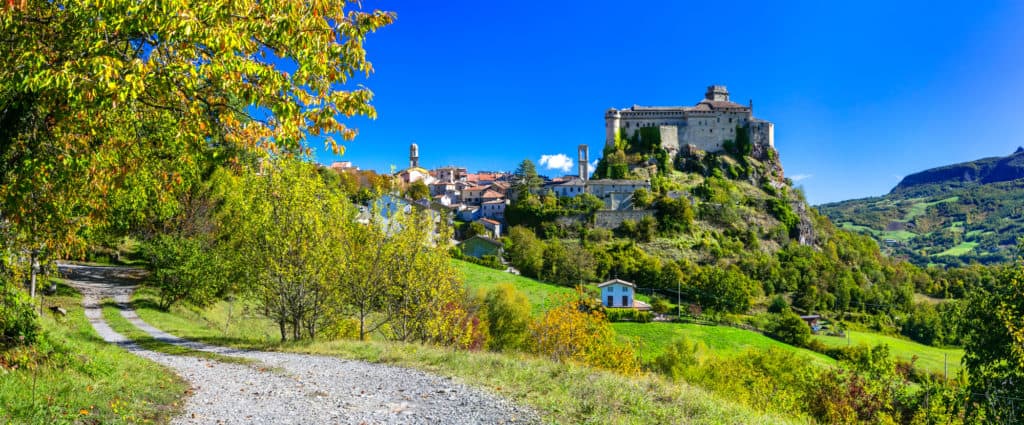
In the 14th century, Moroello, a young officer called fell in love with a beautiful young woman called Soleste who was from a noble family, but of course, he couldn’t ask them for her hand in marriage because of his lack of fortune, so they kept their love hidden, and she continued to wait for him as he went off to battle. A few weeks later, Soleste spotted a group of soldiers approaching the castle, carrying the enemy’s flag as a sign of victory.
She mistakenly believed that Moroello was killed, so in her grief, she threw herself off the high castle wall and died. Moroello was shocked to find out what happened to his love, so in his grief, he decided to jump off one of the castle’s towers. According to legends, his ghost still wanders the castle grounds in search of Soleste. However, some Italian ghostbusters actually reported that they managed to take photos of a monk’s ghost, and not of the young lover.
Would you venture into any of these haunted locations? Are you brave enough to try to mess with the paranormal? While many of these castles are quite beautiful, perhaps it is better to admire them from the safety of the outside. After all, it is better safe than face-to-face with an angry ghost. Let us know what you think!

London in June: An Ultimate Guide to 13 Unmissable Events and Festivals
United Kingdom
25/04/2024

The Perfect Day Trip from London: Where Will Your Adventure Take You?
United Kingdom
25/04/2024

Scotland in May: Sunshine, Mild Temps, and Outdoor Adventures
Scotland
25/04/2024

Discover the Top 15 Best Places to Visit in Northern Ireland
Travel Guides
24/04/2024

How to Find the Best Scotland Travel Guide: An Ultimate Guide
Scotland
24/04/2024