

The MAC Belfast is the Metropolitan Arts Centre that anchors the city’s Cathedral Quarter, and it’s one of the few Belfast attractions that doesn’t charge to walk in. Travellers exploring Northern Ireland’s capital often plan their day around Titanic Belfast or City Hall, then discover the MAC almost by accident while wandering the cobbled streets nearby. That’s a shame, because this is where Belfast’s contemporary creative scene actually lives.
This guide covers what you need to plan a visit: opening hours, how to get there, what the building looks like and why, what’s inside, and how to build the MAC into a wider afternoon in the Cathedral Quarter. ConnollyCove has visited the area on several filming trips for our Belfast content, and this guide draws on those visits, along with the venue’s own visitor information.
Table of Contents
Visiting the MAC Belfast

The essentials: the MAC is open seven days a week in Belfast’s Cathedral Quarter, galleries are free, and theatre shows are ticketed separately. Here’s what you need to know before you go.
Opening Hours and Entry Fees
The MAC typically opens from 10 am, with later hours on performance evenings. Gallery entry is free across all three exhibition spaces, though a suggested donation is common practice in Northern Ireland’s cultural venues and always appreciated. Theatre and live performance tickets are priced individually per show, so check the official MAC website before you travel if there’s a specific production you want to see, since opening hours and programming can shift around bank holidays and between exhibitions.
Getting to the MAC
The venue sits within walking distance of Belfast city centre, close to St Anne’s Cathedral. Most visitors arrive on foot from Donegall Square or via a short taxi ride from Belfast’s main railway and bus stations. If you’re building a longer day out, ConnollyCove’s 22 things to do guide places the MAC within a sensible walking loop alongside City Hall and the Titanic Quarter.
Best Time to Visit and Seasonal Considerations
Weekday mornings are the quietest time to see the galleries, particularly outside school holidays. Weekend afternoons bring more footfall, especially when St George’s Market is running nearby. Belfast’s weather is changeable year-round, so the MAC works well as a wet-weather backup for an itinerary built around outdoor Cathedral Quarter sights. For live performances, book ahead during the Belfast International Arts Festival in October, when demand for MAC tickets rises noticeably. Check the official site for current exhibition dates and any temporary closures, as gallery turnover occurs several times a year.
Why the MAC Matters to Belfast
The MAC matters because it turned a derelict corner of the Cathedral Quarter into the anchor of Belfast’s contemporary arts scene, and its story tracks the wider transformation of the city since the 1990s. Understanding that history changes how the building reads once you’re standing inside it.
From Warehouse District to Cultural Quarter
Long before the MAC existed, this pocket of Belfast around St Anne’s Cathedral was a working warehouse district tied to the linen and shipping trades. As those industries declined through the twentieth century, the area fell quiet. The MAC’s arrival in 2012 was part of a broader push to bring the Cathedral Quarter back to life, alongside independent galleries, music venues and the cafés that now line its cobbled streets. You can trace more of that industrial backstory in ConnollyCove’s guide to Belfast’s history.
The Cathedral Quarter’s Creative Heart
Walk five minutes in any direction from the MAC, and you’ll find independent galleries, live music venues and the street art that’s become one of the area’s defining features. This tradition is still practised today: local artists regularly repaint walls around the quarter, and the MAC itself often connects with that scene through outreach programmes and community exhibitions. ConnollyCove’s Must-See Belfast guide covers the wider quarter in more depth if you want the full picture before you arrive.
A Symbol of the City’s Regeneration
For a city whose recent history includes decades of division, a purpose-built contemporary arts venue in the city centre carries weight beyond its programming. The MAC sits alongside developments like Titanic Belfast as evidence of Belfast’s shift toward a creative, visitor-facing economy. Locals we’ve spoken with over several visits describe watching the Cathedral Quarter change from a place people avoided after dark to one of the city’s busiest social spaces.
Community Roots, Not Just Culture for Visitors
It would be easy to assume a building like this exists mainly for tourists, but the MAC’s outreach programmes, family workshops and community partnerships suggest otherwise. Local schools use the space regularly, and the building’s café functions as an informal meeting point for Belfast residents who have no particular interest in the current exhibition. That everyday use is part of what gives the venue its character.
Architecture and Design: The Volcano and the Red Brick
The MAC’s design earned real architectural credibility, and the building rewards a slower look rather than a quick walk-through. Hackett Hall McKnight’s design won a RIBA award in 2012 and remains one of the most discussed pieces of contemporary architecture in Belfast.
Hackett Hall McKnight’s Award-Winning Vision
The building combines glass, steel and dark brick in a way that references the warehouses that once stood on the same site, while still reading as unmistakably modern. Architects Hackett Hall McKnight designed the MAC to sit comfortably alongside the older buildings of the Cathedral Quarter rather than dominate them, which is part of why the exterior can look understated from street level, in contrast to the drama inside.
Inside the Volcano: The Foyer as Public Space
Step through the entrance and the building opens upward into a central atrium, informally known as the Volcano, that connects the galleries and theatres across multiple floors. It’s a genuinely useful piece of design, not just an architectural flourish: the foyer works as a meeting spot, a place to sit with a coffee between shows, and a viewpoint from which you can see activity happening on several levels at once.
“The angle of the Volcano staircase catches the light differently every time we’ve filmed there. Hackett Hall McKnight designed a building that keeps revealing new views the longer you stay inside it.” Ciaran Connolly, Founder of ConnollyCove
A Nod to Belfast’s Industrial Past
The red brick facade is a deliberate reference to the linen warehouses and shipping stores that once filled this part of Belfast. Rather than erase that industrial history, the design leans into it, using traditional materials in a contemporary form. If you’re interested in how that industrial heritage shows up elsewhere in the city, ConnollyCove’s guide to Titanic Quarter covers the shipbuilding side of the same story.
What to See and Do: Galleries, Theatre and Community Life
The MAC’s programming spans visual art, theatre, dance and family workshops, and the mix changes often enough that no two visits look the same. Here’s what to expect across the building.
The Galleries and Visual Art Programme
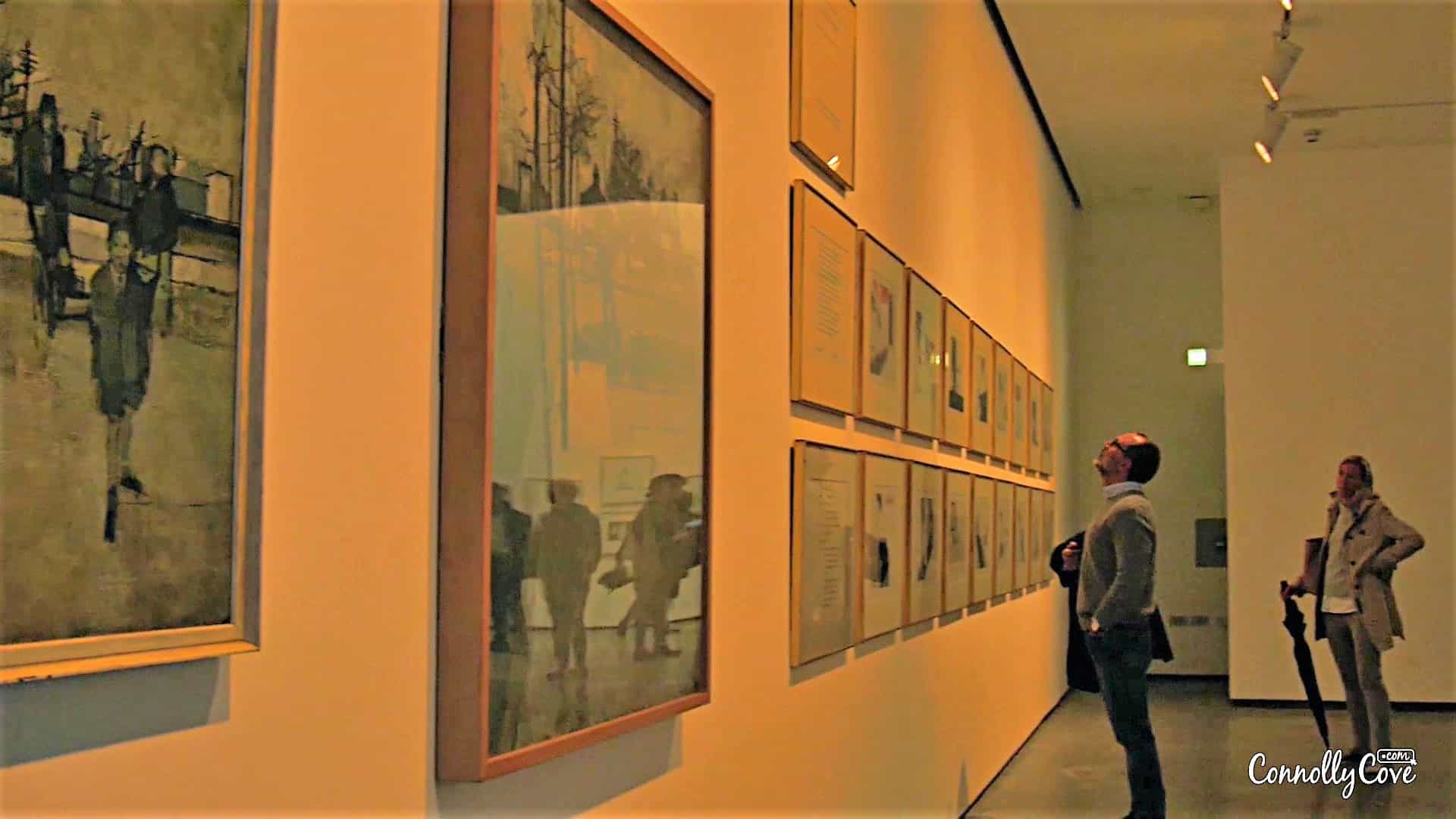
Three galleries host a rotating programme of contemporary visual art, including international touring exhibitions and work by artists based in Northern Ireland. Because entry is free, it’s worth building in a return visit if you’re staying in Belfast for more than a couple of days, since exhibitions typically run for several weeks before changing. For a broader sense of where the MAC sits within the city’s gallery scene, ConnollyCove’s guide to Belfast’s art galleries compares it with venues like the Ulster Museum and Golden Thread Gallery.
Theatre, Dance and Live Performance
Two theatre spaces host everything from touring drama to comedy, dance and spoken word, with programming that leans toward contemporary and boundary-pushing work rather than mainstream commercial theatre. The Belfast International Arts Festival uses the MAC as one of its key venues each October, and the Out to Lunch festival in January brings music and comedy into the building during Belfast’s quieter winter months.
The MAC as Belfast’s Third Space
Based on our visits, one of the more interesting things about the MAC is how many people use it without attending a show. The café inside the foyer draws remote workers, students and people simply passing through the Cathedral Quarter, functioning less like a museum café and more like a genuine neighbourhood spot. If you’re planning a Belfast day out with a partner or friend, ConnollyCove’s Belfast date ideas guide includes several other low-cost stops that pair naturally with an afternoon here.
The Permanent Present by Mark Garry
One of the more unusual things inside the MAC is a permanent artwork by Irish artist Mark Garry, made from hundreds of coloured copper strands running from a high window down through the building. The piece was commissioned in connection with the Thomas Devlin Fund, a charity set up in memory of a Belfast teenager, and it’s worth pausing beneath it rather than walking straight past. Ask staff at reception if you’d like more details on the piece’s background; specifics of the commission are worth double-checking on site, as details of charitable commissions can change over time.
Exploring the Cathedral Quarter: A Local’s Itinerary
The MAC works best as a one-stop within a wider Cathedral Quarter afternoon rather than a single destination trip. Here’s how to build a loop around it that covers food, street art and a few nearby landmarks.
Street Art and Nearby Landmarks
The Cathedral Quarter’s cobbled streets carry some of Belfast’s best-known contemporary murals, a world apart from the political murals found on the Falls and Shankill roads further out. St Anne’s Cathedral, which gives the quarter its name, is a short walk from the MAC and is worth a look even from the outside. ConnollyCove’s guide to Belfast street art maps out several murals within easy reach.
Where to Eat and Drink Close By
St George’s Market runs a Friday, Saturday and Sunday programme within walking distance and is one of the best places in Belfast to pick up lunch between gallery visits. The Cathedral Quarter itself is dense with independent cafés and pubs, several of which host live traditional music at weekends. ConnollyCove’s Belfast food guide and separate guide to St George’s Market both cover options within a ten-minute walk of the MAC.
Accessibility and Family Visits
The building was designed with lift access between floors, and the ground-floor galleries and café are step-free from the main entrance. If you’re travelling with a wheelchair or pushchair, it’s still worth confirming current lift status and any temporary access changes directly with the venue before you visit, since renovation work in older parts of the Cathedral Quarter can occasionally affect nearby routes. Families will find the MAC’s workshop programme genuinely useful for a rainy afternoon, and the free galleries mean a short visit doesn’t need to feel like a big financial commitment if children lose interest quickly.
Beyond the Cathedral Quarter
If you have time for a fuller day, Titanic Belfast and the wider Titanic Quarter sit a short taxi ride away, and Belfast also hosts a permanent tribute to its years as a Game of Thrones filming hub. ConnollyCove’s guides to Titanic Museum Belfast and Game of Thrones filming locations both make sensible additions to a longer Belfast itinerary built around the MAC.
How the MAC Compares to Belfast’s Other Galleries
The MAC isn’t the only place in Belfast to see art, and knowing how it differs from the city’s other galleries helps you decide how much time to give it. The short version: the MAC leans contemporary and changes often, while nearby venues lean historical and stay largely fixed.
Free Entry Versus Ticketed Collections
Like most of Belfast’s major cultural venues, the MAC charges nothing for its galleries, putting it in the same bracket as the Ulster Museum rather than a paid attraction such as Titanic Belfast. The difference shows up in scale rather than cost: the MAC’s three galleries can be seen properly in under an hour, while the Ulster Museum’s collections easily fill an afternoon.
Contemporary Art Versus Historical Collections
The Ulster Museum covers natural history, archaeology and centuries of fine art under one roof, whereas the MAC focuses entirely on contemporary and often experimental work. Travellers who want context on Irish history alongside their art viewing tend to prefer the Ulster Museum, while those after current, sometimes provocative exhibitions gravitate toward the MAC.
Choosing Between the MAC and the Ulster Museum
If you only have time for one gallery in Belfast, let the type of art decide it rather than the venue’s reputation. A short stay favours the MAC simply because it can be seen quickly between other Cathedral Quarter stops, while a full day in Belfast has room for both. Based on our visits, pairing the two back-to-back works well, since the contrast between contemporary and historical collections gives a fuller sense of what Belfast’s art scene actually looks like.
The MAC Through the Year: Festivals and Seasonal Programming
The MAC’s programming shifts noticeably with the seasons, and timing your visit around one of its festivals changes what you’ll find inside the building. Two events in particular are worth building a Belfast trip around.
Belfast International Arts Festival in Autumn
Every October, the MAC becomes one of the city’s key venues for the Belfast International Arts Festival, hosting theatre, dance and visual art that extends beyond the venue’s usual year-round programming. This tradition is still practised annually, and it’s the busiest the building gets, so book theatre tickets well ahead if you’re travelling to Belfast specifically for the festival.
Out to Lunch Festival in Midwinter
January brings the Out to Lunch festival, a mix of music, comedy and spoken word that fills the MAC’s foyer and theatres during Belfast’s quietest tourist month. It’s a good option if you’re visiting the city in winter and want evidence that Belfast’s cultural calendar doesn’t simply pause after Christmas. The wider Cathedral Quarter also picks up around Belfast’s Christmas markets in December, so a late-December visit can combine both.
Quieter Months for a Slower Visit
Outside of these two peaks, spring and late summer tend to bring smaller, more contemplative exhibitions and shorter runs of theatre. If you’d rather see the building without festival crowds, these quieter months suit visitors who want to spend longer in front of individual pieces rather than moving through a packed programme. Local guides recommend checking the current exhibition schedule a few weeks in advance, since gallery turnover occurs several times a year regardless of season.
Planning Your Visit
The MAC rewards visitors who treat it as part of a wider Cathedral Quarter afternoon rather than a quick stop between bigger attractions. Free galleries, a genuinely striking building and a café that works just as well for a coffee as a pre-theatre drink make it one of the easier cultural additions to a Belfast trip. Pair it with a walk through the surrounding streets and a stop at St George’s Market, if the timing works, and you’ve got a half-day that costs very little and shows a different side of the city than the Titanic story most visitors arrive expecting.
For more on building out a full Belfast itinerary around venues like this one, explore ConnollyCove’s guide to a perfect day in Belfast or our wider Northern Ireland attractions coverage.
FAQs
Is entry to the MAC free?
Yes, entry to all three galleries is free year-round. Theatre, dance and live performance tickets are priced separately per show, and a suggested donation for gallery visits is welcomed but not required. Check the official MAC website for current exhibition details before you travel.
Do I need to book tickets in advance?
Walk-ins are fine for the galleries, since there’s no ticketing system for free exhibition space. Theatre and performance shows do sell out, particularly during the Belfast International Arts Festival in October, so book those in advance through the venue’s own booking system.
Is there parking near the MAC?
The MAC is located in a pedestrian-friendly part of the city centre, with no dedicated on-site parking. The nearest multi-storey car park is a short walk away near St Anne’s Cathedral, and several Belfast city centre car parks are within a ten-minute walk if that one is full.
Is the MAC suitable for children and families?
Yes, particularly for the free galleries and the workshop programme aimed at younger visitors. The building’s café and open foyer also make it an easy place to pause with children between other Cathedral Quarter activities, and lift access covers all floors.