


Syria: Explore 20 Beautiful Attractions that will Seize Your Mind
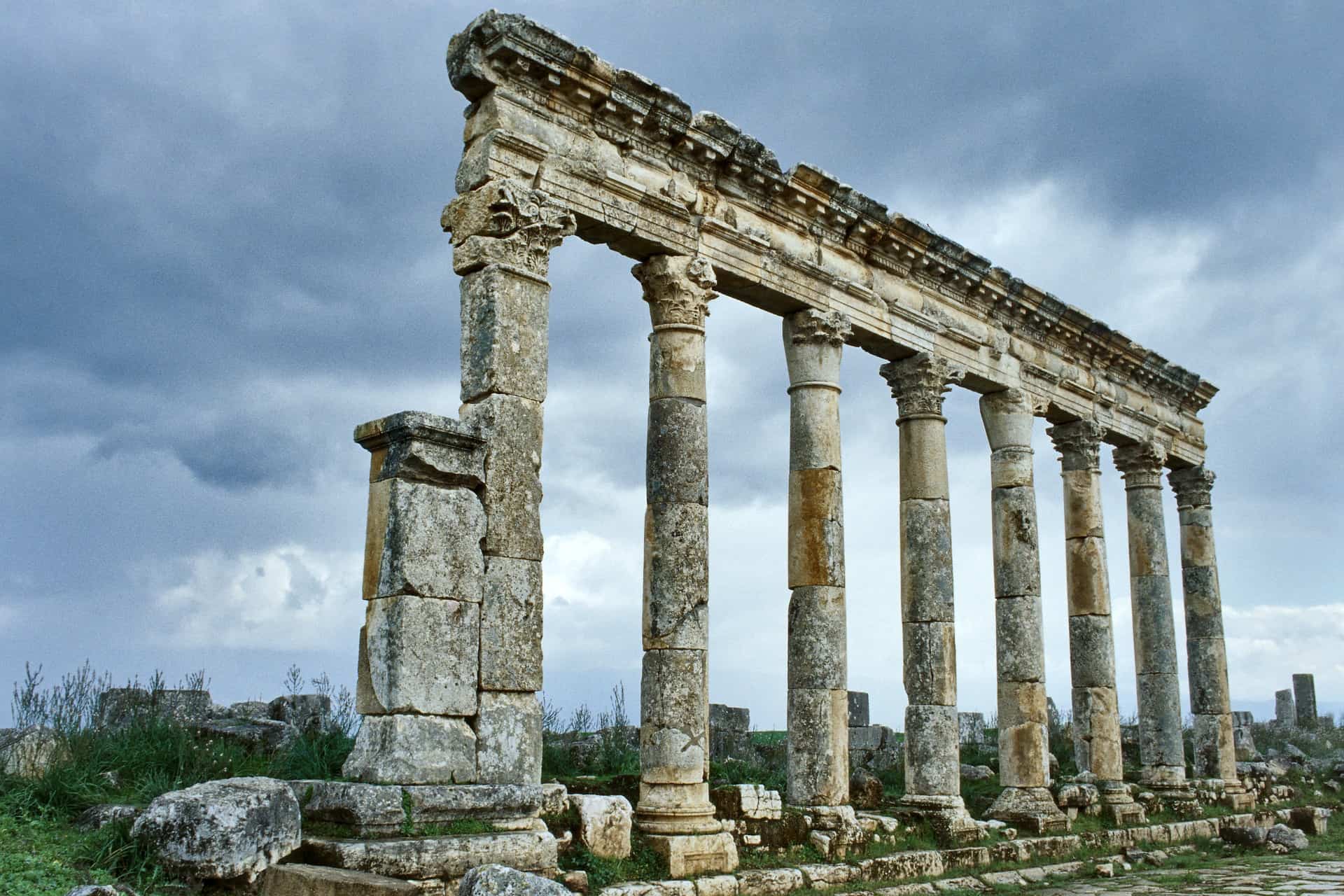
Updated On: April 16, 2024 by  Shaimaa Olwan
Syria is a Middle Eastern and Mediterranean country in northwest Asia. Syria is known for its fascinating nature; it contains the most beautiful touristic sites that you will enjoy visiting. You should not worry about the climate in Syria, as it is known as “the country of Jasmine”, which enjoys a moderate climate and picturesque nature.
You will also enjoy the deserts scattered in the east and west of the country, where the green mountains will blow away your mind. Between the desert and the coast, you will fall in love with the breathtaking plateaus and plains.
The resorts in Syria are spread over the mountains in many locations. The beautiful coast resorts, where the sea converges with the forest are popular touristic destinations. forests cover the coastal mountains with a green carpet which is interspersed with rivers, waterfalls, springs, and wonderful lakes, surrounded by forests on all sides.
The resorts in Syria are characterized by scenic views, orchards, natural forests, and fresh air. Also, Syria is famous for its archaeological locations and monuments scattered throughout the country, many of which have been taken care of and invested for tourists.
Water Landscapes and Rivers
Syria is most blessed with its diverse water landscapes, such as rivers, lakes, and coastal beaches. Sea and beach resorts in Lattakia and Tartous, where chalets, casinos, hotels, and tourist camps are spread along the Syrian coast. The coast is characterized by the convergence of mountains and forests with the sea. In addition to the Ghouta oasis, Al-Hijanah Lake.
Tigris and Euphrates Rivers
One of the most famous rivers that flow in Syria. On their banks, ancient civilizations were built and flourished, as the two rivers are the reason for calling this land the cradle of civilization.
Damascus
The city of Damascus is one of the ancient Syrian touristic cities, and it is listed as a UNESCO World Heritage Site. The city includes 125 historical monuments. These landmarks date back to different historical periods and are represented by Islamic, Roman, and Byzantine monuments.
If you are looking for tranquility, archaeological areas, and nature that restore your soul, and you like to feel the mixture of old civilizations with the hustle and bustle of the city, then you are heading to the right destination.
Umayyad Mosque
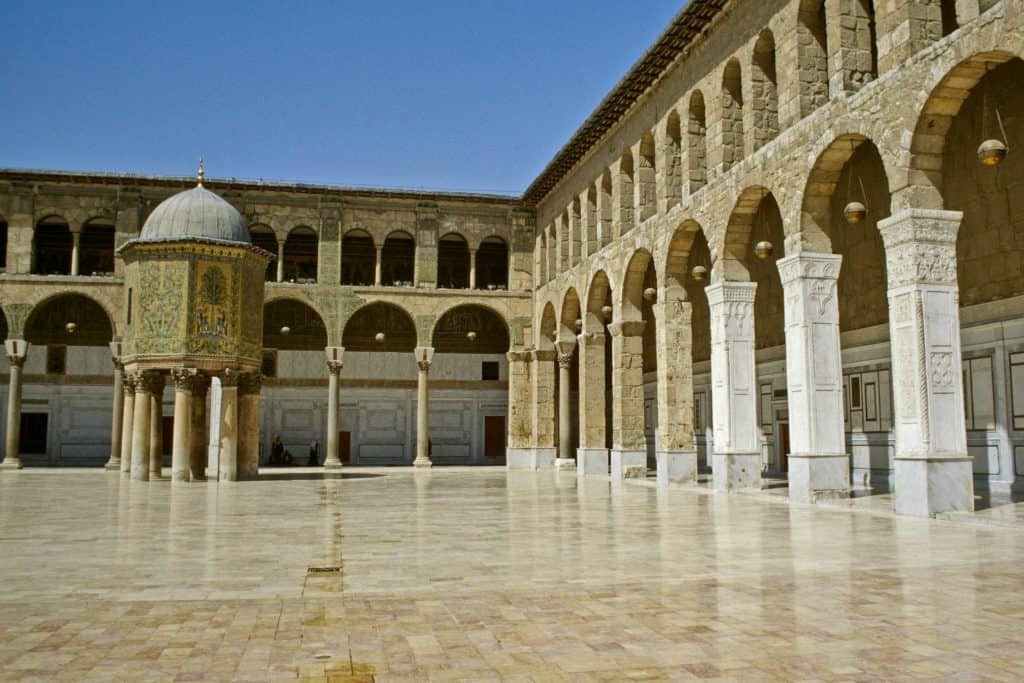
It is the fourth most famous Islamic Mosque after the two sanctuaries of Mecca and Medina and Al-Aqsa Mosque. It is also one of the most luxurious Islamic mosques, and one of the seven wonders of Islamic buildings in the world.
The Umayyad Mosque is famous for the decoration of its ceiling and its colorful mosaic walls, and the marble used in construction. The mosque is also distinguished by being the first mosque in which the mihrab and the apse appeared as a result of the building style.
The northern minaret, which is the oldest of its three minarets, dates back to the era of al-Walid ibn Abd al-Malik. The mosque contains the burial of the body of John the Baptist. The cemetery containing the remains of Salah al-Din al-Ayyubi is annexed to the mosque.
Al-Hamidiyah Market
Or Souk al-Hamidiyah is one of the most famous markets in Damascus, it is really beautiful, well organized, and elegant. It is described as a spacious and magnificent building and an industrial-commercial center in the heart of old Damascus. It is fully covered with an iron roof full of small holes through which sunrays penetrate during the day, it is paved with black basalt stone. It is a place for gatherings for visitors and tourists from all parts of the world.
The market extends for nearly two miles. The first part of it is located next to the Citadel of Damascus. It contains many mosques and ancient historical buildings. On its sides are shops of every kind and type on two floors. Several sub-markets branches from it. The Hamidiya market continues until the gate of the Jupiter Temple with the famous towering columns, to the square in front of the Umayyad Mosque in the heart of the old city.
Tekkiye Mosque
Sulaymaniyah Tekkiye Or Sultan Suleiman I Mosque is one of the important Ottoman monuments in Damascus. It includes a mosque, a museum, a market for handicrafts and heritage, and a school. The most prominent feature of the style of the Tekkiye is its two slender minarets, which resemble obelisks or two pencils, a style that was not familiar in Damascus until that era.
The hospice includes two sections: The grand Tekkiye, which consists of a mosque and a school, and the smaller hospice which consists of a prayer sanctuary, a large yard with corridors and rooms surrounding it, and multiple domes on top of them. The small hospice was a shelter for strangers and students. Today, it includes the Syrian Military Museum and the market of popular industries.
Damascus Hill
It is a geographical location in Wadi Barada, northwest of Damascus. It is a wonderful and popular location, full of restaurants and cafes. It is a destination for Damascene families goes out for recreation every week.
Damascus Hill is divided into seven branches by the Barada River, which branches in an area called the Shadrawan, and covers its plains in late winter and spring, with an attractive green meadow that attracts tourists.
Aleppo
Aleppo is a city of great history and its archaeological sites are clear evidence and proof. It is considered the most important city in the East. The towns and villages of Aleppo contain the charm of old civilizations in its castles, museums, monasteries, churches, mosques, the famous oriental markets, many summer resorts, natural places, beautiful gardens, and wonderful forests in the countryside.
In addition to a number of international hotels, Aleppo is full of a variety of amusement parks and water parks, casinos, cafes, and restaurants. The city was named the capital of the Islamic culture in the Arab world in 2006.
The ancient houses that have been transformed into restaurants rich in Aleppian heritage and wonderful hotels have made Aleppo one of the most beautiful tourist destinations in Syria, as it also includes many ancient heritage places. Aleppo is famous for its ancient restaurants, and delicious dishes, such as kebabs and grilled kebabs.
Aleppo was listed as a UNESCO World Heritage Site in 1986 because of its historical buildings that date back to the historical period from the 11th century to the 16th century. Archaeologists have agreed that Aleppo itself is a large museum with the most ancient and magnificent buildings. It includes mosques, temples, inns, and ancient markets, with its architectural consistency, which made it one of the most prominent landmarks in Syria.
The Great Mosque of Aleppo
It is one of the most important historical mosques in the ancient city of Aleppo. The mosque was built during the 8th century and was renovated in the 11th century. Where a fountain was added to its central courtyard, and a minaret of 45-meter length was added to become one of the most prominent elements in this mosque.
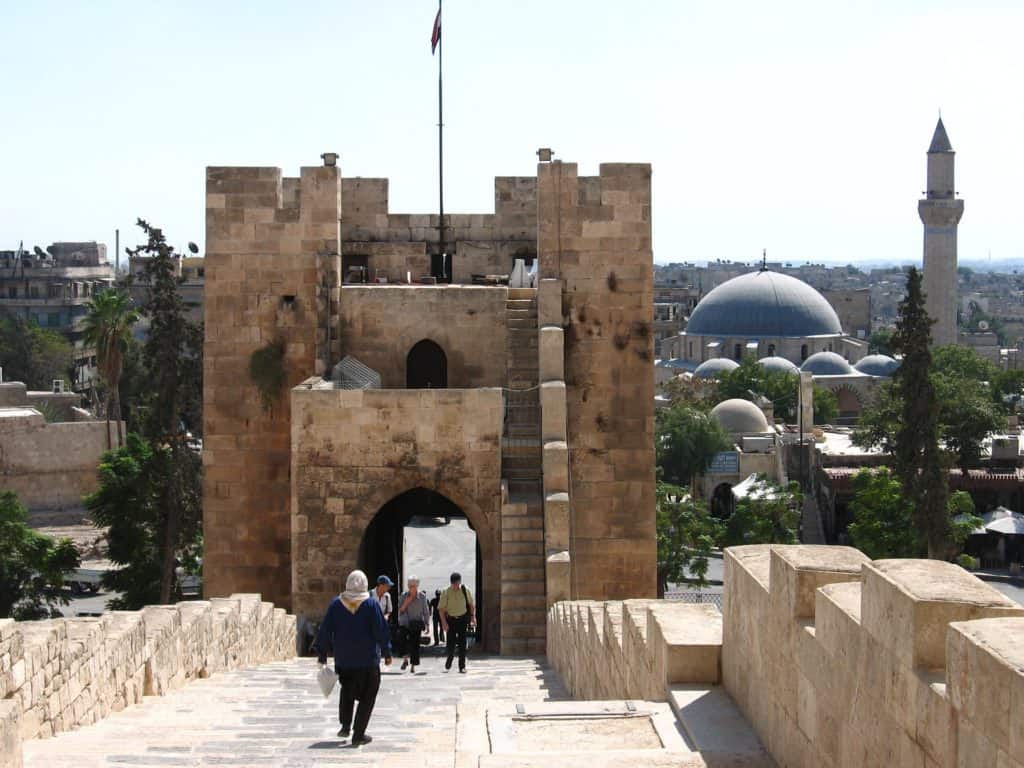
The Citadel of Aleppo
It is one of the important monuments in Syria, located on top of a limestone hill, where the Ayyubids built its main structure in the medieval period during the 12th and 13th centuries. The bulk of the castle was built in the Ottoman era during the beginning of the 16th century. It is noteworthy that the remains of a Bronze Age temple were found during the last excavations of the castle, which dates back to the 2ND millennium BCE, as this temple contains a group of inscriptions depicting pagan deities.
Tartous
The best place to attract tourists and the focus of attention for its rural nature, waterfalls, historic buildings, and hospitality that makes you feel at home. Among the best places recommended to visit in Tartous are:
Notre Dame Cathedral
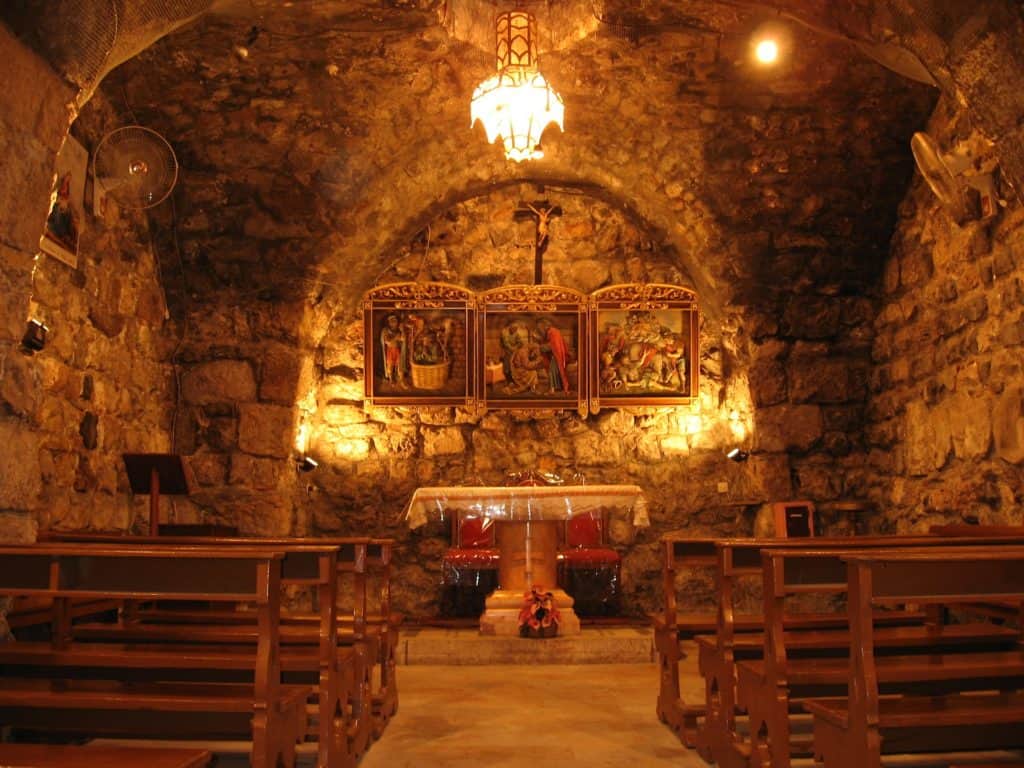
A Catholic cathedral in Tartous. Constructed during the 12th century. It is described as “the best-preserved religious structure of the Crusades.” The cathedral was famous and in high demand during the Crusades as it was reported that Saint Peter had previously ordered the construction of a chapel there for the Virgin Mary.
Mirqab Castle
An impenetrable fortress located 5 km east of the city of Baniyas on the Syrian coast. It was built in 1062 CE, on top of a hill 370 m above sea level. It overlooks from the east the mountains of Latakia and from the west over the city of Banias and the Mediterranean Sea, surrounded by mountains, forests, and a huge trench with a stairway that passes over a bridge to the main entrance of the castle. It is located in the north of Tartus.
Safita
Safita is characterized by its beautiful nature and its picturesque views of the mountains and forests from all sides, a charming nature where the relics and archaeological sites are spread in Safita and its surroundings. In the center of the city is a huge castle dating back to the period of the Crusades. One of the huge towers of that castle still exists today.
Amrit
The historical and archaeological town of Amrit is located south of Tartus, it has very beautiful touristic facilities and beaches. It is famous for its unique temple, which dates back to the 5th century BCE. It is carved out of rock and surrounded by water. Amrit is also famous for the remains of a huge stadium that could host up to 12 thousand people and dates back to the 16th century BCE.
Arwad Island
In history, Arwad was a refuge that the residents of the opposite coast would rush to whenever there were wars or invasions between different civilizations, such as Assyrian, Aramaic, Phoenician, and others. Today, Arwad Island shines in the sea with its natural beauty and captivating simplicity. Its port is decorated with sails and brightly colored boats, restaurants, and small popular cafes overlooking the sea and Tartous.
Arwad is famous for its Ayyubid tower and its old citadel, which has become a museum for the island’s antiquities, maritime traditions, and memories of the Syrian national struggle. their home. The beautiful Syrian island has been inhabited since ancient times.
Arwad in the days of the Canaanites was an independent kingdom in the name of Arados, and there are many ancient texts that talk about its importance in trade and navigation and about its naval fleet. Arwad enjoys a special, enchanting beauty, as this maritime kingdom that once ruled a large part of the Syrian coast embraces the sea with its unique houses, a small port, and beautiful cafes.
Al-Dawayat Cave
One of the oldest caves discovered in Syria, and it is one of the most important tourist destinations in Syria in general, as it is characterized by the beauty of its striking nature and is full of magical storms and omens. It was called al-Dawayat because of the small openings in its ceiling that illuminate the entrance to the cave.
The cave is 750 meters above sea level and contains a main hall with an area of 2,400 square meters, and a ceiling height of 17 m, while the length of the troughs ranges from 50 cm to 9 m, with bright columns rising from its ground. The lengths of the crystal columns range from 8 m to 16 m.
Latakia
Lattakia is famous for the beauty of its nature and the kindness of its people. The charm of the province lies in the many cities, villages and resorts located in the green mountains covered with natural forests, fruit trees and orchards. Latakia has many monuments, archaeological sites, historical towns, and castles along the Latakia Mountains.
Latakia has a number of short rivers, lakes, many natural water springs and waterfalls, beautiful nature in the mountains and among the forests, and charming nature on the shores of the Mediterranean. Tourist facilities, hotels, and parks are spread throughout all the famous summer resorts.
The main cities of Latakia are Mountainous and coastal, there is an international airport that connects the province to the internal airports of Syria and a number of countries in the world, in addition to a train station, advanced touristic trains, and hotel services.
Latakia Forests
The forests are in the north of Lattakia in the Al-Bayer area. It is the largest area covered by forests in Syria. This region is characterized by its wonderful beauty and good residences. The trees of the forest rise tall, and the natural springs flow among the forest trees in wonderful and enchanting scenes. The Al-Farnaq forests extend into the arms of the Syrian coastal mountains.
Ras Al-Basit
A distinctive sandy beach in the form of a natural peninsula to the north of Latakia, near its border with Iskenderun. It is characterized by the picturesque scenery resulting from the meeting of the mountains with the sea.
Um El-Toyour
A village located 30 km north of Latakia in Ras Al-Basit and has a population of about 2000 people. The village’s beach extends for 12 km, its southern part is sandy, and its northern part is rocky and rushing to Ras al-Basit. The area was declared a nature reserve to preserve migratory birds and forests.
Kessab
Kessab is a tourist town and a summer center, 60 km to the north of Latakia, it is the farthest from its touristic sites. Kessab overlooks vast areas of green forests and is considered one of the richest areas of Latakia with hotels and cafes.
Blue Beach
A resort and hotel facility in the province of Latakia, located on the shore of the Mediterranean Sea in a beautiful touristic area close to the city center and the markets.
Ugarit
The ruins of the ancient Syrian city of Ugarit were discovered on an archaeological hill called today, Ras Shamra, 3 kilometers from the northeastern edge of the present-day city of Latakia. An ancient archaeological city. Excavations have shown that the site of Ras Shamra includes about 20 archaeological settlements dating back to the year 7500 BCE. However, with the advent of the second millennium BCE, the settlement on the site almost doubled.
Mishqita
A Syrian resort and town in Lattakia, Mashqita is located 23 km north of Lattakia, and enjoys very beautiful nature, overlooking beautiful views of seven lakes. It is located on the road between Lattakia and the famous Kessab resort. It is surrounded by a group of resorts and villages.
Saydnaya
It is a Syrian city that is considered one of the oldest Christian cities in the Arab East. Its name means “Our Lady” in Aramaic, and it is located at 1,450 meters above sea level. The city is famous for its natural beauty and for its Christian sanctuaries, which are famous all over the world. Sednaya prison is also located near the city.
Palmyra
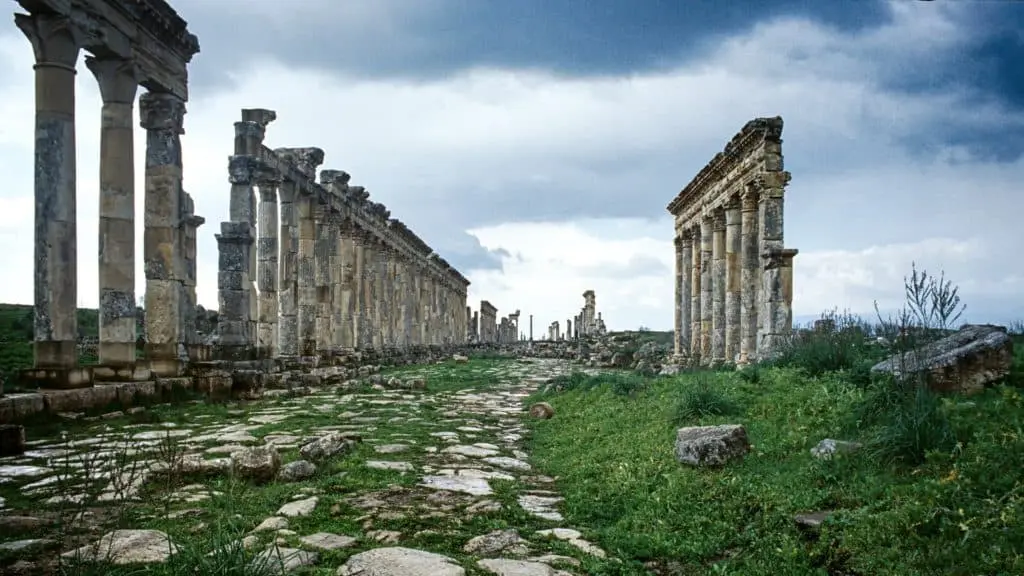
Palmyra is an ancient Semitic city in the middle of the Levant region, it is located 243 km away from Damascus and 150 km from Homs in the east. The city is known for its archaeological monuments that date back to the 2nd millennium BCE.
Palmyra was also included in the UNESCO World Heritage Sites in 1980, as it contains many monuments dating back to the Neolithic era. It also contains Aramaic, Arab, Greek, and Roman monuments, in addition to a number of important buildings, including the Senate, the court, the Temple of Bel, which dates back to 32 CE, the Temple of Baal Shamin, which dates back to the second century BCE, the Temple of Nabu, the Great Colonnade of Palmyra, and funerary temples.
Al-Hosn Castle
It is located near Homs. It is considered one of the most beautiful archaeological castles in the world. The castle is considered one of the best-preserved fortifications in the east. It consists of two concentric castles, the outer of which is surrounded by a defensive wall reinforced with semi-circular towers. The upper inner castle consists of huge towers overlooking the outer castle from above the slope on which it was built. the castle was registered on the World Heritage List.
Palmyra Castle
One of the most prominent landmarks of the archaeological city of Palmyra. It is surrounded by a trench, held to prevent the attackers from entering. Thus, the only entry into the castle was a tire-based bridge, which is over the trench in front of the main entrance.
Castle of Saladin
One of the castles of the Syrian coast mountains. It was built on a high peak surrounded by forests and breathtaking scenery. For a long time, it was called the Citadel of Sahyun. Today, it bears the name of Salah al-Din al-Ayyubi Castle in memory of the Kurdish Islamic leader Salah al-Din al-Ayyubi. In 2006, the castle was registered on the World Heritage List.
Funeral City
Known as Wadi Al-Maqabir or the valley of tombs. The 50 monuments were built in the form of towers up to four floors. Other tombs are located to the north of the city, as the tombs were underground.
Temple of Bel
The temple was made up of a large area, in a rectangular shape. The exterior wall is about 205 meters including a gate, and the interior room is located in the middle of the region. Bel is a Babylonian Accadian god, he represents the Lord of the Lords in the Babylonian belief. By the end of the second century BCE, the altar of the temple was built. The lobby consists of six columns.
The Syrian Coast
The Syrian coast on the Mediterranean is in northwest Syria. it forms the governorates of Tartous in the south and Latakia in the north. It is internationally known for its beautiful nature, with picturesque summer villages, clean air, forests, mountains covered with greenery, springs, streams, rivers, and natural and artificial lakes that were formed behind a number of dams. There are also several small uninhabited islands off the Syrian coast.
Bosra
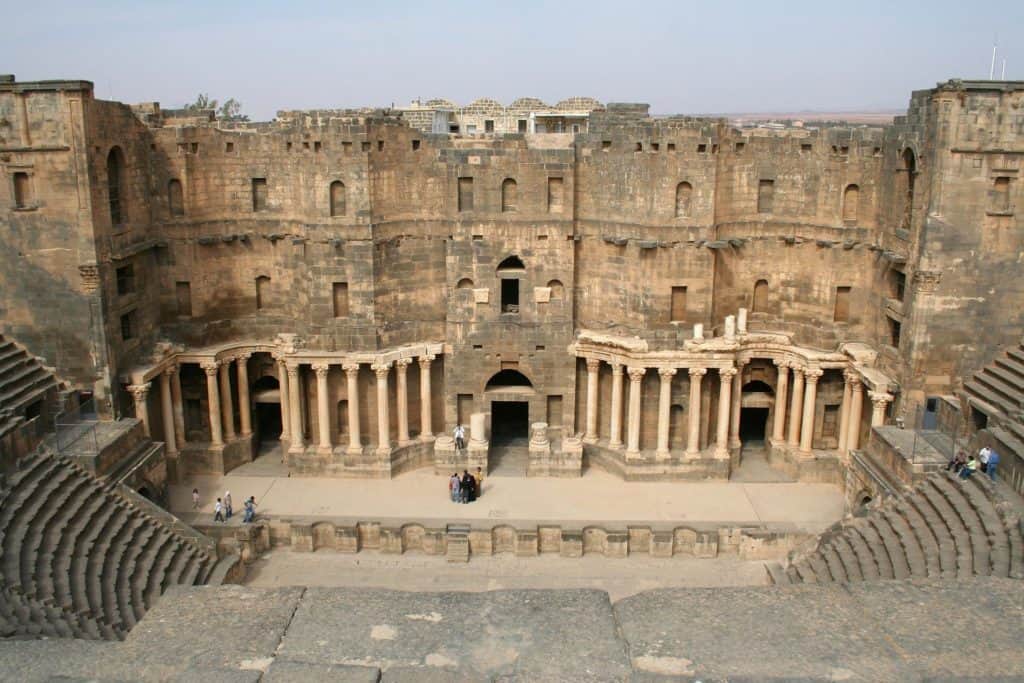
Bosra al-Sham is a small city in southern Syria. It is 40 km away from Daraa and about 140 km from Damascus and around the sea is about 850 meters. Bosra is one of the most important Romanian archaeological cities in the world and has been contrary to many civilizations.
Bosra was more than just an important capital and center of the Roman Province in the east, a religious capital, and a commercial capital of several civilizations. It is registered in UNESCO within the list of world heritage sites.
Its distinguished location had a great impact on its prestigious status among the cities of the ancient East. It played an important civil and commercial role. The most important feature of it is its theater, as it was designed following the style of Roman theaters.
Among its important monuments are the central arch, the underground market, and the Temple of the Nymphs.
Apamea
One of the ancient Syrian cities is located 55 km northwest of Hama. it has an ancient fortress next to it that bore its name, known today as Qalaat al-Madiq. The city has very ancient roots in time, as it was an important cultural center in the region. Apamea has a historical status that lives up to Hellenist, Roman, Byzantine, and Islamic eras.
Castle of al-Madiq
Situated to the west of the city of Apamea, with a majestic view overlooking the area, one of the many castles deployed across the Syrian coast. The castle was believed to be an Acropolis, then in the Roman covenant it became a military site.
The design of the castle puts it on the list of the most distinguished, as it is a beautiful castle. The design follows the Arab fortress model, the Arab construction of the castle is due to the orders of restoration of Nour al-Din Zanki.
The village inside the castle is largely full of remains of the small houses that were once inhabited. The castle is a great fence in an irregular polygon, with a lot of installed square towers, and a large door that has two watchtowers for guarding the castle entrance.
Khan Apamea Museum
An Ottoman archaeological Khan and museum, located to the south of the Castle of al-Madiq at 226 m. above sea level. It was built in the early 16th century CE, during the reign of the Ottoman Sultan Sulaiman Khan I. the Khan plan is a wide courtyard surrounded by several rooms and the rooms are based in large stones and half-cylindrical docks, it is classified as a distinctive luxurious building.
Rusafa
The city of Rusafa is located in the north of the Syrian desert to the southwest of Raqqa. Rusafa contains many important facilities and buildings in addition to its huge wall, churches, basilica, cathedral, palaces, famous huge underground water tanks, and aqueducts adjacent to it that date back to the Roman and Byzantine eras.
Dura Europos
The city of Dura-Eupopos is located to the southeast of Deir ez-Zor. It extends on the western plateau of the Euphrates River. An ancient Syrian city that includes the first home church in the world and the paintings of a synagogue are considered the most beautiful. It was originally a Babylonian city, but after Syria has fallen in the hands of the Persians, it followed the Persian empire.
Maaloula
A Syrian city located in the northwest of Damascus and about 1,500 meters above sea level. Its name means a high place with fresh air, according to the Syriac language, which the inhabitants of Maaloula still speak. It is famous for the sacred Christian monuments, in addition to other important ancient monuments dating back to the 10th century BCE. Its inhabitants, Christians, and Muslims, still speak the Aramaic (Syriac) language, the language of Christ, beside the Arabic language.
Marmarita
A town situated in Homs Governorate, it is about 850 meters above sea level and varies in height due to its location on the hills and mountains. It is a resort known for its natural beauty.
Masyaf
A Syrian city located southwest of Hama; it rises about 450 meters above sea level. The city is surrounded by a group of mountains, as it takes a middle position between the coastal mountains and the interior plains of Syria. It is famous for its high wind speed. Fishing is one of the most famous activities in this city.
Assad Lake
An artificial lake that was formed behind one of the largest Arab projects, the Euphrates Dam, which is located on the Euphrates River in the Raqqa Governorate. It is a huge lake, it is well used for irrigation and agriculture, as well as a hydroelectric station located on its bank to generate electric power. It is a touristic destination for its peaceful surroundings and tranquility that tourists enjoy on their way to visit nearby archaeological sites.
Religious Tourism
Syria is the cradle of monotheistic religions. It has been considered from the beginning of history as an important meeting place for several religions.
Christian Shrines
Syria is very rich in Christian sanctities, including churches and monasteries that are the oldest in the world, important places and towns in Christian history, such as Maaloula, churches such as the Mariam Church, the Monastery of Our Lady, the Church of Saint Ananias, the Church of St. Nasiriyah, St. Jacob Church,
There are also the Chaldean Church, St. Ephrem Church, Syriac Church, St. George Church, St. George’s Patriarchal Monastery, Our Lady of Sednaya Monastery, Cherubim Monastery, St. Elias Shwaya Monastery, Mrs. Belmana Monastery, St. Musa Monastery, the Patriarchate of Antioch and the rest of the East, and many more throughout Syria.
Islamic Shrines
In Syria, there are many important mosques and historical shrines, including the Umayyad Mosque, as well as the mosques of Ahl al-Bayt, including the Sayyida Zainab Mosque in Damascus, the Sayyida Ruqayya shrine, and the shrine of the Prophet Abel. There are also important historical mosques of many companions of Prophet Mohammed in Damascus and other regions of Syria.
Medical Tourism
It is known as one of the objectives of visiting Syria of all kinds, from treatment in sanatoriums or specialists to hospitalization with sulfur and mineral water. Syria is full of an abundant number of mineral springs. Among tourist attraction centers, there are these mineral springs that include the Spring of Life, located 45 km south of Damascus in the village of Jabab in the Daraa governorate, as well as the Ras Al-Ain Springs, which contain a group of sulfur and mineral water springs in the city of Ras Al-Ain, which belongs to the Al-Hasakah governorate.
Some places of therapeutic mineral and sulfur water springs in Syria include the Baqin in the Damascus countryside, Al-Nabain in Lattakia Governorate, and Drikish in Tartous governorate springs of mineral water. As for sulfur water, there is the Abu Riah in Homs Governorate and the Sukhna in Homs Governorate.
Chabab Spa
A resort designed to receive convalescents, patients, and hospital seekers. It also provides treatments and calming souls from the pressures of daily life through relaxation.
Syrian Cuisine
An ancient and diverse cuisine that derives its diversity from the Syrian nature and history. Each Syrian city and region has its own distinct food between Damascus, Aleppo, Homs, Hama, the cities of the Syrian coast, the Syrian Jazira region, Deir Ezzor, Raqqa, the Badia, and the mountainous regions in Latakia, Sweida, and the Damascus countryside. This is what made the Syrian cuisine very rich with its dishes and appetites.
In ancient times, there were major religious cuisines that prevailed in Syria; the Roman cuisine based on bread, meat and beer. The Quine-Phoenician cuisine based on vegetables, olive oil, and wine, the Eastern Jewish cuisine is based on cereals.
With the advent of Christianity, the Syrian cuisine developed to become the Christian kitchen known today in Syria as the fasting kitchen. Since the 16th century, new types of food from the Sephardic Jewish and Andalusian cuisines have entered Syria, such as tabbouleh and moussakaa.
The original innovative Syrian food provides a convenient opportunity to wander between the many different dishes of Syrian appetizers, main dishes, and desserts. The Syrian grills, the well-known Aleppo kebab, special kibbeh of Aleppo, meat with dough, Shami and Aleppo safiha, Syrian pastries, Damascene ice cream, Aleppo beans.
The great advantage of the Syrian cuisine lies in its diversity and richness, from the most famous Syrian desserts and sweets to fish and seafood in Lattakia, Tartous, and Arwad, to Mahashi and Yabraq, to the distinctive okra, kebabs, and eggplant kebabs in the Euphrates cities of Deir Ezzor and Raqqa, to the famous Arab mansaf in As Suwayda and Daraa, to the great variety of sweets, salads, delicious Syrian appetizers, and original and distinct main dishes according to regions.
What distinguishes Syrian cuisine is many ancient, renewable and authentic dishes, appetizers, many types of salads, grills, kibbeh, and drinks such as black raspberry syrup, Qamar al-Din syrup, tamarind and yoghurt. They are all famous and well known all over the world.
There are dishes of Turkish origins, such as Barak which is a type of Mahshi that consists of grape leaves stuffed with rice and meat. Yalanji which is another type of Mahshi consists of grape leaves stuffed with rice and some vegetables.
Communications and Internet in Syria
Communication companies in Syria have met with a remarkable development and a great spread, as they have multiplied and offered telecommunications and Internet offers throughout the country. The internet speed in Iraq is acceptable, and prices are low. Internet is also available at airports, stations, restaurants, as well as some high-end areas.
The official currency in Syria
The currency in Syria is the Syrian Pound; however, it is locally known as Lira.
Facilities
The tourist infrastructure is available in the many cities and resorts of Syria, which include five-star hotels, many international hotels, tourist villages, multi-class hotels, restrooms, huge high-end restaurants, wonderful parks, natural camping locations, a large number of tourism companies, airline offices, tourist services. Syria is famous for its cinemas and Theatres, night clubs and cultural clubs that are spread in all cities and regions.
Syrian ports on the Mediterranean are most renowned in the region, such as the port of Latakia and the port of Tartous. The tourist congestion is generally in Damascus and the Syrian coast, Homs and Aleppo, especially the resorts of the countryside of Damascus and the resorts of the mountains and forests of the coast, which attract tourists from all over the world.
Transportation
You can move within Syria using many public transportation methods. The various Syrian cities are connected all over the country with modern roads and highways, a network of railways and trains covering all Syrian governorates, a number of airports for domestic and international airlines, and cruises. Check the following:
Flights
There are many domestic flights in Syria, through which you can travel between the major touristic cities in the country.
Buses
Syria has many public buses and cars; it is very useful mobile between provinces and cities. Bus stations and road services are being developed continuously. Highways are being taken care of to provide a safe and comfortable trip for everyone.
Railways
Syria has many different railways, which provide you with a way to move within Syrian cities and their prices are cheap.
Taxis
Taxi is the most common way in Iraq to get around the cities, as it is the most convenient and fastest way.
Scotland in May: Sunshine, Mild Temps, and Outdoor Adventures
Scotland
25/04/2024
Discover the Top 15 Best Places to Visit in Northern Ireland
Travel Guides
24/04/2024
How to Find the Best Scotland Travel Guide: An Ultimate Guide
Scotland
24/04/2024
The Ultimate Guide to the Best Shopping Areas in London
England
24/04/2024

The Absolute Guide to the Best Restaurants in Bath, England: Unveiling the Culinary Gems of Bath!
Food and Cuisine
24/04/2024