

Scottish Mythology: Mystical Places to Explore in Scotland
Updated On: April 21, 2024 by  Ciaran Connolly
Scotland has a lengthy, more than 2,000-year-old Celtic heritage. At that time, weird occurrences were commonplace, and superstition ruled. This has resulted in a rich collection of myths and legends that collectively make up Scottish mythology, and may we say that it’s far more exciting than its Greek counterpart.
We get it. Yes, Greek mythology dominates the mystic scene. However, a true Philomath knows that Scottish mythology offers a richer array of different kinds of tales, coupled with the mystically skilful storytelling of the Scots. Their knack for storytelling has been carried from one generation to the other, each adding its “flavour” to these Celtic myths and legends. Fortunately for us, this preserved one of the best folklore in human history.
The best way to truly feel the excitement and uniqueness of Scottish mythology is by exploring the numerous mythical places scattered around the country. These places give insight into the ancient society that kept telling and retelling the fables, which make up a significant portion of Scotland’s history. Below are just some of the mystical places in Scotland where you can, even for a moment, connect with the country’s mythology, in addition to exploring some unique ancient beliefs.
Scottish Mythology and Aspects of Nature
Beira, the Queen of Winter, was said to have a solid grip on the nation by causing storms in January and February, which prevented the emergence of greenery. She was regarded as a fierce and cruel elderly woman who sparked the fatal spiralling action of Corryvreckan, bringing snow and floods that caused rivers to overflow. She was even credited with building mountains and lakes.
Scottish Goddesses
The powerful Celtic goddesses were linked to feminine childbirth as it connected to female divinity and the soil. The goddess, also referred to as a “national goddess,” was once connected to the Celtic people and territory, and the queen served as her earthly manifestation. The “hag,” a celestial entity that is detrimental and also known as the Goddess, the Gaelic Cailleach, and the Giantess, was another “ambivalent” figure from Scottish mythology. The hag is thought to be divine, with a “deep heritage and extraordinary lifespan,” and is beneficial during delivery in addition to being a “healer.” She is also known for being “both a creator and a destroyer, a mother and a nurturer, at once kind and violent.”
After introducing the main aspects of Scottish mythology, let’s go over some of the most famous Scottish mythological symbols, creatures, and spirits.
Unicorns
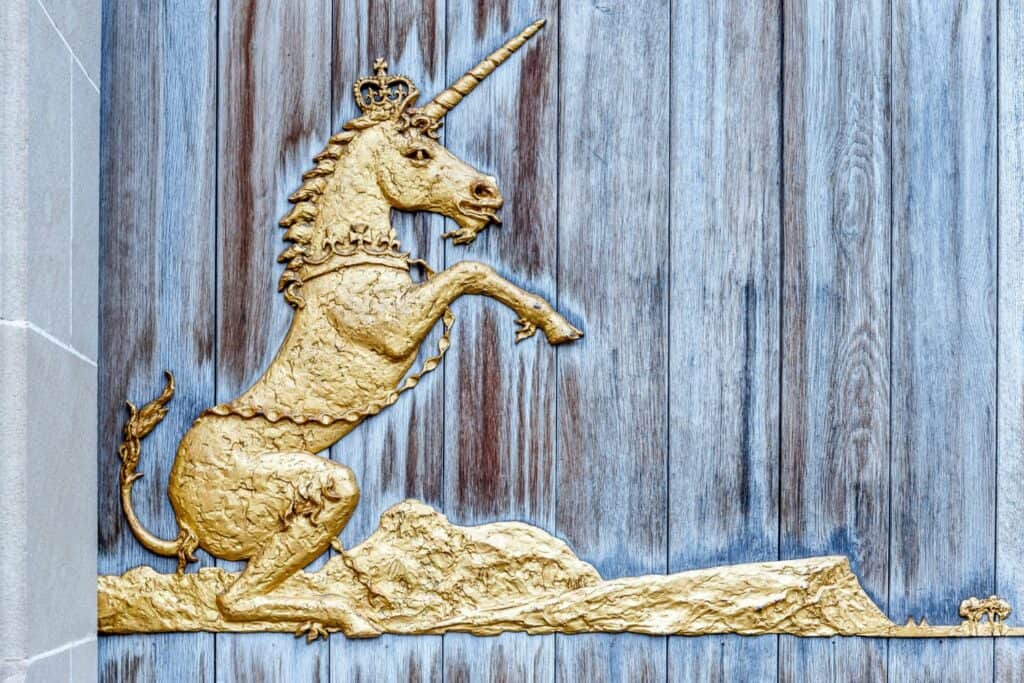
Interestingly enough, the mythical creature that all children seem to be fascinated with, the unicorn, is Scotland’s national animal.
Unicorns have been represented in writing as far back as the time of the Celts and ancient Babylonians. In Scotland, by the 12th century, the unicorn had come to symbolise royalty and authority. It was said that this “animal” was the true form of power, and only the Scottish monarch could tame this beast. It eventually became a representation of Scotland’s spirit of freedom and its enchantingly stunning, untamed landscape.
Where in Scotland might you encounter a unicorn?
Isle of Skye
On this mist-covered, hilly island, named “cloud island” in Old Norse, a unicorn could certainly tread. Unquestionably, the Isle of Skye is one of Scotland’s most enchanting destinations. A true Scotland itinerary wouldn’t be complete without stopping by and admiring this natural wonder.
Eilean Donan Castle
On an island between two lochs, the 13th-century Eilean Donan Castle is certainly worth a visit. It’s one of the most mesmerising castles in Scotland.
The Northern Highlands
In a place this untamed place, magic is in every nook and cranny—unicorns are but one example. You can see if you take the North Coast 500 route.
Edinburgh
Look for the unicorn statue at important landmarks in Scotland’s capital, such as Holyrood Palace and Edinburgh Castle.
Kelpies
Do you know what a “kelpie” is? According to Scottish tradition, kelpies are water spirits that resemble horses and are claimed to have the power of 100 horses. They can be hiding among the rivers in Scotland. But be cautious. Kelpies, in contrast to unicorns, have a sinister and scary temperament.
A kelpie may entice you into riding on its back down by the water. But watch out for this water horse. This legendary cunning figure carries anyone who succumbs to its cries into the dark waters.
Where in Scotland might you encounter a Kelpie?
Loch Coruisk
Over the years, this lake has served as the inspiration for numerous Scottish poets and painters. Today, you can even take a 45-minute boat cruise from the village of Elgol to look for the kelpies.
The Helix
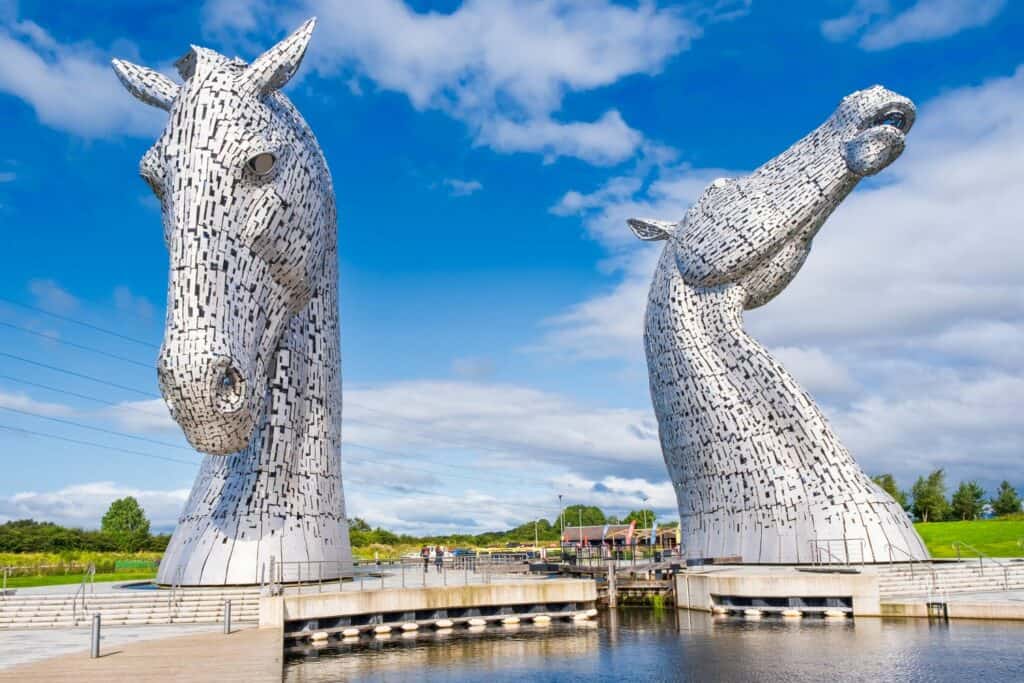
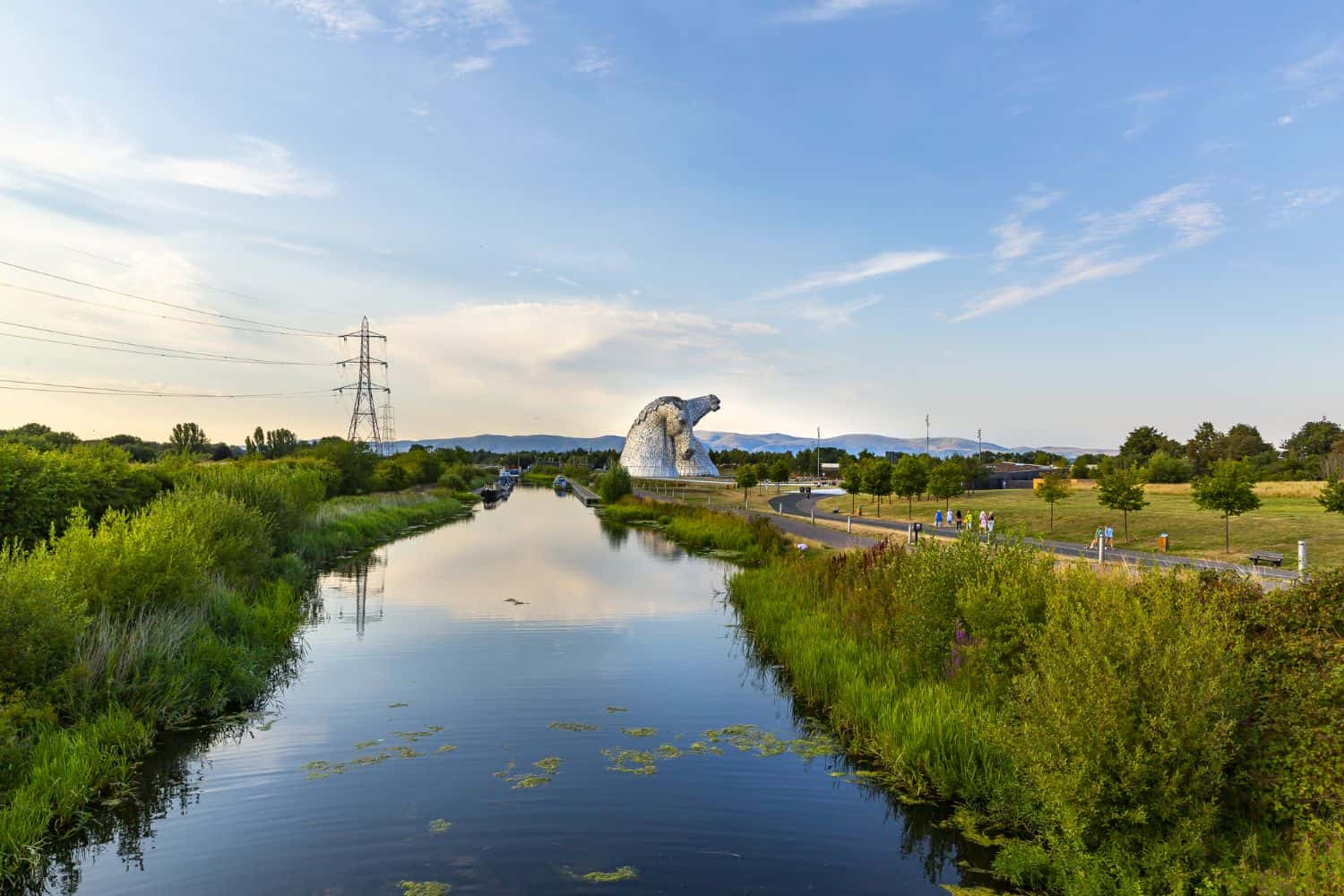
The Kelpies, two enormous steel horsehead statues near Falkirk, are a must-see and a great photo opportunity.
Blue Men of the Minch
You might come across them if you visit the Isle of Lewis.
The blue men of the Minch, also called Storm Kelpies, are said to prey on sailors who try the voyage. According to legend, the Blue Men, with their blue skin, would sleep in the calm weather. But they had the power to call in storms whenever they wanted. Many captains perished as a result of this. Keeping your mouth shut could be something to think about if you ever visit the area since legend has it that there is no other secure route to pass.
Fairies
We all loved fairies at one point when we were young, but these little Scottish people are kind of different. If you’re a fan of the famous Outlander, you know that the belief in fairies was predominant in Scotland, and some still uphold this today.
According to Scottish tradition, these “faeries” or “small people” have many forms and temperaments. They may be friendly, sure, like the ones we would imagine during our childhood, but if you dare to disrespect them, expect to face their wrath.
If you show kindness to the Sidhe fairies, they can shower you with good luck. However, we advise you to stay away from the pitch-black, deep forests at night. If you do not, the Ghillie Dhu, or “dark-haired youth” in Scottish Gaelic, may punish you. If you invade his forest home, he will not be happy.
Where in Scotland might you encounter Fairies?
Fairy Glen
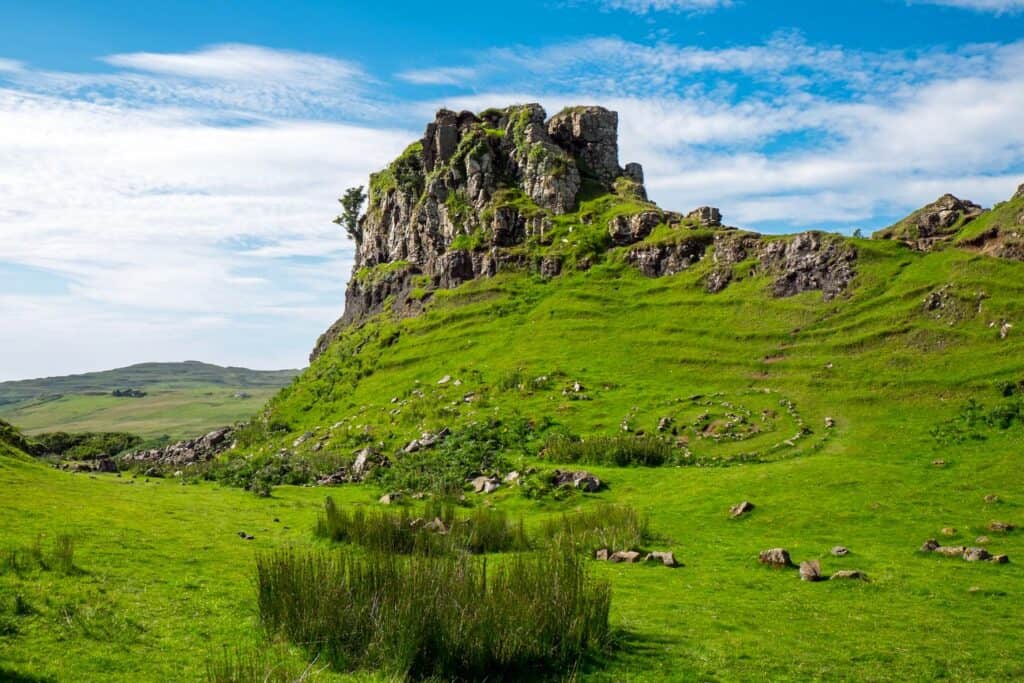
Explore the Fairy Glen, a legendary glen on the Isle of Skye, and you might run into some Sidhe faeries.
Fairy Pools
On the Isle of Skye, the Fairy Pools, another mystical location for the little lads, you can find them, precisely in Glenbrittle, under the Black Cuillin mountains.
The Green Lady
Learn about the Green Lady by going to Crathes Castle, which is halfway between Aberdeen and the Cairngorms National Park, one of Scotland’s top parks to visit. As you stroll through this 16th-century castle, you can spot her creepy figure clutching a young kid.
The Headless Drummer
Edinburgh has more paranormal tales to share with you. In Edinburgh Castle, many ghost spirits are allegedly imprisoned, notably the Headless Drummer.
When you go around the historic walls of this famous castle, keep an ear out for the sound of distant drumming. The drummer kid is introducing himself to you in that way.
The Bean Nighe
Residing in Scottish glens and meadows, it is hard to determine what she looks like at first, but she is wearing green and is obviously elderly. Her long, grey hair was tangled and flowed down her back and over her shoulders. She has a deformed face with a pointy nose and only one nostril when she turns to face you.
Whether or not you believe in Scottish mythology, Scotland’s scenery and historical sites are mesmerising to view. Don’t let the spirits scare you off! Scotland has much more to offer everyone, no matter which type of traveller you are.
The Absolute Guide to the Best Restaurants in Bath, England: Unveiling the Culinary Gems of Bath!
Food and Cuisine
24/04/2024
Planning a Trip to Scotland: Your All-Inclusive Guide to Exploring the Great Highlands
Travel Guides
23/04/2024
Your Ultimate Guide to Explore the Top Castles in Kent, England
England
23/04/2024
Weather in Ireland in May: A Guide to Climate, Temperature, and What to Wear
Ireland
23/04/2024
Top Castles to Stay in Edinburgh for an Unforgettable Accommodation Experience
Scotland
23/04/2024