
Saint Eunan’s Cathedral rises above Letterkenny like a stone signal flag, and it is one of the easiest landmarks in County Donegal to build a day around. Whether you are passing through on the Wild Atlantic Way or basing yourself in the town for a few nights, the cathedral’s spire, Gothic stonework and hilltop position make it worth more than a quick photo stop.
This guide covers what to expect when you visit, the history behind the building’s Victorian Gothic design, and the landmarks within easy reach that turn a single stop into a full Donegal itinerary.
Table of Contents
A Letterkenny Landmark Worth Stopping For
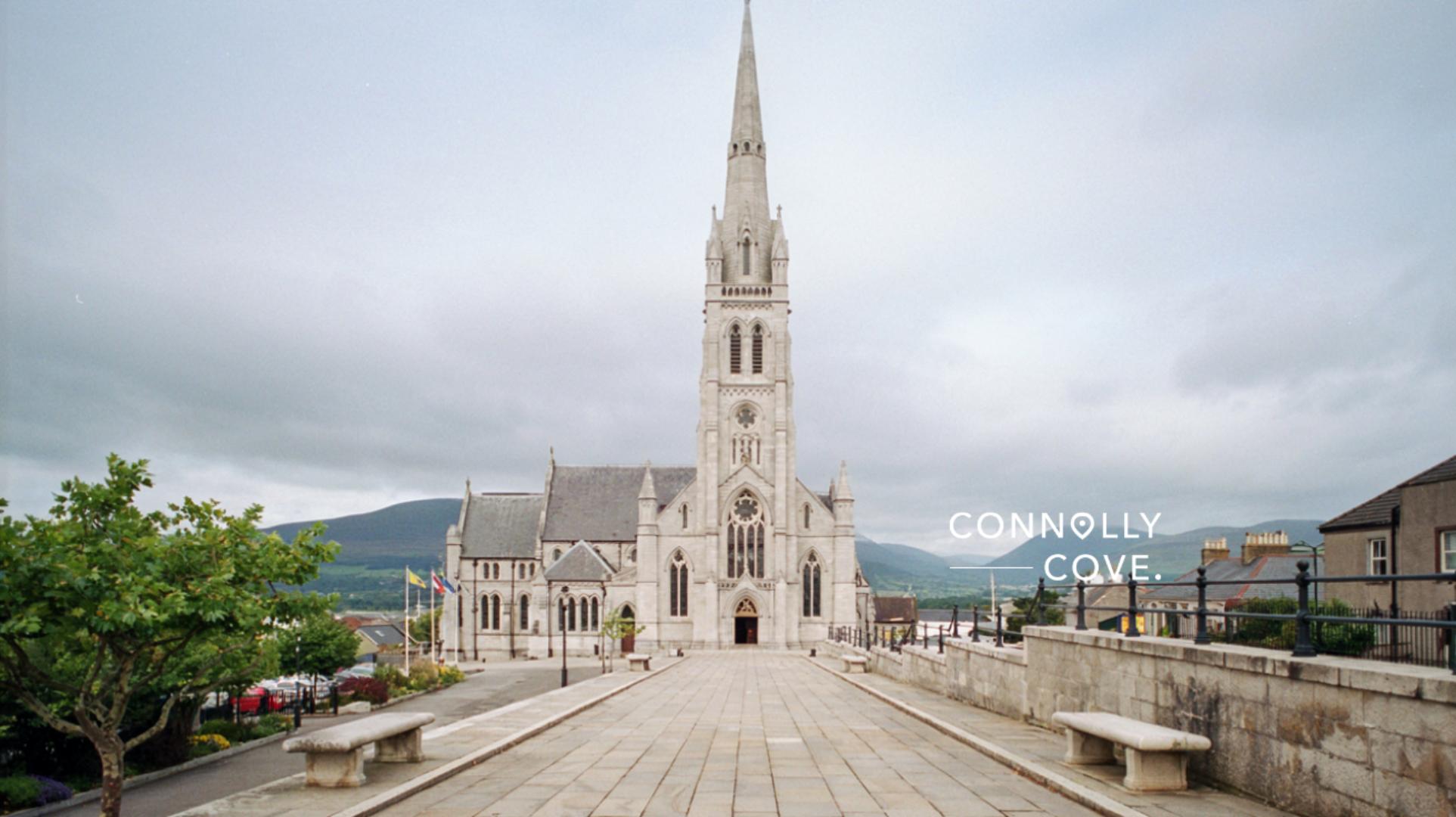
Saint Eunan’s Cathedral is the tallest and most recognisable building in Letterkenny, and its spire is visible from several streets before you reach it. The cathedral sits on raised ground at Ard Choluim, overlooking the town centre, which makes it a natural orientation point if you are exploring Letterkenny on foot.
Letterkenny is the largest town in County Donegal and a common stopping point for travellers heading further along the Wild Atlantic Way or into the Inishowen Peninsula. For a wider sense of what the county offers beyond this one landmark, ConnollyCove’s guide to County Donegal’s top attractions and sights is a useful starting point for planning a longer trip.
Up close, the building’s scale is the main draw. The nave runs to roughly 171 feet, the transepts stretch around 100 feet across, and the spire reaches close to 240 feet above the town, a height that makes it one of the tallest church spires in Ulster. Approaching from Main Street, the tower dominates the view for several minutes before you reach the base of the hill, and the walk up gives a good sense of why the site was chosen: it is one of the few points in Letterkenny with a clear vantage over the surrounding countryside.
The cathedral square in front of the building is a good spot to pause. It offers a clear line of sight back down over the town’s rooftops and, on a clear day, towards the hills that ring Letterkenny to the west. Travellers combining a cathedral visit with a wider county trip often use this square as a natural start or end point for a walking loop of the town centre.
The Gothic Design and Donegal Stone Behind the Cathedral
Saint Eunan’s Cathedral was built between 1890 and 1901 in the Victorian Gothic Revival style, and its exterior is largely faced in white sandstone quarried at nearby Mountcharles. The stone changes colour noticeably in wet weather, taking on a warmer tone that is worth seeing if you catch Letterkenny after rain.
The building was designed by the architect William Hague, whose Gothic Revival work also shaped several other cathedrals in Ireland. James McClay of Strabane served as building contractor for the first phase of construction, while carving work was carried out by Purdy and Millard, stonemasons from Belfast. Their detailing is most visible around the doorways and window arches, where the sandstone has been worked into pointed arches and tracery typical of the style.
Funding came largely from local donations across the Diocese of Raphoe, a detail that says something about the scale of community investment behind the building. Letterkenny was a comparatively small town when construction began, and a cathedral of this size represented a significant undertaking for the area at the time.
Inside, the altar area is worked in coloured marble, a contrast to the pale sandstone of the exterior, and the stained glass windows along the nave were donated piece by piece over the years following the cathedral’s completion, which is why the styles vary slightly from window to window if you look closely. The building underwent a significant restoration in the 1980s to repair weathering damage to the stonework and roof, work that has kept the exterior largely as it appeared when first completed.
Visiting Saint Eunan’s Cathedral: What to Expect
The cathedral remains an active place of worship, but visitors are welcome to step inside outside of service times to see the interior. Expect high vaulted ceilings, detailed stonework around the altar area, and stained glass that catches the light well in the late morning.
There is no admission charge to view the cathedral, though a donation box is usually available for those who would like to contribute towards its upkeep. Visits tend to be short, around twenty to thirty minutes, unless you are particularly interested in the architecture or stained glass, in which case it is worth allowing longer.
As with any working place of worship, it is worth keeping voices low and avoiding visits during scheduled services, which are typically posted at the entrance and on the cathedral’s own website. Modest dress is appreciated but not strictly enforced for daytime visits. The seating inside runs to several hundred, giving a sense of just how large a congregation the building was originally designed to hold.
The cathedral sits a short walk from Letterkenny’s Main Street, so it pairs naturally with a stroll around the town centre’s shops and cafés. If you want a fuller picture of what else Letterkenny has to offer beyond the cathedral itself, ConnollyCove’s dedicated guide to Letterkenny, the Cathedral Town, covers the wider area in more depth, including the Donegal County Museum and the An Grianán Theatre.
Photography is generally permitted outside of services, and the exterior is best photographed from Market Square or from further down the hill, where the full height of the spire is visible against the skyline.
Nearby Landmarks Worth Adding to Your Donegal Itinerary
Saint Eunan’s Cathedral works well as an anchor point for a wider day out, since several of County Donegal’s best-known landmarks sit within an hour’s drive.
Grianán of Aileach, an ancient stone ringfort on the Inishowen Peninsula, is around 25 minutes from Letterkenny by car. The fort dates back well over a thousand years and offers panoramic views across Lough Swilly and Lough Foyle. A full breakdown of the site’s history and visiting details is available in this guide to Grianán of Aileach.
Glenveagh National Park, home to Glenveagh Castle and the Derryveagh Mountains, is a longer but worthwhile detour of around 45 minutes, and pairs a castle and gardens with genuine wilderness hiking. It features alongside other countywide highlights in ConnollyCove’s guide to things to do in Donegal.
Travellers with more time and a taste for dramatic coastal scenery should consider the drive to the Slieve League Cliffs, roughly ninety minutes from Letterkenny via Donegal Town. Among Europe’s highest sea cliffs, they are a firm favourite for Donegal itineraries, and route options and timing for the journey are covered in this guide to the Slieve League Cliffs.
For a shorter coastal stop, Bundoran and Killybegs both sit further south along Donegal Bay and are popular additions to a longer Wild Atlantic Way itinerary. Practical things to see and do in each area are covered in these guides to Bundoran and the town of Killybegs.
To the north, the village of Downings on the Rosguill Peninsula offers a quieter coastal detour, with beaches and the scenic Atlantic Drive loop making it a good half-day trip from Letterkenny. The drive and what to do once you arrive are covered in this guide to Downings.
Travellers interested in the folklore behind these landmarks, including the legends attached to Grianán of Aileach and the wider Donegal coastline, will find more detail in this guide to the legends of County Donegal, and the full coastal route is mapped out in ConnollyCove’s Wild Atlantic Way guide.
Best Time to Visit Letterkenny and the Cathedral
Late spring through early autumn offers the most reliable weather for exploring Letterkenny and the surrounding countryside on foot. May, June and September tend to combine decent weather with fewer crowds than the height of summer.
Winter visits still work well if your main interest is the cathedral itself, since the interior is sheltered from the weather and the low winter light can be striking through the stained glass in the late morning. Pack layers regardless of season, as Donegal’s weather changes quickly and the town sits exposed to Atlantic winds.
If you are travelling specifically to see the Wild Atlantic Way landmarks nearby, aim for spring or early autumn, when roads are quieter, and viewpoints such as Grianán of Aileach are less crowded than during peak summer months. St Patrick’s Day in March also brings a parade and extra footfall to Letterkenny town centre, which is worth factoring in if you are planning a quieter visit to the cathedral itself.
Where to Eat and Stay Near the Cathedral
Letterkenny’s Main Street and the surrounding streets have a reasonable spread of cafés, bakeries and casual restaurants within a short walk of the cathedral, making it easy to combine a visit with a coffee stop or lunch break.
Accommodation options range from town centre guesthouses and small hotels to larger hotels on the edge of Letterkenny, which tend to suit travellers who are using the town as a base for exploring Glenveagh, Grianán of Aileach or the wider Inishowen Peninsula. Booking ahead is worth doing during the summer months and around Letterkenny’s larger annual events, such as the Donegal International Rally and the Earagail Arts Festival, when accommodation fills up quickly.
Explore More of County Donegal
Saint Eunan’s Cathedral is one of many landmarks that make Letterkenny a strong base for exploring County Donegal. For more of the county’s coastline, castles and ancient sites, explore ConnollyCove’s wider Donegal coverage or watch ConnollyCove’s travel videos documenting the Wild Atlantic Way.
Frequently Asked Questions
Here are quick answers to the questions travellers most often ask before visiting Saint Eunan’s Cathedral.
Can tourists visit Saint Eunan’s Cathedral?
Yes, the cathedral welcomes visitors outside of service times. There is no admission fee, though donations towards its upkeep are welcome.
How do you get to Saint Eunan’s Cathedral?
The cathedral is on Ard Choluim, a short walk from Letterkenny’s Main Street. It is well signposted from the town centre and easy to reach on foot if you are already exploring Letterkenny.
How long does a visit take?
Most visitors spend twenty to thirty minutes inside. Allow longer if you want to look closely at the stained glass or the stonework around the altar.
What architectural style is the cathedral built in?
It was built in the Victorian Gothic Revival style between 1890 and 1901. The exterior is faced in white sandstone from nearby Mountcharles.
Is Saint Eunan’s Cathedral worth visiting if I only have one day in Letterkenny?
Yes, it pairs well with a short walk around the town centre. It also works as a starting point for day trips to Grianán of Aileach or Glenveagh National Park.
What other landmarks are near Saint Eunan’s Cathedral?
Grianán of Aileach and Glenveagh National Park are both within an hour’s drive. The Slieve League Cliffs are a longer but popular day trip from Letterkenny.