

Article Summary
What this article covers: A practical, up-to-date guide to Rossmore Forest Park in Monaghan, covering the Drumlin Giants sculpture trail, the walking routes, the history of the ruined Rossmore Castle, and when to visit.
Who this is for: Families and day-trippers planning a visit to County Monaghan, and anyone with an interest in Irish heritage sites and forest walks.
Key takeaway: Rossmore Forest Park pairs a genuine Gothic ruin with a modern giants sculpture trail, which makes it one of the more family-friendly heritage days out in Monaghan, and it’s free to visit.
Expert insight: “What I liked about the giants trail is that it’s not trying to be an ancient site. It’s a new piece of storytelling built on old Irish giant-lore, and watching kids run ahead to find the next sculpture is a good reminder that folklore only survives if each generation gets a new way into it.” — Ciaran Connolly, Founder of ConnollyCove.
Quick Facts
- Rossmore Forest Park covers around 320 hectares and is managed by Coillte, Ireland’s state forestry body.
- Rossmore Castle, built in the early nineteenth century, was demolished in the 1970s after dry rot damage; only the entrance stairway and buttress walls remain.
- The park’s Drumlin Giants sculpture trail includes eleven planned wooden figures, several of which are already in place.
Rossmore Forest Park in Monaghan, Ireland, sits about three kilometres outside Monaghan town, and it’s one of those places that rewards a slow visit rather than a quick loop. Coillte manages the 320-hectare woodland today, but for close to two hundred years it was the private estate of the Rossmore family, and the drumlins, lakes and yew avenues still carry the shape of that history.
What makes Rossmore stand out from other Irish forest parks is the mix. You get genuine Gothic ruin, a wildlife-rich chain of lakes, and eleven wooden giant sculptures hidden through the trees, all on paths gentle enough for a buggy. Whether you’re planning a family day out or building it into a longer trip, ConnollyCove’s guide to things to do in Monaghan is a useful starting point for what else to see nearby. Here’s what to know before you go.
Table of Contents
Getting There and Visitor Essentials
Rossmore Forest Park is free to enter, and the main entrance sits on the R189, the Threemilehouse to Newbliss road, a short drive south of Monaghan town. There’s parking at the entrance, and Coillte’s own site is the best place to check for any current car park charges or seasonal closures before you travel, since these details can change.
The park has no set closing time posted at the gate the way a visitor attraction might, so treat it like most Coillte forests and plan to be back at the car park before dusk, particularly in winter when the light goes early. Paths are surfaced and largely flat near the entrance, which makes the main loop manageable for wheelchair users and pushchairs, though the further trails towards Priestfield and the lakes involve some looser ground and gentle inclines.
There’s a playground near the car park, picnic tables scattered through the grounds, and Rossmore Golf Club sits immediately next door if you fancy eighteen holes after your walk. Travellers coming from Dublin or Belfast should allow roughly ninety minutes each way, and Monaghan town itself has cafés and parking if you want to break up the drive.
The Drumlin Giants: Rossmore’s Sculpture Trail
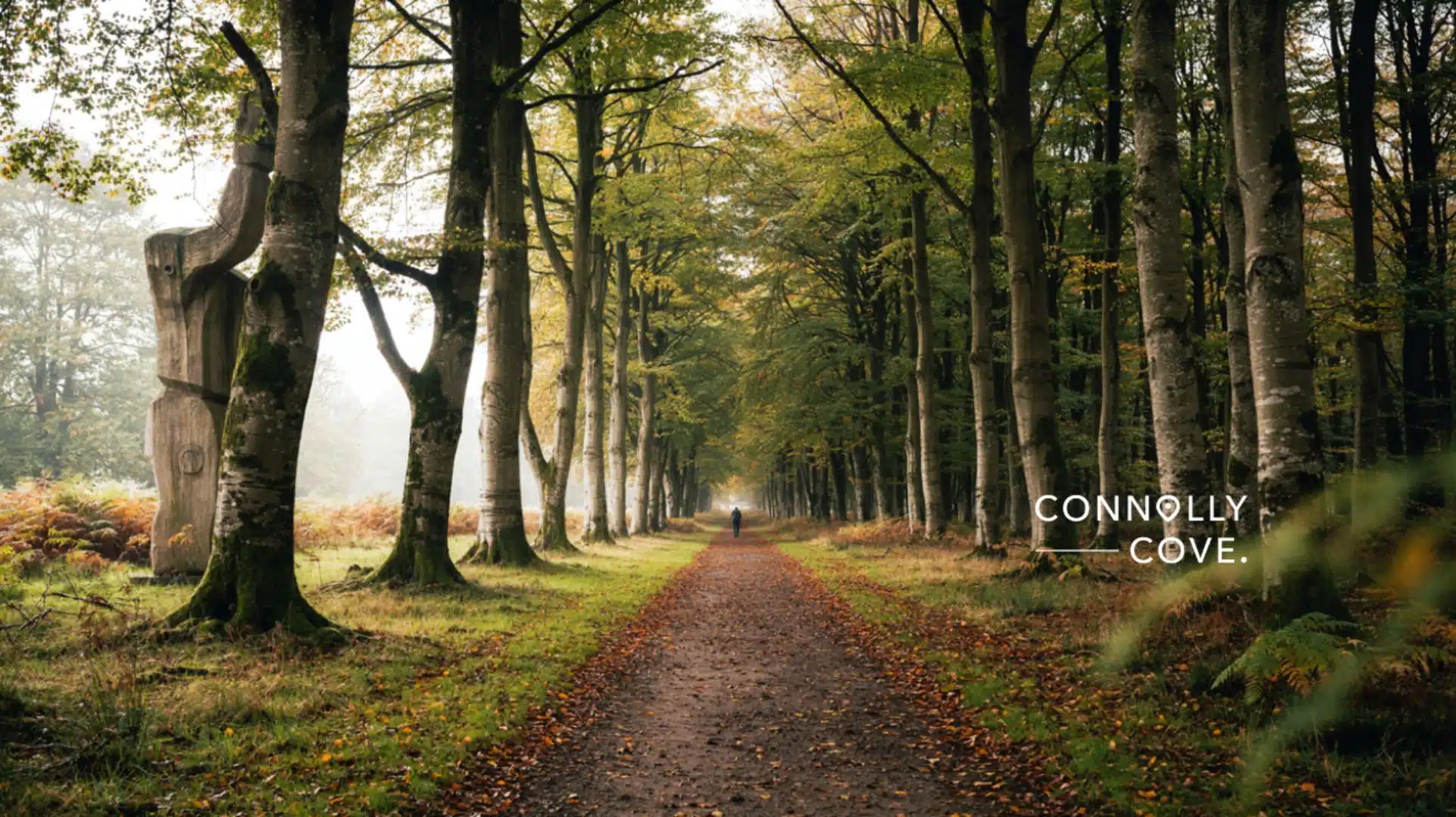
The giants are Rossmore’s signature feature, and they’re the reason a lot of families make the trip. Eleven wooden sculptures are planned across the park, most already in place, each with its own backstory written by a local writer.
Banba, described as queen of the giants, greets you close to the main entrance, part carved figure and part landform, said to watch over everyone who passes through. Roddy den Drum stands near Castle Lake and, according to the park’s own lore, is the giant who shaped the lakes with his hands. Look for Garaidh den Drum, nicknamed Spike for the spear he carries, and Big Ross, who sleeps beneath the playground after saving the local children from a witch in the old stories. Dagda’s Cauldron, tucked further into the woodland, rounds out the trail’s best-known stops.
None of this is ancient mythology in the way the Tuatha Dé Danann stories are. It’s a modern sculpture trail drawing on Irish giant-lore for its characters and names, which is exactly what makes it work for younger visitors. If you want the older material these giants borrow from, ConnollyCove’s guide to Celtic mythology creatures covers the beings and manuscripts the stories descend from, and our piece on Ireland’s fairy trees looks at how that same folklore still shapes the countryside outside the park gates.
“What I liked about the giants trail is that it’s not trying to be an ancient site. It’s a new piece of storytelling built on old Irish giant-lore, and watching kids run ahead to find the next sculpture is a good reminder that folklore only survives if each generation gets a new way into it.” — Ciaran Connolly, Founder of ConnollyCove.
Walking the Trails
Rossmore has three main marked routes, and all of them are graded easy to moderate, so there’s no need to be an experienced hiker to enjoy a full afternoon here. The paths are largely tarmac or compacted stone, with some looser gravel on the longer routes.
| Trail | Distance | Highlights |
|---|---|---|
| Barn Hill Lake Loop | Around 3.2km, roughly 50 minutes | Castle Lake, several of the giant sculptures |
| Priestfield Walk | Around 3km | Colonnade of yew trees, the Rossmore family mausoleum |
| Castle Trail | Around 4km | Castle ruins, lakeside paths, Dagda’s Cauldron |
Along the way you’ll pass five small fishing lakes, the remains of the old walled garden, and a stretch of towering giant redwoods and monkey puzzle trees near the main car park, planted when the estate was in its prime. If forest walks like this are your thing, Tollymore Forest Park in County Down offers a similar mix of rivers, bridges and woodland on a larger scale, and ConnollyCove’s wider look at Ireland’s forests rounds up other parks worth the detour.
The Rossmore Family and the Castle That Vanished
Rossmore Castle no longer really exists, and that’s part of the appeal rather than a disappointment. The Barony of Rossmore was created in 1769, and it was Warner Westenra who began building the castle in Tudor Gothic style, with his son Henry Robert completing the work and later extensions added in a heavier Scottish Baronial style.
At its peak, the building had well over a hundred windows across dozens of different shapes and sizes, the result of successive Lords Rossmore enlarging and remodelling the house, reportedly egged on by a long-running rivalry with a neighbouring landowner over whose drawing room was bigger. It’s a detail most guides to Rossmore leave out entirely, but it says something about how estates like this one were built as much for status as for shelter.
Dry rot took hold after the Second World War, and by the 1970s the castle had been demolished. What’s left is the old entrance stairway and sections of the buttress walls, standing alone in a clearing, still tall enough to give you a sense of scale. The Rossmore family mausoleum survives near the Priestfield trail, and the walled garden and yew avenue are still walkable. ConnollyCove’s broader guide to the architecture of Irish castles is worth a read if you want the wider context for how estates like this one were built and why so many ended up in ruin.
“Standing at the bottom of those stairs at Rossmore, going nowhere but up into open air, tells you more about the scale of the old house than any photograph could. It’s one of the more honest ruins in Ireland, because it doesn’t pretend to be anything more than what’s actually left.” — Ciaran Connolly, Founder of ConnollyCove.
Wildlife and When to Visit
Rossmore’s lakes and mixed woodland support a decent range of wildlife, and it’s worth timing your visit around what you want to see. Otters and herons use the lake chain, red squirrels are regularly spotted in the older woodland, and the park’s rhododendron and azalea beds put on a strong show in late spring and early summer.
Fewer visitors come through outside the summer months, so autumn brings quieter paths and good colour in the beech and oak stands, while spring is the time for the rhododendrons and for birdsong through the yew avenue. Winter walks are shorter on daylight but often the best for spotting wildlife along the lakes, since the paths are far less busy. Summer weekends are the busiest, particularly around the playground and Barn Hill Lake Loop, so an early start is worth it if you’d rather have the giants trail to yourself.
Whatever the season, wear boots with grip. Sections of the Castle Trail and Priestfield Walk turn soft and muddy after rain, which in County Monaghan is often, and a detail we noticed on our own visit was how quickly the ground around Priestfield Lough holds water after a wet week. No booking is needed at any time of year, since Rossmore operates as an open, free-access Coillte forest, but it’s worth checking Coillte’s website before you travel for any storm-related closures, as forest parks are sometimes shut temporarily after severe weather.
Beyond Rossmore: Exploring County Monaghan
Rossmore works well as part of a longer day around Monaghan rather than a standalone stop. Lough Muckno, Monaghan’s largest lake near Castleblayney, is around a twenty-minute drive away and adds watersports and further walking trails if you want to extend the day. Clones, with its lace-making history and market square, is another easy add-on, covered in ConnollyCove’s walk around Clones. For a fuller run-down of the county, our guide to exploring County Monaghan pulls together the castles, lakes and towns worth building into a longer trip.
Rossmore Forest Park: The Bottom Line
Rossmore Forest Park earns its reputation as one of Monaghan’s better days out because it gives you three different things in one visit: a proper Gothic ruin, genuinely good wildlife-watching around the lakes, and a sculpture trail that keeps children entertained for hours. It’s free, it’s accessible, and it rewards a second visit in a different season. If Monaghan has whetted your appetite for more of Ireland’s heritage landscapes, ConnollyCove’s guide to famous landmarks in Ireland is a good next stop.
FAQs
Here are quick answers to what people most often ask before visiting Rossmore Forest Park.
Is Rossmore Forest Park free to visit?
Yes, there’s no entrance fee. Check Coillte’s website for any car park charges before you travel, since these can change.
How long is the walk around Rossmore Forest Park?
The main loops run from around 3km to 4km, taking roughly 50 minutes to just over an hour depending on the route and your pace.
Are dogs allowed in Rossmore Forest Park?
Yes, dogs are welcome on a lead. Stick to the marked trails and clean up after your dog, as you would in any Coillte forest.
Can you still see Rossmore Castle?
Only in part. The house itself was demolished in the 1970s after dry rot damage, but the entrance stairway and sections of the buttress walls still stand.
How many giant sculptures are there at Rossmore?
Eleven are planned across the park, with several already in place, including Banba near the entrance and Roddy den Drum by Castle Lake.
What is the best time of year to visit Rossmore Forest Park?
Late spring brings the rhododendrons into bloom, while autumn offers quieter paths and good woodland colour. Both are strong choices for photography.