


Amazing Things to Do in Ras El Bar
Updated On: April 18, 2024 by  Ahmed Samir
Ras El Bar is located in Damietta and is considered one of the most beautiful areas that can be visited during the winter and summer due to its location at the confluence of the Nile River with the Mediterranean Sea. It offers fascinating views you rarely see in any other place, lovely weather and many gardens and trees surrounding it.
Ras El Bar is unique in that it is one of the rare places in the world where the river meets the sea, so it has plenty of beaches that overlook the Nile and the ocean together.
The city takes the shape of a triangle, with one of its sides overlooking the Nile River and the other overlooking the Mediterranean Sea. Its base overlooks the port of Damietta. The nature of Ras El Bar has helped attract many lovers of tranquillity and charming nature to enjoy its mild climate.
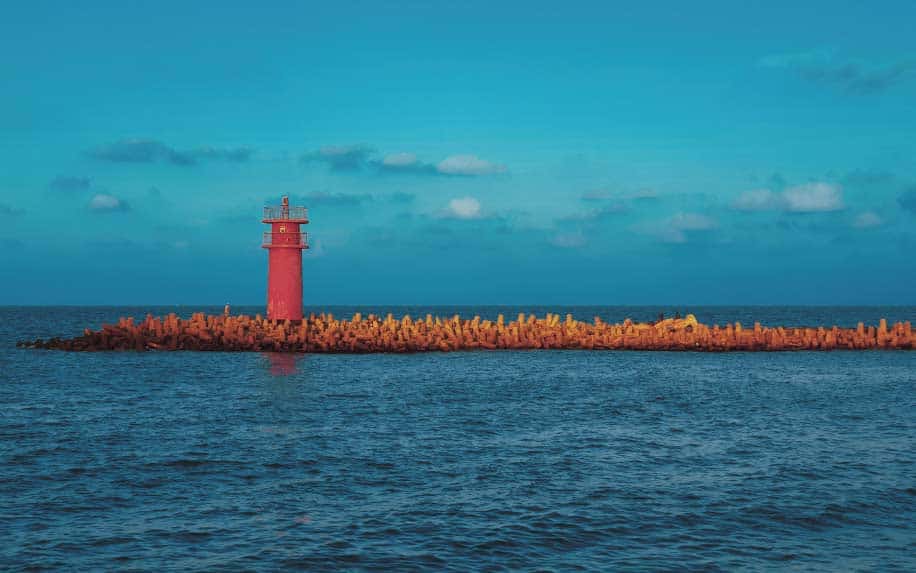
Ras El Bar has two lighthouses opposite each other to guide the ships. To preserve their identity, work is being done to develop the two lighthouses periodically. Tourists are keen to visit the two lighthouses and enjoy the picturesque nature. Ras El Bar was called the Best Summer Resort and is considered the city where stars meet.
It has also been visited by countless famous theatrical groups and many important figures, such as Queen Nazli, the mother of King Farouk and her daughters and sisters of the king, especially in the summer. In 1883, a German scientist called Kouh visited Ras El Bar. He was fascinated by the beauty of the city and its charming nature, and he wrote that this area would be of great importance due to its geographical location and picturesque nature.
Things to do in Ras El Bar
As one of Egypt’s top summer destinations, Ras El Bar has countless exciting things to do. Here are some of our highlights.
1. Al Fanar Walkway
If you decide to go to Ras El Bar, your trip cannot be complete without visiting the lighthouse, a tourist walkway located on the northeastern coastal part of Ras El Bar. This walkway is supported by significant rocks barriers to protect the coast from erosion. The Al-Fanar area contains a large area designated for sitting and enjoying the fresh outdoors, directly viewing the clear water and the blue sky.
In this beautiful place, the Nile River journey ends after a trip lasting more than 6695 km, in which the water passes through ten African countries. The waters of the Nile River converge with the waters of the Mediterranean around this tourist attraction, which is undoubtedly the best.
2. Garbi Area
The Garbi area is located on the Nile in the city’s south. Currently, it is considered the main entrance to the town of Ras El Bar. This area contains many casinos and clubs overlooking the Nile shore, giving you a magnificent view you will love. It is considered a perfect place for hiking and recreation, as tourists enjoy the atmosphere, hop on Nile cruises in beautiful sailboats, and even practice swimming or kayaking.
It is considered the best area for physiotherapy in Egypt because it has a long history since ancient times for its dry sand containing thorium, which is used to treat rheumatic diseases. The treatment was done through burial in the sand.
3. Nile Street
Nile Street is one of the most critical streets in Ras El Bar. It is an open space and a site where you can look at the simple and beautiful cultural and architectural monuments. Nile Street extends along the coast of the Nile, and by walking in the street, you can see many hotels with fabulous architectural styles.
If you visit Nile Street, it is best to do so at sunset, when the weather is calm and beautiful. It is the street that never sleeps, and you can enjoy your time until the early morning hours.
4. Port Said Street
Known as the primary market, it is a large street with a walkway that extends along the sea from the south to Al-Fanar in the north. The street contains several distinctive shops, restaurants, children’s entertainment parks, and cafeterias.
Amr Rabie via Unsplash
5. Sea Walkway
To appreciate the fantastic views of the Mediterranean, walk along the city’s coast and enjoy the coastal walkway with many beach services cafeterias and restaurants.
Things to do Near Ras El Bar
Ras El Bar is also ideally situated close to many of the top tourist attractions in Egypt. Here are some top places you can visit with a short journey from Ras El Bar.
1. Damietta City
Damietta is famous for its many archaeological sites, proving it was one of the most important cities in ancient Egypt. Its importance is increased by the distinctive geographical location and the picturesque nature, as it is an area with mild weather throughout the year.
Many of these archaeological sites date back to the era of the Pharaohs, followed by the Islamic conquest, such as the Amr ibn al-Aas Mosque, the second mosque built in Africa, as well as its historical churches, which date back to the early ages of Christianity.
Damietta city has a large group of sunken antiquities in the Mediterranean Sea facing the city’s coasts. The most prominent of these is the Tel El-Deir area, considered one of the most critical archaeological hills in Damietta.
2. Amr Ibn Al Aas Mosque
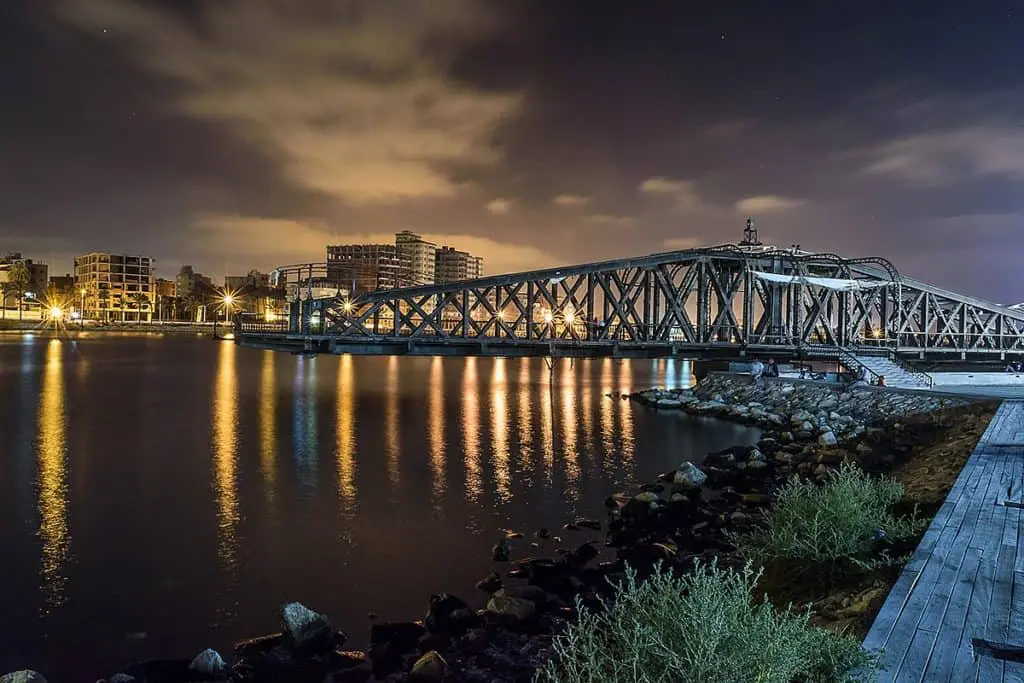
The mosque is considered one of the most famous mosques in Damietta, also called Al-Fath Mosque. It is the second mosque built in Egypt after the construction of the Amr Ibn Al Aas Mosque in Fustat, and it was built in the same style. The Amr Ibn Al-Aas Mosque is in Al Gabana Al Kobra in Damietta. It is also the largest mosque in Damietta in terms of area.
The mosque consists of an open rectangular courtyard surrounded by corridors on four sides, the most important of which is the southern portico, the qibla portico. This includes four naves, the eastern and western porticos, each containing two naves, and the northern portico, which currently includes two naves.
The Fatimid era was the golden age of Damietta, where the town grew and prospered. This appeared in its architecture, precisely that of this mosque. This mosque was known in the Mamluk era as the Fateh Mosque due to a person called Fateh bin Othman, who came from Marrakech to Damietta during the reign of King Al Zahir Baybars, and he cleaned and purified the mosque and re-established prayer in it.
3. Lake Manzala
Lake Manzala is an essential and large natural lake in Egypt. Its banks are bordered by four central governorates: Dakahlia, Port Said, Damietta, and Sharqia. They are connected to the Suez Canal through a spur that borders Port Said Governorate from the southern side called the Communication Canal.
The lake is located in a unique location in the northeastern part of the Nile Delta, where the Mediterranean Sea is to the north, the Suez Canal is to the east, the Nile River is to the west, the Damietta branch and the Husseiniya Hill is to the south.
It is also an essential place for raising fish due to the availability of natural nutrients, and it produces a lot of fish compared to any other natural lake in Egypt. The lake’s water varies in salinity and is relied on to feed many plants with fresh and saltwater.
4. Tel El Dier Area
It is one of the essential archaeological Areas in Damietta, located northeast of the city of Kafr Al Batekh and has an area of 7 acres. It was an ancient Egyptian cemetery dating back to the 26th dynasty of the Pharaonic era. Were 1100 artefacts discovered at the site to be displayed at the Grand Egyptian Museum.
Tel El Dier Area contains more than 3500 artefacts, including golden charms and amulets, and some amulets made of precious stones there are also 13 pure limestone sarcophagus discovered with human figures of men and women during the excavations, and some of these mummies are of nobles, and antiquities are dating back to the Ptolemaic and Roman eras that were found there as well.
5. Tel Al Brashiya Area
The area is located in Faraskur in Damietta, where you will find a Roman bath, the first of its kind in the eastern Delta region. This bath contains a lower tank for storing water, interspersed with sewage lines, and you will also find a residential area with its architectural division adjacent to this bath. There are words written in the Coptic language on the walls, containing a slice of gold and some Roman bronze coins. Also, in the area, you will see a cemetery dating back to the late Roman Coptic era beside the bath.
6. St. George’s Church
The church was built in 1650, and it contains the bones of Saint George, who was martyred in the 9th century.
You will find archaeological icons inside the church, like Anba Anthony, the Holy Virgin, Archangel Michael, Saint George the Roman, and Saint Demiana. 1989 the church was repaired to retain its archaeological character, and several buildings were built for church services. There are also 3 altars: the main altar in the name of St. George the Roman, the sea altar in the name of Archangel Michael, and the tribal altar in the name of the Virgin Mary.
7. Al Diasty or Al Ansari Dome
The dome was built in the 8th century, in the Ottoman era. The reason for building it was to hold seniors’ meetings and as a place for learning sessions for students coming from outside Damietta, and it was used as a place for the governor to stay when he came to Damietta. It is classified as one of the prime examples of Islamic architecture, as it is polygonal in shape, it was built on a square room topped by three holes held in a triangular shape and contains an iwan, and its floor is decorated with Islamic inscriptions.
The dome hosted dignitaries and students from the Ottoman era until the French campaign entered Egypt, making it one of the top historical sites in Egypt.
8. Al Bahr Mosque
It is one of the most famous and essential mosques in Damietta. It was repaired in 1009 and is located on the eastern bank of the Nile. It was built in the Andalusian style, on an area of 1200 m2, and then rebuilt in 1967 in the same style. When you enter the mosque, you will find it is decorated with lovely Islamic inscriptions with five domes and two minarets, and an annexe to it including a cultural and religious library.
9. Church of St. Mary
The church is located in Sorour Square in Damietta. It was built in 1745, and it belonged to the Catholic Church. After many years, the church became affiliated with the Orthodox Church, and there you will find the preserved body of Saint Sedhom Beshai, who was martyred in this area also, there is a part of the cross of Christ, which the church acquired from Bishop Morcos, Bishop of Marseilles in 1974. It is a famous attraction in the city, and it receives visitors all year round.
Now that our trip to Ras El Bar is over check out our guide to planning your next Egyptian vacation.
Scotland in May: Sunshine, Mild Temps, and Outdoor Adventures
Scotland
25/04/2024

Discover the Top 15 Best Places to Visit in Northern Ireland
Travel Guides
24/04/2024

How to Find the Best Scotland Travel Guide: An Ultimate Guide
Scotland
24/04/2024
The Ultimate Guide to the Best Shopping Areas in London
England
24/04/2024

The Absolute Guide to the Best Restaurants in Bath, England: Unveiling the Culinary Gems of Bath!
Food and Cuisine
24/04/2024