


Place des Vosges, Paris’ Oldest Planned Square
Updated On: November 08, 2023 by  Aya Radwan
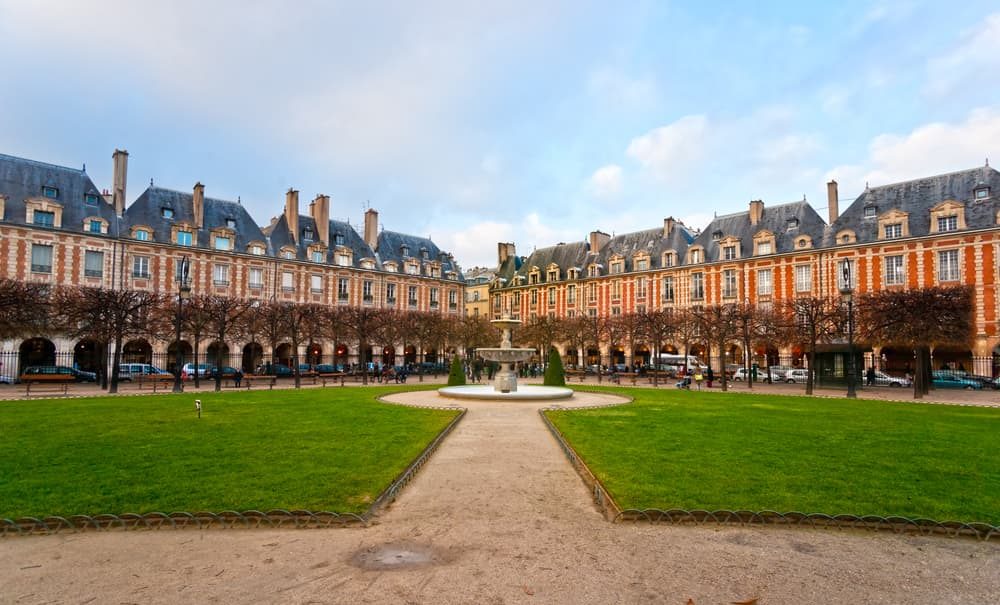
Once known as the Place Royale, Place des Vosges stands on the dividing lines of the 3rd and 4th arrondissements in Paris. The square is the oldest planned square in Paris and of the Marais district. Once home to the noble families of France, the square became an expensive area to live in during the 17th and 18th centuries. The Place is the main reason for the chic nature of Le Marais among Parisians.
Histoire de la Place des Vosges – Place des Vosges History
The history of building the Place Royale or Place des Vosges goes back to the once royal residence on site; the Hôtel des Tournelles. Once passed down to him from his father, Pierre the Bishop of Paris, sold the Hôtel des Tournelles after his father’s death. Duc de Berry; Charles VI’s brother, bought the house and eventually the property fell to Charles VI who lived there from 1417.
For a short period of time, the Hôtel was the residence of John of Lancaster; the Duke of Bedford when the British entered France after the death of Charles VI. It, once more, became a royal residence when it was passed to Charles of Orléans; father of Francis I of France. French kings usually preferred other castles and chateaus as residence such as the Louvre Palace while the Hôtel des Tournelles was usually used by their mothers or mistresses.
Many lavish events took place at the Hôtel, such as the “danse macabre” before Charles, Duke of Orleans in 1451 and King Henry II held his coronation there. The last festivity held in Hôtel des Tournelles was to celebrate the double marriage of Elisabeth de France to Philip II of Spain and the King’s sister; Marguerite de France to the Duke of Savoy. A tournament was held as celebration during which King Henry II was badly injured in a joust, his death followed afterwards.
The Italian princess; Catherine de Medici, had loathed the medieval architecture of the Hôtel des Tournelles, having grown up in Roman-styled palaces. She took the death of her husband Henry II as a sign to sell the building, hence she turned it into a gunpowder reservoir and ordered the building be sold and demolished. Pertaining power as regent on behalf of her underage sons, she ordered the demolition and instructed the use of some of the materials in building more modern palaces such as the Madrid and the Tuileries.
Place Royale or Places des Vosges was born out of the attempt of Henry IV to reuse part of the Hôtel’s buildings. After the failure of his ambitions of creating a silk, gold and silver factory in the premises, he issued instructions to his minister, the Duke of Sully, to measure out the place in 1604.
Henry IV later donated huge parts of the place to his noblemen, giving them permission to build pavilions there. This was on the condition they stuck to the original square layout, materials and main dimensions laid down by the architects Androuet du Cerceau and Claude Chastillon. Construction of the current layout of the place began in 1605.
Construction of the square lasted from 1605 to 1612, the square is indeed a true square measuring 140 meters by 140 meters. Place des Vosges was built on the site of the Hôtel des Tournelles and its gardens; the pavilions Henry IV’s noblemen built according to his instructions. The square was one of the first examples of European programs of royal city planning, after the Plaza Mayor in Madrid.
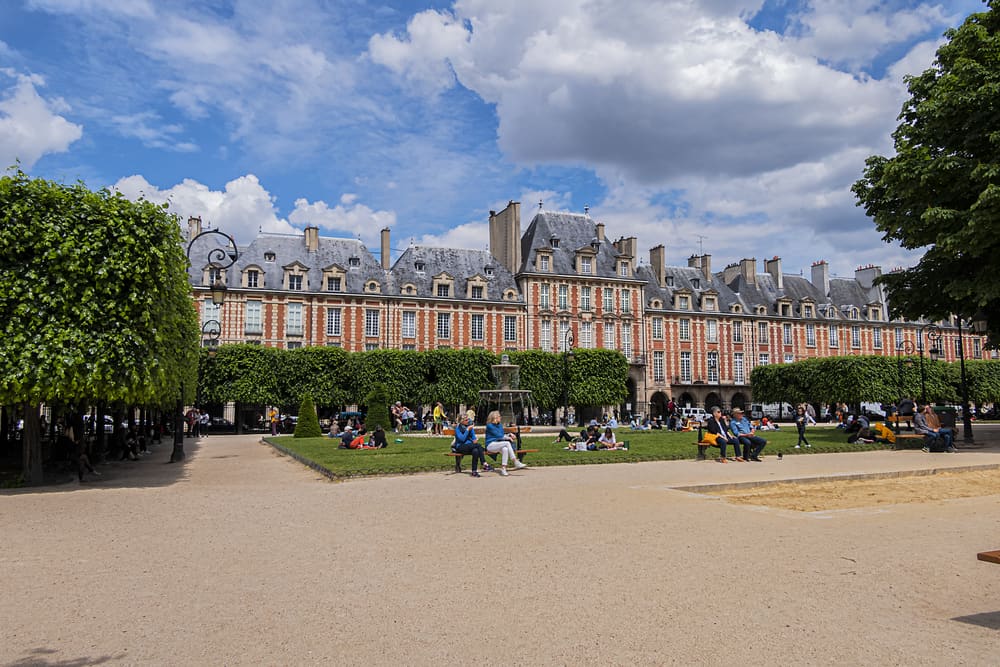
The Place Royal was inaugurated with the celebration of the engagement of Louis XIII and Anne of Austria, setting the prototype of the upcoming royal residences. The distinguishing feature of the Place was the matching house fronts of red bricks and stripes. Only the north range of the square was built using the vaulted ceilings that galleries were supposed to have.
Two pavilions were built higher than the unified roofline of the square centering the north and south façades offering entrance to the square through triple arches. These two pavilions were designated to the King and Queen each but no royal lived in the royal residences of the square. Anne of Austria was the only royal to stay in the aristocratic square in the Pavilion de la Reine.
During the time before the French Revolution, the Place Royal served as a meeting place for the nobility of the country. The square had sparked a construction and development plan of the city of Paris, hence creating more venues and urban background for the French aristocracy and nobility. Major renovations were already underway following orders from Henry IV.
Before the completion of the square, Henry IV ordered the Place Dauphine to be laid out. Paris’ makeover began to manifest in the short period of five years. The Louvre Palace saw new additions, the Pont Neuf as well, the Hôpital Saint Louis in addition to the building of two more squares.
Most of the nobility living in Place Royale moved out and into the Faubourg Saint-Germain district, the remaining nobility stayed there until the French Revolution. It was during the revolution that the square’s name changed. The square was renamed after the Vosges department who were the first to pay taxes to support a campaign by the Revolutionary Army in 1799.
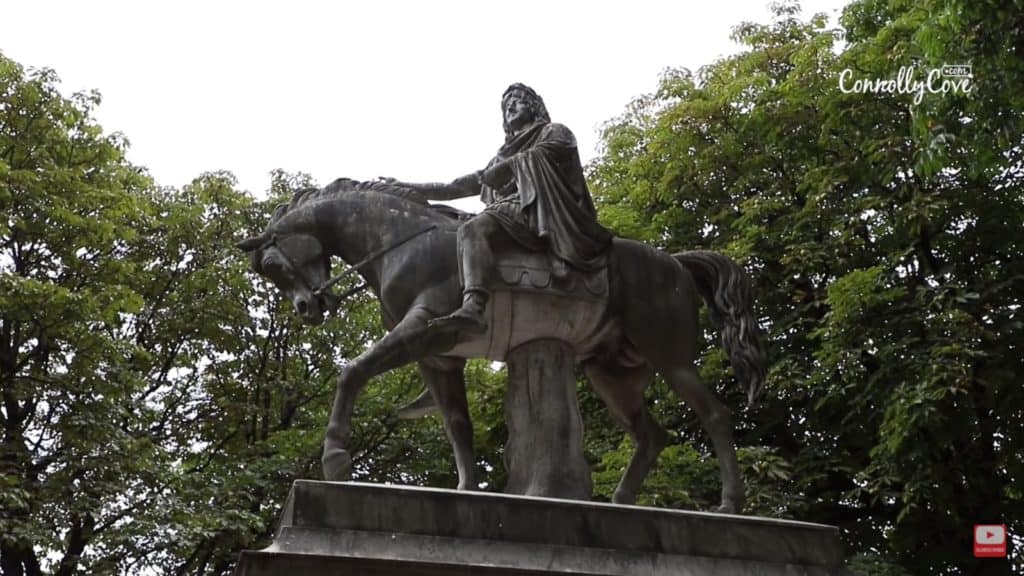
The first fall of Napoleon; also known as the Restoration, reverted the square’s name to its original one; Place Royale. The name later was re-changed to Place des Vosges during the French Second Republic in 1870. The bronze equestrian of Louis XIII in the center of the place was erected upon orders of Cardinal Richelieu the garden planning of the square was later to 1680.
Today, Place des Vosges provides different hotels housing public libraries, museums and galleries. Hôtel de Sully is a 17th century mansion that is the current location of Centre des monuments nationaux; the French national organization in charge of national heritage sites. Another is the Pavillon du Roi, once housing the apartment of the King of France, is now home to valuable artifacts.
How to Get to Place des Vosges
There are various ways to get to Place des Vosges, public transportation allows you to get anywhere in Paris. Here’s how you can get to the former Place Royale.
1. Place des Vosges – Train Stops:
There are two train lines passing near Place des Vosges; lines L and N. You can take the train from many stations in the French capital that will take you to the square. From Edenred, Malakoff for example, the train ride will take about 71 minutes to get to Place des Vosges.
2. Place des Vosges – Metro Stops:
Metro lines 1 and 7 are the metro lines passing close to the Place des Vosges. If you take the metro from Gare du Nord, the metro will take you to Breguet-Sabin station in 9 minutes. Afterwards, you’ll only walk for 6 minutes before reaching the square. There’s a metro leaving for Breguet-Sabin from Gare du Nord every 5 minutes.
3. Place des Vosges – Bus Stops:
Bus stops and routes close to the Place are 69, 72, 76, 87 and line 96. You can get to the square from different stations in Paris, many take less than an hour. A bus leaving from Passerelle des Vignes in Puteaux will get you to Place des Vosges in 52 minutes. A bus ride from Gare du Nord will use line 91 and you will arrive in 20 minutes before taking a 10-minute walk to the square.
Place des Vosges Hotels Particulier
A hôtel particulier is a private mansion or grand townhouse, mostly comparable to a British townhouse or mansion. The revival of the Place Royale was through the many pavilions built by the nobility in 1605 upon orders from Henry IV. After the near abandonment of the pavilions by their residences, restoration works on the pavilions were carried out in different stages, one pavilion at a time.
Here are some of the notable hôtels particulier in Place des Vosges.
1. Pavillon du Roi – N*1:
This 16th century tower-like building once held the King of France’s primary apartment. Designed by Pierre Lescot in the mid-1540s, construction of the building started in 1553 and finished in 1556. For years, the Pavilion was considered a visual substitute to the former medieval Louvre Tower demolished in 1528 by Francis I.
The exterior of the pavilion served as a major influence on the architectural scene in the country. The west and south façades has bossaged quoins inspired by the design of Rome’s Palazzo Farnese by Antonio da Sangallo the Younger. The arched design Lescot chose for the ground floor windows had the most influence; they were copied for many following generations especially those of the Louvre Colonnade and French Classical Architecture in general.
The ground floor housed the chambers of the Royal Council and at one point, in 1672, it housed the Académie Française. The King’s chambers or the two rooms of the Royal Apartment were on the first floor. The bedroom from the time of Henry IV and a larger ceremonial room where the king held court and received ambassadors.
The two rooms of the Royal Apartment can be accessed through the king’s antechamber, from the upper main room of the Lescot Room. They were separated by a corridor that was made accessible through a renovation in 2021. The small petit cabinet du Roi and the Queen Consort’s room to the east of the King’s rooms.
To the west there was a corridor created by Henry IV and enlarged in the 1660s, led to the Petit Galerie, Grand Galerie and Tuileries Palace. The second floor had an apartment used in the 17th century, mainly by the King’s relatives and officials. The third floor was set as an Italian-style belvedere and is sometimes referred to as the Grande Cabinet.
The interior of the building underwent major makeover from 1806 to 1817 on the hands of the Louvre’s architect; Pierre Fontaine. He ordered the demolition of the upper levels to harmonize the building’s height with that of the Louvre Colonnade. Then he emptied the building and re-did it using new plans.
On the ground floor, Fontaine created a great room now known as the Salle de la Venus de Milo, and a smaller transitional space known as Corridor de Pan that opens on Salle des Caryatides. Fontaine ordered the paneling and ceiling of the Chambre à Alcôve and Chambre de Parade of the first floor taken down. He later assembled them in two rooms of the Colonnade Wing, now part of the Department of the Egyptian Antiquities.
The first and second floor spaces were merged together with the never-finished 1668 extension to the south, into one sky-lit room with a high ceiling, currently known as the Salle des Sept-Cheminées. Decorations of this room were designed and made real by Fontaine’s successor ; Félix Duban. The beautiful colors of the decorations were finally revealed after a 2020-2021 cleaning of the rooms.
2. Hôtel Coulanges – N*1 bis:
This mansion in the Place des Vosges was built for Philip I of Coulanges in 1607. Philip I was the maternal grandfather of the future Madame de Sevigne; Marie de Rabutin-Chantal. Marie was born in Hotel Coulanges, in 1626 and lived here until the age of eleven.
Philip I lived with his family in the mansion, his parents on the second floor until the family sold the place in 1637. The post-impressionist painter Georges Dufrénoy lived there from 1871 to 1914. The mansion was later occupied by the contemporary dance Isadora Duncan and her lover Isaac Singer.
Hotel Coulanges has had such a thrilling journey since the early 1960s. It was bought by Béatrice Cottin in 1963, by then the mansion was in a poor state. She undertook a multi-million restoration project of the mansion. However, due to a femur injury, Béatrice was hospitalized and later entered into a nursing home. With a huge amount of debt, the mansion was seized.
A long legal process later began between Béatrice’s lawyers and the Black Thursday movement. Advocates for young people and students suffering from housing problems, the movement lost the legal battle against Béatrice Cottin because she was the rightful owner of the mansion. Béatrice died in 2015.
Xavier Niel eventually acquired the hotel in 2016. It was announced that Niel intended to keep the mansion as a heritage for his family for many years to come. He also intended to establish a museum dedicated to the great work of Béatrice Cottin on the mansion.
Different sections of the mansion were designated as historical monuments on different stages. First, the façades and roofs in 1926. Then, the stairs in 1953, followed by the vaulted gallery and the leaves of the entrance door in 1954. Finally, the ceiling of the second floor was designated in 1967.
Hotel Coulanges should not be confused with Hotel de Coulanges. Hotel Coulanges is where Marie de Rabutin-Chantal was born but Hotel de Coulanges is where she lived for several years after leaving the first hotel and until her marriage.
3. Hôtel de Rohan-Guéménée – N*6 (Maison de Victor Hugo):
This house museum is the house where Victor Hugo lived for 16 years and is located in the Place des Vosges. The building in which Hugo rented an apartment was built in 1605 and acquired its current name; Hôtel de Rohan-Guéménée from the de Rohans family. A donation by the French novelist Paul Meurice made to the city of Paris to buy the house was the step of turning it into a museum.
The museum consists of an antechamber, the Chinese living room, the medieval style dining room and Victor Hugo’s room where he died in 1885. The museum is open from Tuesday to Sunday from 10:00 am to 6:00 pm and closes on Mondays and public holidays.
4. Hôtel de Sully – N*7:
This 17th century mansion is the current location of the Centre des monuments nationaux; the French national organization in charge of national heritage sites. Hôtel de Sully was originally built between 1624 and 1630 for Mesme Gallet; a wealthy financier. This specific location was chosen to provide access to the Place Royale; Place des Vosges today.
The hotel gets its name from the Duke of Sully; Maximilien de Béthune, who purchased the building in 1634. Several additions were made to the mansion as it was owned by the Sullys all through the 18th century. The Duke finished the redecoration of the building while his grandson commissioned architects to add a new wing to the mansion in 1660.
The mansion became a property of investment in the 19th century resulting in the undertaking of more changes to accommodate traders, craftsmen and tenants. The new owners following the hotel’s classification as a historical monument in 1862, worked on the complete restoration of the building. Another major restoration project started after the building became city property in 1944 and finished in 1973.
5. Hôtel de Fourcy – N*8:
On the east side of the Place des Vosges, this private mansion is located between the Rohan-Guémené and Châtillon hotels. The most notable resident of the mansion is poet Théophile Gautier, who lived there between 1828 and 1834. Gautier established a vocational school in the mansion, which occupied many of its room for several decades.
Gautier’s heirs donated the mansion to the City of Paris, on the condition that the mansion remains home to the vocational school. For years, the school used the rooms as computer rooms, classrooms, administrative offices of the principle, his deputy, secretaries and professors. In addition to meeting rooms, professors’ rooms and warden’s lodge.
6. Hôtel de Chaulnes – N*9:
Also known as Descures Hotel and Hotel Nicolay-Goussainville, Hotel de Chaulnes is located between Hotel Sully and Hotel Pierrard on the west side of the Place des Vosges. The hotel got its names from its several occupants over the years.
The hotel first belonged to Descures; advisor of King Pierre Fougeu. The hotel later passed down to his daughter in 1641 and was later sold in 1644 to Honoré d’Albert d’Ailly; the Duke of Chaulnes. Succeeded by his son Charles in ownership of the hotel, it was sold after Charles’ death in 1701 to Jean Aymar de Nicolaÿ; Marquis de Goussainville.
The hotel stayed in the ownership of the Nicolaÿ family until it was confiscated during the French Revolution. Then it was later returned to the possession of the Nicolaÿs, who kept it until 1822. The façade, the roofs on the square and the vaulted gallery were inscribed as historical monument in 1954 then the remaining façades and interior followed later that year.
The first floor of the hotel has been the seat of the Academy of Architecture since 1967. The hotel is also currently rented by Galerie Historisimus.
7. Hôtel de Vitry – N*24:
This mansion is known by many different names, such as Hôtel de Guiche, Hôtel de Boufflers, Hôtel de Duras and Hôtel Lefebvre-d’Ormesson. Hôtel de Vitry is located in the north side of Place des Vosges, on the 3rd arrondissement, east of Hôtel de Tresmes. The mansion is currently a private property.
In 1920, the façades and roofs of the hôtel were classified as a historical monument. Later, in 1956, the gallery facing the square and the leaves above the entrance door were also classified as historical monuments.
8. Hôtel de l’Escalopier – N*25:
Located on the 3rd arrondissement, this hôtel has quite the history. It was originally owned by Pierre Gobelin du Quesnoy; Councilor of State. Du Quesnoy tried to set his house on fire, out of love for the future Madame de Montespan; Mademoiselle de Tonnay-Charente. Du Quesnoy rented the mansion to the Maillé-Brézé before selling it to one of his relatives; Gaspard de l’Escalopier in 1694.
Currently a private property, the mansion’s main façade is on the east side of the Place des Vosges. Hôtel de l’Escalopier was classified as a historical monument in 1956. The latest known owner of the building is the Lady Jane Company.
9. Pavillon de la Reine and Hôtel d’Espinoy – N*28:
Pavillon de la Reine, otherwise known as the Queen’s Pavillon was also distinguishable around Place des Vosges for being higher than the rest of the pavilions. The pavilion is located opposite that of the King, on the 3rd arrondissement of the French capital. Construction of the Queen’s Pavillon lasted three years from 1605 to 1608.
The structural style of the Queen’s Pavillon is similar to that of the King’s Pavillon; also known as Pavillon du Roi. You can only distinguish between the two pavillons through the details, such as the Sun of the Medici, above the central arch of the Queen’s Pavillon. The architectural style of the mansion is reflective of the 17th century building style.
Pavillon de la Reine consists of two floors with three arches on the ground floor. The middle arch, distinguished by being the widest, connects Place des Vosges with rue de Béarn. There are elements of other architectural styles in the construction of the mansion, such as Renaissance and late Gothic styles.
The mansion had many occupants through its history and at one point housed a gambling den. Along with its neighbor; the Espinoy Hotel, the Pavillon de la Reine was classified as a historical monument in 1984. The statue of King Louis XIII in the middle of the Place des Vosges stands with its back to the front of the pavillon.
Hôtel d’Espinoy is a hôtel particulier in the 3rd arrondissement in Paris, on the north side of the Place des Vosges. It is adjacent to the Pavillon de la Reine and the Hôtel de Tresmes. Built at the beginning of the 17th century, the hôtel is distinguished by its staircase, with wrought iron railings. The currently private mansion was designated a historical monument along with its neighboring Pavillon de la Reine in 1984.
Synagogue de la Place des Vosges – Hôtel de Ribault – N*14
Also known as the Charles Lich Synagogue, it is located in the first floor of the Hôtel Ribault. Charles Lich is a survivor of the Auschwitz concentration camp and was rabbi of the deportees of France from 1995. Lich received the rabbi title as an honor since he didn’t get any rabbinical training or studied in yeshiva. He is a co-founder of the Synagogue de la Place des Vosges.
Lich was the hazzan of the Synagogue in rue des Tournelles and after the rite change of the synagogue, he began to form a minyan in the first floor of the 14th pavilion of Place des Vosges. The place was formerly the premises of the Circle of the Marais Studies. The name changed from Place des Vosges Synagogue to Charles Lich Synagogue in 2006, in honor of the rabbi.
Place des Vosges Fountains
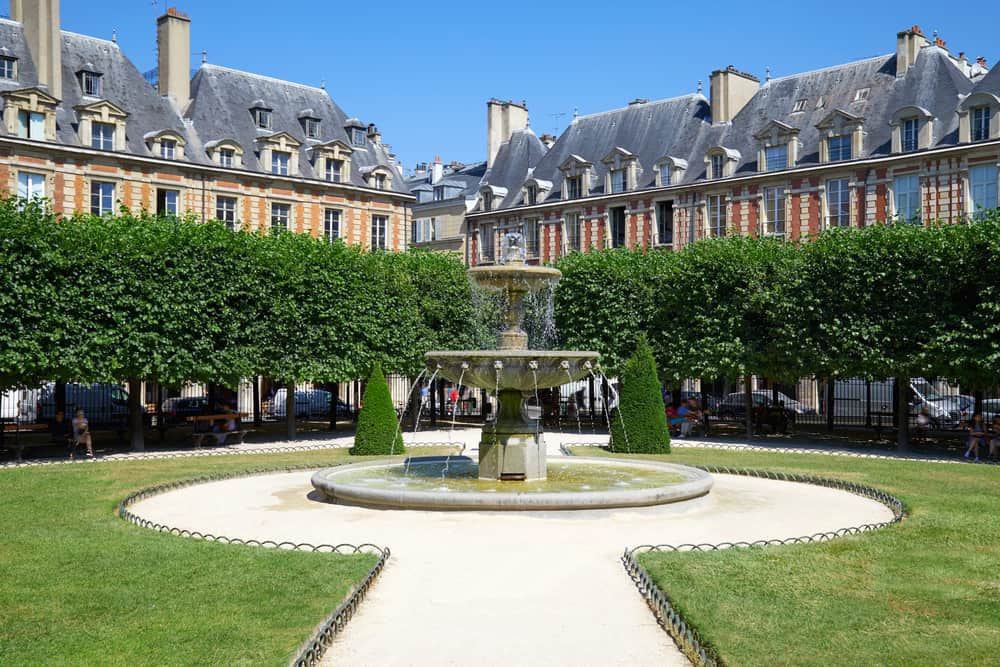
The beautiful Place des Vosges looks even more prestigious from an aerial view, the perfect square looks to be encompassing a massive garden. The green area at the center of the square is free to access and offers a serene escape from the buzzing city life outside.
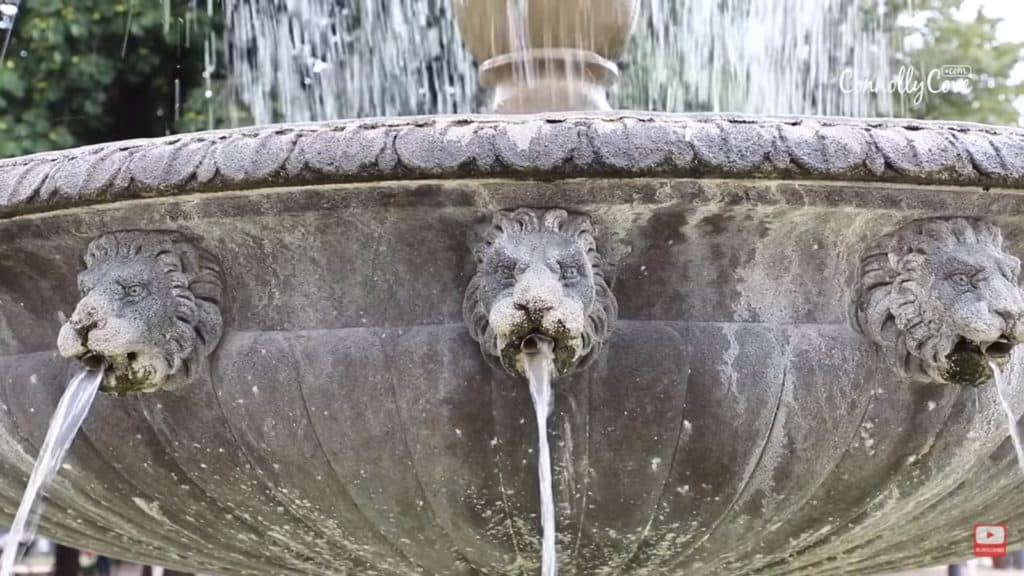
At each corner of the central greenery, you will see four identical fountains. Built by the famous sculptor; Jean-Pierre Cortot in the first part of the 19th century, the four fountains are decorated by 16 lion heads that dispense the water. The fountains are called by their location within the garden; north-east, south-east, north-west and south-west.
Who Lived in Place des Vosges?
1. Madame de Sevigné:
Marie de Rabutin-Chantal is one of the prominent figures of the 17th century literature in France. She was born in Hotel Coulanges (N*1bis) in 1626, which was owned at the time by her grandfather. Marie lived in Hotel Coulanges till she was eleven years old until the mansion was sold in 1637.
Several years later, Marie lived in the Hotel de Coulanges for a few years before her marriage and becoming Madame de Sevigne. She became famous for the letters she wrote, many of them she were addressed to her daughter; Françoise-Marguerite de Sévigné.
2. Victor Hugo:
The place where one of France’s most revered poet and novelist is called Hôtel de Rohan-Guéménée, otherwise known as N*6 on the Place des Vosges. Born in 1802, Hugo wrote in different genres through his life, from poems to satires to even political speeches and critical essays. While he is most known around the world for his two famous novels; Les Misérables and Notre-Dame de Paris, he is most famous in France for his poetry collections such as Les Contemplations.
After buying an apartment floor in the Hôtel, Victor Hugo lived there with his wife for 16 years before he died in 1885. The building is now owned by the City of Paris and has been converted into a museum for the memory of France’s most celebrated writer. The museum is open to visitors from Tuesday to Sunday from 10:00 am to 6:00 pm and closes on Mondays and public holidays.
3. Maximilien de Bethune, the First Duke of Sully:
The first Duke of Sully is most known for being Henry IV’s advisor. Maximilien was born in 1560. Not only was Sully a councilor of the King but he was also an esteemed-statesman. He is known for implementing several policies which helped in revitalizing the French state and many politicians copied his methods for generations.
Sully was also put in charge of supervising the reviving of the Hôtel des Tournelles, by Henry IV, after its demolition. From this initiative, the Place Royale or the current Place des Vosges was born. Henry IV gave specific instructions that the place’s layout must be preserved as he donated parts of it to his noblemen to build and reuse.
The Duke of Sully bought Hôtel de Sully, in 1634 and finished its decoration. The hotel was completely furnished by that time and he spent his last years living in the mansion. Sully had a literary talent; he wrote a memoir that contain many of the political and economic matters he faced, with a bit of fiction added here and there.
4. Poet Théophile Gautier:
Pierre Jules Théophile Gautier was a French poet and writer of many genres. Gautier was known as a defender of Romanticism, however, his works didn’t fall solely under this category. Gautier’s works ranged from Parnassianism to Symbolism all through to Modernism.
Gautier moved with his parents to settle in Paris, specifically in Le Marais. For a brief period of time he lived in the Hotel de Fourcy (N*8), from 1828 to 1834 where a vocational school started bearing his name. The mansion remained the property of Gautier’s heirs until they donated it to the City of Paris on the condition that the school keeps its occupation of the mansion.
5. Georges Dufrénoy:
Although he was born in the southern suburb of Thiais, post-impressionist Georges Dufrénoy lived with his family in Place des Vosges all his life. Georges was hesitant between studying architecture and painting at the age of 17. He decided to become a painter and went to become one of France’s prominent painters in the late 19th and early 20th centuries.
The hotel where Dufrénoy lived is called Hotel de Bassompierre or N*23. The hotel is on the north side of the Place des Vosges on the 3rd arrondissement in Paris. In 1734, Hotel de Bassompierre was attached to the adjacent Hotel du Cardinal de Richelieu.
Different parts of the Hotel de Bassompierre were classified as historical monuments over time. In the beginning, in 1920 the façades and roofs were classified. Followed by the decorated ceiling of the Madame Dufrénoy’s apartment in 1953. Finally, the vaulted gallery along with the doors and staircases in 1955.
Hotels near Place des Vosges, Paris
Different hotels with different ratings and varieties of services are located close to Place des Vosges. Here are some good deals of nearby hotels:
1. Hotel Alhambra (13 Rue De Malte, 11th arr., 75011 Paris):
This hotel might be located in the 11th arrondissement of Paris but it’s only 1 Kilometer away from Place des Vosges. With a private garden, soundproof guestrooms and a delicious breakfast buffet, Alhambra is highly ranked as a budget-friendly hotel.
For a comfort twin room including breakfast, a two-night stay will only cost 237 Euros plus taxes and charges. A comfort double room with the same perks, in addition to a garden and city views and extra in-room services will cost 253 Euros plus taxes and charges.
2. D’win (20, rue du Temple, 4th arr., 75004 Paris):
Less than a kilometer away from Place des Vosges, D’win is on the 4th arrondissement and is also close to Hôtel de Ville metro station. The rooms have modern-style furnishing and a great variety of services are offered to make your stay as comfortable and enjoyable as possible. Paris’ pride; Notre-Dame de Paris is a mere nine minute away.
A two-night stay in a Comfortable Double Room will be 369 Euros in addition to taxes and charges, an extra 9 Euros can be added if you wish to try their yummy breakfast. A Family Room, on the other hand, consisting of three adults, will increase the cost to 445 Euros plus taxes and charges. The hotel has been praised for the friendliness and helpfulness of its staff.
3. Hotel Fabric (31 rue de la Folie Méricourt, 11th arr., 75011 Paris):
A former textile factory turned modern hotel, Hotel Fabric is locted in the 11th arrondissement and is only 1 Kilometer away from Place des Vosges. In addition to free access to the hammam and fitness room, you can pay a little extra to enjoy their fabulous breakfast and massage services.
A Club Double Room, with one double bed, will cost 420 Euros for a two-night stay including taxes and charges. An additional cost of 18 Euros can be paid if you choose to have breakfast at the communal lounge. A Deluxe Room that can accommodate three travelers will 662 Euros with free cancelation and no payment upfront.
Place des Vosges Airbnb
Questions were circulating regarding whether renting an Airbnb apartment is cheaper or more expensive than renting a room in a hotel. Surprisingly enough, studies have been carried out and surveys have been answered by Priceonomics regarding the matter. It was established that renting an entire apartment in an Airbnb is 21% cheaper than renting a hotel room.
This, to some extent, explains why people prefer to book through Airbnb when they’re planning to go on vacation. Whether they knew about the scientific study or not, that’s not a secret anymore. Here are some of the best Airbnb close to Place des Vosges.
1. Place des Vosges, Country Side in Paris (Paris, Île-de-France):
This Airbnb is just a mere 200 meters from Place des Vosges, in a calm 18th century courtyard. You’re in the heart of the Marais district, with its historical museums, hotels, restaurants and cafés. It is fairly close to several metro stations such as lines 1, 5 and 8, making it easier to get around the city. The Airbnb can accommodate up to 8 people with three separate bedrooms, two bathrooms and two toilets.
The price for the night in this Airbnb, enjoying all household services and products, is 524 Euros! You can book your accommodation through their website online and you can choose all the specifications you like. This Airbnb was praised for its great location, the privacy of its courtyard, great hospitality and even for being a quiet oasis in the heart of the bustling city of Paris.
2. Place des Vosges Airbnb – Rue Saint Sabin:
This cozy Airbnb is perfect for a couple or two friends traveling together. You will be only meters away from both, Place des Vosges and Place de la Bastille. The Airbnb is located in the 11th arrondissement and at the edge of the 4th arrondissement.
The apartment is a modern and fully renovated studio with a double bed and many household services. The price will differ slightly when you’re booking, depending on how close the time of booking is to your travel. Price will normally start at about 88 Euros a-night. This Airbnb is praised for its location, cleanliness, friendliness of the staff and its closeness to Le Marais.
3. Marais – Rue de Turenne:
Located in the lively neighborhood of the 3rd arrondissement, this Airbnb is just around the corner from Place des Vosges. You get to stay in a 17th century home that was renovated and refurbished, equipped with all conveniences to provide you with the most comfortable stay. The one thing about this Airbnb is that the minimum nights to reserve is four nights.
Enjoy the one-bedroom apartment, with four beds with a fully equipped kitchen, dining area, workspace and a coffeemaker. You can even host events; the apartment can easily fit up to 25 people. You will pay 221 Euros a-night for your four-night stay at this apartment, which is a great price.
Place des Vosges Vacation Apartments
Vacation apartments are a favorite among many travelers, some feel they make you feel at home more than staying in a hotel. Vacation apartments are great for groups traveling together, where all group members can gather together easily. Here are some of the closest vacation apartments to Place des Vosges.
1. Citadines Bastille Marais Paris (37 Boulevard Richard Lenoir, 11th arr., 75011 Paris):
Situated at a strategic distance from both Place de la Bastille and Place des Vosges, Citadines Bastille Marais Paris is just a 10-minute walk away from both squares. Many services make for a comfortable stay, such as self-catering, a kitchen, a seating area and free internet access.
A Studio in the building, with your choice of one large double bed or two single beds, will be 294 Euros plus taxes and charges. An extra 13 Euros can be added if you wanted to enjoy their delicious breakfast. An apartment for rent consisting of two single beds and one sofa bed that can accommodate four people, for a two-night stay, will only be 402 Euros, if you’d like to enjoy free cancelation.
2. Roi de Sicile – Rivoli – Luxury Apartment Hotel (19 Rue de Rivoli, 4th arr., 75004 Paris):
Less than a Kilometer away from Place des Vosges, this luxury apartment hotel offers you a complete apartment experience at a great price. Apartments are equipped with a fully equipped kitchen including a microwave, a fridge and a dishwasher. A dining area is also available in the accommodation, as well as a bathroom with a shower, robes and slippers.
A Deluxe Studio, accommodating two people with one large double bed, will be 519 Euros plus taxes and charges and you can pay an extra of 18 Euros if you wish to try their offered breakfast. This price is available if you would like to enjoy free cancelation. The same room can be enjoyed at a price of 468 Euros but the payment will be nonrefundable.
A Deluxe Apartment that can accommodate four people, a bedroom with one large double bed and a living room with a sofa bed, will cost 933 Euros if you’d like to enjoy free cancelation. If not, the cost will be 841 Euros. All prices are with the addition of taxes and charges.
3. Résidence Bastille Liberté (18-22 Rue de Charonne, 11th arr., 75011 Paris):
Less than a Kilometer away from Place des Vosges, this apartment hotel is located in a cute street with trees lining up its sides. Both Centre Pompidou and Notre-Dame de Paris are less than 2 Kilometers away. With great views of the city, they offer great services as well, such as airport shuttle, family rooms and facilities for disabled guests.
A one-bedroom apartment that can accommodate four people for two nights, with one large double bed and a sofa bed, will 492 Euros. This price includes the taxes and charges as well as an offer of free cancelation. The apartment hotel is ranked high for many services including the cleanliness, comfort and most importantly, value for money.
4. Sweet Inn – Turenne (132 Rue de Turenne, 3rd arr., 75003 Paris):
Right at the heart of the City of Light, Sweet Inn offers you great accommodation with close proximity to Place des Vosges; being only a Kilometer away from the famous square. The hotel offers you great apartments for rent that are fully equipped to meet all your needs during your stay. A living room, a dining room, a well-fitted kitchen set with all appliances await you.
A three-bedroom apartment that can accommodate up to 8 people, with the option of free cancelation, will be 1,183 Euros plus taxes and charges. The place has been highly-ranked for its cleanliness, facilities, comfort and also, value for money.
Place des Vosges, Paris Restaurants
In the heart of Le Marais, Place des Vosges is surrounded by restaurants of different cuisines that will definitely satisfy your palette. Here are some of these not to be missed places.
1. L’Ange 20 (44 rue des Tournelles, 75004 Paris France):
With an interesting interior design; with ribbed newspapers and posters covering the ceiling and a rather cozy restaurant. L’Ange 20 serves French food at its best. If you want to experience French cuisine in the heart of Le Marais, this is where you go with eyes closed.
With a French and European menu, prices are also great for such a place praised for its delicious and authentic food. Be sure to give their Foie Gras a try, a dessert of pomme carmelisee and crispy goat cheese with salad. With a price range of 38 Euros to 42 Euros, you will enjoy the best of the meals you can ever have in Paris.
2. La Place Royale (2 B Place des Vosges, 75004 Paris France):
Complete with a view of the garden in the middle of the Place des Vosges, this restaurant gives you the opportunity to wind off after spending your day in the buzzing Le Marais. La Place Royale doesn’t only offer French cuisine but also offers vegetarian friendly dishes and even gluten-free options. Prices range between 17 Euros and 49 Euros.
3. Bistrot de L’Oulette (38 rue des Tournelles Bastille, Place des Vosges, Chemin vert, Opera de Bastille, 75004 Paris France):
A beautiful and warm restaurant that allows you to experience the best of the cuisine of southwest of France. In this bistrot you will surely enjoy the classics of French cuisine and some re-visited dishes that will make you come back time after time. In addition to French and European cuisines, the bistrot also offers vegetarian friendly dishes.
Give their Beef Charolais, tomato salad and Rillette of salmon a try. Also their shrimp and avocado starter and the confit duck for a main course. Their Pear Croustade is one of their most famous desserts. All this with a price range of 17 Euros to 40 Euros.
4. Ristorante Italiano 0039 (24 rue des Tournelles Quartier Le Marais, 75004 Paris France):
If you’re in the mood for some authentic Italian dishes in the heart of Paris, you should try the menu at Ristorante Ialiano 0039. With a price range of 22 Euros to 35 Euros, they offer you a variety of Italian, Mediterranean, European and Tuscan dishes, they also offer vegetarian friendly option.
A perfectly warm Spinach Ravioli, the Beef Fillet, Spaghetti with tomatoes and basil and finish off with the lightest Tiramisu. You are guaranteed great food and will definitely come over again for many times to come.
Place des Vosges, Paris Cafés
Sometimes you just like to take a breath while enjoying a light meal or a cup of coffee or if you’d just like to sit calmly for some time with your favorite cup of Joe. Here are some of the best cafés in Le Marais, to help you get your caffeine fix and get back out there exploring the City of Light.
1. Le Peloton Café (17 rue du Pont Louis Philippe Le Marais, 75004 Paris France):
Known for their freshly ground coffee, Le Peloton is located in the Marais district of France. Here, you can wind-off with your cup of coffee and people watch on the Seine. They offer homemade sweet and savory waffles, tarts, cookies to enjoy along with your coffee. You can enjoy a good time watching the baristas prepare your coffee on the wooden bar or the scene outside, all for the price range of 5 Euros to 18 Euros.
2. Alma the Chimney Cake Factory (59 boulevard Beaumarchais, 75003 Paris France):
Located in close proximity to Place des Vosges, this café is on the 3rd arrondissement. If you’ve never tried a chimney cake, this is the place to get acquainted with such a tasty treat. With a good roasted cup of coffee by your side, you’ll surely enjoy your time in this small cozy café. Price range is very good, only ranging between 4 Euros to 12 Euros.
3. Strada Café (94 rue du Temple, 75003 Paris France):
Fairly close to Center Pompidou, this café is on the 3rd arrondissement. They offer you a variety of sumptuous cakes such as the banana and Nutella cake, which will be perfect to enjoy with the right dosage of caffeine on the side. If you’d like to have a light breakfast of sunny-side up eggs, this is the place. For a price range of 7 Euros to 20 Euros, you’ll get the value of your money and more.
4. Patisserie Carette, Paris Place des Vosges (25 Place des Vosges, 75003 Paris France)
This lovely and homey place located right on Place des Vosges is one of the nicest places to get your day started, fit for a mid-day break or even a hot chocolate before calling it a day. Your experience will be complete with outdoor seating where you can enjoy the beautiful square and its garden.
Patisserie Carette is known for many of the signature French desserts. However, visitors have specified the macaroons as the best in Paris. One visitor on TripAdvisor stated that you can only go there for the macaroons alone, if not to enjoy the rest of their menu. Their hot chocolate is so delicious, it will fill your heart with warmth, no matter your age.
Patisserie Carette has three menus, a Macaroon Menu, a Savory Menu and a Sweet Menu. Their signature macaroons come in a variety of delectable flavors with the price for 8 Euros for a 100 grams. The Savory Menu include club sandwiches, salads, petits fours and more. Many of the sweets available on the Sweet Menu such as Paris Carette and Mont-Blanc are sold at a range of 5 Euros to 8 Euros a piece.
Place des Vosges, Paris Shopping
A trip to the City of Love is not complete without a good shopping spree. The French capital might be known for high-end boutique shops and world famous brands, but there are many shops where you can find hidden gems. Here are some of the shops close to Place des Vosges, including ones where you can buy your daily needs at good prices.
1. Monoprix (71 Rue Saint-Antoine – 75004 Paris):
All you need under one roof, Monoprix has been dubbed by many tourists as the French Target; as opposed to the famous American shop series. There’s a grocery section on the first floor, upstairs you can find your other needs such as toiletries, cleaning supplies, even blankets, towels and sunglasses. There are clothes for all ages and most importantly, cosmetics!
They even have many indoor services such as photocopying and digital photo developing. If you’re planning on staying for a while in Paris, you should definitely go and stock up on everything you need! Monoprix opens every day from 9:00 am to 8:50 pm, and opens from 9:00 am to 12:50 pm on Sundays.
2. Weekday (121 Rue Vieille du Temple – 75003 Paris):
Specializing in both women’s fashion and men’s fashion, this fashion store has all the pieces you need at great prices. Their fashionable pieces are perfect for keeping up with the Parisian fashion scene. Many visit Weekday for their jeans collection, great fit with great price.
Open from 11:00 am to 8:00 pm from Monday to Saturday and from 12:00 pm to 6:00 pm on Sundays. They even offer online shopping through their website and you get free shipping when you shop with more than 200 US Dollars – equivalent to 177 Euros!
3. Papier Tigre (5 Rue des Filles du Calvaire – 75003 Paris):
The Paper Tiger is a concept shop, specializing in all the things stationery. They have all you can dream of as a lover of notebooks, journals, binders, pens, desk lamps, you name it! They have different collections in-store, such as Color Inspiration, Cool Kids Only, Guilty Pleasures, For Cooking Lovers and even Bags and Packages. The place is perfect for buying memorable gifts to take back home.
They have an offer of “Gift of the Month” where you are offered a special gift when buying with a specified price. For January 2022, it was getting a gift pouch with five ballpoint pens, when your purchases exceed 60 Euros from the shop.
Place des Vosges TripAdvisor Reviews
When spending your time in and around Place des Vosges, you will surely not get bored. Not only you’ll have your hands full, but also your soul and most importantly your belly. With its rich history, calm aesthetic and original beauty, tourists, both French and foreigners, always want to come back.
Recent visitors to Place des Vosges described the square on TripAdvisor as the perfect spot to sit and relax after exploring Le Marais, it’s great if you have kids as well since they can play in the greenery around you while you enjoy the warm sun and marvel at the beauty of the fountains.
Another review stated that Place des Vosges is the best square in all of France, where you can relax, grab a bite at one of the surrounding restaurants and breathe in the history of the area. One reviewer even said they come back to Place des Vosges every time they are in Paris!
I bet you would gladly spend days in and out Place des Vosges, and I can almost swear you wouldn’t get bored!

London in June: An Ultimate Guide to 13 Unmissable Events and Festivals
United Kingdom
25/04/2024
The Perfect Day Trip from London: Where Will Your Adventure Take You?
United Kingdom
25/04/2024

Scotland in May: Sunshine, Mild Temps, and Outdoor Adventures
Scotland
25/04/2024
Discover the Top 15 Best Places to Visit in Northern Ireland
Travel Guides
24/04/2024

How to Find the Best Scotland Travel Guide: An Ultimate Guide
Scotland
24/04/2024