


Discover the Most Magnificent Peaks In England
Updated On: November 08, 2023 by  Esraa Mahmoud
When you think of the Old Blighty, the majestic castles, palaces, and eye-catching historical monuments are the first to come to mind, but what about the natural gifts—the peaks in England?
The valleys and lakes of the British Isles are repeatedly sung in verse and prose. The spectacular mountains are no less worthy of attention. Although England is considered a predominantly flat country, the English homeland is still the proud owner of several mountains and hills. Most of England’s high mountains are in the Lake District, which adds to the region’s touristic appeal.
The peaks in England are one of the fascinating natural attractions in the country. The peaks of the mountains in England, especially those in the Lake District, always reveal unique, fairy-like beauty within a limited height. What are the most well-known mountains in England, and are they worth a visit? Let’s find out!
Scafell Pike
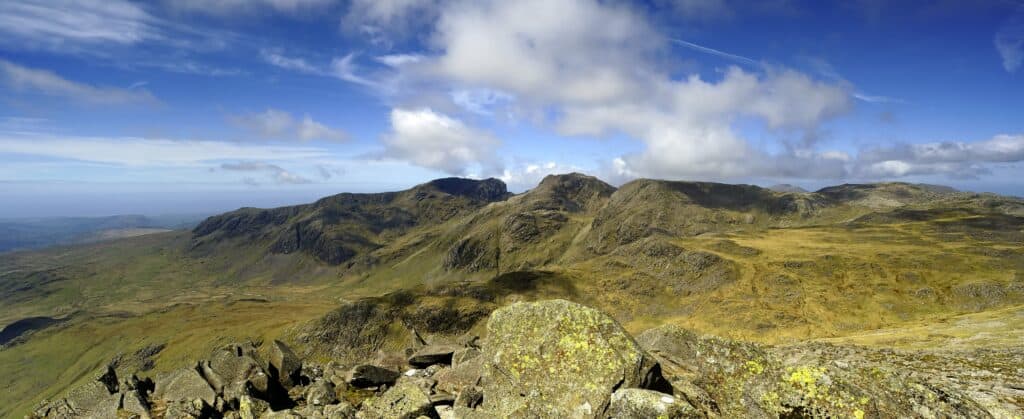
Starting with the most famous one, Scafell Pike is the highest mountain in England and one of the most stunning peaks in the west of the English Lake District. At 978 metres high, thousands of people climb Scafell Pike every year. If you mount it on a clear day, you can see Wales, Scotland, and Ireland… How cool is that!
At the foot of the peak is England’s deepest lake, Wastwater (79 metres). The Crag Tarn, the highest mountain range around the body of water, is also situated here at 822 metres above sea level.
Scafell Pike mountain is particularly popular with mountain climbers. At the time of the National Three Peaks Challenge, many extremist climbers visit the mountain.
The ‘Three Peaks Challenge’ is a challenge to climb the highest peaks in England, Scotland, and Wales in 24 hours. The three mountains are Scafell Pike in England, Snowdon in Wales, and Ben Nevis in Scotland.
The challenge with all three is that each peak is difficult to climb, and each climb must be done relatively quickly. Sadly, mass tourism has had a negative effect on the region’s environment. In recent years, erosion and pollution have been increasing.
In addition to its scenic beauty, this mountain has a very special meaning to the British. Although there are hardly any buildings at the top, there is England’s highest war memorial, which is not only naturally stunning but also historically significant.
After going to the top of Scafell, you can explore the historic area of Cumbria County or visit the Cumberland Mountains. Scafell Pike is a must-visit for anyone touring the peaks in England!
Helvellyn
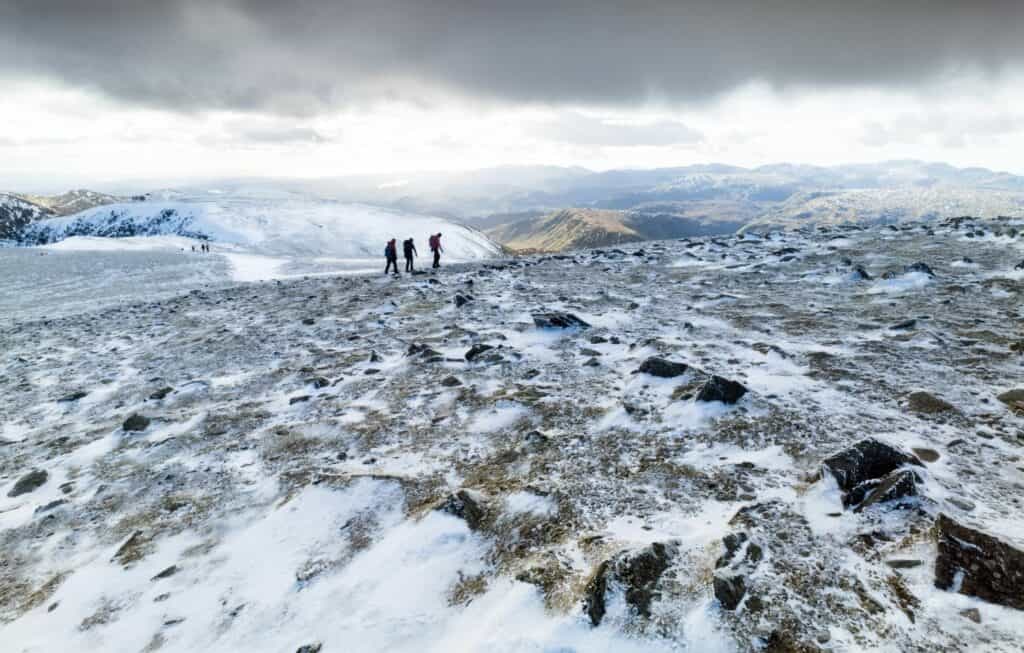
At a height of 950 metres, Helvellyn is the second-highest mountain in England. The peak is situated between the village of Patterdale and Thirlmere Reservoir.
The Helvellyn has an almost flat summit, which made it possible for a British aircraft to land here successfully in 1926 for the first time! There are many birds at Mount Helvellyn, like crows, skylarks, buzzards, and stoneflies.
The local shepherds use the slopes of the mountain for grazing their livestock. Many hikers head off to explore the Helvellyn mountain trails, but it is not uncommon for these hikes to result in death. So, make sure you are taking all the necessary precautions and be extra careful during your climb.
Skiddaw
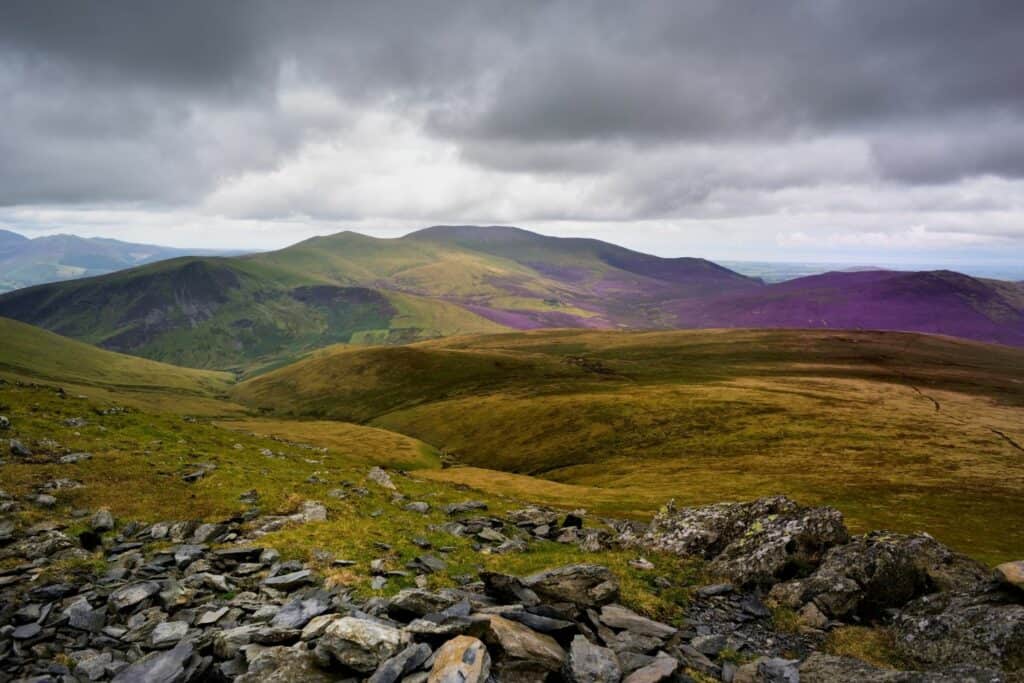
Skiddaw is one of the highest peaks in England and the 4th highest in the Lake District. The 931-metre Skiddaw is one of the oldest formations in England and probably in the whole of Europe.
Skiddaw is nestled north of Keswick town, overlooking the Derwent Water. The peak doesn’t get the recognition it deserves. It offers some of the most spectacular views in the north-western lakes.
The peak is surrounded by valleys of lesser height, which enriches the magical structure and appearance of Skiddaw. Additionally, being a non-volcanic peak makes it great for hiking, even for the most inexperienced hikers.
Loughrigg Fell
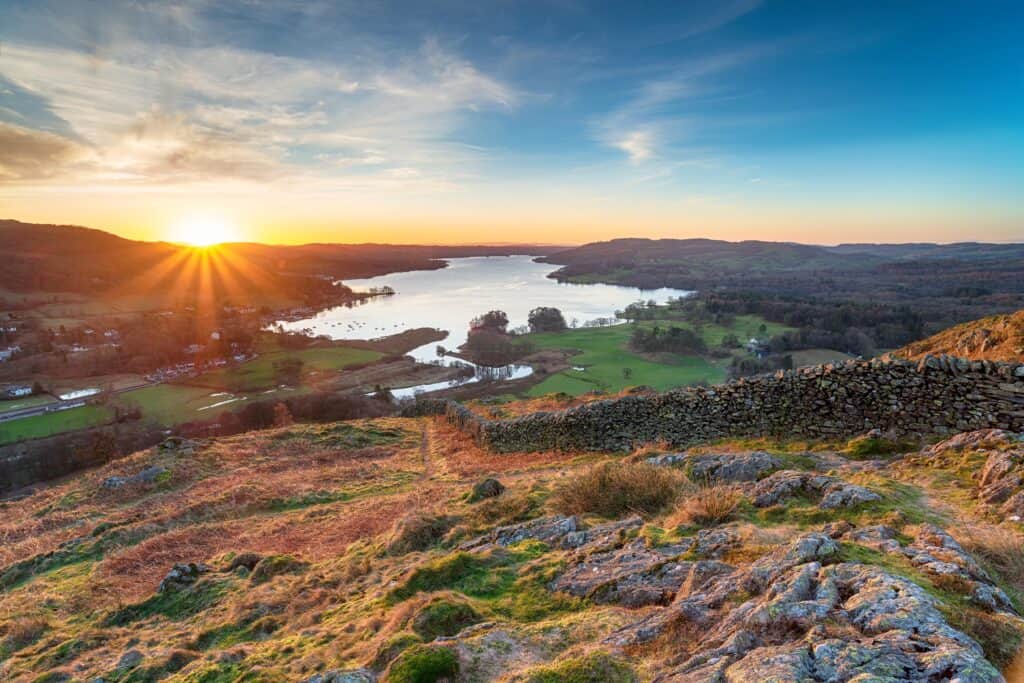
Loughrigg Fell is only 335 metres above sea level, a modest hill compared to others. From this small hill, you can look out over Lake Windermere to the south and take in the beauty of the largest lake in England.
The way up to Loughrigg Fell is easy; you can start at Grasmere Lake and follow the back of the lake, where you will find a footpath, then follow the footpath all the way past Rydal Water and finally hike to the top.
Many people ask what the word ‘Fell’ in ‘Loughrigg Fell’ means. In the English Lake District, ‘Fell’ means mountain, but these elevations are not very high, so they are not too difficult to climb and are suitable for leisurely hikes.
Old Man of Coniston
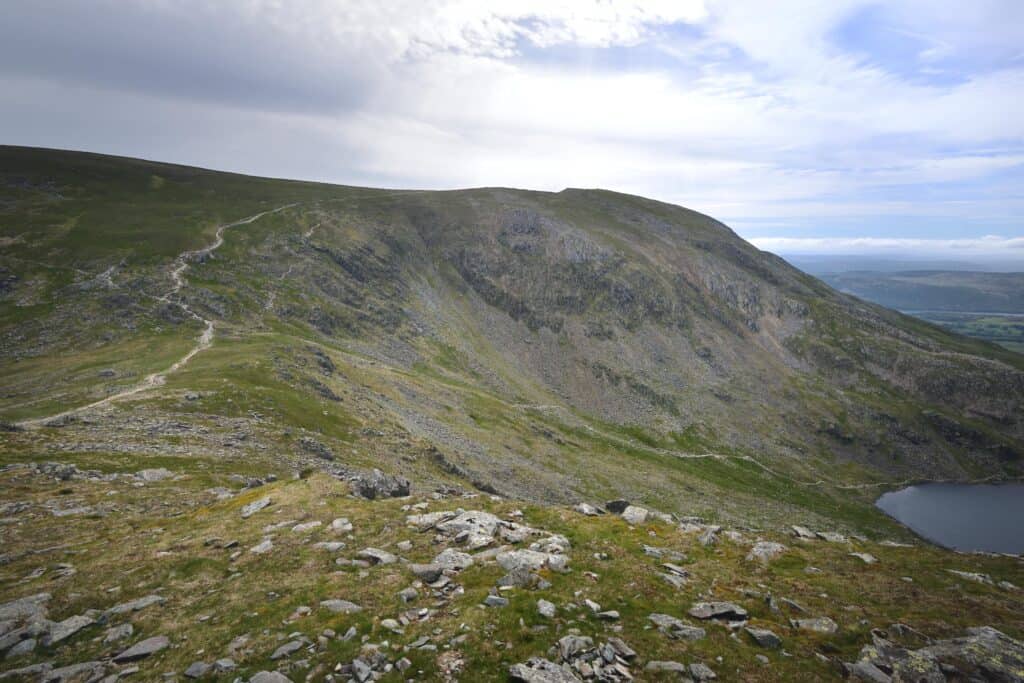
Old Man of Coniston is an easy fell to access in the English Lake District. Besides its catchy name, the Old Man of Coniston also has a catchy appearance, and it attracts tonnes of fell-walkers from around the world.
There are two ways to reach the peak of the Old Man. First is the short, steep route via the Low Water north of the Walna Scar. The second way is the long gradual route via the Goat’s Water, west of the Walna Scar.
The Old Man of Coniston‘s name is a linguistic mashup of the Celtic name ‘Alt Maen,’ meaning ‘high stone,’ and the Norse words ‘Konigs Tun,’ which translates to ‘King’s Farm.’ The fell is about 803 m high and is located on the shores of Coniston Water, guarding this beautiful land and everyone in the English Lake District.
Cross Fell
While it seems like all the peaks in England are located in the Lake District, that couldn’t be further from the truth. Heading to the north of England, we land at the Pennine range. The range is home to some impressive peaks in England, especially Cross Fell.
Reaching 893 metres high, Cross Fell is the highest mountain in the Pennine range and the highest peak outside the Lake District. The top of the fell offers a panoramic view of the Eden Valley and Garrigill, and on a clear day, you can see as far as the peaks of the Lake District.
Cross Fell is a popular destination for hikers and walkers. The peak can be reached in different ways; however, the most common ways would be via Dufton village or Garrigill village.
Gummers Howe
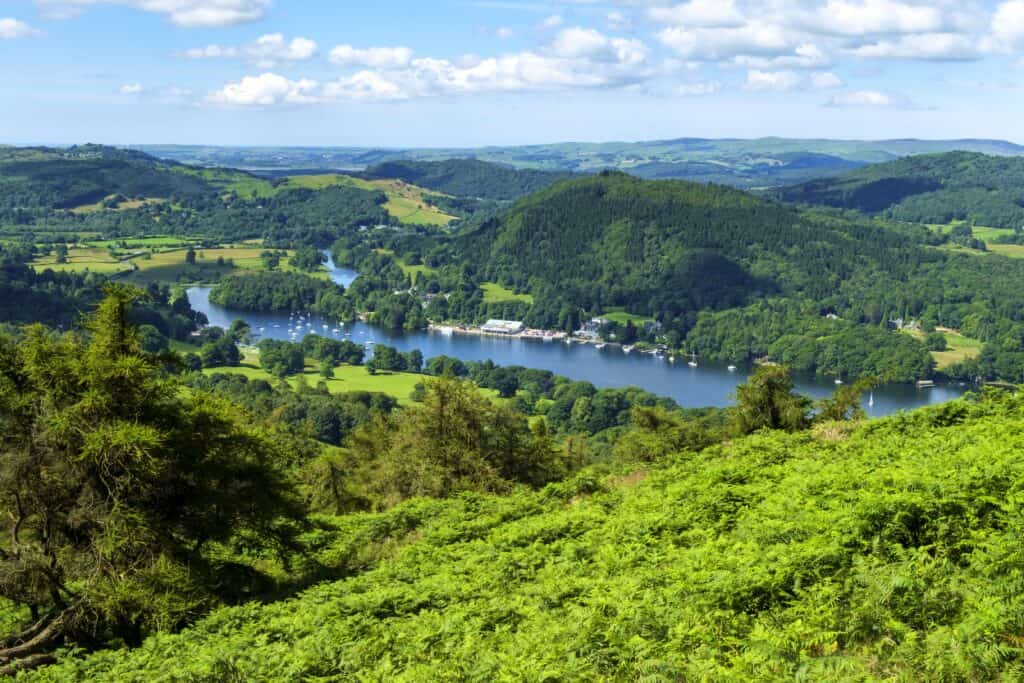
Gummers Howe is one of the easiest peaks in England to climb. You can drive to the top in about 30 minutes. If you want to avoid driving, you can take a boat from Bowness or Ambleside to Lakeside and then take another from Lakeside across the lake to the fell foot park.
Once you have climbed up to a certain height, you will see a small hill on your left-hand side. Just ahead of the forest in that direction, you will see the clear sign for the entrance to Gummers Howe.
Nothing beats the view from the top of the hill, where you get to watch the wind blowing through the trees and look out over the blue water and the rolling hills in the distance—it doesn’t get any better!
The summit of Gummers Howe is one of the most beautiful peaks in England, and it is also a perfect spot to catch the sunrise or sunset.
Cat Bells
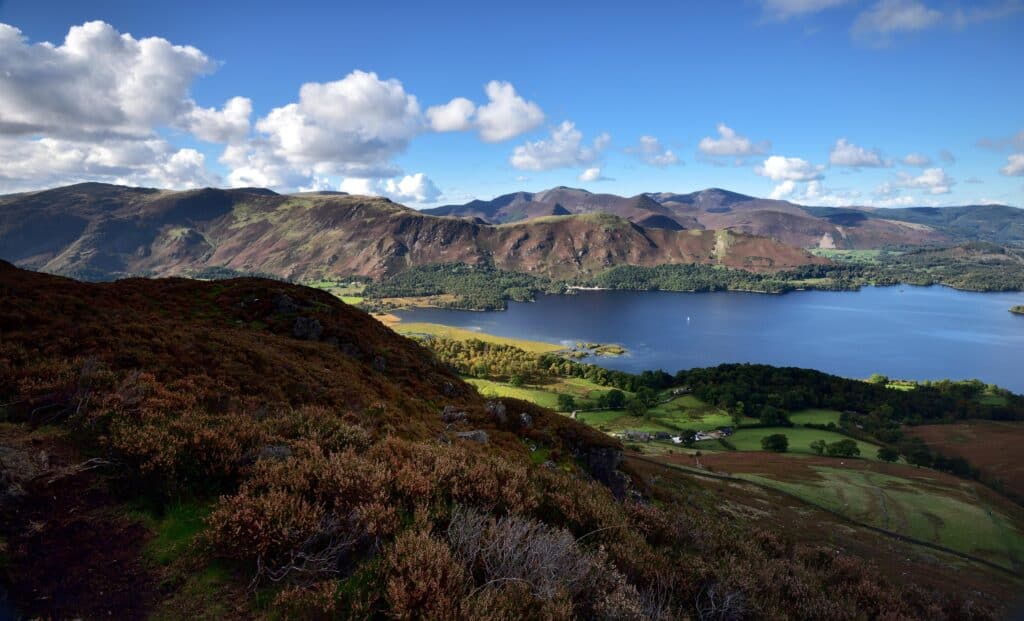
Another mountain that is located in the Lake District is Cat Bells. The elevation is definitely a newbie in the list of best peaks in England compared to Scafell Pike and the others. Cat Bells is fairly easy to climb to the top for those who have never hiked before.
Located in the small English towns of Keswick and Derwent Water, this not-so-steep peak is believed by locals to be the home of wildcats. Once you reach the top, you can see the whole of the Lake District, with its beautiful, mirrored lakes and lush valleys in full view.
If you want to raft in the Lake District, you can start at Keswick Landings, a 10-minute boat ride to Hawse End. The end is one of the starting points of the Cat Bells and is an easy climb; just follow the footpath for about 6 km.
For those who don’t want to take the boat, you can start hiking right after you arrive at your destination; the route is not very different. All in all, Cat Bells is a very manageable climb for those who want to take it easy and have a picnic at the top with a view of the Lake District.
There are so many more peaks in England that truly deserve a visit. From the vast and hard-to-climb to the less challenging ones, the peaks in England cater for every taste. So make sure to include visiting a mountain or two while planning your trip to England; you won’t regret it!
However, if you are looking for more mountains to explore in Europe, then you should head to Ireland for a bit of mountain exploration and the Les Vosges Mountains in France. If you want to discover more peaks outside the continent as a whole, then plan a trip to Egypt’s most famous mountains and the Adirondack Mountains in New York.

The Kingdom of Ireland: King Henry VIII’s Declaration as the King of Ireland
Ireland
19/04/2024

The Truth about the Claddagh Ring Curse: Debunking Myths and Exploring the Symbolism
Mythology and Folklore
19/04/2024

Top 10 Irish Public Holidays and Traditions to Experience on Your Ireland Holidays
Festivals and Events
18/04/2024

6 Top Mourne Camping Sites for an Unforgettable Experience Under the Stars
Northern Ireland
18/04/2024

Eostre: The Germanic Goddess of Dawn and Spring Equinox Celebrations
Mythology and Folklore
17/04/2024