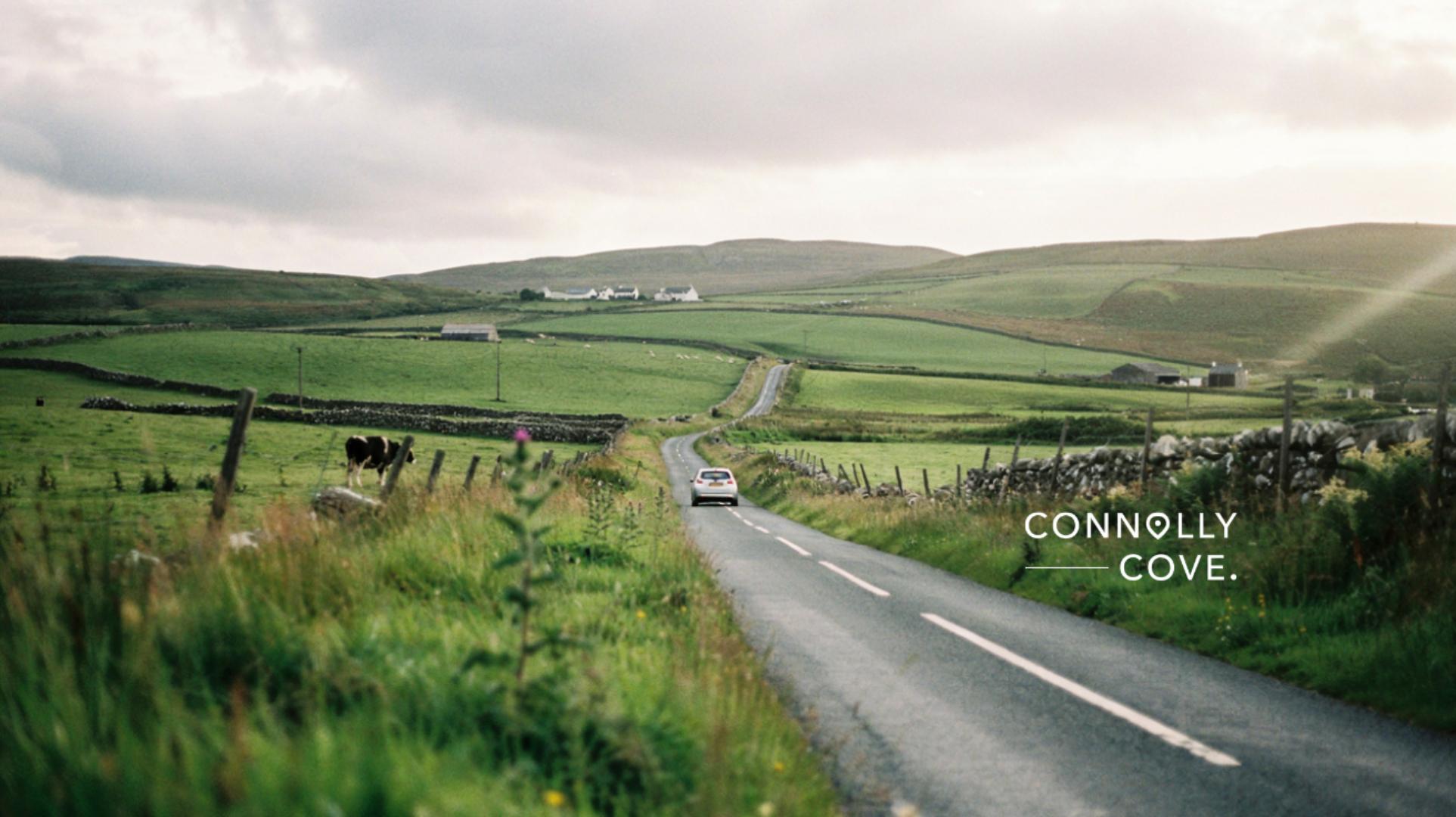


Dromahair and Ballintogher sit on one of the quieter stretches of road between County Sligo and Galway, tucked into the Leitrim countryside where the N4 gives way to narrower roads lined with stone walls and forestry. Drivers heading south from Donegal or west from Enniskillen often pass within minutes of both villages without realising what they are skipping. A short detour off the main route adds around fifteen minutes to the journey and takes in a ruined Franciscan friary, a seventeenth-century plantation castle, and the lake that inspired one of Ireland’s most quoted poems.
This guide is written for people actually driving to Galway, not planning a week in Leitrim. It covers what is worth stopping for, how long each stop realistically takes, and what to expect when you get there. ConnollyCove has covered this stretch of the Sligo and Leitrim border on previous trips through the north-west of Ireland, and this update reflects what still makes the detour worthwhile.
Table of Contents
Why Dromahair and Ballintogher Are Worth the Detour
Dromahair and Ballintogher sit within a few kilometres of each other on the Leitrim side of the Sligo border, on one of the back roads that link the N4 to the road towards Galway. Travellers moving between the north-west and the west of Ireland can stay on the main road and miss both villages entirely, or take the short loop through them and add a genuine change of scenery to the drive.
The appeal here is not one blockbuster attraction. It is the combination of a ruined abbey, a lakeside castle, a literary backdrop, and a couple of villages that still function as working communities rather than tourist stops. For travellers exploring Ireland’s Wild Atlantic Way corridor or heading to Galway from Donegal, Sligo, or Northern Ireland, this is a natural place to break up several hours of driving.
Creevelea Abbey and Parke’s Castle
Creevelea Abbey and Parke’s Castle are the two landmarks that make Dromahair worth the stop, and both sit within a short drive of the village centre. Creevelea Abbey was founded for the Franciscan order in the early sixteenth century by the O’Rourke family, who controlled this part of Leitrim for centuries. The friary was suppressed during the dissolution of the monasteries, but the ruins, including the cloister and carved details on the tower, remain accessible and free to visit.
Parke’s Castle stands a short drive from Dromahair on the shore of Lough Gill. It was built in the early 1600s during the Plantation of Ulster on the site of an earlier tower house belonging to the O’Rourke clan, and it is one of the more complete plantation-era buildings in this part of Ireland. The Office of Public Works manages the site, so opening hours and any admission charges are worth checking directly on Heritage Ireland, i.e., before you travel, since these can change seasonally.
Walking both sites comfortably takes under an hour if you keep to the ruins and the castle grounds. History enthusiasts who want to read the display panels in full, or who plan to take the guided tour at Parke’s Castle when it runs, should allow closer to ninety minutes.
The Dervorguilla Story Behind Dromahair’s History
Dromahair’s connection to Irish history runs deeper than its ruins suggest, and it centres on a woman named Dervorguilla. She was married to Tiernan O’Rourke, lord of Breifne, whose territory was situated in and around Dromahair in the twelfth century. According to the traditional account recorded in the Irish annals, Dervorguilla’s departure with Diarmait Mac Murchada, King of Leinster, in 1152 became one of the events cited as a contributing factor in the chain that led to the Anglo-Norman invasion of Ireland later that century.
Historians continue to debate how much weight to put on this single episode against the broader political rivalries of the period, and the annals themselves were written well after the events they describe. What is not in dispute is that Dromahair sat at the centre of one of medieval Ireland’s most consequential power struggles, which is a striking amount of history for a village most people drive past in under a minute.
Ballintogher: The Village Road Trippers Often Miss
Ballintogher gets far less attention than Dromahair, and that is largely because it sits slightly off the more obvious tourist route. The village lies closer to several of the viewing points for Lough Gill’s smaller islands, including the island associated with Yeats’s Lake Isle of Innisfree, and it retains the kind of unhurried village atmosphere that has mostly disappeared from busier parts of Sligo and Leitrim.
“Ballintogher isn’t on most people’s list, but it’s the kind of place that rewards a short stop. Pull over near the lake, and Lough Gill does the rest of the work for you.” — Ciaran Connolly, Founder of ConnollyCove.
There is no single headline attraction in Ballintogher itself. The value is in the surrounding countryside: quiet lanes down to the lake shore, views across to the Dartry Mountains on a clear day, and a genuine sense of rural County Leitrim that the main road bypasses completely.
Slish Wood and the Countryside Behind Yeats’s Poetry
Slish Wood, sometimes spelt Sleuth Wood, sits on the southern shore of Lough Gill close to Dromahair and Ballintogher, and it is the setting Yeats named directly in his poem “The Stolen Child”. The woodland runs down to the water’s edge and includes a signed walking trail that loops through mixed forestry with several points where the lake opens out in front of you.
Travellers with an interest in Yeats’s work often combine a walk through Slish Wood with a stop at one of the viewing points for the Lake Isle of Innisfree, since both sit within the same few kilometres of shoreline. The walk itself takes around forty minutes at an easy pace, making it a realistic addition even for those working to a tight schedule on the way to Galway.
How to Visit in Under an Hour
Visiting Dromahair and Ballintogher on a tight schedule is entirely possible if you focus on one landmark rather than trying to cover everything. A quick stop at Creevelea Abbey alone takes fifteen to twenty minutes, while adding Parke’s Castle from the outside, without the guided tour, brings the total closer to forty-five minutes, including the short drive between the two.
Parking at both sites is straightforward for cars, with dedicated car parks at Parke’s Castle and roadside space near Creevelea Abbey. Larger vehicles and campervans have more room at Parke’s Castle than at the abbey, where the approach road is narrower. If you are travelling with a campervan or a larger vehicle, it is worth checking current access conditions directly with the site before arrival, since rural road widths in this part of Leitrim can vary.
Where to Get Coffee in Dromahair and Ballintogher
Coffee options in this part of Leitrim are limited compared to Sligo town, and that is worth knowing before you plan a stop for refreshments rather than sightseeing. Dromahair has a small number of local businesses that serve coffee, though opening days and hours in rural Irish villages change seasonally and sometimes close midweek, so it is sensible to have a backup plan rather than build a tight schedule around one specific stop.
Ballintogher has fewer options again, and most travellers looking for a wider choice of cafés continue to Sligo town, roughly twenty minutes away, or wait until they reach one of the towns further along the route to Galway. This is one area where checking current listings on a mapping app before you set off will save more time than relying on older guides, including this one.
Lough Gill’s Mythology and Celtic Connections
Lough Gill carries more than literary history. Lakes and lake islands hold a long-standing place in Celtic mythology as thresholds between the everyday world and the Otherworld, a theme that runs through many of the stories ConnollyCove has documented in its guide to Celtic mythology creatures. Irish folklore frequently uses water, particularly still lakes, as the boundary where mortal life and the supernatural world meet.
The wider mythological tradition connected to Ireland’s terrain includes the Tuatha Dé Danann, the legendary race said to have ruled Ireland before the arrival of the Celts and to have retreated into the hills, lakes, and mounds that still carry their name. Travellers interested in how these stories connect to physical places across Ireland can find a fuller account in ConnollyCove’s guide to the Tuatha Dé Danann. Lough Gill’s specific folklore is less documented than sites like Newgrange or the Hill of Tara, but the lake sits firmly within a setting where myth and geography have always overlapped.
Current Conditions and Seasonal Information
The best time to visit Dromahair and Ballintogher depends more on light and water levels than on any single event calendar. Late spring through early autumn generally gives the longest daylight hours for exploring Slish Wood and the shoreline around Parke’s Castle, while autumn brings colour to the woodland that photographers tend to prefer.
Winter visits are still worthwhile for the ruins at Creevelea Abbey, which look striking against low winter light, though shorter days mean less time to combine multiple stops. Rural roads in this part of Leitrim can be affected by standing water after heavy rain, so drivers travelling outside the summer months should check current road conditions and, where relevant, opening hours for Parke’s Castle directly on Heritage Ireland, i.e., before setting off, since these are updated more reliably there than on third-party travel sites.
Resuming the Journey: From the Leitrim Border to Galway
From Ballintogher, the route back towards Galway typically rejoins the N4 before picking up onward roads through County Roscommon and County Mayo, or continuing via Sligo town for those who want a longer stop in Yeats country first. The drive from this stretch of Leitrim to Galway city generally takes between two and two and a half hours, depending on the exact route and traffic through the towns along the way.
Once you reach Galway, the contrast with the wooded, lake-dotted countryside around Dromahair is immediate. ConnollyCove’s guide to things to do in Galway covers the city itself, while the guide to Connemara, County Galway, is worth reading in advance if the plan includes continuing west towards Clifden and the Twelve Bens. Those with time for a longer detour before Galway city might also read ConnollyCove’s guide to things to do in County Leitrim, which covers more of the county beyond this specific route.
Planning Your Route to Galway?
ConnollyCove covers travel destinations and cultural stories across Ireland, from Leitrim’s quiet border villages to Galway’s city streets and the wider Connemara coastline. Explore the guide to things to do in Galway or the guide to Celtic mythology creatures for more on the folklore woven through this part of the country, or visit ConnollyCove’s YouTube channel for video coverage of the Sligo and Leitrim countryside.
Frequently Asked Questions
Here are quick answers to the questions travellers ask most often about this stretch of the Sligo to Galway route.
How do you pronounce Dromahair and Ballintogher?
Dromahair is pronounced “DROM-a-hair”, and Ballintogher is pronounced “BAL-in-TOH-ker”. Both names come from Irish place names describing local geographical features.
Is the detour through Dromahair worth the extra time on a Sligo to Galway drive?
Yes, for most travellers the fifteen-minute detour is worthwhile. It trades a short stretch of main road for a ruined abbey, a historic castle, and lake views that the N4 does not offer.
Can you see the Lake Isle of Innisfree from the road near Ballintogher?
You can see parts of Lough Gill and some of its islands from several points along the shore road near Ballintogher. The specific island associated with Yeats’s poem is best viewed from designated viewing points rather than the main road itself.
What is the best time of year to visit this stretch of Leitrim?
Late spring to early autumn offers the most daylight and the easiest walking conditions around Slish Wood and Parke’s Castle. Autumn is particularly good for those who want to see the woodland colour change.