


Where To Find The World’s Most Famous Paintings: 21 Museums To Visit
Updated On: January 30, 2024 by  Ciaran Connolly
Museums and galleries work hard to preserve masterpieces so that we can enjoy them for generations to come. The most famous paintings serve as a window into the artist’s soul and a reflection of the era in which they were created. They have transcended time and space to become revered treasures of our global cultural heritage.
So, where are the most famous paintings in the world kept? These works of art can be found in the halls of renowned museums and galleries across unexpected corners of the world. Join us as we explore the remarkable locations that house some of the most iconic and celebrated works of art ever created!
Scroll down to read through the article, or click on one of the highlighted sections below to jump ahead!
Table of Contents
Tips For Visiting The Most Famous Paintings In The World
Research Busy Times
The best way to ensure you get a good view of your favourite painting is to visit at a time when fewer people are visiting the museum. Planning ahead is key, especially if you are wanting to see one of the most famous paintings in the world.
Mid-week is usually slower for museums than weekends when more people are off work or school. Additionally, heading to the museum or gallery in the morning or when they first open is often a good choice, as there will be fewer crowds compared to later in the day. If you’re unsure of when peak times are, doing a Google search can help you know when a museum is the busiest.
Check out the Museum or Gallery Online
Before visiting a museum or art gallery, it is always a great idea to check out their website! Not only does this provide additional information about the institution, such as maps, opening times, and other attractions, but it can also enable you to learn more about the painting you’re viewing!
Although some museums have information about the artwork on display posted near the exhibit, not all of them do. For background information on the artist, painting methods, and the time period in which it was created, make sure to do some research and look online!
Ensure the Piece is on Display
The most famous paintings often have a permanent residence in one museum or gallery. However, this does not mean that it will always be there and on display! Many museums and institutions around the world work together to temporarily exchange pieces to allow more people across the world to view them.
Checking ahead, either online or by calling, to make sure the piece you want to see is on display is a good idea, especially if it is your only reason for visiting the museum. It would be very disappointing to make the journey and pay for admission only to find that the famous painting is part of a travelling display or has been moved!
Take a Tour
Once you get to the museum or gallery, you may be overwhelmed by how many beautiful works of art are on display. The best way to learn more about the most famous paintings at the museum is to take a tour led by knowledgeable staff or an audio guide. Most museums and galleries offer at least one of these options.
On the guided tours, visitors will have the opportunity to learn more about the famous paintings and works of art on display at the museum. Staff may even answer questions you have about the art, its history, conservation, and the artist!
For more tips to get the most out of your museum trip, read our article here.
A Sunday Afternoon On The Island Of La Grande Jatte by Georges Seurat
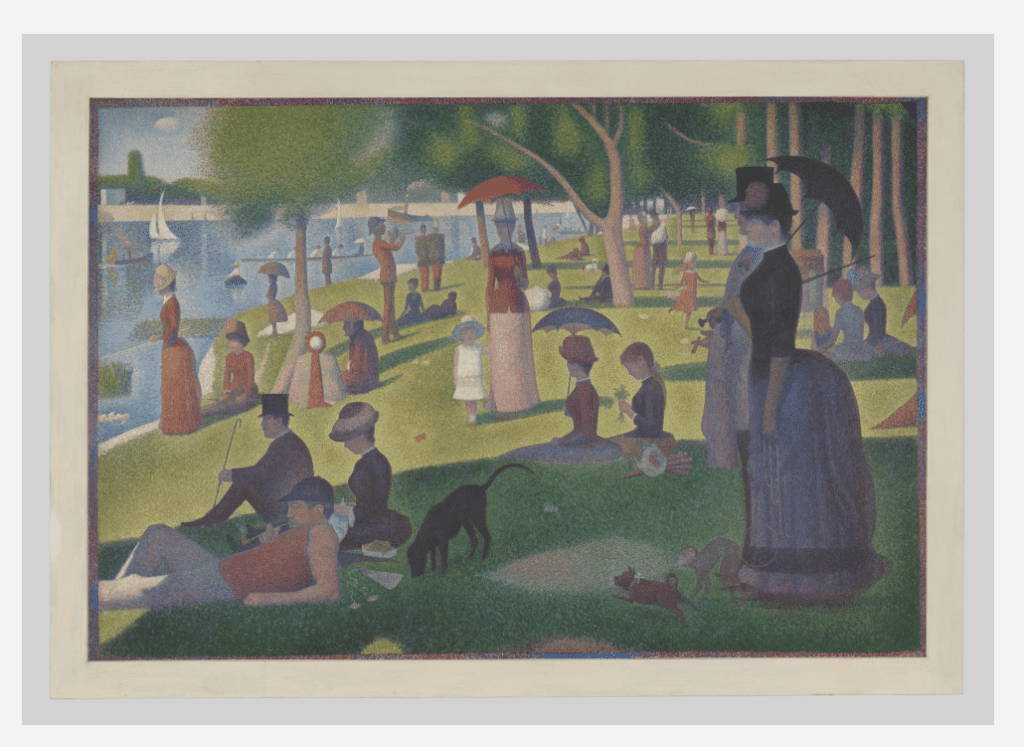
A Sunday Afternoon on the Island of La Grande Jatte is a masterpiece of Pointillism, a painting technique developed by the French artist Georges Seurat. Created between 1884 and 1886, this iconic work is considered one of the most important and influential pieces in the history of art.
The painting is currently housed in the Art Institute of Chicago, located at 111 S Michigan Avenue in Chicago, Illinois. The painting depicts a tranquil scene on the banks of the Seine River in Paris, where people from various social classes gather on a leisurely Sunday afternoon.
Art Institute of Chicago Opening Hours:
| Monday | 11am–5pm |
| Tuesday | Closed |
| Wednesday | Closed |
| Thursday | 11am–5pm |
| Friday | 11am–5pm |
| Saturday | 11am–5pm |
| Sunday | 11am–5pm |
American Gothic by Grant Wood
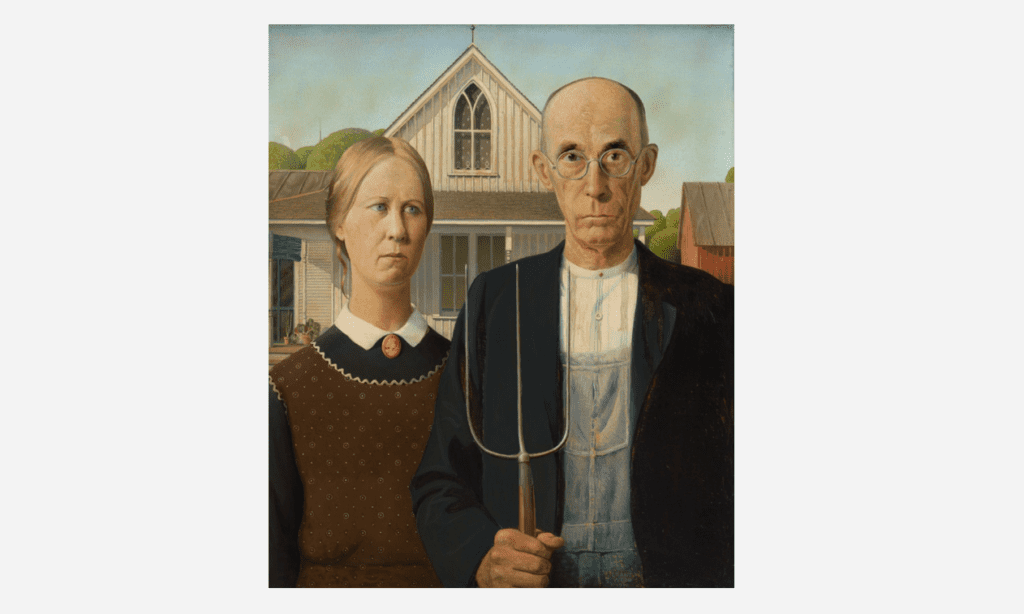
American Gothic is one of the most iconic and recognizable American paintings of the 20th century. It was created by the American artist Grant Wood in 1930. This painting is often interpreted as a satirical commentary on rural American life and the traditional values associated with it.
The painting features a stern-looking farmer and his daughter standing in front of a modest, Gothic-style farmhouse in rural Iowa. Both figures are depicted with a sense of stoicism and seriousness, and they wear simple, old-fashioned clothing. The piece is currently on display at The Art Institute of Chicago.
Art Institute of Chicago Opening Hours:
| Monday | 11am–5pm |
| Tuesday | Closed |
| Wednesday | Closed |
| Thursday | 11am–5pm |
| Friday | 11am–5pm |
| Saturday | 11am–5pm |
| Sunday | 11am–5pm |
Girl With A Pearl Earring by Johannes Vermeer
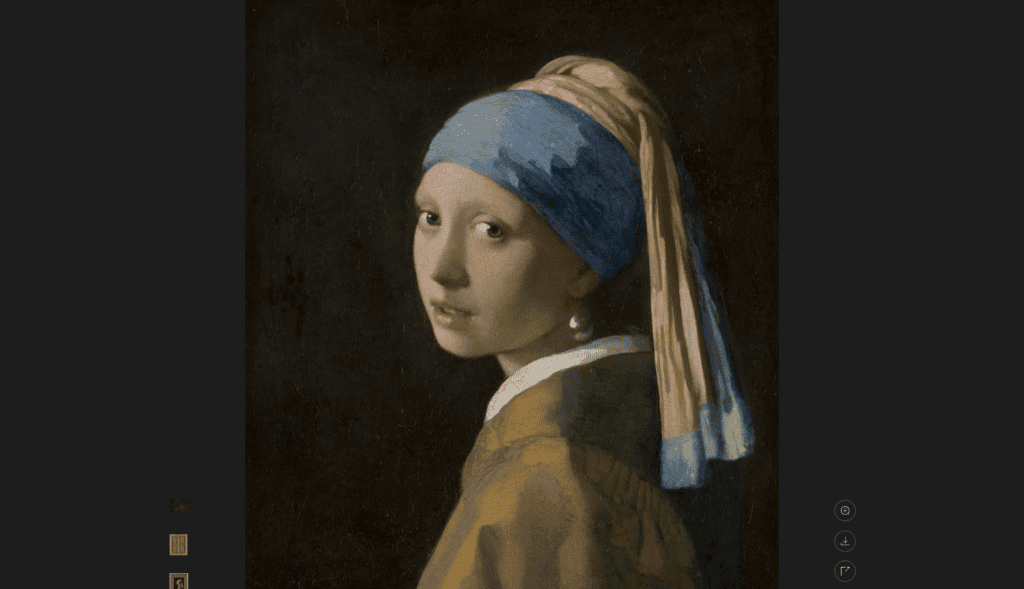
One of Vermeer’s most famous paintings is the Girl With A Pearl Earring, which is displayed in the Mauritshuis Museum in the Netherlands. The identity of the girl from the painting is not known; the piece is sometimes referred to as the “Mona Lisa of the North” due to its captivating and mysterious qualities.
The painting has captivated art enthusiasts and scholars for centuries due to its exceptional technical skill, the alluring gaze of the girl, and the air of mystery that surrounds her identity. The painting is housed in the Mauritshuis Museum in The Hague, Netherlands, where it draws in visitors from around the globe.
Mauritshuis Museum Opening Hours:
| Monday | 1–6pm |
| Tuesday | 10am–6pm |
| Wednesday | 10am–6pm |
| Thursday | 10am–6pm |
| Friday | 10am–6pm |
| Saturday | 10am–6pm |
| Sunday | 10am–6pm |
The Guernica by Pablo Picasso
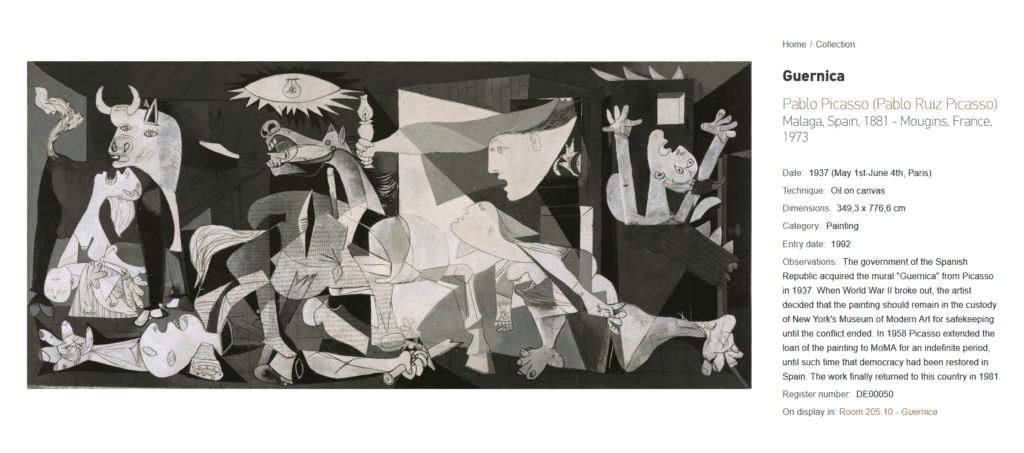
The Guernica is a powerful and iconic anti-war painting created by the renowned Spanish artist Pablo Picasso in 1937. It is considered one of the most significant artworks of the 20th century and one of Picasso’s most famous paintings.
The message behind the piece is a poignant condemnation of the horrors of war and the suffering it inflicts on innocent civilians. The painting was inspired by the tragic events of the Spanish Civil War, specifically the bombing of the town of Guernica.
For many years, The Guernica was toured around various countries to raise awareness about the Spanish Civil War and the broader issue of the devastation of war. It eventually found a permanent home in the Museo Nacional Centro de Arte Reina Sofía in Madrid, Spain, where it remains on display today.
Museo Nacional Centro de Arte Reina Sofía Opening Hours:
| Monday | 10am–9pm |
| Tuesday | Closed |
| Wednesday | 10am–9pm |
| Thursday | 10am–9pm |
| Friday | 10am–9pm |
| Saturday | 10am–9pm |
| Sunday | 10am–2:30pm |
Las Meninas by Diego Velazquez
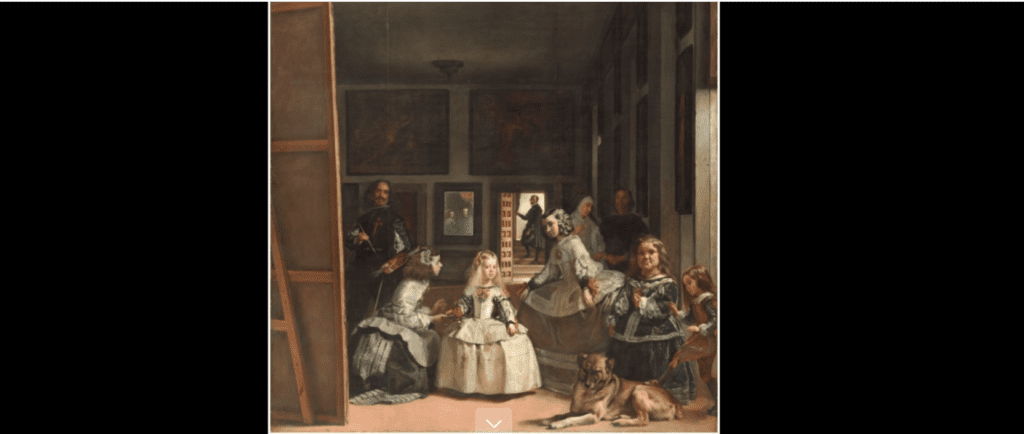
Las Meninas is one of the most famous paintings in the history of Western art. It was painted by the Spanish Baroque artist Diego Velázquez in 1656. The painting is a court portrait depicting Princess Margarita Teresa of Spain, the daughter of King Philip IV. She is shown along with her ladies-in-waiting, servants, and the artist himself, Velázquez, at his easel.
Las Meninas is part of the collection at the Museo Nacional del Prado in Madrid, Spain, where it remains a central masterpiece and a symbol of Spanish Golden Age art. The painting draws crowds of art enthusiasts, students, artists, and scholars daily.
Museo Nacional del Prado Opening Hours:
| Monday | 10am–8pm |
| Tuesday | 10am–8pm |
| Wednesday | 10am–8pm |
| Thursday | 10am–8pm |
| Friday | 10am–8pm |
| Saturday | 10am–8pm |
| Sunday | 10am–7pm |
Liberty Leading The People by Eugène Delacroix
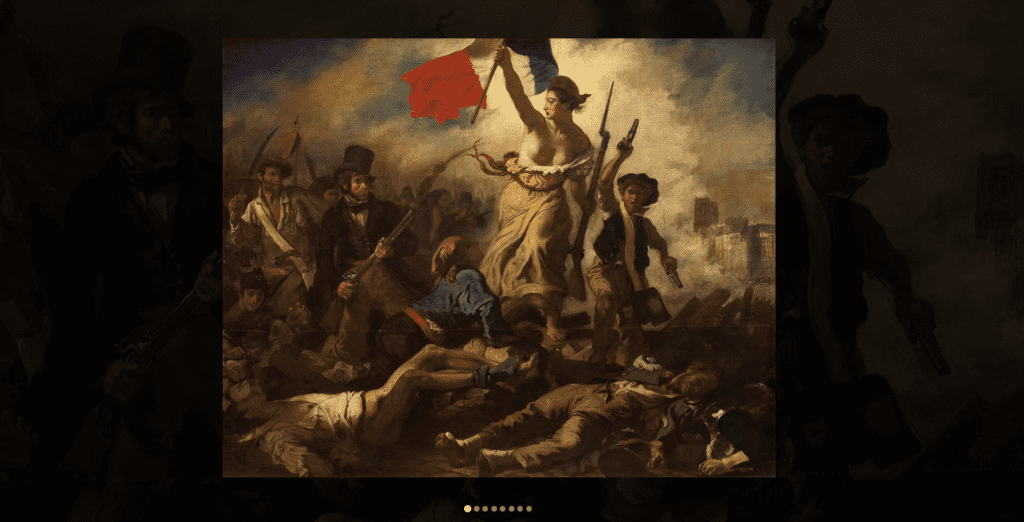
Liberty Leading the People, or “La Liberté Guidant le Peuple” in French, is one of the most famous paintings in the world. It was created by the French Romantic artist Eugène Delacroix in 1830 and has become a symbol of revolution.
This mesmerising work of art is celebrated for its depiction of the July Revolution of 1830 in France, which ultimately led to the overthrow of the Bourbon monarchy and the ascent of the July Monarchy under King Louis-Philippe. Today, Liberty Leading the People is housed in the Louvre Museum in Paris, France.
Louvre Museum Opening Hours:
| Monday | 9am–6pm |
| Tuesday | Closed |
| Wednesday | 9am–6pm |
| Thursday | 9am–6pm |
| Friday | 9am–9:45pm |
| Saturday | 9am–6pm |
| Sunday | 9am–6pm |
Mona Lisa by Leonardo Da Vinci
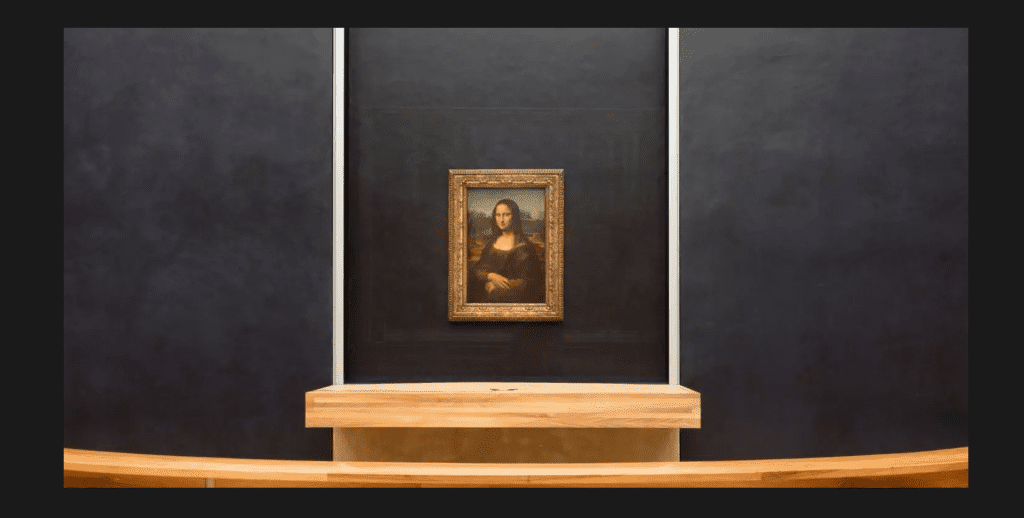
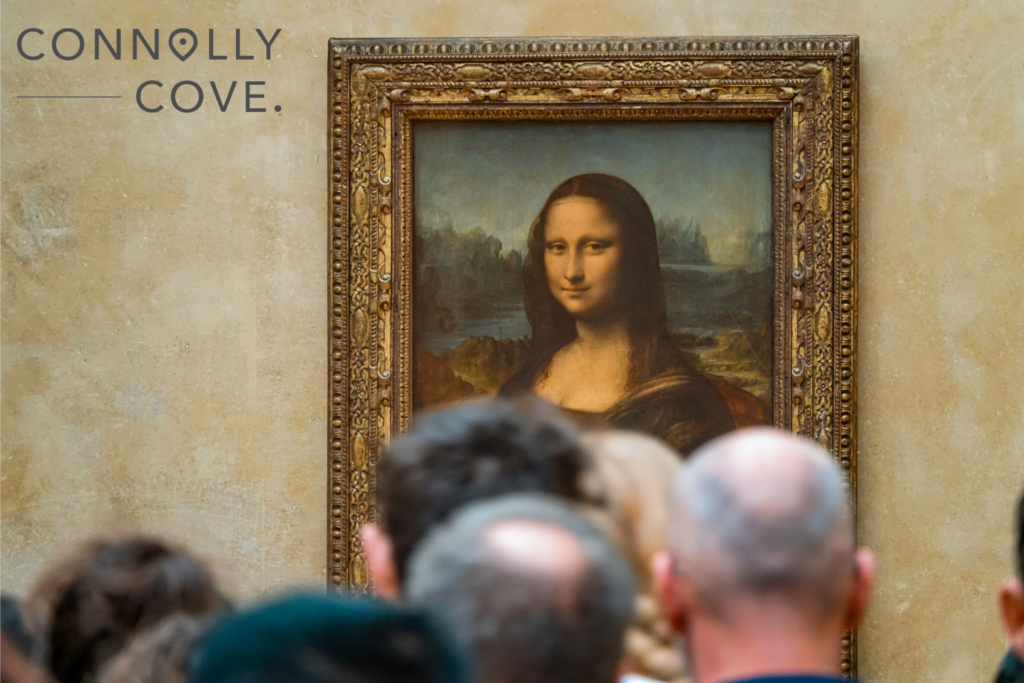
The Mona Lisa, also known as “La Gioconda” or “La Joconde” in Italian and French, respectively, is the most well-recognised painting in the world. It was painted by the Italian Renaissance artist Leonardo da Vinci in 1503.
The Mona Lisa has been housed in the Louvre Museum in Paris since the French Revolution. It remains one of the museum’s most prized and visited artworks, attracting millions of visitors from around the world every year.
The painting gained worldwide attention when it was stolen from the Louvre Museum in 1911 by an Italian handyman named Vincenzo Peruggia. The painting was missing for over two years before being recovered in Italy in 1913. Luckily, it has been safely on display ever since!
Louvre Museum Opening Hours:
| Monday | 9am–6pm |
| Tuesday | Closed |
| Wednesday | 9am–6pm |
| Thursday | 9am–6pm |
| Friday | 9am–9:45pm |
| Saturday | 9am–6pm |
| Sunday | 9am–6pm |
Napoleon Crossing The Alps by Jacques-Louis David
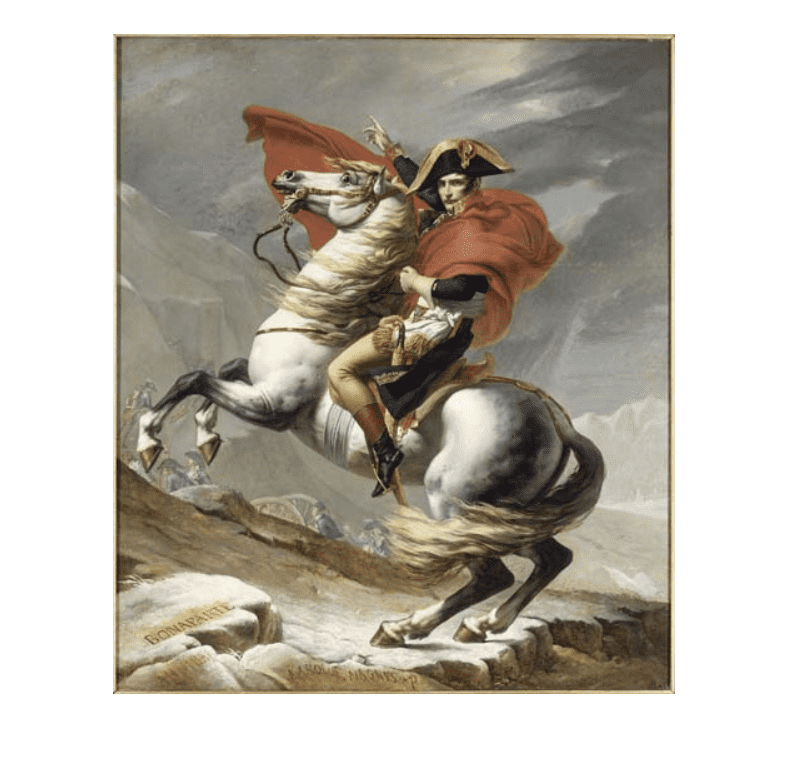
Napoleon Crossing the Alps was originally titled “Napoleon at the Saint-Bernard Pass“. The famous painting was done by the French Neoclassical artist Jacques-Louis David between 1800 and 1801. It depicts Napoleon Bonaparte, the French military and political leader, on his way to surprise and defeat the Austrian forces in Italy.
Napoleon Crossing the Alps is displayed in the Château de Malmaison in France. This particular version of the painting is larger in scale and is known as “The Great Saint Bernard Pass” version. The Chateau is 10 kilometres from Versailles, another amazing destination in France.
Château de Malmaison Opening Hours:
| Monday | 10am–12:30pm, 1:30–5:15pm |
| Tuesday | Closed |
| Wednesday | 10am–12:30pm, 1:30–5:15pm |
| Thursday | 10am–12:30pm, 1:30–5:15pm |
| Friday | 10am–12:30pm, 1:30–5:15pm |
| Saturday | 10am–12:30pm, 1:30–5:45pm |
| Sunday | 10am–12:30pm, 1:30–5:45pm |
Nighthawks by Edward Hopper
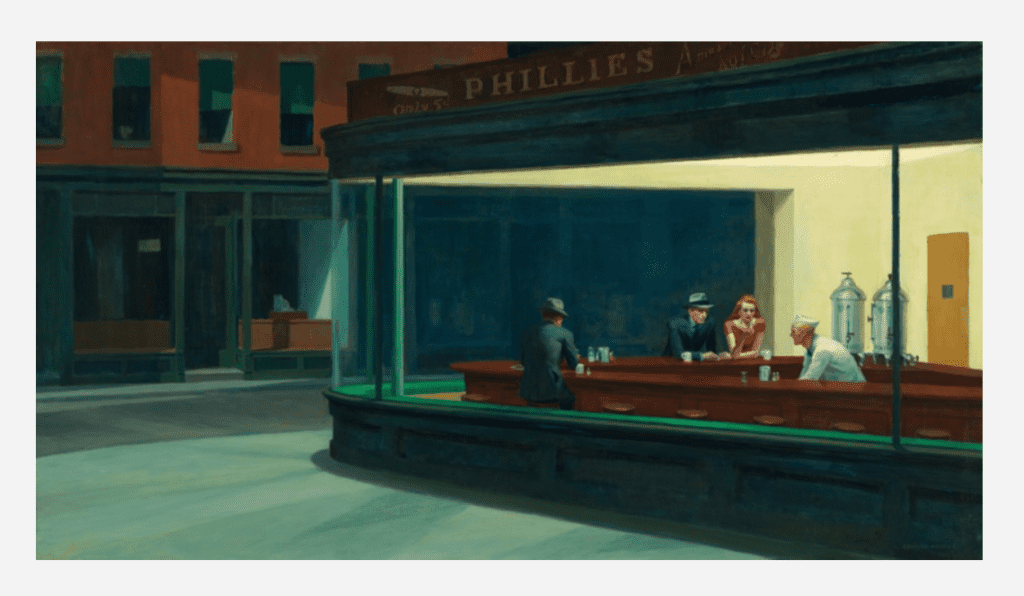
Nighthawks is an intriguing painting created by the American artist Edward Hopper in 1942. It is celebrated for its portrayal of the sense of isolation, loneliness, and alienation that can be found in modern urban life.
Nighthawks is on display at the Art Institute of Chicago. It is one of the most well-known and cherished artworks in the museum’s extensive collection. The piece is so iconic, in fact, that it has been parodied in many movies and TV shows.
Art Institute of Chicago Opening Hours:
| Monday | 11am–5pm |
| Tuesday | Closed |
| Wednesday | Closed |
| Thursday | 11am–5pm |
| Friday | 11am–5pm |
| Saturday | 11am–5pm |
| Sunday | 11am–5pm |
Starry Night by Vincent Van Gogh
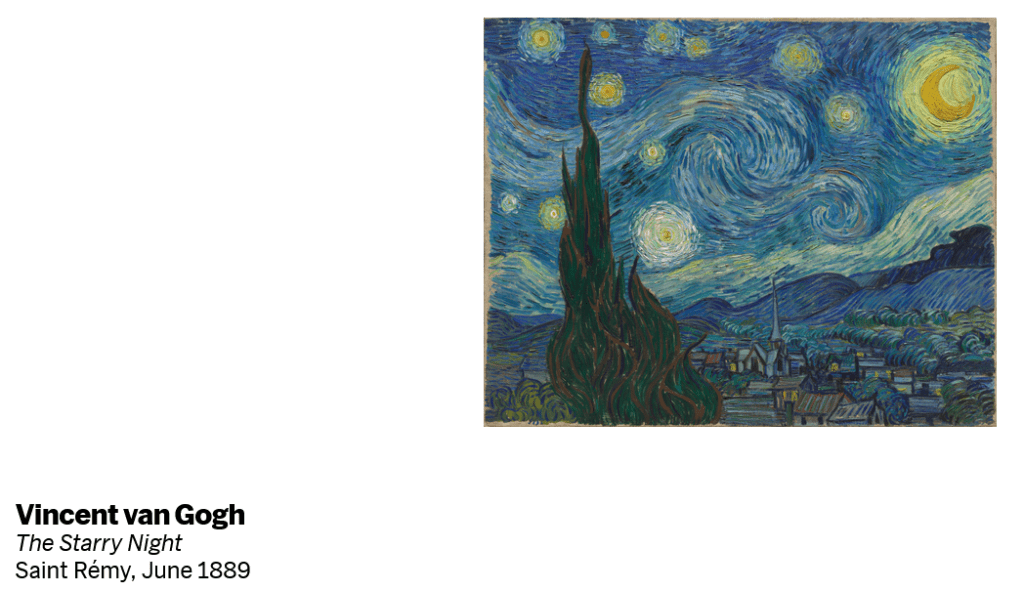
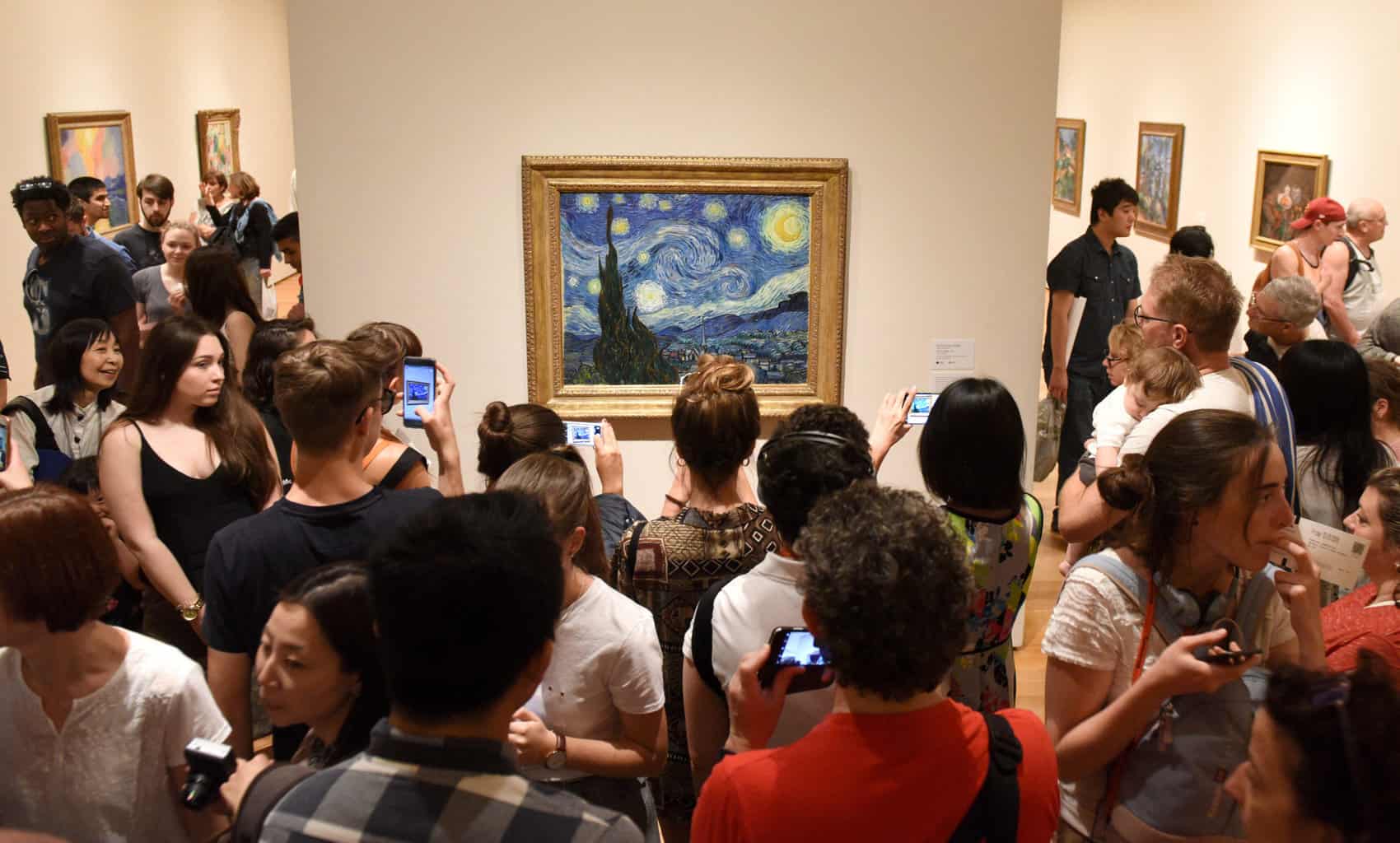
Starry Night is one of the most recognisable paintings in the world. Created by the Dutch post-Impressionist artist Vincent van Gogh in 1889, it is his most iconic and influential work. The painting features a nighttime scene with a small village at the bottom, a cypress tree in the foreground, and a dramatic, swirling night sky above.
Starry Night is currently on display at the Museum of Modern Art (MoMA) in New York City, where it attracts visitors from around the world. MoMA’s collection of modern and contemporary art includes a wide range of iconic artworks, and Starry Night holds a special place as one of its most treasured pieces.
Museum of Modern Art (MoMA) Opening Hours:
| Monday | 10:30am–5:30pm |
| Tuesday | 10:30am–5:30pm |
| Wednesday | 10:30am–5:30pm |
| Thursday | 10:30am–5:30pm |
| Friday | 10:30am–5:30pm |
| Saturday | 10:30am–7pm |
| Sunday | 10:30am–5:30pm |
The Arnolfini Portrait by Jan Van Eyck
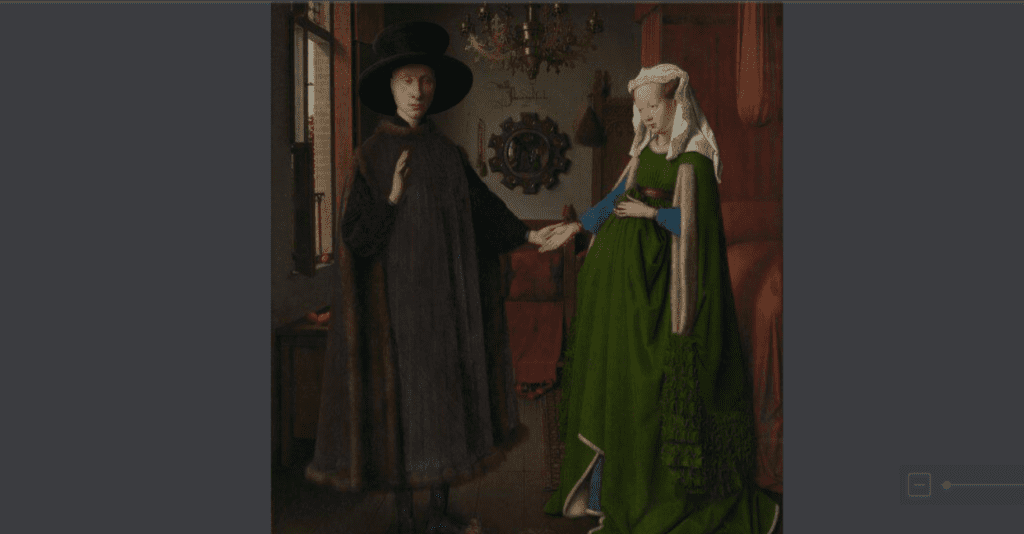
The Arnolfini Portrait, also known as “The Arnolfini Wedding” or “The Arnolfini Marriage,” is a famous Northern Renaissance painting by the Flemish artist Jan van Eyck. Created in 1434, it is one of the most renowned and studied works of art from the 15th century.
The Arnolfini Portrait is on display at The National Gallery in London, United Kingdom. The National Gallery is home to an extensive collection of European paintings from the 13th to the 19th centuries and is one of the most important art museums in the world.
The National Gallery Opening Hours:
| Monday | 10am–6pm |
| Tuesday | 10am–6pm |
| Wednesday | 10am–6pm |
| Thursday | 10am–6pm |
| Friday | 10am–9pm |
| Saturday | 10am–6pm |
| Sunday | 10am–6pm |
The Birth Of Venus by Sandro Botticelli
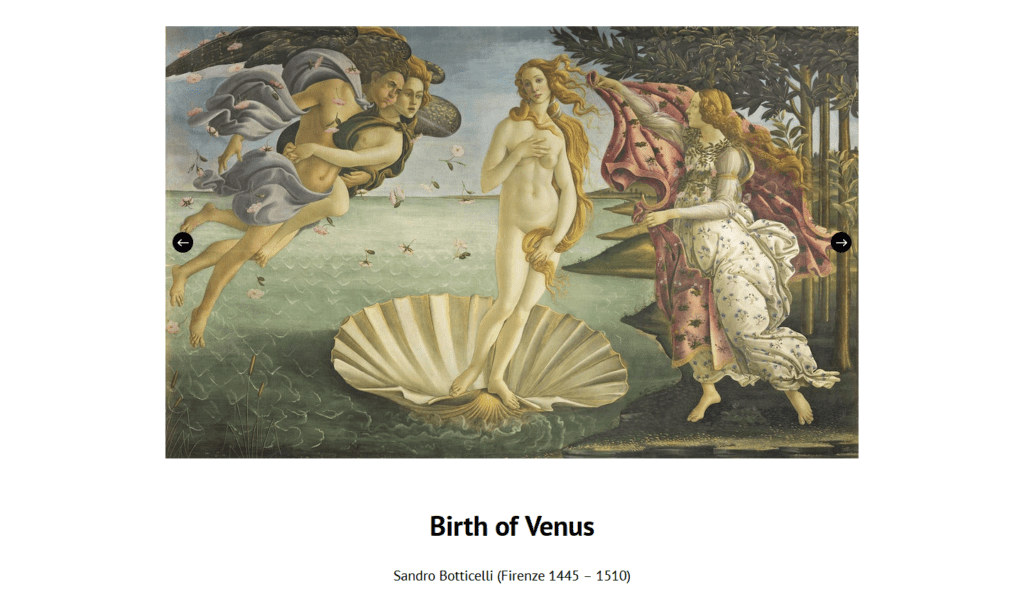
The Birth of Venus is a painting by the Italian Renaissance artist Sandro Botticelli. It is considered one of the most famous paintings of the Renaissance period and was created around 1484-1486. The painting is renowned for its depiction of the classical mythological figure Venus, the goddess of love and beauty.
The Birth of Venus is currently on display at the Uffizi Gallery (Galleria degli Uffizi) in Florence, Italy. The Uffizi Gallery is one of the most renowned art museums in the world and is known for its exceptional collection of Renaissance and Baroque artworks.
Uffizi Gallery Opening Hours:
| Monday | Closed |
| Tuesday | 8:15am–6:30pm |
| Wednesday | 8:15am–6:30pm |
| Thursday | 8:15am–6:30pm |
| Friday | 8:15am–6:30pm |
| Saturday | 8:15am–6:30pm |
| Sunday | 8:15am–6:30pm |
The Garden Of Earthly Delights by Hieronymus Bosch
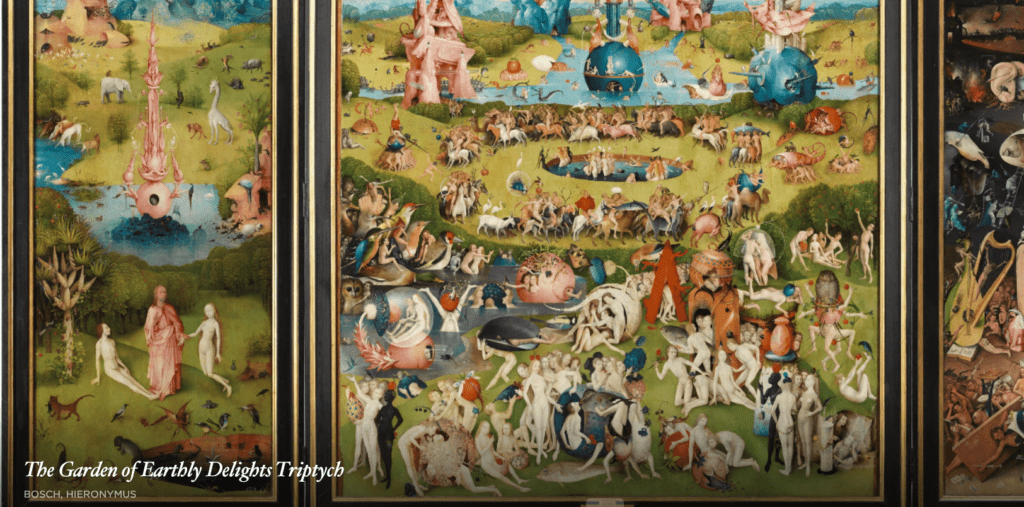
The Garden of Earthly Delights is an enigmatic triptych painting, which means it features three panels that can be opened and closed like a book. This masterpiece was created by the Dutch painter Hieronymus Bosch, also known as Jheronimus Bosch, between 1490 and 1510.
The left panel of the painting depicts the Garden of Eden, the central panel portrays a fantastical and chaotic earthly paradise, and the right panel illustrates a hellish landscape of damnation. The Garden of Earthly Delights is currently housed in the Museo Nacional del Prado in Madrid, Spain.
Museo Nacional del Prado Opening Hours:
| Monday | 10am–8pm |
| Tuesday | 10am–8pm |
| Wednesday | 10am–8pm |
| Thursday | 10am–8pm |
| Friday | 10am–8pm |
| Saturday | 10am–8pm |
| Sunday | 10am–7pm |
The Kiss by Gustav Klimt
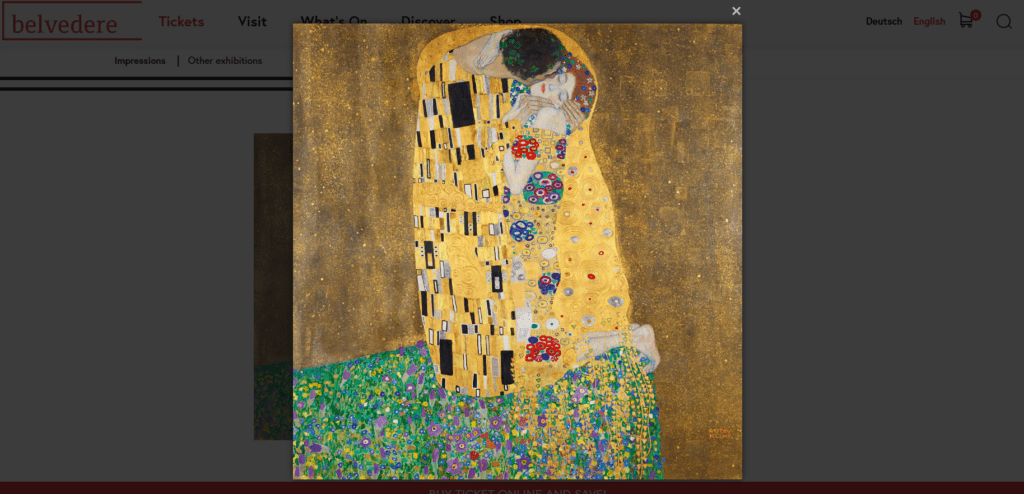
The Kiss is a famous painting created between 1907 and 1908 by the Austrian Symbolist artist Gustav Klimt. The painting was made during the height of Klimt’s “Golden Phase,” and it is considered one of his most celebrated and recognisable works.
The Kiss is currently on display at the Österreichische Galerie Belvedere, commonly known as the Belvedere Museum, in Vienna, Austria. The Belvedere is a renowned museum housed in a historic palace complex. It is home to an extensive collection of Austrian art, including many works by Gustav Klimt.
Belvedere Museum Opening Hours:
| Monday | 10am–6pm |
| Tuesday | 10am–6pm |
| Wednesday | 10am–6pm |
| Thursday | 10am–6pm |
| Friday | 10am–6pm |
| Saturday | 10am–6pm |
| Sunday | 10am–6pm |
The Night Watch by Rembrandt
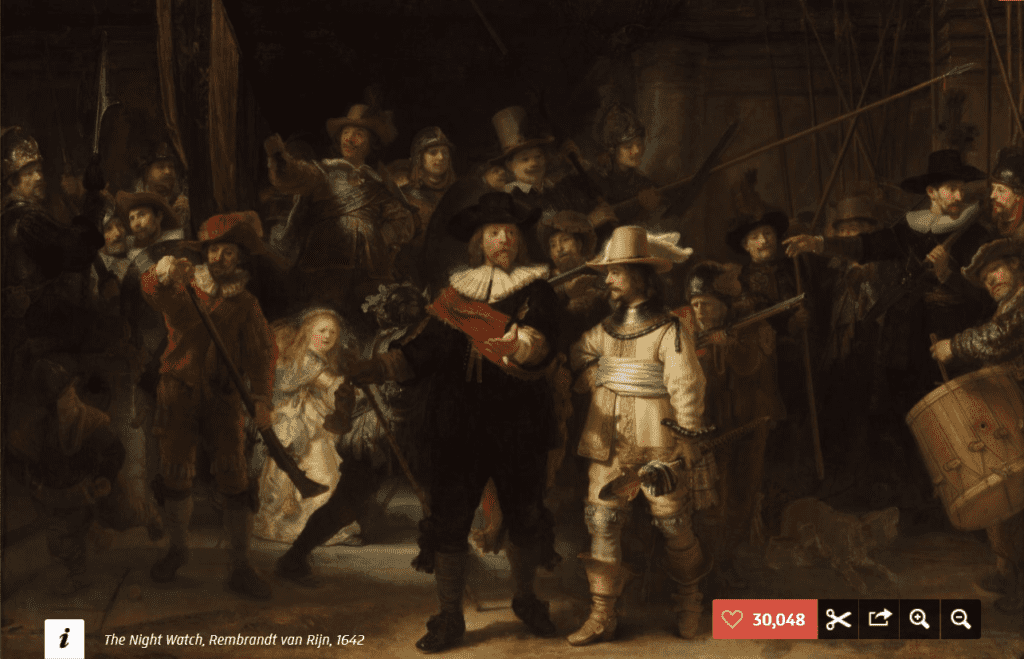
The Night Watch is a renowned painting by the Dutch Golden Age artist Rembrandt Harmenszoon van Rijn. Created in 1642, it is officially titled “Militia Company of District II under the Command of Captain Frans Banninck Cocq.” It is one of Rembrandt’s most famous paintings.
The Night Watch is displayed at the Rijksmuseum in Amsterdam, Netherlands. The Rijksmuseum houses an extensive collection of Dutch Golden Age paintings, including numerous works by Rembrandt. The Night Watch is one of the museum’s most visited artworks, attracting art enthusiasts and visitors from around the globe.
Rijksmuseum Opening Hours:
| Monday | 9am–5pm |
| Tuesday | 9am–5pm |
| Wednesday | 9am–5pm |
| Thursday | 9am–5pm |
| Friday | 9am–5pm |
| Saturday | 9am–5pm |
| Sunday | 9am–5pm |
The Persistence Of Memory by Salvador Dali
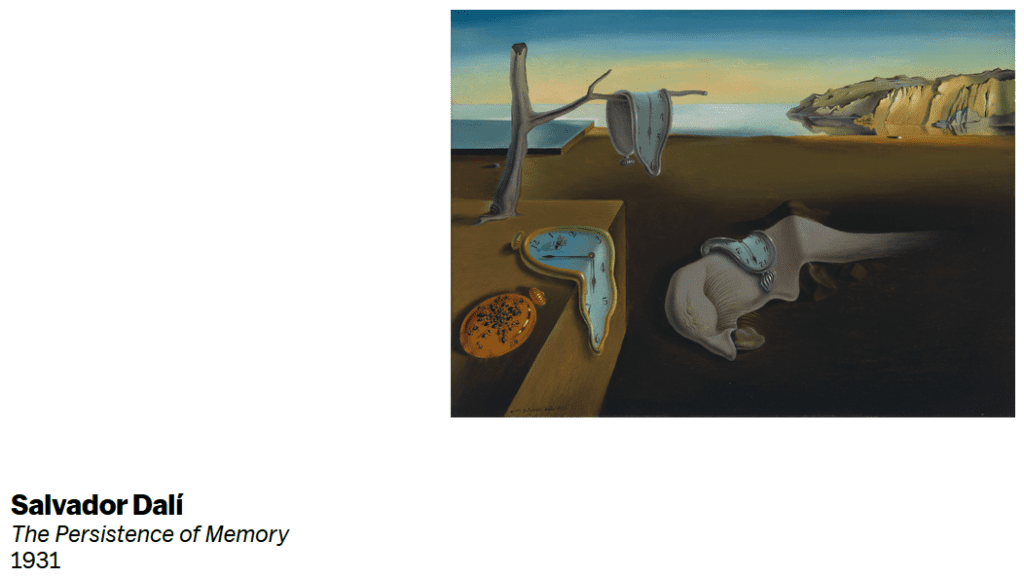
The Persistence of Memory is the Spanish Surrealist artist Salvador Dalí’s most famous painting. Created in 1931, the painting is celebrated for its dreamlike, surreal, and enigmatic quality. It features a barren landscape with a rocky foreground and a distant body of water.
In the painting, time appears to have lost all meaning. Melting watches, a central motif of the painting, hang from various objects like tree branches and a distorted face. The melting watches are often interpreted as a representation of the fluidity and instability of time.
The Persistence of Memory is on display at the Museum of Modern Art (MoMA) in New York City, United States and is a must-see for visitors interested in the art of Surrealism. MoMA is one of the world’s most famous art museums, known for its extensive collection of modern and contemporary art.
Museum of Modern Art (MoMA) Opening Hours:
| Monday | 10:30am–5:30pm |
| Tuesday | 10:30am–5:30pm |
| Wednesday | 10:30am–5:30pm |
| Thursday | 10:30am–5:30pm |
| Friday | 10:30am–5:30pm |
| Saturday | 10:30am–7pm |
| Sunday | 10:30am–5:30pm |
The Scream by Edvard Munch
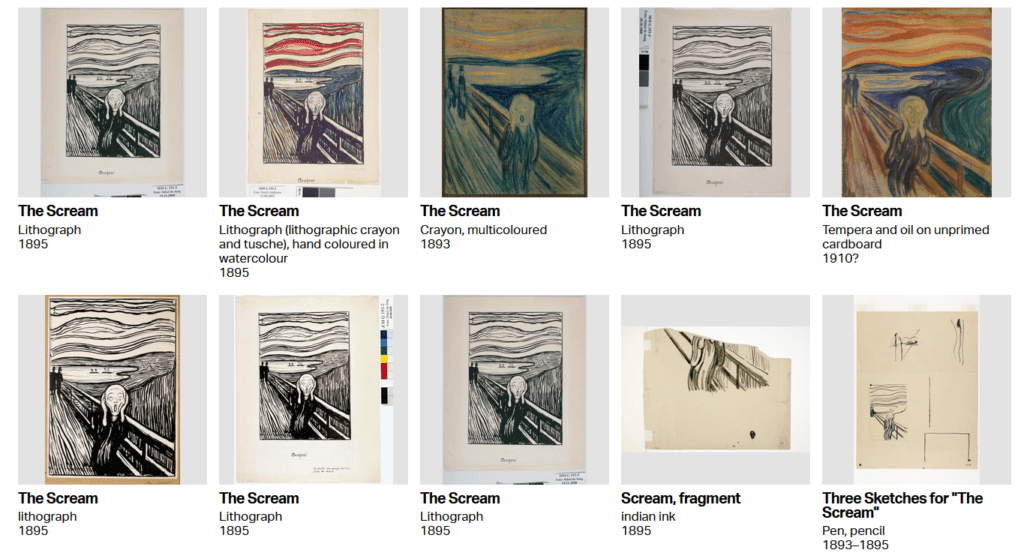
The Scream is a painting by the Norwegian artist Edvard Munch. It is considered one of the most famous paintings in the history of Western art. The depicted figure’s tormented expression and the chaotic landscape are often interpreted as a representation of the artist’s own anxiety and existential crisis.
Many people are unaware that The Scream is part of Munch’s larger series of works known as “The Frieze of Life,” which explores themes of love, anxiety, death, and the human experience. The Scream is a central piece within this thematic series.
Edvard Munch created several versions of “The Scream,” including paintings, lithographs, and pastels, which are on display at the Munchmuseet (Munch Museum) in Norway. The most famous version is the tempera on cardboard painting from 1893, which is housed at the National Gallery in Oslo, Norway.
Munchmuseet Opening Hours:
| Monday | 10am–6pm |
| Tuesday | 10am–6pm |
| Wednesday | 10am–9pm |
| Thursday | 10am–9pm |
| Friday | 10am–9pm |
| Saturday | 10am–9pm |
| Sunday | 10am–9pm |
The Swing by Jean-Honoré Fragonard
The Swing, originally titled “Les Hasards heureux de l’escarpolette,” is a famous Rococo painting created by the French artist Jean-Honoré Fragonard in 1767. It portrays a young woman on a swing, suspended by a shadowed male figure who playfully pushes her. The painting portrays movement and playfulness as the woman is shown in mid-air with her shoe flying off.
The painting is currently on display at the Wallace Collection in London, United Kingdom. The Wallace Collection is a renowned museum known for its exceptional collection of European fine and decorative arts, including paintings, furniture, and armour.
Wallace Collection Opening Hours:
| Monday | 10am–5pm |
| Tuesday | 10am–5pm |
| Wednesday | 10am–5pm |
| Thursday | 10am–5pm |
| Friday | 10am–5pm |
| Saturday | 10am–5pm |
| Sunday | 10am–5pm |
Sunflowers by Vincent Van Gogh
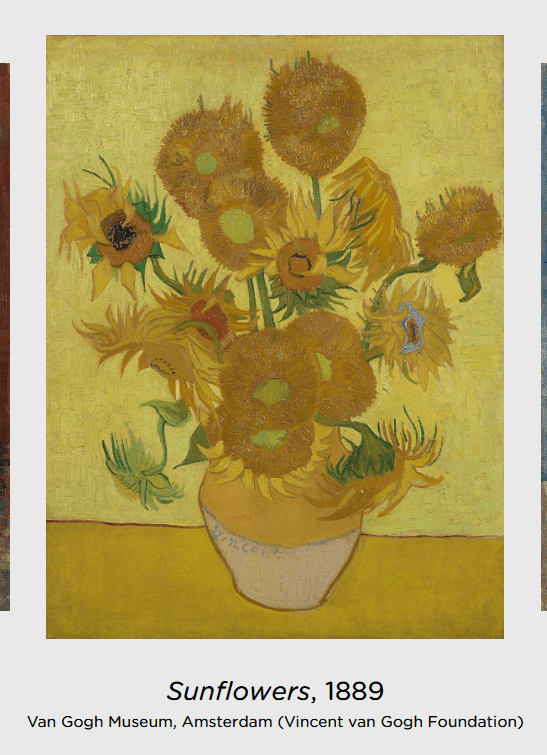
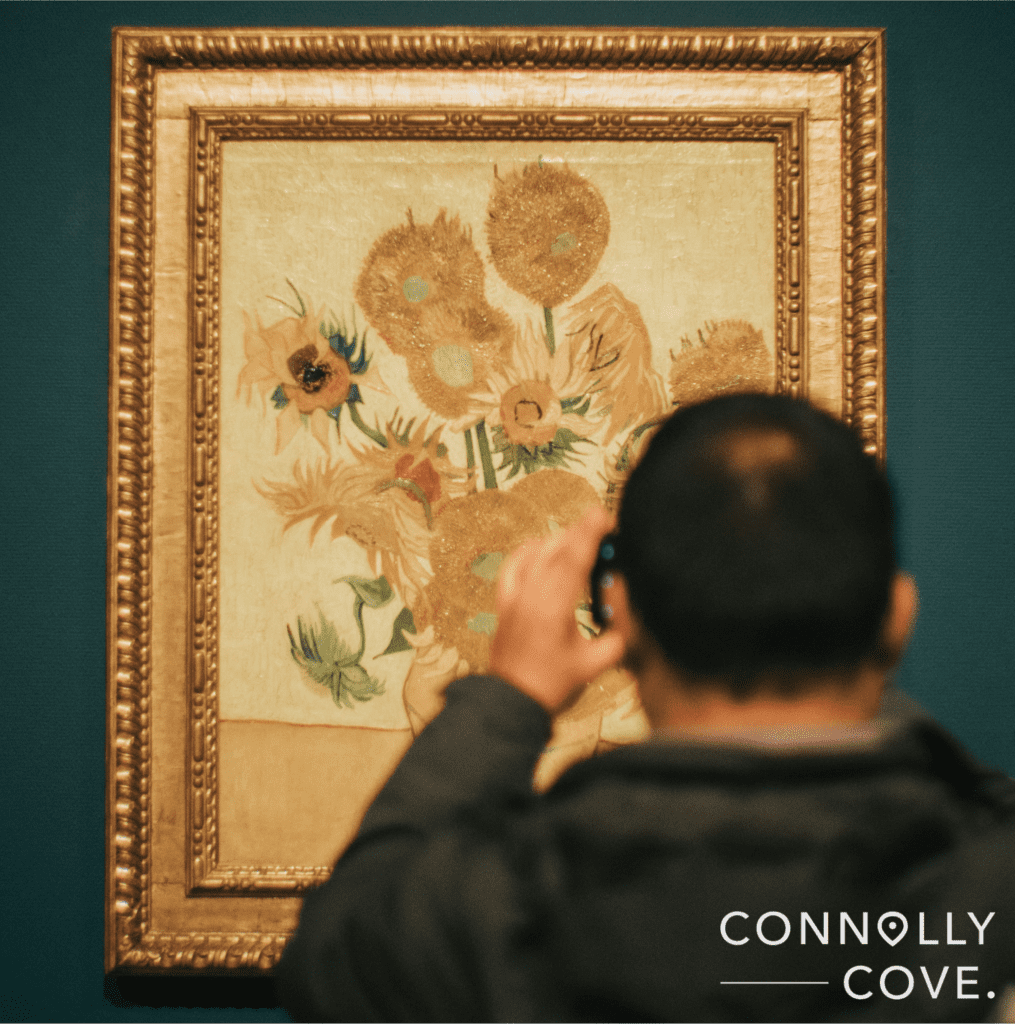
Sunflowers is a series of paintings by the Dutch Post-Impressionist artist Vincent van Gogh. Van Gogh created this series between 1888 and 1889 while he was living in Arles, France. The series consists of several paintings, each featuring vibrant depictions of sunflowers in various stages of bloom.
Vincent van Gogh was fascinated by the bright colours and symbolism of sunflowers. He considered them to be a symbol of happiness, gratitude, and the fleeting nature of life. Van Gogh aspired to be an artist known for his paintings of flowers, and now Sunflowers is one of his most famous paintings.
Several versions of the Sunflowers series can be found in various museums and collections around the world. One of the most famous versions, titled Sunflowers (F455), is displayed at the National Gallery in London, United Kingdom. Other versions can be found at the Van Gogh Museum in Amsterdam, Netherlands.
Van Gogh Museum Opening Hours:
| Monday | 9am–6pm |
| Tuesday | 9am–6pm |
| Wednesday | 9am–6pm |
| Thursday | 9am–6pm |
| Friday | 9am–6pm |
| Saturday | 9am–6pm |
| Sunday | 9am–6pm |
Whistler’s Mother by James Abbott McNeill Whistler
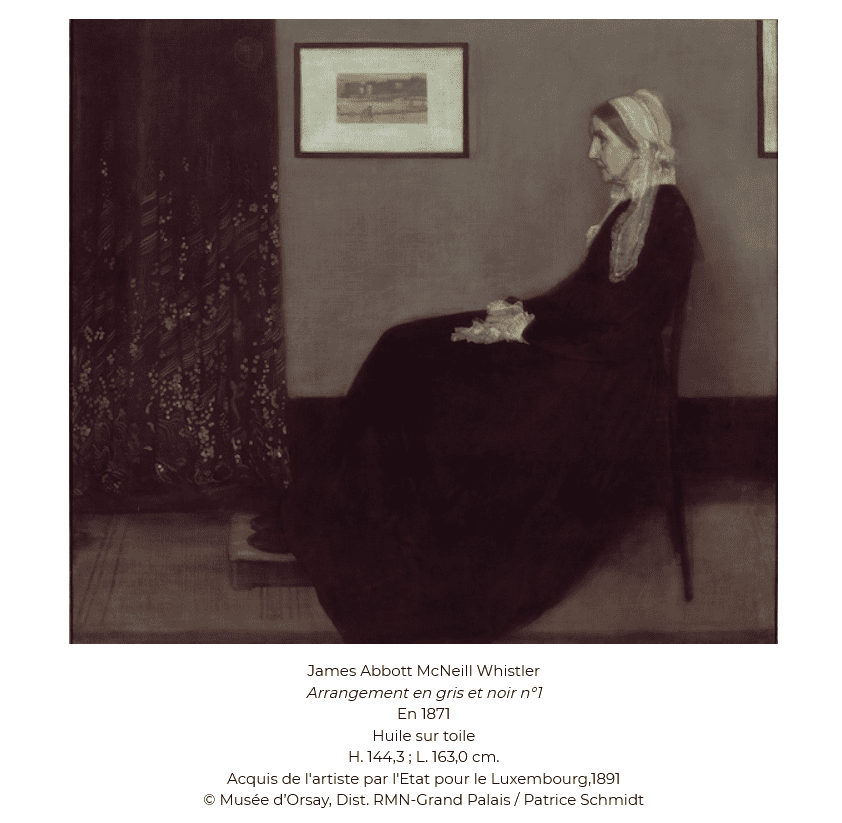
The painting was originally titled “Arrangement in Grey and Black No. 1,” but it is better known by the name Whistler’s Mother. It is a famous portrait painting created in 1871 by the American artist James Abbott McNeill Whistler.
Whistler’s Mother is currently on display at the Musée d’Orsay in Paris, France. It draws in crowds of people from around the world and is a must-see exhibit for anyone who visits.
Musée d’Orsay Opening Hours:
| Monday | Closed |
| Tuesday | 9:30am–6pm |
| Wednesday | 9:30am–6pm |
| Thursday | 9:30am–9:45pm |
| Friday | 9:30am–6pm |
| Saturday | 9:30am–6pm |
| Sunday | 9:30am–6pm |
The World’s Most Famous Paintings are Spread Across the Globe
The most famous paintings in the world are spread across many museums, which conserve, display, and protect those works for the future. These works are must-sees for any art enthusiast, and experiencing them in person is the best way to fully capture the emotion and skill the artists put into their paintings.
From Leonardo da Vinci’s Mona Lisa and Vincent van Gogh’s emotional Starry Night to the beauty of Sandro Botticelli’s The Birth of Venus and the surrealist dreamscape of Salvador Dalí’s “The Persistence of Memory,” these paintings have amazed and inspired people from around the world.
If you enjoyed this article, check out some of our other blogs about museums:
How to Visit a Museum: 10 Great Tips | Rosicrucian Egyptian Museum | California Automobile Museum | Museo Nacional de Antropología | Inside the Spectacular National Museum of Ireland | Museums: Between the Normal and the Bizarre | 10 Exciting Museums in Chicago | Best 10 Car Museums in England

Top 10 Irish Public Holidays and Traditions to Experience on Your Ireland Holidays
Festivals and Events
18/04/2024

6 Top Mourne Camping Sites for an Unforgettable Experience Under the Stars
Northern Ireland
18/04/2024

Eostre: The Germanic Goddess of Dawn and Spring Equinox Celebrations
Mythology and Folklore
17/04/2024
Explore the Top Hotels in County Cavan for Your Ultimate Getaway
County Cavan
17/04/2024

Irish Golf: Exploring the Top Golf Courses in Ireland
Culture Exploration
17/04/2024