

Lille-Roubaix, the City that Re-identified Itself
Updated On: November 07, 2023 by  Aya Radwan
The former industrial city of Roubaix is located in the Lille metropolitan area on the Belgian border. The textile industry helped boost the thriving of the city in the 19th century.
After this industry dwindled, the city faced challenges of urban decay with serious economic and social implications by the middle of the 1970s. The city basically had to find a new identity for itself by the end of the 20th century.
And the city of Roubaix had done just that! If you know where to look, you will find fascinating sites to visit and one of the biggest shopping venues you could find; Roubaix’s huge outlet mall!
The weather in Roubaix is fairly mild. Since it’s located on the north-east slope of the Lille metropolitan area. During the summer, the sun will greet you to give you enough warmth with no risk of sunburns. While during the winter season, snowfall for a while holiday season is a guarantee.
So what can this relatively new cultural city offer you? We’ll discover how you can get there, since it’s not that far from other cities in the Lille area nor is it far from the French capital Paris either.
How to get to Roubaix?
- By train:
The fastest way to get to Roubaix is by boarding the train from Lille, for a ticket range of 2.59 Euros to 13 Euros. You will take the 10 Kilometer distance in an average of 9 to 10 minutes maximum.
The train that leaves from Lille Flanders to and arrives in Roubaix is operated by SNCF. There are approximately 100 train trips each week between the two centers though it’s better to check in advance if you’re planning on being there during weekends or the holiday season.
- By subway:
For a ticket less than 2 Euros, you can ride the subway that will take you all through the 12.6 Kilometers distance from Lille to Roubaix in less than 25 minutes. A company such as IIevia offers a subway ride every 10 minutes.
- By tram:
If you prefer using the tram, it will get you to Roubaix in less than half an hour for a ticket less than 2 Euros for the entire distance of 10.2 Kilometers. Every 20 minutes a new tram trip departs and they are operated by IIevia as well.
- By taxi:
If you prefer a bit more private commute, you can take the 13.6 Kilometer trip by taxi for less than 40 Euros to take you from Lille to Roubaix. You can use several taxi services such as Taxis Lille Europe or Taxi Lille Metropole.
- By car:
If you’d like to rent a car and go on a road trip from Lille to Roubaix, the cost can be expensive without adding the cost of fuel. To rent a car it would cost a bit more than 60 Euros and with the fuel cost it might be 70 Euros. Remember it’s always best to check the means of transportation you’d prefer and book in advance to get the best prices.
What Roubaix has to offer you?
This city is blessed with remarkable buildings, old brick factories and warehouses. This once renowned city which was esteemed to be a worldwide textile capital in the early years of the 20th century.
The city has one of the architectural works in the French history and culture of the 19th century Industrial Revolution. Roubaix was announced Town of Art and History on 13th of December, 2000. Since then, the city of Roubaix has been promoting its new status through its social and industrial history.
- Église Saint-Martin (Church of Saint Martin):
Traces were found of an older church at the same site that was of Romanesque style. The façade tower and a few columns of the nave remained of the first church recorded at this place and were used in reconstruction by Charles Leroy between 1848 and 1859. The current church is built in a Gothic style.
The church underwent several renovation works. The first taking place from 1968 to 1978 which included the removal of the interior neo-Gothic décor. A second renovation project, this time covering the exterior was undertaken in 2002. The stucco decorations were then removed, leaving the stone bare.
The church still holds Sunday mass till this day with occasional musical concerts every now and then. It was listed as a historical monument in 2009.
- La Piscine Museum:
This 1930s converted Art Deco swimming pool was transformed into the most spectacular museum. The pool chambers, its galleries, tiled walls and beautiful stained windows form the main exhibition room. The adjacent textile factory offers more exhibition space.
Opened in 2000, the museum sheds light on the city’s textile industry with an archive containing over thousands of samples dating back to 1835. For a day’s pass of 5 Euros you will get to marvel upon fabrics from Ancient Egypt, a revolving fashion collection, fine ceramics and paintings by artists such as Tsugouharu Foujita.
- La Manufacture:
As if stepping out of a time machine, this old factory, now a museum will show you the different machinery used in the textile industry. From hand-operated looms from the Medieval Times to 21st century computerized machines.
The former Craye factory still houses all the equipment when work was shut down. Demonstrations are put up using the machinery accompanied by an audio archive recounting the old times, from weavers, foremen and spinners.
- Usine Motte-Bossut:
This old factory looks like a castle and it’s one of the most prestigious-looking factories in the city, it has an entrance that looks like a gatehouse and a chimney stack shaped like a turret.
The building of this factory goes back to the 1840s when the majority of the factory was built. Extensions were added in the following years up until the 1920s when the entire building was finally complete.
The factory ceased to work in the 1980s and renovations works began afterwards to transform it to hold the National Archives of the World of Work which is under the supervision of the French Ministry of Culture. The factory is hard to miss as it was built right beside Roubaix Canal right at the center of the city on Rue du Général-Leclerc.
- Villa Cavroix:
Originally built for the textile industrialist Paul Cavrois, it was designed by the illustrious Robert Mallet-Stevens. This cutting-edge villa was built in 1932 yet was only recently restored after being left to the claws of negligence for so long.
Despite so, everything in the villa is as it was back in the 1930s. Some rooms were left empty of furniture to give you the opportunity to appreciate the fine work of Mallet-Stevens and the amazing works of wood and marble used for paneling and the floors.
- Hôtel de Ville (City Hall):
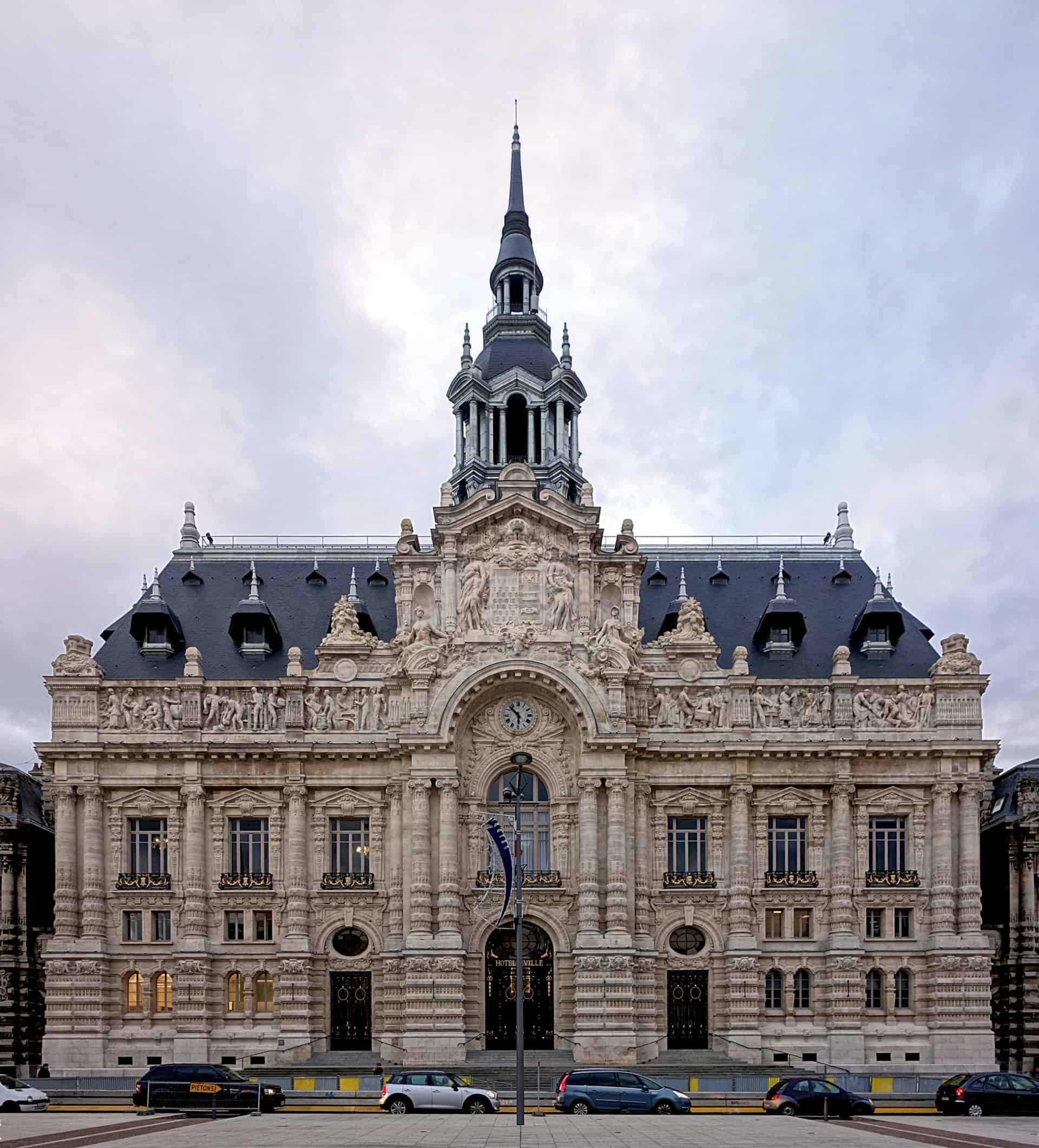
Roubaix’s City Hall was designed by Victor Laloux in 1903. Together with the sculptor Alphonse-Amédée Cordonnier, they designed a beautiful manifesto of the city’s textile industry at the top of the façade of the city hall.
There are figures representing all the activities that constituted the livelihood of the people of Roubaix. Cotton-harvesting, cotton-washing, spinning, weaving, dyeing and conditioning. This prestigious building is a beautiful document of when this city was at its peak.
- Parc Barbieux:
Roubaix’s main park was begun in 1840 yet was abandoned halfway through before the banks and mounds were turned into a beautiful English style garden at the beginning of the 20th century.
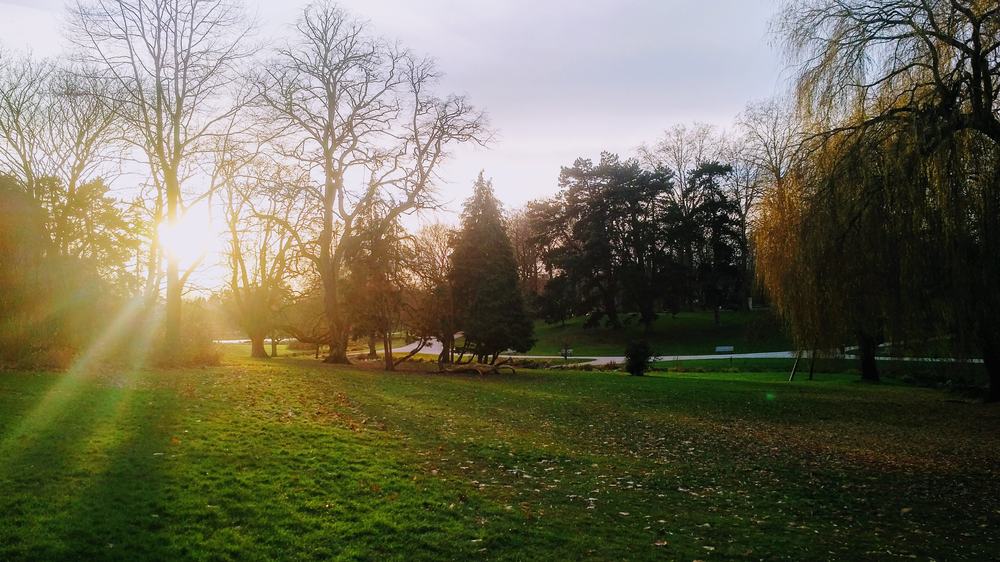
The park has an interesting back story. It’s said that the water channel that meanders through the center of the park is the remnant of a failed attempt to link the center of Roubaix with the Marque River.
The park offers various activities that you’d certainly enjoy if you have kids and you happen to visit during summer time. Mini golf courses, pedalos, rowing boats and a pétanque court. Kiosks are dotted around the park to serve you light food and beverages.
- McArthurGlen Roubaix:
A couple of minutes on foot south of the center of the city is this designer outlet. Opened a few years ago, it attracts shoppers from Lille and even from Belgium across the border. It offers you 75 stores for a catalogue of premium and designer brands. Guess, Lacoste, Calvin Klein you name it, you’ll find it there.
This pillar of the city’s redevelopment program offers you other useful services on the premises. Cafés and restaurants are dotted everywhere to give you an opportunity to rest your tired feet.
There’s free WIFI connection, a kids’ area for the children to play and enjoy their time as well and a helpful staff that are trained in multiple languages and can help you get around.
- Cimetiere de Roubaix:
If you’re up for a bit of spooky history, you can visit the Roubaix Cemetery where the founding families of the textile industry found their final resting place. The place unlikely demonstrates the decline of the textile industry in the city. It’s only shameful that the place isn’t always well maintained.
- La Condition Publique:
This former fabric factory is now a temporary exhibition space. They offer you online ticket reservations for their upcoming events and guided tours as well. The exhibition offers the services of a café and a restaurant that serves slow food, which tastes wonderful.
- Parc du Palais de Justice:
When the Law Courts’ yard is open you can enter for free and enjoy the Renaissance inspired architecture. The long and austere façade fronting the street contrasts with the richly decorated internal courtyard.
The lavish decoration of the main building is highlighted by the different colors of materials used in the buildings; bricks and stones. Upon entering you will be greeted by two horse heads which indicate the location of the former stables on either side of the building.
Even though the industrialist Pierre Catteau was the one who commissioned the construction of this lavish building, he didn’t live long enough to enjoy the beauty of the place for long. A monogram at the top of the central projection features his initials PC.
Adjacent to the law courts there’s a park where you can have a picnic with the family. Kids will love the place as they can play and wander around freely. Some even recited the existence of chickens running around.
Whether the chickens lived there or not, that is not clear. Worth a shot to find out though, right?
- Verlaine Message Museum:
Ten minutes away from Roubaix, in Tourcoing is a huge Nazi bunker at the former headquarters of the 15th German Army. Radio Londres was the French Resistance station broadcasting from London during the war.
On the night before the Normandy Invasions, on June 5th, 1944 the Radio Londres sent out coded messages in the form of lines of poetry by the likes of Paul Verlaine to warn the Resistance to mobilize. This is the German bunker that first intercepted those messages.
There’s a lot of communication equipment from that era that you can gaze upon and read about. There are generators, signal detectors and all kinds of military equipment as well.
- LaM (Lille Métropole Museum of Modern, Contemporary and Outsider Art):
This modern art museum is in Villeneuve-d’Ascq, around 15 minutes away from Roubaix on your way to Lille. The total number of artworks in the museum is over 4,500 pieces, making the LaM the only museum in Europe to present the main components of the 20th and 21st centuries: modern art, contemporary art and outside art.
First opened in 1983, the museum underwent a major renovation when it was closed in 2006 for reconstruction works and the museum finally reopened in 2010.
It’s worth mentioning that the collection of outsider art was donated to the museum back in 1999. The museum’s collection offers an overview in modern and contemporary art including drawings, paintings, sculptures, photography, prints, illustrated books and artist’s books and electronic media.
- Brasserie Cambier:
On your way to Lille from Roubaix, you can stop at the town of Croix. Cambier is a craft brewery that gives tours every Saturday afternoon. It’s a throwback when breweries were the mainstay of cities in the Nord region in the 19th and 20th centuries.
The tour takes you around the brew-house accompanied with a step-by-step explanation of how Cambier make their signature “Mongy” craft beer. The tour ends with a tasting session after which you can buy a bottle or two and you can even buy one of the stylish glasses with the brewery’s name on it, to take home.
- Old Lille:
You can’t visit Roubaix without a visit to the center of Old Lille. The city’s landmarks have Flemish influence including the use of red and brown brick. With the use of bricks, the presence of row houses and terraced houses, Lille will give you a Belgian English vibe, almost as if you’ve travelled to a different country than France.
For a day’s visit in Lille-Roubaix you can check:
- Palais des Beaux-Arts de Lille (Lille’s Palace of Fine Arts):
Which is a municipal museum dedicated to fine arts, modern art and antiquities. You wouldn’t want to miss the visit as it is one of the largest art museums in France.
- Lille Cathedral (Basilica of Notre Dame de la Treille):
This national monument is an example of Gothic Revival architecture was begun in 1854 and only finished in 1999.
- Jardin botanique de la Faculté de Pharmacie (The Botanic Garden of the Faculty of Pharma):
This free-entry botanical garden is open all week except for university holidays. The garden includes more than 1,000 taxa.
- Renaissance Lbirairie Furet du Nord (Literally Northern Ferret):
This once fur store is now a bookstore. The store is on the Grand Place, it is still the largest bookstore in Europe today. The store offers products such as books, stationery, music and multimedia.
When you check these architectural sites off your bucket-list, you’ll surely return to Roubaix exhausted but satisfied at the end of the day.
- Parc Zoologique:
For guaranteed fun for you and if you have kids with you, a visit to the Lille Zoological Park in the Vauban Esquermes at the foot of the Lille Citadel. The low entry fee has helped this zoo become one of the most visited zoos in Europe.
For only 4 Euros you get to see a wide variety of zebras, panthers, rhinos, monkeys and all kinds of tropical birds.
Festivities in Roubaix
Your trip to Roubaix is not complete until you’ve caught one of the various festivals and events that take place there. If festivals and art exhibits are not your kind of jam, well, perhaps watching a challenging race at the tracks of the Stab will be the perfect change for you.
- Paris – Roubaix Race (Mid-April):
This one day event is one of the hardest cycling races in France. Mainly because of the wild race track; rough country tracks and cobblestones. The race is very challenging it is named “Hell on the North”. Even special gear has been designed specifically for the course.
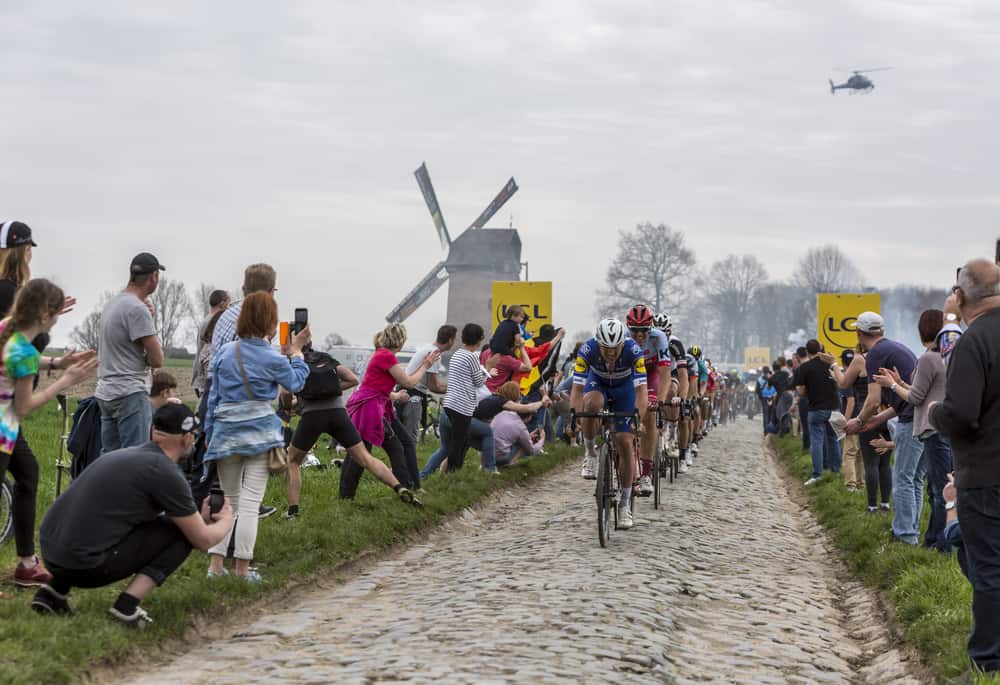
Winning the Paris – Roubaix race is a huge achievement for professional riders. Whether you are watching the race among the grueling route or at the finish line, if you’re a cycling fanatic, you wouldn’t want to miss this event.
- Stab Velodrome:
In the heart of the Sports Park in Roubaix, the Stab gives you the opportunity to dare the track and perhaps you will set a new cycling record. Group cycling challenges are also offered where teams of three cyclists will compete for a six-hour endurance race.
- Friendship Festival and Citizenship (May):
This festival is where you get to meet other people from different countries, backgrounds and lifestyles. It’s an opportunity to discover more events that support this theme as well.
- Festival Belles Mechanical (June):
This festival is for all antique car lovers so if you’re one, you should definitely attend.
- Festival Roubaix Accordion (October):
The event features music concerts by many artists from the area. It’s a good way to familiarize yourself with the atmosphere of the city and the region in total. The festival consists of various musical events that take place at different sites of the city.
- Free Exhibitions (December):
All through the month of December, free art exhibitions are held around the city. Exhibitions that offer works of art for sale by international and world-renowned artists.
- Weekly Markets:
All year round, more than eleven weekly markets take place. The venues vary depending on the day of the week. The usual market days are Mondays, Wednesdays, Fridays, Saturdays and Sundays. A Christmas market is a stable in each December in the city.
Roubaix Cuisine
There are many restaurants in Roubaix that will charm you into returning for another visit.
- Le Plessy:
The food is excellent and well-presented, the service team is great and everything is done with so much passion and professionalism. It is a nice atmosphere across from the train-station.
- Le Rivoli:
Right across from the City Hall, this is a very classic French styled bistro. The owner of the bistro who also happens to be the chef walks the floors to check on guests and how they liked their food.
- Le Don Camillo:
A bustling restaurant near Saint Martin, it offers a variety of dishes including Italian cuisine, pizza and even vegetarian friendly. For the best experience, you’d want to book your table in advance as it can get very busy. This restaurant is a great choice if you’re looking for a tasty meal on a budget.
- Fer a Cheval:
Another good choice if you’re looking for a delicious meal at a reasonable price. The restaurant opens at 7 pm and mainly serves a lot of French food as well as salads, fish and even burgers.
- Loft 122:
The exposed industrial aesthetics of this place give it a New York vibe. It is located at an old textile factory at the heart of Roubaix. The charm and authenticity of the place have been preserved, an ideal setting to enjoy a cuisine and fast service in a trendy and warm atmosphere.
- Baraka:
If you’re headed to La Piscine for the day you’d come across Baraka on your way. The food is excellent and very affordable as well.
Imagine a stroll along the renovated landmarks all day, a relaxed time at the park and delicious food with not much damage to your finances. How about you imagine Roubaix?
Bienvenue à Roubaix!
The Top 4 Best Restaurants in Belfast, Northern Ireland
Northern Ireland
16/04/2024

Exploring the Best Irish Gins for a Taste of Ireland’s Distilling Excellence
Food and Cuisine
16/04/2024
Everything You Need to Know About the Currency in Northern Ireland
Northern Ireland
16/04/2024
The Capital of Connemara, Clifden, Co. Galway
County Galway
15/04/2024

French Village, Lisburn Road, Belfast
Northern Ireland
15/04/2024