


Interesting Italian Travel Statistics: Everyone Should Know Before Flying to Italy
Updated On: November 09, 2023 by  Rahma Ali
Italian Travel statistics are filled with interesting facts because it’s time to know everything about this awe-inspiring country.
Travel to Italy is always a popular choice for tourists, as the country has many beautiful attractions to explore.
It’s no wonder so many people love travelling to Italy – it has not something but millions for everyone! From ancient ruins to breathtaking coastlines, there’s plenty to see and do in this gorgeous country. They can enjoy its splendour wherever they go. If you’re wondering whether or not to fly to Italy, the information provided here should help you make a more well-informed choice.
But first, we discuss why many people love travelling to Italy, so you have caught a glimpse of what you’re about to deluge in.
Why Is Italy Popular Tourist Destination?
My love for Italy started from… I really don’t know, but I think it’s from my birthdate. And no, it’s not just because of its divine culinary (which I find justified).
Your affection for Italy almost begins instinctively; you will find yourself adoring it for no reason. Actually, no! A million reasons around mean that you will are about to experience a lifetime of warm adventure like nothing before.
Let’s recap some reasons why everyone (I mean everyone) loves Italy, those who consistently make plans to ensure they come back here every year.
- From its rolling, therapeutic hills to its captivating coastline, Italy offers a wealth of destinations to explore.
- Italy’s central location in Europe makes it a convenient destination for both short weekend trips and extended vacations.
- Love history, attractions and walking tours? You won’t know where to start. From world-famous museums and art galleries to idyllic beaches and rolling hillsides, it’s an excellent gateway for all types of travellers.
- From pizza and pasta to cannoli and gelato, Italian cuisine is world-renowned for a good reason. And with so many regional specialties on offer, you’ll never tire of exploring the country’s culinary delights.… need we say more?
- No one has the luxury of going during the low season when rates are often at their lowest. But Italy is still different because you’re not limited to big cities; even small towns can offer you an authentic experience in fall, winter, or whenever.
- Even streets are joyful on their own. Free walking tours are available in each nook of Italy. You don’t have to pay anything to have quality time around.
I think it’s enough, that is why Italy is one of the best tourist destinations.
Italian Travel Statistics: Awesome Facts to Know Before You Go
Italy should be on everyone’s bucket list, not our judgment; it’s what Italian travel statistics tell you. And there’s no wonder about that. Italy has a bunch of historical landmarks, epic monuments, and venerable ancient sites more than any other country in the world.
Stop wasting time guessing and take a look at the statistics instead.
- More than 96 million people visited Italy in 2019, making it the fifth most-visited country in the world. Source: Statista. (Come on! Italy deserves your attention right off.)
- In 2021, due to the coronavirus, which hit the country sharply, the total number of tourist arrivals reduced to around 41 million. Source: Statista. (as a travel blogger, I received a fair amount of questions telling me if Italy was a safe place to visit after the Covid-19 crisis. Of course, it’s. Plan your trip now!)
- At the beginning of 2022, Italy received around 4 million visits as the country started recovering from the coronavirus. Source: Statista. (See! Here is what backs me up. Many people are flocking to Italy, and this number will triple in the fall and Christmas season)
- The Italian government announced that they expected to generate 26.4 billion euros at the end of 2022, an 11.8% increase from the last year. Source: Demoskopika. (The same revenue accumulated in 2019; fair enough!)
- In 2019, tourism contributed 10.6% of the gross domestic product (GPA). Source: Statista. (It would be better, too! Italy is heaven that will bring you the best time ever)
- In 2021, Italian travel statistics showed that tourism generated roughly 9.1% of the GPA, up from 6.1% in the last year. Source: Statista. (This number is expected to increase in 2022, with many tourists planning to spend the best off-season fall vacation around Italy,)
- Direct and indirect employment in Italy’s travel and tourism industry was over 2.64 million in 2021, a major rise from the previous year despite the pandemic’s severe effects. Source: Statista. (these jobs include accommodation, transportation services, travel agencies, food and beverage establishments, and more)
- Even though the country lifted the pandemic restrictions in 2021, the monthly expenditure by travellers was not even close to the pre-pandemic levels. Source: Statista. (actually, there are many ways to keep yourself amazed in Italy, from visiting landmarks, town tours, local bars, shopping, exploring its beaches, and many other activities)
- Roma is the most-visited city in Italy, with more than 10.32 million tourists in 2019, ranking it in 17th place among the most-visited cities worldwide, followed by Milan, Venice, and Florence. Source: Euromonitor. (It always starts and ends with Roma)
- In 2021, the national arrivals in the tourism establishment in Roma mounted approximately 1.6 million, a slight increase from 2020 (1.1 million). Source: Statista. (remember to check out our recommended list of hotels below to know when you can stay in Italy.)
- Inbound tourist arrivals in Venice reached roughly 1.4 million in 2021, rising slightly from 922,000 in 2022; however, remaining far from the pre-pandemic level, totalling 4.8 million in 2019. Source: Statista. (It’s one of the most popular destinations in Europe, welcoming tourists from the U.S. and all countries worldwide.)
- In 2021, France snatched the place of Germany as the first contributor to Italy’s tourism market, recording 6.3 million, which is above 2020 but still under 2019 before the coronavirus. Source: Statista. (It’s a significant shift in Italian travel statics as Germany used to take this place, with 5.2 million arrivals in 2021, down from 6.74 million in 2019)
- However, it varies depending on the city; for example, some U.S. travel statistics showed that the United States was the major contributor to the international tourism market in Venice. However, the largest number of domestic visitors came from Lombardy. Source: Statista. (Most arrivals are recorded in favour of St. Mark’s Basilica)
- In 2019, international visitors spent more than $51 billion, an all-time high compared to the previous three years, and of course, this number fell sharply two years later. Source: Macrotrends. (Definitely, you know the reason)
- In 2021, mostly Italians who travelled abroad were holidaymakers searching for a new adventure for pleasure, totalling 2.1 million in March only. Source: Statista. (one of the critical pieces of information about Italian travel statistics is that Italians prefer to travel to Spain and France, and they are most likely to travel by car— not just to save on flights expenses but because the road is one of the most memorable trips anyone could take off, according to Big Seven Travel)
- The number of domestic trips in Italy was 37.2 million, rising by 9% compared to 2020. But it remained below the 2019 numbers, 54.3 million journeys across the Mediterranean. Source: Statista. (When Italians prefer to travel domestically, they go to Puglia and Sicily, according to Big Seven Travel)
- Numbers about the volume of domestic tourism in Italy: the number of domestic arrivals in Milan, especially in tourist accommodations and establishments, amounted to 3.5 million in 2019, then dropped to roughly 1.75 million domestic arrivals in 2021. However, domestic arrivals hit 730.000 people in Venice in 2021, up from 416.000 in 2020. Source: Statista. (But both cities are on their way to recovery.)
- In March 2022, Italy’s tourism balance rose significantly, reaching 618 million euros, almost close to the same period in 2019. Source: Statista. (the upcoming numbers will be promising, for sure!)
- Venice ranked as the most expensive city in Italy in terms of booking four-star hotels, hitting roughly 196 euros per night, followed by Florence, where you’d pay nearly 187.5 euros per night. Source: Statista. (However, booking earlier will save you a lot)
- Italian travel statistics in 2022 showed that Naples is the highest average occupancy rate in Italy regarding four-star hotels, with 80.4%. Source: Statista. (Naples is another Italian gem in absolute terms)
- The number of non-hotel accommodations in Roma slightly rose between 2019 and 2021, to over 22.000, up from 20.000. Source: Statista. (that comes after increasing the number of rental lodgings, including holiday dwellings and homes available in Roma.)
- Unlike Roma, the non-hotel accommodations in Venice declined in 2021, reaching 32.000 compared to 35.000 in the previous year. Source: Statista. (these dwellings offer you a chance to travel to Italy without breaking the bank. And many cities around the country have opened such establishments; for example, in Milano, you can find 5,093 non-hotel options with different packages and offerings)
- The average spending per visitor in Italy was recorded at $544. Source: The World Data. (Of course, if you have a well-thought-out itinerary for where you’d stay and how you’d take advantage of deals in the area, you may reduce that cost.)
Most Visited Attractions in Italy
Feeling excited enough to visit Italy? Good for you! It’s absolutely a great choice. But let’s explore the 5 most visited attractions in Italy to include them on your itinerary.
Colosseum
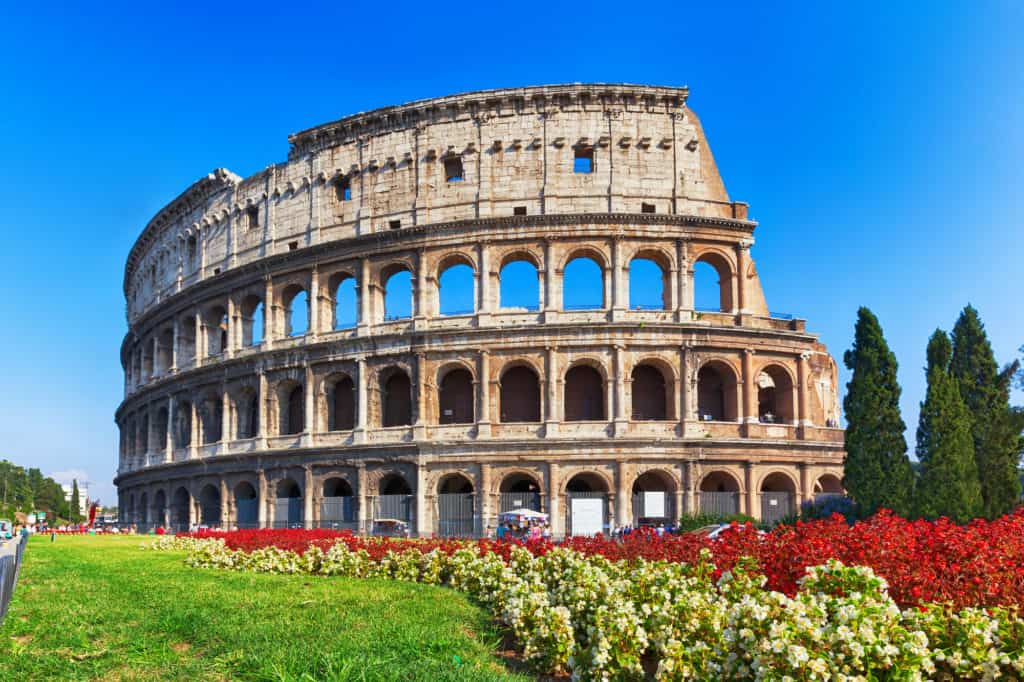
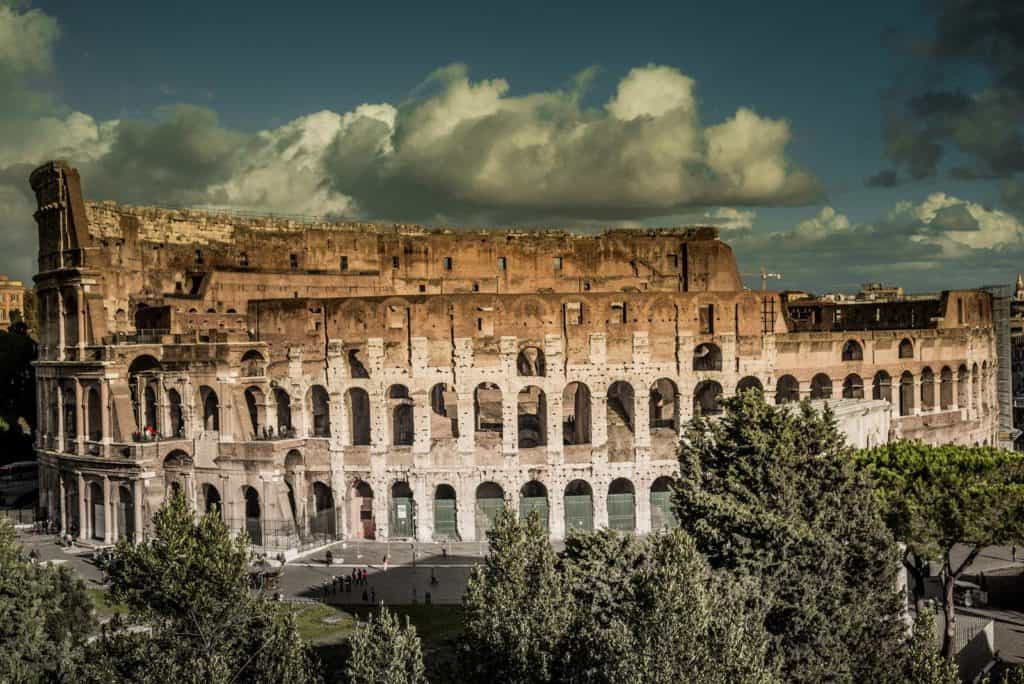
According to Roma Colosseum Tickets, more than seven million people visit the old buildings at Colosseum, Palatino, and Roman Forum annually.
Why should you visit? It’s an iconic spot you don’t need to miss while visiting Italy. Its history goes back to 72 C.E. Constructed under the Roman emperor Vespasian, it is also one of the world’s most outstanding examples of architecture. It remained one of Rome’s most popular attractions until the end of the Roman Empire.
Activities: Are you planning to visit Italy? Well, why are you not willing to take a photo with the most famous structures in the world? One of the best activities to do there is to let yourself loose between its heritage sites and enjoy plenty of touristic diversity. And if you grow weary, stop at one of the cafés hidden in the twisting alleyways. Take the opportunity to hit other nearby attractions like Palatino Hill and Roman Forum. Both places are a must for history buffs.
What you expect: Don’t expect anything but be awestruck by its immense size and grandeur. Italy’s Colosseum comprises 80 gates, and you most likely need a tour guide to help you discover the whole site’s mystery and know the history behind each corner.
POMPEII
Around 2 million and a half come from all over the world to explore POMPEII, based on a report generated by POMPEII Tours.
Why should you visit? When one thinks of Pompeii, Italy, the first thing that comes to mind is probably the city’s tragic past. After Mount Vesuvius erupted, ash buried the city, suffocating its residents. Nevertheless, Pompeii is a famous archaeological site in Italy that was once the most powerful city in the world. It was demolished by an eruption of Mount Vesuvius in 79 A.D., but you can still visit and explore its ruins today. It’s another UNESCO World Heritage site in one of the world’s most called nations, Roma.
Activities: Activities you can do at Pompeii include visiting the museum, exploring the city’s galleries and forums, and touring its well-preserved public baths. Visitors can explore the ancient ruins of the metropolis, which offer a fascinating glimpse into the past. Indeed, one of the prettiest historical sites in Italy had to be Pompeii stepping inside the origins of Roma. In addition, Pompeii is home to several points of interest; every corner will offer you something that deserves a stop. The whole atmosphere makes it an ideal destination for culture lovers. Finally, the city provides a variety of dining and shopping options. Include all attractions, from Thermal Baths, the Forum, and the theatre. Just like an open-air museum teeming with mysteries and history.
What you expect: Long queues and high temperatures in summer. You will need to book your ticket in advance. The entry ticket to the historical site of Pompeii is £13. Also, you should be prepared for crowds. The site is one of Italy’s most crowded tourist attractions, so that it can get quite busy during peak season. There are also a lot of steps to navigate, so comfortable shoes are a must.
Uffizi Gallery
Around 2 million visitors are making their way to one of Italy’s most desired arts galleries, Uffizi Gallery, according to Visit Florence.
Why should you visit? If you’re an art lover, a visit to the Uffizi Gallery and Vasari Corridor in Florence, Italy, is a must. The rich history and timeless atmosphere of the Uffizi Gallery’s displays will transport you to another time and place. It houses an incredible collection of Italian Renaissance paintings, sculptures, and artefacts. Today, it’s open to the public and offers stunning views of the city. It comprises many magnificent works by the masters, such as Raffaello, Cimabue, Leonardo da Vinci and other monuments. The gallery offers a new vision of how Italy is so great, and that’s why Italians called it “the beautiful country” or “Il bel paese.”
Activities: Uffizi Gallery is considered one of the bucket list travel destinations due to having more than forty-five halls. You will need at least 4 hours to explore all its treasures. Keep your mobile in your hand because you want to capture inspiring photos wherever you turn. We encourage you to start with the balcony, which overlooks The Duomo. It’s the most visited spot in the attraction because you will get a 360-view of the city. And don’t miss paying a visit to the Vasari Corridor, an adjacent long passageway that the ruling Medici family used to travel between their palazzo and the government offices.
What you expect: Uffizi Gallery doesn’t just host art; it’s art in itself. When you visit the Uffizi Gallery, you can expect to see some of the most incredible art in the world. The gallery houses paintings by some of the most famous artists in history, so being stuck with crowds is so normal, especially during weekends and high seasons. The standard ticket is less than £1; however, you will be limited with the halls you can access. So check other tickets if you want to hit all corridors and exhibits, and take a deep breath while watching the world-class paintings and scruples.
The Accademia
Do you know what tourists are willing to explore first? Well, yes, The Accademia, which hosts roughly 1.46 million visitors, regarding a published report by the Ministry of Culture.
Why should you visit? The Accademia is one of Italy’s most decent and finely decorated art museums and one of the most widely-visited galleries in Florence, right after the Uffizi Gallery. This epic landmark is beautifully designed and provides a fascinating insight into the history of Italian art. Moreover, The Accademia is located in one of Italy’s most beautiful cities, Florence. Florence is a delight to explore with its winding streets, picturesque piazzas and stunning medieval buildings. And when you get enough from all the sightseeing, there are plenty of great restaurants and cafes to relax in. Furthermore, it illustrates Italy’s political and cultural influences from Ancient times through the Renaissance and even into modernity. So yes, visiting The Accademia is definitely worth it!
Activities: Plan your trip and set at least 90 minutes aside to explore The Accademia’s offerings which will give you insights into the centre of Western history, which draw curious millions annually. You can navigate the gallery, read the illustrations, pay attention to details, and take tens of photos. It’s a mecca for Michelangelo’s David fans, and you should get in even if you don’t know him or you’re not so fascinated by European art. However, all these visitors who come every day definitely have a reason to check-in. So join the club and be ready for the grandeur. Start your tour by walking into the Hall of the Prisoners, then go directly to The Tribune, where you can come up with the finest works.
What you expect: As its one of the most attractive spots in Florence, but in Italy, you will feel overwhelmed wherever you go. The Accademia in Italy is unrivalled as a centre for artistic excellence. This world-renowned institution is known for housing some of the most iconic art pieces in history, including Michelangelo’s David. So whether you’re an art lover or looking to soak up some culture, visiting The Accademia is sure to be an unforgettable experience. You can make your tour even better by joining a professional guide who will provide you with an explanation in a language of your choice; English, Germany, Spanish, and French.
Castel Sant’Angelo National Museum
According to Roma Sights, the Castel Sant’Angelo National Museum is a must-see epic monument that attracts over a million travellers from all over the globe every year. (You should join these flocks; of course, they have a good reason. Italy champions Europe’s dominance through art.)
Why should you visit? Castel Sant Angelo National Museum is a must-see for anyone interested in Italian art and history. The museum houses an impressive collection of Renaissance and Baroque paintings, sculptures, tapestries, and various archaeological artefacts. Visitors can also take advantage of the beautiful gardens and stunning views of Rome from the castle walls. A unique building, an archaeological site, and a musume are felt in the Italian empire’s dominance until today. You can explore an assortment of antiques brimming with history and legends at each bend. Its halls host the finest imperial arts and architecture that are so unique and authentic in masterpieces. With a legacy stretching to 2000 years ago, the whole structure served as a fortress and a refuge to several pops and sometimes prisons.
Activities: Plan to visit the Mausoleum of Hadrian, which turned out to be a magnificent museum illustrating different golden eras in the history of the Roma Empire. Many things you can stroll through in Castel Sant’Angelo National Museum. But if you want to cover the highlights of this visit, it would be the Courtyard of the Angel, the Hall of Urns, and then head to the Mausoleum of Hadrian. As the birthplace of the Renaissance, we advise you to join a guided group to help watch the details of history, structures, and rich collections, including paintings, military weapons, and pottery. Undoubtedly, take a stroll around Papal Apartments. That the entire Vatican city has been designated as a UNESCO World Heritage site is hardly shocking.
What you expect: You can take advantage of the Vatican pass package that will give you exclusive access to all Vatican attractions and a tour by the Rome Hop-On Hop-off bus. These packages are available online; just take your time to find the finest for you. This place offers sweeping historical sites and monuments and a swathe of cultural landmarks. You’ll feel like you’ve entered a beautiful drama book explicating love, passion, and greatness oozing from every one of its pores. Of course, you will need to dress appropriately and show respect for this unquestionably impressive architecture. Pass through St. Angelo Bridge during the sunset. The view will blow your mind. And book your ticket ahead to save every moment to enjoy this incredible city’s beauty.
What is the Best Time to Visit Italy?
According to Italian travel statistics, the peak season for tourism in Italy is May through September. That is when the weather is at its best and more events and festivals occur. However, this also means that prices are higher and crowds are larger.
October through April is considered the off-season if you want to avoid the crowds and save money. The weather isn’t as ideal during this time, but you’ll be able to find better deals on hotels and flights.
And don’t worry about the weather. Even in February, you can go outside with your t-shirts in Roma and enjoy the sunlight. And that will encourage you to explore more around Italy, visit different regions, and enjoy great food and famous art.
Vacationing in Italy in July or August is ideal if you wish to partake in the many events and outdoor activities that characterise a true Italian summer. Just be prepared for higher prices and bigger crowds.
You should know that there are various events, such as wine and pasta festivals, to visit between November and March. Undoubtedly, you can enjoy beautiful holiday decorations. You will never get any better than this.
Important: you will be rewarded with food available only this time of the year.
But summer is not suitable for me; July and August are so hot that you can’t meander through its streets without getting burnt by the sun.
Where Can You Stay in Italy? (Top Hotels, Hostels & More)
One of the most frequented-asked questions is, “where can I stay in Italy?” However, the rest of the people are still asking, “Can I backpack in Italy?” If you have been to Italy before, you’re qualified to answer this question. So, share with us in the comments.
In general, the answer to where to stay in Italy is a tough decision. However, you already have so many incredible options.
After the world is open again and all quarantine requirements for travellers are lifted, we pick gorgeous, affordable accommodations ranging from hotels, farm stays, villas, and others to help you choose the best for you.
Read on for our tried-and-true suggestions on where to stay in Italy, based on years of experience collaborating with a wide range of local experts to craft itineraries to suit every traveller’s needs and preferences, from the most economical to the most luxurious.
Roma
Rome is one of the most beautiful and historic cities in the world. Rome is a city rich in heritage and culture, with attractions ranging from the Colosseum’s ruins to the Vatican. And, of course, let’s not forget all the delicious food you can eat while roaming around this wonderful city!
If you’re looking for a place to stay in Rome, there are plenty of great options. Whether you want to stay in a luxurious hotel or a more budget-friendly hostel, I’m sure you’ll be able to locate an ideal area.
No matter where you stay or what you do while you’re in Rome, you’re sure to have a fantastic experience. So go out and see what this city has to offer; you won’t be disappointed.
How many days to stay in Roma? Rome is a city that demands more than a weekend visit. However, if you’re planning to stay more, we invite you to explore fascinating mountains and islands and have a tour through Italy’s coast. However, the ideal duration lies between 4-5 days.
Best districts to stay in Roma: Roma Termini / Esquilino, Trastevere, Pantheon, Piazza di Spagna, and Quartiere San Lorenzo.
Best Hotels/ Hostels in Roma for all Budgets
Luxury:
- Singer Palace Hotel (£340 per night)
- J.K. Place Roma (£668 per night)
Midrange
- Hotel Campo de’ Fiori (£113 per night)
- Il Campo Marzio Hotel (£158 per night)
Budget
- YellowSquare Rome (£59 per night)
- Domus Terenzio (£108 per night)
Florence
This city quickly showed off when we created a list of Italy’s best places to stay. Over the other side of Italy’s coast, the waters of the Tyrrhenian Sea are crystal clear, especially on the beaches on either side of the island port of Florence.
If you’re considering a trip to Florence, Italy, you may be wondering if it’s worth your while. The answer is a resounding yes! Florence is a charming city with so much to see and do. You’ll see some stunning scenery and enjoy delicious food and wine.
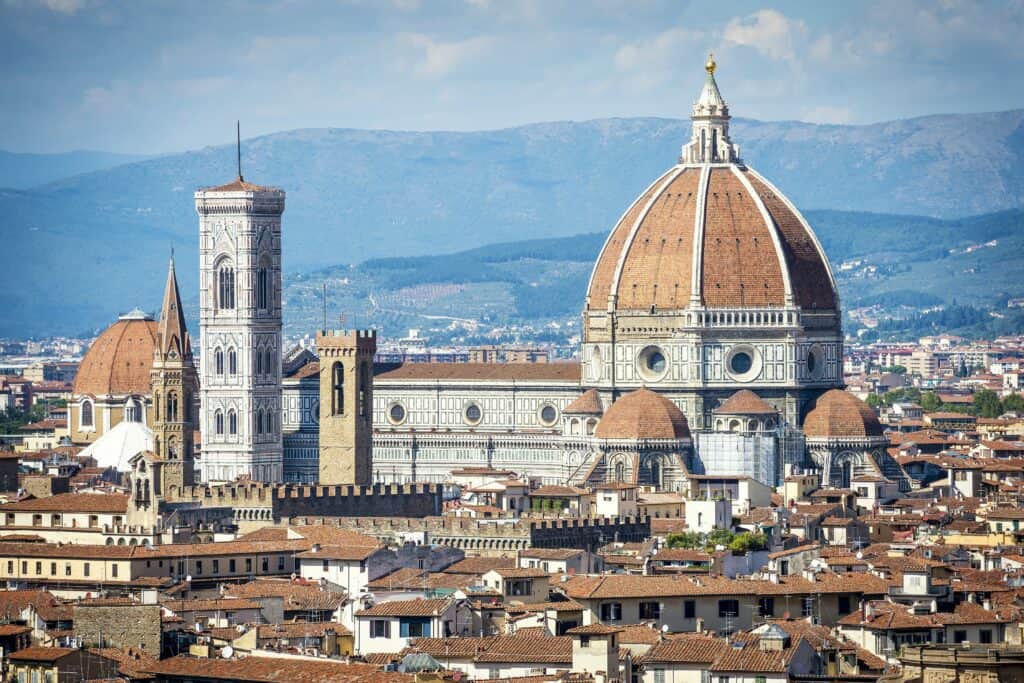
What to do once you get there? Well, Florence is known for its art and architecture. The Duomo, the Uffizi Gallery, and the Ponte Vecchi, a stone bridge built in the 13th century, connect the island of Florence to the mainland and should all be on your must-see lists.
The Duomo is a cathedral that was built in the 14th century. It is one of the most popular tourist attractions in Florence. In addition, some of the most well-known artworks in the world may be seen at the Uffizi Gallery.
That’s why over 15 million tourists come to this city annually, according to some Italian travel statistics by UNESCO.
How many days to stay in Florence? How many days you can stay in Florence will depend on your budget and schedule, but we recommend at least 3-4 days. Trust us; you won’t want to leave!
Best districts to stay in Florence: Oltrano, Piazzale Michelangelo, Ponte Vecchio, and Santa Croce.
Best Hotels/ Hostels in Florence for all Budgets
Luxury:
- Portrait Firenze (£627 per night)
- Hotel Lungarno (£415 per night)
Midrange
- Hotel Ponte Vecchio Suites & Spa (£172 per night)
- Continentale (£180 per night)
Budget
- Hotel Perseo (£94 per night)
- PLUS Florence (£46 per night)
Venice
Jutting out into the Mediterranean, this city was once the heart of many aspects of modern European civilization and culture. As a result, plenty of artefacts, buildings, and other reminders of Rome’s illustrious history remain today.
Venice is usually a popular party destination in summer; however, you can enjoy an idyllic hideaway if you need some time away to recharge your batteries.
And, of course, you will enjoy bustling nightlife venues, a globally renowned art scene, and world-class restaurants.
Once you step inside Venice, you will discover that this enhancing area’s founder was a distinguished artist.
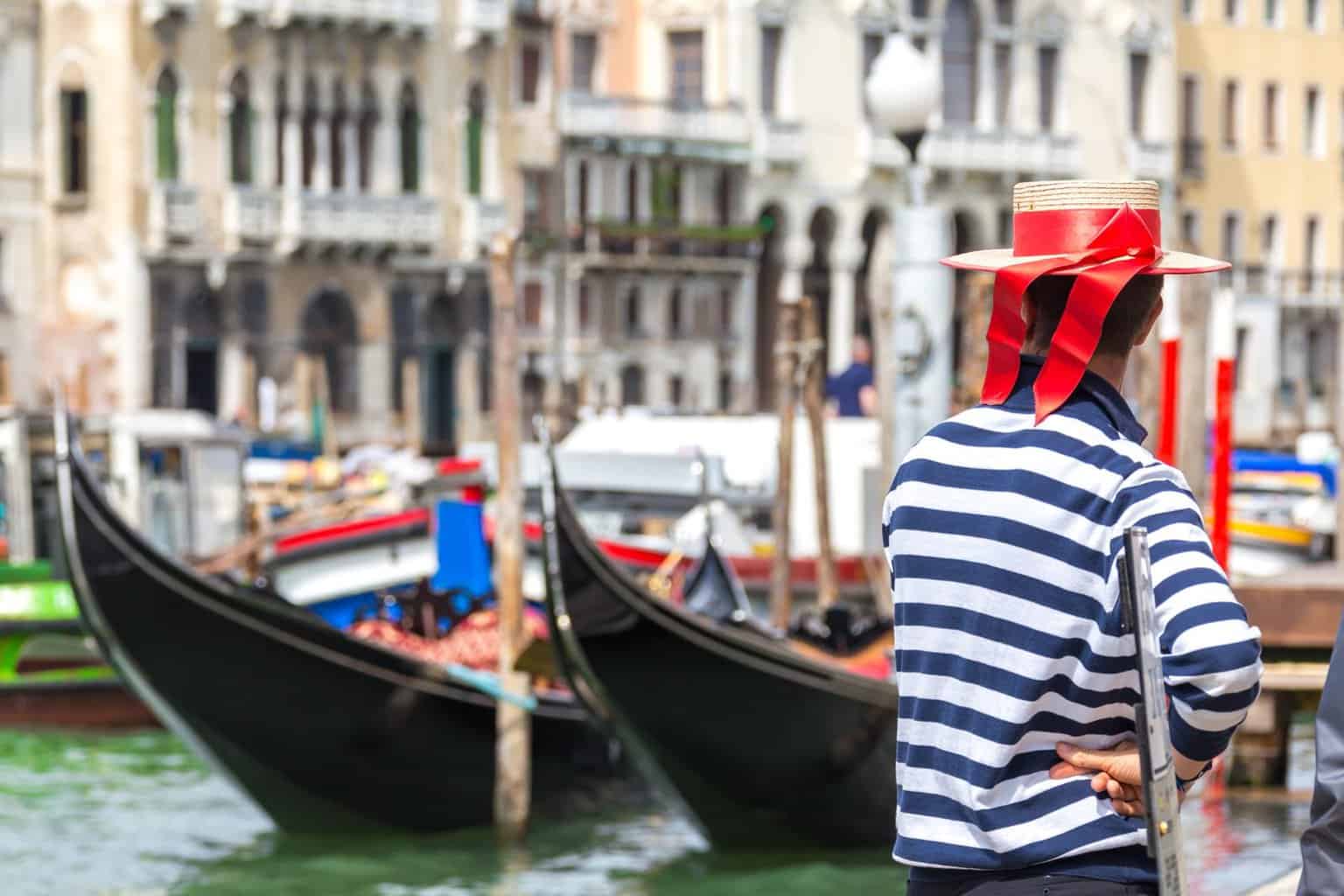
It seems complicated to catch up on all its beautiful spots, but we can draw your map around the city depending on this; The Grand Canal — is one of the most iconic places in Venice and a must-see. So take a ride on a gondola and enjoy the views of the canal and its beautiful architecture.
Then take a tour around St. Mark’s Basilica, another Venetian landmark you cannot miss. This stunning cathedral is full of history and art and its breathtaking mosaics.
And end your trip with something like Doge’s Palace, the place to go if you want to learn more about Venice’s fascinating past.
How many days to stay in Venice? You should spend no set amount of time in Venice – it all depends on what you want to see and do. Two or three days is probably enough if you’re only interested in seeing the major sights. But if you want to experience Venice, we recommend staying for at least four or five days.
Best districts to stay in Venice: San Marco, Dorsoduro, San Polo, and Santa Croce
Best Hotels/ Hostels in Venice for all Budgets
Luxury:
- The St. Regis Venice (£794 per night)
- Palazzo Veneziano – Venice Collection (£285 per night)
Midrange
- Hotel Le Isole (£190 per night)
- Hotel Agli Alboretti (£170 per night)
Budget
- Ostello Santa Fosca (£89 per night)
- Anda Venice Hostel (£54 per night)
Puglia
From the UK, Spain, and Puglia, If you’re willing to explore all of Europe, you just don’t want to miss relaxing in Puglia, which visitors often overlook.
Actually, this city needs no introduction. Just take your time now to surf the Internet and watch images from Puglia.
Puglia is a region located in the southeastern part of Italy. It is known for its beautiful coastline, traditional architecture, and delicious food. Puglia is a great place to visit if you want a relaxed and enjoyable vacation.
The experience of having a trip around Puglia is one that you will never forget; many things to see and do in this awe-inspiring region, and you are sure to enjoy every minute of your stay. That’s why it’s called the heel to Italy. Just take a boat and explore the sun-backed beaches from another point. Or, for a very different experience, some local input is w.aiting for you beyond picturesque villages.
How many days to stay in Puglia? At least 4 days if you want to spend the idyllic beach vacation. And it’s not about crystal clear water or breathing in the sunlight. Indeed, Italy is a country decorated with atmospheric castles and postcard-perfect spots wherever you turn, and Puglia is no exception.
Best places to stay in Puglia: Gallipoli, Polignano, Porto Cesareo, and Fasano
Best Hotels/ Hostels in Puglia for all Budgets
Luxury:
- Dimora Talenti (£245 per night)
- PALAZZO DE NOHA Boutique Hotel (£177 per night)
Midrange
- Antica Masseria del Fano (£167 per night)
- Il Giardino Della Regina (£90 per night)
Budget
- Central Suite Lecce (£67 per night)
- URBAN OASIS HOSTEL (£39 per night)
Sardinia
After visiting the heel of Italy, now it’s time to taste something different, Sardinia.
The island of Sardinia is a popular vacation spot off Italy’s mainland. Plenty of activities are available along the island, such as swimming, sunbathing, hiking, and exploring the many villages and towns. Into food? Fret not: the food in Sardinia is also delicious, with many seafood and pasta dishes to try. Sardinia is the place to go if you’re searching for a location to unwind and indulge in fine wine.
It always offers a secluded atmosphere for all kinds of travellers. There is definitely no shortage of amusing things to experience here.
How many days to stay in Sardinia? 5 days can be enough if you want a particular beach time with your family or lover. Otherwise, if you’re going to explore the southern edge of Italy, then one week will enable you to explore everything you’re dreaming about.
Best places to stay in Sardinia: Cagliari, Villasimius, Costa Rei, and Pula.
Best Hotels/ Hostels in Sardinia for all Budgets
Luxury:
- Hotel Pitrizza, a Luxury Collection Hotel, Costa Smeralda (£426 per night)
- Hotel Stella Maris (£270 per night)
Midrange
- Cala Caterina (£155 per night)
- T Hotel Cagliari (£106 per night)
Budget
- Arega Bed&Breakfast Villasimius (£57 per night)
- B&B 1987 Pula (£67 per night)
Tips to Visit Italy on a Budget?
After knowing so much about Italian travel statistics, you’re still missing something; how to explore Italy on a budget. In general, Italy is not a friendly-budget place. However, you can do it with simple tips while getting the best vacation you have always dreamed about. Here we go!
- Do your research before you go – know what kind of things you want to do and see, and look up the average cost of those activities. That will help you better budget your money once you’re there.
- Travel outside of peak tourist season – not only will flights and hotels be cheaper, but attractions will have shorter lines and be less crowded overall. Everything, we mean everything, will be much cheaper; flights, accommodations, even renting cars.
- Get a Eurail pass – if you plan on travelling around the country, this pass will save you a ton of money on train fares.
- Stay in hostels or Airbnbs instead of hotels – again, with these cost-cutting tactics; you can free up some serious cash for other uses.
- Don’t stay right in the city centre or any famous districts like Piazza del Popolo, Spanish Steps, and Colosseum: instead, choose other areas like Garbatella and Quartiere San Lorenzo. You will save money and still be well-connected by the metro within 15 minutes.
- Eat like a local – instead of opting for tourist traps when it comes to food, try to spot places where the locals eat.
- Don’t even think of eating at a tourist spot such as Piazza Della Rotonda, Piazza Navona, and Colosseum: because these places will charge you so much, and the food quality is super low. You will most likely pay tons of money for a microwaved plate of pasta.
- Take advantage of a local fresh produce market: you don’t have to eat in restaurants all the time, especially if you have planned to stay here for more than a week. Some Italian travel statistics showed that many visitors started looking for more affordable options like bringing fresh food from local markets and supermarkets and cooking them at home.
- Don’t hesitate to try street food in Italy: You will find it in Florence, Venice, and Roma. They are comfortable and super cheaper than restaurants.
- Avoid Using Uber: This service is going to be much more expensive than a regular taxi. Instead, use the Free Now app, which works pretty much exactly like Uber but with reasonable rates with an option to pay with your credit card and tip the driver if you like.
- Never order a taxi from the streets: Again, be stuck with Free New. Unfortunately, many drivers might take advantage of you since they know you’re a foreigner, and they will charge you any price they like, and you can do nothing about it.
- Don’t hesitate to use public transportation: Many buses run around the city, especially in Roma.
- Use Rome Metro: It’s safe, fast, convenient and will save you a bunch of pounds. Naples metro is always perfect for moving around the city, not just for the reasons above; it has one of the most beautiful stations in the entire world with astonishing design and remarkable paintings.
Important: In Italy, no one expects you to leave a tip. And even if you’ve decided to leave a tip, it can be any amount. There is no specific percentage; it’s just a way to show your appreciation as you like the service or you want to thank the waiter. Most of the time, tipping is included in the bill. Whatever puts you the most at ease is the best option.
- Search for a small street: as we said, don’t stay at the first restaurant you stumble upon. Instead, find a less-known restaurant and enjoy a homemade meal with locals; it will cost you so little compared to the latter option.
- Shopping in Italy is a way to travel on a budget: You will enjoy a tax-free service if you spend more than €155; you can request a tax refund between 11%-15% of your purchase. Just remember to bring your passport and give it to the store; they will fill in the information they want. Then, before leaving Italy, go to the airport 30 minutes earlier and go to the tax-free office, and they will proceed with a refund request. And after just a few days, you will receive the money in your bank account.
- You don’t have to pay for water in Italy, especially in Roma: you can refill your bottle from any fountain or tap across the city. Indeed, Italy has one of the freshest water systems in the world. Even if you don’t have a bottle, just drink straight from any street taps and save mineral water money.
- Order your coffee or snack at the counter: If you go to any coffee and get to a table and then order your espresso, you will charge extra money for the service. It applies to having your breakfast too. So, don’t ask again when you see locals have their meal at the counter. It’s always about money.
- Many cities in Italy are just open-air museums: meaning almost all places you have written down on the top of your bucket lists are free to visit. The streets are state-of-the-art, teeming with ancient history. If cash gets tight, visit just two or three paid attractions and make use of the many free options available, such as public parks, churches, and other historic sites.
- Try free online musume guides: many travellers want to know more about the city they visit by hiring a local professional guide. And it’s easy to see why; Italy is one of the most iconic destinations in Europe that are popular with world-class art and historical sites. But you can just use a free audio guide while visiting beautiful surroundings if you’re exploring the city on a budget.
- Don’t forget to check out cheaper activities offered by local vendors: when searching for Itlian travel statistics or friendly budget activities, you will be overwhelmed with plenty of things to do and savour in the country. Always keep searching till you find what fits your expenses.
F.Q. about Italian Travel Statistics
- Is Italy expensive?
In general, Italy is not cheap. So, the short answer to “is Italy expensive?” will be yes. The cost of accommodations and transportation can add up if you’re not careful. Another issue related to travelling to Italy is that you will not get what you’re paying for. That means the overall quality of products (except food and drink) is not as superior as in northern Europe; however, you will be charged the exact cost. Although, you will fall in love with this country wherever you go. It’s a combo of emotions, experiences, and spirits you will never find anywhere.
To sum up: We recommend writing down all your expenses and planning what you will spend on transportation, accommodation, attractions, food, and what you will do every single day. So, if you think your trip around Italy will be out of your budget, please reread our tips in “Tips to Visit Italy on a Budget?” and feel free to leave your question below. And the best part about Italy is that you don’t need to have a luxury trip to experience its splendour. Any budget is fine to enjoy its fabulous food and varied history.
- How much does it cost to travel to Italy?
Whether you’re heading to Italy to Plan to spend a honeymoon vacation, backpacking, or on a family trip, don’t expect to pay at least €100 daily to make the most of the country. This budget includes accommodation, two meals, simple activities like visiting two attractions, and transportation except for taxis or Uber.
However, other expenses are excluded, like flights around Italy, travel to distant regions, or shopping. That’s why some Italian travel statistics found that $544 is the average spending of visitors.
Also, if you’re just looking for ways to save and scrimp, you would miss a lot in Italy. And it doesn’t mean you will splash out everywhere. You just keep your budget under control and still have the trip you always imagined.
- How do I decide where to go to Italy?
When planning a trip to Italy, you need to answer these questions: how many days should you spend in Italy? What are the must-see sights? And, of course, where should you go?
Choosing where to travel in Italy is complicated, with no simple answer. With so much history and culture crowed this extraordinary country, it can be hard to narrow down your options. However, you can begin to prioritise your choices by considering how many days you have and what you hope to see and explore while in Italy.
If you only have a few days in Italy, you will want to focus on visiting the most popular tourist destinations, such as Rome, Florence and Venice. However, if you have a bit more time, you can venture off the beaten path and explore some less well-known towns and regions.
So, less than 5 days is a reasonable period to stay in the same city and hit all its gems. However, if you’d wait for more than a week, consider visiting two regions.
Many Italian travel statistics showed that most tourists prefer to start their journey with Roma and visit Florence and Venice. Nevertheless, it’s a good itinerary if you’re still wondering, “How do I decide where to go to Italy?”
- What is the nearest country to Italy?
The nearest country to Italy is France. However, you can also visit Switzerland, Austria, and Slovenia after exploring Italy, as the country will get you exclusive access to many nearby countries. So, lace up your walking shoes and be ready for excitement.
- What are the best Italy beach holidays?
You’ll enjoy a lot this year while venturing around to spot the best Itlay beach holiday. Indeed, a few places in the world are as romantic and beautiful as Italy. And this country has a lot to offer if you’re trying to bask in euphoria. From the stunning coastline of the Amalfi Coast to the secluded beaches of Sardinia, you have chosen the right place since you booked your flight to Italy to enjoy a sun-soaked experience.
If you’re looking for a beach holiday crammed with history and culture, head to Sicily. This island is home to some of the most stunning Roman ruins in the world and plenty of beautiful beaches. Or, if you want to enjoy some of the best food and wine Italy offers, besides pristine beaches, then Tuscany is the perfect place for you. With its rolling hills and picturesque villages, this region is truly breathtaking.
In short, Italy is a beautiful country with a lot to offer tourists. The travel statistics show that more and more people are interested in visiting Italy, and rightly so! With its stunning scenery, delicious food and rich history, there is something for everyone in Italy. However, it is critical to remember that Italy is a popular tourist destination, so it is important to plan your trip carefully and budget accordingly. Following these tips ensures you have a wonderful trip to Italy without breaking the bank.

The Enchanting Charm of Scotland Wedding Castles!
Scotland
25/04/2024

London in June: An Ultimate Guide to 13 Unmissable Events and Festivals
United Kingdom
25/04/2024

The Perfect Day Trip from London: Where Will Your Adventure Take You?
United Kingdom
25/04/2024

Scotland in May: Sunshine, Mild Temps, and Outdoor Adventures
Scotland
25/04/2024
Discover the Top 15 Best Places to Visit in Northern Ireland
Travel Guides
24/04/2024