


Delve into Some Interesting Facts about the Toasts of Ireland
Updated On: April 07, 2024 by  Salma Ihab
Have you ever wondered why people clink glasses before drinking? Well, this is what we all refer to as toasting or cheering. You probably know that, but the reason behind it is a bit mysterious. Interestingly, a legend goes about that matter, stating that toasting makes us feel united. Weird enough? You may know that unconsciously because every time you toast, you show agreement to a specific something. People raise their glasses and toast to show they are all on the same page. It is a gesture of oneness. What is even more interesting is the fact that toasts can differ according to culture. Right here, we will introduce all about the toasts of Ireland and the cheers. Why Ireland in particular? Well, this culture has a lot of secrets and exciting facts to unfold.
Why Do People Toast For Celebration?
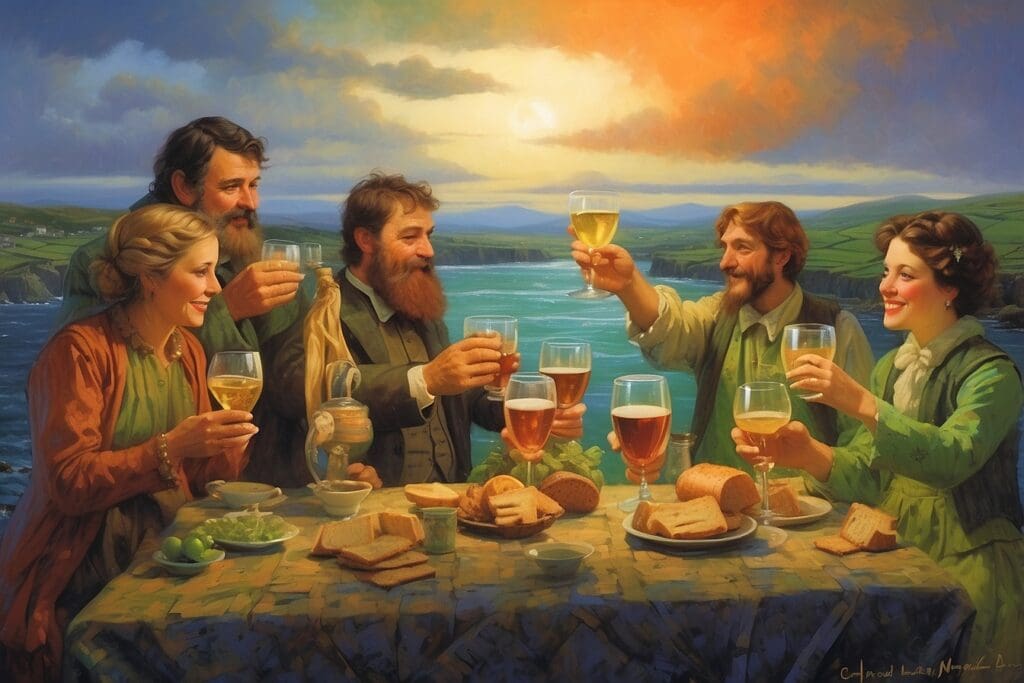
More than a few sources claim that toasting is a ritual that dates back to some old times. People used to express their honour, glory, or goodwill by toasting a drink. Some cultures also use very specific beverages. The toast did not always have to be something people had to honour; it could be a person. This person is usually someone they congratulate or agree with something he stated. Again, toasting has roots in Western culture, and it has survived for generations after generations.
To answer the main question, toasting was mainly for verbally expressing honour and goodwill. However, some cultures use it to emphasize beliefs and notions. There was once that nice theory that answered this question through psychological means. The theory states that to enjoy an experience, you need to use your entire senses. When you have a drink, you can naturally see, smell, taste, and even feel it. However, it has no sound to hear. For that reason, toasting was there to complete the missing sense, which is listening. You clink the glasses against one another, and there is that pleasant sound. Although it was just a random and unproven theory, it was lovely to approach matters from that angle.
The Interesting History Of The Toasts of Ireland
The toasts of Ireland are not that different from other toasts around the world. They usually have the same form, but the term people use differs according to every culture. Anyway, every culture shares some similarities with others and has its own differences, including Ireland’s toasts. According to some legendary stories, people in the past used to toast as a sign of concern about poisoning. Sounds very strange, doesn’t it? To make matters even stranger, they believed that clanking the glasses together would make them identify the presence of poison. They believed so because toasting causes drinks to spill into one another, causing a splash that can reveal the truth. Conversely, there was no clear evidence behind those facts.
According to The International Handbook on Alcohol and Culture, the practice was a sign of sacrifice the ancient people used. The spiritual tradition involved a sacred liquid people offered to their gods to grant their wishes. It seems that many stories have revolved around the origin of toasting. Another story states that this practice goes back to the 17th century. People in that era used to add flavours to their drinks; spiced toast was commonly used. The word toast refers to the flavour they added to their drinks.
The English Version of the Toasting Story
Seemingly, toasting had a lot of stories that resulted in its existence. There is also the English version of that story. English people say toast when they clank their glasses against one another. It’s pretty much like every other culture. However, they have a new dimension and a different point of view. They had a widespread practice regarding wine during the 6th Century B.C. In the past, people used to put a piece of burnt toast on top of the wine. That piece of bread, they believed, used to absorb some of the wine’s acidity, making the drink more delicious. That was why they performed this practice; it made their wine taste better. Especially since wine in the past was not as good as it is today. Luckily, people nowadays can get ready-made tasty wines.
Besides, the practice included passing around the bowl from which they took the wine. So that people can share it and enjoy it. What did they do to that piece of toast? Well, the last person to take his/her share was also granted that piece of toast to eat.
Slainte: The Toast Of Ireland
Everybody knows how the English-speaking world toasts. They say CHEERS! However, some countries seem to have their own slang. Ireland is one of those cultures; it has its very own toasts. While toasting is only a notion, it makes people feel happy when they shout the same thing simultaneously. There are plenty of Irish toasts, but one of the most popular is Slainte. The pronunciation of this word is different from how you write. Irish people pronounce it as SLAHN-CHE. The word goes back to the Old Irish language. The literal meaning of it is Health. Surprisingly, Slainte is not only the toast of Ireland. It is also the name of a drink in some countries, such as Ireland and Scotland.
Etymology of the Word
The word Salinte is the primary form of Irish Gaelic. According to the Old Irish language, it is an abstract noun derived from another Old Irish adjective. The old adjective was Slan, and it meant “Healthy.” Other sources claim that the word descends from several words in different cultures. One of those word is a Latin one, Salus. It is equivalent to the meaning of the word Salute in Italian, Spanish, and Romanian. All of those cultures sometimes use the word salute as a toast.
There are also other variations to that special toast of Ireland, Slainte. Some people say Slainte mHaith which means “Good Health” in Irish Gaelic. On the other hand, Irish Gaelic people respond to the toast with Slainte Agad-sa, meaning “To your health as well.”
Queen Elizabeth II and Her Famous Toast Of Ireland
In 2011, Queen Elizabeth II visited the Republic of Ireland. The Irish president, Mary McAleese, invited and welcomed her. It was a significant visit in the political history of Ireland. This visit strengthened the bond between the two countries, Ireland and England. It was also the anniversary of the Dublin and Monaghan Bombings. McAleese believed that the Queen’s visit was the right moment, describing the visit as “an extraordinary moment in Irish history.” Besides, over half the population of Ireland supported the visit.
The speech of the queen was a very significant one. She also fascinated the Irish president with her remarkable speech. After finishing her speech, she gave one of the famous toasts of Ireland, making people even support her more. The Queen’s speech was one of Ireland’s very few significant toasts. She received more support when she began her speech with a few Gaelic words. Queen Elizabeth showed people she was against the British efforts to eliminate Ireland’s ancient language. She made a positive step in discussing sensitive issues between the two countries and regained people’s respect.
Different Types Of The Toasts Of Ireland According To Each Occasion
Ireland is not only different in how people toast, but it also has different toasting types. Toasting in Ireland is variable depending on the occasion which people are celebrating. Here are some of the most popular toasts around Ireland:
Christmas and New Year’s Toasts of Ireland
Some Irish toasts belong solely to Christmas and New Year’s; they are very traditional.
“Nollaig shona dhuit!” means “Happy Christmas to you!”
And for the New Year:
“Athbhliain faoi mhaise duit!” means “A prosperous New Year to you!”
OR
“Go mbeire muid beo ar an am seo arís.” which means “May we be alive at this time next year.”
Toasts of Irish Weddings
Ireland has its very own traditions when it comes to weddings. They have unique customs and ways of celebrating on such big days. Toasting is an integral part of any wedding. They also toast on that particular day on their way. If you are going to attend the wedding of an Irish friend, here is your guide to how to toast:
“Sliocht sleachta ar shliocht bhur sleachta.” means “May there be a generation of children on the children of your children.”
On the other hand, there is also a longer toast that most people love to recite during weddings.
“Sláinte go saol agat,
Bean ar do mhian agat.
Leanbh gach blian agat,
is solas na bhflaitheas tareis antsail seo agat.”
THE ENGLISH TRANSLATION
“Health for life to you,
A wife of your choice to you,
Land without rent to you,
A child every year to you,
And the light of heaven after this world for you.”
Saint Patrick’s Day Drinking Toast
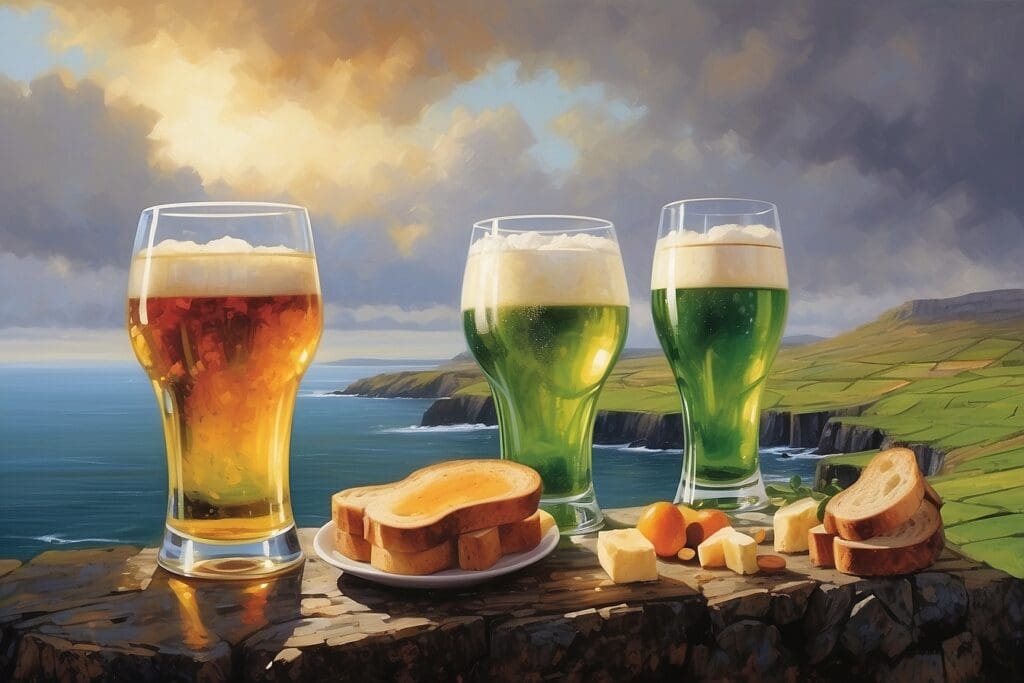
Saint Patrick’s Day is one of the most significant celebrations in Ireland. It is equivalent to the importance of Christmas all over the world. Now, we will introduce you to the famous toasts of Ireland that people use on that particular day. However, we will get into more details about that day later on.
“Beannachtaí na Féile Pádraig oraibh!” means “May the blessing of St. Patrick’s Day be on you.”
THE CELEBRATION OF SAINT PATRICK’S DAY
Ireland is a country of celebrations. Irish people love to celebrate their special occasions every once in a while. One of their special celebration days is Saint Patrick’s Day. They also have a special toast, among the toasts of Ireland, specifically for this day. People call this celebration either Saint Patrick’s Day or the Feast of Saint Patrick. Not only is it a cultural celebration, but also a religious one. It takes place on 17 March. This date saves the death of Saint Patrick, the prime Christian supporter of Ireland.
In the early 17th century, Christians used to celebrate that day. It was an official Christian feast day. The Church of Ireland, the Catholic Church, and the Anglican Communion verify that day as one to celebrate. Also, the Lutheran Church and the Orthodox Church celebrate it. It is a day of celebration for every single Christian.
Significance of the Day
The day honours Saint Patrick and the arrival of Christianity in Ireland. However, Ireland is not the only country that celebrates it. Other countries, like Britain, Scotland, and Russia, observed that day. Some parts of Asia celebrate that day like Korea, Japan, and Malaysia. On the other hand, the day is not only to commemorate the greatness of Saint Patrick. It also celebrates the whole culture of Ireland and its remarkable heritage.
Celebrations of Saint Patrick’s Day
Celebrations always include feasts of food and drinks. St. Patrick’s Day is one of Ireland’s national days, so people wait for it passionately. The celebration of this day usually includes the colour green. You’ll find yourself seeing green everywhere. People tend to wear green customs and shamrocks on that particular day. You will also see festivals and public parades everywhere. On the other hand, religious rituals sometimes interfere with the ways of festivity. Christians who belong to liturgical denominations attend church services on that day.
Because drinking is part of any celebration, people consume alcohol and whiskey on that day. Historically, there were restrictions on consuming alcohol in Ireland. However, the government lifted those restrictions. Thus, people now enjoy their drinks on this day and have their toasts of Ireland to celebrate it.
Who was Saint Patrick?
He was a Christian missionary and bishop in Ireland. Saint Patrick existed in the 5th century and was Romano-British. He was born in the 4th century to a very wealthy family. His grandfather was a priest in a Christian church, while his father was a deacon. He wrote a declaration when he went to Ireland. When he was sixteen years old, some Irish raiders kidnapped him and took him as a slave. He worked as a shepherd during the first six years of his abduction. It was when he believed in the existence of God and indeed found Him. The Declaration that he wrote stated that God told Patrick to flee to the coast. Because he believed in God, he went there to find a ship waiting to take him back home. He returned to his home and became a priest.
Going Back to Ireland
During that time, Ireland was full of pagans. Patrick decided to convert them to Christianity. Thus, he was the first person to bring Christianity to Ireland. A lot of Irish legends also mentioned tales about him. He lived there for many years and succeeded in converting thousands of people to Christianity. After long years, Patrick died on 17 March. Downpatrick was the place at which his body was buried. Irish people still remembered him even after his death, and he became Ireland’s prime saint. The positive impact that St. Patrick had on Ireland gave people something to celebrate until now.
Whiskey And The Toasts Of Ireland
People toast with drinks. Those drinks always contain alcohol, including whiskey and beer. As we previously mentioned, Ireland had restrictions on alcohol consumption at some point. However, the limits are over now, especially on St. Patrick’s Day. There is one thing that most of the people never pay attention to. Whether it is an Irish toast or toasting of any other culture, why do people use whiskey for toasting? As surprising as this may sound, whiskey actually has some benefits. However, overconsumption can work against us instead of in our favour. A lot of studies have shown that drinking whiskey can have a great impact on your health. So, let’s see what that glass of joy has in store for us.
The Benefits of Whiskey
Consume whiskey in moderation, and you’ll reap its benefits while perfectly making one of the toasts of Ireland. We will list here all the benefits you gain from weight loss. Remember to toast, one of the toasts of Ireland for sure, with every point.
Weight Loss and Diabetes Control
Yes, whiskey can help you lose weight. Conversely, it is not the best way to retreat when you need to shed some extra pounds. Instead, follow a healthy diet and exercise regularly. Whiskey helps curb your appetite. Surprisingly, whiskey controls the amount of glucose that your liver releases. Well, these points are good ones, so toast to them.
Reduce the Risk of Cancer
Whiskey has some antioxidant properties. Thus, it succeeds in combating free radicals and preventing them from forming altogether. Whiskey can inhibit the formation of cancerous cells. SLAINTE TO THE WHISKEY!
Strengthen Your Memory
Whiskey can get you drunk, but it can enhance your memory and boost it as well. It does so by slowing down the formation of dementia through the antioxidants they contain. It gives your life a fantastic timeline, preventing plaque from building up. This plaque causes Alzheimer’s, and you’ll enjoy a long life with great memories. It can boost your immune system too.
The Relation Between The Toasts Of Ireland And Irish Legends
The Irish mythology is an ocean of fantastic tales and legends. However, the legends do not directly mention Ireland’s toasts, but they give us an insight into their existence. One of the most famous tales of Ireland involved the leprechauns. They appeared in several movies and tales. Leprechauns are fairies, male fairies actually, who were sly and always drunk. The most famous tales about them involved them trying to get money from wealthy people. Leprechauns had related creatures called the claurichauns. They looked a lot like them. However, the leprechauns had tiny bodies, while the others had taller ones.
Leprechauns and Being Drunk
Well, you may be wondering what the leprechauns’ story has to do with the toasts of Ireland and drinking. The only relation between them was the fact that leprechauns were always drunk. According to some sources, claurichauns were the drunken versions of leprechauns. They were sheep riders and beer and whiskey addicts. Probably, they did the toasts of Ireland every time they drank. Wondering what they ever did those toasts of Ireland to? Well, they probably toasted to enormous fortunes and better tricks, for that what they were always good at.
How those fairy creatures treat you depends solely on how you treat them. Leprechauns show despise or respect towards you by treating your beer. They are friendly if you treat them with respect. These creatures would even protect your wine, beer, and whiskey cellar. On the other hand, they can destroy your cellar if you mistreat them.
So, enjoy the start of the New Year, attend a lovely party and dance your heart away. Drink up your favourite glass of wine and make one of the best toasts of Ireland.

Discover the Top 15 Best Places to Visit in Northern Ireland
Travel Guides
24/04/2024

How to Find the Best Scotland Travel Guide: An Ultimate Guide
Scotland
24/04/2024

The Ultimate Guide to the Best Shopping Areas in London
England
24/04/2024

The Absolute Guide to the Best Restaurants in Bath, England: Unveiling the Culinary Gems of Bath!
Food and Cuisine
24/04/2024

Planning a Trip to Scotland: Your All-Inclusive Guide to Exploring the Great Highlands
Travel Guides
23/04/2024