
Article Summary
What this article covers: The impact of the Celtic Tiger on Irish cultural identity, from the collapse of Catholic authority to a newly multicultural, self-assured Ireland shaped by the 1995–2007 economic boom.
Who this is for: Irish heritage travellers, culture enthusiasts and diaspora readers trying to understand how the boom years changed Ireland.
Key takeaway: The Celtic Tiger changed what it meant to be Irish faster than almost any period since the Famine, trading Catholic authority and emigration for secular confidence, inward migration and a housing crisis that still shapes the country.
Expert insight: “I grew up hearing my grandparents talk about Ireland as a place you left. By the time I was filming my first travel videos, Ireland had become somewhere people were moving to. That reversal, more than any GDP figure, is what the Celtic Tiger actually meant.” — Ciaran Connolly, Founder of ConnollyCove.
Quick Facts
- The term “Celtic Tiger” was coined in 1994 by economist Kevin Gardiner, comparing Ireland’s growth to the East Asian “tiger” economies.
- TG4, Ireland’s Irish-language broadcaster, launched in 1996, during the boom’s early years.
- Ireland required an EU–IMF bailout in 2010 after the 2008 crash exposed the property bubble built up during the boom.
The impact of the Celtic Tiger on Irish cultural identity runs far deeper than the economic statistics suggest. Between 1995 and 2007, Ireland moved from a country young people were leaving to one that suddenly had jobs, foreign investment and international attention, and that reversal changed how Irish people saw themselves faster than almost any period in the nation’s history.
This article looks past the growth figures to the cultural shift underneath: how the Catholic Church’s grip on daily life loosened, how a country built on emigration became a place people moved to, and how Irish music, language and self-image were remade in the process. ConnollyCove has spent years documenting Irish heritage, and this era is where much of modern Ireland actually begins.
Table of Contents
Ireland Before the Boom: A Poorer, More Religious Country
Before the Celtic Tiger, Ireland in the 1980s was one of the poorer countries in Western Europe, and its cultural life was shaped largely by the Catholic Church. Unemployment regularly ran above 15%, and large numbers of young Irish people emigrated rather than face a stagnant economy at home. Divorce remained illegal until a 1995 referendum, and contraception was tightly restricted well into the 1980s. The parish priest, not the market, set the moral tone in most towns. Foreign investment, low corporate tax rates and EU membership began changing this from the mid-1990s, but the cultural change that followed ran well ahead of anything economic planners expected.
The Fall of the Pulpit: How Prosperity Loosened the Church’s Grip
Economic independence did more to weaken the Catholic Church’s authority in Ireland than any single event. As wages rose and more women entered paid work, fewer people depended on the Church for education, welfare or moral approval, and the clerical abuse revelations that emerged through the Ferns, Ryan and Murphy reports arrived just as people had the independence to walk away.
Mass attendance, once close to universal, fell sharply through the 2000s. The 1995 divorce referendum passed by less than 1%, but it marked a genuine turning point: personal life was no longer governed primarily by canon law. That confidence laid the ground for later social referendums, including marriage equality in 2015 and the repeal of the Eighth Amendment in 2018.
From Emigrant Island to Multicultural Nation
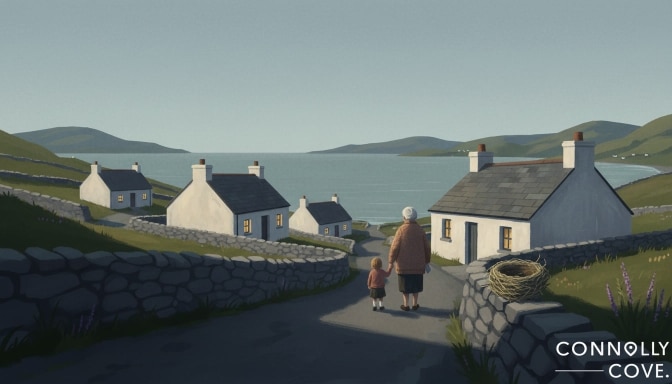
The Celtic Tiger reversed a pattern of emigration that had defined Irish life for more than a century, and that reversal may be the era’s single biggest cultural shift. For the first time in generations, Ireland recorded net inward migration: returning members of the Irish diaspora came home for work, joined by large numbers of new arrivals, particularly from Poland and Lithuania after EU enlargement in 2004. Ireland’s 2004 citizenship referendum, which removed the automatic right to citizenship for children born in Ireland to non-national parents, showed this shift was not without tension.
Small towns that had sent generations abroad were now home to Polish shops, new places of worship and international workers, and the word “Irish” had to stretch to cover people whose parents had never set foot on the island. That redefinition, uneven in places, began during the boom years, not after them.
Ireland Before, During and After the Celtic Tiger
The scale of the shift is easier to see side by side than in isolated facts.
| Marker | Pre-Tiger Ireland (1980s) | Celtic Tiger Era (1995–2007) | Ireland Today |
|---|---|---|---|
| Church attendance | Near-universal weekly Mass | Falling steadily through the 2000s | A minority practice in most cities |
| Migration | Heavy net emigration | Net inward migration, EU accession arrivals | Mixed; renewed emigration since 2008, now easing |
| Housing | Low-cost, low-supply | Rapid speculative building | High cost, ongoing shortage |
| Cultural export | Modest, largely diaspora-led | Riverdance, TG4, global music acts | Streaming-era Irish film, music and literature |
| National mood | Insular, emigrant nation | Confident, sometimes brash | More self-critical, still adjusting |
Riverdance, TG4 and a New Cultural Confidence
The Celtic Tiger years turned Irish culture from something played down into something exported on purpose. Riverdance began as a seven-minute interval act at the 1994 Eurovision Song Contest and grew into a global stage show, presenting Irish dance to an international audience rather than a parish hall. TG4, Ireland’s Irish-language broadcaster, launched in 1996, at the height of the boom, and gave Gaeilge (pronounced “GAYL-guh”) a modern, urban platform it had not had before; the language stopped being coded as rural and struggling and became, in cities like Dublin and Galway, closer to a badge of cultural confidence.
The same period saw traditional Irish music move from pub sessions onto international festival stages, carried by musicians who treated the fiddle and bodhrán as instruments for a world stage rather than museum pieces.
“The first time I filmed a trad session in a packed Dublin pub full of tourists and locals sitting side by side, it struck me how naturally the two audiences fit together,” says Ciaran Connolly, Founder of ConnollyCove. “That ease with being watched, rather than being defensive about it, is very much a Celtic Tiger inheritance.”
Ghost Estates and the 2008 Crash: The Cultural Hangover
The Celtic Tiger’s confidence collided hard with the 2008 crash, and the evidence is still visible in rural Ireland. Speculative building during the boom, encouraged by tax incentives, left unfinished or empty “ghost estates” across the midlands and west, and the National Asset Management Agency was set up in 2009 to manage the property loans behind them.
Emigration resumed almost immediately: for a generation that had grown up expecting the boom to last, watching siblings leave again for Australia, Canada or the UK in 2009 and 2010 was a genuine shock. That disillusionment shaped a wave of Irish fiction and music that followed, from novels about young adults navigating precarious work to folk acts reworking older, darker material for a post-crash audience. The crash did not undo the boom’s cultural changes, but it added a layer of caution about prosperity that had not existed in 1995.
Seeing the Celtic Tiger’s Legacy When You Visit Ireland Today
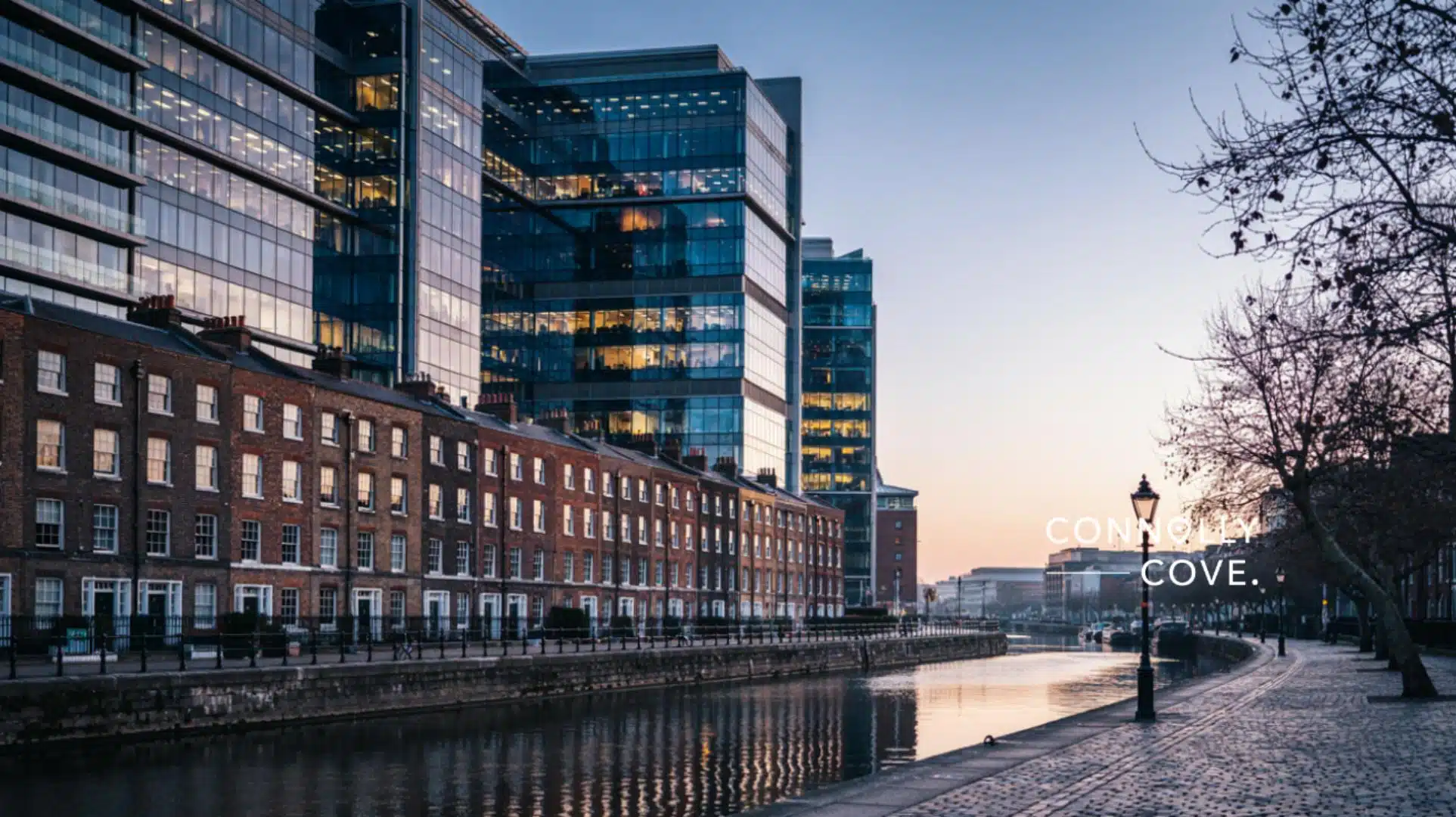
Travellers can still read the Celtic Tiger directly off modern Ireland. Based on our visits to Dublin’s Docklands, once nicknamed “Silicon Docks” for the tech firms that arrived during the boom, the contrast with the Georgian streets a short walk toward Dublin’s historic centre is worth seeing in person. If you’re planning a trip to Dublin, walk both areas back to back; the change in architecture says more about the Celtic Tiger than any statistic can.
The EPIC Irish Emigration Museum puts the reversal of the emigration story into context. Housing costs in Dublin and Galway, still among the highest in Europe, are a direct legacy of the boom-era property market. Local guides across the Midlands can still point out ghost estates absorbed into ordinary housing, alongside others still waiting for that outcome.
Explore More Irish Heritage
The Celtic Tiger remains one of the clearest examples of how quickly economic change can reshape a country’s sense of itself. ConnollyCove covers this kind of cultural shift across Irish history, from the evolution of the Irish language to the traditions and proverbs that outlasted the boom entirely. For more on how modern Ireland got here, explore our guides to Irish heritage, or subscribe to our YouTube channel for video coverage of the places mentioned above.
FAQs
Here are quick answers to the questions people most often ask about the Celtic Tiger and Irish cultural identity.
What does “Celtic Tiger” actually mean?
The term was coined in 1994 by economist Kevin Gardiner, comparing Ireland’s rapid growth to the East Asian “tiger” economies. It stuck as shorthand for Ireland’s 1995–2007 boom.
How did the Celtic Tiger affect Irish culture?
It weakened Church authority, reversed emigration into inward migration, and gave Irish music, language and art new confidence abroad. It also brought rising consumerism and house prices.
What caused the end of the Celtic Tiger?
A property bubble, fuelled by cheap credit and speculative building, collapsed alongside the 2008 global financial crisis. Ireland needed an EU–IMF bailout in 2010 after guaranteeing its banks’ debts.
How did immigration change during the Celtic Tiger?
Ireland shifted from net emigration to significant inward migration, particularly from EU accession states after 2004. This changed Irish society more in a decade than in the previous century.