


God’s Creatures: The Psychological Thriller’s Filming Locations in County Donegal, Ireland’s Surfing Capital
Updated On: April 23, 2024 by  Aya Radwan
Nature scenes that are perfectly crafted have always presented the best backdrops for the screen, whether it’s for a film, TV show, programme or video. Despite the ominous psychological atmosphere of the new film, God’s Creatures, the film presented some of County Donegal’s natural beauty. It might seem like a stark contrast, but the filming crew’s selected locations added more depth and authenticity to the film.
In this article, we will take a trip around County Donegal to explore where the upcoming film God’s Creatures was filmed. We will also talk about the film just enough to get you excited about it, and we’ll see how this will serve the tourism sector in the county.
It’ll be exciting, we promise!
God’s Creatures’ Filming Locations in County Donegal
County Donegal, the northernmost Irish county, has been attracting more visitors during the past years. It’s become a famous filming location as well, where several films have taken to its villages and towns to build new worlds. Donegal County Council, the main body responsible for the sustainable development of the county’s tourism sector, shared that the county’s domestic visitors reach up to 330,000 visitors, while international visitors are almost 300,000 visitors.
What is the Film God’s Creatures About?
Aileen lives in a small Irish fishing village where all villagers are familiar with each other. The close-knit community gets an unexpected surprise when Brian, Aileen’s son, returns from Australia abruptly. Even though joy fills her heart after her son’s return, Aileen suspects he’s hiding something due to his refusal to talk about his time abroad or why he returned. Aileen is hiding a deep secret on her part as well, one that won’t only affect her relationship with Brian but with their community as well.
So, what are the Filming Locations The God’s Creatures Crew Chose to Film at?
A psychological thriller isn’t the typical type of film that one links with natural beauty, although it mainly depends on the protagonist’s character. Perhaps the time of the filming also fit the film’s theme as well; it was shot back in Spring 2021 when the entire world was nearly locked up due to Covid-19 restrictions. The main female protagonist, Emily Watson, commented that it was such an emotional experience and made her feel one with Irish soil.
Killybegs
If County Donegal carried the title “Ireland’s Hidden Gem”, Killybegs carries a further title of “The Amazing Gem of Donegal”. The town on Ireland’s north coast and the Wild Atlantic Way served as a backdrop for the fishing village depicted in God’s Creatures. Killybegs is a fishing town, harbouring Ireland’s most important fishing ports, much like the town where Aileen and her son Brian lived in the film.
Due to Killybegs’ stunning coastline along the Wild Atlantic Way and its importance as a fishing harbour, the town became a popular destination among visitors. While the majority of tourists love hitting the golden sandy Fintra Beach on the town’s outskirts, other tourists time their visit to attend Killybegs’ Summer Street Festival. This unique festival celebrates the town’s fish catch, with stands and stalls lining the streets to give visitors a true taste of the sea.
Why do many consider Killybegs a hospitality heaven? Well, apart from the town’s thriving hospitality business, to accommodate the increasing numbers of yearly tourists, the town has a history of hospitality as well. Although it was wartime between Spain and England, La Girona, one of the Spanish Armada’s ships, sought refuge, food and repairs at Killybegs’ Harbour. The locals did not disappoint; under the guidance of their chieftain, they repaired the ship and offered food and clothing to its crew.
What to do in Killybegs?
Away from the typical hustle of fishing ports, Killybegs is an ideal location for a quiet and relaxing stop during your visit to County Donegal. You can visit the town’s Maritime and Heritage Centre, housed in the former Donegal Carpets factory. It was at this factory that the world’s largest carpet loom lived and was used to create masterpieces adorning prestigious landmarks, such as Dublin Castle, Buckingham Palace and The Vatican. The Heritage Centre will give you a look at Killybegs’ history, you can admire samples of previous carpet creations, and you can even learn how to make a knot yourself.
The main tours available in Killybegs include a boat tour that will take you to the breathtaking Slieve League cliffs, which are, believe it or not, higher than the Cliffs of Moher. Diverse and dancing sea creatures, such as dolphins, puffins and sharks, will keep you company along the way. The second tour is the Walk and Talk Tour; you will learn about Killybegs’ history and walk along Killybegs’ St Mary’s Church, the ruins of St Catherine’s Church and St Catherine’s Holy Well.
Teelin
From Killybegs, the filming crew of God’s Creatures headed to the nearby village of Teelin. You can spot Teelin during the boat tour from Killybegs, as the village is located near Slieve League and is a much smaller community than Killybegs. A fishing village like the previous town, Teelin boasts a rich cultural, musical and fishing history. The village’s harbour is one of the oldest on the island of Ireland, built at the beginning of the 1880s.
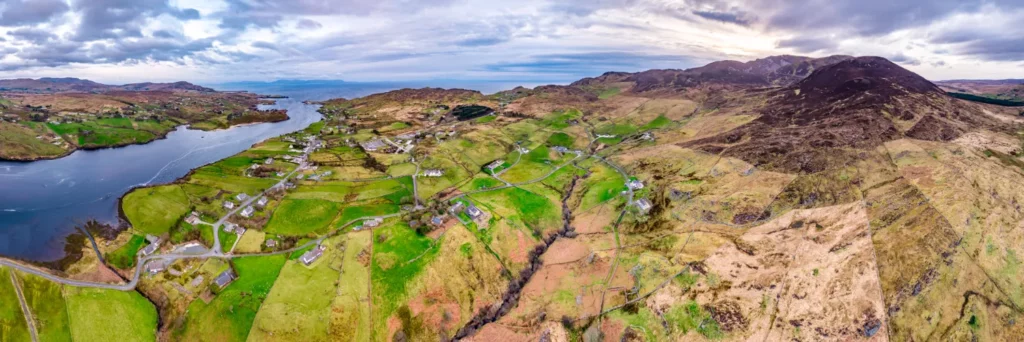
If you’re planning to head to Teelin, you will not be disappointed. You will feel like you are stepping into a completely new world, and the simple reason behind this is the traditional Irish, or Gaelic, the locals use. While County Donegal is known to lure those interested in learning the county’s dialect, which resembles Scottish Gaelic, Teelin’s Irish Language College attracts students interested in linguistic studies of traditional Irish.
What to do in Teelin?
If you’re up for a soul-filling nature walk to fill your lungs with heaps of fresh air, then you can head up the Pilgrims Path, overlooking Teelin. The path is a u-shaped path that pilgrims take to reach the plateau of Slieve League, and from up there, Teelin, its harbour and coast stretch under your admiring eyes.
Another nature walk is the Carrick River Walk, where you’ll find yourself walking along running streams, swinging trees and diverse fauna. You can easily start the walk across from Teelin’s main road, where the river starts, and even though the path seems easy to follow, it’s preferable if you have local guides to make sure you’re on the right track.
Kilcar
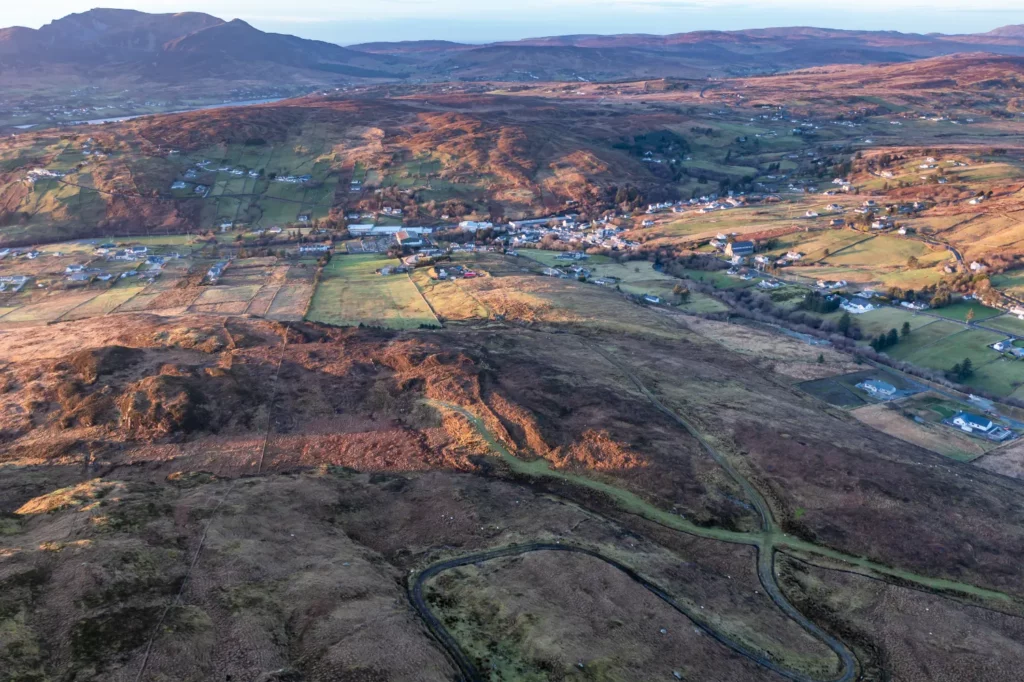
The last filming location for the God’s Creatures crew is the townland of Kilcar, in Donegal’s southwest. While many call it Kilcar in English, the town’s original name, Cill Charthaigh, is its official name. Not far from the previous two towns, Kilcar also holds a wonderous view of the Slieve League cliffs. The town’s old church once stood on a hill which provides a majestic view of Kilcar and its historic buildings.
What to do in Kilcar?
The old monastic site overlooking Kilcar isn’t its only landmark; the Kilcar Parish stands on one side of the town’s main street. Kilcar is famous for its distinguished tweed textiles, with Donegal’s main tweed facility in town and two other textile factories as well. What distinguishes Kilcar’s tweed industry is that it’s all handwoven, which adds to the fabric’s beauty and value.
You can shop all the different tweed products at Studio Donegal. Besides the tweed facilities, you can find the town’s knitting factory and the shop of a local brand that specialises in seaweed-based cosmetics. Right next door to Studio Donegal is the town’s community facility, Áislann Chill Chartha, which includes the town’s historical exhibitions, Donegal’s history and historic photographs. The community facility offers services such as a library, a computer centre, a fitness centre and a theatre.
If you feel like heading out of town and giving water sports a try, you can head to Muckross Head, also referred to as Muckros Peninsula. This popular tourist destination offers you a wide array of water sports, from diving to surfing and rock climbing. The peninsula also has a scenic beach that’s perfect for family activities.
The Donegal County Council Film Office
The production team of God’s Creatures stated that filming in County Donegal couldn’t have been possible without the cooperation and the facilitations offered by Donegal’s Film Office. The office is the official body responsible for providing resources for both local and international filmmakers who wish to film in the county.
Donegal County Council established the Film Office in 2003 and tasked it with the responsibility of assisting filmmakers who wish to film in Donegal to find a cast, suitable filming locations, equipment, props and any required local services. The office works in cooperation with another Irish agency called Screen Ireland, or Fís Éireann, the primary developmental agency in charge of the Irish film industry.
The Film Office helps give filming permissions and enquiries a push to help filmmakers meet their filming deadlines. Through its work, the office aims at promoting County Donegal as a thriving filming location as well as promoting it as an attractive tourist destination, with the ultimate goal being putting Donegal on the international map of filming locations.
God’s Creatures is the latest film to scout for filming locations in County Donegal; Pierce’s Bronsnan’s Four Letters of Love, and Liam Neeson’s In the Land of Saints and Sinners, were filmed in different spots around the county. All of these projects came to light with the assistance of the Donegal County Council Film Office.
County Donegal is one of Ireland’s most visited counties, with its prehistoric monuments that stretch back in time to the Iron Age. The county’s long-stretching coastline provides tourists with golden beaches, rocky terrains, breathtaking oceanic views and cliffs. Downings, Lifford, Letterkenny, the Grianan of Aileach and the Fairy Bridges are some of the few splendid spots you must check during your visit to County Donegal.
Under the supervision of the Donegal County Council Film Office, the county will continue to thrive both as a tourist destination and a popular filming location.
How to Find the Best Scotland Travel Guide: An Ultimate Guide
Scotland
24/04/2024

The Ultimate Guide to the Best Shopping Areas in London
England
24/04/2024

The Absolute Guide to the Best Restaurants in Bath, England: Unveiling the Culinary Gems of Bath!
Food and Cuisine
24/04/2024
Planning a Trip to Scotland: Your All-Inclusive Guide to Exploring the Great Highlands
Travel Guides
23/04/2024
Your Ultimate Guide to Explore the Top Castles in Kent, England
England
23/04/2024