Article Summary
What this article covers: Which of Florence’s landmarks, palaces, gardens, library, museum days, and budget shopping spots genuinely cost nothing, and how to plan around the ones that only look free.
Who this is for: Budget-conscious travellers, including UK and Irish visitors, planning a Florence trip without a large sightseeing budget.
Key takeaway: Florence’s best free experiences aren’t its famous queues; they’re the quiet refectories, gardens, and palace courtyards that most guidebooks barely mention.
Expert insight: Ciaran Connolly, Founder of ConnollyCove, says: “The Cenacolo di Sant’Apollonia is the one I send people to first. It’s two streets back from the queues at Piazza San Marco, it’s almost always empty, and Andrea del Castagno’s Last Supper fresco holds up against anything you’ll wait two hours to see.”
Quick facts:
- Florence Cathedral’s nave costs nothing to enter, but the Dome, Bell Tower, Baptistery and Museum all require one of three paid passes, priced from roughly €15 to €30.
- On the first Sunday of every month, Italy’s Domenica al Museo scheme opens state museums, including the Uffizi and the Accademia, free to all visitors.
- The Medici Villas and Gardens are a UNESCO World Heritage Site, though access varies considerably between the fourteen locations, and only a couple near Florence are freely open to the public.
Table of Contents
Search “free things to do in Florence”, and you’ll find the same ten landmarks repeated across dozens of near-identical lists. This guide takes a different approach. Rather than another checklist, it explains what’s actually free, what only looks free, and where the real trade-offs sit, particularly around queue times and crowd size. It covers the well-known free sights alongside ground most guides skip entirely: Florence’s free parks, its quiet refectories, a library with a view of the Duomo, and a few cheap things to do in Florence when a small budget still needs stretching.
ConnollyCove is an Ireland-based travel and culture platform, and this guide reflects the questions UK and Irish travellers ask most often about visiting European cities cheaply: how to get there for less, what genuinely costs nothing once you arrive, and which “free” attractions are worth the wait. ConnollyCove’s approach to city guides favours this kind of practical, budget-first detail over a simple list of attractions, whether you’re touching down in Pisa on a budget airline or arriving from Rome by train.
Arriving on a Budget: The UK and Irish Traveller’s Route
Most UK and Irish travellers land nowhere near Florence itself. Budget carriers such as Ryanair and easyJet fly into Pisa International Airport or Bologna Guglielmo Marconi Airport far more often than the smaller Florence Airport, and both connect to the city by direct regional train.
From Pisa, take the PisaMover shuttle from the airport terminal to Pisa Centrale station, then board a Trenitalia regional service to Firenze Santa Maria Novella. The full journey (from the airport to the city centre) usually takes around 60 to 90 minutes. Regional tickets are typically priced under €20 depending on the time of day. From Bologna, high-speed trains reach Florence in as little as 35 minutes, though fares on the fast Frecciarossa and Italo services are higher than those on the slower regional alternative.
Buy tickets through the official Trenitalia app or website rather than third-party resellers, and validate paper tickets at the small green or yellow machines on the platform before boarding; an unvalidated ticket can result in an on-the-spot fine even if you paid for it. Travellers arriving from within Italy, say after a stop in Rome or Venice, will find Florence’s Santa Maria Novella station sits right in the historic centre, a short walk from most of the free sights covered in this guide. If Venice is also on your itinerary, ConnollyCove’s guide to Venice covers the equivalent budget rail connections for that leg of an Italian trip.
The Duomo Dilemma: What’s Free, What’s Not, and Is It Worth the Wait?
Entry to Florence Cathedral, Santa Maria del Fiore, is free and requires no ticket or booking, but that single fact hides a more complicated picture. The queue to get into the nave is often the longest in the city, driven by security checks rather than ticket sales. Once inside, the experience is deliberately plain: most of the cathedral’s original art has either been lost over the centuries or moved to the adjoining Opera del Duomo Museum, which does charge admission.
Everything else in Piazza del Duomo costs money. Three combination passes cover the paid sights: the Ghiberti Pass (around €15) for the Baptistery, the Museum, and the Santa Reparata crypt; the Giotto Pass (around €20), which adds the Bell Tower; and the Brunelleschi Pass (around €30), the only one that includes the climb to the top of the Dome itself, a timed booking that regularly sells out in peak season. None of the passes can be bought separately for a single site, and none include the cathedral, as it doesn’t need one.
| Site | Cost | What You’ll See | Typical Wait | Worth It? |
| Cathedral nave | Free | Plain Gothic interior, geometric marble floor | Up to 2 hours (security queue) | Only if you have time to spare |
| Brunelleschi’s Dome | Paid (~€30) | Last Judgement fresco, rooftop views | Timed entry, book weeks ahead | Yes, if the climb matters to you |
| Giotto’s Bell Tower | Paid (~€20) | Best photographs of the Dome itself | Moderate | Worth it for photographers |
| Opera del Duomo Museum | Paid (any pass) | Original sculptures, Michelangelo’s Florentine Pietà | Short | Yes, quietest of the paid sights |
For travellers with limited time, the maths is worth doing, honestly. A two-hour security queue for an interior that even locals describe as stark is a poor trade-off compared with the hours you could spend elsewhere in the city, particularly given how many free frescoed interiors are within a ten-minute walk.
As Ciaran Connolly, Founder of ConnollyCove, puts it: “Standing in a two-hour security queue for a cathedral interior that even locals call bare isn’t a budget win, it’s a time loss. I’d rather travellers spend that hour inside Orsanmichele or Santa Trinita, where you won’t pay a cent and the doors are usually open.”
If you’re short on time, skip the cathedral queue and put that hour towards the churches, palaces, and refectories covered later in this guide.
Iconic Masterpieces and Open-Air Galleries
Florence’s most photographed free sights are almost entirely outdoors, which means no ticket booth, no time slot, and usually no queue beyond the crowd itself.
Loggia dei Lanzi (Loggia dei Signoria)
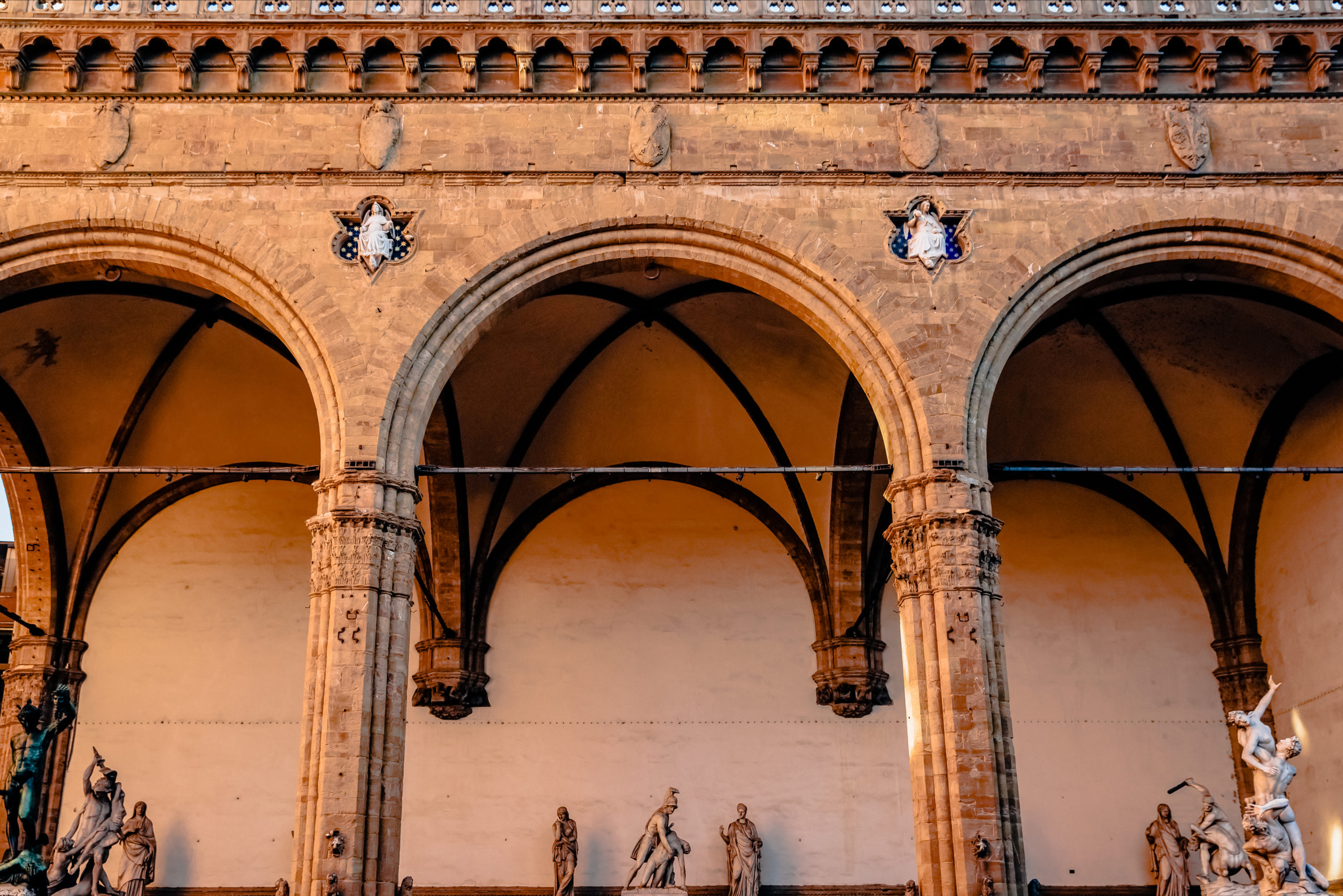
This roofed, open-sided gallery on Piazza della Signoria has displayed sculpture since the 14th century and costs nothing to walk through at any hour. Benvenuto Cellini’s bronze Perseus with the Head of Medusa dominates the space, and it wasn’t placed there by accident: the Medici family commissioned it as a deliberate piece of political theatre, a none-too-subtle warning to their rivals rendered in bronze. Look for Giambologna’s Rape of the Sabine Women alongside it, carved from a single block of marble.
Palazzo Strozzi (Strozzi Palace)
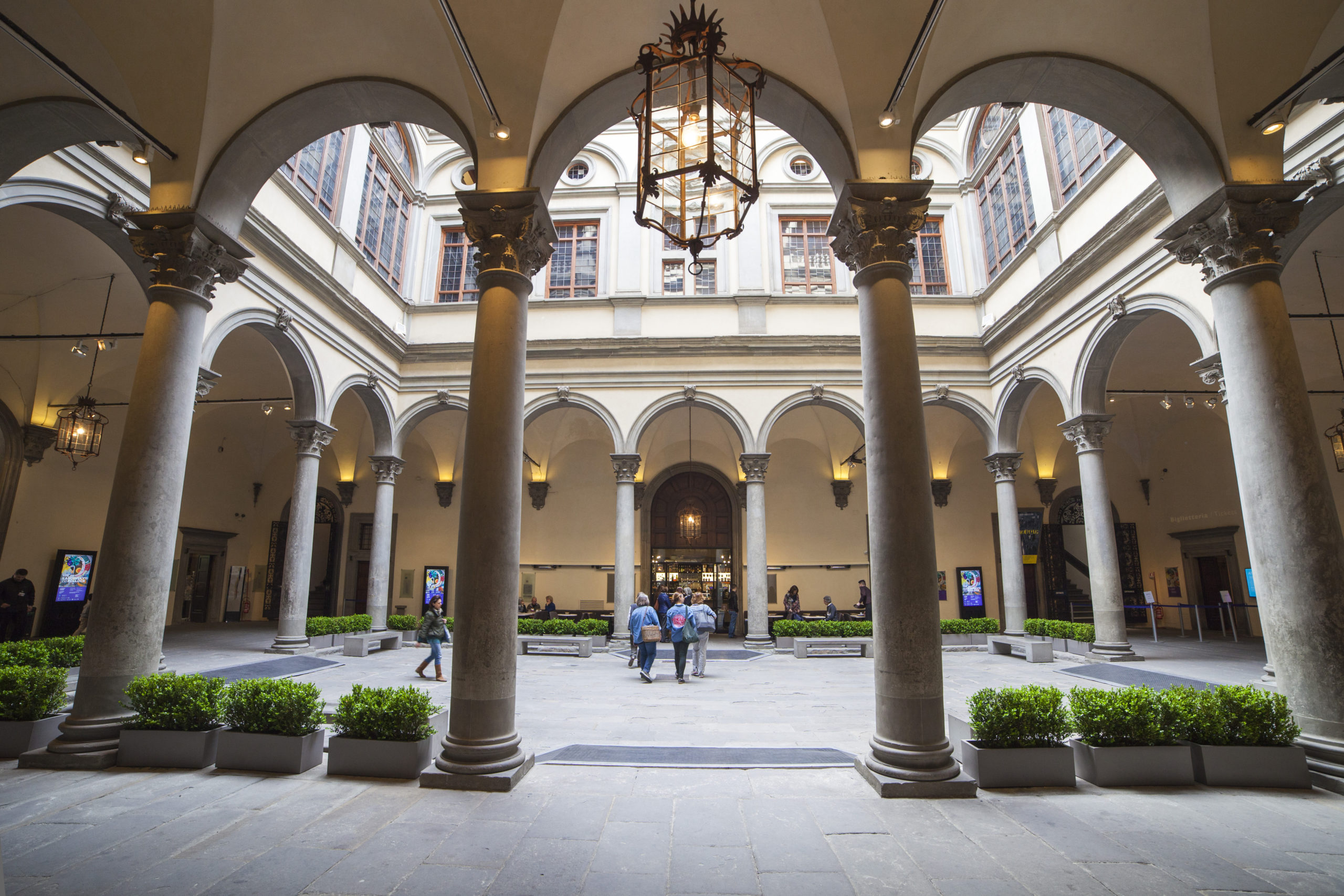
Palazzo Strozzi is one of Florence’s largest Renaissance palaces, built by Filippo Strozzi as a deliberate rival to the Medici family’s own residences. It introduced a new building form to Renaissance architecture: a free-standing structure surrounded by streets on all four sides.
The exhibition galleries inside require a paid ticket, but the Renaissance courtyard and its café are free to enter at any time, even without an exhibition ticket. The palace generally opens from 10 am to 8 pm, with extended hours to 11 pm on Thursdays, though free entry no longer applies during those evening hours, as some older guides suggest. Check the official Palazzo Strozzi website before visiting if a specific exhibition matters to your trip.
Basilica of Santa Maria Novella
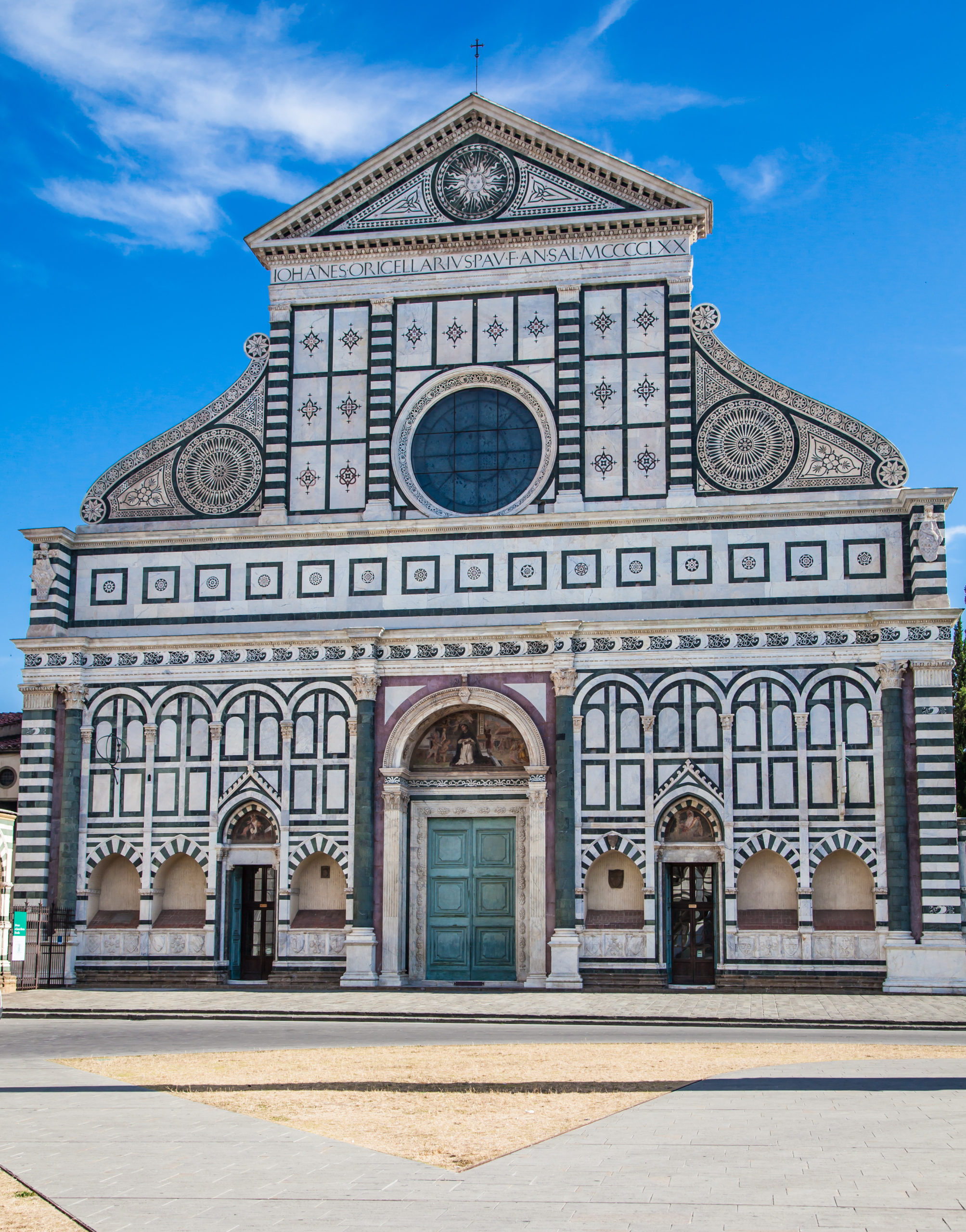
Facing the central railway station of the same name, the Basilica of Santa Maria Novella is Florence’s principal Dominican basilica, built in a Gothic-Romanesque-Renaissance style with a striking marble façade in emerald green and white. The main church interior is free to enter, though the adjoining museum and cloisters typically require a separate ticket, so it’s worth checking current opening times and ticketing at the entrance.
Ponte Vecchio and the Arno River
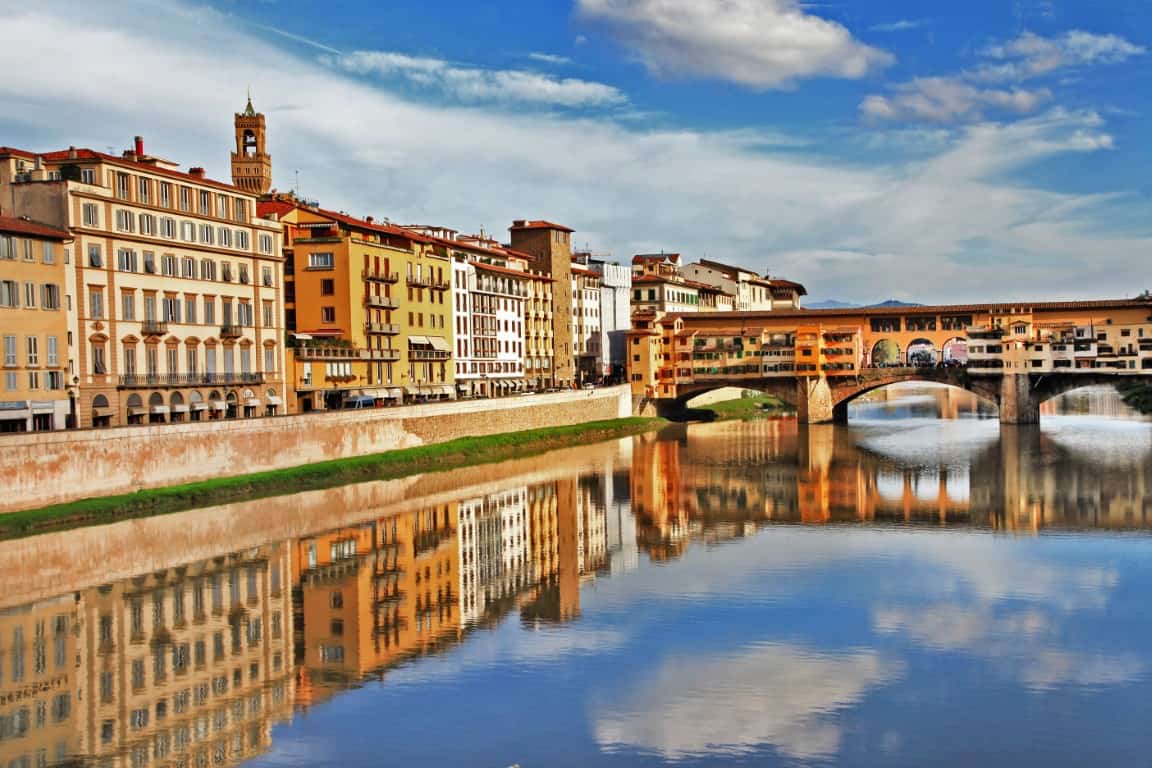
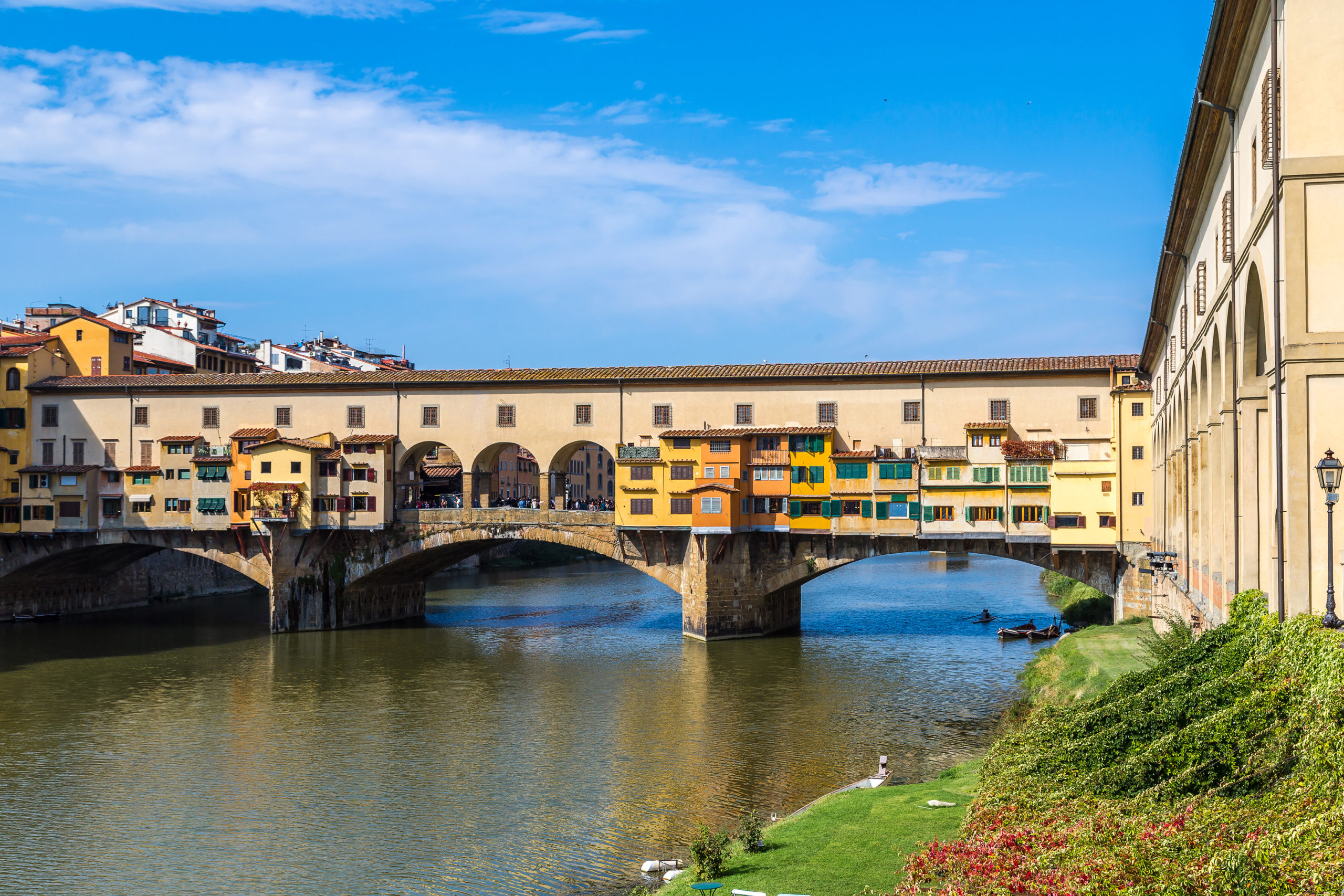
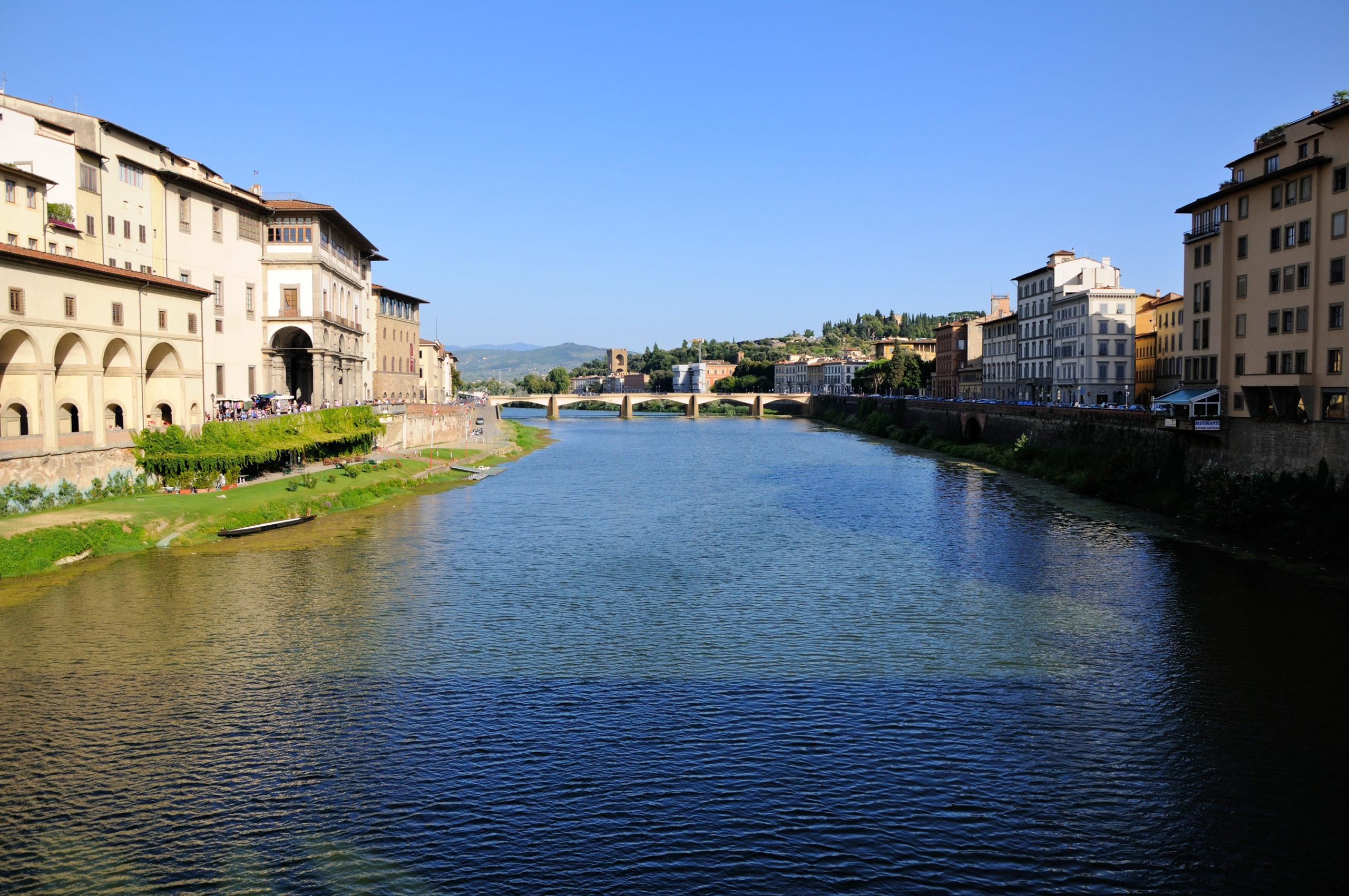
Florence’s medieval bridge, lined with jewellers’ shops that have occupied the same spots for centuries, is free to cross or photograph. The best view of it isn’t from the bridge itself but from the neighbouring Ponte Santa Trinita, where you can see the whole structure reflected in the Arno. The riverbank more broadly is one of Florence’s simplest free pleasures: you can walk or cycle along it, sunbathe on the sandy stretches in summer, or relax and overlook the water, particularly striking around sunset.
Street Art and Hidden Details
Look up at the corner of Palazzo Vecchio, and you’ll find a faint profile carved into the stonework, long attributed to Michelangelo, supposedly sketched on a bet without looking at the wall. Elsewhere in the centre, French street artist Clet Abraham has spent years subtly altering standard road signs into small visual jokes, a self-guided scavenger hunt that most first-time visitors walk straight past.
Florence’s Free Cenacoli: Renaissance Frescoes Without the Crowds
Florence’s cenacoli, monastery refectories frescoed with scenes of the Last Supper, are the city’s most overlooked free attraction, and the ones almost no competing guide covers in any depth.
Cenacolo (pronounced cheh-NAH-koh-loh) is Italian for “refectory,” the dining hall of a former monastery. The Cenacolo di Sant’Apollonia, tucked into a quiet street near Piazza San Marco, houses Andrea del Castagno’s Last Supper from around 1447, painted nearly 50 years before Leonardo da Vinci’s more famous version in Milan. Few visitors know it exists, so it stays quiet even in peak season. Note that entry policies at Florence’s smaller state-run sites do shift from year to year, and a modest admission fee has applied at some cenacoli in recent periods, so check current pricing on the official Musei del Bargello or CoopCulture site before building it into your day.
Andrea del Sarto’s Last Supper at the former convent of San Salvi, a little further from the centre, is another of the city’s under-visited refectories, and it rewards the short journey out with a similarly peaceful viewing experience. Both frescoes reward slow looking rather than a quick photograph. Notice the architectural framing Castagno used at Sant’Apollonia, painted to make the scene look as though it continues into the real room. It’s a trick of perspective that predates the more celebrated examples of Renaissance illusionism found elsewhere in the city.
Florence’s Free Gardens and Parks
Away from the historic centre, several of Florence’s green spaces welcome visitors at no charge any day of the year, which makes them a reliable fallback whenever the piazzas feel overwhelming.
Medici Villas and Gardens
The Medici Villas and Gardens across Tuscany are a UNESCO World Heritage Site, twelve villas and two gardens built by the Medici family between the 15th and 17th centuries, illustrating their patronage of the arts during the Renaissance. Despite what older guides sometimes suggest, access varies significantly between sites: many are private property, open by appointment only, or scattered well outside Florence itself. Villa della Petraia and the garden of Villa di Castello, both just outside the city, are among the most reliably open to visitors and make a reasonable half-day trip if Renaissance garden design interests you, though it’s worth confirming current opening days before travelling out.
Parco delle Cascine (Cascine Park)
On the north bank of the Arno, Parco delle Cascine is Florence’s largest public park, around 160 hectares of meadows, woods, and boulevards that were once the Medici family’s farming and hunting estate. It’s free and open at all times, ideal for a run, a picnic, or simply an hour away from the crowds in the historic centre, and it hosts a large outdoor market on Tuesday mornings.
Giardino dell’Orticoltura (Horticultural Garden)
The Giardino dell’Orticoltura is a small, free botanical garden established in 1859 by the Società Toscana di Orticoltura, featuring a handsome cast-iron greenhouse and rare ornamental plants originally used for horticultural research. It draws a fraction of the visitors that Florence’s paid gardens see, which makes it a genuinely peaceful stop.
Giardino delle Rose (The Rose Garden)
Tucked below Piazzale Michelangelo in the Oltrarno district, the Giardino delle Rose is a compact, free rose garden with sweeping views back across the city. Created in 1865 by the architect Giuseppe Poggi, it also hosts 12 sculptures by the Belgian artist Jean-Michel Folon, donated to the city in 2011. Most visitors climbing the steps towards Piazzale Michelangelo walk straight past the entrance, so it stays quiet even when the viewpoint above is busy.
Breathtaking Views and Sacred Spaces
Florence’s best panoramic view and several of its richest fresco cycles won’t cost you a cent, provided you know where to look beyond the postcard spots.
Piazzale Michelangelo
The classic sunset viewpoint over the whole city, the Duomo included, is free to reach on foot or by bus, though the walk up through the Rampe del Poggi gardens is a quieter, greener alternative to the busy bus stop route. Arrive at least 30 minutes before sunset in the warmer months, when the terrace fills quickly.
Basilica di San Miniato al Monte
Just above Piazzale Michelangelo, this Romanesque church has one of the most striking marble facades in the city and a calm atmosphere, helped by the Benedictine monks who still chant Gregorian vespers there in the late afternoon. Entry is free, and it draws a fraction of the visitors the Duomo does.
Orsanmichele
Once a grain market, later converted into a church, Orsanmichele holds an exceptional collection of Renaissance sculpture in niches around its exterior, most of which have been replaced with copies, while the originals are in the small museum upstairs. The church interior, with frescoes by Ghirlandaio’s circle, is free to enter and rarely busy, making it one of the better low-key alternatives to a long Duomo queue.
The Biblioteca delle Oblate: A Free Library Worth Knowing About
The Biblioteca delle Oblate, a three-level public library housed in a former convent near the Duomo, is one of Florence’s most underrated free spaces and costs nothing to use, including for visitors rather than residents. Membership is open to everyone with a valid ID, and visitors can borrow books, use the free internet connection, and settle in at one of the multimedia stations to watch documentaries or films.
The ground floor houses a Conservation and Local History section with historical materials on Florence and Tuscany, while the first floor has three large reading rooms with computers and satellite TV. The real draw, though, is the second-floor terrace and café, which looks directly out over the Duomo, a free view that rivals paid rooftop bars nearby. The library also runs a children’s section with reading sessions, events, and workshops throughout the year. It’s worth confirming current opening hours and any ID requirements for non-resident membership directly with the library before visiting.
Free Museum Sundays: How Domenica al Museo Actually Works
On the first Sunday of every month, Italy’s Domenica al Museo initiative opens Florence’s free museums to everyone, including the Uffizi Gallery, the Accademia, the Palatine Gallery at Palazzo Pitti, the Boboli Gardens, the Bargello, and the Medici Chapels.
The catch is one most articles gloss over: free does not mean quiet. Expect queues of two to four hours at the Uffizi and Accademia in spring and summer, and reservations aren’t available on free Sundays except for visitors with disabilities and their companions, or pregnant visitors, who can book priority access. Everyone else queues on a first-come, first-served basis. If your main goal is simply to see Michelangelo’s David or Botticelli’s Birth of Venus without the wait, it’s often worth paying for a timed ticket on a regular day rather than losing half a morning to a free Sunday queue. If you do go, arrive at least an hour before opening.
Smaller participating sites, such as the Bargello or the Medici Chapels, tend to draw far shorter queues on free Sundays and are a better use of a budget-conscious morning if avoiding a wait matters more to you than seeing the very biggest names.
Budget Shopping in Florence
Florence also has several places to shop without spending heavily, which is worth knowing if souvenirs or everyday essentials are part of the trip.
San Lorenzo Market
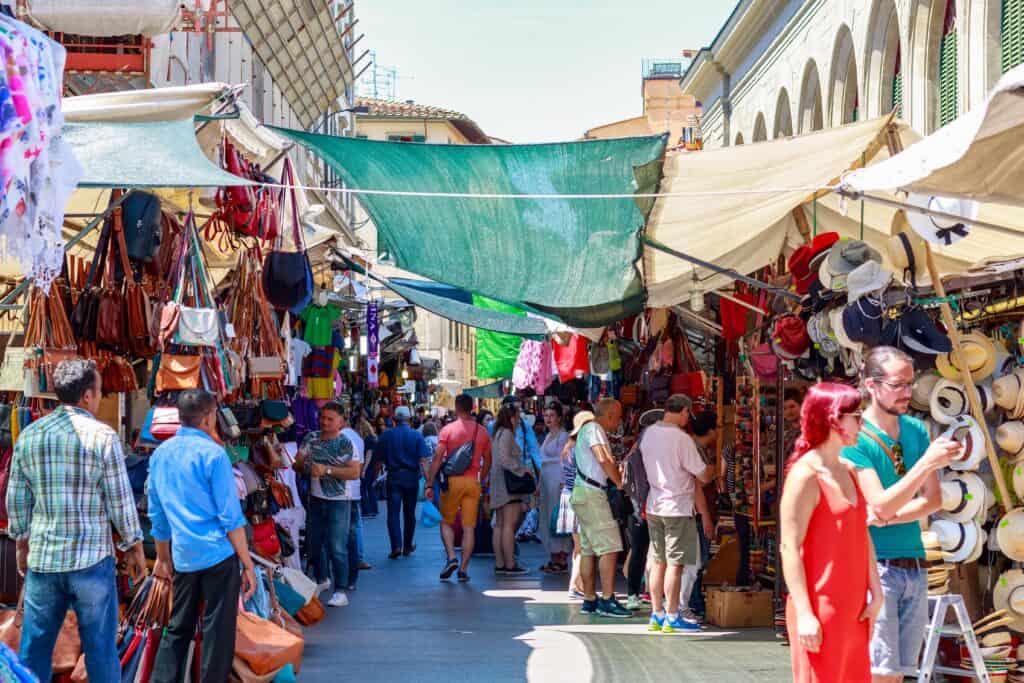
San Lorenzo Market is Florence’s largest street market, close to the Basilica of San Lorenzo, and it’s genuinely one of the more enjoyable things to do in Florence on a small budget. It combines two distinct markets: the two-level indoor Mercato Centrale, which sells food, and an outdoor market selling clothes, leather goods and souvenirs. Prices are generally negotiable at the outdoor stalls, and it’s worth picking up gelato nearby before heading on.
Ciao-Ciao, Piazza Italia, and Oviesse
For everyday clothing, three budget chains are worth knowing about. Ciao-Ciao has several branches around Florence and regularly offers discounts on basics like T-shirts, socks, and scarves. Piazza Italia sells smart-casual clothing and accessories at more affordable prices than the boutiques nearer the centre. Oviesse covers a broader range, including office wear, casual clothing, and children’s clothes, and tends to be one of the cheapest options in the city for everyday essentials.
Practical Budget Survival Tips
A handful of small, practical habits make a noticeable difference to what a day in Florence actually costs.
Florence’s fontanelle, small public drinking-water fountains dotted around the historic centre, provide free, chilled water and are worth refilling a bottle at throughout the day rather than buying bottled water near the main sights. Public toilets typically charge €1 to €2, so it’s often more practical to buy a cheap espresso at a local bar and use the facilities there instead. For lunch, a schiacciata or panino from a bakery or grocery counter costs a fraction of what you’d pay at a sit-down tourist restaurant near a major sight. It’s one of the simplest, cheapest things to do in Florence on a small budget: eat where locals queue, not where the menu is printed in five languages.
Current Conditions and Seasonal Information
Florence’s shoulder seasons, roughly late October to November and February to March, offer the best balance of manageable crowds, lower accommodation prices, and comfortable walking weather. It’s a good stretch for a free-sights itinerary built around outdoor viewpoints, gardens, and queuing for the Duomo. Peak summer, June to August, brings the longest queues at every free and paid sites, and the midday heat calls for an early start.
Always check official sources before travelling, as opening hours, free Sunday participation, and dress code enforcement can change with little notice. The Duomo enforces a strict dress code, shoulders and knees covered, at every entrance, including the free nave. Church opening hours generally run shorter on Sundays and around religious holidays, when several of the sights covered here restrict access for services. For up-to-date state museum hours and any temporary closures, the official Uffizi Galleries and Musei del Bargello websites are the most reliable sources, and for train times and fares, Trenitalia’s own site and app remain more accurate than third-party booking platforms.
If Florence is one stop on a wider Italian trip, ConnollyCove’s guide to the Amalfi Coast and our overview of Italian travel patterns are useful companions for planning a longer, budget-conscious route through the country. Travellers weighing Florence against other affordable options further afield may also find ConnollyCove’s roundup of the world’s cheapest travel destinations a useful comparison point, and our broader guide to budget travel covers the digital tools and habits that apply well beyond Italy.
Making the Most of a Free Florence
Florence rewards travellers who look past the three big-ticket sights and into its quieter churches, refectories, gardens, palace courtyards, and a library or two, most of which cost nothing and see a fraction of the footfall. Treat the Duomo queue as optional rather than compulsory, prioritise the Cenacoli and Orsanmichele if a long wait bothers you more than ticking off famous names, and time a Domenica al Museo visit only if you’re genuinely prepared for the queue that comes with it. San Lorenzo Market and the budget clothing chains nearby are worth an hour or two if souvenirs or everyday essentials are on the list, too.
ConnollyCove is an Ireland-based platform covering budget-friendly cultural travel across Europe and beyond, and Florence is one of several Italian cities worth exploring on a similarly tight budget. For more on planning an affordable Italian itinerary, see our guide to Venice, or explore the wider ConnollyCove YouTube channel for video coverage of European destinations.
FAQs About the Free Things to Do in Florence
Here’s what travellers most often want to know before planning a free day out in Florence.
Is the Duomo in Florence free to enter?
Yes, entry to the main cathedral nave of Santa Maria del Fiore costs nothing and needs no ticket. You will need a paid pass to climb Brunelleschi’s Dome, visit the crypt, climb the Bell Tower or enter the museum, and the queue for the nave is often the longest wait in the city.
Is Palazzo Strozzi actually free on Thursday evenings?
Not any longer for the main exhibition galleries, despite older guides suggesting otherwise. The Renaissance courtyard and café remain free to enter at any time, and the palace does keep extended hours until 11pm on Thursdays, but a paid ticket is needed for the exhibitions themselves.
Can all of the Medici Villas and Gardens be visited for free?
No, access varies considerably across the fourteen UNESCO-listed sites. Several are private property or open by appointment only, while Villa della Petraia and the garden of Villa di Castello, both close to Florence, are among the most consistently open to the public.
What does “Cenacolo” mean, and are they worth visiting?
Cenacolo (pronounced cheh-NAH-koh-loh) means “refectory” in Italian, the dining hall of a former monastery. Florence’s Cenacoli house large frescoed depictions of the Last Supper, are rarely busy, and offer some of the best Renaissance art viewing in the city, away from the main queues.
How does Domenica al Museo work in Florence?
On the first Sunday of every month, Florence’s state museums, including the Uffizi and the Accademia, open free to all visitors. Expect queues of two to four hours at the largest sites in peak season, since reservations aren’t available on free days except for visitors with disabilities.
When is the best time of year to visit Florence on a budget?
Late October to November and February to March offer lower accommodation prices, thinner crowds at free attractions, and comfortable temperatures for a day spent mostly outdoors and queuing. Summer brings the longest queues and the highest prices across the board.
How can UK or Irish travellers get to Florence cheaply?
Budget flights into Pisa or Bologna, followed by a direct regional train, are usually cheaper than flying straight into Florence Airport. The Pisa to Florence rail journey takes around an hour and typically costs under €20 each way.
Where can I shop on a small budget in Florence?
San Lorenzo Market is the best-known option for souvenirs, leather goods and food, with negotiable prices at its outdoor stalls. For everyday clothing, budget chains including Ciao-Ciao, Piazza Italia and Oviesse offer noticeably lower prices than shops closer to the main tourist streets.